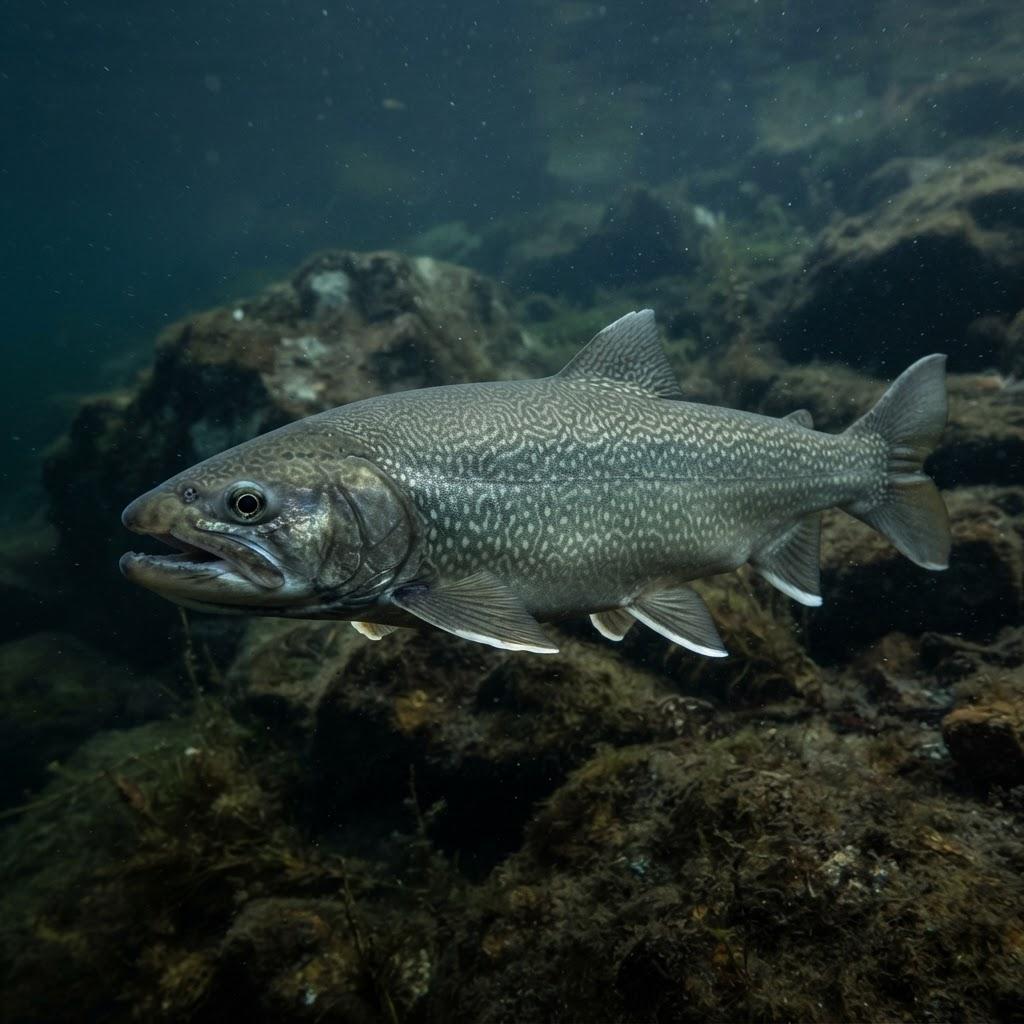
Salvelinus namaycush
Lake Trout
Meet the Lake Trout, the grumpy old grandpa of the freshwater world who prefers life in the dark, icy depths. This prehistoric-looking glutton is a master of living in the slow lane while hiding a surprisingly long and dramatic lifespan.
Meet the Fish
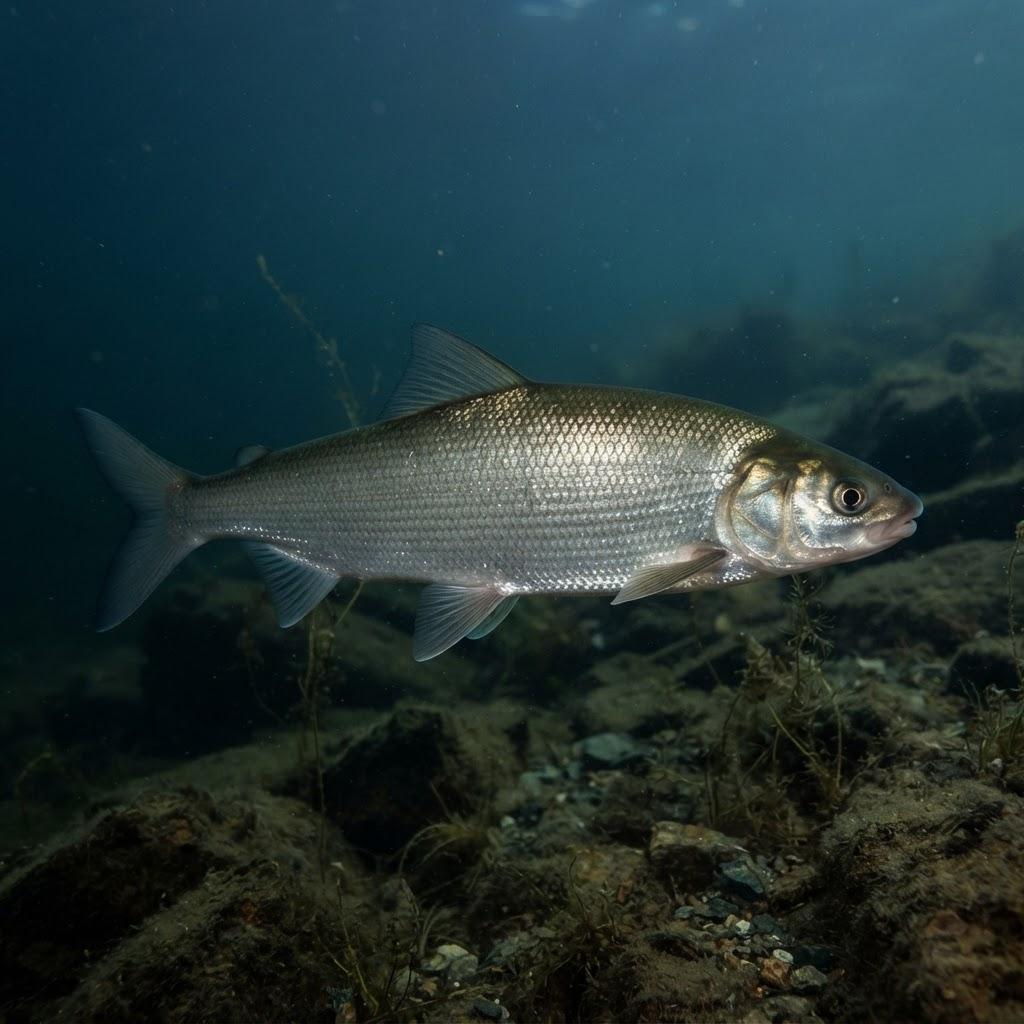
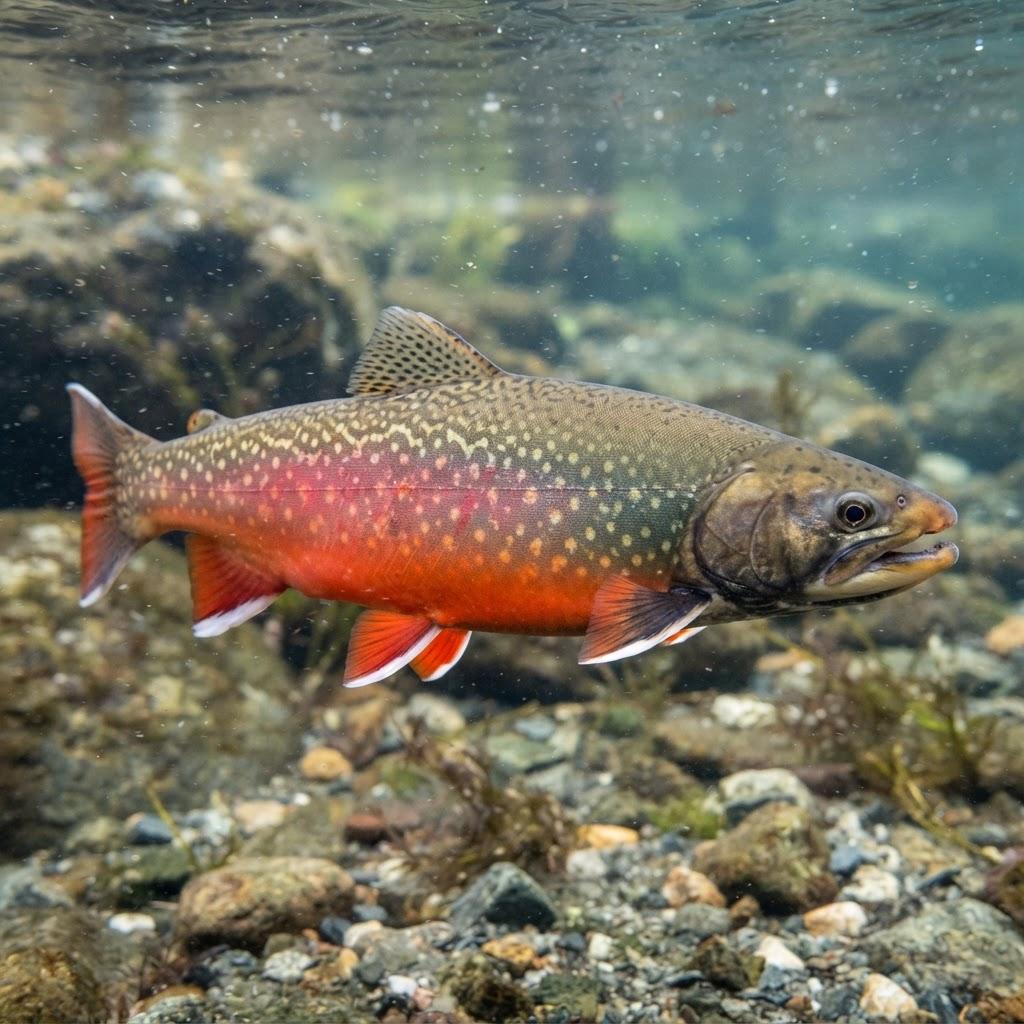
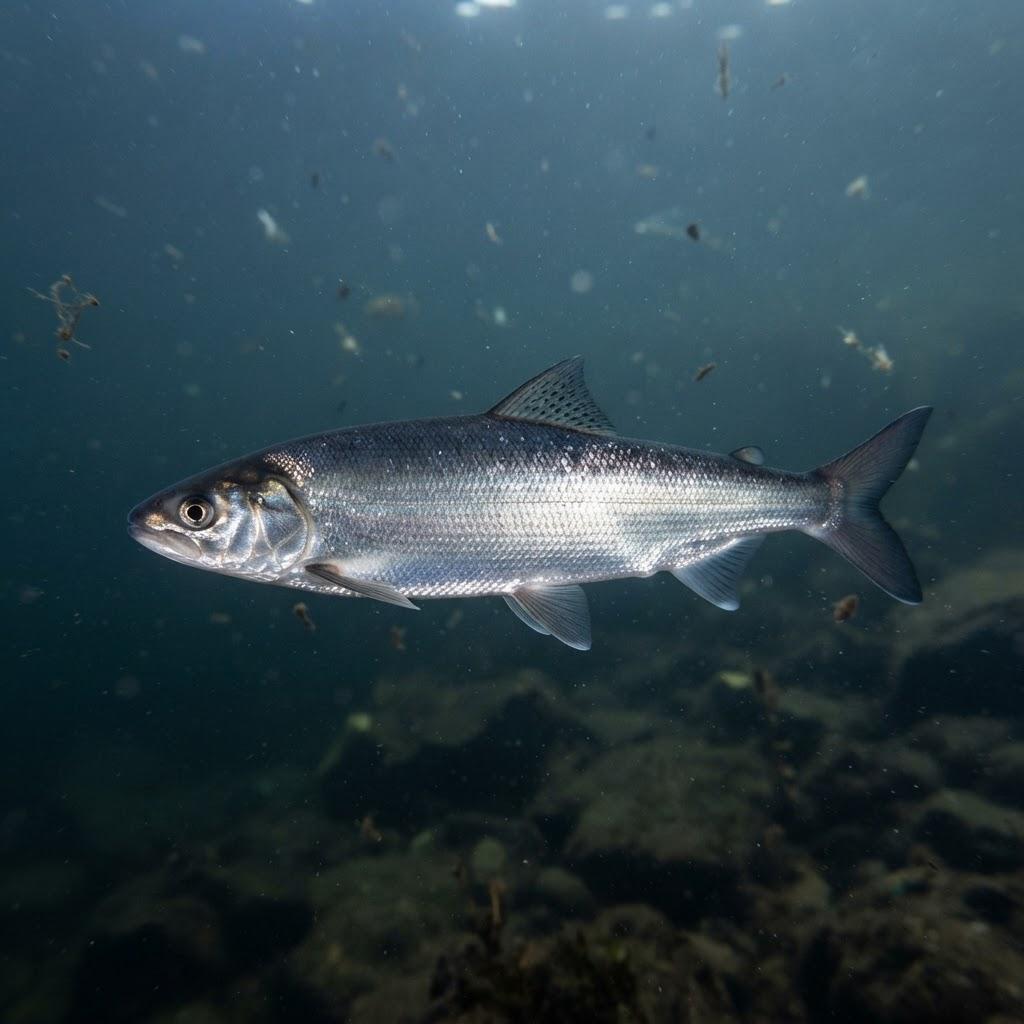
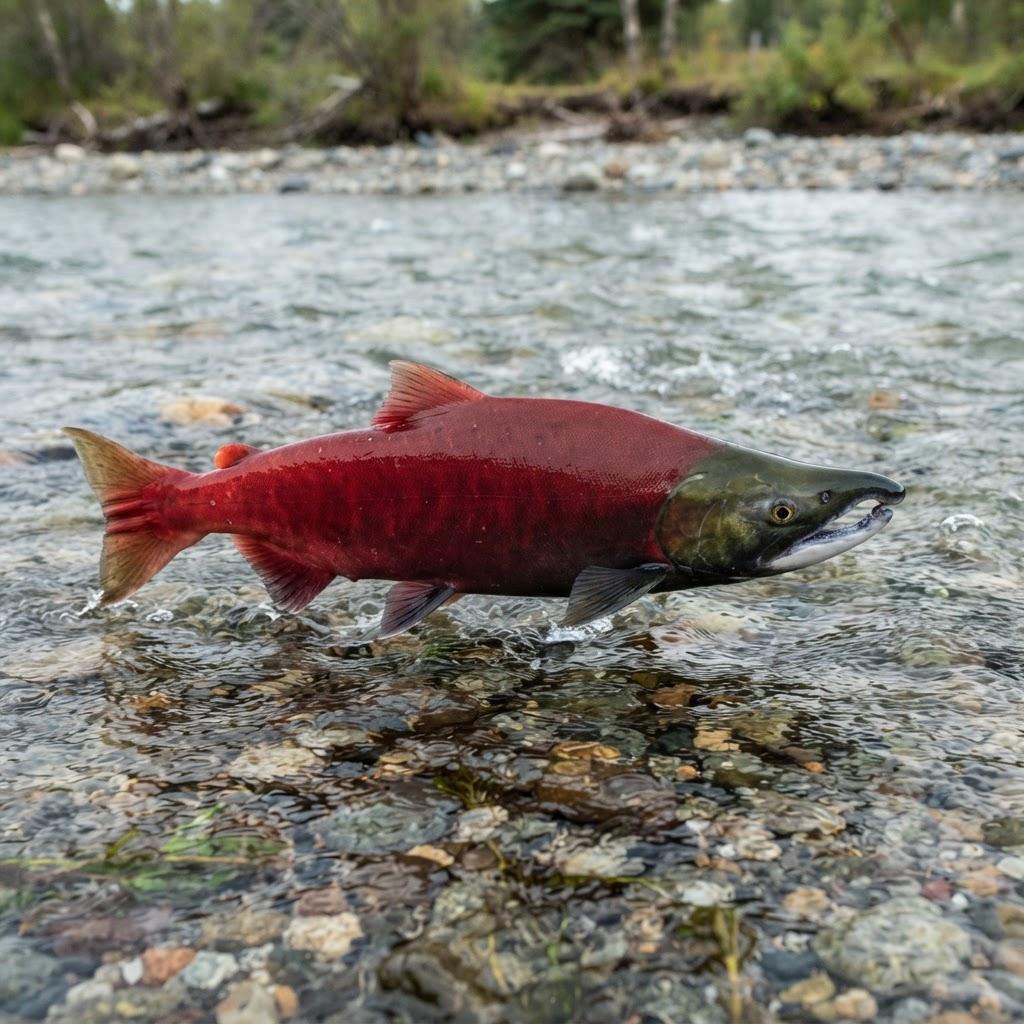
Imagine a grumpy, well-fed relative who refuses to move out of the basement. That is the Lake Trout. While other fish are out there splashing around in the sunlit shallows, playing tag and chasing bugs, the Lake Trout is deep down in the basement of the lake—the cold, dark, oxygen-deprived depths—living its best antisocial life. This isn't your average shimmering, neon-colored reef fish. The Lake Trout is built like a rugged, silver-gray battleship, speckled with light spots that look like they were applied by a paintbrush with a shaky hand. It has a mouth that seems to go on forever, perfect for snapping up anything that dares to wander too close to its gloomy living room. While its cousins in the salmon family might go off on dramatic adventures to the ocean and back, the Lake Trout is a total homebody. It sticks to the deep, chilly water year-round, turning the concept of 'living in the fast lane' on its head by being the absolute king of the slow, cold grind.
Weird Biological Superpowers Explained Simply
If you ever wondered how to survive in the equivalent of an underwater meat locker, the Lake Trout has the blueprint. Its greatest superpower is its incredible tolerance for freezing cold, oxygen-starved water. While most fish would start complaining about the lack of warmth after ten minutes, the Lake Trout is like, 'Turn the AC up, I love this.' They possess a specialized organ called a swim bladder that functions essentially like a built-in scuba buoyancy compensator, allowing them to hang out at extreme depths without using a single ounce of energy to stay afloat. Think of it as a personal, gravity-defying floating recliner. Because they live where the water is perpetually cold, their metabolism runs at a speed that would make a sloth look like an Olympic sprinter. This allows them to store massive amounts of energy for a long time, helping them survive when snacks are scarce. They are basically the endurance athletes of the deep, running on a super-efficient low-battery mode that keeps them chugging along for decades.
Absurd Self-Defense Mechanisms
You might think a fish as large and intimidating as a Lake Trout would have a fancy way of fending off attackers, like glowing like a disco ball or shooting poison spikes. Nope. The Lake Trout’s primary self-defense mechanism is the ultimate 'you can't catch what you can't see' strategy. By hanging out in the deepest, murkiest parts of the lake where light barely penetrates, they turn themselves into ghost-like shadows that predators ignore. When they do feel threatened, they don't curl into a ball or release a cloud of ink; they rely on raw, stubborn muscle and speed. They can execute a 'burst of doom' maneuver—a sudden, high-speed dash that utilizes their large tail fins to accelerate from zero to 'get out of my face' in a split second. It is the aquatic equivalent of an armored truck suddenly deciding it needs to perform a Tokyo Drift move to get away from a bicycle. It is surprisingly effective, mostly because nothing in the deep, cold dark really wants to tangle with a grumpy, toothy giant.
Fish Drama and Gossip
Life in the deep, cold abyss is mostly quiet, but when the breeding season rolls around, the drama ramps up to reality-TV levels. Imagine a high school cafeteria, but instead of cliques fighting over who sits where, you have giant, silver-spotted fish competing for the best patches of rocky gravel on the lake floor. It’s a literal 'mine, mine, mine' situation. The males get incredibly territorial, swimming in frantic circles around their chosen patch and puffing out their gills to look bigger, like a guy in a gym shirt trying to look tougher than he is. They don't have voice boxes to scream at each other, so they do it with intense, aggressive head-butting and dramatic tail-swiping. It is the underwater version of a passive-aggressive office meeting where everyone is silently glaring at each other over the last donut in the breakroom, except in this case, the donut is a prime piece of real estate for their future kids.
The "Wait, That's Real?!" Deep-Sea Oddities
While Lake Trout aren't deep-sea creatures in the 'alien monster with glowing lures' sense, they share a lifestyle with those weirdoes of the ocean depths. Both live in environments where the sun basically gave up and went home hours ago. In the abyss, you see things like the barreleye fish, which has a transparent head so you can watch its brain and eyes work—which is honestly a bit rude. Lake Trout don't have transparent heads, but they do share the deep-water obsession with extreme pressure and cold. If you were a surface-dwelling fish, swimming to where a Lake Trout lives would be like you walking into a walk-in freezer while wearing nothing but a swimsuit. The environment dictates the design. In both the deep ocean and deep lakes, the 'weird' factor is high because the rules of light and warmth don't apply. The Lake Trout is essentially the lake’s version of a deep-sea pioneer, proving that you don't need a glow-in-the-dark lure to be a total oddball of the water.
Myth Busting
There is a persistent myth that Lake Trout are just 'dumb eating machines' that will bite at anything shiny they see. People think they are the equivalent of a toddler in a candy store, but this is a massive insult to their intelligence. Research has shown that these fish are actually quite selective. They have incredible spatial memory—they know exactly where the food is, where the predators hang out, and where the temperature is just right. They don't just wander aimlessly; they are like seasoned hikers who know every shortcut and hidden path in their lake. Another myth is that they only live in the biggest, deepest lakes. While they love a good, deep puddle, they have been found thriving in smaller, surprisingly shallow high-altitude lakes where the water stays cool year-round. They are far more adaptable than people give them credit for. Stop calling them brainless monsters; they are actually the sharp, strategic grandmasters of their cold, watery kingdom.
Humorous Historical Tales or Folklore
Throughout history, the Lake Trout has been viewed with a mixture of reverence and total bewilderment by indigenous cultures and early settlers. In some folklore, they were seen as the 'Old Spirits' of the lakes, primarily because they can live for fifty years or more—longer than the average human lifespan in the Middle Ages. Imagine an old fisherman catching a fish that might have been swimming around when his great-grandfather was still in diapers. That’s enough to make anyone superstitious! There are old stories from the Great Lakes region about 'The Great Silver King,' a legendary Lake Trout so big it could reportedly tow a canoe across the lake. While that is likely a bit of fisherman's hyperbole, the fact remains that these fish have been a literal life-saver for humans, providing a steady, reliable food source during long, harsh winters where nothing else was biting. They are the unsung, scaly heroes of history.
Underwater Love Stories and Bizarre Romances
When a boy Lake Trout meets a girl Lake Trout, the courtship isn't exactly candlelit dinners and soft music. It is more of a chaotic, high-energy, full-contact sport. They don't have a sophisticated dance, but they do perform what scientists call 'mass spawning' rituals. This involves a group of them swirling around together in a giant, silvery tornado of fish bodies over a bed of rocks. It looks less like romance and more like a mosh pit at a heavy metal concert. They are messy, they are loud—well, as loud as fish can be—and they are completely unbothered by anyone watching. It is a no-frills, get-it-done approach to romance that is highly effective. Once the deed is done, they don't stick around to raise the family; they basically 'ghost' their partners and go back to their separate lives in the cold depths, having fulfilled their biological duty in one wild, energetic night.
Underwater Architecture and DIY Nesting
Most fish build nests that are basically piles of twigs or mud, but the Lake Trout prefers a more minimalist, 'industrial-chic' approach. They don't use glue or building materials; they use the natural terrain to their advantage. They seek out rocky shoals where the waves have washed away all the dirt, leaving only clean, smooth stones. They will spend hours using their fins to clear off any remaining silt or algae, essentially vacuuming their own floor until it is pristine. This is crucial because their eggs need to settle into the tiny gaps between the rocks to stay safe from currents and scavengers. It is like they are constructing a secret, underwater bunker for their future offspring. Once the eggs are tucked into these rock-cracks, they are hidden away from most threats. It is a simple, effective piece of architecture that proves you don't need a PhD in engineering to keep your family safe.
The Chaos of Raising Tiny Swimmers
If you are looking for a fish that dotes on its babies, you are looking at the wrong species. The Lake Trout is the ultimate 'hands-off' parent. Once the eggs are laid in their rock-bed bunker, the parents basically say, 'Good luck, kids!' and swim off to find a snack. They do not guard the nest, they do not bring home worms, and they definitely do not teach them how to swim. The tiny fry that hatch are on their own from minute one. They survive by hiding in the dark crevices of the rocks, living off their own yolk sacs like tiny, self-contained snacks. It is a harsh, sink-or-swim environment where only the smartest and quickest survive the first few weeks of life. It’s chaotic, it’s brutal, and it is entirely efficient. They believe in the 'school of hard knocks,' quite literally, starting their lives by navigating the rocky, dark, and dangerous geography of the lake bottom.
How to Spot One & How It Is Doing
If you want to catch a glimpse of the legendary Lake Trout, you’ll need some specialized gear and a serious amount of patience. You won't find them basking at the surface. You need to head to the deep, cool lakes, likely using a fish-finder to locate them hanging out near the bottom where the water temperature is perfectly chilly. Look for that signature silver body with creamy white or yellow spots. If you see one, give it some respect—it might be older than you! Conservation-wise, these fish are doing 'Least Concern,' which is fancy talk for 'they are doing just fine, thank you very much.' However, they are still vulnerable to changes in lake temperature and water quality. You can help by supporting clean water initiatives and being a responsible steward of our lakes. Don't dump trash or chemicals, and keep the water cold and clean so these grumpy, wonderful, prehistoric-looking giants can keep cruising the depths for another few million years.