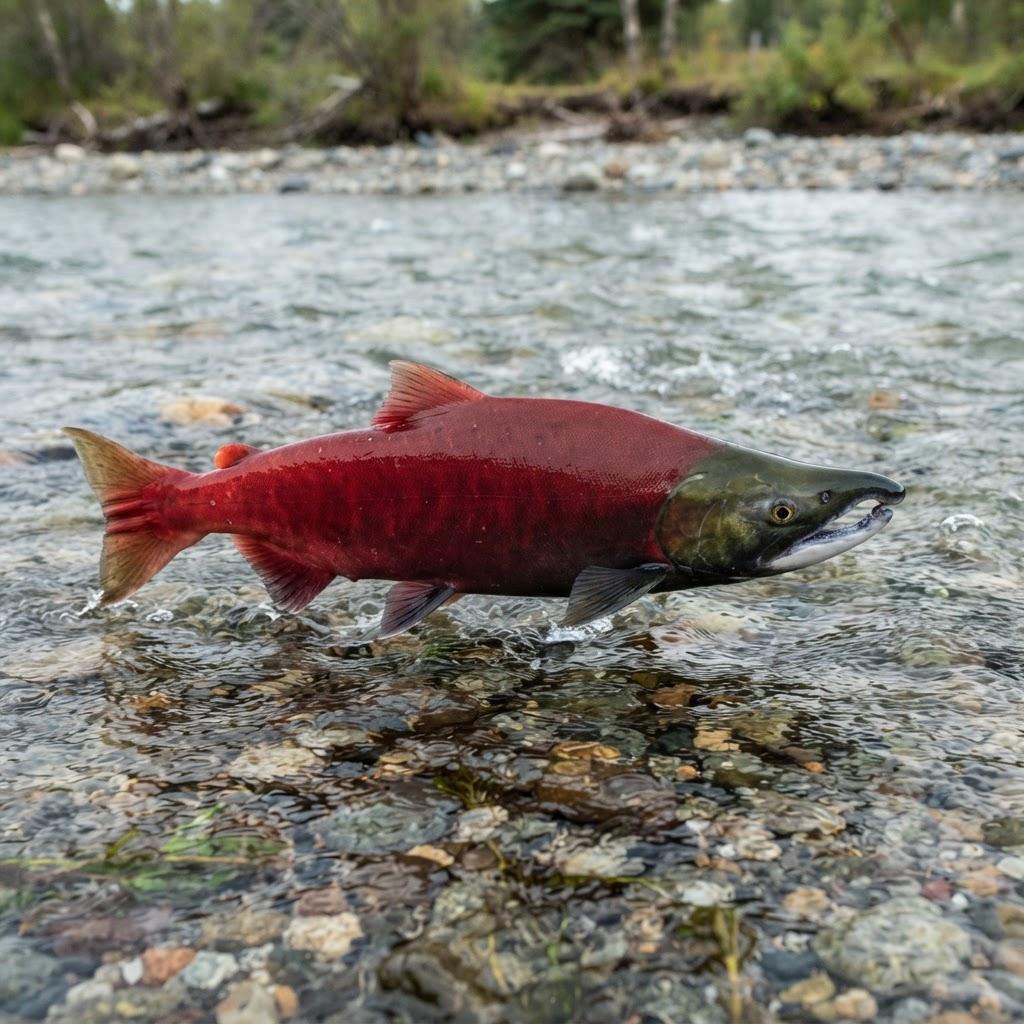
Oncorhynchus nerka
Salmon (Sockeye)
Meet the Sockeye Salmon, the world's most dramatic overachiever who literally turns bright red and grows a hunchback just to head home for the holidays. It is a fish that treats a 1,000-mile upstream swim like a casual Saturday morning jog.
Meet the Fish
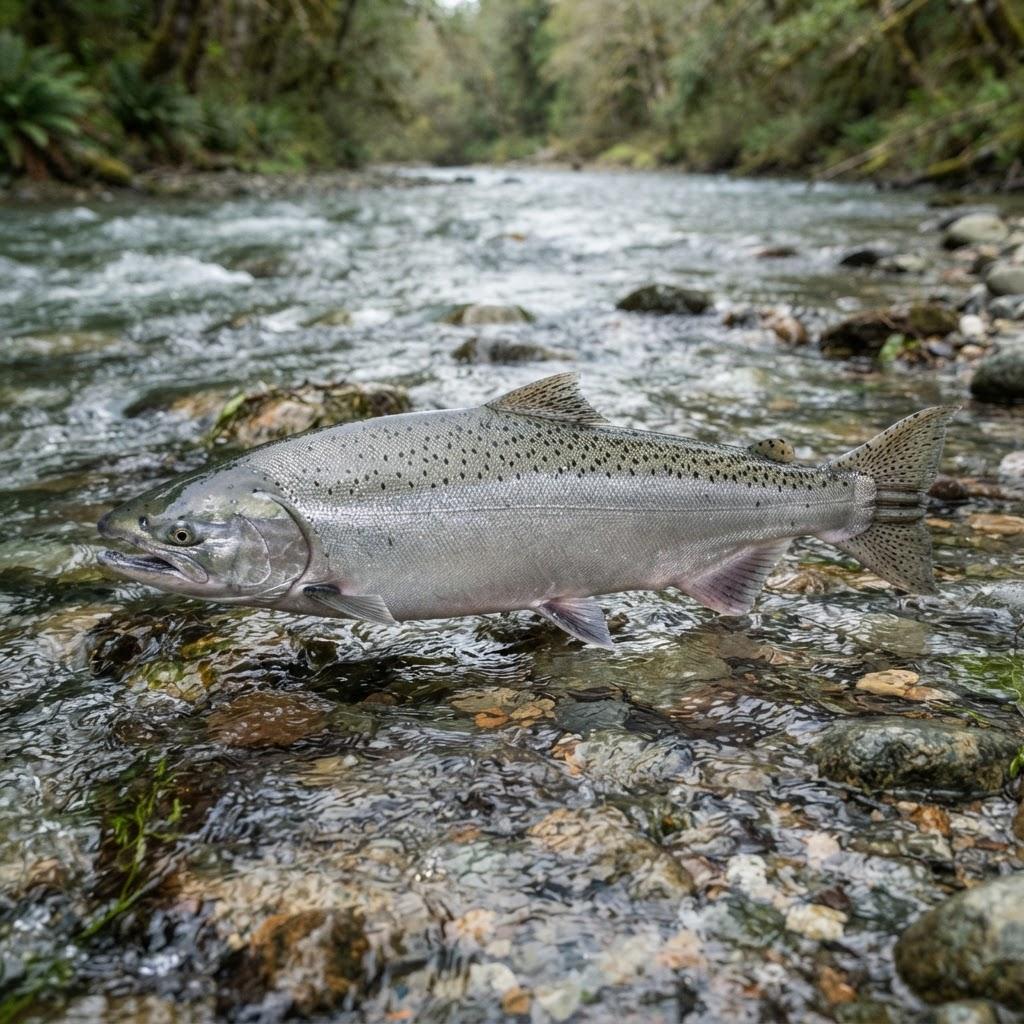
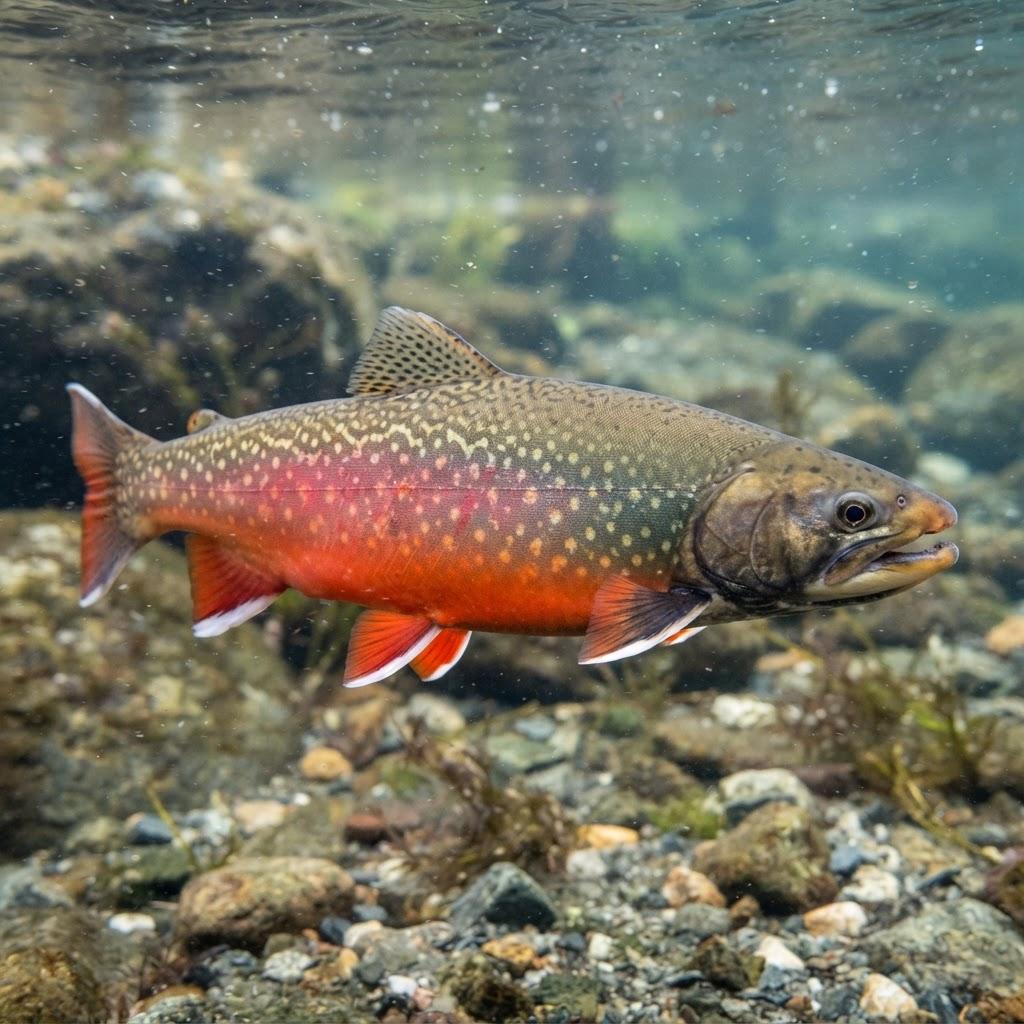
Imagine you are planning a trip home for the holidays, but instead of buying a plane ticket, you decide to walk a thousand miles against the current of a river while wearing a suit that makes you look like a neon-red radioactive hotdog. That is the vibe of the Sockeye Salmon. Most fish are content to just drift through the ocean, minding their own business and eating plankton, but the Sockeye has main-character energy. In the ocean, they look like perfectly normal, silver-scaled athletes. But once they hit the freshwater rivers to spawn, they undergo a transformation so drastic that if a human did it, we would call it a midlife crisis of epic proportions. They trade their sleek silver for a brilliant, eye-searing crimson, and the males sprout a hooked jaw and a bizarre, humped back that makes them look like a grumpy cartoon character. They are the marathon runners of the sea, the stubborn commuters who refuse to take the highway, and honestly, they are the most interesting neighbors you could never actually have.
Weird Biological Superpowers Explained Simply
How do these fish find the exact same stream where they were born, even after wandering thousands of miles in the vast, featureless Pacific? It sounds like magic, but it is actually a high-tech internal GPS that puts your smartphone to shame. Sockeye Salmon use magnetic field navigation, essentially sensing the Earth's magnetic north pole like a built-in compass. But that is just the beginning. As they get closer to home, they switch to 'olfactory imprinting,' which is a fancy way of saying they memorize the smell of their home stream like you memorize the smell of your grandma's baking. Each river has a unique chemical signature, a cocktail of minerals and plant decay that the fish 'tastes' in the water. They are basically sniffing their way home across a continent. It is like being dropped into an airport in a foreign country and finding your front door just by following the scent of your specific laundry detergent from three miles away.
Absurd Self-Defense Mechanisms
When you are a Sockeye Salmon, the world is essentially a giant buffet, and you are the main course for everyone from grizzly bears to bald eagles. Their primary defense mechanism isn't slime or spikes, but pure, unadulterated speed and evasive maneuvers. When a predator lunges, the Sockeye executes a high-speed 'flight' response that would make a drag racer jealous. They also utilize 'countershading,' which is a biological camouflage trick. Their backs are dark to blend in with the deep ocean floor when viewed from above, and their bellies are light to match the bright surface water when viewed from below by a hungry shark. It is basically the fish version of a cloaking device. When they enter the rivers, they stop playing defense and start playing offense, using their sheer numbers to overwhelm predators. It is a strategy called 'predator satiation,' where they all show up at once so the local bears simply can't eat them all, leaving plenty to carry on the family line.
Fish Drama and Gossip
The riverbed is basically a reality TV show set where the stakes are life or death. The Sockeye mating season is characterized by intense territorial posturing that would make a professional wrestler blush. The males, now decked out in their aggressive red-and-green 'spawning colors,' spend their days head-butting each other and flaring their gills to prove they are the toughest guy in the pool. If a rival male gets too close to their chosen female, the resident male will chase him off with a display of pure, unadulterated rage. The females are just as intense, guarding their nesting sites with a ferocity that keeps even the most persistent suitors in line. It is high-octane drama played out in inches of water, complete with dramatic charges, posturing, and the occasional 'sneaker' male—a smaller guy who tries to slide in and fertilize eggs while the big, macho males are busy fighting each other. It is truly the 'Real Housewives of the River' but with more scales.
The "Wait, That's Real?!" Deep-Sea Oddities
While Sockeye are surface-dwellers, they spend a portion of their lives migrating through the depths of the North Pacific, and they occasionally encounter the weirdest creatures on the planet. Think of the deep-sea cousins they pass by, like the barreleye fish, which has a transparent head so you can see its brain and eyes literally staring through its own forehead. Or the anglerfish, which carries a glowing fishing pole on its head to lure prey in the absolute darkness. Compared to these deep-sea aliens, the Sockeye seems like a normal, productive member of society. But the deep sea is a place where light is a luxury and pressure is a weight that would crush a submarine. While our Sockeye friends are out there cruising the upper layers, these deep-sea critters have evolved to live in a world of perpetual midnight. They are the weird neighbors who never turn on their lights, but in their case, it is because they have evolved to make their own neon shows instead.
Myth Busting
Let’s clear up some nonsense about these fish. People often think that all salmon die instantly after one mating season, but while that is true for the Sockeye, it is not a universal rule for all fish. Another common myth is that fish are mindless automatons. Research into the Sockeye reveals they are incredibly adept at learning river systems and remembering landmarks, which is far from 'mindless.' Some folks also believe that salmon can climb waterfalls just by pure luck, but in reality, they are physics-defying jumpers. They can clear vertical obstacles several times their body height using sheer muscle power and an explosive burst of energy. They aren't just flopping around; they are calculating the trajectory, timing the current, and launching themselves with enough force to clear massive logs and rapids. It is not a miracle; it is just really, really hard work, combined with the kind of athletic talent that would win gold at the Olympic high jump.
Humorous Historical Tales or Folklore
Indigenous cultures throughout the Pacific Northwest have revered the Sockeye for millennia, viewing them as a sacred gift from the sea. There is a beautiful legend about the 'Salmon People,' who were thought to live in a great house under the ocean and travel to the rivers in human form during the salmon runs to feed their terrestrial brothers and sisters. It was a cultural understanding that promoted respect and sustainability; if you treated the fish with honor, they would return every year. Contrast this with the later European settlers who, upon seeing the rivers literally clogged with thrashing, crimson fish, often couldn't believe their eyes. Early explorers' journals describe the salmon runs as so thick that you could 'walk across the backs of the fish.' While that might be a slight exaggeration, it speaks to the sheer, mind-boggling scale of these migrations, which have been a central part of human survival and storytelling in the region since the dawn of time.
Underwater Love Stories and Bizarre Romances
The Sockeye romance is less of a candlelit dinner and more of a high-pressure corporate merger. There is no time for long-term dating or 'getting to know you' phases. Once they reach the spawning grounds, the clock is ticking. The male doesn't have a flashy song to sing, but he does have that brilliant, bright red color and a massive jaw that says, 'I am the healthiest, most genetically superior fish in the river.' The female is looking for a partner who can help her defend her nest, not one who is going to flake out early. Once she selects a spot and begins digging, the pair forms a temporary bond. He stays close, chasing off intruders, while she meticulously cleans the gravel for their future offspring. It is a whirlwind romance that lasts exactly as long as it takes to deposit and fertilize the eggs, ending in a mutual exhaustion that is both tragic and deeply committed.
Underwater Architecture and DIY Nesting
You might think a fish just lays eggs in the mud and calls it a day, but the Sockeye female is a master of civil engineering. She builds a 'redd,' which is a fancy word for a gravel nest. She uses her massive tail to beat against the river bottom, creating a depression that helps water flow over her eggs, keeping them oxygenated. This is not a sloppy job; it is precise work. She has to clear away the silt and move large rocks, using the force of her own body as a bulldozer. She tests the gravel to make sure it is just the right size—too big, and the eggs get crushed; too small, and they wash away. It is an architectural project designed for maximum survival. Once the eggs are safely tucked into the gravel, she covers them with more rocks, creating a fortress that protects her precious cargo from hungry trout and insects that would otherwise make a snack out of them.
The Chaos of Raising Tiny Swimmers
Once the eggs are laid and fertilized, the parents have officially hit their expiration date. They do not hang around for the hatching party. When the tiny, larval salmon—called 'alevins'—hatch, they are basically tiny heads attached to a giant yolk sack. They stay under the gravel for weeks, feeding on their own personal lunchbox until they are strong enough to emerge as 'fry.' From the moment they poke their heads out of the gravel, it is an absolute free-for-all. They are immediately hunted by everything in the river that has a mouth. The survival rate of a salmon fry is shockingly low, which is exactly why the females lay thousands of eggs at a time. It is a numbers game. Only a handful of these tiny swimmers will make it back to the ocean, and fewer still will survive the high-seas gauntlet to one day return as adults to start the whole wild, chaotic cycle over again.
How to Spot One & How It Is Doing
If you want to catch a glimpse of these legendary fish, look for the 'Big Red Runs' in the fall, particularly in places like the Adams River in BC or the Kenai River in Alaska. If you see the water literally turning red, you have found them. They are iconic, beautiful, and—thanks to some serious conservation efforts—mostly doing fine, though they face challenges from climate change and habitat loss. The good news? You can help. Protecting their home rivers is the single most important thing, so support local conservation groups and be mindful of your water usage. Don't look at a Sockeye and see just a fish; see a survivor, a world traveler, and an architect. When you stand on a riverbank and see them struggling against the current, remember they are the ones who make our wild places wild. It is a privilege to witness their journey, so be a good guest and keep their rivers clean.