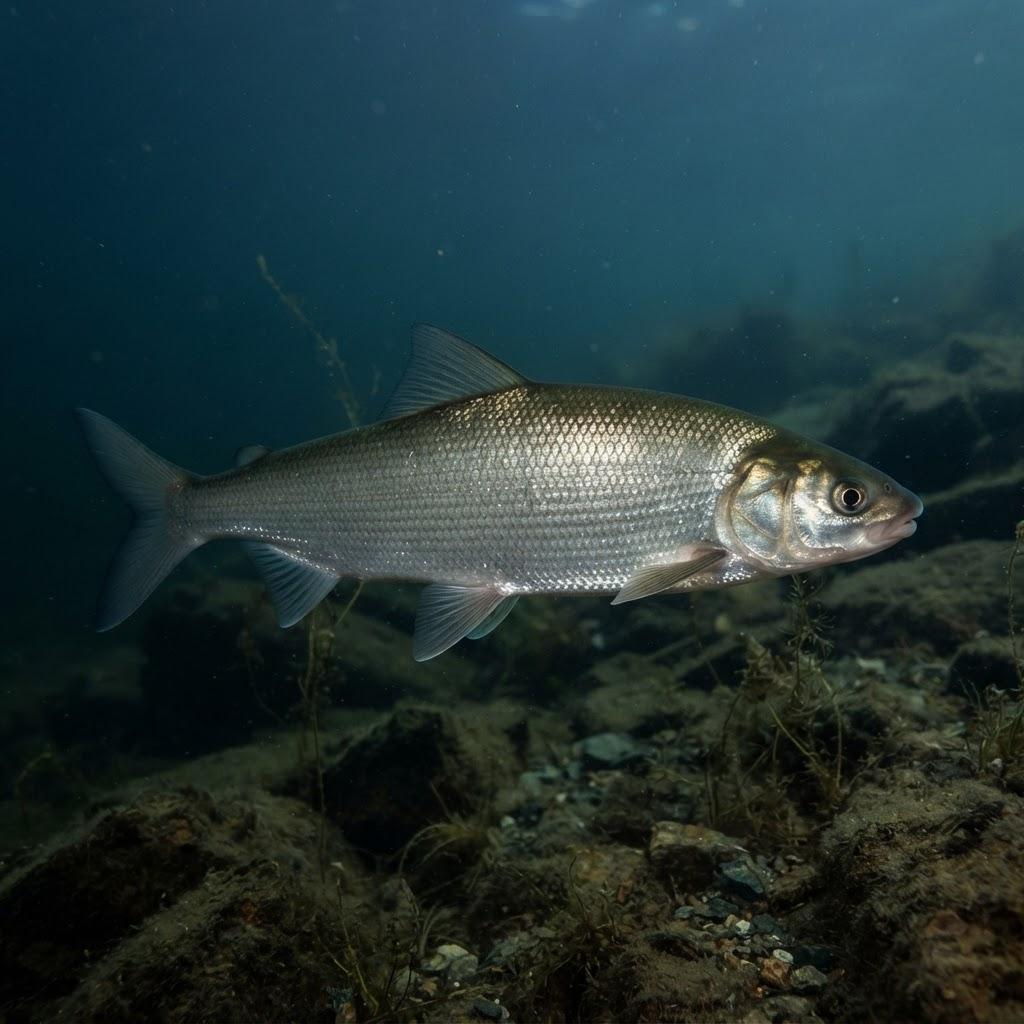
Coregonus clupeaformis
Lake Whitefish
Meet the Lake Whitefish, the silver-scaled celebrity of the Great Lakes that loves cold water and snacks like a professional connoisseur. This isn't just another fish in the pond; it is the ultimate underwater foodie with a penchant for sophisticated snacking.
Meet the Fish
Picture the Lake Whitefish as the quiet, sophisticated wallflower at a high school dance. While the flashier species like Northern Pike are busy acting like the varsity football captains—all teeth and aggression—the Whitefish is sitting in the corner, looking elegantly streamlined and effortlessly cool in its metallic-silver suit. This fish is the James Bond of the freshwater world: sleek, composed, and undeniably stylish. It doesn't need to bark or jump out of the water to prove its worth. Its vibe is pure, unadulterated cold-water chic. Found in the deepest, frostiest nooks of the Great Lakes, this fish prefers a lifestyle that would make a penguin shudder. With a slightly sub-terminal mouth—that is fancy talk for 'my mouth is tucked under my nose'—it looks perpetually like it is sniffing out the finest dinner reservation in town. It is not here for your drama, it is here for the benthic buffet, and it looks good doing it.
Weird Biological Superpowers Explained Simply
If you ever wondered how a fish navigates the crushing darkness of a deep, frozen lake without crashing into every rock, look no further than the lateral line. Think of this as the Whitefish’s built-in, six-sense radar system. It is basically a row of specialized cells that run down its sides like a line of tiny, highly sensitive microphones. These cells can detect the tiniest change in water pressure, allowing the Whitefish to 'feel' the movement of a tiny crustacean from several feet away, even in total pitch blackness. It is essentially a submarine sonar, but powered by biology instead of expensive batteries. Add to this its ability to switch its metabolism into low-gear mode during the icy winter months, and you have a creature that is practically a professional survivalist. It is like having a car that can shift into super-efficient electric mode just by deciding it is tired of gas, allowing it to thrive when everything else is hibernating.
Absurd Self-Defense Mechanisms
When you are a Whitefish, you aren't exactly built like a tank. You don't have spikes, you don't have electric zappers, and you certainly don't spit ink like a theatrical octopus. So, how does the Whitefish handle a predator like a hungry trout or an ambitious human angler? It uses the art of the vanishing act. The Whitefish is a master of countershading, an evolutionary camouflage trick where its back is dark enough to blend into the shadows of the lake floor, while its belly is light enough to fade into the bright surface water if viewed from below. If things get hairy, it doesn't fight; it simply turns on a dime with its powerful, forked tail and accelerates into the abyss faster than you can say 'gone.' It is the aquatic version of throwing a smoke bomb and slipping away through a back alley, leaving the predator wondering if they were actually hungry or just hallucinating a delicious lunch.
Fish Drama and Gossip
The social life of a Lake Whitefish is surprisingly similar to a low-key office breakroom. They are schooling fish, which means they spend most of their time hanging out in groups. It is not necessarily a 'best friends forever' situation, but rather a mutual protection pact. When you spend your life in a school, you have to follow the herd. If one fish darts left, everyone darts left. It is essentially synchronized swimming without the fancy hats. However, when mating season arrives, the drama ramps up. Males start vying for position, not with loud displays, but with persistent, subtle jostling. It is the fish equivalent of a bunch of guys standing around a water cooler trying to look the most 'available' without actually talking to anyone. It is a quiet, competitive dance where the only thing at stake is who gets to impress the most desirable partners, all conducted with the stoic silence of a library study group.
The "Wait, That's Real?!" Deep-Sea Oddities
While the Lake Whitefish spends its life in the freshwater 'deep zones' rather than the crushing depths of the midnight ocean, it shares a surprising amount of DNA with the weirdos of the abyss. Think of the Whitefish as the freshwater cousin of the deep-sea salmonids. Just like the barreleye fish, which evolved a transparent head to look up at prey, the Whitefish has evolved specialized eye structures to deal with low-light environments. While it doesn't sport the neon, blinking light-show organs (photophores) that deep-sea dwellers use to signal for dates, the Whitefish occupies that twilight region of the lake where sunlight is a rare commodity. It understands the cold, dark, and lonely lifestyle just as well as any creature hanging out in the Marianas Trench. It is the professional 'cave dweller' of the Great Lakes, proving that you don't need a glow-in-the-dark stomach to be the undisputed master of the dark.
Myth Busting
There is a persistent rumor that Whitefish are somehow 'dumb' because they are easily caught by commercial fishing gear. This is a massive insult to their intelligence. The reality is that Whitefish are opportunistic feeders who just happen to love a good, easy meal, which is a trait shared by most sentient creatures—ever seen a human at a buffet? Another myth is that these fish are strictly bottom-feeders that live in mud. Not true! While they love the snacks found on the bottom, they are actually quite active swimmers that move up and down in the water column based on temperature and oxygen levels. They aren't wallowing in the muck; they are essentially on a vertical treadmill, constantly adjusting their 'altitude' to find the perfect 'room temperature' water. They aren't lazy; they are just masters of environmental optimization. They know exactly where the best 'living room' is in the lake, and they go there.
Humorous Historical Tales or Folklore
The Lake Whitefish has a long and storied history, particularly among the indigenous peoples of the Great Lakes region, who knew it as 'the fish that sustains life.' There are beautiful legends about the Whitefish being a gift from the Great Spirit to ensure that people had enough to eat during the brutal, unforgiving winters. Unlike some fish that are caught in tall tales of giant sea serpents or sirens, the Whitefish was always the 'reliable hero' of the story. Historical records from fur traders note that they could eat Whitefish every single day for months without ever getting bored, which is a massive testament to the fish's culinary profile. It wasn't the monster under the bed; it was the breakfast, lunch, and dinner that kept everyone warm and fed. It is the legendary 'comfort food' of the freshwater world, revered not for its ability to bite your arm off, but for its ability to keep a civilization thriving.
Underwater Love Stories and Bizarre Romances
When it comes to romance, the Whitefish does not believe in grandiose gestures or flashy courtship dances. They are the minimalists of love. As autumn approaches and the water temperature drops, these fish engage in a ritual that involves a lot of synchronized swimming and gentle nudging. It is basically the fish equivalent of a slow-motion dance at a senior prom. They congregate in shallower rocky areas, often under the cover of darkness. There is no elaborate jewelry or singing involved, just a massive, chaotic party where eggs and milt (that is fish-speak for the male contribution to the baby-making process) are released into the water column. It is a 'hope for the best' strategy that turns the lake bottom into a literal nursery overnight. While it lacks the dramatic flair of a peacock's feather display, it is highly effective and gets the job done efficiently.
Underwater Architecture and DIY Nesting
If you are looking for an intricate, woven nest like a bird, you are going to be disappointed by the Whitefish. They are not the interior decorators of the fish world; they are the 'free-range' parents. They don't build houses, condos, or even little stone piles. Instead, they look for rocky, clean substrates—usually shoals or reefs with good water flow. The idea is that the eggs will settle into the crevices between the rocks, which acts like a protective fortress against predators that might want a protein-packed snack. It is a brilliant, low-maintenance strategy. By choosing the right 'real estate' with plenty of crannies, the Whitefish effectively offloads the work of nursery-building to the geography of the lake itself. It is a 'set it and forget it' method that has worked for thousands of years, proving that sometimes the best home is the one that was already there.
The Chaos of Raising Tiny Swimmers
Parental leave is not a concept for the Lake Whitefish. Once those eggs are scattered among the rocks, the parents effectively vanish like a college student who finished their final exam and left for summer break. They do not guard the eggs, they do not read them bedtime stories, and they certainly do not bring them school lunches. The tiny fry that hatch are on their own from minute one. They survive on a tiny yolk sac attached to their bellies for the first few days, which acts like a portable, pre-packed lunch box. After that, they are thrust into the harsh reality of being the smallest thing in a very big, hungry lake. It is a numbers game. By laying thousands of eggs, they ensure that even if most of them become fishy snacks, a few survivors will grow up to be the next generation of silver-scaled stars.
How to Spot One & How It Is Doing
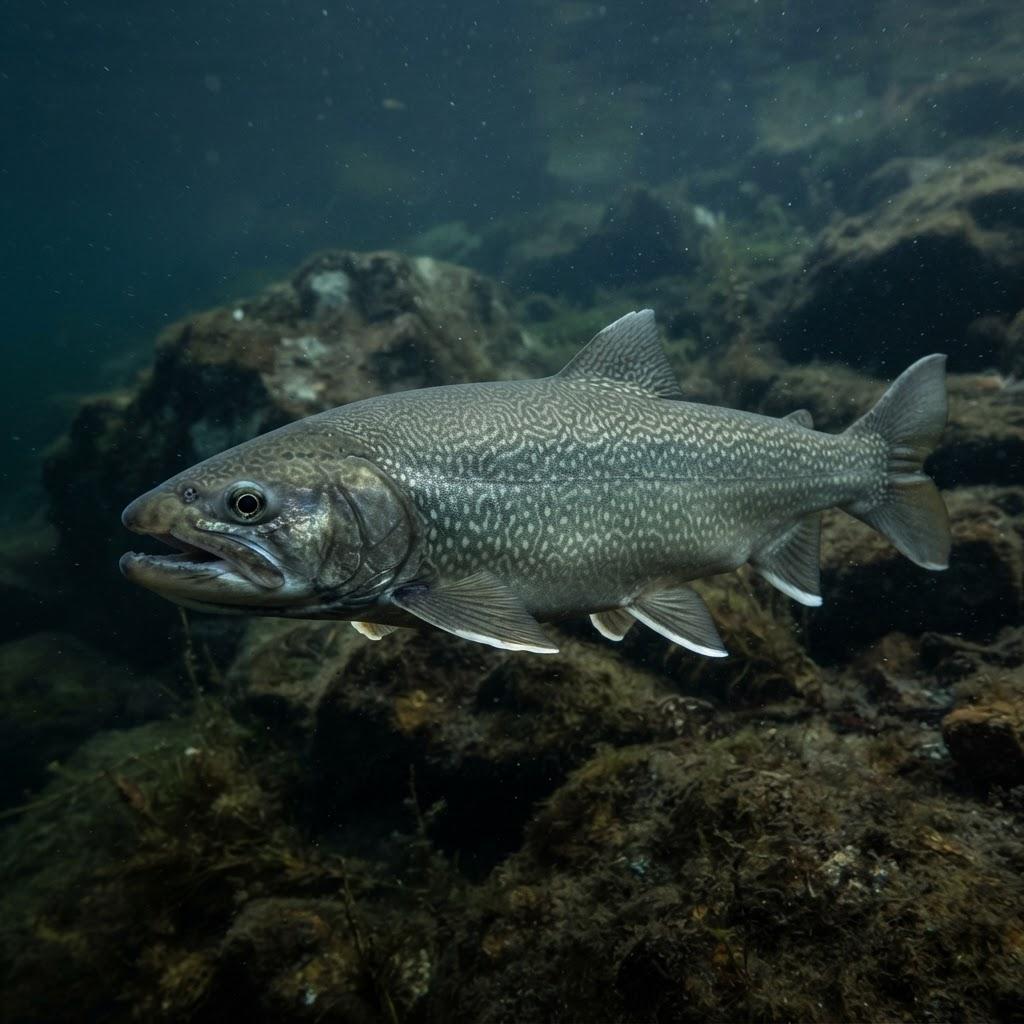
If you want to spot a Whitefish, you need to head to the chilly, deep waters of the Great Lakes. You are looking for a fish with a small head, a silver body that shimmers like a polished coin, and a dorsal fin that stands tall. If you are a fisherman, you will know them by their delicate mouth and their tendency to be found in deeper, cooler water than the average bass. The good news is that the Lake Whitefish is doing quite well compared to many other species. They are currently listed as 'Least Concern' in many areas, though they do face challenges from invasive species like zebra mussels that eat their food sources and changes in climate. You can help by keeping local waters clean, supporting sustainable fishing practices, and not moving bait fish between different lakes, which helps prevent the spread of diseases. With a little care, these silver-scaled legends will continue to thrive in the deepest, coolest corners of our waters for generations to come.