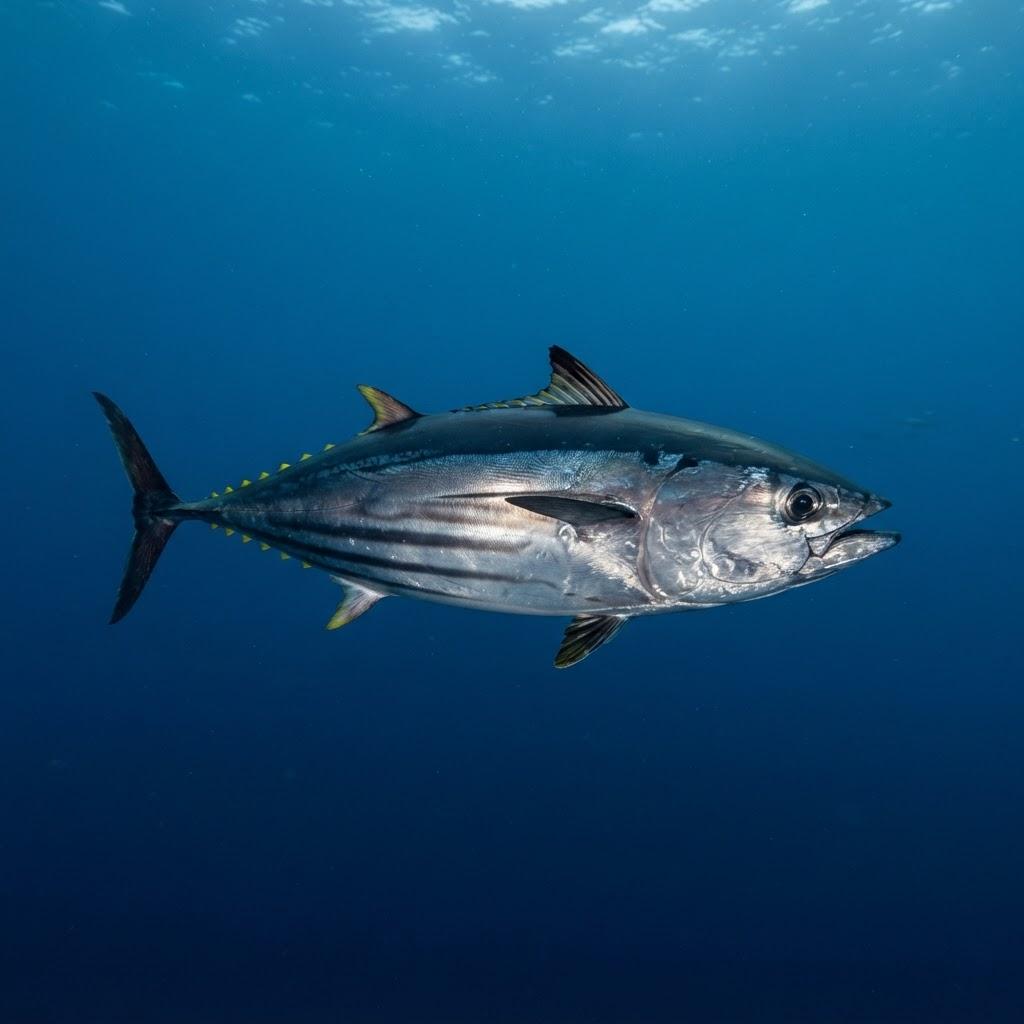
Katsuwonus pelamis
Skipjack Tuna
Meet the Skipjack Tuna, the ocean's ultimate endurance athlete and a speed-demon that never, ever stops moving. With a metabolism faster than a race car, this glittery glitter-bomb of the sea is the life of every pelagic party.
Meet the Fish
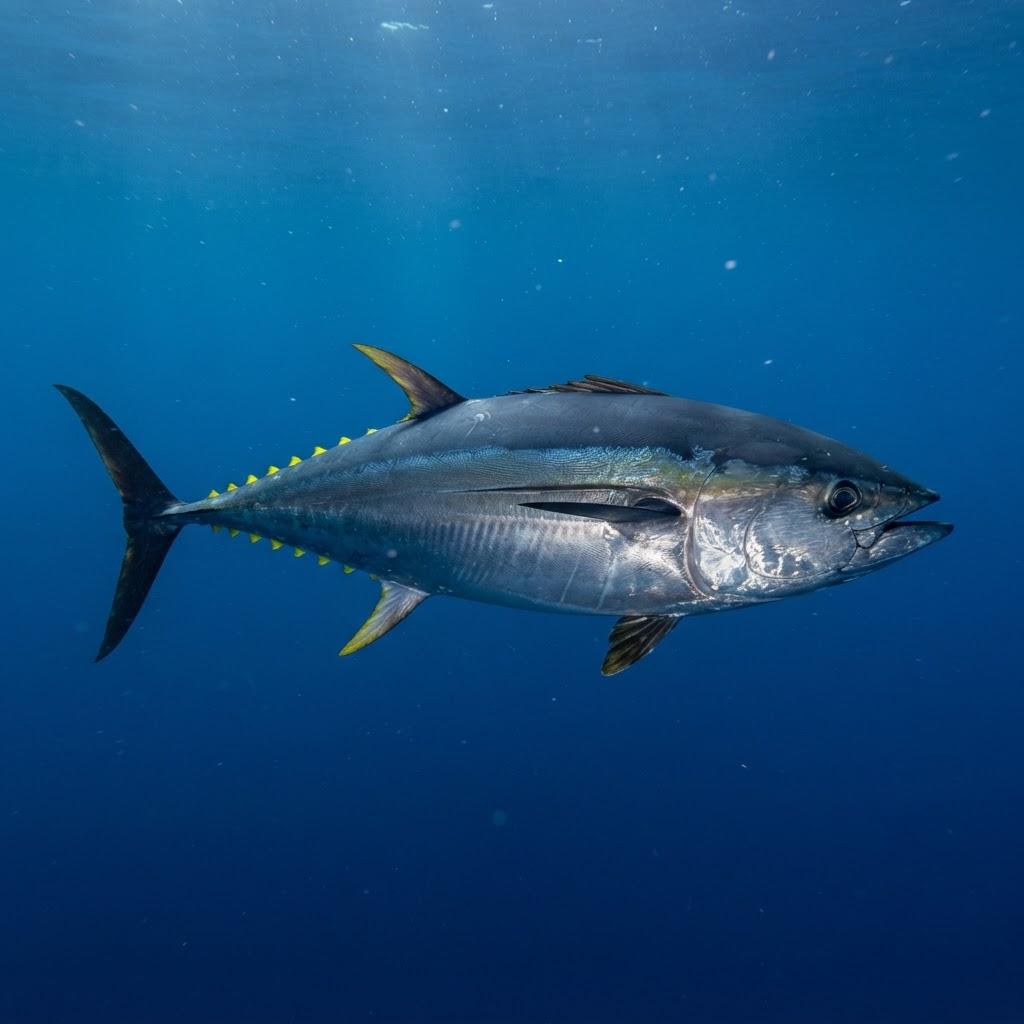
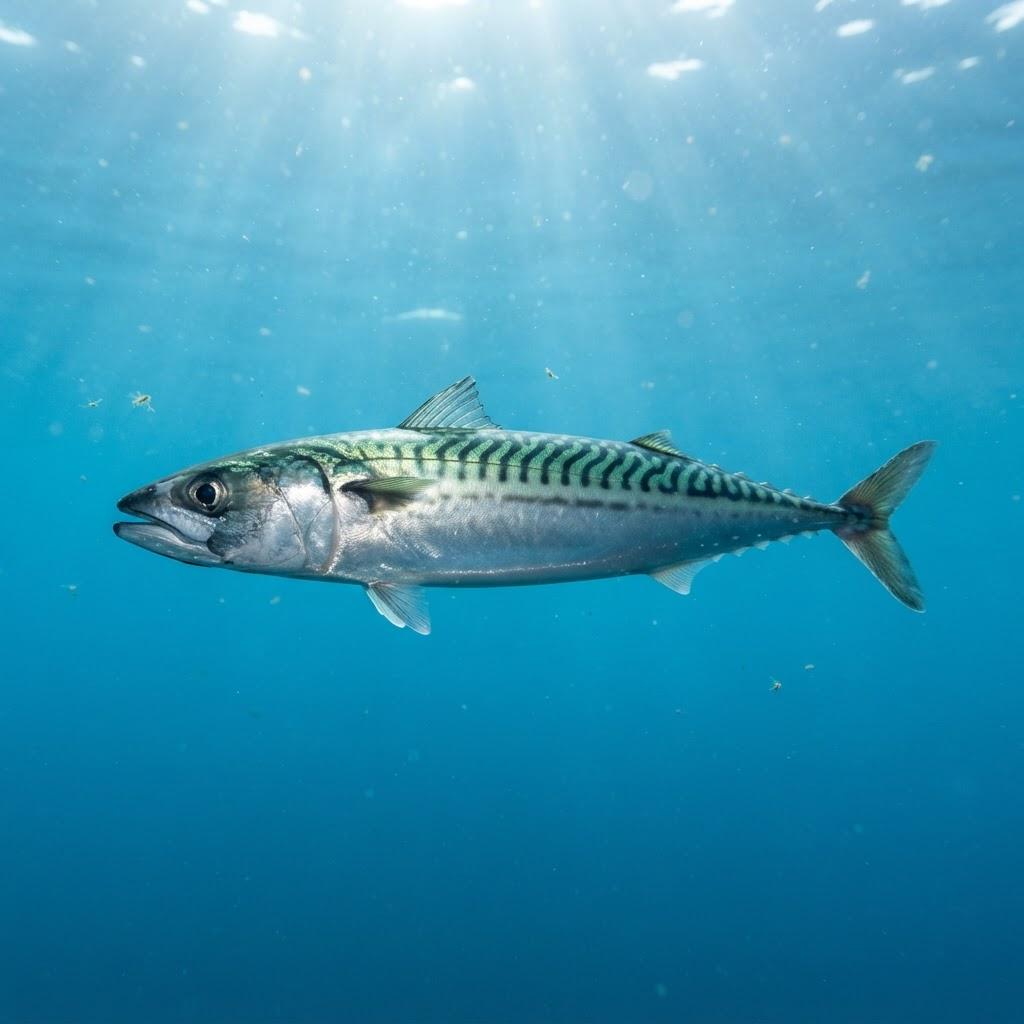
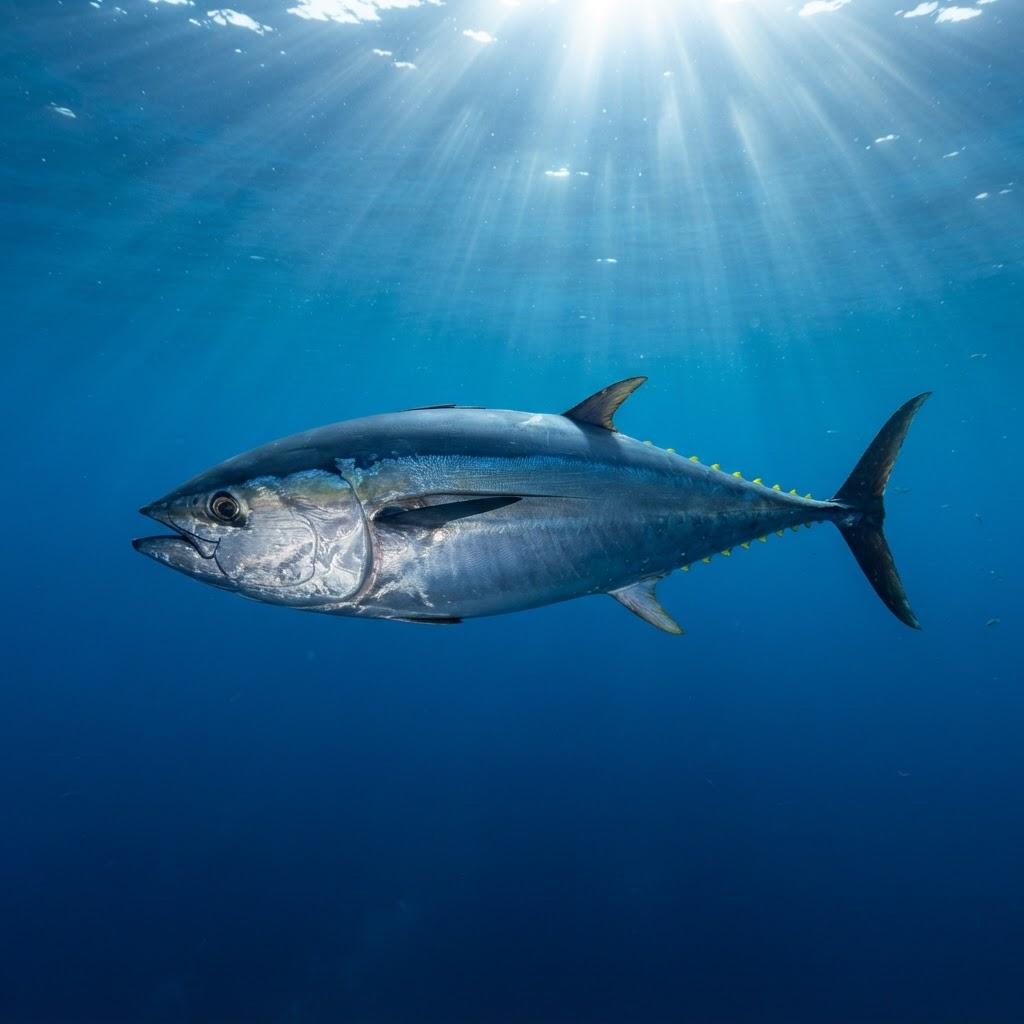
Picture an Olympic sprinter who has just downed six double-espressos and is currently running a marathon through a swimming pool. That, my friends, is the Skipjack Tuna. This is not your average, slow-drifting aquarium resident; the Skipjack is a sleek, silver-striped rocket ship of the open ocean. Imagine a torpedo covered in pearlescent armor that glitters like a disco ball under the midday sun. They are the quintessential overachievers of the sea, constantly in motion, darting through the waves with a level of energy that would make a toddler on a sugar high look like they are taking a nap. They are essentially the caffeinated middle managers of the pelagic world—always on the move, always scanning for snacks, and never, ever caught just lounging on the couch. Their vibe is strictly business meets extreme sports, and they are the undisputed champions of being everywhere at once.
Weird Biological Superpowers Explained Simply
How do you stay warm when you are basically a living icicle swimming through the deep blue? Well, the Skipjack Tuna has a biological trick that would make a mad scientist jealous: regional endothermy. In plain English, while most fish are 'cold-blooded' and take the temperature of their surroundings, the Skipjack has a special network of tiny blood vessels that act like a car radiator in reverse. It keeps their muscles, eyes, and brain warmer than the freezing ocean water around them. This is the biological equivalent of wearing a high-tech heated wetsuit built directly into your flesh. Because their engine is constantly running hot, they can power through the water with ridiculous speed and precision. It is like having a turbo-boost button that never runs out of fuel, allowing them to chase down prey that would easily outswim a chilly, sluggish cousin who is just trying to conserve energy.
Absurd Self-Defense Mechanisms
When you are a Skipjack, you do not have the luxury of hiding in a cave or inflating into a spiky ball like some nervous pufferfish. Your defense strategy is purely 'run for your life.' These fish have mastered the art of high-speed evasion, utilizing their streamlined bodies to execute sharp, physics-defying turns that leave predators like sharks and billfish wondering if they just saw a ghost. They are basically the getaway drivers of the ocean, using their sheer velocity to zip into massive schools, creating a dizzying, shimmering blur of silver that confuses the heck out of any hungry hunter. It is a mass-casualty confusion tactic; when you have ten thousand friends all darting in different directions at thirty miles per hour, the odds of a predator catching you are slim. They do not need armor or poison when they can simply blink and be three miles away before the attacker finishes a blink.
Fish Drama and Gossip
If the ocean were a high school, the Skipjack Tuna would be the varsity team that never leaves the gym. Their social structure is incredibly rigid and defined by the constant, unspoken pressure of 'keep up or get left behind.' They live in massive schools, which are essentially giant, frenetic popularity contests where every fish is constantly jockeying for a position near the best food source. There is no time for romantic ballads or slow-motion stares here; it is pure, high-stakes competition. If you are slow, you are not eating, and if you are not eating, you are definitely the gossip of the day—or rather, the main course. The social hierarchy is determined by health, speed, and the ability to maintain the pack's relentless pace. It is a fast-paced soap opera where the only plot points are finding lunch and avoiding being eaten by a bigger fish, all while moving at top gear.
The "Wait, That's Real?!" Deep-Sea Oddities
While our Skipjack friend loves the bright, sun-drenched surface, it is fascinating to contrast them with the weirdos lurking in the deep. Down in the twilight zone, creatures are busy playing with neon lights and translucent skin, whereas the Skipjack is firmly grounded in the land of high-speed pursuit. If the deep-sea fish are the goth, mysterious kids in the back of the class, the Skipjack is the loud, glittery kid doing cartwheels on the cafeteria tables. Deep-sea fish rely on bioluminescence to trick prey or find mates in the pitch black, using light like a handheld flashlight in a cave. The Skipjack, conversely, uses its incredible vision to navigate the bright surface waters, where light is abundant. It is the difference between a high-tech submarine using sonar and a fighter jet pilot looking out the cockpit—both are impressive, but they operate in completely different versions of reality.
Myth Busting
Let’s clear the deck on some nonsense. There is a persistent myth that tuna are mindless drones, barely smarter than a piece of driftwood. Wrong. The Skipjack is an incredibly intelligent navigator with a built-in internal compass that would put a GPS to shame. People often assume that because they move so much, they must be simple, but their ability to track changing water temperatures and find massive, microscopic patches of food across thousands of miles of ocean is nothing short of brilliant. Another myth is that they can sleep while swimming; while they do move in a sort of autopilot, they are constantly monitoring their surroundings for threats. They are not mindless, nor are they boring. They are highly attuned survivalists who have cracked the code of open-ocean living, and to suggest they are simple-minded is to ignore the massive neural processing power required to pull off their daily athletic feats.
Humorous Historical Tales or Folklore
Humans have had a long, complicated, and often hungry relationship with the Skipjack. For centuries, sailors viewed these fish not just as food, but as a sign of a vibrant, healthy ocean. Some ancient maritime folklore suggested that when a school of Skipjack chased a boat, it was actually a good omen for the crew, a 'moving escort' of silver blessings. Of course, in later years, the folklore turned into industry, leading to some rather bizarre historical claims about the infinite bounty of the sea. There were even rumors that if you followed the Skipjack closely enough, they would lead you to hidden islands or legendary treasure, which usually just led the poor sailors to a bigger school of fish and a lot of sunburn. The Skipjack remains a part of the cultural fabric of many island nations, appearing in art, songs, and tall tales of massive catches that got away by just a hair's breadth.
Underwater Love Stories and Bizarre Romances
When you are constantly on the move, you do not have time for elaborate candlelit dinners or long, romantic walks on the beach. For the Skipjack, romance is a high-speed, 'blink and you will miss it' affair. Mating happens on the fly, with massive swarms of fish gathering in warm, equatorial waters to release their eggs and sperm into the open ocean currents. It is the ultimate casual encounter—no commitment, no building a house, no raising the kids. They just release their reproductive cells into the water, hoping for the best, and then immediately return to their hectic, high-speed lifestyle. It is not exactly the stuff of fairy tales, but in the vast, dangerous expanse of the ocean, this 'spawn and dash' strategy is actually a genius move to ensure that at least a few of the thousands of eggs make it to adulthood without being gobbled up.
Underwater Architecture and DIY Nesting
If you are waiting for a Skipjack to build a cozy, Instagram-worthy nursery or a protective fortress out of kelp and pebbles, you are going to be waiting forever. These fish are the ultimate nomads. They do not build houses; they view the entire ocean as their living room, kitchen, and bedroom all at once. There is no 'nest' in the traditional sense, because they are constantly traveling in search of food. They do not have time to sit still and worry about interior design. Their strategy is to trust in the sheer numbers of the open water. By scattering their eggs across the currents, they avoid the risk of having all their 'nest' destroyed by a predator. It is a minimalist approach to architecture—why build a house when you can move into the next ocean basin for lunch?
The Chaos of Raising Tiny Swimmers
Parenting? What is that? The Skipjack Tuna is the embodiment of the 'sink or swim' philosophy, quite literally. Once the eggs are fertilized, the parents are gone like a teenager who just got their license. The tiny, transparent larvae are left to fend for themselves in a microscopic world that is essentially a giant soup of hungry predators. It is a total free-for-all. These tiny swimmers have to learn how to be fast, mean, and hungry from the very second they hatch. It is brutal, it is chaotic, and it is entirely efficient. There is no coddling, no teaching how to find food, and no protective school bus. They grow up in the rough-and-tumble of the open currents, becoming the next generation of silver rockets through sheer willpower and the luck of the draw. It is a tough life for a baby, but it creates some of the most resilient adults in the world.
How to Spot One & How It Is Doing
If you ever find yourself on a boat in the tropics, look for the 'boiling water' phenomenon. That is not the ocean getting hot; that is a school of Skipjack Tuna absolutely tearing into a school of smaller fish. It looks like the surface of the water is exploding, with silver streaks flying everywhere and birds diving from above to get in on the action. Conservation-wise, the news is actually pretty good! Skipjack are the most abundant and resilient tuna species out there, largely because they mature fast and reproduce like crazy. However, keeping them that way means supporting sustainable fishing practices. You can help by choosing products labeled as sustainably caught, which ensures that fisheries are not scooping up too many babies before they can grow into the high-speed athletes we know and love. By shopping smart, you keep the ocean’s race cars zipping through the waves for generations to come.