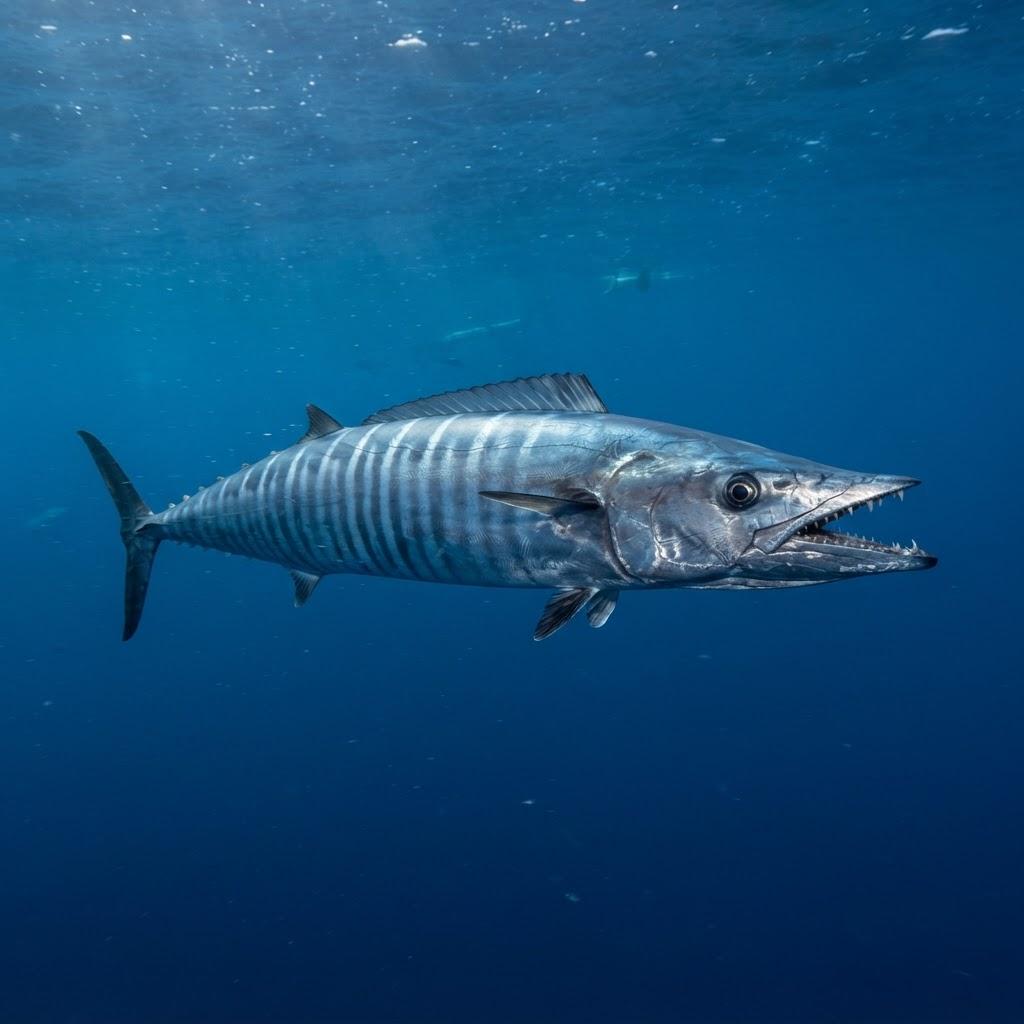
Acanthocybium solandri
Wahoo
Meet the Wahoo, the ocean's undisputed speed demon that treats the open sea like its personal drag-strip. With teeth like steak knives and a penchant for disappearing before you even realize you've hooked it, this is the silver-bullet of the blue water.
Meet the Fish
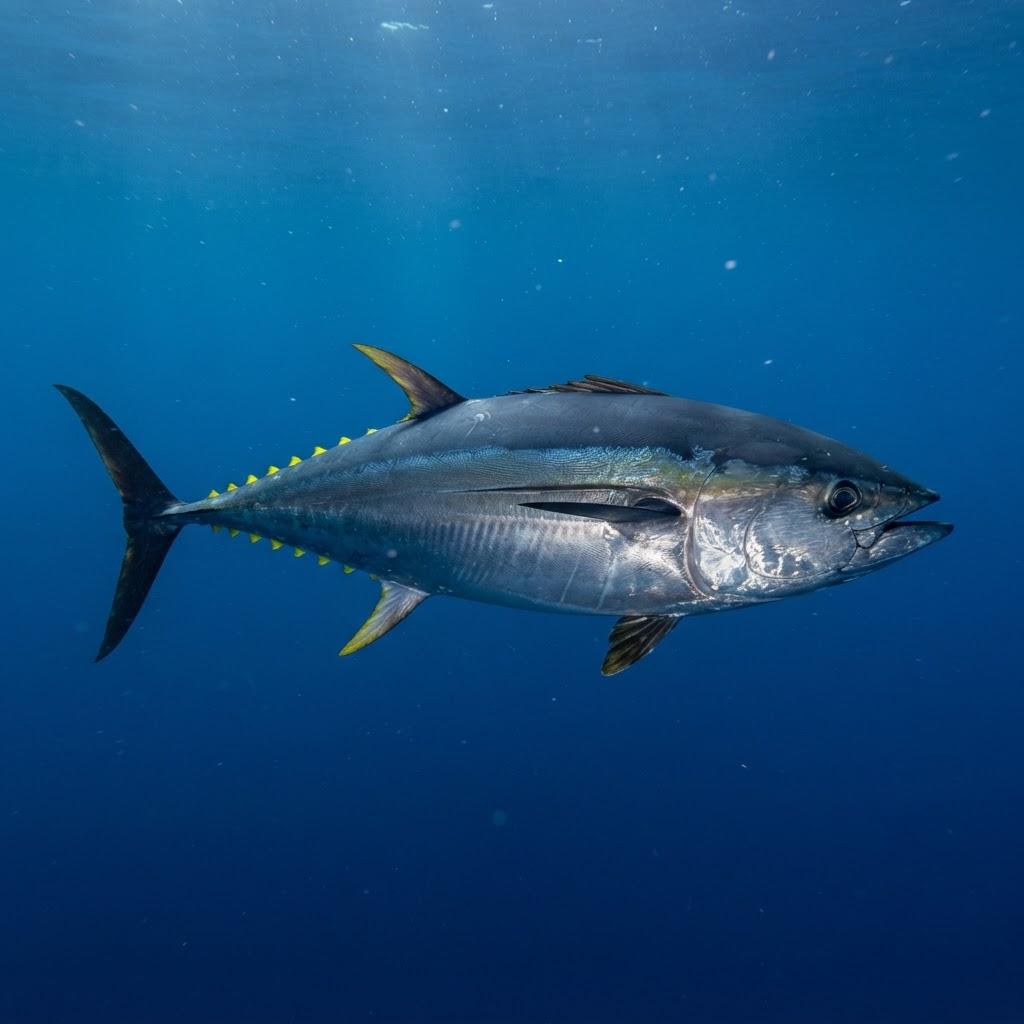
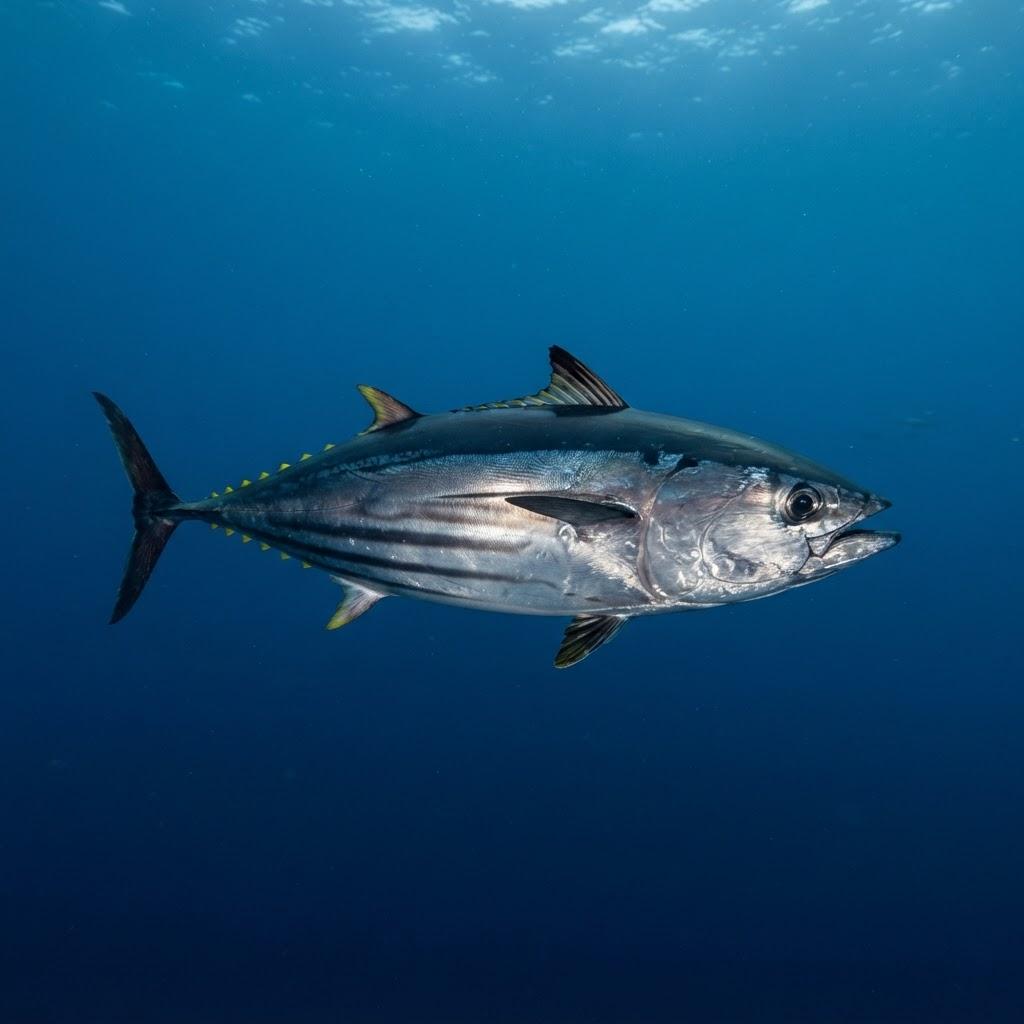
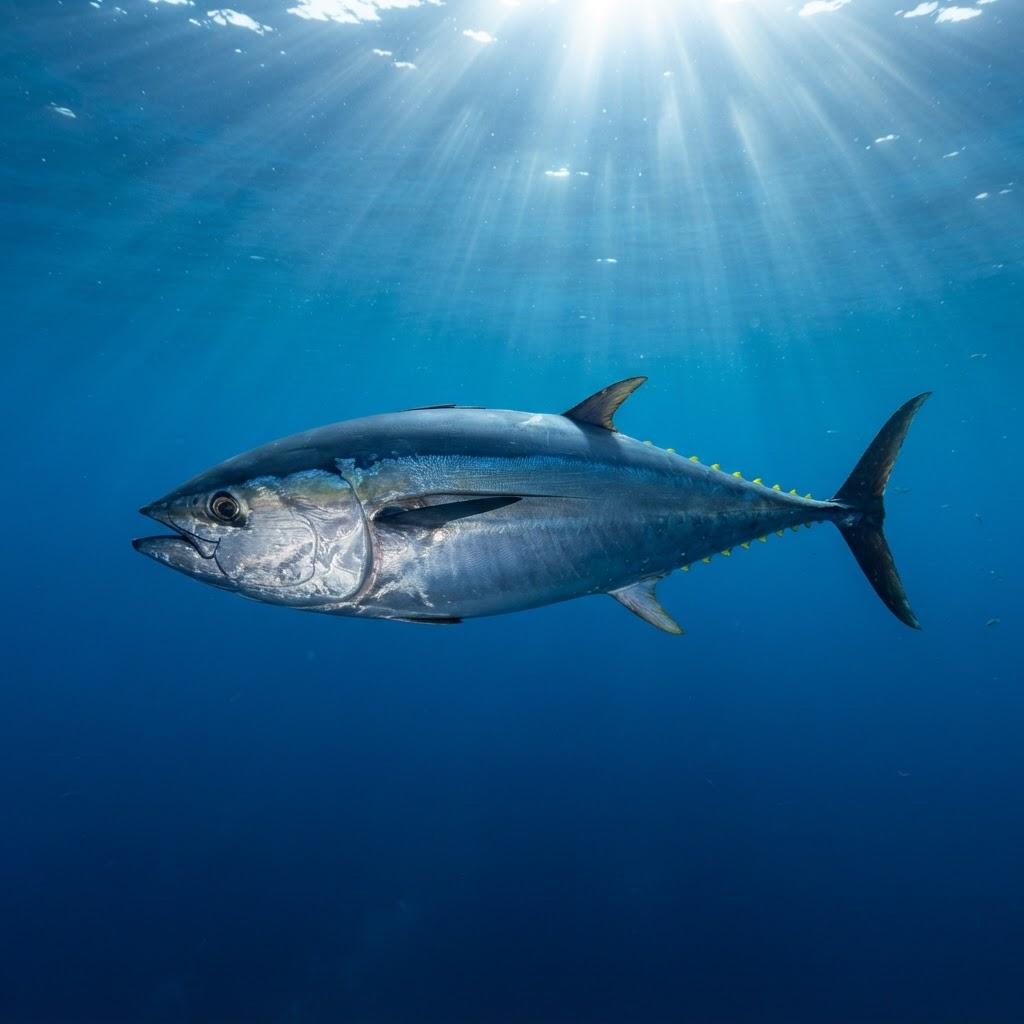
Imagine you are at a crowded party and suddenly someone walks in wearing a tailored tuxedo, moving with the kind of frantic, caffeinated energy that makes everyone else look like they are moving in slow motion. That is the Wahoo. It is the high-performance sports car of the sea, a sleek, metallic blue-silver bullet that does not just swim, it teleports. While other fish are content to loiter around coral reefs like bored teenagers at a mall, the Wahoo is living its life a quarter-mile at a time, perpetually late for an appointment that only it knows about. What makes the Wahoo weird isn't just its speed, but its attitude. It has a retractable snout that looks like it belongs on a Victorian villain, and its mouth is lined with triangular, serrated teeth that could make a shark nervous. It is basically the James Bond of the pelagic zone: sharp, lethal, and devastatingly fast.
Weird Biological Superpowers Explained Simply
If you ever wondered what would happen if you combined a torpedo with a razor blade, the Wahoo is your answer. Its primary superpower is its hydrodynamic design, which is basically fancy scientist-speak for being shaped like a wet noodle that just went through a wind tunnel. Wahoo possess a unique body structure where their skin is covered in tiny, microscopic scales that reduce drag to almost zero. It is like they are perpetually swimming through Teflon-coated water. But the real magic is in their gills. They have a massive surface area for processing oxygen, allowing them to fuel their muscles for extreme, high-speed dashes. When a Wahoo decides it wants to be somewhere else, it doesn't just swim; it accelerates with the force of a small explosion. This level of metabolism is basically like having a turbocharger bolted directly onto your spine, turning every Wahoo into a biological muscle machine.
Absurd Self-Defense Mechanisms
In the ocean, the best defense is usually 'don't be there when the predator arrives.' While a pufferfish opts for the 'scare tactic' and a hagfish chooses the 'slime bomb' approach, the Wahoo subscribes to the 'I am too fast for you to even perceive' philosophy. It is like trying to swat a fly with a sledgehammer. When a shark or a larger predator decides it wants a Wahoo snack, the Wahoo doesn't hide behind a rock or swell up; it turns on the afterburners. Their ability to accelerate rapidly allows them to reach speeds that make most predators give up in sheer frustration. It is the aquatic equivalent of driving away from a bad blind date at ninety miles per hour. If you can't be bigger than your opponent, you just have to be the thing they are too slow to catch. It is a bold, frantic, and highly effective way to stay off the menu.
Fish Drama and Gossip
Life in the open ocean is a never-ending episode of a high-stakes reality show, and Wahoo are the aloof loners who only show up to the party to wreak havoc. They are not the 'join a giant school' type; they prefer to be solitary or roll in very small, exclusive cliques. This makes them the ultimate gossip magnets. Imagine a group of snobby socialites who avoid big crowds because they think they are too important for the herd. Wahoo are highly territorial about their personal space, often snapping at other fish that get too close to their favorite cruising lane. If you see a Wahoo, it is usually because it is bored and looking for a fight. They don't engage in those adorable, choreographed group dances you see in documentaries; they engage in high-speed, aggressive strikes that are basically the fish version of a slap-fight in a luxury lounge.
The "Wait, That's Real?!" Deep-Sea Oddities
While Wahoo prefer the bright, sun-drenched surface waters, they are only a hop, skip, and a deep dive away from the absolute nightmares that lurk in the dark. If the Wahoo is the cool kid in the convertible, deep-sea fish are the Goth kids living in a haunted basement. Down in the twilight zone, creatures make their own glow-in-the-dark makeup using bioluminescence, essentially holding a neon sign that says 'come here so I can eat you.' Wahoo look downright conventional compared to things like the barreleye fish, which has a transparent head that lets you look right at its brain and green, orb-like eyes that rotate inside its own skull. While the Wahoo is busy winning a drag race in the sun, its deep-sea cousins are busy evolving extra-long teeth and stomachs that can swallow a prey item twice their own size just in case food doesn't appear for a decade.
Myth Busting
Let’s clear the air: people think Wahoo are just 'Tuna with a bad attitude,' but that is a gross oversimplification. One of the biggest myths is that fish are mindless automatons that react to stimuli like light switches. Research shows that many fish, including the high-speed Wahoo, are surprisingly clever. They have a map in their heads of where they want to go and what currents will get them there fastest. Another myth is that the Wahoo is a mindless predator that bites anything that moves. In reality, they are picky eaters. They have a specific hunting style that involves careful selection of prey, often ignoring smaller fish that don't meet their 'high-speed fuel' criteria. They aren't just hungry; they are connoisseurs of the open water, selecting only the highest-quality meals to keep that turbo-charged metabolism running at peak performance all day long.
Humorous Historical Tales or Folklore
History is full of people seeing things in the ocean and immediately assuming they have seen a sea monster. The Wahoo, with its elongated body and terrifying set of teeth, has likely been the unintentional star of many a 'monster' sighting. Sailors in the olden days would see a flash of metallic silver moving faster than the wind alongside their ships and, after a few too many cups of grog, would tell stories of the 'Ghost of the Atlantic.' While they didn't have a name for the Wahoo, they certainly knew that something fast and sharp was out there. There are even old superstitions among Caribbean fishers that the Wahoo is the ghost of a lost warrior, destined to wander the ocean at top speed, never finding rest. It makes sense, really—when you are that fast and that intense, people are going to assume you have a dark, magical backstory to explain why you are so good at your job.
Underwater Love Stories and Bizarre Romances
Dating for a Wahoo is not about finding a partner to settle down with in a nice condo; it is a fleeting, high-speed encounter that happens somewhere in the vast blue expanse. It is basically the Tinder experience of the animal kingdom. They are broadcast spawners, which means there is no awkward 'meet the parents' dinner. They release their eggs and sperm into the open water and hope for the best. It is less of a romance and more of a mass-participation genetic lottery. The males might display some color changes to look a bit more dashing, but it’s all very brief. In the world of the Wahoo, if you spend too much time on a date, you might get eaten or fall behind on your migration. Romance is a quick affair, done at thirty knots, and then it is back to the serious business of being the fastest thing in the neighborhood.
Underwater Architecture and DIY Nesting
If you are looking for an underwater home, you are looking in the wrong place if you expect to find a Wahoo nest. They do not build houses, they do not dig holes, and they definitely do not arrange pebbles into geometric patterns to impress a mate. They are the ultimate minimalists. They treat the entire ocean like a rented studio apartment they are planning to move out of tomorrow. Why would you spend time building a fortress when your entire lifestyle depends on never staying in one place for more than five minutes? Wahoo parenting is basically the 'set it and forget it' method of the natural world. They don't have to worry about DIY projects or baby-proofing the nursery because they don't have a nursery. The ocean is the nursery, and the current is the babysitter, which is frankly a very bold, if somewhat irresponsible, architectural choice.
The Chaos of Raising Tiny Swimmers
Imagine you have thousands of babies, and you decide to just let them drift wherever the wind blows. That is the parenting style of the Wahoo. There is no coddling, no mouth-brooding, and certainly no 'don't talk to strangers' talks. The tiny Wahoo fry are born into a world where everything, including their own cousins, thinks they look delicious. It is a numbers game. They release so many eggs that the sheer volume of tiny fish creates a statistical probability that a few will survive. It sounds chaotic, but it has worked for millions of years. The survival of the fittest takes on a literal meaning here: only the fastest, sharpest, and most alert of the swarm make it to adulthood. It is a harsh upbringing, but it produces the kind of top-tier, high-speed predators that we see carving up the surface of the ocean today.
How to Spot One & How It Is Doing
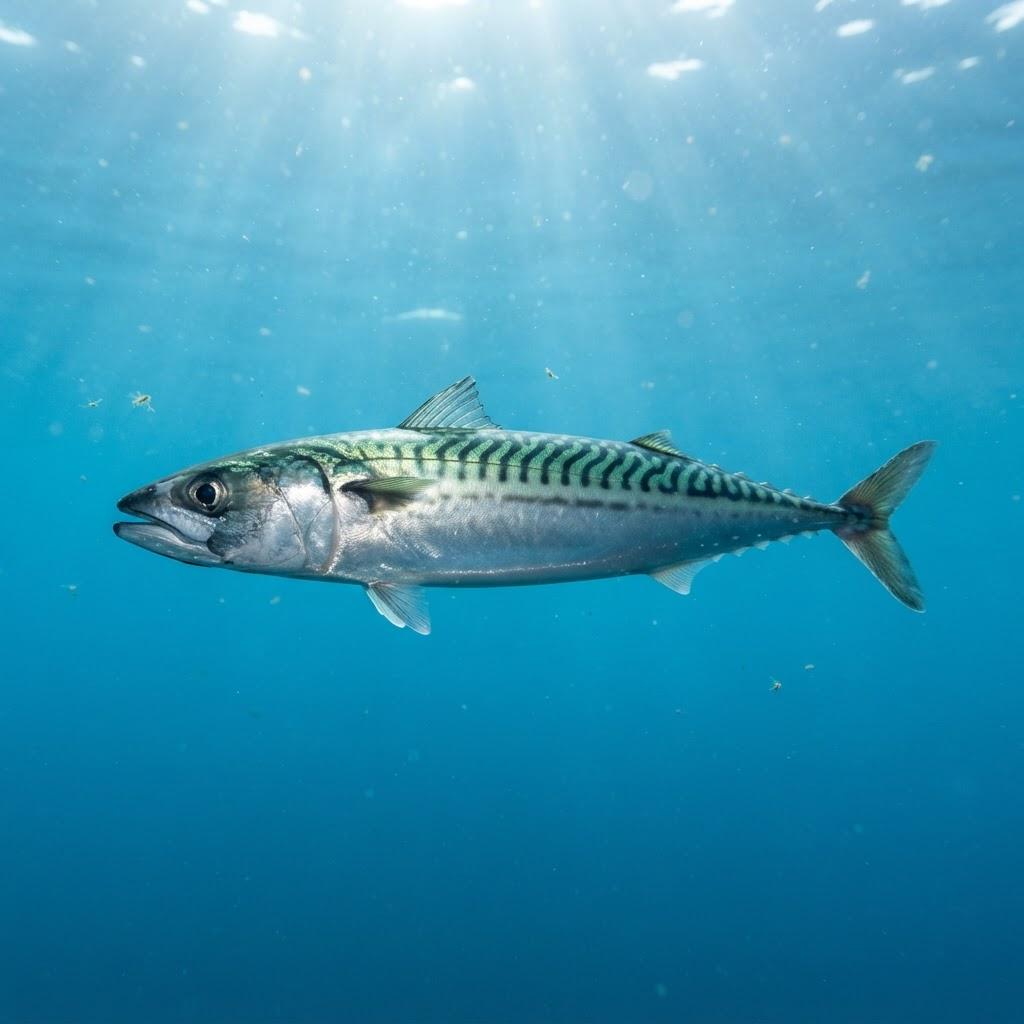
If you want to spot a Wahoo, you better have a good pair of sunglasses and a very fast boat. They hang out in the 'blue water'—the deep, clear areas far from the coast—and they are often caught by trolling, which is just dragging bait behind a moving boat at high speeds. Look for that signature metallic blue back and the silver sides with vertical, wavy stripes that make them look like they are wearing a camouflage suit designed for a rave. Regarding their conservation, the news is actually pretty good! Wahoo populations are currently classified as Least Concern. They reproduce quickly and live over a huge area, making them resilient to the pressures of fishing. You can help keep them that way by supporting sustainable fishing practices and making sure we don't overfish the smaller species they eat. Keeping the ocean healthy keeps the Wahoo racing for generations to come.