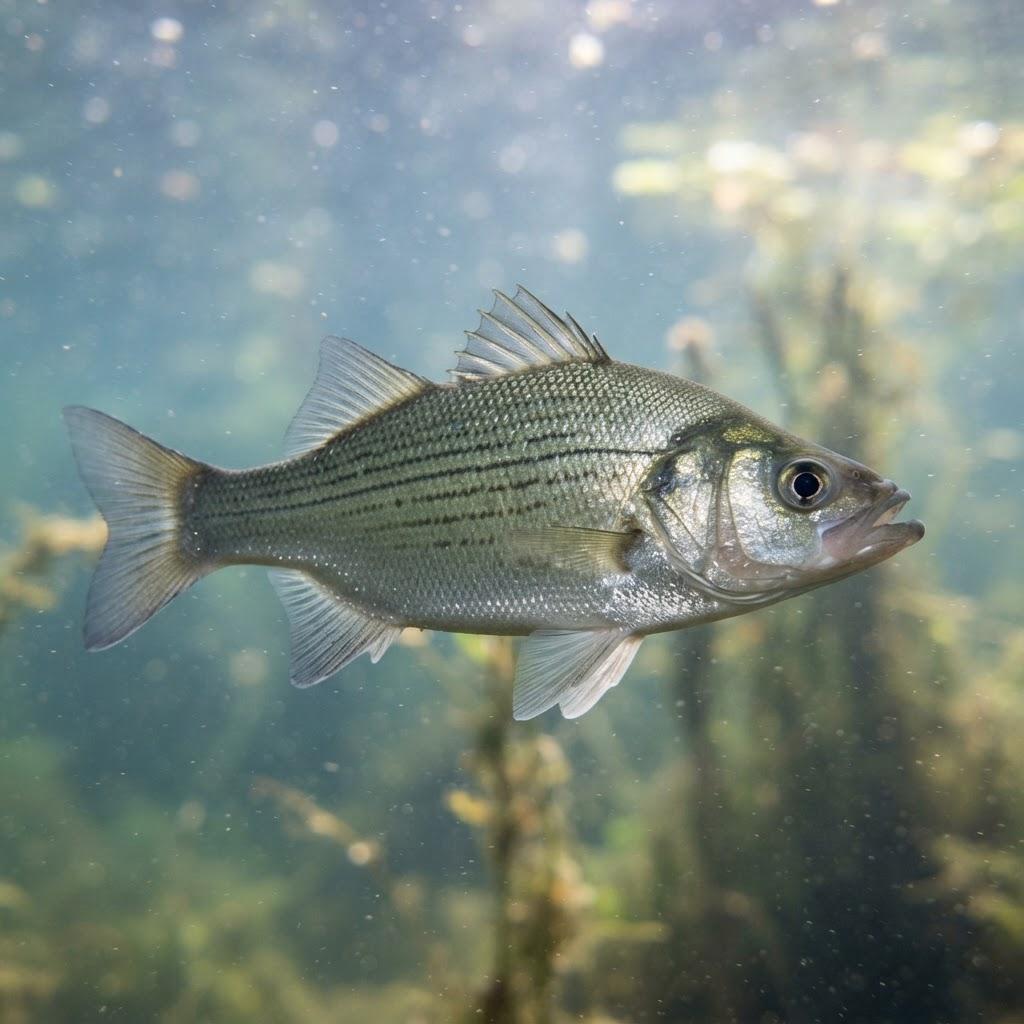
Morone chrysops
White Bass
Meet the White Bass, the high-energy party animal of the freshwater world. These silver-sided speedsters are famous for their frantic feeding frenzies that turn quiet lakes into bubbling, chaotic battlegrounds.
Meet the Fish
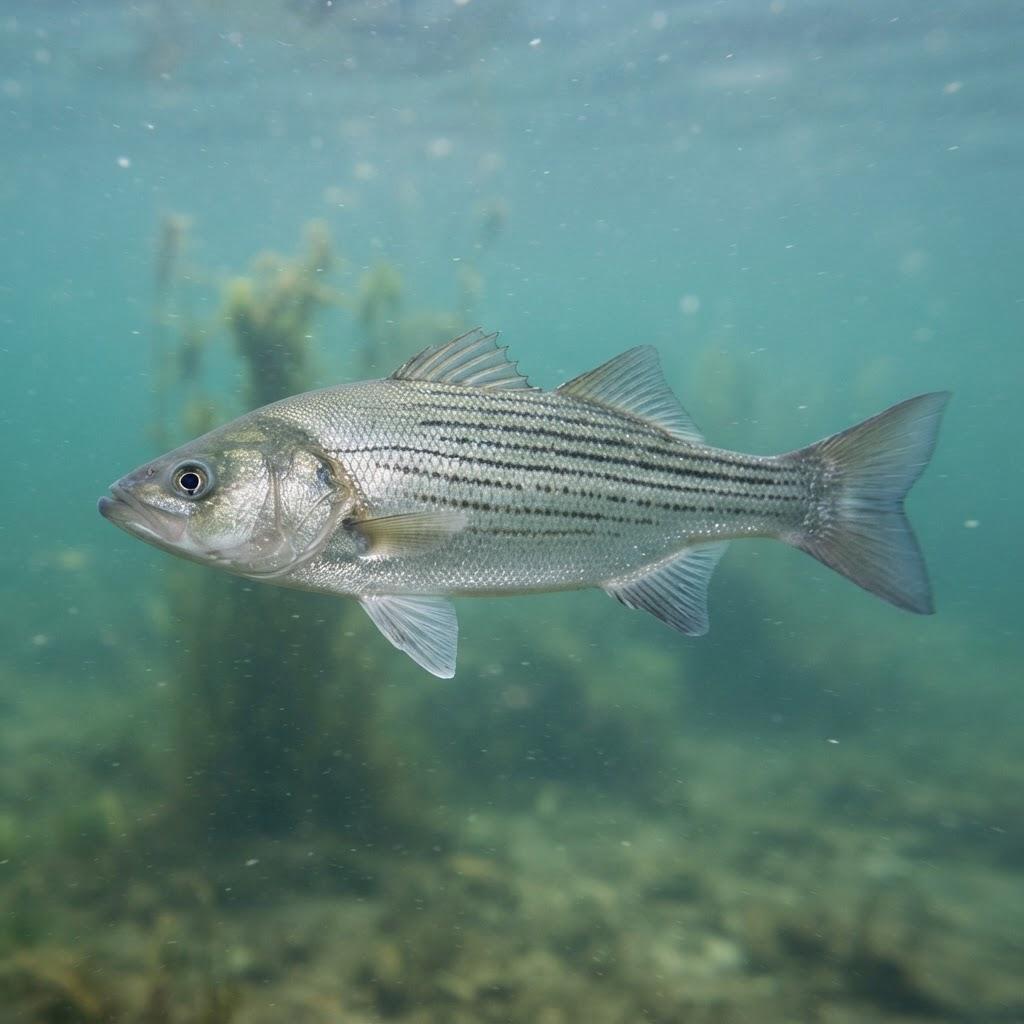
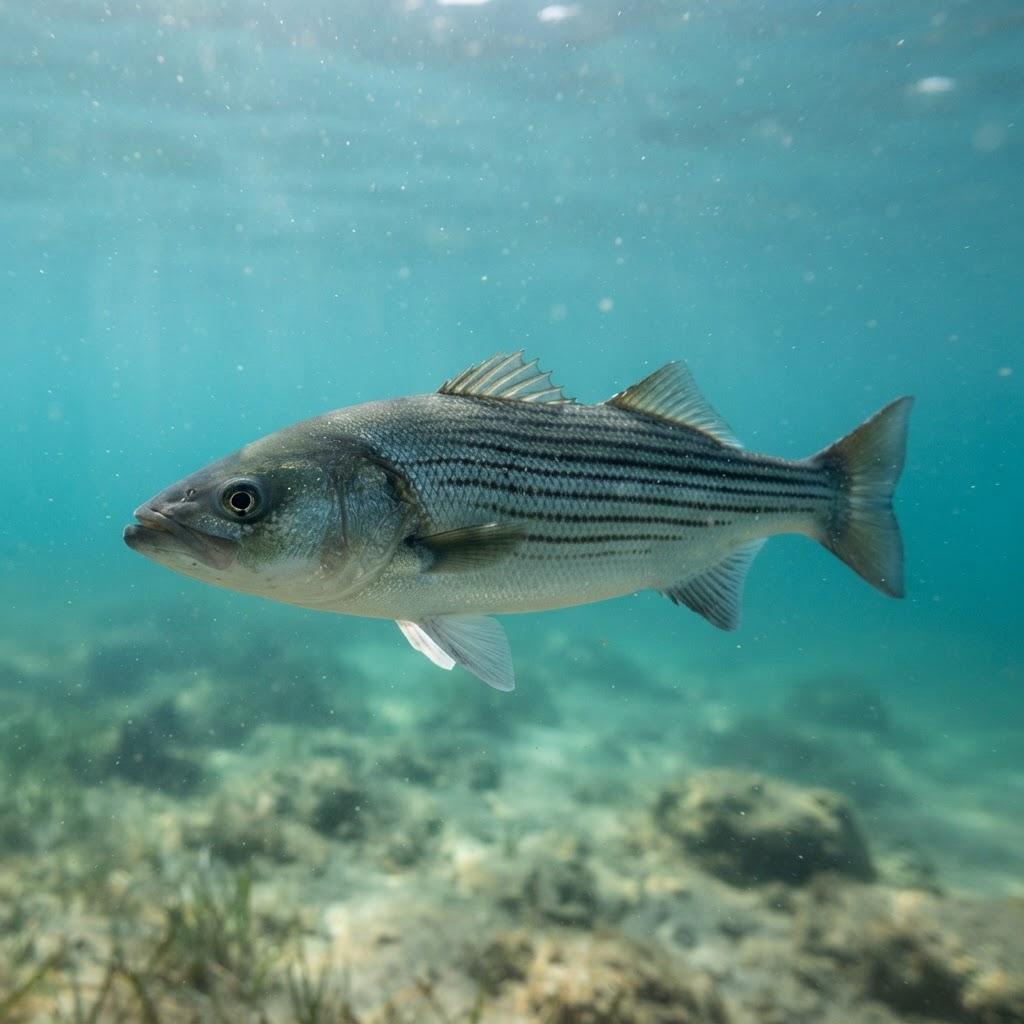
Imagine a fish that spent its entire life fueled by triple-shot espressos and pure adrenaline. That is the White Bass. If the freshwater ecosystem were a high school cafeteria, the White Bass would be the varsity athlete who never sits still, constantly planning the next big event. Sporting a sleek, silver body adorned with faint horizontal stripes that look like a pinstripe suit from a 1920s gangster, these fish are all about flash and speed. They are not the hulking brutes lurking in the mud; they are the chic, streamlined predators that hunt in organized, highly motivated mobs. When you see a group of White Bass on the move, it is less like a school of fish and more like a biker gang heading to a destination they are very excited about. Their vibe is quintessential 'work hard, play harder,' especially when they pin a baitfish against the surface and turn the water into a literal boiling cauldron of scales and teeth.
Weird Biological Superpowers Explained Simply
The secret to the White Bass's success is its sensory-laden 'lateral line' system, which acts like a biological high-definition radar. Imagine walking through a pitch-black house but being able to sense exactly where every piece of furniture is just by the way the air moves around your skin. That is essentially what the White Bass does under the water. This lateral line is a series of tiny canals running along their sides, filled with sensors that detect even the smallest vibration or pressure change in the water. While other fish might rely on their eyes, the White Bass has a sixth sense that allows them to hunt in low light or murky conditions with the precision of a heat-seeking missile. It is as if they have an invisible shield of awareness projecting outwards, allowing them to coordinate their high-speed attacks without ever bumping into their best friends during the heat of the chase.
Absurd Self-Defense Mechanisms
When you are a White Bass, you do not have the luxury of hiding in a hole or growing spikes like a pufferfish, because you have places to be and baitfish to catch. Instead, their self-defense mechanism is a combination of sheer velocity and the buddy system. Their primary strategy is the 'safety in numbers' approach, but with a tactical twist. If a larger predator like a Northern Pike or a muskie decides that a White Bass looks like an excellent lunch, the school does not just scatter; they move in a synchronized blur of silver that confuses the attacker’s visual tracking. It is like trying to swat a single fly when you are trapped in a room with a hundred of them moving in perfect harmony. They are slippery, fast, and constantly changing direction, which makes them a logistical nightmare for anyone trying to get a solid bite on them, effectively winning by simply being too much of a hassle to catch.
Fish Drama and Gossip
Life in a White Bass school is pure, unadulterated reality TV. There is a constant, unspoken hierarchy based on size, speed, and hunger levels. During the feeding frenzy, it is not a polite 'after you' situation; it is a cutthroat race to the buffet. If you have ever seen two siblings fighting over the last piece of pizza, you understand the social dynamics of a White Bass school during a shad migration. There are constant shoves, clever steals, and jockeying for position to ensure you are the one getting the best view of the action. It is a high-octane social structure where your status is directly tied to your ability to keep up with the pack. If you are slow, you are not getting fed, and you certainly are not getting any respect. It is a world of constant movement and occasional 'get out of my lane' posturing that keeps everyone on their fins.
The "Wait, That's Real?!" Deep-Sea Oddities
While the White Bass enjoys the sun-drenched shallows, its distant oceanic cousins in the deep sea have to deal with conditions that would make a freshwater fish faint. Down in the twilight zone, creatures do not just navigate by sense; they light up like Christmas trees to communicate or lure prey. The White Bass might think its pinstripes are fancy, but it has nothing on the Dragonfish, which can produce its own red light—a superpower that acts like a secret sniper scope, allowing it to see prey that is literally invisible to everyone else. The White Bass operates in a world of abundant sunlight and oxygen, whereas the deep-sea inhabitants live in an alien landscape where the pressure is intense enough to crush a submarine. Comparing the White Bass to a deep-sea anglerfish is like comparing a frantic city commuter to a recluse living in a space station; both are survivors, but their strategies for dealing with the void are worlds apart.
Myth Busting
For decades, folks assumed that because the White Bass is a fast-moving, aggressive feeder, it must be completely brainless—just a biological machine triggered by any flash of light. That is simply not true. Studies show that these fish are remarkably intelligent and exhibit a high level of learning capacity. They actually remember where they found food in previous seasons and can even recognize the presence of environmental cues that signal a feast is coming. They are not just mindless zombies chasing shiny objects; they are calculated opportunists. There is also the myth that White Bass are 'dirty' fish that only live in muddy, low-quality water. In reality, these fish are incredibly picky about their water clarity and oxygen levels. They prefer clean, well-oxygenated environments, making them a fantastic indicator of a healthy river or lake system, so maybe we should stop calling them 'trash fish' and start giving them some credit.
Humorous Historical Tales or Folklore
History is filled with strange beliefs about fish, and while the White Bass is a bit more localized to the Americas than ancient Mediterranean sea-serpent lore, it has its own place in the annals of human curiosity. Native American tribes and early settlers often viewed the seasonal migration of White Bass as a magical phenomenon, a 'silver run' that signaled the turning of the seasons. Because they appear in such massive, shimmering numbers, there were tall tales in early frontier pubs about men catching them with nothing more than a silver spoon tied to a piece of string. Whether or not these stories were fueled by an excess of local ale is up for debate, but the sentiment remains: the White Bass is a fish that leaves an impression. It is a creature that turns a quiet morning on the lake into a story worth telling, even if the fish themselves don't care about the history books.
Underwater Love Stories and Bizarre Romances
When spring arrives, the White Bass decides it is time for a massive, uncoordinated dance party. Unlike some fish that carefully court one another with polite nudges and delicate displays, White Bass romance is a loud, messy, and extremely public affair. They gather in giant, swirling congregations in shallow, rocky rivers where the current is brisk. It is less like a ballroom dance and more like a mosh pit at a concert. Females release thousands of eggs while males swarm around, hoping to fertilize as many as possible in a frantic, bubbling frenzy of activity. There is no 'getting to know you' phase, and there are no long-term commitments. It is a 'love them and leave them' scenario that is dictated entirely by the water temperature and the lunar cycle, creating a chaotic underwater disco that lasts only as long as the conditions are just right.
Underwater Architecture and DIY Nesting
If you are looking for elaborate castles or perfectly crafted nests, you are looking at the wrong fish. The White Bass is the quintessential 'free spirit' of the construction world. They do not build nests, and they do not have a nursery; they believe that home is where you leave it. Instead of investing time in real estate, they choose the rocky bottom of a river or a clean, gravelly shoreline as their nursery. They rely on the water flow to keep the eggs oxygenated and hidden among the stones. It is the ultimate 'leave no trace' parenting style. While other fish spend weeks moving pebbles to build a perfect fortress, the White Bass just finds a nice spot, drops their eggs, and moves on with their lives. They figure if you cast enough eggs out there, a few are bound to make it to adulthood, which is a gamble that has kept them in the game for ages.
The Chaos of Raising Tiny Swimmers
Parental involvement? None. Zero. Zip. The White Bass mother is the ultimate advocate for independence. Once those eggs are deposited in the gravel, the parents are long gone, likely already hunting for their next meal. The baby fish, known as 'fry,' are left to navigate the dangerous, big-fish-eat-little-fish world on their own from day one. It is a high-stakes survival game where the only teacher is experience. Most of the fry will unfortunately become a snack for a larger predator, but because each female releases such an enormous number of eggs, they use the 'quantity over quality' strategy to keep the population thriving. Watching a school of fry is like watching a swarm of tiny, twitchy dust motes floating in the current, unaware of the massive world they are about to conquer. It is a brutal, chaotic beginning, but those who make it end up being the speed-demon adults we know and love.
How to Spot One & How It Is Doing
If you want to see a White Bass in action, look for the 'boil.' If you see a patch of water on a calm lake that looks like it is simmering, head that way—that is a school of White Bass driving baitfish to the surface. Look for the silver, compressed body, the arching back, and the distinct, dark lines running horizontally. They are a sign of a healthy aquatic ecosystem, so if you see them, you know the water is doing just fine. Fortunately, the White Bass is currently categorized as 'Least Concern' by conservationists, meaning they are doing quite well. You can help keep it that way by keeping our waterways free of trash and being mindful of local fishing regulations. They are a resilient, adaptable species that has learned to live alongside humans, so as long as we protect their home turf, they will keep putting on their silver, high-speed water shows for generations to come.