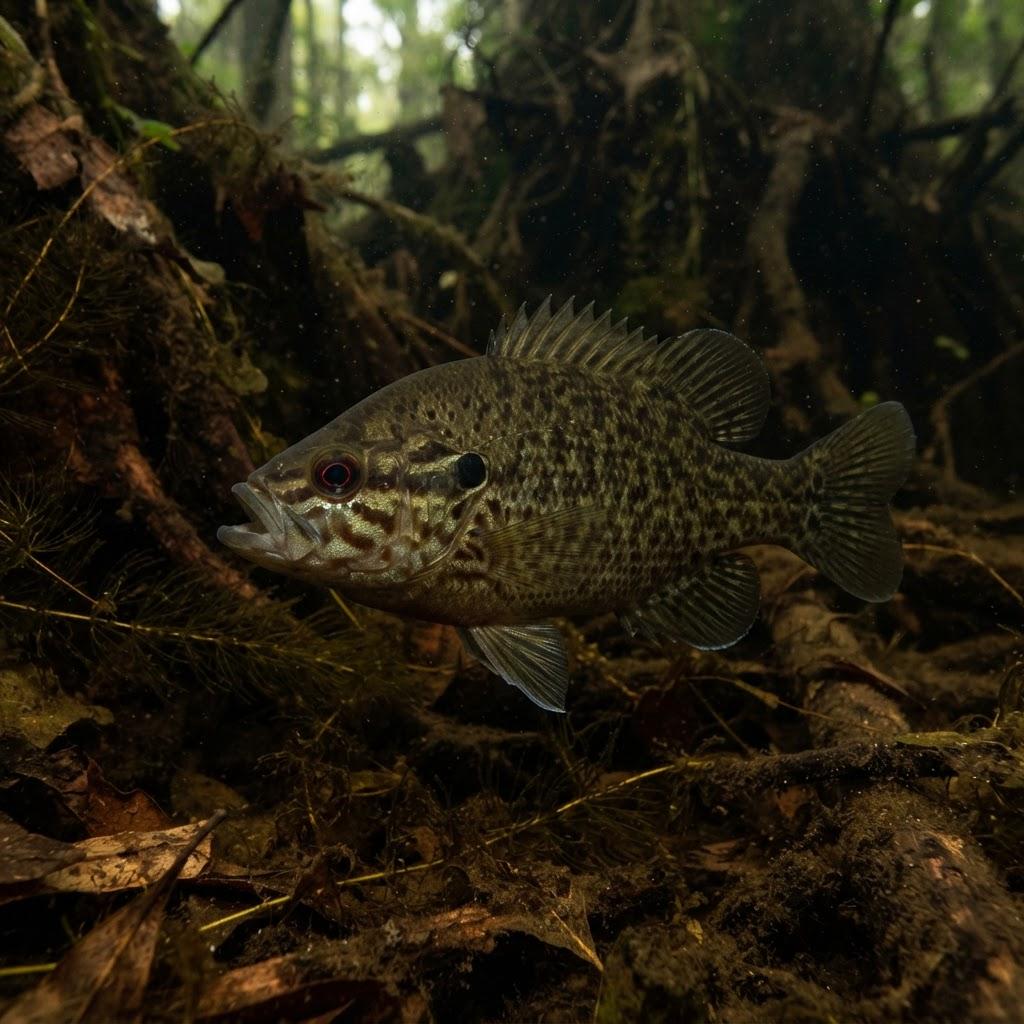
Lepomis gulosus
Warmouth
Meet the Warmouth, the grumpy, heavy-set bouncer of the swamp who treats every meal like a buffet and every intruder like a personal insult. This tough-as-nails sunfish proves you do not need to be a shark to be the coolest, moodiest fish in the murky pond.
Meet the Fish
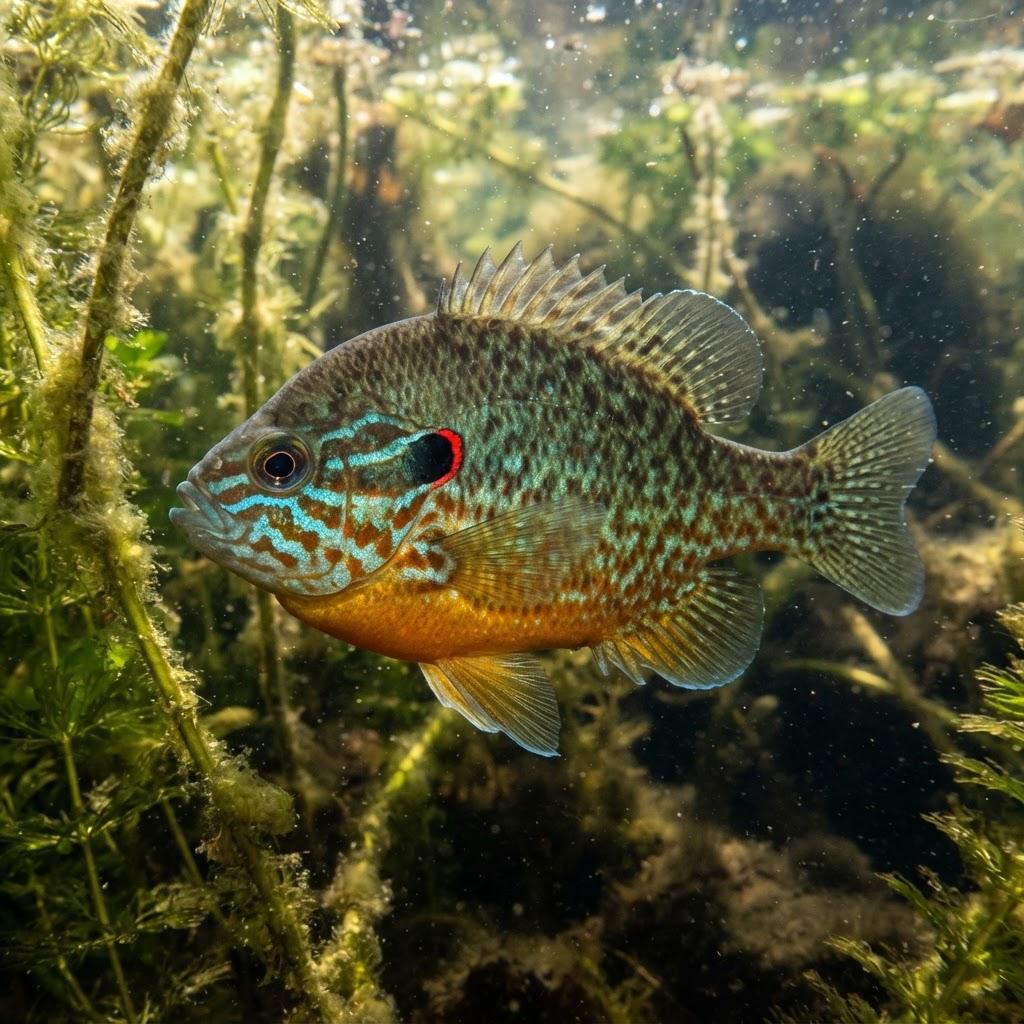
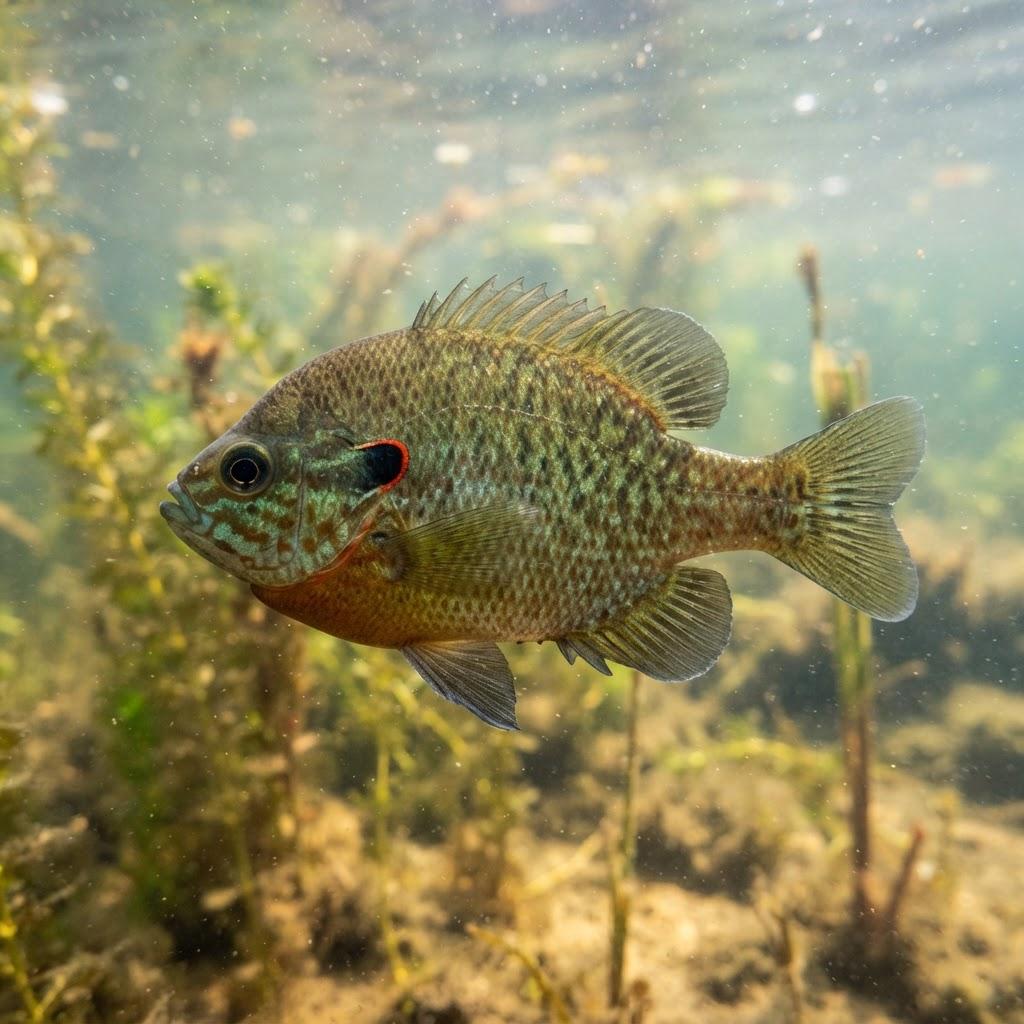
If you walked into a dive bar at the bottom of a swamp, the Warmouth would be the guy sitting in the corner booth with a leather jacket and a permanent scowl. He is not the biggest fish in the water, but he acts like he owns the entire zip code. With his oversized, cavernous mouth—which is exactly where he gets his name—and a look that suggests he has seen things he would rather forget, the Warmouth is the anti-hero of the sunfish world. While his cousins like the Bluegill are out there being all sparkly and photogenic, the Warmouth is rocking a camo-patterned skin of olive, brown, and mottled gold, perfectly designed to blend into the shadows of a submerged log. He is the ultimate ambush predator, a living trapdoor spider with fins. He does not care about your beauty standards or your trendy swimming lanes; he is here for the snacks and the privacy. There is something intensely relatable about a creature that just wants to sit in a dark, quiet place and wait for a crayfish to walk by, and that makes the Warmouth an absolute legend in the murky, underwater suburbs.
Weird Biological Superpowers Explained Simply
The Warmouth has a biological superpower that puts standard vacuum cleaners to shame: the vacuum-mouth strike. When this fish decides that a small minnow or a confused dragonfly is about to become his next meal, he does not just swim up and nibble. He expands his mouth and throat cavity with such sudden, violent force that he creates a localized low-pressure zone. Physics basically forces the water—and the target inside it—to rush into his maw like a drain being unplugged. It is a biological suction cannon. Imagine trying to eat a slice of pizza from across the room just by inhaling really hard. That is the Warmouth experience. Beyond this suction mastery, he is also equipped with eyes that are perfectly tuned to the low-light, tea-colored water of his home turf. He sees the world in high-contrast detail while his prey is still stumbling around in the dark. It is like having built-in night-vision goggles that also double as a high-velocity snack-delivery system. He is perfectly evolved to be the king of the dingy, and honestly, that deserves a round of applause.
Absurd Self-Defense Mechanisms
When a predator, like a hungry bass or a snoopy river otter, tries to mess with the Warmouth, the fish has a very specific strategy: he turns into a prickly pincushion. The Warmouth is heavily armored with sharp, rigid spines on his dorsal and anal fins. When threatened, he locks these spines into a fully extended position, effectively transforming from a chubby, palm-sized fish into a spiky underwater landmine. If you were a predator trying to swallow something that suddenly felt like a mouthful of cactus needles, you would probably rethink your lunch plans too. This is not just a passive defense, either; the Warmouth has a very 'try me' attitude. He is physically thick and deep-bodied, which means that unless you have a truly massive gullet, you are going to choke on him. He bets on the fact that most predators prefer an easy, soft meal over one that requires a trip to the aquatic dentist. It is the fish equivalent of wearing a suit of armor made entirely of needles to a high-stakes wrestling match.
Fish Drama and Gossip
The social life of a Warmouth is basically the swamp version of a gritty reality TV show where everyone is constantly mad at each other. They are intensely territorial, spending the vast majority of their time guarding their 'man cave' under a stump or behind a pile of rocks. If another Warmouth enters their vicinity, it is on. They do not just ignore each other; they engage in intense, staring-contest-style standoffs, flaring their gills and showing off their mouth size to intimidate the interloper. It is all about puffing out their chests, or rather, their gill covers, to look as large and terrifying as possible. They are the neighbors who constantly call the homeowners association because your lawn is two inches too long, except their lawn is a patch of silt and the consequences involve a lot of aggressive chasing. You rarely see them schooling like other fish; they are far too antisocial for that. They prefer the solitary life of a grump who just wants their own personal space to be respected at all costs.
The "Wait, That's Real?!" Deep-Sea Oddities
While the Warmouth is technically a freshwater dweller, his personality screams 'deep-sea monster trapped in a pond.' If you look at the deep-sea denizens like the Dragonfish, they share that same 'don't talk to me' energy and specialized, oversized mouths designed to grab whatever floats by. The difference is that while the deep-sea crowd uses bioluminescence—essentially internal neon signs—to lure prey or signal to potential dates in the pitch black, the Warmouth uses his environment. He turns the murky, tannin-stained swamp water into his own private deep sea. He doesn't need to glow because he has mastered the art of being invisible. While the deep-sea fish are floating in an alien, pressurized void, the Warmouth is mastering the alien void of a flooded stump. It is the same principle: life in the dark turns you into a specialized hunter. If we could put a Warmouth in the midnight zone, he would probably be running the place within a week, mostly because he already looks like he belongs in a submarine horror movie.
Myth Busting
There is a persistent myth that sunfish are 'dumb' because they are easy to catch with a simple hook and worm. People think this means they have no brain power, but in reality, the Warmouth is a master of situational awareness. He is not dumb; he is just a gourmand. He knows what a high-quality snack looks like. Another myth is that these fish are just 'garbage eaters' that live in polluted, nasty water. While they are resilient enough to handle lower oxygen levels and murkier conditions than a trout, they actually thrive in high-quality habitats with lots of cover. They are not living in sludge because they love it; they are there because they are highly efficient survivors. They have a reputation for being 'trash fish' among anglers who are only hunting for trophy-sized bass or walleye, but that is a human projection. The Warmouth is a perfectly adapted piece of evolution. The only thing truly broken here is the human ego that refuses to appreciate a fish simply because it doesn't look like a glossy magazine cover model.
Humorous Historical Tales or Folklore
In the annals of backwoods fishing lore, the Warmouth occupies a strange place of respect. There are old campfire stories in the deep South about the 'Swamp King,' a fish said to be so aggressive that it would bite the hand that tried to reach for it. While these are clearly hyperbolic tall tales told to keep children away from the edge of the pond, they reflect the genuine respect local anglers have for the fish's scrappy nature. Some folklore suggested that keeping a Warmouth scale in your pocket would bring good luck in negotiations—presumably because the fish is so good at being stubborn and holding his ground. Whether or not that actually helped anyone win an argument is up for debate, but it shows how this fish seeped into the local identity. He is the quiet, tough icon of the marsh, a creature that doesn't need a massive, mythical backstory to be legendary. He is already a legend to anyone who has ever tried to dislodge a hook from his iron-grip jaw.
Underwater Love Stories and Bizarre Romances
When spring rolls around, the Warmouth shifts from 'grumpy hermit' to 'aspiring architect.' The courtship ritual is essentially a high-stakes construction project. The male finds a suitable spot, clears the debris with his tail and fins, and begins the labor-intensive process of digging a nest in the mud or sand. He then proceeds to perform a complex dance for any passing female that catches his eye. He isn't just looking for a mate; he's looking for a partner to admire his real estate skills. Once a female is interested, she inspects the nest, and if the quality of his excavation is up to her standards—a process that is basically the underwater equivalent of a HGTV home inspection—they spawn. The male does all the heavy lifting, cleaning, and preparation, proving that for the Warmouth, romance is about showing off your home improvement capabilities. It is the ultimate flex: 'Look at this hole I dug, darling. It is the best hole in the entire county.'
Underwater Architecture and DIY Nesting
The construction of a Warmouth nest is a marvel of brute force engineering. These fish don't have tools, so they use their bodies as bulldozers. A male Warmouth will spend hours vibrating his fins to fan away silt and dragging pebbles around to line his pit. He is looking for just the right texture of sediment to keep the eggs safe from shifting muck. This nest isn't just a place to hang out; it is a fortress designed to protect the next generation from the myriad of predators constantly lurking in the swamp. He is a perfectionist. He will chase off anything that gets too close to his property, whether it is a turtle, another fish, or just a stray twig that looks like it might cause trouble. This dedication to architecture is why you find these fish in such specific, sheltered spots. They are not nomadic wanderers; they are master builders who put immense effort into the structural integrity of their nurseries.
The Chaos of Raising Tiny Swimmers
Once the eggs are laid, the Warmouth father turns into a full-time, high-octane bodyguard. He stays over the nest, constantly fanning his fins to keep oxygen-rich water moving over the eggs and picking off any insects or tiny fish that think they’ve found an easy buffet. It is a stressful job, and he barely takes a break to eat. When the eggs finally hatch, the fry are tiny, chaotic little specks that have to learn to hide immediately, or they become lunch for everything else in the swamp. The father stays on guard for a while, his patience wearing thin as his offspring start to wander off. It is essentially a scene from a nature documentary where the parent is constantly trying to corral a bunch of toddlers at a busy airport. Most of them won't make it, but the few that do are the ones who learned to be as tough and wary as their father. It is a brutal, relentless cycle of life, but it works.
How to Spot One & How It Is Doing
Spotting a Warmouth requires a bit of detective work. Look for shallow, tea-colored water with lots of logs, stumps, or dense weeds. If you see a fish that looks like a stocky, moody sunfish with a massive mouth, you have likely found your guy. They are doing quite well, actually! Because they are so adaptable and thrive in the kinds of disturbed or sluggish habitats that other fish might avoid, they are a 'Least Concern' species. Their populations are stable, which is great news for fans of the swampy underdog. To help them thrive, keep your local ponds and waterways clean. Avoid dumping chemicals or litter into wetlands, as these small, murky ecosystems are the lungs of our landscape. If you enjoy fishing, consider catch-and-release to help keep the populations healthy and robust. The Warmouth doesn't need much—just a bit of clean water and a good, sturdy log to hide under. By protecting their swampy kingdoms, we ensure that this grumpy, fascinating little character keeps patrolling his corner of the world for years to come.