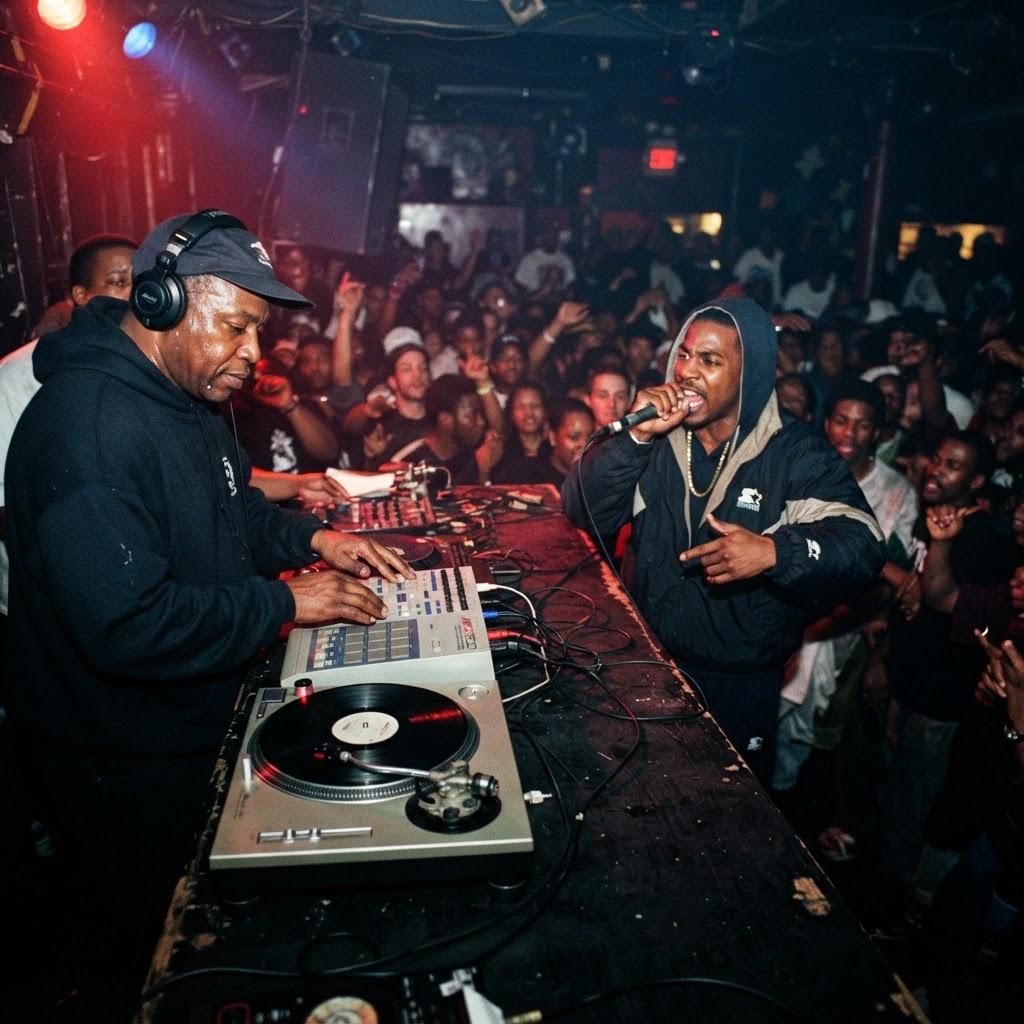
Late 1980s, New York City, USA
Boom Bap
Boom Bap is the gritty, head-nodding heartbeat of golden-age hip-hop that proves you only need a dusty drum break and a microphone to change the world. It is raw, unapologetic, and the reason your neck hurts from bobbing along to the beat.
Meet the Genre
Imagine walking through a gray-tiled subway station in 1993, the air thick with anticipation, while a stranger with oversized headphones turns the corner. Suddenly, the concrete world shifts. The rhythm starts—a sharp, stinging 'boom' followed by a crisp, snapping 'bap' that echoes off the walls like a heartbeat. That is the essence of Boom Bap. It is not just music; it is an attitude that sits somewhere between a street-corner philosophy session and a masterclass in rhythmic precision. It feels like wearing a heavy leather bomber jacket in October, smelling the exhaust of city buses, and witnessing a lyrical genius drop a truth bomb that makes you stop mid-stride. This genre is the stubborn, prideful kid who refuses to adopt the new-school polish. It celebrates the imperfections of life, the dust on the vinyl records, and the raw, unwashed poetry of the city streets. You do not just listen to Boom Bap; you become part of its ecosystem, nodding your head in involuntary rhythm as the heavy bass line anchors your soul to the pavement.
The Sound & Signature Elements
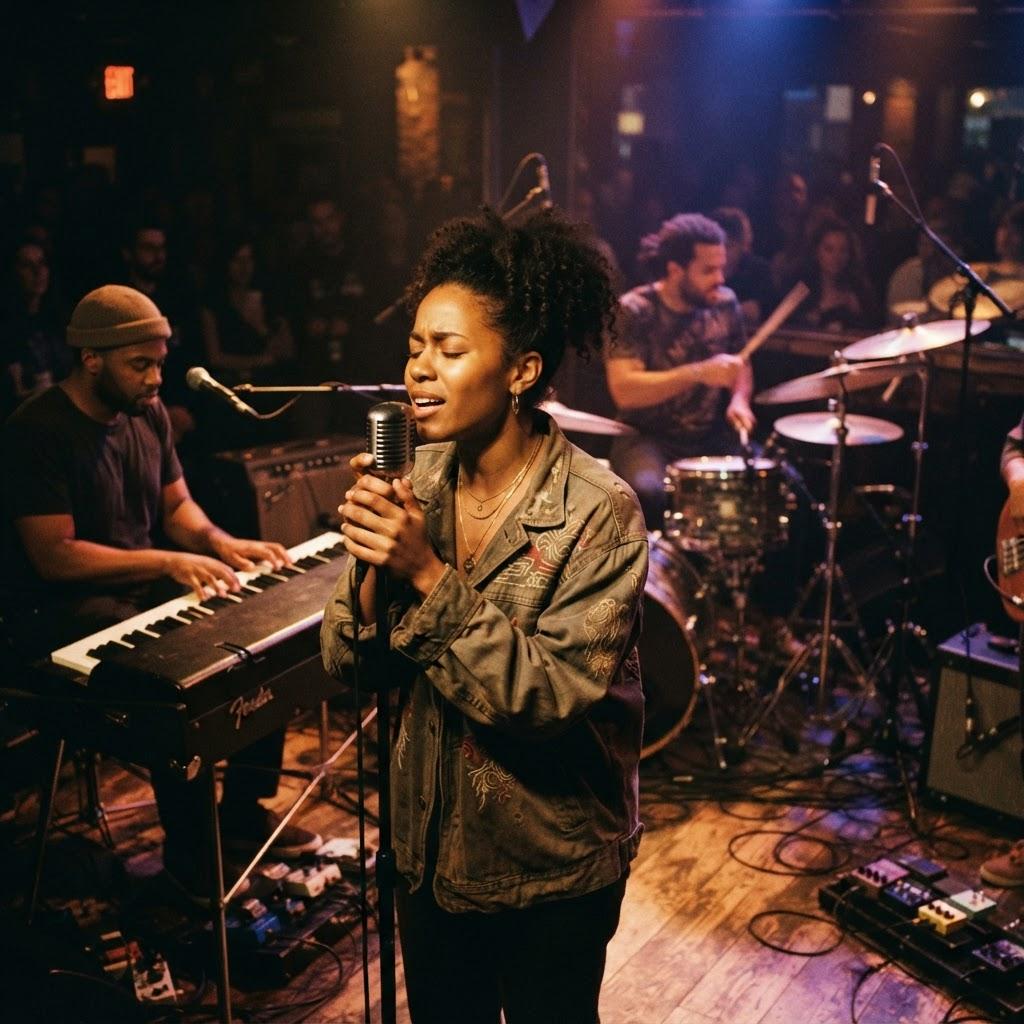
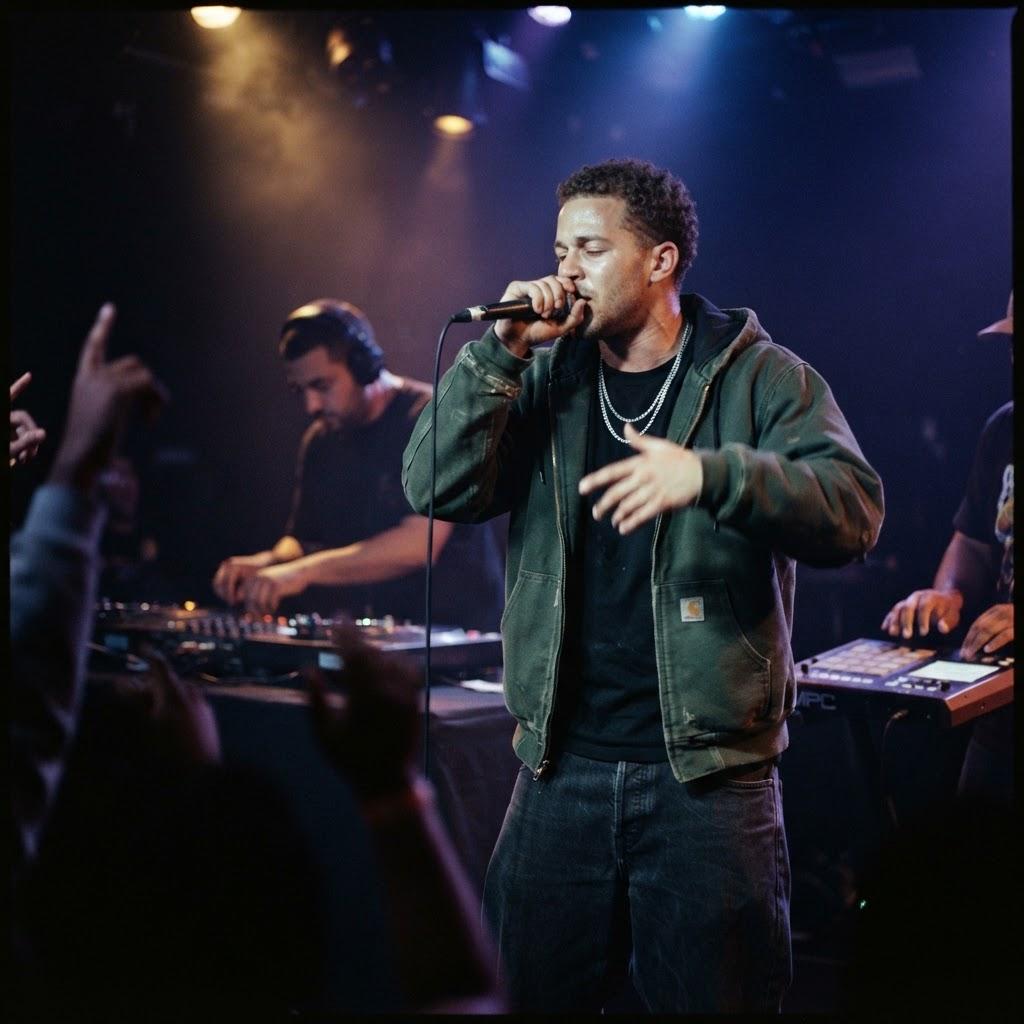
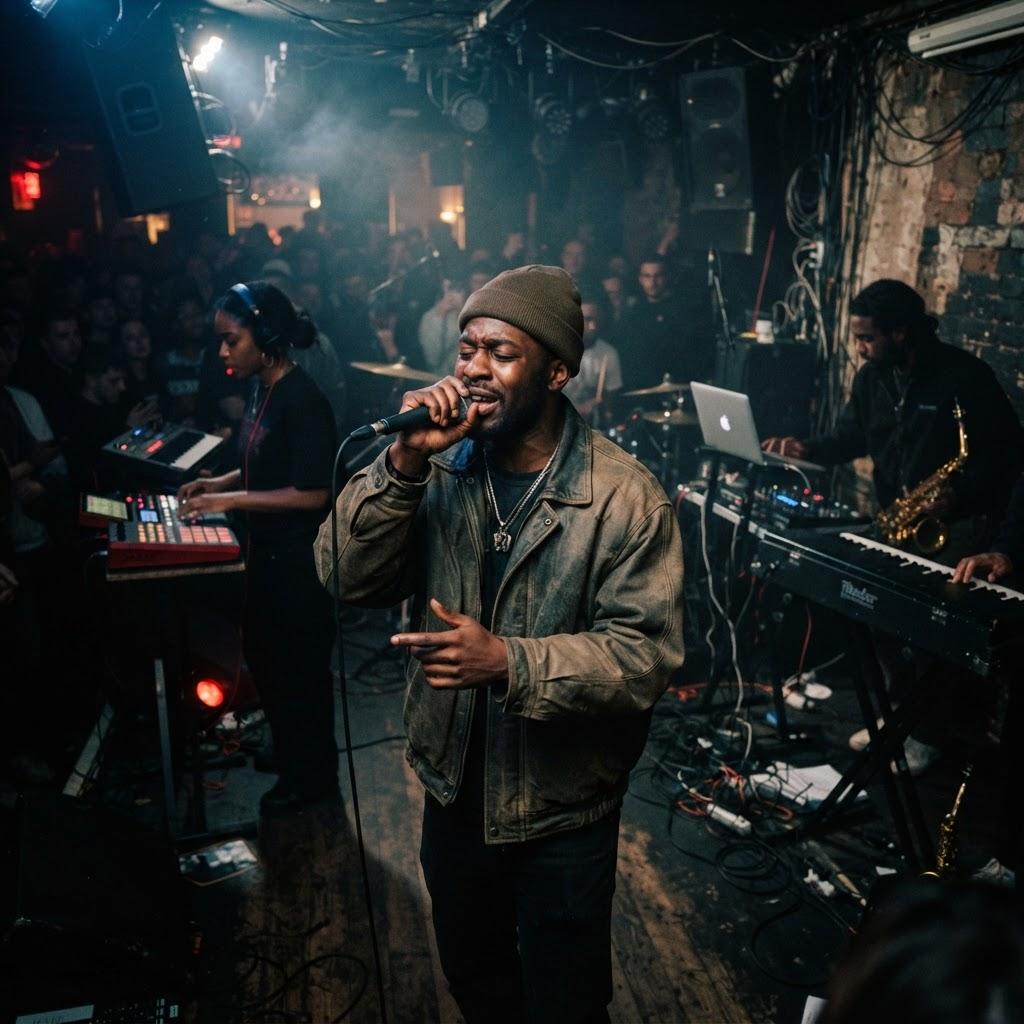
At its musical core, Boom Bap is a game of architectural minimalism. The name itself is the instruction manual: the 'Boom' is that deep, low-frequency kick drum that thumps you in the chest, while the 'Bap' is the sharp, high-frequency snare that pierces through the mix like a needle drop. These two elements act as the rhythmic skeleton for the entire track, usually sitting comfortably in the 85 to 95 beats-per-minute range, which is the perfect speed for human nodding. Producers—the unsung alchemists of this genre—would hunt through crates of forgotten funk and jazz records to find a two-second drum break. They would take that sliver of audio, throw it into a sampler like the legendary E-mu SP-1200 or the Akai MPC, and chop it up until it felt like a brand new heartbeat. This isn't just looping; it is sonic surgery. Adding a layer of dusty, melancholic piano or a brass sting from a 70s soul track completes the vibe, creating a sound that feels simultaneously ancient and brand new. The structure is almost always verse-heavy, giving the rapper plenty of room to weave intricate, rhythmic, and rhyme-dense stories.
Origins & Birth of the Sound
Before it had a name, it was just the sound of the streets figuring out how to make magic out of scraps. In the late 80s, New York City was a pressure cooker of ambition, poverty, and creative explosion. Producers were tired of the glossy, over-produced drum machines that sounded like plastic. They wanted something that felt like the concrete they walked on. They found their secret weapon in the discarded vinyl of the jazz and funk eras. If a drummer from 1974 hit a snare a certain way, these pioneers wanted that exact sonic footprint. They treated these snippets of audio like rare fossils. It was born in cramped, smoke-filled basement studios where the ventilation was nonexistent but the creativity was overflowing. You would see producers huddled over massive, clunky samplers, frantically pressing buttons to get that 'swing'—the subtle, human-like delay that keeps a beat from sounding too robotic. It was an act of rebellion against the corporate polish of the music industry. By taking the discarded noise of the past and rearranging it into a aggressive, forward-moving rhythm, they defined a generation and built a culture that refused to be polished, sanitized, or ignored.
The Pioneers & Legends
You cannot talk about the Mount Rushmore of Boom Bap without bowing down to the architects who drew the blueprints. DJ Premier, the master of the scratch and the cut, was like a mad scientist who could make a simple drum break sound like a symphony of street wisdom. His work with Gang Starr gave the genre its grit and its integrity. Then there is Pete Rock, the crate-digger extraordinaire, whose melodic sensibilities proved that a street-tough beat could still be beautiful enough to cry to. Q-Tip from A Tribe Called Quest brought the jazz-inflected sophistication, turning the genre into a high-art form that felt as natural in a record store as it did on a basketball court. And we absolutely must recognize the lyrical titans: Nas, whose 'Illmatic' is basically the Holy Grail of Boom Bap, and The Notorious B.I.G., who possessed a flow so fluid it felt like water over rock. These artists weren't just musicians; they were urban historians, capturing the claustrophobia, the joy, and the existential dread of city life with a level of detail that puts novelists to shame. Every beat they touched turned into a piece of cultural history.
Defining Tracks & Era-Defining Moments
If you want to understand the impact of this genre, you have to look at the tracks that stopped the world in its tracks. Take Nas’s 'N.Y. State of Mind'—it is essentially the Big Bang of lyrical intensity. The beat is haunting, the delivery is clinical, and it captures the essence of a city that never sleeps, even when it is having a nightmare. Or consider 'C.R.E.A.M.' by the Wu-Tang Clan; that piano loop is burned into the collective consciousness of anyone who grew up in the 90s. It turned the concept of 'Cash Rules Everything Around Me' into a universal mantra, proving that Boom Bap could be as philosophical as it was catchy. Then you have 'They Reminisce Over You (T.R.O.Y.)' by Pete Rock & C.L. Smooth, which stands as a masterclass in sampling. That saxophone loop is so warm and nostalgic that it makes you miss places you have never even visited. These weren't just hits on the radio; they were sonic markers of a time when the gap between the underground and the mainstream was bridged by pure, undeniable talent. They forced the world to acknowledge that hip-hop wasn't just a trend, but a dominant cultural force.
Subgenres & Offshoots
Once the Boom Bap tree took root, it started growing some very strange and beautiful branches. You had the 'Jazz Rap' offshoot, spearheaded by groups like The Roots and Digable Planets, who decided that if you were going to sample jazz, you might as well bring the live horns and upright bass into the studio to blur the lines. Then there was the 'Conscious Rap' movement, where Boom Bap became the vehicle for radical thought and social commentary, with artists like Common and Mos Def using the classic, punchy rhythms to deliver heavy-hitting messages about identity and justice. On the darker side, there was 'Hardcore Rap' or 'Mafioso Rap,' which took the grit of the genre to its logical extreme, focusing on cinematic, often violent storytelling that mirrored the mob epics of Hollywood. Each of these subgenres took the core 'boom' and 'bap' and twisted it to fit a different mood. Some went lighter, some went darker, but the DNA remained the same—that commitment to a hard-hitting drum break and a flow that hit you right between the eyes. It proved the format was flexible, able to contain everything from poems to political manifestos.
Cultural Impact & Influence
Boom Bap didn't just stay in the headphones; it bled into everything. It influenced the way people walked, the oversized clothes they wore, and the slang they used. If you see someone in a pair of baggy denim jeans, a fitted cap, and a heavy hoodie, you are looking at the fashion silhouette born from this era. Beyond the wardrobe, it changed language itself, injecting street-smart vernacular into the mainstream vocabulary. It also turned film into a canvas for the urban experience, with directors like Spike Lee utilizing the genre's aesthetic to ground their stories in the messy, vibrant reality of the city. More importantly, it gave a voice to the voiceless. The genre provided a platform for marginalized communities to document their struggles and triumphs in a way that couldn't be censored or silenced. It taught a whole generation how to critically analyze their environment and find beauty in the broken pieces of their neighborhoods. Even today, when you hear a modern artist using a crisp, break-beat-style drum loop, you are hearing the ghost of the 90s still dictating the rhythm of the culture. It became the global language of rebellion and authenticity.
Controversies & Drama
Where there is passion, there is drama, and Boom Bap had enough of it to fuel a thousand tabloids. The biggest tension was the 'Purist vs. Progression' war. As the 90s turned into the 2000s, newer production styles like the polished, synthesizer-heavy sound of the South or the rise of digital trap music started to threaten the dominance of the dusty, sample-based Boom Bap. The old-school purists were relentless, calling anything that wasn't looped from a jazz record 'selling out' or 'soulless.' It was a civil war played out in music magazines and late-night radio shows. Then there were the regional beefs—the East Coast versus the West Coast. This wasn't just a friendly competition about who had the better beat; it turned into a genuine, and at times tragic, cultural divide. Artists would take shots at each other over the rhythm, turning tracks into lyrical battlegrounds. It was messy, it was stressful, and it was undeniably entertaining for the fans. You could feel the tension in the air every time a diss track dropped. It was the ultimate 'us versus them' mentality, but that friction was exactly what pushed the artists to deliver their absolute best work.
Global Spread & Regional Scenes
Boom Bap didn't stay locked in the five boroughs of New York for long. It traveled like a virus, infecting scenes in London, Paris, Tokyo, and beyond. In Europe, the genre was adopted by artists who blended it with local political struggles, creating a transatlantic bridge of resistance. The French scene, in particular, took the Boom Bap blueprint and added their own linguistic flair, making the rhythms sound even more sharp and intellectual. In Tokyo, a dedicated subculture of 'beat-diggers' emerged, obsessing over the rarest of American soul vinyl to craft their own unique, Japanese-inflected version of the sound. It was fascinating to see how the genre's structural simplicity—those drums and those loops—allowed it to become a universal language. Whether you were in a basement in Berlin or a rooftop in Johannesburg, you could drop a 90 BPM breakbeat and everyone would immediately understand the assignment. It wasn't about where you were from anymore; it was about whether you respected the craft of the sample. The world took the NY blueprint and started building their own skyscrapers, each with a slightly different flavor but the same solid, rhythmic foundation.
The Modern Landscape
Is Boom Bap a museum piece? Absolutely not. It is alive and kicking, living in the 'lo-fi' playlists that students use to study to and the underground circuits where young rappers still treat the microphone like a sword. While the mainstream might be dominated by high-energy trap and hyper-polished pop-rap, there is a massive, thriving underground movement that is constantly digging back into the roots. Artists like Joey Bada$$ and Griselda have brought the raw, gritty, 90s-style production back into the light, proving that there is a massive audience for music that focuses on dense, complex lyricism over simple, repetitive hooks. TikTok has even played a weird, unexpected role, with younger generations discovering classic 90s loops and finding that the aesthetic fits perfectly with modern, low-key, vintage-inspired lifestyle content. The genre has shifted from being the 'popular' sound to being a 'classic' sound, which is a position of incredible power. It no longer has to compete for the charts; it just has to exist as the gold standard of quality. It is the comfortable pair of boots that you know will never fail you, no matter how many trends come and go.
How to Dive In
So, how do you actually start your journey? Do not just hit shuffle. Start with the monoliths. Put on Nas’s 'Illmatic'—it is the perfect opening chapter, a flawless 40-minute record that tells you everything you need to know about the vibe. Then, listen to A Tribe Called Quest’s 'The Low End Theory' to understand how jazz and hip-hop can hold hands without getting embarrassed. If you want the raw, dusty, crate-digger energy, hunt down anything produced by DJ Premier or Pete Rock; their discographies are essentially the syllabus for the genre. Pay attention to how the drums feel—that is your anchor. Once you have those locked in, branch out into the Wu-Tang Clan for that gritty, chaotic energy, and Black Star for the conscious, poetic side of things. Don't worry about being an expert overnight; the beauty of Boom Bap is that it welcomes you in the moment the snare hits. Just find a pair of good headphones, turn up the volume until the world feels like it’s vibrating, and let that rhythm settle into your bones. It’s a lifetime of discovery, and you have just taken the first step into the best sound ever created.