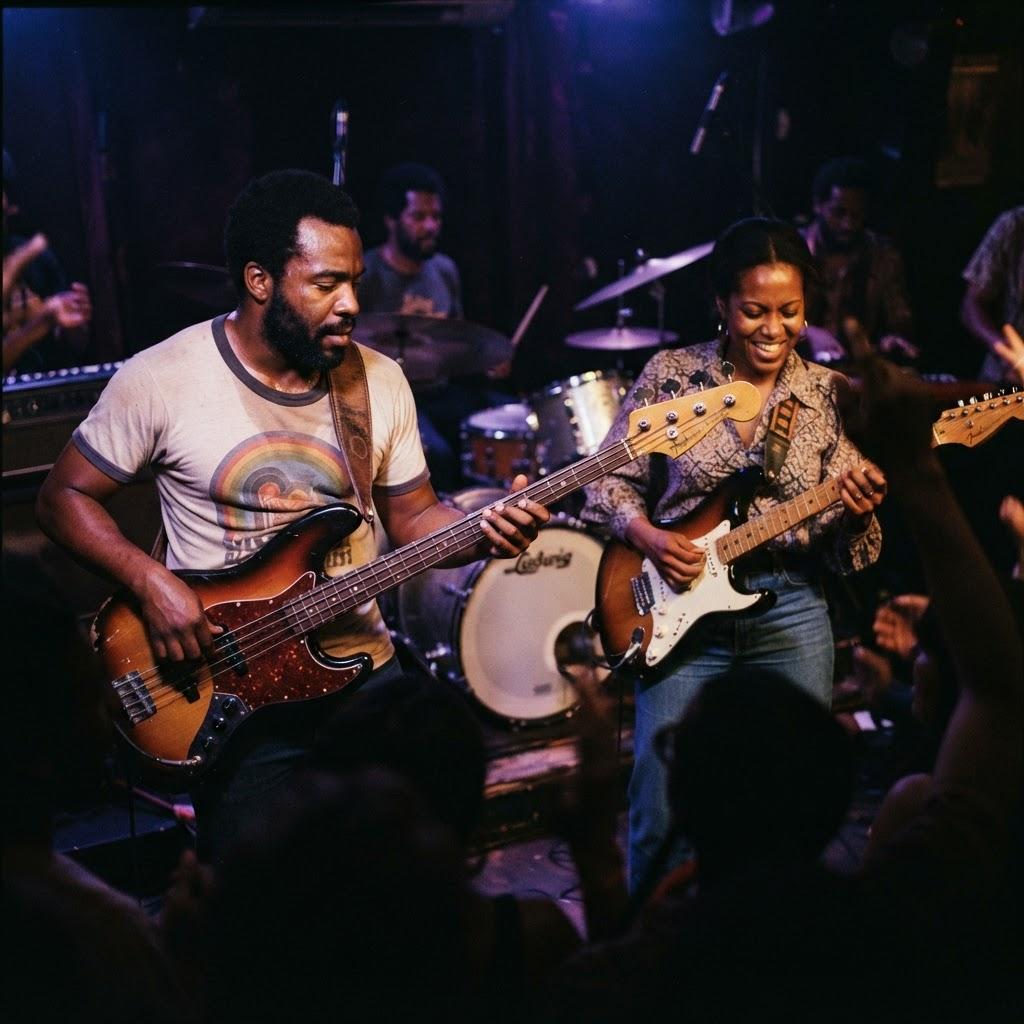
Late 1960s, United States
Funk
Funk is the musical equivalent of a glittery disco ball spinning at maximum velocity inside a sweaty, basement-level basement party. It is a genre that prioritizes the 'One' above all else, daring you to stop tapping your foot and start full-on vibrating.
Meet the Genre
If music were a high school, Funk would be the kid who skipped gym class to perfect an intricate, gravity-defying dance routine in the cafeteria. It is not just a genre; it is a sentient force of nature that has one singular mission: to make your hips move whether you consent or not. Funk does not care about your social anxiety or your stiff posture. It arrives at the party wearing a sequined cape, smelling like expensive cologne and pure, unadulterated confidence. You recognize Funk the moment the bass hits your chest—it is that sticky, elastic, rubber-band sound that seems to stretch across the room and pull you toward the center of the dance floor. It is greasy in the best way possible, like a delicious slice of pizza you know you should not eat but absolutely must. While other genres might be concerned with poetic lyrics about broken hearts or high-concept storytelling, Funk is obsessed with the physical sensation of sound. It is a genre that treats the space between the notes as just as important as the notes themselves. To listen to Funk is to agree to a contract where your primary job is to find 'The One'—that glorious, heavy downbeat that anchors the chaos and makes the whole world feel like it is swinging in perfect rhythm.
The Sound & Signature Elements
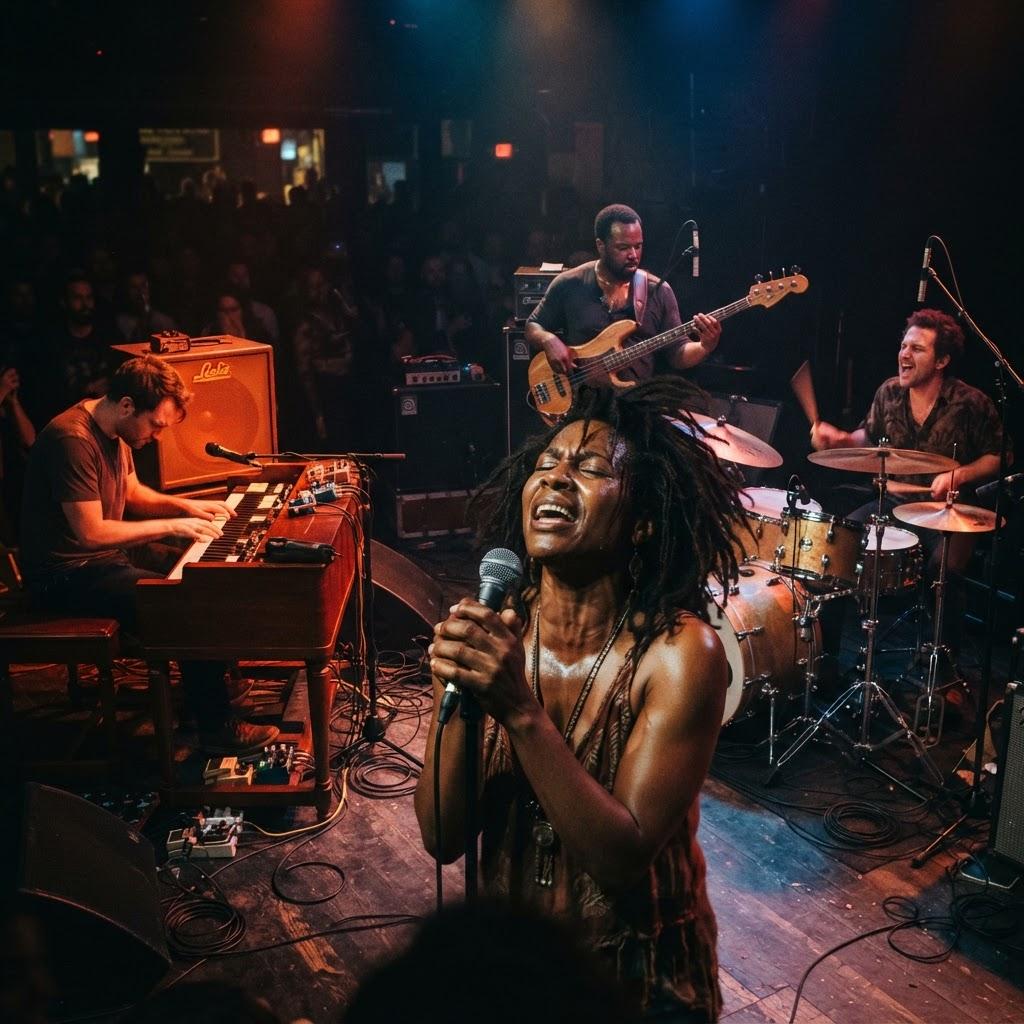
To understand the mechanics of Funk, one must imagine a clock where every gear is slightly loose, yet they all work together to create the most rhythmic contraption in existence. At the center of this mechanism is the bass guitar, which in Funk is not a background character but the lead protagonist. Funk basslines are often described as 'in the pocket,' which is a way of saying they are so tight and perfectly timed that they sit perfectly inside the rhythm of the drums. Then there is the 'chicken-scratch' guitar, a technique where the player mutes the strings with their left hand while plucking them with their right. It sounds like a rhythmic frying pan, creating a percussive, clucking noise that drives the song forward. We cannot ignore the horns—usually a trumpet, saxophone, and trombone—which act like the genre's megaphone, punctuating the silence with sharp, bright blasts of energy. The tempo is usually a steady, head-nodding mid-tempo, somewhere between a relaxed strut and a frantic dash. Everything in a Funk song is subservient to the groove; if a melody gets in the way of the rhythm, the melody gets kicked out of the room. It is all about 'syncopation,' which is just a fancy musician word for accenting the notes that you do not expect to hear, giving the music a stuttering, bouncy feel that prevents it from ever feeling stale or predictable.
Origins & Birth of the Sound
The story of Funk begins not in a pristine recording studio, but in the humid, electric atmosphere of 1960s America, where the lines between Jazz, Soul, and R&B were beginning to blur into a beautiful, sweaty mess. It was born out of a desire for a more raw, visceral connection between the performer and the listener. In places like New Orleans, where the brass band tradition had been thriving for decades, musicians began experimenting with stripping away the complex harmonies of Jazz to focus on the grit. The genre bubbled up from the streets, fueled by a changing social landscape where musicians were finding new ways to express Black identity through danceable, unapologetic music. It was the sound of the urban experience—the clatter of the city, the hum of the nightlife, and the absolute necessity of finding joy in tough times. By the time the sound migrated to places like Detroit and Dayton, it had been distilled into a weapon of mass joy. It wasn't about the formal presentation of concert halls; it was about the juke joint, the house party, and the basement rehearsal space. This was music that belonged to the people, intended to be felt in the floorboards and the marrow of your bones, marking a transition from the smooth polish of Motown to the jagged, syncopated electricity of the Funk movement.
The Pioneers & Legends
If Funk were a royal court, James Brown would be the undisputed king, sitting on a throne made of speakers and glitter. He was the architect of the 'One,' the man who insisted that every instrument must function like a drum. He famously ran a band that was as disciplined as a military unit, firing members if they missed a single beat or scuffed their shoes. Then you have George Clinton, the eccentric philosopher-king of P-Funk. Imagine a mad scientist wearing a diaper and a rainbow wig, leading a mothership made of cardboard into a sold-out arena—that was George. His projects, Parliament and Funkadelic, were sprawling, psychedelic operas about aliens, black pride, and the importance of partying. He took the grit of the street and turned it into a cosmic space odyssey. You also have legends like Sly Stone, who mixed the raw energy of Funk with a psychedelic, hippie sensibility, creating songs that were both politically charged and incredibly infectious. Bootsy Collins, with his star-shaped sunglasses and his bass guitar that looked like a space laser, became the human embodiment of the Funk aesthetic. These artists were not just musicians; they were superheroes who used their instruments to force a smile onto the faces of anyone within earshot, turning their eccentricities into a cultural armor that made them icons.
Defining Tracks & Era-Defining Moments
To really get what Funk is about, you have to subject your ears to the masters at work. Take 'The Payback' by James Brown; it is a masterclass in tension and release, where the groove stays locked for what feels like an eternity while the tension builds under your skin. It is the ultimate musical 'don't mess with me' anthem. Then there is 'Flash Light' by Parliament, which features one of the first truly iconic synthesizer basslines. That bubbly, watery sound changed the course of pop music forever, proving that a computer could have more soul than most human beings. Don't skip 'Thank You (Falettinme Be Mice Elf Agin)' by Sly and the Family Stone, which is basically the musical equivalent of a street-corner block party where everyone is invited to dance. It is stripped-back, aggressive, and so incredibly catchy that it might be legally dangerous. These songs are the cornerstones of the genre, serving as the high-water marks for what a rhythm section could achieve when they decide to stop overthinking and start simply feeling the vibration. When these tracks dropped, they were not just hits; they were seismic shifts in the cultural tectonic plates, proving that a simple, repeating groove could do more to unify a crowd than a thousand-page manifesto.
Subgenres & Offshoots
As Funk matured, it started getting creative, branching out into weird and wonderful new territories like a musical banyan tree. You had 'P-Funk,' which was the psychedelic, space-obsessed sibling that preferred long, rambling jams and elaborate costumes. Then came 'Disco,' which took the sweat-soaked energy of Funk, put it in a silk suit, and sent it to the dance clubs of New York. While purists might debate the 'soul' of Disco, its entire structural skeleton—the four-on-the-floor beat, the syncopated bass—is pure Funk DNA. Further down the line, Funk collided with Jazz to create 'Jazz-Funk,' a technical, high-speed variant that featured more complex melodies and solos for people who wanted their groove with a side of music school theory. Later, 'Electro-Funk' emerged, where the synthesizers took center stage, replacing the live horns with robotic, computerized sounds that paved the way for everything from early hip-hop to modern techno. Each of these subgenres took a different aspect of Funk—the rhythm, the instrumentation, or the philosophy—and amplified it until it became something entirely new, proving that Funk wasn't just a style, but a foundational set of principles that could adapt to any technological change or musical trend that came its way.
Cultural Impact & Influence
The cultural reach of Funk is so vast that it is almost impossible to find a piece of modern pop culture that hasn't been touched by its greasy hands. Think about fashion: those massive, platform-soled boots, the wide-collared shirts, the leopard-print jumpsuits, and the oversized sunglasses—that is all Funk energy. It made being loud, proud, and unapologetically colorful a form of protest. Beyond the clothes, Funk fundamentally changed the way we dance. It introduced a type of movement that was less about ballroom steps and more about individual expression—jerking, popping, locking, and just letting your body react to the rhythm. Linguistically, it gave us a vocabulary of coolness, a slang that seeped into the streets and eventually into the mainstream. Politics, too, were woven into the fabric of the music. While it often sounded like a party, the lyrics were frequently subversive, challenging authority and calling for unity during a time of massive civil rights upheaval. Even the way movies and television are edited today owes a debt to Funk; the idea of the 'hook' or the 'drop' is essentially a cinematic technique applied to sound, creating anticipation and payoff that keeps the audience hooked and ready for more.
Controversies & Drama
Naturally, a genre that was this loud and proud didn't stay out of trouble for long. In the mid-70s, the so-called 'Disco Sucks' movement became a bizarre cultural backlash, but beneath the surface, it was often coded racism against the Funk and Disco roots that were primarily built by Black and queer communities. Radio stations would sometimes refuse to play the funkier, more explicit tracks, claiming they were 'too raw' or 'too suggestive,' which is hilarious considering what passes for radio-friendly today. There were also the legendary rivalries between bands, like the high-stakes 'battle of the bands' that would happen in cities across the US, where groups would literally try to play each other off the stage through sheer volume and technical ability. George Clinton’s erratic management of his various P-Funk ensembles also created a soap opera of litigation, lost record rights, and band members coming and going like a revolving door. But in true Funk fashion, most of this drama ended up in the music itself. The scandals were fuel for the fire, and the rivalries pushed every artist to sharpen their skills. Even the moral panics over the 'lewd' dance moves associated with the genre just made people want to hear it more, proving that you can never really stop a good beat.
Global Spread & Regional Scenes
Funk did not stay in the United States; it jumped on a jet plane and started influencing ears all over the globe. In West Africa, musicians like Fela Kuti merged Funk with traditional highlife and jazz to create 'Afrobeat,' a genre that was as political as it was danceable, using the Funk groove to soundtrack revolutions. In Brazil, Funk became a completely different animal—'Baile Funk' took the heavy percussion and morphed it into something gritty, fast-paced, and incredibly local to the favelas of Rio. In Japan, city pop producers obsessed over the tight production of American Funk, creating a shiny, futuristic take on the genre that is still being sampled by hip-hop artists today. Even in the UK, the post-punk scene caught the Funk bug, realizing that a jagged, rhythmic bassline could sound just as cool in a gloomy London club as it did in a sunny California park. Everywhere it landed, Funk adapted. It didn't demand that you play it exactly like it was played in Dayton or New Orleans; it just asked that you keep the 'One' strong and keep the rhythm in your heart, allowing it to become a universal language of movement.
The Modern Landscape
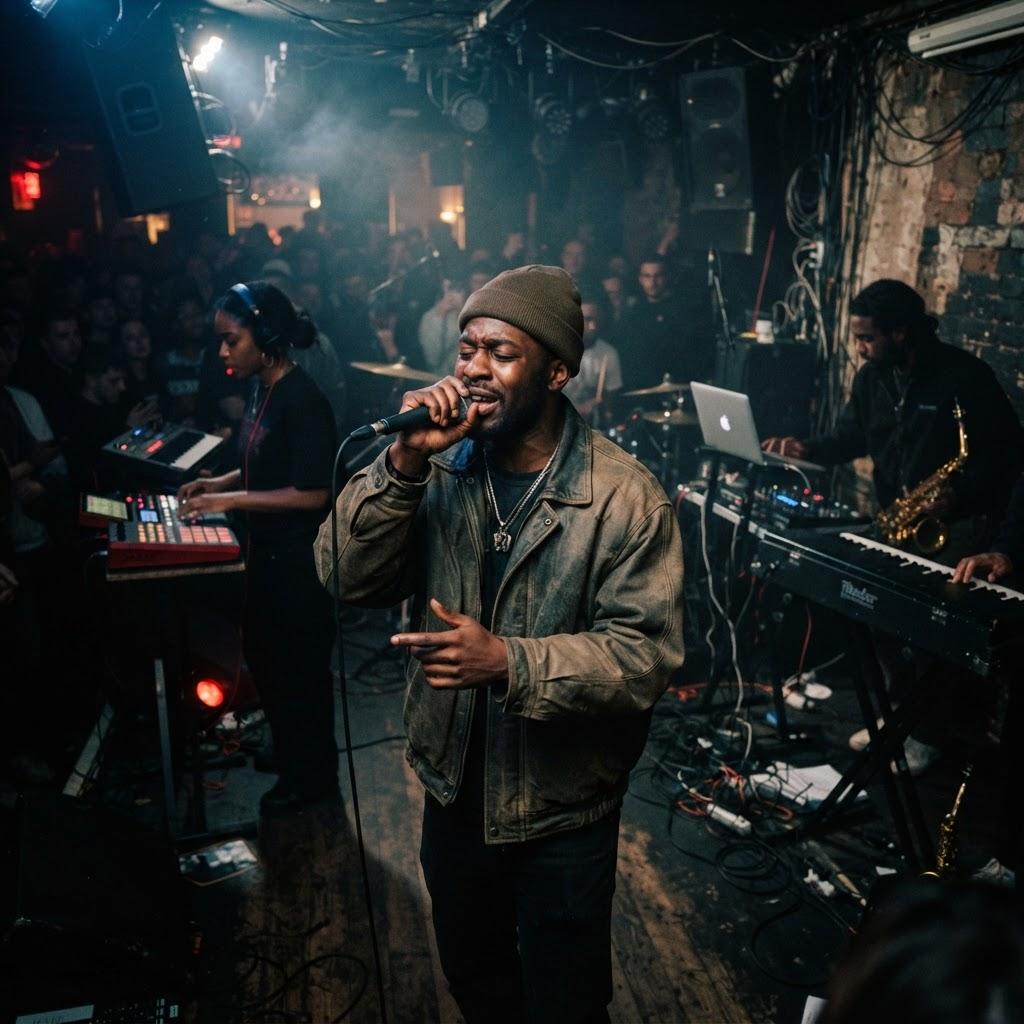
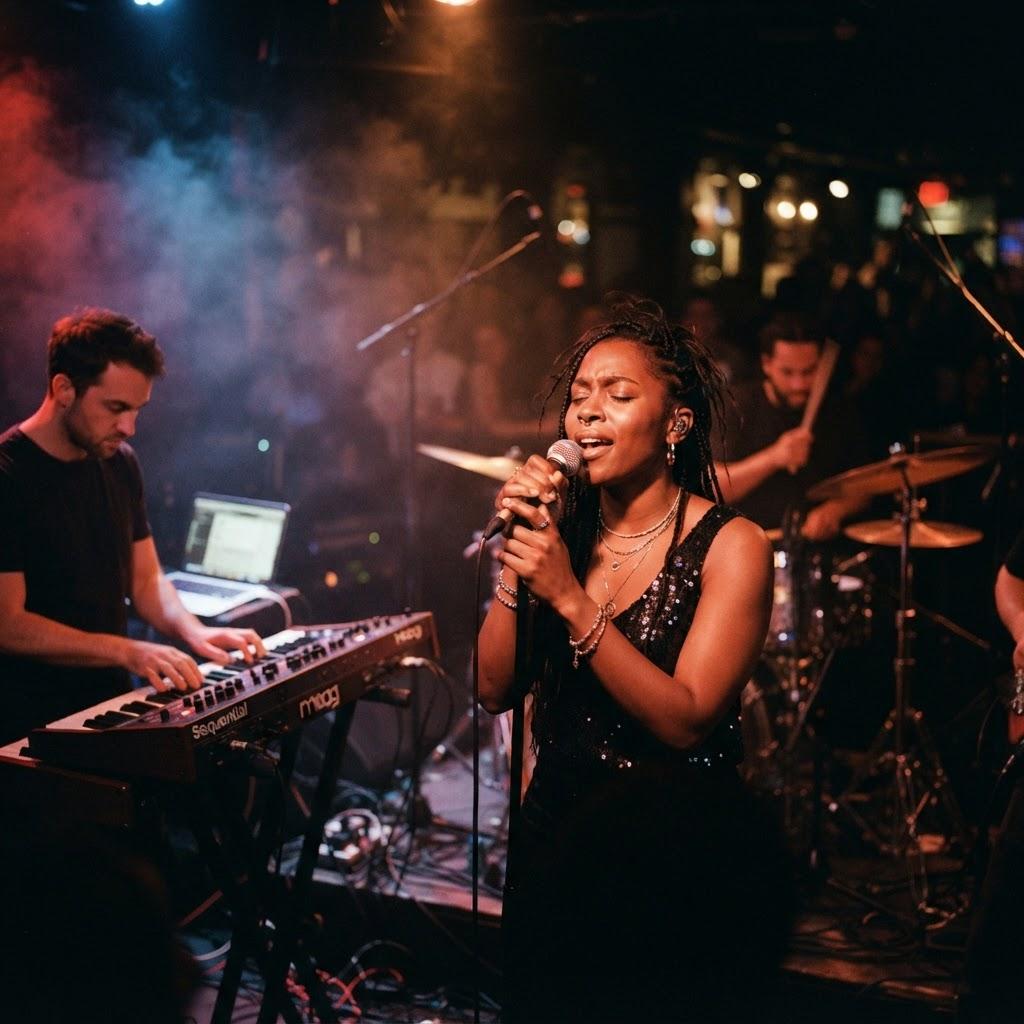
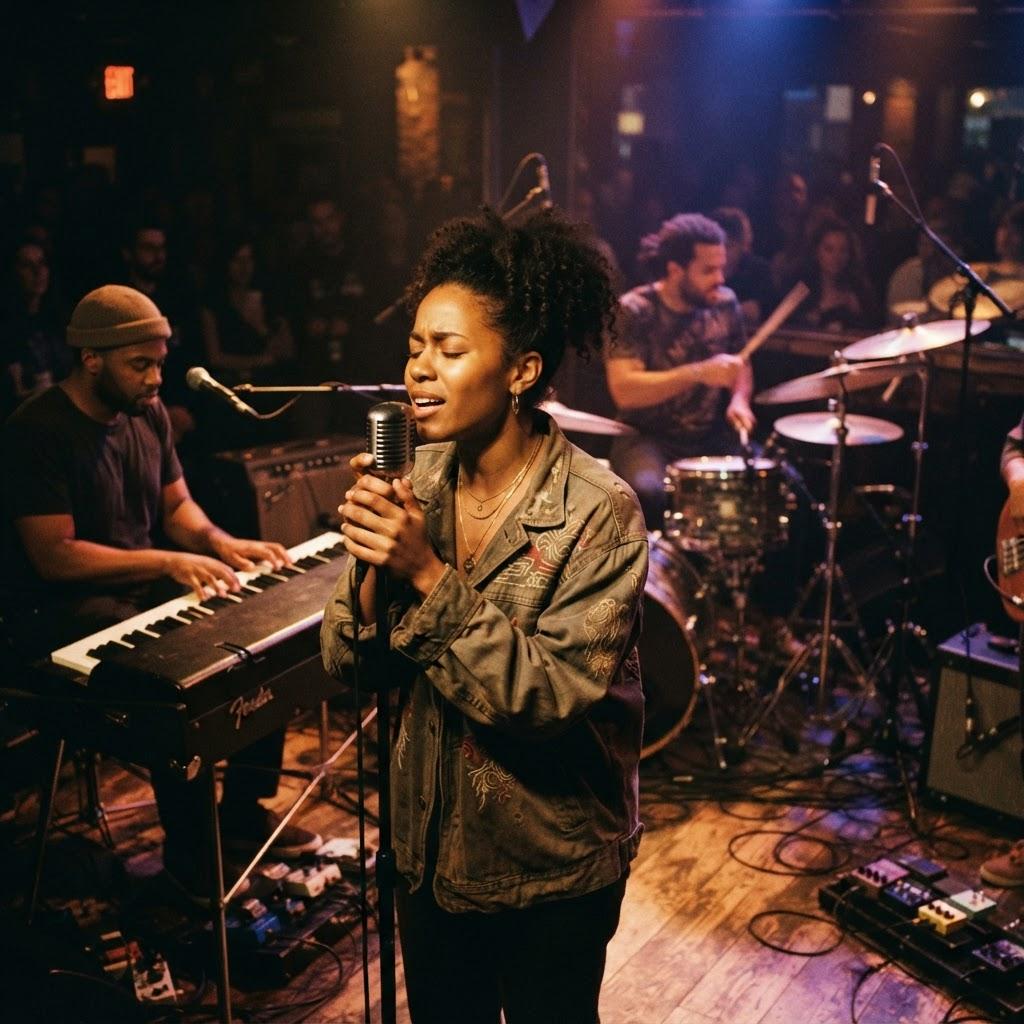
Today, Funk is the silent partner in almost every successful pop song. You hear it in the 'slap bass' lines of modern R&B, the synth-driven hooks of indie-pop, and the sample-heavy loops that form the backbone of modern Hip-Hop. Artists like Bruno Mars have built entire careers by masterfully recreating the aesthetic, proving that the world is always hungry for that classic, feel-good bounce. But it is not just about nostalgia. A new generation of musicians is taking the original elements of Funk—the live instrumentation, the improvisational spirit, and the technical virtuosity—and blending them with modern electronic textures. Festivals around the world still see massive crowds losing their minds the second a bass player starts walking a line that hits that deep, visceral spot in the center of the brain. Whether it is a lo-fi bedroom producer cutting up a drum break or a massive stadium act bringing a full horn section on stage, the pulse of Funk is still beating, stronger than ever. It has survived the rise of the digital age by becoming the essential 'human' element that prevents electronic music from feeling too cold or mechanical. It is the heartbeat of modern sound.
How to Dive In
If you are ready to let Funk take control, you need a starting lineup that covers the spectrum. Begin with 'Give Up the Funk (Tear the Roof off the Sucker)' by Parliament for the full, cosmic, group-vocal experience. Move on to 'Superstition' by Stevie Wonder to hear how a simple, punchy clavinet riff can carry an entire universe of sound. Throw on 'Fire' by the Ohio Players if you want to understand how a horn section can provide as much heat as a fireplace, and definitely check out 'Cissy Strut' by The Meters for a masterclass in how to make a rhythm section sound like it is breathing. When you listen, do not just treat it as background noise. Close your eyes, find that bassline, and track it through the song. Pay attention to how the guitar stabs pop in and out, and try to find the 'One'—the first beat of the bar. Once you find it, you will never lose it. Funk is not a genre you study; it is a genre you join. So, go find those tracks, crank the volume, and let your feet do the thinking. Your life is about to get a lot more rhythmic, and honestly, you deserve it.