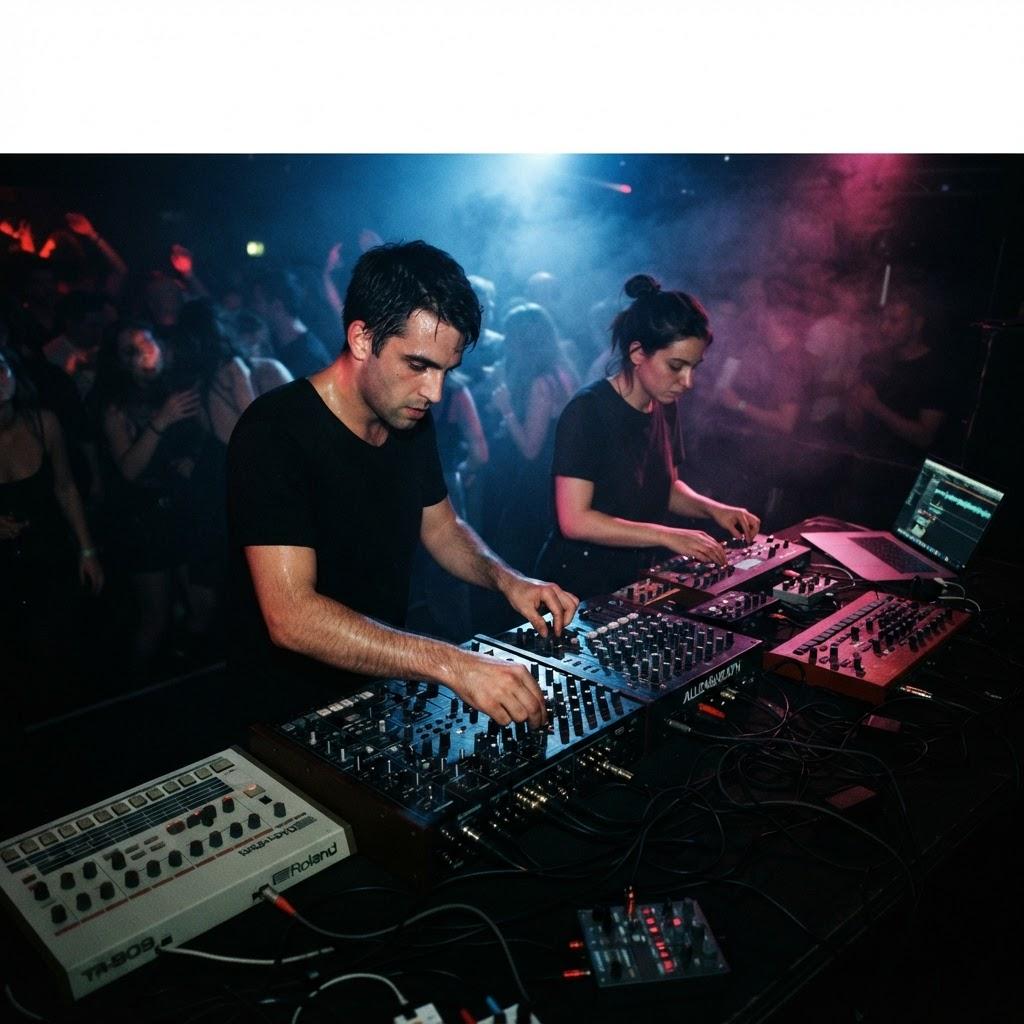
1980s, Detroit, Michigan
Techno
Techno is the relentless, mechanical heartbeat of the dancefloor, born from the industrial soul of Detroit. It is a mesmerizing journey into rhythm where human emotion meets the cold, beautiful precision of the machine.
Meet the Genre
Imagine a cold, rainy Tuesday night in a city that’s forgotten how to sleep, but you’re stuck inside a giant, pulsing robot heart. That is the essence of Techno. It isn't just music you listen to; it is a physical sensation that creeps up your spine and demands that your feet keep moving long after your brain has checked out. Techno is the cool, metallic cousin of dance music who doesn't need a singer to tell you how to feel. Instead, it uses repetitive, hypnotic loops to carve out a space in your head where nothing exists but the rhythm. It is stripped-down, industrial, and gloriously weird. While other genres might beg for your attention with soaring choruses or heart-wrenching lyrics, Techno is busy building a cathedral out of drum machine clicks and laser-beam synthesizers. It is the sound of the future as imagined by people who were bored with the radio. Once it locks into your consciousness, you realize that the repetition isn't boring—it is a portal. It is music for the night owls, the dreamers, and the folks who find peace in the mechanical hum of a perfectly synced sequence.
The Sound & Signature Elements
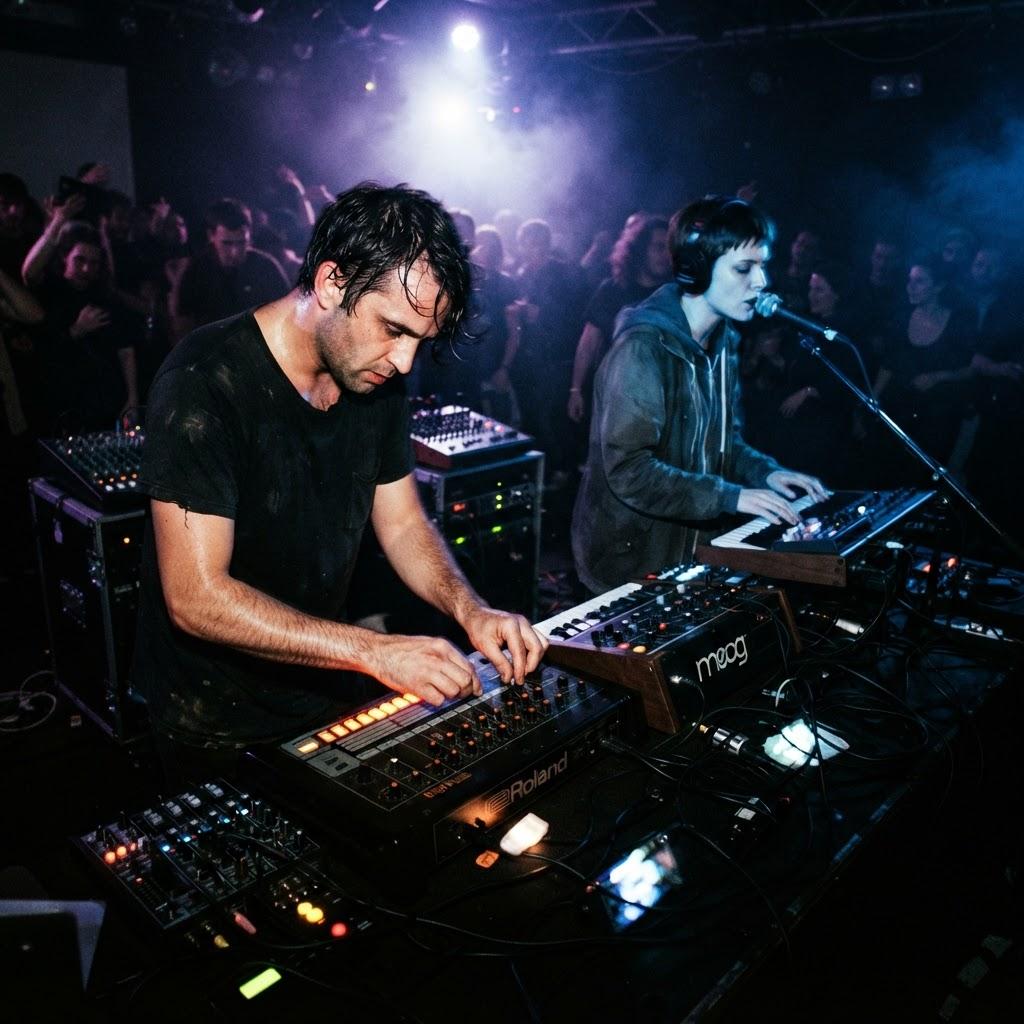
At its core, Techno is all about the 'four-on-the-floor' beat, which basically means a kick drum hits on every single beat of a four-beat measure—one, two, three, four. It is the rhythmic equivalent of a steady, reliable heartbeat. The tempo usually hangs out between 120 and 150 beats per minute, which is fast enough to make your heart race but steady enough to keep you locked in a trance. Then there are the synthesizers, which sound like digital aliens communicating via Morse code, and the sequencers—tools that let producers arrange sounds in precise, repeating patterns. Think of a sequencer like a programmable brick-layer; it makes sure every sound lands exactly where it needs to, every time. You won't find traditional verses or choruses here; instead, the song structure is built on adding and subtracting layers of sound. A producer might introduce a hi-hat, then a rumbling bassline, then a screechy, metallic melody, building the intensity until the 'drop' hits like a freight train. It is a game of sonic Jenga, where the tension rises and falls, keeping the dancefloor hanging on every microscopic change in the loop.
Origins & Birth of the Sound
Techno didn't just appear; it was forged in the post-industrial rust of 1980s Detroit. Think of the city as a ghost town of massive, silent factories and decaying skyscrapers, a place where the American Dream had sort of stalled out. A trio of high school friends known as the Belleville Three—Juan Atkins, Derrick May, and Kevin Saunderson—were looking at the wreckage and thinking about the future. They were listening to dark, European synth-pop like Kraftwerk, which sounded like calculators playing funk music, and mixing it with the gritty, deep soul of American funk and R&B. They wanted to create a sound that felt like the machines they grew up around, but with the 'soul' of the Motown legacy that ran through the city’s veins. They were kids with synthesizers in their basements, patching wires together to see if they could make their equipment scream. It was an act of creative defiance. They weren't trying to make pop hits; they were trying to soundtrack the transition from the assembly line to the motherboard. They created Techno as a vehicle to escape the dying reality of their surroundings by literally building a new one out of electricity and grit.
The Pioneers & Legends
The legend of the Belleville Three is the stuff of music history books, but the mythology only grows from there. Juan Atkins is often called the 'Godfather' of Techno, and for good reason—he saw the connection between the electronic gloom of Kraftwerk and the rhythmic funk of Parliament-Funkadelic before anyone else did. Derrick May, on the other hand, brought a kind of beautiful, fractured emotion to the genre, claiming his music sounded like 'George Clinton and Kraftwerk stuck in an elevator.' Then you have the mysterious, anonymous heroes of the movement, like Jeff Mills, who treats a DJ booth like a space-exploration cockpit. Mills is famous for his inhuman ability to mix three records at once with lightning speed, creating a chaotic yet perfectly controlled hurricane of sound. There is also Underground Resistance, a collective that acted more like a techno-guerilla unit, fighting the mainstream music industry with raw, aggressive, and fiercely independent sounds. These people weren't just musicians; they were architects of a new sonic reality who risked being ignored by the world, yet they kept pushing their machines to the breaking point until the world had no choice but to dance along.
Defining Tracks & Era-Defining Moments
If you want to understand the lineage of the genre, you have to look at the tracks that acted as the 'Big Bang' moments. Juan Atkins, recording as Model 500, dropped 'No UFO's' in 1985, which is widely considered the first proper Techno track. It features a squelchy, bizarre bassline that sounds like a robot trying to tell a joke, and it immediately set the template for everything that followed. Then came 'Strings of Life' by Derrick May, a song that ditches the typical drum-heavy Techno formula for soaring, orchestral strings that feel like a sunrise after a ten-hour rave. It’s the moment Techno proved it could be beautiful. Meanwhile, Kevin Saunderson’s 'Big Fun' under his Inner City alias proved that Techno could actually be a massive, chart-topping pop success, bringing the sound to the masses. These tracks weren't just songs; they were blueprints. Every time a new producer sits down to make a beat today, they are essentially walking through doors that these songs kicked open thirty years ago. They are the artifacts of a revolution that was broadcast through cheap speakers and massive sound systems alike, changing the trajectory of club culture forever.
Subgenres & Offshoots
Once Techno started growing, it started mutating, because Techno is basically a virus that loves to evolve. You have 'Acid Techno,' which is defined by the squelchy, acidic sounds of the Roland TB-303 synthesizer—a machine that was originally a total failure but eventually became the most beloved sound in dance music. It sounds like a liquid snake trying to escape a pipe. Then there is 'Minimal Techno,' where producers decide to strip everything away until there’s almost nothing left, making it the zen garden of the genre; it’s all about the tiny, subtle clicks that happen in the silence. On the flip side, you have 'Hard Techno,' which is basically Techno’s angrier, caffeine-fueled cousin that hits you in the chest with high speeds and industrial-strength distortion. Don't forget 'Detroit Techno,' which maintains that deep, soulful, and spacey heritage, or 'Dub Techno,' which takes the foundation and buries it in layers of echo and reverb, making it sound like it’s being played through a fog of thick, humid air. Every subgenre is just a different flavor of the same core philosophy: let the machine do the talking.
Cultural Impact & Influence
Techno didn't just change music; it fundamentally altered how we think about the weekend. Before Techno, the dancefloor was often about a performer—a singer or a guitar player—holding court. With Techno, the DJ became the conductor, and the crowd became the performance. It birthed the modern 'rave' culture, a massive, global phenomenon defined by inclusivity, long nights, and an obsession with sound quality. Fashion-wise, it stripped away the glitz of the disco era and replaced it with functional, futuristic gear—oversized hoodies, combat boots, and neon colors that looked great under strobe lights. It also influenced film, with directors using the cold, relentless pulse of Techno to score scenes about hackers, cyber-thrillers, and dystopian futures. You can even hear the DNA of Techno in modern pop and hip-hop; whenever you hear a crisp, synthetic drum beat in a chart-topping radio song, you are hearing the ghost of a Detroit basement. It made electronics seem cool, accessible, and human. It taught a whole generation that you didn't need a million-dollar studio or a record label's permission to create a masterpiece; you just needed a drum machine and an idea.
Controversies & Drama
You’d think a genre built on repetitive beats would be pretty chill, but the Techno world has had its fair share of high-stakes drama. The biggest war is always between the 'purists' and the 'pop-seekers.' Purists love to stand in the corner of a dark, smoke-filled room and argue that if it’s too melodic or catchy, it’s not 'real' Techno. They treat the genre like a religion that shouldn't be polluted by commercial sounds. Then you have the 'sellout' accusations, which fly around whenever a Techno producer gets a little bit famous or signs with a big label. It’s like, 'Oh, you want to make a living? Traitor!' Then there are the epic battles over DJ equipment. Remember when everyone transitioned from vinyl records to digital USB sticks? You would have thought the world was ending based on the heated debates in message boards. 'Vinyl is the only way to feel the sound!' shouted the old guard, while the digital pioneers argued that being able to mix more tracks more effectively was the natural evolution of the art. It’s all a bit silly, but that’s the passion of a genre that takes itself incredibly seriously.
Global Spread & Regional Scenes
Techno left Detroit and became a global phenomenon, but it changed its accent depending on where it landed. When it hit Berlin after the wall came down, it found its true spiritual home. Berlin was a city of empty warehouses and dark, concrete bunkers, and Techno was the perfect soundtrack for the city's chaotic, rebellious energy. The Berlin sound became darker, grittier, and more intense, turning clubs like Berghain into world-famous temples of nocturnal worship. Meanwhile, in Japan, the Techno scene developed an obsession with extreme precision and futuristic aesthetics, with producers creating music that sounded like it was made on a spaceship headed toward a distant star. In the UK, Techno cross-pollinated with rave and jungle, resulting in faster, breakneck rhythms. Even in places like South America or South Africa, local scenes have taken the Techno template and infused it with local percussion and rhythms, proving that the language of the 'four-on-the-floor' kick drum is truly universal. Wherever it goes, Techno acts like a chameleon, absorbing the local architecture and social mood to become something unique, while always keeping that mechanical heart beating at its core.
The Modern Landscape
Today, Techno is doing better than ever, thriving in a world that feels increasingly like a sci-fi novel. It has shifted from being a niche underground obsession to a major force in the global music industry. You can walk into a festival in the middle of a desert, a basement club in London, or even see bits of it on TikTok trends. The production tools have become so powerful that a kid with a laptop can create sounds that would have required a room full of expensive gear in the 80s. This has led to an explosion of creativity, where modern producers are blending Techno with everything from classical music to heavy metal, constantly testing what the genre can handle. It’s also become more diverse, with an incredible wave of female and non-binary artists taking the lead and bringing fresh perspectives to a genre that was once dominated by a small group of guys in Detroit. It is a constantly moving target; just when you think you’ve figured out what Techno is, a new artist comes along, speeds it up, adds a weird vocal sample, and suddenly the whole genre feels new and exciting again.
How to Dive In
Ready to get lost in the machine? Start by listening to the foundational texts. Begin with the 'Techno! The New Dance Sound of Detroit' compilation; it’s like reading the history book of the genre in a single sitting. For a deeper, more atmospheric dive, put on Jeff Mills’ 'Waveform Transmission' or Robert Hood’s 'Minimal Nation'—these albums will teach your ears how to appreciate the minimalism and the raw power of a single, repeating loop. If you want to see where the modern sound is heading, check out artists like Helena Hauff for something gritty and electric, or Charlotte de Witte for those massive, stadium-shaking basslines. Don't try to intellectualize it; just put on a pair of good headphones, turn the volume up, and let your body find the rhythm. If you find your foot tapping or your head bobbing, you’re doing it right. Techno is about losing the self in the sound, so stop overthinking, hit play on a high-energy mix, and prepare to have your mind cleared out by the glorious, relentless power of the beat. The night is young, the sequence is running, and the dancefloor is waiting!