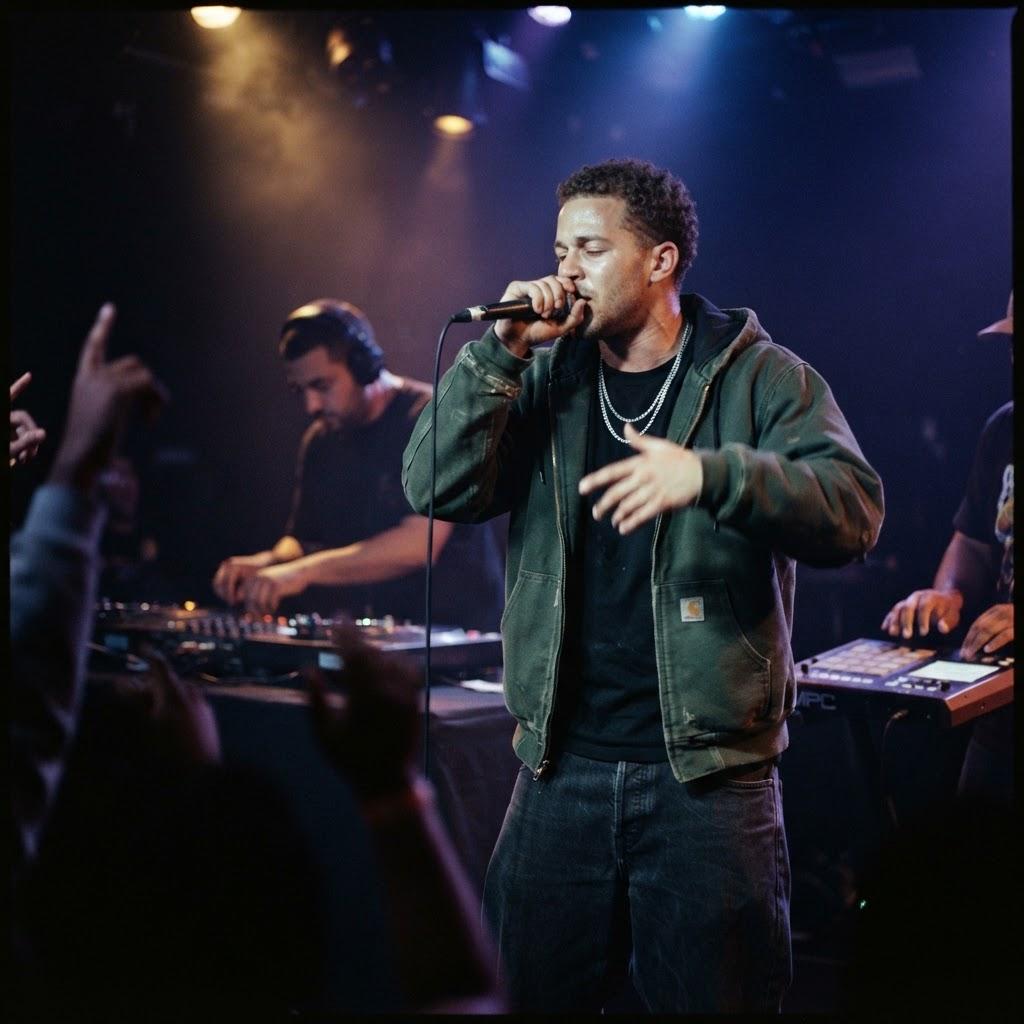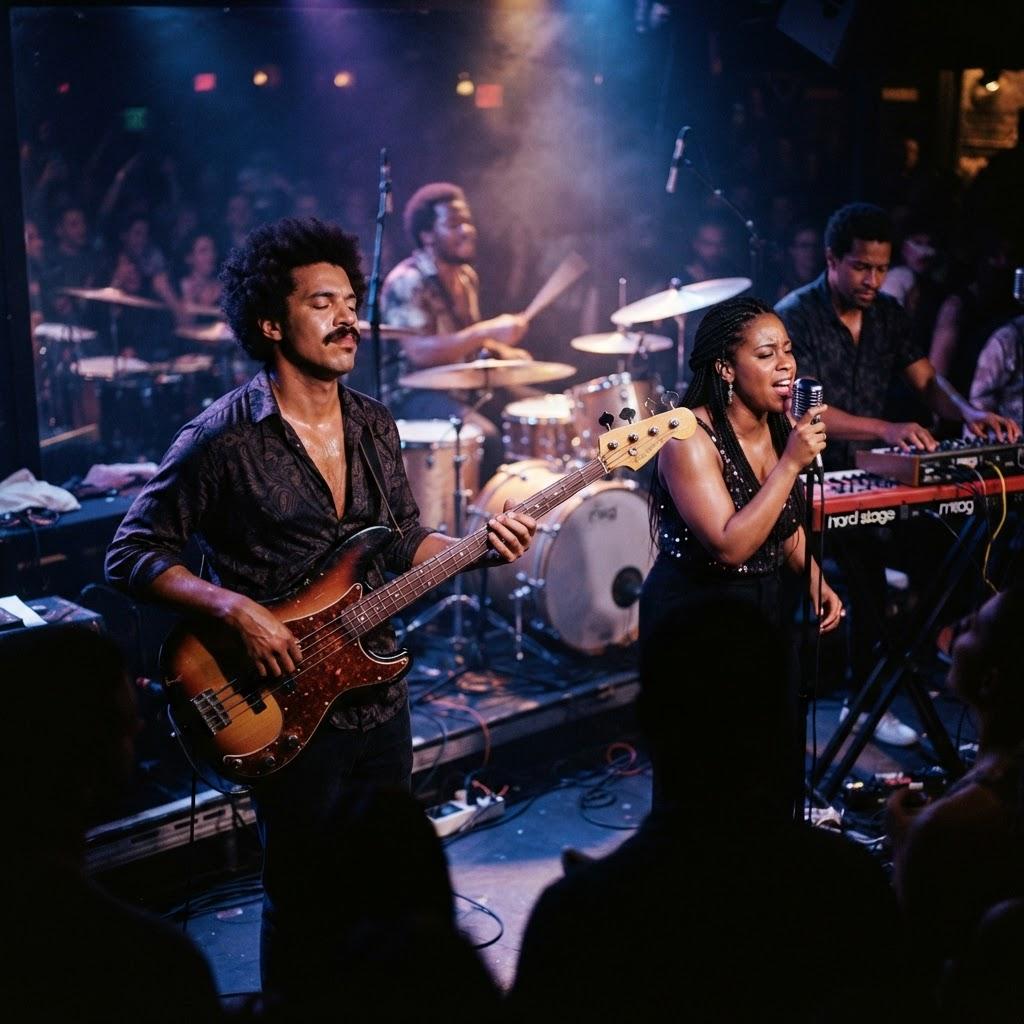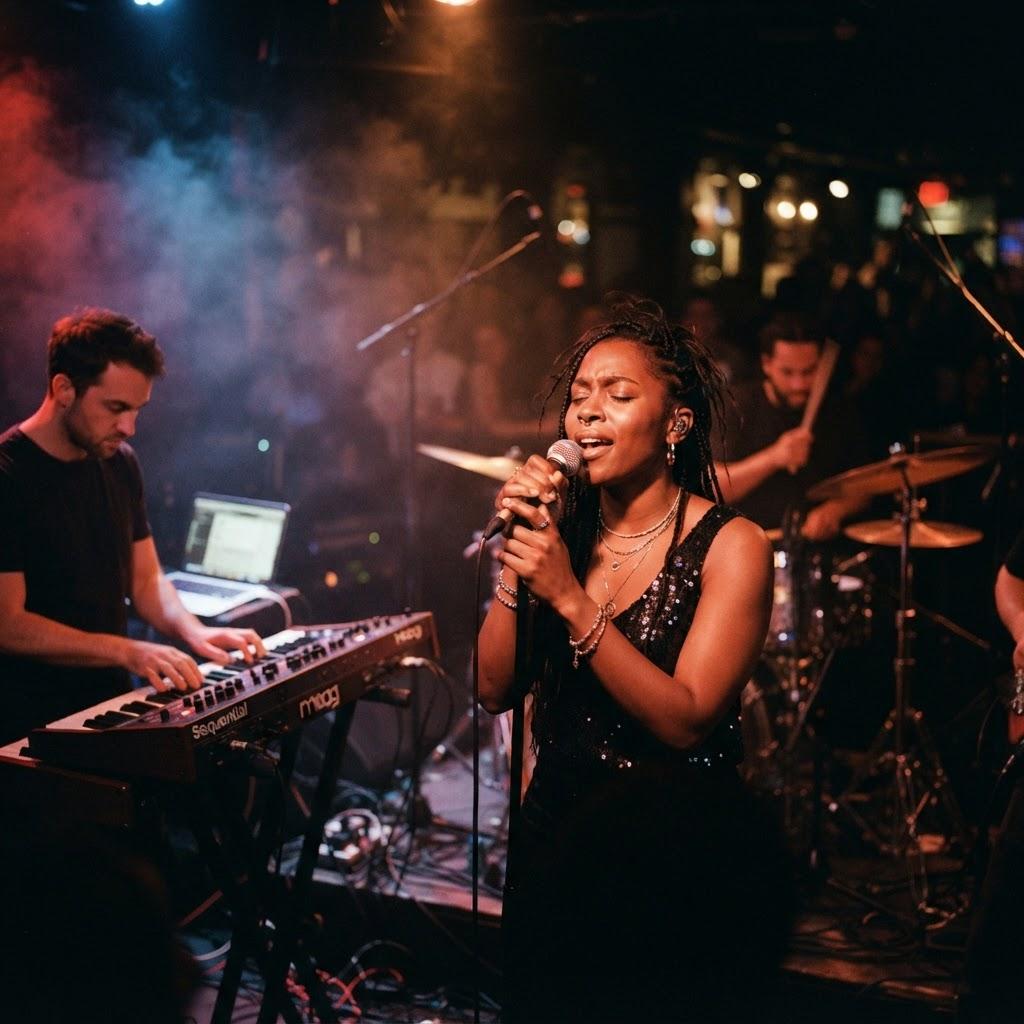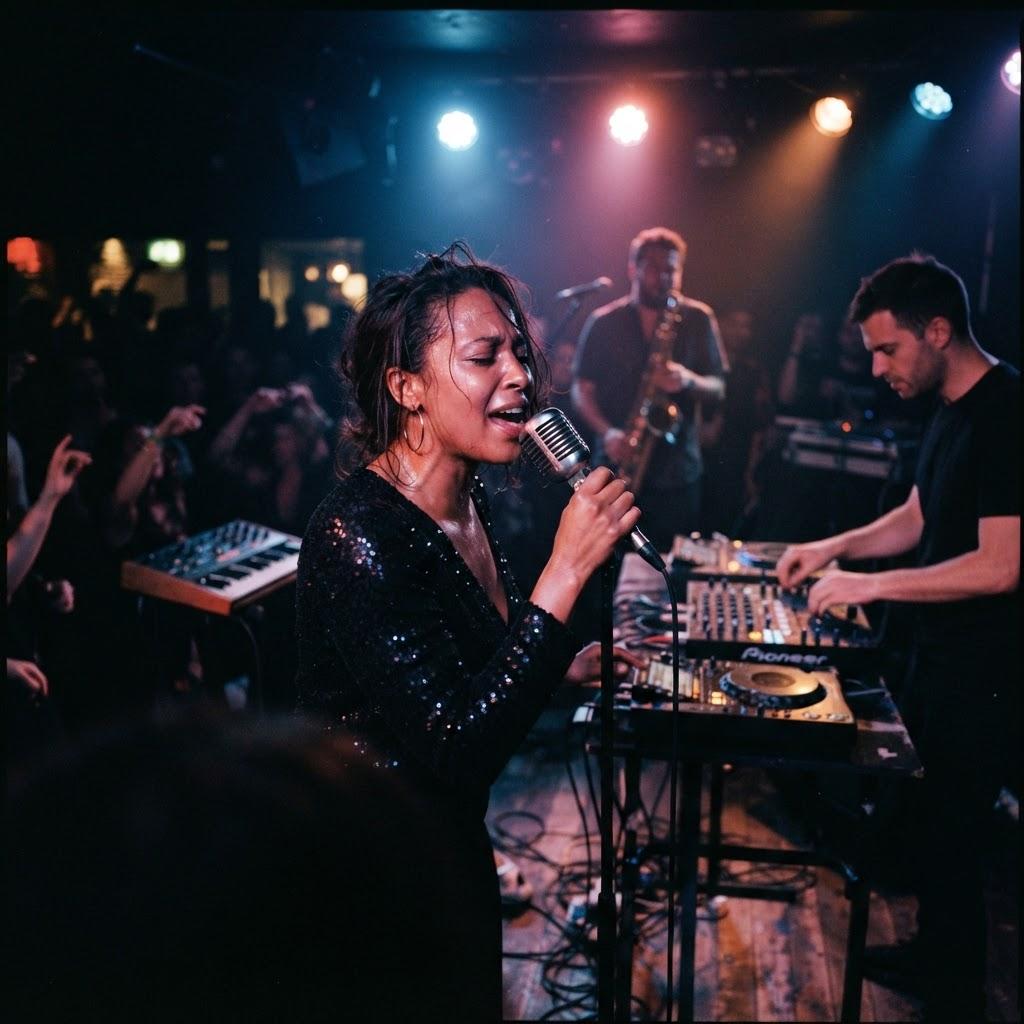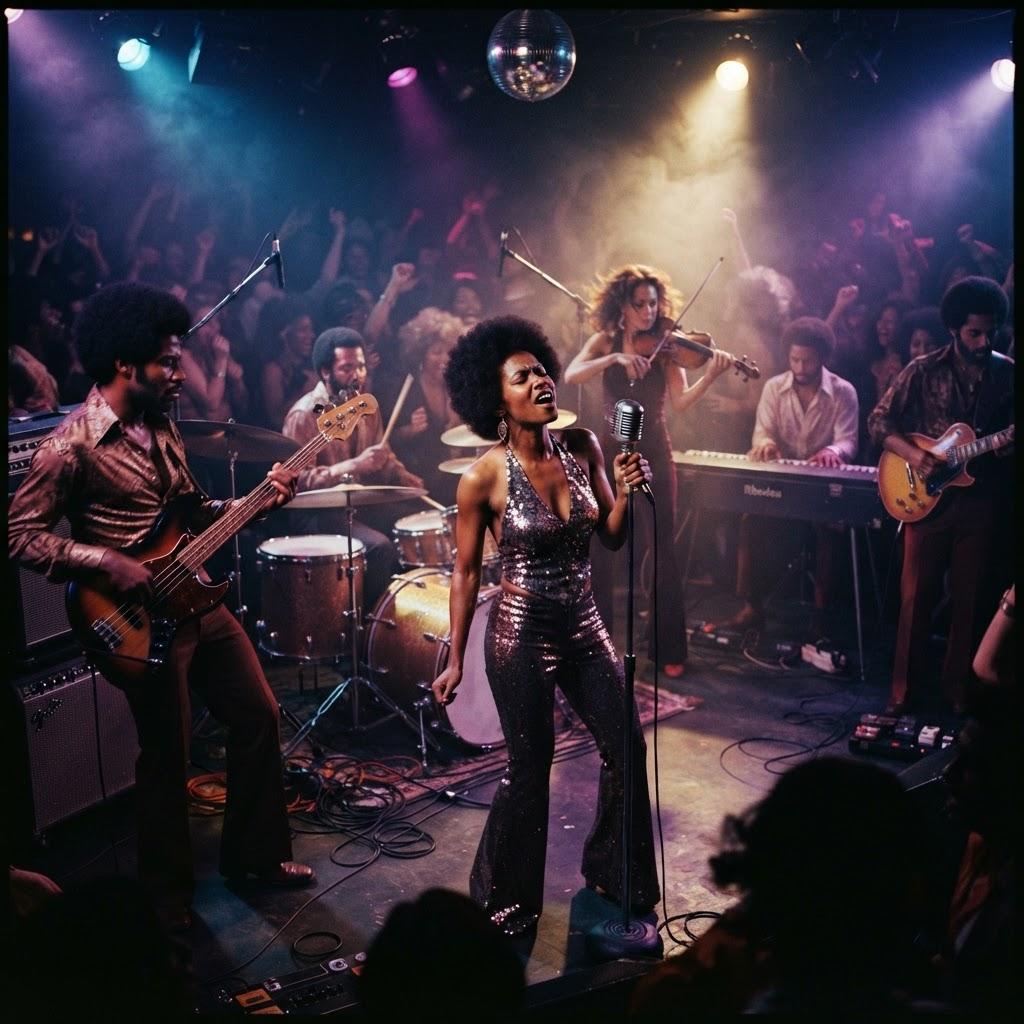
1970s, New York City, USA
Disco
Disco is the sparkly, high-energy glitter bomb that forced the world to put on platform shoes and dance until the sun came up. It is a glorious, bass-heavy revolution of pure joy that turned the dance floor into a sanctuary.
Meet the Genre
Picture a room bathed in the kaleidoscope reflections of a giant rotating mirror ball, where the air is thick with anticipation and the scent of expensive perfume and cheap cologne. Disco is not just a genre of music; it is an emotional state, a high-octane celebration that demands your absolute participation. It is the glittering king of the seventies, wearing a jumpsuit made of pure audacity and sporting a pair of platform boots that could reach the moon. When that bass drum kicks in, it acts like a heartbeat for the entire room, pulsing in a steady, hypnotic rhythm that dissolves all your bad days into a puddle of sweat and endorphins. It is the music of inclusivity, where the lonely, the loud, and the fabulous all found their home under the flickering lights of the discotheque. Disco is unapologetically hedonistic, obsessed with the physical sensation of sound, and built to turn even the most rhythmically challenged individuals into masters of the floor. It is a sonic fever dream that never actually ended, just waited patiently for the next generation to put on their best sequins and boogie.
The Sound & Signature Elements
At the very core of disco is the 'four-on-the-floor' kick drum pattern, which is exactly what it sounds like: a steady, driving thump on every single beat of a 4/4 measure. Think of it like a relentless metronome that refuses to get tired. This beat acts as the sturdy floor upon which the rest of the madness is built. Then comes the bassline—the true secret sauce. Disco basslines are melodic, bouncy, and often played with a technique where the player plucks the strings so hard they snap against the fretboard, creating a percussive, metallic 'pop.' Layered on top are lush orchestral strings that swoop and swirl like they are performing in a grand opera, adding a dash of cinematic class to the grimy nightclub sweat. You will also hear the shimmering, insistent 'chick-chick' of a hi-hat cymbal, which acts like a caffeinated energizer bunny, pushing the tempo forward. Musicians use a bit of studio magic called 'compression' to make everything sound tight and punchy, ensuring that the volume remains consistent so that even in a giant club, every single note hits you square in the chest with the force of a velvet-covered sledgehammer.
Origins & Birth of the Sound
Long before it was a global obsession, disco was a secret handshake whispered in the dark corners of underground New York City bars. In the early 1970s, marginalized communities, specifically Black, Latino, and queer dancers, were looking for a space to exist without the judgment of mainstream society. They found it in private loft parties and hole-in-the-wall clubs where the music was curated by pioneers who cared less about radio hits and more about keeping the crowd moving until sunrise. These early DJs began splicing together long, instrumental sections of funk and soul tracks, creating an endless loop of rhythm. They didn't want the music to have an ending; they wanted it to be a trance. The term 'disco' itself is a shortened version of 'discotheque,' a French term for a place where records were played instead of live bands. It was born out of economic necessity and creative genius—why pay for a band when one person behind two turntables could create a seamless, non-stop sonic journey that hit harder than any drum set ever could? It was an act of defiance, taking the soul of R&B and the grit of funk and turning them into a perpetual motion machine for social revolution.
The Pioneers & Legends
The pantheon of disco gods is populated by legends who fundamentally changed how we relate to sound. First, you have Giorgio Moroder, the architect of electronic disco. This man didn't just record songs; he built sonic spaceships, utilizing synthesizers to create the iconic, futuristic pulsing sound found on Donna Summer’s 'I Feel Love.' He basically invented the sound of the future while wearing a tuxedo. Then there is the incomparable Nile Rodgers of the band Chic. His guitar style is a masterclass in economy and groove—those choppy, rhythmic chords are so tight they could slice paper. He made the guitar sound like a percussion instrument, and his influence echoes through every dance track made in the last forty years. We cannot forget the queens of the era, like Donna Summer, who brought operatic, breathless drama to the floor, or the Bee Gees, who accidentally stumbled into the disco stratosphere and emerged as the kings of the charts. These artists were not just singers; they were master conductors of the nightclub energy, understanding exactly how to build a song to maximize the collective sweat and euphoria of a crowded room.
Defining Tracks & Era-Defining Moments
To understand the gravity of disco, you have to look at the tracks that stopped the world in its tracks. 'Stayin' Alive' by the Bee Gees is the obvious choice, with that iconic walking-down-the-street bassline that immediately makes everyone want to strut. But look deeper. 'Le Freak' by Chic is a masterclass in studio perfection, a song that is so impossibly catchy it feels like it was written in a laboratory designed for human delight. Then there is Gloria Gaynor’s 'I Will Survive,' which shifted from a simple dance floor filler to an international anthem of personal resilience and post-breakup triumph. These songs were not just background noise; they were cultural lightning rods. When these records hit the airwaves, they didn't just top the charts—they altered the way radio worked, forcing programmers to respect the long-form dance track. The pivot point was when disco bled into cinema with the release of *Saturday Night Fever*. Suddenly, the underground had a face, and that face was John Travolta in a white suit. It transformed a specialized club culture into a global pop-culture phenomenon that literally forced everyone, from suburban parents to small-town teenagers, to try to master the finger-point dance move.
Subgenres & Offshoots
Disco is a family tree with branches that reach into some very strange and beautiful places. You have 'Italo-disco,' which emerged from Italy with a colder, more mechanical, and often delightfully cheesy synthesizer sound—think of it as the robotic cousin of American disco. Then there is 'Euro-disco,' which took the lush strings and added a continental flair, often leaning into grandiose arrangements and slightly more experimental song structures. If you head towards the harder, punchier side, you find 'Hi-NRG,' a genre that turned the tempo up to eleven and focused on high-speed, synthetic energy designed for relentless, marathon-length dancing. On the softer side, 'Disco-Funk' kept the groove tight but added a bit more soul-inspired instrumentation, feeling more like a sweaty backyard barbecue than a high-end club. And of course, we cannot forget the 'Boogie' scene, which took the disco template and injected it with more synthesizer grit and complex rhythm patterns, bridging the gap between the glitter-ball era and the rise of 1980s electro. Each branch carries the same DNA—the desire to make you move—but they all dress up in different costumes, proving just how versatile and resilient this genre really is.
Cultural Impact & Influence
The cultural tentacles of disco reached far deeper than the dance floor. It influenced the fashion world by making sequins, spandex, and lamé acceptable daily wear, pushing the boundaries of what 'glamorous' actually meant. The look was about shine, movement, and a bit of performance art; if your outfit didn't sparkle under the lights, were you even really at the party? Linguistically, it gave us a vocabulary of cool, turning the nightclub into the center of the universe. In terms of film, the era gave us cinematic snapshots of urban life, both the glitz and the decay, that remain definitive today. More importantly, disco laid the groundwork for modern dance music culture. The concept of the 'remix'—the art of taking a song and extending its life with new textures and rhythms—was pioneered by disco DJs. Every electronic music subculture that has followed, from house music to techno and beyond, owes a massive, unpaid debt to the pioneers of the seventies who realized that the groove was a living thing that could be manipulated and stretched into infinity. It taught the world that a DJ could be an artist, and that a dance floor could be a site of radical self-expression.
Controversies & Drama
Disco was not just sunshine and glitter; it faced a level of vitriol that seems almost comical in retrospect. In the late seventies, a segment of the rock music world launched a 'Disco Sucks' campaign that was, frankly, a giant display of musical insecurity. It reached its peak during the infamous 'Disco Demolition Night' at a Chicago baseball stadium, where rock purists blew up a crate of disco records in an act of performative hostility. This wasn't just about music; it was a thinly veiled reaction against the diverse, queer, and minority-led culture that disco represented. The drama was palpable: rock fans felt their guitar-hero dominance was threatened by these 'soulless' machines and repetitive beats. It created a weird, polarized environment where you were expected to pick a side. In reality, the 'disco is dead' movement was just a bunch of people upset that they couldn't control the dance floor anymore. Ironically, the hate only served to push disco further underground, where it mutated, evolved, and eventually birthed the modern dance music industry, proving that you can burn the records, but you cannot kill the vibe.
Global Spread & Regional Scenes
Disco did not just stay in the cramped, sweaty lofts of New York; it boarded planes and spread like a glittery virus. In Paris, the scene took on an air of chic, sophisticated decadence, emphasizing high-production values and fashion. In Germany, Munich became a surprise powerhouse, hosting studios where Giorgio Moroder and other visionaries created the 'Munich Sound'—a more electronic, precise, and driving take on the genre that stripped away some of the traditional soul influences in favor of pure, machine-made rhythm. In Brazil, it collided with local sounds like Samba to create a uniquely percussive and vibrant disco-fused fusion. Meanwhile, in cities like Chicago and Detroit, the seeds were being sown for what would eventually be known as House and Techno. The local scenes took the disco template and injected their own urban realities into the beats, whether that meant more grit, more political urgency, or just a heavier focus on the bass frequencies that rattle the windows of your car. It was never a monolithic sound; it was a conversation that happened simultaneously in every major city on Earth.
The Modern Landscape
Today, disco is living its best second life. It never truly went away; it just went incognito, wearing different masks in every decade. Listen to almost any modern chart-topping pop track—from artists like Dua Lipa to Daft Punk—and you will hear that familiar, shimmering disco DNA hiding in the chords and the beat. It is the secret ingredient in almost every successful pop song because humans have an innate, biological need to dance to a steady four-on-the-floor pulse. You see it on TikTok, where retro aesthetics are constantly being rediscovered by a new generation who appreciate the unabashed fun of a good bassline. The resurgence of 'nu-disco' has brought the classic elements back to the forefront, polished with modern production techniques that make the drums hit harder and the synthesizers glow brighter. It remains the gold standard for party music, the baseline for joy, and the go-to sound when a song needs an instant injection of 'cool.' Whether it is being sampled in a hip-hop track or fully recreated by a modern band, disco is the eternal fuel for the party that never stops.
How to Dive In
Ready to get your sparkle on? Start your journey by listening to Chic’s 'The Best of Chic'—it is essentially the textbook for how to build a perfect rhythm section. After that, immerse yourself in Donna Summer’s 'Bad Girls' or 'I Remember Yesterday' to understand the vocal power and the electronic experimentation that made the genre soar. Don't skip the Bee Gees; their soundtrack work for *Saturday Night Fever* is a total masterpiece of songcraft that everyone needs to hear at least once in their life. For a bit of that classic, sophisticated grit, look up tracks by Earth, Wind & Fire or Sister Sledge to see how a massive band can fit into the disco framework without losing any of their soul. Once you have the basics, start digging into the deeper, instrumental-heavy tracks by artists like Cerrone or Love Unlimited Orchestra, which will show you the cinematic, sweeping side of the genre. Put these on loud, clear some space in your living room, and don't worry about looking silly—the whole point of disco is that you can't get it wrong. Just find the pocket, feel the pulse, and let the mirror ball do the rest. The dance floor is waiting for you.