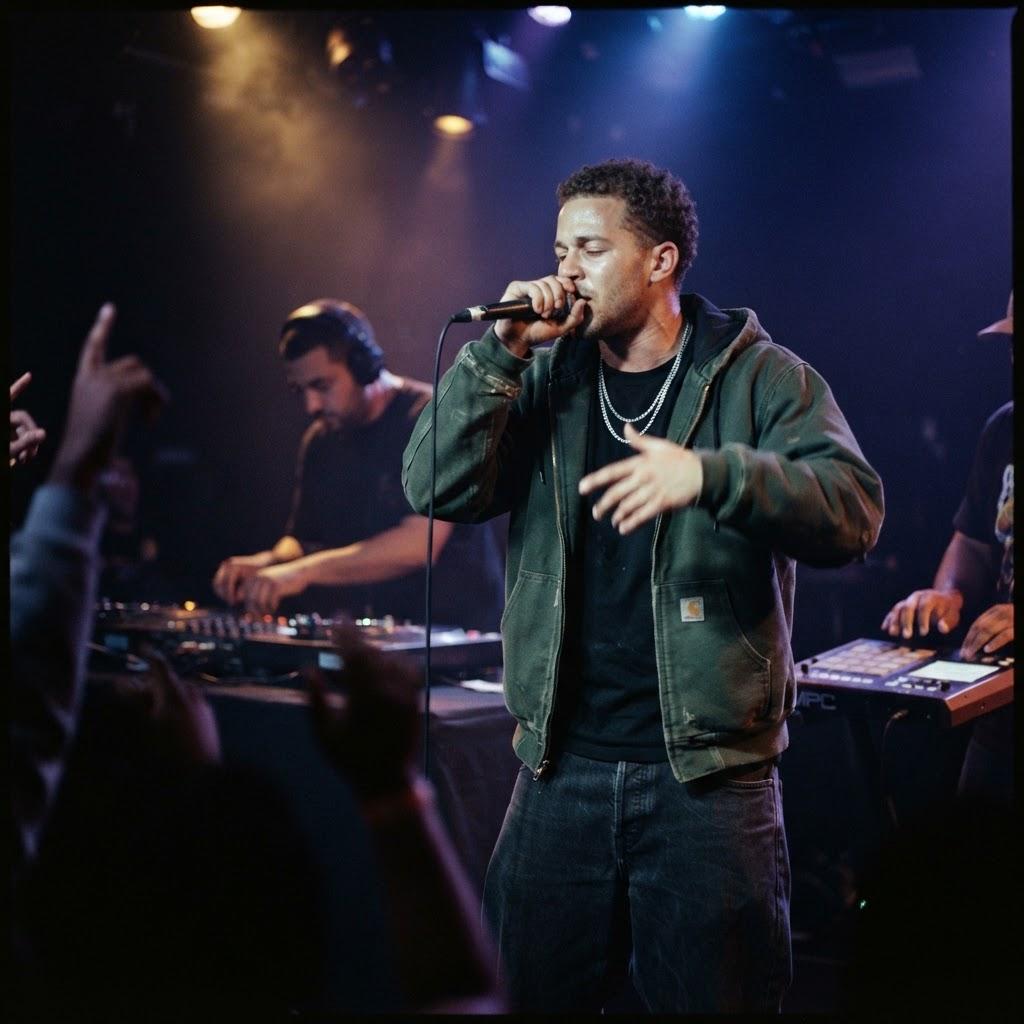
1973, The Bronx, New York
Hip Hop
Hip Hop is the rhythmic heartbeat of modern culture, a swaggering sonic revolution that turned poetry into power. From block parties in the Bronx to global domination, it is the ultimate testament to turning nothing into everything.
Meet the Genre
Imagine walking down a sweltering New York street in the seventies, where the air is thick with anticipation and the rhythm of life itself. Suddenly, a block party erupts, not because of a fancy venue, but because someone decided a pair of turntables and a microphone were all the instruments they needed to shake the earth. That is the heartbeat of Hip Hop. It is a sonic wildfire, a brash, unfiltered, and deeply intelligent form of communication that treats the entire world as a canvas for rhythmic storytelling. It does not just demand to be heard; it walks into the room with a confidence that says the room was waiting for it all along. Hip Hop is the art of the remix, the craft of the rhyme, and the absolute refusal to play by the rules established by those who came before. Whether it is spinning a tale of struggle or celebrating the sheer joy of existence, Hip Hop remains the most honest mirror we have, reflecting both the jagged edges of reality and the glittering heights of aspiration.
The Sound & Signature Elements
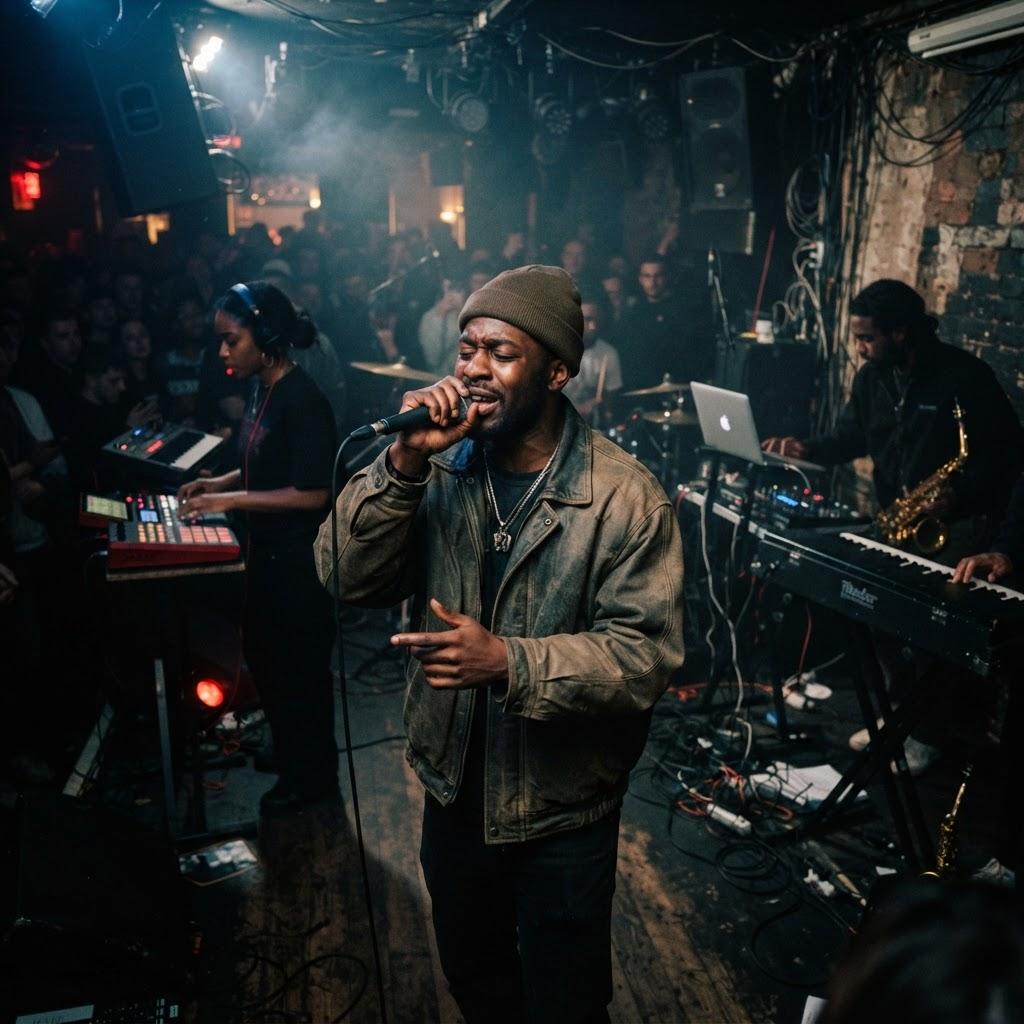
At its core, Hip Hop is built on the glorious concept of the break. A break is essentially the drum-heavy section of a song where the singer stops, and the groove takes over. Hip Hop producers took those brief moments of rhythmic magic, looped them until they were hypnotically steady, and built entire cathedrals of sound on top. It is the musical equivalent of a collage, blending snippets of soul, jazz, and funk into a new structure. The drum machine, particularly the legendary Roland TR-808, became the genre’s backbone, providing that chest-thumping bass that rattles windows. Vocalists, or rappers, approach the microphone like percussionists, focusing on flow, which is simply the way syllables dance around the beat. They use rhyme schemes that are as intricate as complex mathematical equations but delivered with the casual air of a street-corner conversation. When you hear that characteristic kick-snare pattern, you know you are witnessing a structural marvel where the voice acts as the lead instrument, guiding the listener through a landscape of layered samples and synthesized textures.
Origins & Birth of the Sound
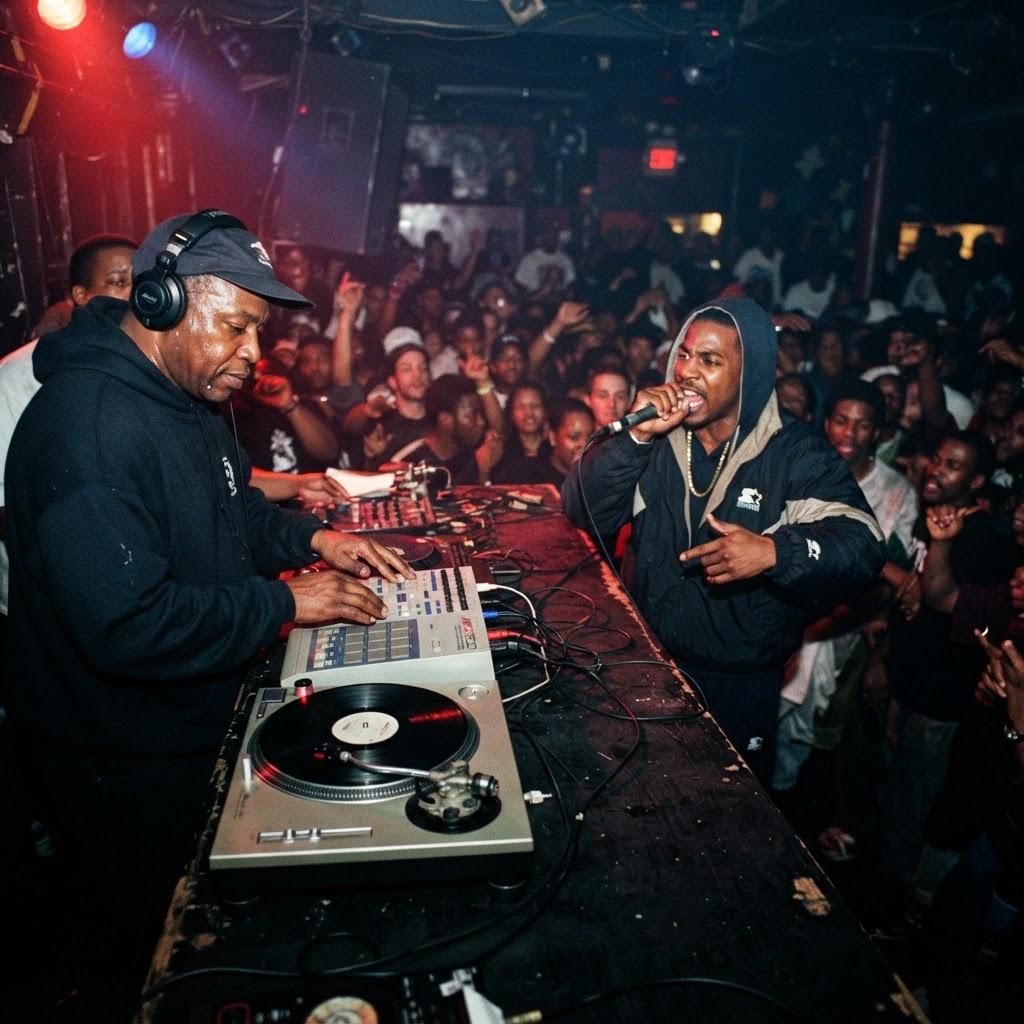
The origin story of Hip Hop is not found in a pristine recording studio or a fancy conservatory, but in the sweat-soaked, electric atmosphere of 1520 Sedgwick Avenue in the Bronx. It was here that DJ Kool Herc, the undisputed Godfather of the genre, realized that the crowd went wild when he isolated the drum breaks from popular records. He called it the merry-go-round technique, manually switching between two copies of the same record to keep the groove playing indefinitely. It was a revolutionary act of creative defiance. Kids who had been pushed to the margins suddenly had a voice and a stage, turning the chaos of urban life into organized, rhythmic art. It was a DIY movement born of necessity and sparked by the desire to keep the party moving. From the neighborhood parks to the rec rooms, Hip Hop emerged as a way for the youth to define their identity, celebrate their neighborhood, and tell their own history before anyone else could attempt to rewrite it for them.
The Pioneers & Legends
The pantheon of Hip Hop is populated by giants who transformed a party trend into a culture of mythic proportions. You have Grandmaster Flash, who turned the turntable into a literal musical instrument, treating it with the same respect a violinist has for a Stradivarius. Then came Afrika Bambaataa, who looked at the street violence and offered Hip Hop as the rhythmic alternative, creating the Zulu Nation and setting a standard for global peace. When we talk about lyrical complexity, we have to bow down to Rakim, who revolutionized the way rappers wrote, moving from simple nursery-rhyme structures to intricate, multi-syllabic patterns that left everyone else scrambling to keep up. Later, the legends of the nineties, like the Notorious B.I.G. and Tupac Shakur, became modern-day poets of the streets. Their storytelling was so vivid, so visceral, and so tragically human that they didn't just sell records; they became archetypes of the culture. These pioneers laid the bedrock, ensuring that every rapper today is standing on the shoulders of individuals who dared to turn a microphone into a weapon of mass creativity.
Defining Tracks & Era-Defining Moments
To understand the trajectory of Hip Hop, one must look at the tracks that acted as tectonic shifts in the landscape. Sugarhill Gang’s Rapper’s Delight was the initial spark that brought the genre into the mainstream, proving that a rap record could actually be a massive commercial hit. Fast forward to Grandmaster Flash and the Furious Five’s The Message, which was a critical pivot point; it proved that Hip Hop could be social commentary, addressing the harsh realities of inner-city life with unflinching directness. Then there is Public Enemy’s Fight the Power, a rallying cry that redefined the political weight of the music. In the nineties, Dr. Dre and Snoop Dogg’s Nuthin’ But a G Thang ushered in the G-Funk era, which replaced the frantic energy of the eighties with a laid-back, synthesized groove that dominated the airwaves. Every one of these songs functioned as a cultural document, capturing a specific sentiment in history and anchoring it in a beat so infectious that it became impossible for the world to ignore the genre's seismic growth.
Subgenres & Offshoots
Hip Hop is a massive family tree with roots that run deep and branches that reach into every corner of the musical sky. You have the dusty, nostalgic feel of Boombap, which prioritizes heavy drum kicks and jazz-influenced piano loops. On the other end of the spectrum, you have Trap, which originated in the South and features frantic, high-pitched hi-hats, deep 808 sub-bass, and a dark, moody atmosphere that feels like a trap house at three in the morning. Then there is the soulful, introspective vibe of Conscious Hip Hop, which dives deep into philosophy and social justice. We also have the chaotic, high-energy world of Drill, which brings a gritty, urgent tone to the forefront, or the melodic, atmospheric layers of Cloud Rap that float like a dream. Each subgenre is a distinct flavor, a specific regional dialect in the universal language of rhythm, constantly evolving as artists fuse their local experiences with the foundational elements of the genre to create something entirely new and unexpected.
Cultural Impact & Influence
The influence of Hip Hop is so pervasive that it is practically invisible, like the air we breathe. It didn't just change music; it became the dominant language of youth culture on a global scale. In the world of fashion, the oversized hoodies, gold chains, and pristine sneakers that were once dismissed as street trends are now the staples of luxury fashion houses in Paris and Milan. In language, terms that originated in rap songs have migrated into common daily speech, shifting the way we talk, express coolness, and acknowledge authority. Beyond the surface, it has influenced film by providing the soundtrack to the urban experience and shaping the visual language of music videos as mini-cinematic masterpieces. Politically, Hip Hop has provided a voice for the voiceless, turning disenfranchised neighborhoods into epicenters of cultural power. It has forced society to confront uncomfortable truths about race, class, and inequality, proving that a beat and a voice are sometimes the most effective tools for demanding societal change.
Controversies & Drama
If Hip Hop is a soap opera, the beefs are the episodes that everyone tunes in for. These legendary rivalries—often born from competitive fire—have shaped the culture in equal parts drama and tragedy. The East Coast versus West Coast rivalry of the nineties is the most famous, serving as a dark chapter where the intensity of the competition spiraled into real-world violence. However, drama isn't always fatal; sometimes it is just the pure, unfiltered ego of artists trying to prove who is the best to ever touch the mic. The purist wars are another staple of the genre, with older generations constantly arguing that the new school has lost the essence, while the new school argues that the genre must evolve or die. From accusations of selling out to the endless debates over who is the King of New York or the best lyricist in the South, these conflicts create the tension that fuels progress, forcing artists to refine their craft just to stay relevant in an unforgiving arena.
Global Spread & Regional Scenes
Hip Hop is a chameleonic force, adapting its shape to fit the geography of wherever it lands. While it started in New York, it quickly became a global dialect. In the American South, cities like Atlanta and New Orleans developed their own distinct sounds, replacing the frantic energy of the East Coast with slowed-down, bass-heavy bounce and trap music. Across the Atlantic, the UK developed Grime, a high-speed, aggressive style that feels like the frantic energy of a London street corner at midnight. In France, Hip Hop has become a primary tool for immigrant communities to express their identity, resulting in some of the most sophisticated and politically charged lyricism in the world. From the vibrant scenes in Japan that emphasize the artistry of the DJ to the burgeoning underground movements in Africa, Hip Hop has been successfully translated and re-imagined. It is the ultimate musical nomad, capable of picking up the local vernacular and turning it into a global anthem.
The Modern Landscape
Today, Hip Hop is not just a genre; it is the infrastructure of the internet era. With the rise of streaming and social media platforms like TikTok, the barrier to entry has evaporated. A kid in a bedroom with a laptop can record a track, upload it, and have a global hit by the end of the weekend. The modern landscape is characterized by its fluidity, where genres blur into one another—you have rappers singing, pop stars rapping, and producers experimenting with experimental noise and ambient sounds. The pressure to conform to one specific sound is gone, replaced by a hyper-individualized approach where the personality of the artist is just as important as the music itself. It is a time of incredible diversity, where established legends still command stadium crowds while experimental newcomers push the boundaries of what is considered rhythmic music. It is a messy, vibrant, and constantly shifting ecosystem that shows no sign of cooling down any time soon.
How to Dive In
Ready to step into the ring? The best way to understand the genius of Hip Hop is to follow the evolution. Start with the foundational classics to get a feel for the roots. Nas’s Illmatic is often cited as the perfect textbook example of lyrical storytelling, featuring production that perfectly captures the gritty New York mood. If you want to experience the sheer sonic power of a perfectly curated album, look at OutKast’s Aquemini, which masterfully blends southern funk with futuristic experimentation. For those who want to understand the mainstream dominance, Jay-Z’s The Blueprint is a masterclass in rhythm and flow. Don't stop there, though. Explore the modern greats like Kendrick Lamar, whose albums feel like cinematic epics, or dive into the deep, bass-heavy world of modern trap. Keep your ears open and your playlist diverse. The beauty of Hip Hop is that there is always a new corner to discover, a fresh flow to appreciate, and a beat that is waiting to turn your day around. Go ahead, hit play, and let the rhythm take control.