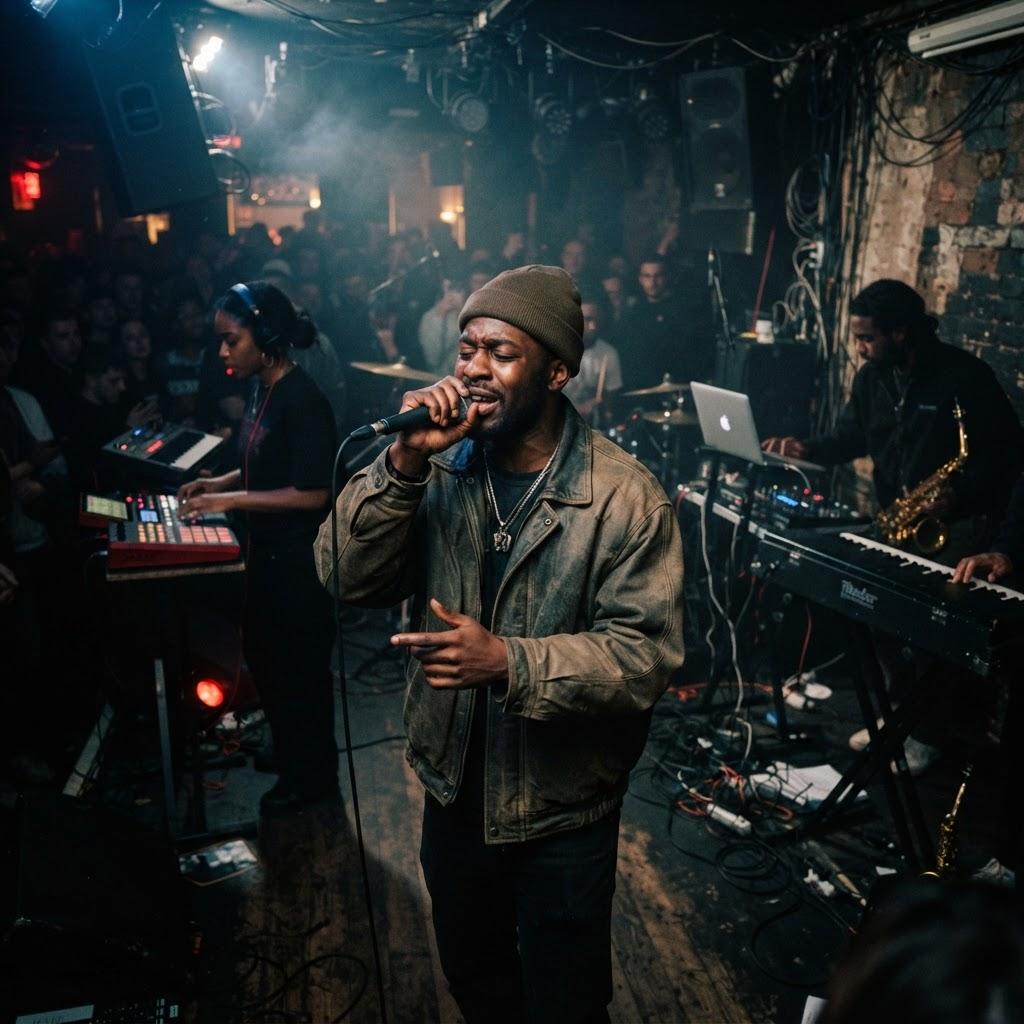
Late 1980s, United States
Alternative Hip Hop
Alternative Hip Hop is the musical equivalent of a rebel with a library card, trading gangsta posturing for existential dread and clever wordplay. It is the genre that proved rap could be as weird, vulnerable, and intellectual as the people making it.
Meet the Genre
Imagine you walk into a party where everyone is wearing leather jackets, gold chains, and talking about how hard their life is. Then, suddenly, someone walks in wearing a sweater vest, carrying a thrift-store book on philosophy, and playing a record of a lonely trumpet player from the 1950s. That person is Alternative Hip Hop. It is the cousin of traditional rap who decided that instead of rapping about the same three topics, it would rather rap about the crushing weight of existential dread, the beauty of a rainy afternoon in the city, or why social hierarchy is a total scam. It does not demand you throw your hands in the air; it invites you to sit in a dimly lit room, nod your head slowly, and contemplate the universe. This genre is the ultimate shape-shifter, never staying in one lane long enough to get a parking ticket. It is the sound of the curious, the artistic, and the slightly eccentric, proving that you do not need a pistol to have a powerful voice.
The Sound & Signature Elements
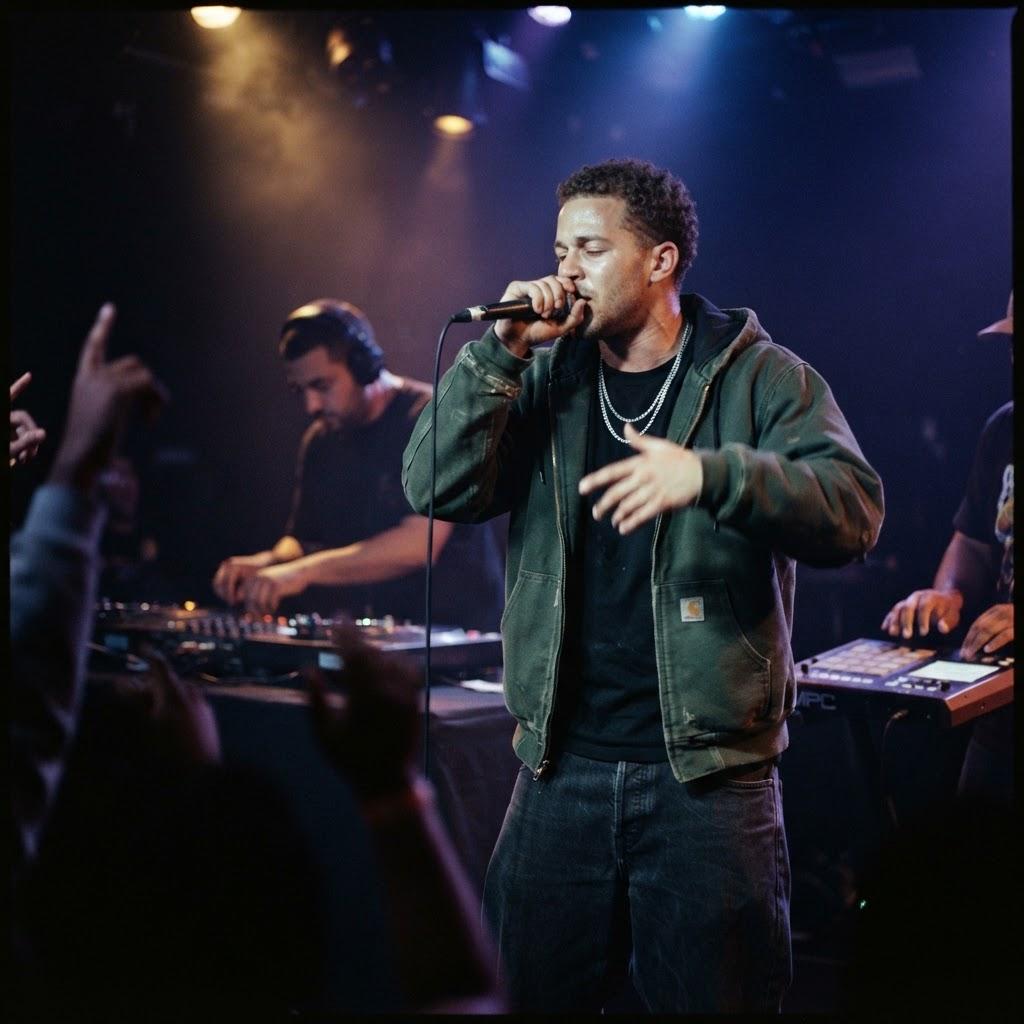
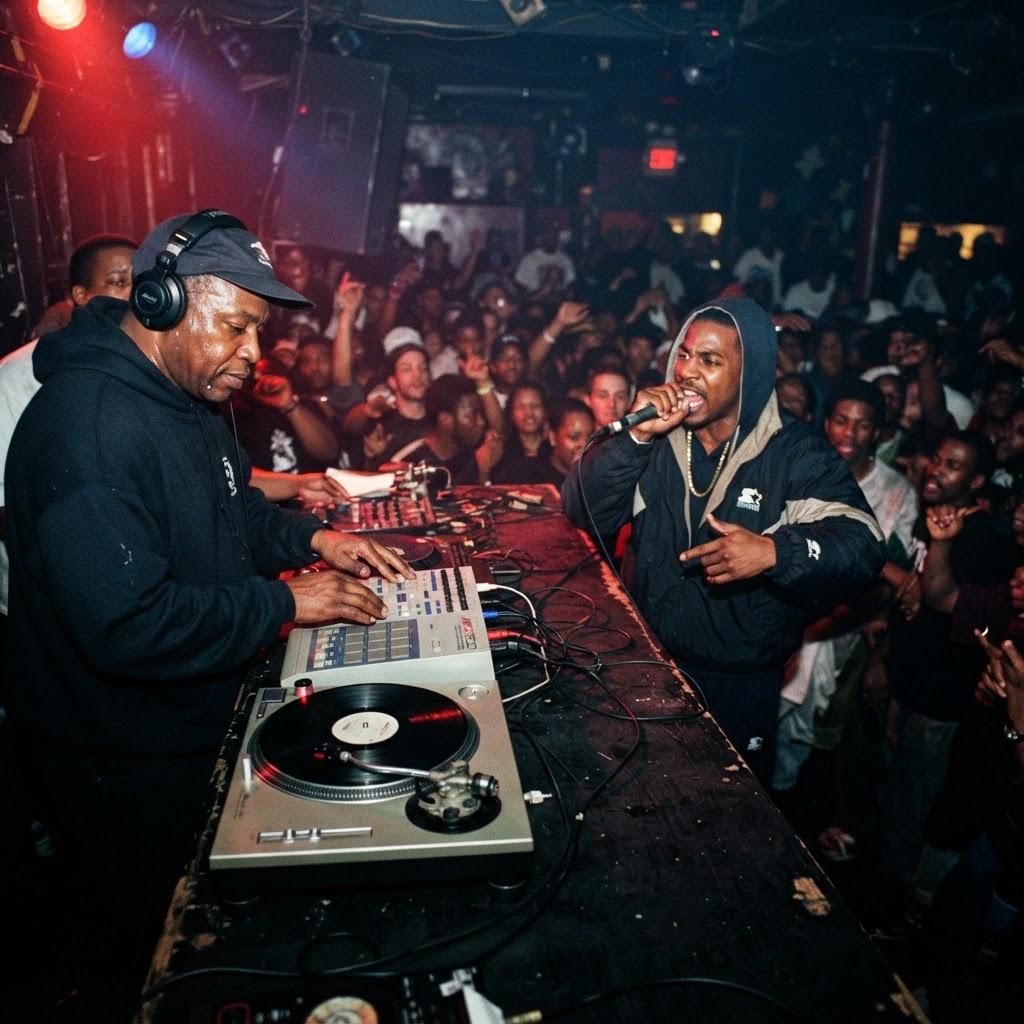
At its heart, the sonic DNA of Alternative Hip Hop is a giant musical scavenger hunt. While mainstream radio was busy perfecting the polished, punchy drum machine beats of the nineties, Alternative Hip Hop was digging through crates of dusty vinyl at record stores, looking for hidden gems. They take a tiny sliver of a jazz saxophone, loop it into a hypnotic rhythm, and layer it over a drum beat that sounds like it was recorded in a basement. It is all about the 'sample'—think of it like musical collage art where they take a piece of something old to create something entirely new. The tempo usually sits in that sweet 'head-nod' zone, generally between eighty and one hundred beats per minute, which is just the right speed for walking down the street looking important. You will often hear 'polyrhythms,' which is just a fancy way of saying there are two different rhythms happening at the same time, making the beat feel a bit tipsy and unpredictable, much like a great conversation after midnight.
Origins & Birth of the Sound
The birth of this sound was not a single 'eureka' moment in a fancy studio, but rather a series of happy accidents happening in the late 1980s. Artists were growing tired of the rigid formulaic constraints of the era’s rap music. They wanted to talk about stuff that did not fit into the standard narrative of bragging or street life. In New York, groups like De La Soul began sampling folk rock and psychedelic pop, wearing bright colors, and acting like total nerds in a world of tough guys. Meanwhile, in Los Angeles, The Pharcyde was bringing a goofy, theatrical sensibility to the West Coast, proving that rap could be funny without losing its street credibility. It was a beautiful act of creative defiance. These artists realized that hip hop was a canvas, not a cage. They took the raw energy of the street and fused it with the intellectual curiosity of the art student, effectively saying, 'We are going to make this music, and we are going to do it our way, even if you do not understand it yet.'
The Pioneers & Legends
If you are starting a club for Alt-Hip Hop legends, A Tribe Called Quest is definitely the president. With their smooth, jazzy aesthetic, they turned rap into something you could play for your high school literature teacher. Then you have the Native Tongues collective, a group of like-minded artists who pushed the boundaries of what 'conscious' rap could be. You cannot talk about this genre without mentioning MF DOOM, the masked supervillain of the microphone, whose rhyming style was so complex it basically requires a degree in linguistics to decode. He treated every verse like a puzzle. Or consider OutKast, the duo from Atlanta who looked at the rigid boundaries of Southern rap and decided to set them on fire. They brought space-age funk and cosmic fashion to the table, proving that you could be a global superstar while singing about aliens and the beauty of the mundane. These legends did not just make songs; they built entire worlds that fans could live in, and that is why their influence is still felt in every corner of modern music.
Defining Tracks & Era-Defining Moments
To understand the gravity of this genre, you have to spin a few specific records that acted like gravity wells for everyone else. Think of A Tribe Called Quest’s 'Can I Kick It?' which used a sample of Lou Reed’s 'Walk on the Wild Side' to create a vibe so chill it basically invented the modern coffee shop playlist. Then there is The Pharcyde’s 'Passin’ Me By,' a track that captured the universal agony of unrequited love with such self-deprecating humor that it felt like a warm hug for anyone who has ever been dumped. Fast forward to OutKast’s 'Rosa Parks,' a song that mixed harmonica-driven blues with hard-hitting bass, proving that Southern rap could be experimental and chart-topping all at once. These tracks did not just climb the charts; they shattered the walls between musical genres. Every time one of these songs dropped, it was a 'wait, they can do that?' moment for millions of listeners, forever changing the expectations of what a rap song was allowed to be.
Subgenres & Offshoots
The family tree of Alternative Hip Hop is less of a tree and more of a tangled, beautiful jungle. You have 'Jazz Rap,' which is exactly what it sounds like—rappers spitting bars over upright bass lines and smoky piano chords. Then there is 'Abstract Hip Hop,' where the lyrics are often stream-of-consciousness poems that make you feel like you are wandering through someone else’s dream. We also have 'Glitch Hop,' which takes the precision of hip hop and intentionally breaks it with digital stuttering and distorted, robotic sounds, kind of like if your computer had a nervous breakdown while trying to produce a track. And let’s not forget the 'Lo-Fi' movement, which has exploded recently; it intentionally keeps the recording quality raw and fuzzy, evoking the feeling of a late-night study session or a quiet train ride through a rain-slicked city. Each of these subgenres takes a piece of the Alt-Hip Hop spirit and drags it in a completely different, weird, and wonderful direction.
Cultural Impact & Influence
Alternative Hip Hop did not just stay inside our headphones; it snuck out and started wearing all the clothes. It changed fashion by swapping out the uniform of the 'tough guy' for vintage thrift store finds, bucket hats, and oversized sweaters. It gave people permission to be themselves rather than a caricature. Beyond style, it forced the world to take rap seriously as a form of high art. Because these artists were sampling everything from jazz to classical music, their fan base expanded to include people who never previously listened to rap. It bridged the gap between the mosh pit and the poetry slam. You can trace the lineage of today’s most experimental, boundary-pushing artists—like Tyler, The Creator or Kendrick Lamar—directly back to the pioneers who dared to talk about their feelings instead of just their cars. It made vulnerability a superpower, teaching a generation that you could be raw, honest, and smart, and that the world would actually listen to what you had to say.
Controversies & Drama
Every scene with a pulse has its fair share of drama, and the Alt-Hip Hop world is no exception. The biggest issue has always been the 'purist' war. When a genre prides itself on being 'underground,' what happens when it gets too popular? You guessed it: the finger-pointing begins. Fans would often call artists 'sellouts' the second they started appearing on MTV or using a cleaner, more expensive studio. It was a constant tug-of-war between wanting your favorite artist to be successful and wanting them to stay a secret that only you knew about. There were also plenty of beefs between the 'conscious' rappers and the 'gangsta' rappers, with both sides claiming the other was either too soft or too destructive. It was the ultimate playground fight: one side arguing about social justice and artistic integrity, the other side arguing about street reality and survival. It was dramatic, it was messy, and honestly, it pushed everyone to sharpen their pens just to prove they were the better lyricist.
Global Spread & Regional Scenes
Once the seed of Alternative Hip Hop was planted, it started growing everywhere, and it picked up some really interesting accents along the way. In the United Kingdom, it fused with the local electronic scene to create something that feels very urban and nocturnal. In Japan, specifically in the scene surrounding Tokyo’s Shibuya district, producers took the jazz-rap foundation and added a level of meticulous, high-fidelity perfection that made it sound like a beautiful, late-night movie soundtrack. In France, the scene embraced the poetic nature of the genre, mixing hip hop with traditional French chansons to create something profoundly introspective. It is fascinating to see how a sound that started in the basements of New York City became a global language. Artists all over the world took the fundamental concept—that you can mix any beat with any story—and used it to tell their own specific, local truths, creating a global network of weirdos and poets all linked by the same love for a great sample.
The Modern Landscape
Today, Alternative Hip Hop is not just a genre; it is the atmosphere of modern music. It has won the war. You hear its influence in the way pop stars build their beats, the way indie bands incorporate rhythm, and the way the entire internet consumes music. Because of the rise of bedroom production, where a kid with a laptop can make a masterpiece in their bedroom, the 'alternative' spirit is now the default setting. We live in an era where genres are essentially flavor profiles, and artists mix and match them without a second thought. You have artists like Brockhampton, who operate like an internet-age boy band with a chaotic, experimental edge, or Earl Sweatshirt, who continues to push the boundaries of how quiet and introspective a rap song can be. It is no longer about being 'underground' versus 'mainstream'; it is about finding your niche, building your tribe, and making the kind of art that makes you feel alive in a digital world.
How to Dive In
So, how do you start your journey into this wonderful world of head-nodding bliss? Do not overcomplicate it. Start by listening to A Tribe Called Quest’s 'The Low End Theory.' It is the definitive 'jazz-rap' masterclass—if you don't find yourself nodding along within the first ten seconds, check your pulse. Then, jump over to The Pharcyde’s 'Bizarre Ride II the Pharcyde' for a dose of pure, unadulterated creativity and fun. If you want something a bit more moody and complex, dive into MF DOOM’s 'Madvillainy,' which is like the 'Lord of the Rings' of alternative rap—dense, dark, and utterly brilliant. From there, let the streaming algorithms lead you down the rabbit hole. Follow the producers, follow the samples, and don't be afraid to click on the weirdest album cover you see. This genre is about discovery, so let your curiosity run wild. Grab a pair of headphones, find a quiet place, and prepare to have your brain rewired in the best way possible. Your new favorite song is just a click away, and the rabbit hole is wide open.