Late 1800s, Deep South, USA
Blues
Blues is the musical equivalent of a hard-earned wisdom session on a front porch, transforming heartache into an electric, foot-stomping catharsis. It is the raw, unvarnished heartbeat of modern music that refuses to let the world stay miserable for long.
Meet the Genre
If music were a person at a party, Blues would be the one sitting in the corner with a drink, possessing the most interesting stories you have ever heard, and somehow, by 2:00 AM, everyone is laughing and crying at the same time. Blues is not just about being sad; it is about taking that heavy, sinking feeling in your chest, giving it a name, and making it dance so it cannot hold you down anymore. It is the sonic equivalent of a thunderstorm that rolls through, clears the air, and leaves everything smelling like fresh rain. Think of it as the ultimate musical survival kit. It is gritty, honest, and remarkably simple, yet it holds more emotional weight than a thousand pop songs combined. While people often mistake it for a mopey genre, Blues is actually a celebration of resilience. It is the art of saying, 'Well, today was a complete disaster, but I am still here, and I have a guitar.' It is the foundation of rock, soul, and pretty much everything that makes your foot tap, yet it remains the cool, understated cousin that never needs to shout to be heard. It is the genre that learned the secret of life: when things go wrong, you might as well sing about it.
The Sound & Signature Elements
The engine of the Blues runs on a structure called the 12-bar blues, which is essentially a loop that resets every twelve measures. Think of it like a conversation that follows a reliable rhythm: a statement, a repeat of that statement, and then a punchline that resolves the tension. This structure feels like home because your brain immediately understands the cycle. Then there is the secret sauce: the blue note. These are notes that fall just a little bit 'off' the traditional scale, almost like the note is shy or slightly embarrassed. When a musician bends a guitar string or slides their finger up the neck to hit that note, it creates a tension that feels exactly like a longing sigh. It is musical tension and release. The instruments act like characters; the harmonica wails like a person crying or laughing, the slide guitar (a glass or metal tube worn on a finger to slide along the strings) sounds like a human voice pleading for mercy, and the piano keeps the rhythm chugging along like a train heading down the tracks. It is not about how many notes you play, but the weight behind every single one. It is loud, proud, and perfectly imperfect.
Origins & Birth of the Sound
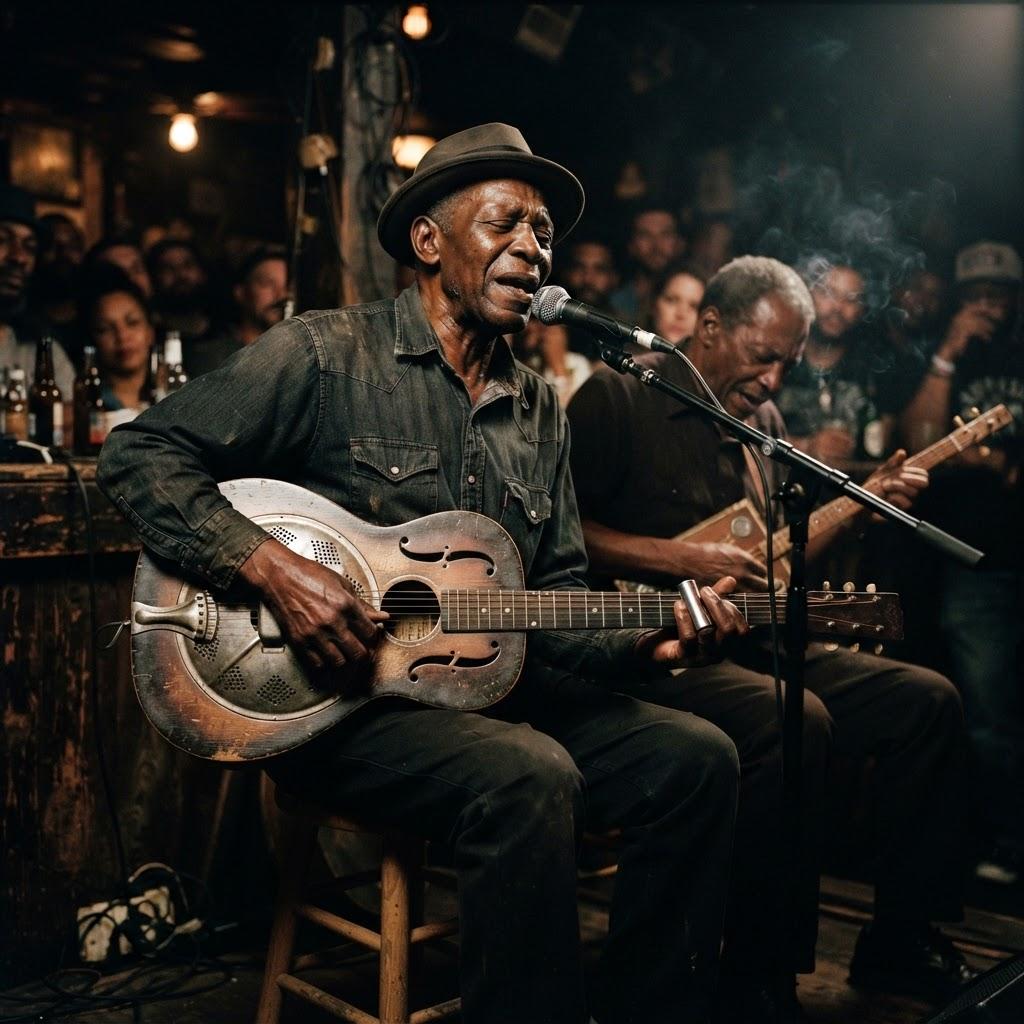
The story starts in the sweltering heat of the Mississippi Delta, a place where the earth was rich and the work was incredibly hard. It was not birthed in a studio; it was born in the fields, in the shacks, and on the dusty roads where people carried their entire world in a beat-up guitar case. It emerged from the fusion of African rhythms brought over by enslaved people, religious spirituals sung in churches, and the raw, rhythmic 'field hollers' used to signal to one another across vast cotton fields. When the sun went down, that exhaustion transformed into music. It was the only way to vent the frustrations of a system that tried to take everything away. The early Blues was acoustic, raw, and fiercely personal. It was a language of the disenfranchised, a secret code of expression that found its way into the juke joints—those ramshackle, glorious houses of revelry where the floorboards were worn thin by dancing. It wasn't formal or composed; it was lived. Every song was a snapshot of a moment, a heartbreak, or a hard day, passed down from one traveler to another like a whispered secret that grew loud enough to change the world.
The Pioneers & Legends
If you look at the family tree of Blues, you see names that sound like folk heroes from a tall tale. Robert Johnson is the ghost of the genre, the man who supposedly met the devil at the crossroads to trade his soul for the ability to play guitar better than any man alive. Whether you believe the legend or not, when you hear those recordings, you realize he sounds like three people playing at once. Then you have Muddy Waters, the man who took the Delta sound and plugged it into an amplifier in Chicago, effectively inventing the electricity that would spark rock and roll. He was the king of the swagger, the guy whose voice could silence a crowded room. And we cannot ignore Bessie Smith, the Empress of the Blues, whose voice could cut through any noise and reach the very back of the room, demanding to be heard. These were not just musicians; they were survivalists. They survived poverty, segregation, and the relentless grind of the road. Their music was their sword and their shield, and they held it with a grip that left the world changed forever.
Defining Tracks & Era-Defining Moments
If you want to understand the history of music, you have to listen to the moments where Blues hit the big time. Robert Johnson’s 'Cross Road Blues' is the terrifying, beautiful starting line where the legend began. You can practically hear the dust on the road and the fear in his voice. Fast forward to Muddy Waters’ 'Mannish Boy'—that is the moment when Blues grew teeth, got an electric guitar, and started a fire that would consume the world. It is unapologetic, heavy, and grooves like nothing else. Then there is B.B. King’s 'The Thrill Is Gone,' which introduced a level of sophistication and jazz-like polish to the genre, proving that Blues could be elegant and heartbreakingly smooth. These tracks are not just songs; they are cultural earthquakes. Each one represents a shift in the tectonic plates of popular music. When you listen to these songs, you are hearing the blueprints for every rock band that played a stadium and every soul singer who ever made a crowd cry. They are the essential chapters in a book that is still being written, and they represent the peaks of what the human spirit can express when it decides to sit down and play.
Subgenres & Offshoots
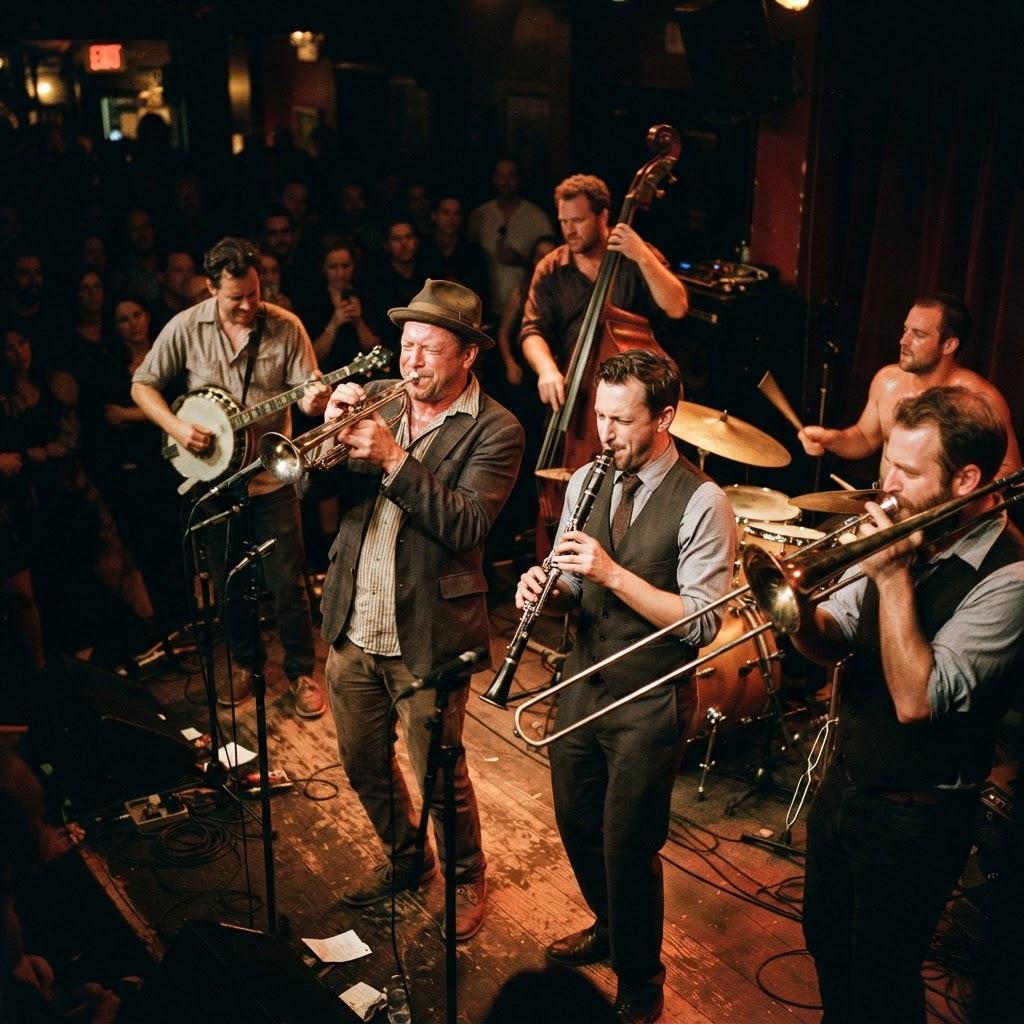
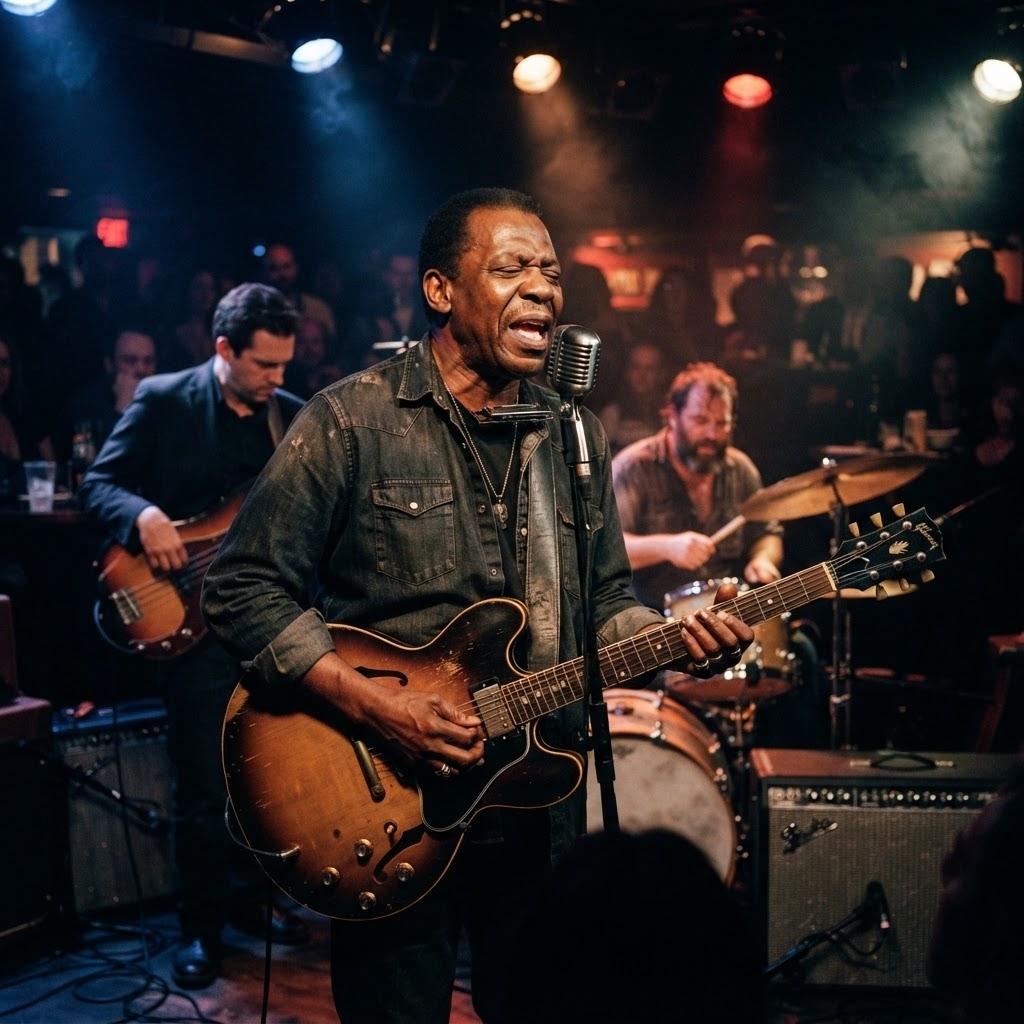
Blues is a prolific parent, having birthed an entire city of musical children. The Delta Blues gave us the foundation, but once it migrated to cities like Chicago, it became 'Electric Blues,' which added drums, bass, and amplifiers to turn the volume up to eleven. Then there is the 'Texas Blues' style, which is known for its incredible technical speed and a guitar tone that sounds as sharp as a cactus spine. We also have 'Jump Blues,' the fast-paced, horn-heavy cousin that wanted to make sure nobody stayed in their chair, paving the way for Rock and Roll. Let's not forget 'Piedmont Blues,' a gentler, more finger-picking-heavy style from the East Coast that sounds like a conversation between two best friends on a porch. And of course, the 'British Blues Boom' of the 60s, where young kids in London tried to mimic the sounds of their American heroes and ended up creating Led Zeppelin and The Rolling Stones. Blues doesn't sit still; it constantly adopts new clothes, styles, and instruments, but underneath all that variety, that familiar, soulful 12-bar heart is still beating.
Cultural Impact & Influence
It is hard to overstate how much of our current cultural reality is just a remix of the Blues. Every time you wear a pair of blue jeans, listen to a guitar solo, or hear someone use the term 'down in the dumps,' you are interacting with the legacy of this genre. Blues provided the vocabulary for the American experience—it gave voice to the struggles of the migrant, the loneliness of the traveler, and the ecstasy of a Friday night release. It influenced fashion, with the aesthetic of the weary traveler and the sharp-dressed juke joint performer becoming iconic images of cool. In film and literature, the 'bluesman' archetype became a symbol of wisdom and tragic heroism. Politically, the Blues was an act of defiance; it was a way for a marginalized people to demand recognition and share their stories in a country that often tried to ignore them. It forced people to listen to voices they had previously dismissed, and in doing so, it helped crack open the door for a more inclusive understanding of American art. It taught the world that you don't need a symphony to change a life; sometimes, you just need three chords and the truth.
Controversies & Drama
The history of Blues is not all smooth sailing; it is filled with enough drama to fuel a dozen soap operas. Early on, the music was dismissed as 'race music' by people who couldn't handle its raw emotion and truth. Then there were the massive disputes over royalties, where legendary artists had their music stolen by slick suits who didn't even know how to hold a harmonica. It was a messy, painful period of exploitation where the originators of the sound often died broke while others got rich off their licks. There were also the purist wars—when Bob Dylan 'went electric' at Newport, the traditionalists acted like he had committed a crime against humanity. The idea that Blues should stay acoustic and 'authentic' versus the idea that it should evolve and plug into the mains caused rifts that lasted for decades. It is funny to think about now, but people used to get into genuine, hot-headed fights over whether or not a drummer belonged in a blues band. It just goes to show how much people care about the soul of the music; they treat it with the same intensity usually reserved for religion or sports.
Global Spread & Regional Scenes
While the Delta is the cradle, the Blues is a world traveler. When people migrated north for jobs, they took the music with them, turning Chicago into the electric capital of the genre. Then, it jumped across the pond to the UK. Post-war British kids, starved for something real, dug through crates of dusty American imports and obsessed over every note. This led to a global explosion where everyone from Japan to Norway started picking up guitars and learning how to 'bend' strings. Today, you can find vibrant, thriving Blues scenes in places like Austin, Texas, where the guitar culture is practically a state religion. You’ll see incredible players in the clubs of Memphis, carrying on the torch of the great soul singers. Even in places like Australia and Brazil, the Blues has been adopted and adapted, blended with local rhythms and traditions to create something entirely new yet unmistakably rooted in the original feeling. It turns out that heartache and resilience are universal languages; you don't need to be from Mississippi to understand the feeling of having the blues, and that is why the genre keeps growing.
The Modern Landscape
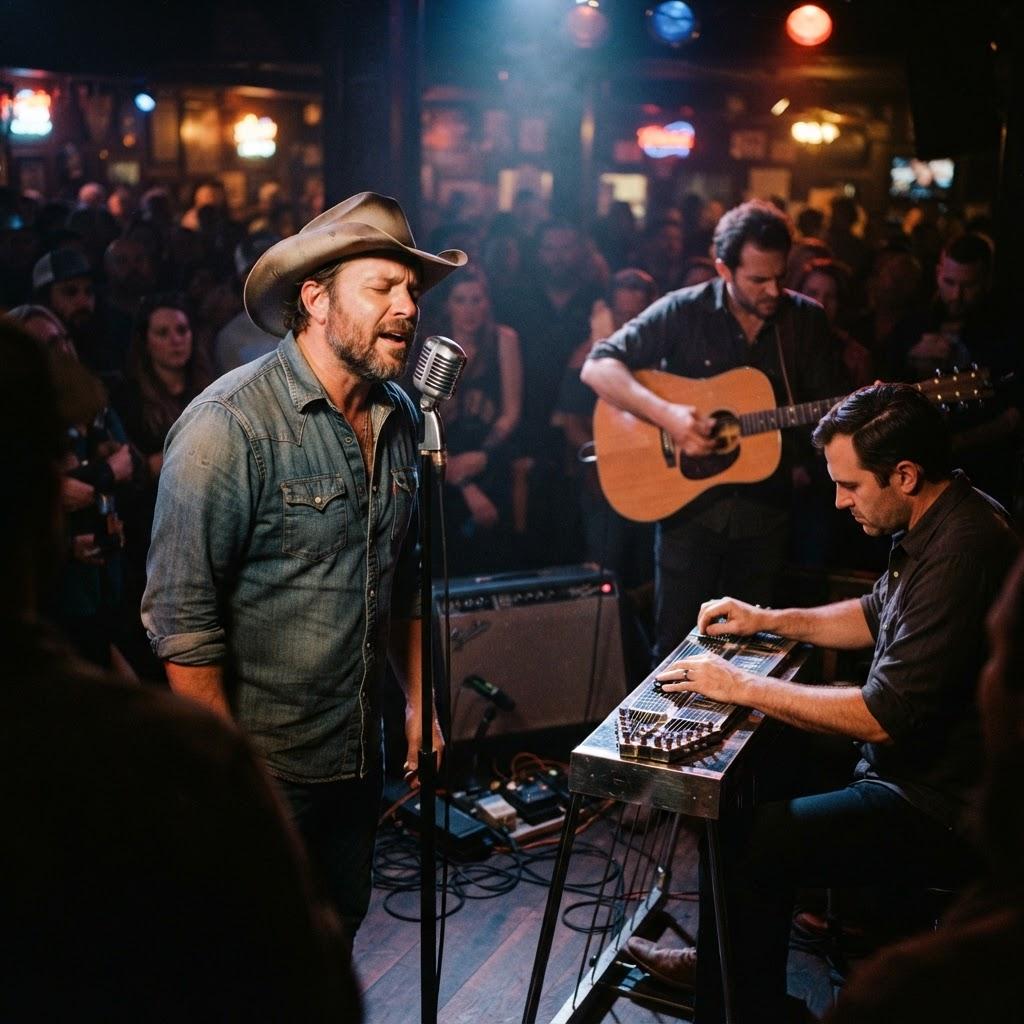
Today, Blues is in an interesting spot—it is like an elder statesman who still knows how to party harder than the college kids. It is no longer the top-40 mainstream dominant force it once was, but it has seeped into the marrow of every modern genre. You hear it in the heavy, distorted riffs of modern rock, the rhythmic structures of hip-hop, and the emotional delivery of R&B. Artists like Gary Clark Jr. are taking the Blues and dragging it into the 21st century with fuzz pedals, hip-hop production, and a modern edge that proves the genre isn't a museum piece. Others are keeping the flame alive by obsessing over the vintage, acoustic purity, ensuring that the roots are never forgotten. Blues has become a flexible platform, a way for artists to ground their music in something tangible and real. It is not dying; it is integrating. Every time a pop star tries to sound 'soulful' or a guitarist leans into a long, wailing note, they are paying rent to the masters who built this house. The landscape is wide and varied, and the future of Blues is as bright as its past.
How to Dive In
Ready to get hooked? Start your journey with a few essential tracks that act as a map for the whole genre. Listen to Robert Johnson’s 'Cross Road Blues' to hear where it all started. Then, put on Muddy Waters’ 'Rollin' Stone' to feel the power of that electric jolt. Move to B.B. King’s 'The Thrill Is Gone' for a lesson in class and guitar mastery. For a bit of piano magic, check out Professor Longhair’s 'Tipitina.' When you listen, don't worry about understanding the theory. Instead, focus on the 'swing'—that slightly uneven, rolling rhythm that makes your head nod involuntarily. Pay attention to the space between the notes; that is where the soul lives. Blues is about the human experience, so listen to it when you are having a bad day, a good day, or any day in between. It will meet you exactly where you are. So, grab a drink, find a comfortable chair, turn the volume up, and let the music do the heavy lifting for you. You are about to enter a world that is as deep as it is wide, and trust me, you are going to love the view.