1920s, Appalachian Mountains, USA
Country
Country is the musical equivalent of a dusty porch, a broken heart, and a pickup truck that somehow always makes it home. It is raw, honest, and arguably the only genre that treats heartbreak with the same level of respect as a cold beer on a Friday night.
Meet the Genre
Imagine you walk into a dive bar where the floor is sticky with spilled lager and the air smells like cheap cologne and diesel. Sitting in the corner is a person who has seen too much, done too little, and has a story about their dog that will make you cry into your napkin. That is Country music. It is not just a genre; it is a lifestyle of wearing denim like armor and treating heartbreak as a badge of honor. Country is instantly recognizable because it refuses to hide. While other genres might use high-tech synthesizers to build a wall of sound, Country shows up with a six-string acoustic guitar and a truth that hurts more than a sunburn. It is the only music that manages to make getting fired, getting cheated on, and getting a flat tire sound like a spiritual experience. If rock music is the loud, obnoxious cousin at the party, Country is the aunt who tells you exactly what she thinks while handing you a plate of potato salad. It is deeply personal, endlessly dramatic, and charmingly stubborn.
The Sound & Signature Elements
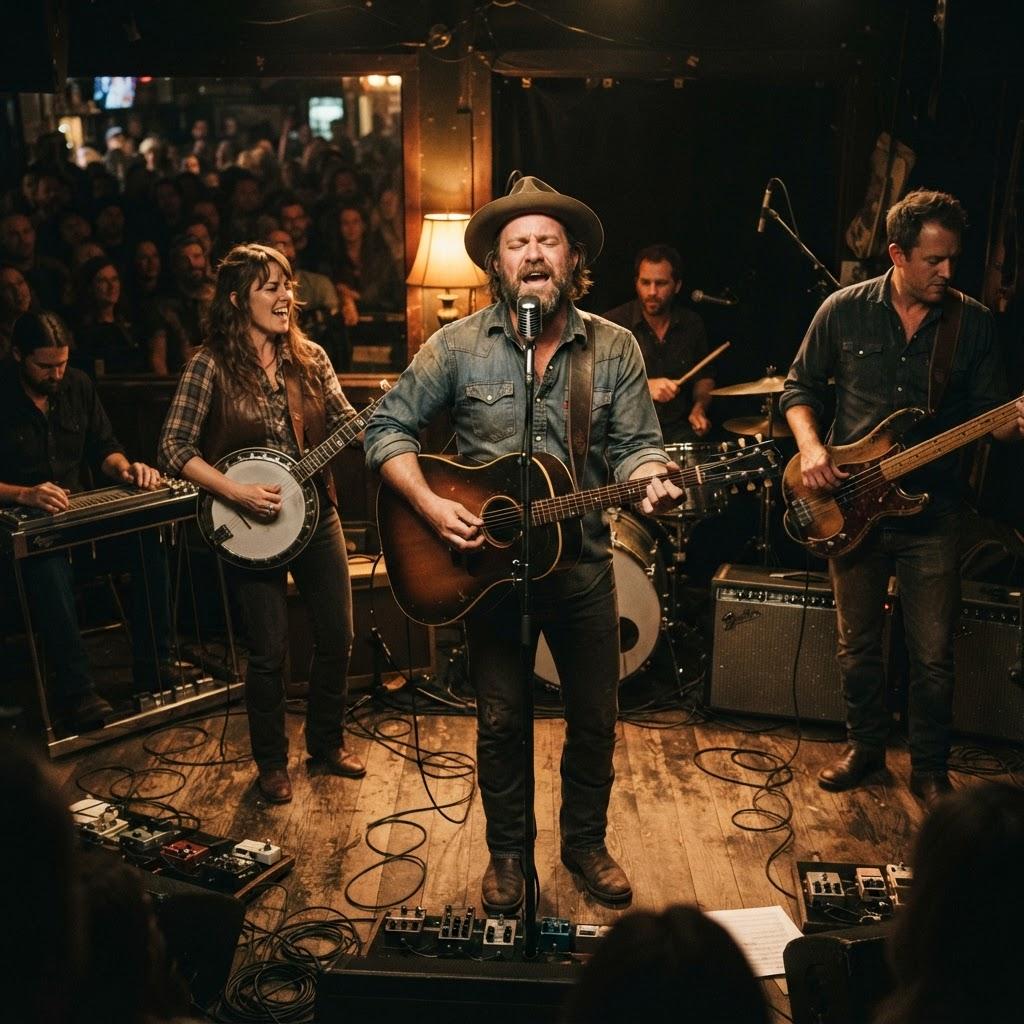
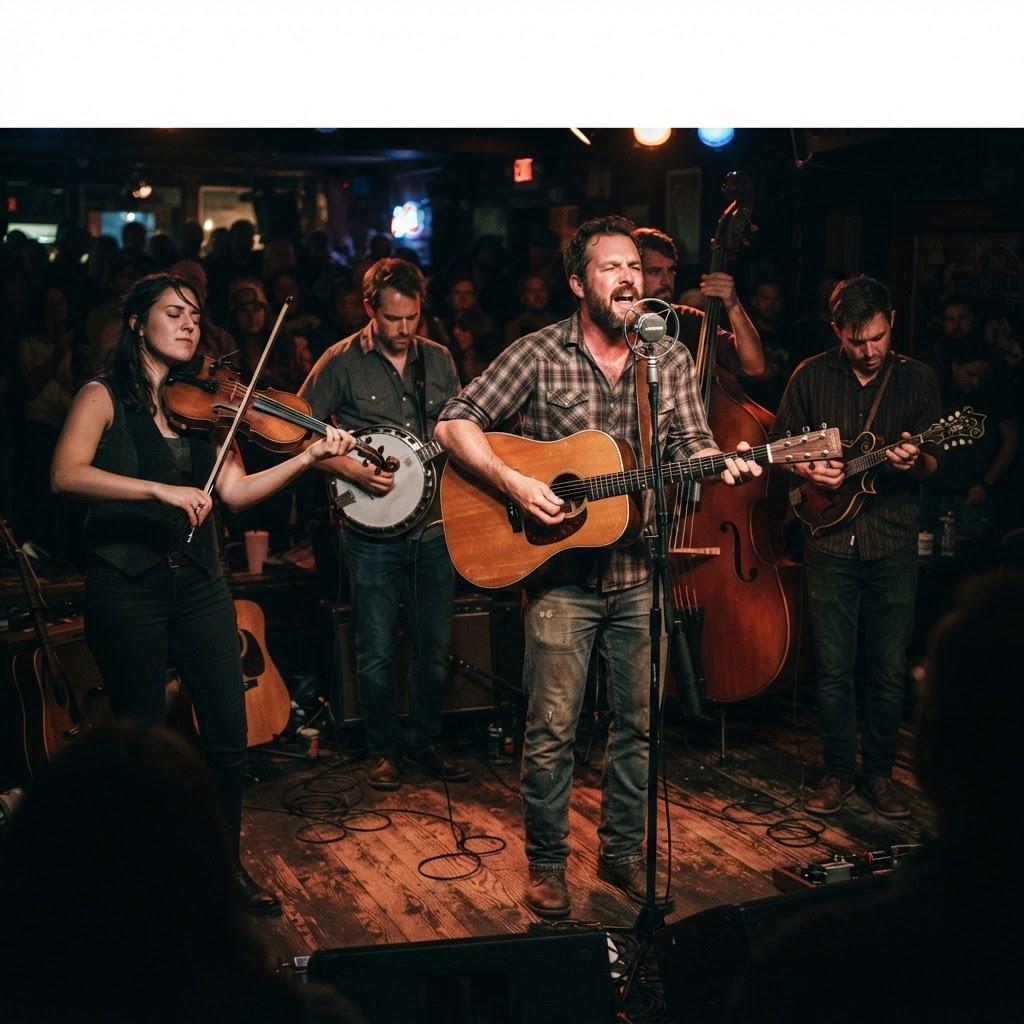
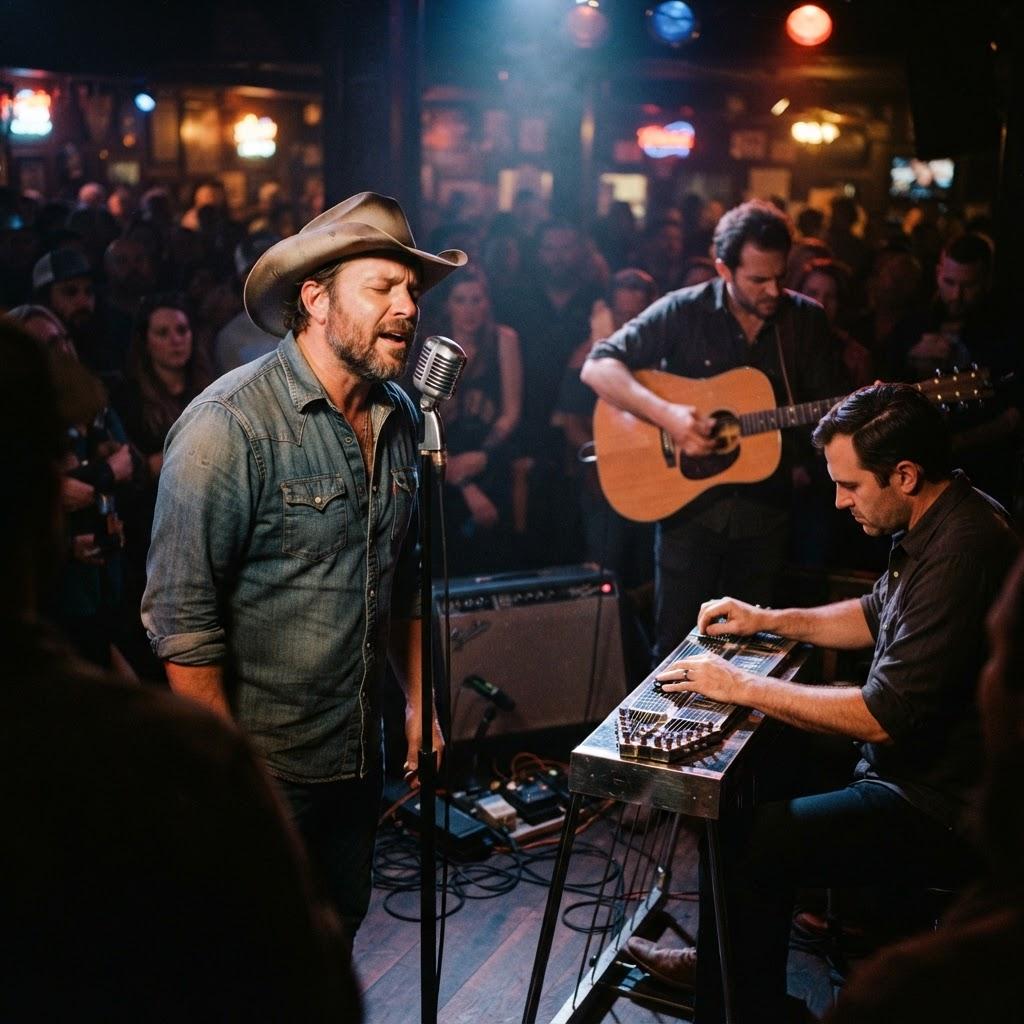
The musical DNA of Country is as sturdy as a fence post but as flexible as a willow tree. At its core, the tempo usually relies on a steady, four-four time signature—think of it as the rhythm of a heartbeat or a slow walk down a dirt road. The most important trick in the sonic toolbox is the pedal steel guitar. Imagine a regular guitar decided to learn how to weep and howl like a coyote in a canyon; that is the pedal steel. It uses a series of metal rods and foot pedals to slide between notes, creating a sound so melancholic it could make a statue shed a tear. Then you have the fiddle, which brings the frantic energy of a barn dance, and the banjo, which provides that percussive, plucky snap that acts like a musical exclamation point. Song structures are refreshingly simple: verse, chorus, verse, chorus, bridge (where the secret feelings usually come out), and a final chorus that hits harder than the first. It is less about complexity and more about clarity, ensuring that every word of the narrative lands right in the listener's gut.
Origins & Birth of the Sound
The birth of Country wasn't a singular lightning strike but rather a slow-cooked stew simmering in the Appalachian Mountains during the 1920s. Think of it as a musical melting pot where Scotch-Irish immigrants brought their fiddles and ballads, and collided head-first with the soulful, bluesy rhythms of the African American communities working the land nearby. They were all sharing the same hard life, the same dry earth, and the same desperate need to turn their suffering into something melodic. The Bristol Sessions in 1927 are often called the Big Bang, where record scouts drove around in cars looking for local talent. They captured the sounds of families singing in kitchens and lonely men playing for tips at general stores. It was music born out of necessity—if you were going to spend twelve hours working the fields, you needed a song to keep your brain from turning to mush. It started as 'hillbilly music,' a label that was meant to be derogatory but quickly became a badge of authenticity for a sound that refused to be polished by the shiny, urban standards of the North.
The Pioneers & Legends
If Country were a superhero movie, the origin story would feature The Carter Family and Jimmie Rodgers. The Carters were the voices of the mountains, delivering tight, chilling harmonies that sounded like they were singing directly from the rafters of an old wooden church. Jimmie Rodgers, on the other hand, was the 'Singing Brakeman'—a man who worked on the railroads, caught tuberculosis, and decided to make music his legacy. He invented the 'blue yodel,' a vocal flip that sounded like a cry for help echoed across a mountain range. Then came Hank Williams, the undisputed messiah of the genre. Hank didn't just write songs; he bled them. He was a guy who could make a song about being lonesome sound like the loneliest thing in the history of the world. He was a tragic character, constantly teetering on the edge of greatness and ruin. Every country star who followed him is essentially trying to capture a sliver of that raw, unvarnished energy that Hank carried around in his guitar case like a loaded gun.
Defining Tracks & Era-Defining Moments
To understand the trajectory of Country, one must look at the moments that made the genre pivot. 'I'm So Lonesome I Could Cry' by Hank Williams remains the gold standard for heartbreak—a song so perfectly composed it feels less like a track and more like a permanent scar on the culture. Then there is 'Coal Miner's Daughter' by Loretta Lynn, which turned the country star into a champion of the working woman, proving that rural reality was just as vital as any big-city anthem. In the 1970s, Willie Nelson and Waylon Jennings spearheaded the 'Outlaw' movement, essentially giving the establishment the middle finger and deciding they would record their own songs in their own way, thank you very much. This moment shifted the power dynamic away from the suits in Nashville and back to the artists in the dirt. It wasn't just about music; it was about independence. When these artists started writing songs that sounded like they were actually having the experiences they were singing about, the genre stopped being a caricature and started being a mirror for millions of listeners.
Subgenres & Offshoots
Country is a tree with limbs that grow in wild, unexpected directions. You have 'Honky Tonk,' which is the rowdy, drink-your-worries-away cousin played in dimly lit bars with a prominent piano and a restless beat. Then there is 'Bluegrass,' which is Country on caffeine, characterized by breakneck speeds, virtuosic banjo picking, and harmonies that sound like a choir of angels who have spent too much time in the woods. 'Western Swing' added jazz elements, bringing the big-band energy to the dance hall, while 'Outlaw Country' stripped everything back to basics—gritty, raw, and defiant. Don't forget 'Country-Pop,' which polished the edges for the radio, giving us soaring choruses that could fill stadiums. Then there is 'Americana,' which acts as the catch-all attic for anything that sounds rootsy and honest but doesn't quite fit the rigid rules of the Country charts. Each subgenre is just a different costume the genre puts on depending on whether it wants to dance, weep, fight, or contemplate the meaning of life.
Cultural Impact & Influence
Country music has shaped the world way beyond the radio waves. Think of the iconic fashion: cowboy boots, denim, and oversized buckles have become universal symbols of 'rugged cool' across every continent. The genre’s language is equally infectious; phrases about 'heartbreak motels' and 'bless your heart' have filtered into everyday dialogue, acting as a shorthand for a certain kind of Southern hospitality and stoicism. In film, the 'country star' trope has become a staple of cinema, portraying the rise and fall of icons as a way to explore the American Dream's dark side. It has also profoundly influenced fashion, from the high-fashion runways of Paris to the simple workwear seen on city streets. Politically, Country has served as the voice of the American heartland, articulating the hopes, fears, and frustrations of people who often feel ignored by the cultural centers of power. It has become a political and cultural rallying cry, proving that the lyrics written on a back porch can influence conversations happening in the halls of government.
Controversies & Drama
If you don't have drama, you aren't doing country music right. The genre has been at the center of endless moral panics, largely because it insists on being honest about things society likes to pretend don't exist. There were the 'Battle of the Sexes' debates, where women like Kitty Wells and later Dolly Parton had to fight for the right to sing songs that weren't just about being a dutiful wife. The 'Outlaw' era was essentially one long, sustained beef with the Nashville establishment, as artists pushed back against the industry's desire to homogenize their sound for mass consumption. Then there is the eternal struggle over 'what is real country,' a debate that breaks out every time a banjo is replaced by a synthesised drum beat. It is a genre that thrives on being 'pure' while simultaneously being obsessed with evolving, leading to a perpetual state of existential crisis that keeps the gossip columns full and the fan forums burning with heated, keyboard-clacking intensity.
Global Spread & Regional Scenes
Country music is a surprisingly prolific traveler. It hitched a ride on the back of American post-war cultural dominance and found a home in the most unexpected places. In Australia, the 'Bush Ballad' tradition turned the outback into a setting as poignant as the American Appalachians, with artists singing about vast, dusty landscapes and the isolation of the frontier. The United Kingdom has a massive 'Country & Americana' scene, where the romanticization of the American West meets British songwriting tradition. Brazil has its own massive 'Sertanejo' scene, which sounds suspiciously like Country music because, well, it is built on the same principles: farming, heartbreak, and simple, sing-along storytelling. It proves that the themes of Country—longing for home, the pain of love lost, and the dignity of hard work—are universal. You don't need to be from Tennessee to understand the feeling of being lonely in a crowded room; you just need to know how to pick a guitar and speak the truth.
The Modern Landscape
Today, Country is in a fascinating state of metamorphosis. It is currently being pulled in two directions: one towards the polished, stadium-filling anthem style that sounds like pop music with a twang, and another towards the 'indie' roots scene that is obsessed with vintage recording techniques and raw, acoustic soundscapes. Artists are blending the genre with hip-hop beats, electronic pulses, and even psychedelic rock, proving that Country is not the frozen-in-amber museum piece that some critics think it is. It is becoming more inclusive, with artists from diverse backgrounds pushing the boundaries of who gets to wear the hat and tell the story. The lines are blurring, and the 'Country' label is being applied to anything that possesses that fundamental narrative core. We are seeing a renaissance of storytelling, where artists are using the genre's familiar instruments to tackle the complexities of life in the digital age, making the music more relevant, messy, and exciting than it has been in decades.
How to Dive In
Ready to get your boots muddy? Start your journey by listening to Hank Williams' 'I'm So Lonesome I Could Cry' to understand the gravity of the genre. Then, queue up Johnny Cash's 'At Folsom Prison' to feel the raw electricity of a live performance that changed the game. For the Outlaw vibe, grab Willie Nelson's 'Red Headed Stranger' and listen to how it tells a complete story in one album. When you want the pop-country crossover, give Shania Twain's 'Come On Over' a spin; it is a masterclass in how to make the whole world sing along to a banjo. Listen for the space between the notes—the way the pedal steel hangs in the air or the way the singer's voice breaks just a little on the sad words. Don't worry about the definitions or the gatekeepers. Just turn the volume up, find a song that speaks to your specific kind of chaos, and let the music do the rest of the work. You are officially part of the porch-sitting, whiskey-sipping, story-telling fraternity now.