1930s, Chicago, Illinois
Gospel
Gospel is the musical equivalent of a soul-shaking, high-voltage revival meeting that turns every bad day into a stadium-sized victory lap. It is the rhythmic, roof-lifting foundation that taught rock, soul, and R&B how to truly catch the Spirit and sing like they actually mean it.
Meet the Genre
Gospel music is that rare musical cousin who shows up to your living room, knocks the coffee table over, and makes you dance until your shins hurt, all while whispering profound truths about the universe into your ear. It is not just music; it is an exorcism of the doldrums. If you have ever felt like your spirit was dragging around a backpack filled with lead bricks, Gospel is the musical equivalent of someone grabbing your hand, pulling you up, and telling you that the weight is gone. It thrives on a level of enthusiasm that would make a marathon runner look like they are taking a nap. It is the sound of joy fighting back against gravity. Every note feels like it was forged in the fire of human experience, polished by decades of Sunday morning sunshine, and delivered with a vocal power that could probably strip paint off a wall if it were aimed correctly. It does not wait for you to get comfortable; it demands your full attention, your clapping hands, and ideally, your ability to hum along until you accidentally hit a high note you did not know you possessed.
The Sound & Signature Elements
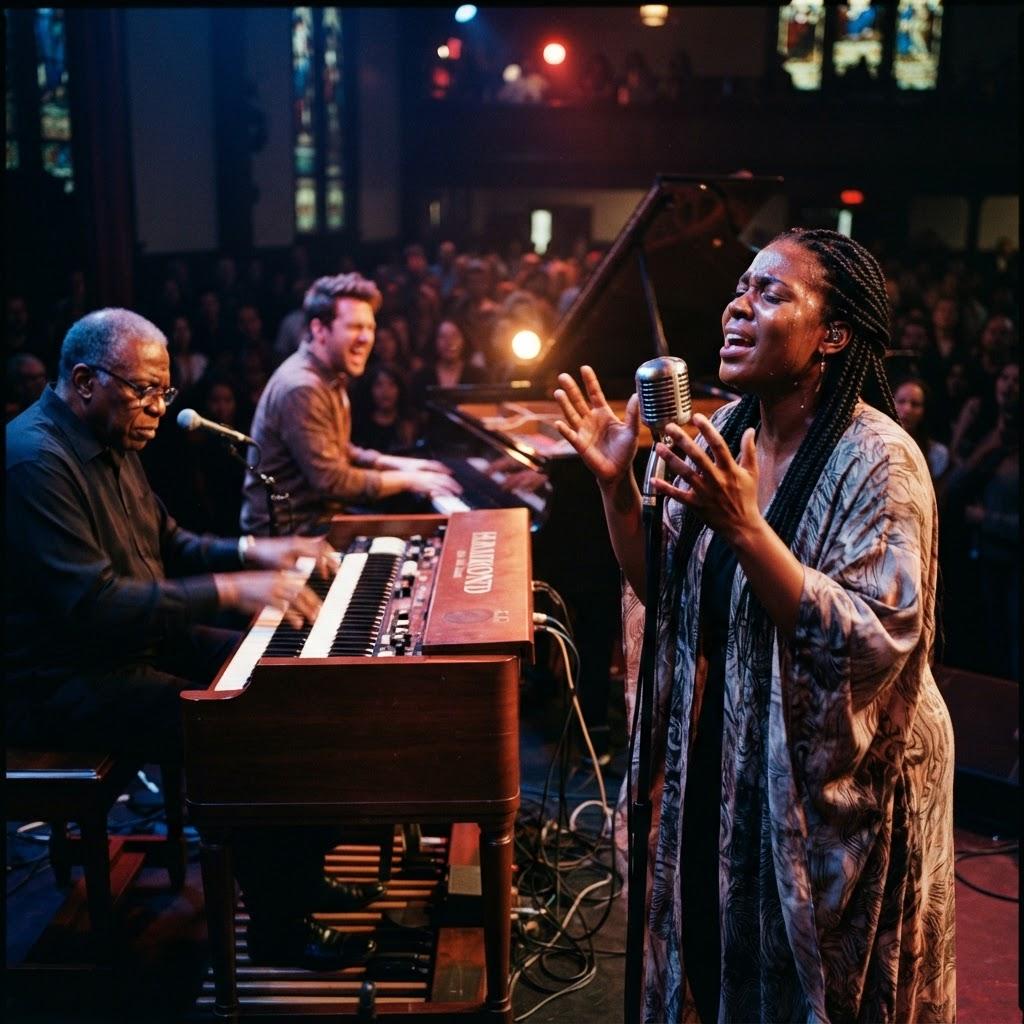
To understand the sonic architecture of Gospel, imagine a giant, caffeinated organ fighting a very rhythmic drummer for control of a room. At the center is the Hammond B3 organ, a massive piece of machinery that creates a thick, swirling sound like a velvet blanket made of electricity. When the player pulls those little drawbars, the organ begins to wail in a way that feels holy. Then there is the vocal arrangement, built on a concept called call-and-response. Think of it like a conversation at a crowded party: one person screams something exciting, and the whole room shouts back an agreement. The singers use melisma—which is just a fancy way of saying they take one syllable of a word and stretch it into a gorgeous, looping obstacle course of notes before finally landing on the finish line. Add a dash of syncopation, where the beat skips over a step to keep your toes twitching, and you have the engine. It is not about perfect, robotic precision; it is about the grit, the sweat, and the crack in the voice when the singer gets truly carried away by the message.
Origins & Birth of the Sound
Before it was the powerhouse it is today, Gospel was born out of the raw, dusty, and deeply soulful intersection of rural folk songs and the big city hustle. It sprouted from the fields where spirituals were sung to keep the heart beating through hard times, eventually drifting into the bustling churches of the Great Migration. Imagine Thomas A. Dorsey, the man considered the father of the genre, sitting at a piano in a Chicago church. He was a blues guy trying to figure out how to put that same Saturday-night fire into a Sunday-morning setting. It was a scandal at the time! Church elders looked at him like he had brought a circus bear into the sanctuary, but the people in the pews heard the music, felt the rhythm, and started clapping along. It was a conscious act of creative defiance. They were taking the sounds of the streets—the piano riffs, the jazz inflections, the bluesy wailing—and wrapping them around stories of resilience and hope. It wasn't just a style; it was a way for people to own their own sound while navigating a world that often tried to keep them silent.
The Pioneers & Legends
The history of Gospel is littered with titans who could sing the wings off a bird. Mahalia Jackson is the undisputed Queen, a woman whose voice could crack the clouds and bring down the rain. She did not just sing; she inhabited the lyrics like she was walking through a house she had owned for years. Then you have Sister Rosetta Tharpe, the woman who basically invented rock and roll before rock and roll even knew what it was, shredding on an electric guitar while singing about the afterlife. She was too cool for her own good. And let us not forget The Soul Stirrers, who introduced a young Sam Cooke to the world. They had a way of harmonizing that sounded like a choir of angels who had been drinking too much espresso. These pioneers were not just musicians; they were sonic architects who built the foundation for every pop star you see on television today. They brought a theatrical flair and a relentless technical skill that made sure the music was never just background noise. They were the original influencers, if the influence was deep, abiding, and life-changing.
Defining Tracks & Era-Defining Moments
If you want to know where the tectonic plates shifted, look at songs like 'Precious Lord, Take My Hand.' When Dorsey wrote it, it became the gold standard of emotional vulnerability, proving that Gospel could handle grief just as well as it handled joy. Then there is Mahalia Jackson’s performance at the 1963 March on Washington. That was not just a song; it was a cultural force field that helped steer the moral compass of a nation. It showed that Gospel was a language of protest and power, not just praise. In the modern era, you look at tracks like Kirk Franklin’s 'Stomp.' When that hit, it was like the genre put on a pair of fresh sneakers and jumped onto the MTV screen, forcing everyone to acknowledge that the old-school church sound could absolutely dominate the pop charts. These moments aren't just about melody; they are about gravity. They changed the rules, expanded the audience, and proved that a genre rooted in tradition could also be the most innovative force in the building. It turns out that when you sing with that much fire, people eventually have to stop and listen.
Subgenres & Offshoots
The Gospel family tree is wilder than a science fiction novel. You have traditional Gospel, which is your classic, choir-heavy, organ-wailing masterpiece. Then you have Southern Gospel, which leans into tight, barbershop-style harmonies and piano-driven melodies that feel like a porch session in the summer. Don't even get me started on Urban Contemporary Gospel, which is basically what happens when Gospel runs into R&B, hip-hop, and club music at a really fancy gala. It is slick, it is shiny, and it has more bass than a submarine. You also have the British Gospel scene, which takes that American root and adds a unique, multicultural flair that incorporates Afrobeat rhythms and a certain reserve that breaks into absolute explosion. Each subgenre is like a different flavor of the same spiritual feast; some are spicy, some are sweet, and some will leave you feeling like you just had a full-course meal. It is a massive, sprawling ecosystem where everyone is trying to express the same feeling, just through a different lens or a different drum machine.
Cultural Impact & Influence
Gospel is the secret DNA inside almost everything you listen to. You can trace the lineage of soul, funk, and rock straight back to the church choir. When Aretha Franklin stepped behind a piano, she was not just singing pop; she was singing the church. Elvis Presley? He was a huge Gospel fan who tried to bring that church energy to his own shows. The call-and-response vocal style is now standard practice for every pop concert where the artist shouts 'Let me hear you!' and the crowd goes wild. Beyond the music, Gospel has influenced how people dress for success, the way speeches are delivered in politics, and even the cadence of stand-up comedy. It taught the world that you should not just present information; you should testify to it. It introduced the idea of the 'breakdown' in a song, where everything drops out except the singer and the spirit, creating that moment of tension that keeps everyone on the edge of their seat. It is the original template for building emotional connection with an audience.
Controversies & Drama
Where there is passion, there is usually someone getting mad about it. The history of Gospel is absolutely riddled with 'purist' drama. Back in the day, the old guard thought that using a piano in church was a sin, let alone a bass guitar or a drum kit. They were convinced that by adding rhythm, the music was becoming too 'secular,' or worldly. It is hilarious to think about now, but people really stood their ground on the sanctity of their organ pedals. Then, when artists started crossing over to R&B, the accusations of 'selling out' were loud enough to break windows. You had legendary singers being told they were drifting away from the mission because they started wearing sequins and performing in theaters. It was the original 'he went pop' controversy. The drama was real, but it was also a sign that the music was alive and growing. Every time someone complained that the music was changing, it meant that the music was actually reaching new people and evolving into something that could survive the next generation.
Global Spread & Regional Scenes
Gospel is a world traveler with a very loud suitcase. It hit the UK like a thunderstorm, where the Caribbean influence mixed with the American tradition to create a sound that is uniquely vibrant and socially conscious. In Nigeria and Ghana, you have entire scenes of Gospel that are absolutely crushing the charts, blending high-energy Afrobeat percussion with anthemic, stadium-filling choruses. It is incredible to see how the genre is re-contextualized. In South Africa, the music is tied deeply to social justice and unity, carrying the same weight and resilience that it held in the American South during the civil rights movement. It has become a global language of resilience. Even in places where the dominant religion is totally different, the sound of a Gospel choir—the swelling harmonies, the emotional intensity—is recognized as a universal shorthand for 'this is a moment that matters.' It is the ultimate crossover genre because, regardless of your background, the sound of a group of people singing their hearts out together is a feeling that needs no translation.
The Modern Landscape
Today, Gospel is living its best life on TikTok, in massive stadium tours, and in the background of your favorite rapper's biggest hit. It is not sitting in a corner; it is everywhere. You see artists like Kirk Franklin or Tye Tribbett selling out arenas like they are rock stars, using production values that rival anything on the Billboard Hot 100. Modern Gospel is not afraid of auto-tune, trap beats, or synthesizers; it is using everything in the toy box to tell the same old story in a new way. There is a whole new generation of producers who treat a Gospel track like a masterpiece of layering, creating soundscapes that are lush, deep, and incredibly polished. It is flourishing because, at its heart, it is still the most efficient way to deliver raw, uncut energy. When things get weird in the world, people instinctively lean toward music that feels like a solid foundation, and that is why Gospel is currently trending, popping, and evolving faster than ever before.
How to Dive In
So, how do you actually start? Do not overthink it; just go to the source. Start with Mahalia Jackson’s 'Amazing Grace' to understand what raw power sounds like. Then, jump into Sister Rosetta Tharpe’s 'Up Above My Head' if you want to know where the swagger came from. If you want the slick, high-energy modern experience, put on Kirk Franklin’s 'The Nu Nation Project' and try to stay still—I bet you a dollar you can't. Look for live recordings, because Gospel is a genre that demands an audience to truly thrive. You want to hear the preacher in the background, the feet stomping, and the choir director yelling encouragement. Go find a playlist of 'Classic Gospel' and let it play while you are doing something mundane, like washing dishes or walking to the store. Before you know it, you will be humming, then tapping your foot, and then suddenly you are the loudest person in the room. This music is built to lift you up, so stop worrying about where to start and just hit play.