Late 1940s, United States
R&B
R&B is the musical equivalent of a velvet-lined rollercoaster—it knows exactly how to break your heart and mend it with a single vocal run. This is the genre that taught the world how to flirt, fight, and fall in love with style.
Meet the Genre
If music were a person, R&B would be that effortlessly cool friend who walks into a room, ignores the spotlight, and still ends up being the life of the party. It is the genre that smells like expensive cologne, feels like silk sheets, and talks like it knows every secret you have ever tried to hide. R&B is not just a collection of notes; it is a mood, a temperature, and an attitude. Think of it as the emotional Swiss Army knife of the music world—it has a melody for when you are head-over-heels in love, a bassline for when you are absolutely fed up with your ex, and a vocal run so impressive it could probably solve a localized energy crisis. It is the musical equivalent of a warm hug that occasionally leaves you crying in the bathroom, but in a way that makes you feel more alive than ever. From the grit of the early blues to the polished, neon-soaked production of today, R&B is the heartbeat of modern pop, yet it somehow stays grounded in the raw, messy reality of being human. It is recognizable within three seconds, usually because the singer sounds like they are physically vibrating with soul, and the rhythm section is playing something that makes your hips move without asking for permission.
The Sound & Signature Elements
To understand the musical DNA of R&B, imagine a really fancy sandwich. You need a solid base, a layer of spicy emotion, and a garnish that ties it all together. At its core, R&B is driven by the groove, which is just a technical way of saying the rhythm makes you want to nod your head until your neck hurts. It usually sits in a comfortable tempo range, never too frantic, never too sleepy, just right. Key instruments are the secret sauce: the electric piano, like the Fender Rhodes, provides that glassy, dreamlike sound that feels like drinking a cocktail in a dimly lit lounge. Then there is the synthesizer, which acts as the modern-day glitter, adding sparkle and texture. The production often uses syncopation—a fancy term for playing notes slightly off the main beat—to give the song that bounce. And the vocals? Those are the main event. We are talking about melisma, which is where a singer sings multiple notes over a single syllable. Think of it as musical gymnastics. If the lead singer is the star athlete, the background harmonies are the supporting cast that makes the whole thing sound like a glorious, multi-layered vocal lasagna. Every instrument is meticulously placed to build tension, leading to those satisfying moments where the beat drops and everything finally clicks into place.
Origins & Birth of the Sound
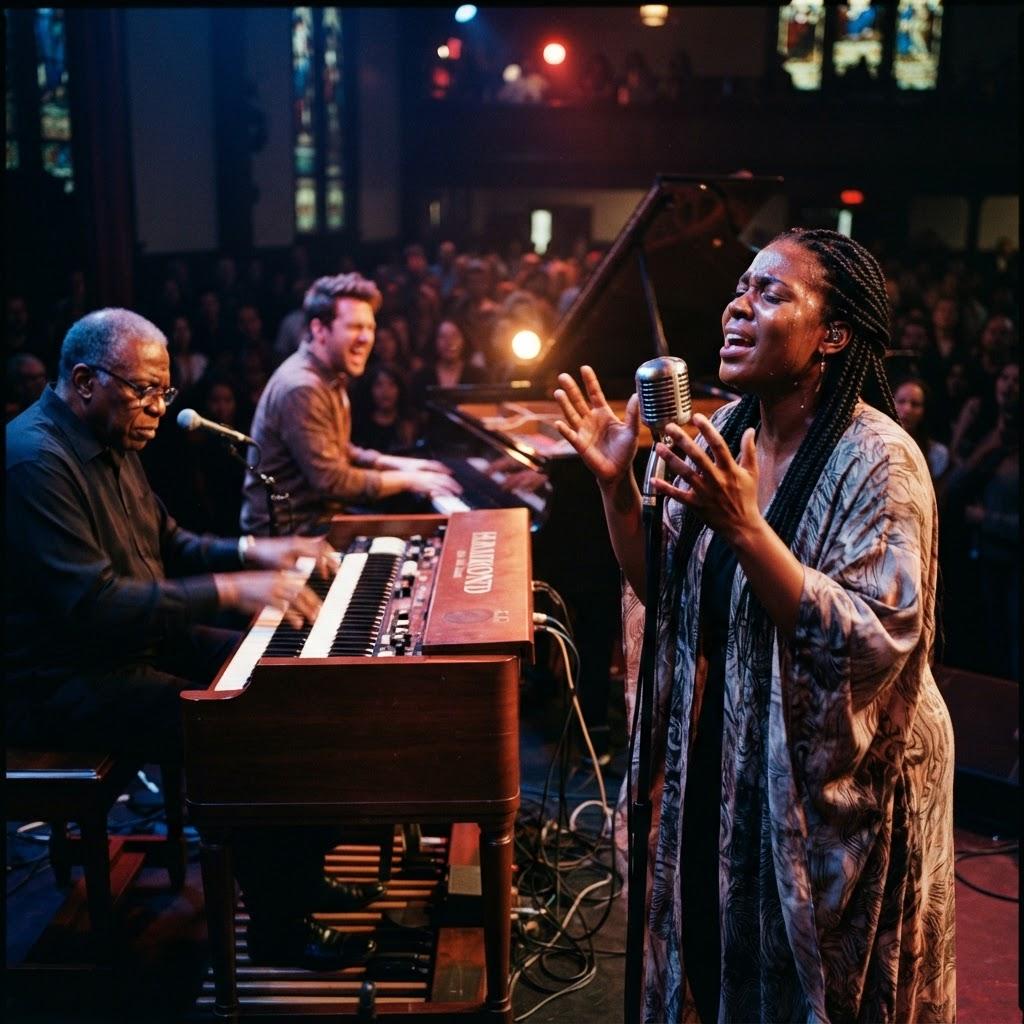
R&B was not born in a sterile laboratory; it was birthed on the bustling city sidewalks, in crowded dance halls, and in the small, sweaty clubs where the blues met the church. As the Great Migration moved millions of Black Americans from the rural South to the humming industrial cities of the North, they brought their stories with them. They packed their guitars, their voices, and their resilience into suitcases and headed for Chicago, Detroit, and New York. The sound started shifting because the environment changed. In the countryside, you had the acoustic, mournful pull of the blues, but the city was loud, fast, and demanding. Musicians started plugging in their guitars to be heard over the noise of the streetcars and the roar of the crowds. They added the driving, optimistic energy of gospel music to the heartache of the blues, creating a new, electrified hybrid. It was the sound of a community finding its voice in a concrete jungle, mixing the sacred and the secular. By the late 1940s, the term 'Rhythm and Blues' was coined as a catch-all for this vibrant, rhythmic, danceable music that belonged to the soul of the urban experience. It was the soundtrack to the Saturday night dance-off and the Sunday morning recovery.
The Pioneers & Legends
The history of R&B is a pantheon of titans, people whose voices could single-handedly influence entire generations of listeners. You have the architects like Ray Charles, who took the sacred wails of the church and dropped them into the middle of a nightclub, essentially proving that holy and profane could coexist over a piano riff. Then there is Aretha Franklin, the undisputed Queen who turned every song she touched into a constitutional amendment. She didn't just sing; she commanded the atmosphere, bringing a level of technical precision and emotional weight that set the gold standard. We also can't talk about legends without acknowledging the slick, suit-wearing masters like Sam Cooke, whose voice was as smooth as butter melting on a warm biscuit. These figures were more than just entertainers; they were characters in a massive cultural epic. They had their quirks—their stage outfits, their signature dance moves, their feuds—but they were united by an almost supernatural ability to articulate the universal experience of longing. When they walked onto a stage, the world stopped moving, and for three minutes, everyone in the room became a believer in the power of the groove.
Defining Tracks & Era-Defining Moments
Music history is often measured by the moments that split time into 'before' and 'after.' Think of the release of albums like Marvin Gaye's 'What's Going On.' That was a turning point because it turned the R&B record into a social manifesto, proving that you could have a danceable track while discussing the messy state of the world. Then there is the 90s, where Janet Jackson’s 'Control' shifted the landscape entirely. Suddenly, R&B wasn't just about love and heartbreak; it was about autonomy, power, and high-tech, razor-sharp production. Or consider the impact of Boyz II Men’s 'End of the Road,' a song that became the mandatory soundtrack for every middle school dance and high school graduation for a decade. Each of these moments represents a pivot where the production techniques evolved, the lyrical themes deepened, and the barrier between the artist and the listener got a little thinner. A defining track is like a time capsule—you hear those first few notes, and you are immediately transported back to a specific feeling, a specific year, and a specific version of yourself. These songs didn't just hit the charts; they hit our collective subconscious.
Subgenres & Offshoots
R&B is a bit like a sprawling, chaotic family tree. It started as a single branch and eventually grew into an entire forest of subgenres. You have Quiet Storm, which is the musical equivalent of a silk tie and a glass of wine—slow, intimate, and perfect for late-night radio. Then there is New Jack Swing, a frantic, dance-heavy evolution in the late 80s that injected hip-hop attitude and stiff, snapping drum machine beats into the mix, making everyone jump around like they had too much caffeine. We also saw the rise of Neo-Soul, a beautiful, organic retreat from the digital polish that looked back to the 70s for inspiration, focusing on acoustic textures and poetry. It’s like the difference between a high-end, synthetic luxury car and a beautifully restored vintage sedan. Each offshoot takes a little bit of the original soul and tweaks it—some make it darker, some make it faster, some strip it back to the bare essentials. The constant evolution shows that R&B is never satisfied with staying in one place; it is always looking to reinvent itself, absorbing the newest technology or the weirdest artistic trend and making it feel like it belonged to the genre all along.
Cultural Impact & Influence
If you look at the last seventy years of fashion, language, and behavior, you are looking at the footprint of R&B. It taught us how to dress—the sharp tailoring of the Motown era, the high-fashion experimentation of the 90s, and the effortless streetwear aesthetic of today are all tied to icons who made looking good a part of the performance. But its reach goes deeper than just clothes. R&B changed the way we speak about love. It gave us the vocabulary for our most complicated emotions, providing the scripts for our breakups and our reconciliation attempts. Politically, R&B served as a quiet, steady force, providing the anthems for civil rights movements and the quiet, persistent voice of resilience during tough times. It infiltrated film, with soundtracks that often became more famous than the movies themselves, and it influenced how we think about the 'cool' factor. Whenever you see a movie character looking out a rain-slicked window while a sad song plays, you are watching the ripple effect of R&B. It set the standard for what it means to be vulnerable in public, turning personal pain into a shared, universal experience that brings people together in a way few other things can.
Controversies & Drama
No genre this powerful gets to exist without its fair share of fireworks. R&B has seen its share of drama, ranging from the 'moral panics' of the 1950s—when parents were horrified by the 'suggestive' nature of rhythmic music—to the legal battles over sampling in the golden age of hip-hop and R&B fusion. There is always a scandal brewing in the background, whether it’s a record label dispute that changes the sound of an entire decade or a diva moment that becomes the stuff of urban legend. Remember when certain radio stations tried to ban songs because they thought the lyrics were 'too steamy'? That only ever made the songs more popular, because as the saying goes, tell a teenager not to listen to something and it becomes their favorite track instantly. These moments of controversy often highlight the tension between the artists and the suits in charge, or the generational gaps between the old guard and the new school. It’s a messy, loud, and sometimes deeply frustrating aspect of the business, but it’s also undeniably human. The drama keeps things interesting, proving that behind every perfect, smooth, and polished vocal performance, there is usually a complex story of human ambition, ego, and a little bit of beautiful chaos.
Global Spread & Regional Scenes
R&B is a world traveler. It left the United States and found a second home in the UK, where it fused with British sensibilities to create a moody, synth-heavy sound. In Japan, it met a love for impeccable production and high-concept aesthetics, resulting in some of the cleanest, most sophisticated R&B ever recorded. In Canada, it was taken, slowed down, and turned into a dark, atmospheric experience that changed the tone of modern pop music globally. Each region adds its own local flavor, like a chef adapting a classic recipe with ingredients found in their own backyard. You can hear the influence of R&B in the way contemporary Afrobeats artists build their rhythm sections, or in the way Korean pop groups treat vocal harmony. It is a universal language of longing and rhythm. It doesn't matter if you are in a club in London, a studio in Seoul, or a bedroom in Toronto; when that classic R&B beat hits, everyone knows exactly what to do. It’s the ultimate musical export, proving that while the roots might be in the American urban experience, the feelings it expresses are fundamentally, universally human.
The Modern Landscape
Today, R&B is a chameleon. It exists in the streaming era, where the traditional 'album cycle' has been replaced by the 'mood-based playlist.' Modern torchbearers are doing away with the boundaries entirely, blending R&B with electronic music, trap, indie-rock, and anything else they find interesting. It is more atmospheric and introspective than ever, often prioritizing 'vibes' over traditional verse-chorus structure. Some of the most exciting artists currently active are taking those classic 90s influences and smashing them into a blender with modern synthesizers to create something that feels nostalgic yet futuristic. The sound is getting smaller and more intimate; thanks to modern recording technology, artists don't need a million-dollar studio to sound like a million dollars. They are making hits in their bedrooms, using laptops to create soundscapes that are dense, textured, and deeply personal. R&B is heading into a space where it is less about fitting into a category and more about the raw, unfiltered expression of the individual. It is constantly evolving, but the core—that undeniable, soulful connection between the voice and the beat—remains as powerful as it was on day one.
How to Dive In
Ready to lose yourself in the groove? Start by putting on a pair of decent headphones—don't cheat with phone speakers, you need to hear the bass tickle your ears. Begin with the foundational magic of Sam Cooke’s 'A Change Is Gonna Come' to understand the gravity of the genre. Move into the neon-soaked energy of Michael Jackson’s 'Off the Wall' to feel the danceability. For the 90s, put on TLC’s 'CrazySexyCool' and just let it play from start to finish; it’s a masterclass in production and personality. For the modern era, dive into SZA’s 'Ctrl' or Frank Ocean’s 'Blonde,' both of which represent the bleeding edge of the genre’s introspective, hazy evolution. As you listen, pay attention to the space between the notes—the breaths the singer takes, the way the bass interacts with the kick drum, the harmonies that hide in the background of the mix. R&B is a genre that rewards the listener for paying attention. It is a lifelong journey of discovery, and the best part is that you can start right now. Just hit play, close your eyes, and let the music do the rest of the work. You are in for one hell of a ride.