1950s, United States
Rock
Rock is the rebellious teenager of music that never quite grew up, trading suburban boredom for distorted guitars and world-changing attitude. It is a sonic explosion that turned volume into a virtue and transformed the stage into a sacred space for the loud, the proud, and the gloriously unhinged.
Meet the Genre
Rock is that loud, leather-clad friend who walks into a quiet library, cranks up a portable speaker, and somehow convinces the librarian to start dancing on the tables. It isn't just a genre; it is a full-scale assault on the mundane. Rock music arrived in the mid-twentieth century like a lightning bolt in a bottle, fueled by the realization that teenagers were tired of listening to their parents’ stuffy big-band jazz records. It is the sound of a garage door opening to reveal a drum set, a borrowed guitar, and enough teenage angst to power a small city for a month. What makes Rock instantly recognizable isn't just the sheer wall of sound; it is the attitude that drips from every screeching guitar solo and every raspy, unpolished vocal line. It is the musical equivalent of a shrug at authority and a giant bear hug for the concept of personal freedom. Whether it is a slow, soulful ballad or a blistering three-minute anthem about absolutely nothing, Rock manages to feel both dangerous and deeply comforting at the same time, like riding a motorcycle through a thunderstorm while wearing your favorite pair of worn-in jeans.
The Sound & Signature Elements
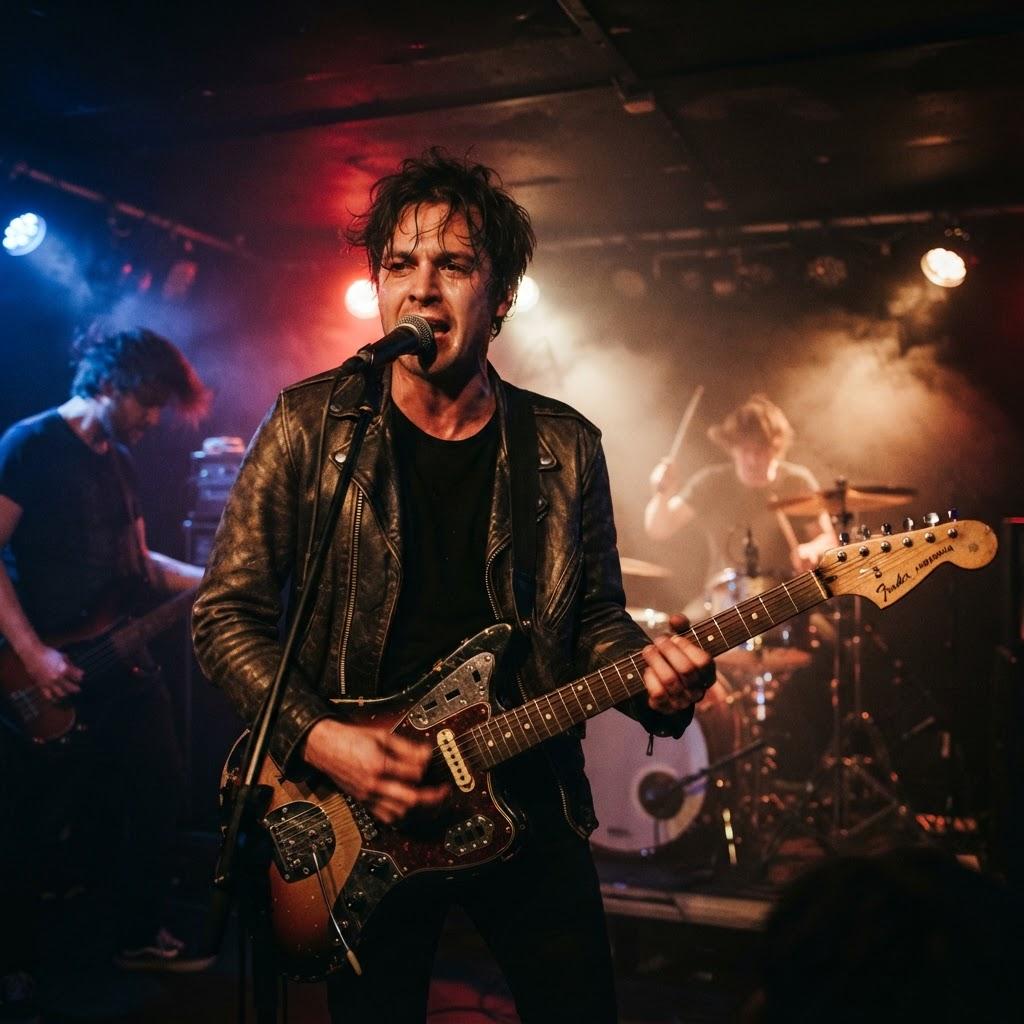
At its core, Rock is built on the holy trinity of noise: the electric guitar, the bass, and the drums, usually held together by a lead singer who probably thinks they are a god. The signature element is the power chord, which is basically when a guitarist plays two or three notes at once to create a thick, buzzing sound that hits your chest like a velvet-covered sledgehammer. Think of the drums as the heartbeat; it is almost always centered on the backbeat, which is the emphasis on beats two and four in a four-beat measure. It is the rhythmic 'snap' that makes your head bob involuntarily. Then there is distortion, which is essentially taking a signal and overworking it until it breaks, turning a clean, polite guitar chime into a roaring, snarling beast. When you add a singer who uses their voice as an extra instrument—growling, wailing, or whispering—you get that dynamic tension where everything feels like it might fly off the rails at any second, yet remains perfectly controlled.
Origins & Birth of the Sound
Imagine the early 1950s in the American South. The air is thick with humidity and musical history, where Delta blues, honky-tonk country, and gospel are all swirling around like ingredients in a very potent, very intoxicating punch. You had artists like Sister Rosetta Tharpe wailing on an electric guitar in churches, and you had rhythm and blues musicians hitting the dance floors with a tempo that made you sweat. Then, someone realized that if you took the swing of blues and mashed it with the twang of country, and then turned the volume up until the speakers started to protest, you would have something entirely new. It was a cultural powder keg waiting for a spark. The kids were tuning into radio stations playing records that their parents found downright scandalous, and suddenly, the sleepy suburbs were buzzing with the sound of a new, electrifying pulse. It was the birth of the 'Rock and Roll' label, a name that originally described the movement of a ship on the sea, but quickly became shorthand for the wild, hip-shaking commotion that was taking over jukeboxes from Memphis to Chicago.
The Pioneers & Legends
If Rock were a family tree, the roots would be gnarled, deep, and occasionally slightly unhinged. You have Chuck Berry, the architect who basically wrote the instruction manual on how to be a guitar hero while duck-walking across a stage like a bird with a musical degree. Then there is Elvis Presley, who wasn't just a singer but a seismic event in human skin, moving his hips in a way that terrified suburban moms and changed the course of pop culture forever. On the other side of the pond, the British Invasion brought us The Beatles and The Rolling Stones—two sides of the same coin where one group looked like polite, charming chaps who could write a melody so catchy it should be illegal, and the other looked like they had been dragged through a hedge backward and loved every second of it. These pioneers weren't just musicians; they were archetypes. They established the blueprint of the 'Rock Star'—a figure who could be simultaneously larger than life and deeply vulnerable, setting the stage for decades of ego, brilliance, and occasionally questionable fashion choices.
Defining Tracks & Era-Defining Moments
You cannot talk about Rock without mentioning the tracks that felt like turning points in human history. Think of 'Johnny B. Goode' by Chuck Berry, the song that basically taught every kid in the 1960s how to pick up a guitar. Or look at the 1965 release of 'Like a Rolling Stone' by Bob Dylan, which proved that a rock song could be as lyrical, literary, and biting as a classic novel. Then there is the 1969 Woodstock Festival, which wasn't just a concert but a massive, muddy, beautiful experiment in living that defined a generation. When Jimi Hendrix played 'The Star-Spangled Banner' at that festival, he didn't just play a guitar; he made it scream, groan, and weep, turning a patriotic anthem into a visceral protest against the world. These moments were not just songs; they were cultural markers that divided 'before' and 'after,' proving that the genre had the power to reflect the turbulence of the world back at itself in a way that felt raw, honest, and undeniably cool.
Subgenres & Offshoots
Rock is a bit like a sprawling, argumentative family that keeps inviting more cousins to the party. In the late 1960s, it grew hair and got weird with Psychedelic Rock, which used studio effects to make everything sound like a colorful dream. Then came the 1970s, which gave us the sheer, operatic excess of Progressive Rock—think fifteen-minute songs about space travel and wizardry. But just as things were getting too posh, Punk Rock arrived in the late 70s, stripping everything back to three chords and a massive amount of attitude, basically saying, 'You don't need to be a virtuoso to say something important.' From there, we got Heavy Metal, which took the volume and made it lethal, and then the moody, introspective Grunge of the 1990s, which traded the leather pants for flannel and the stadium-sized ego for an existential crisis. It keeps branching out because, at its heart, Rock is a language that can adapt to whatever frustration or joy the current decade is feeling.
Cultural Impact & Influence
Rock did more than just sell tickets; it essentially created the idea of the 'teenager' as a distinct social class with its own money, its own fashion, and its own rules. Before rock, you were basically a child until you turned twenty-one and bought a suit. After rock, you had denim, leather jackets, band t-shirts, and hair that defied gravity. It became the language of rebellion. When political movements needed an anthem, they didn't reach for a symphony; they reached for a guitar. Rock music has been the soundtrack to everything from anti-war protests to the collapse of the Berlin Wall. It shaped language, turning phrases like 'don't trust anyone over thirty' into actual life philosophies. Even today, the 'rock star' archetype lives on in how we view influencers, artists, and celebrities—it is the idea that if you are loud enough and honest enough, you can carve your own path through the static of mainstream culture and change the way people see the world.
Controversies & Drama
If there is no drama, is it really Rock? The genre has been the target of moral panics since day one. In the 50s, people thought the music would literally make teenagers lose their minds; in the 80s, the Parents Music Resource Center (PMRC) tried to put stickers on albums, effectively acting as the world's most high-profile record collectors. There were the legendary beefs—the Beatles versus the Stones, Blur versus Oasis, and every band member who ever left a group in a huff of self-righteous indignation. We have had entire decades defined by the 'rock star' behavior that would make a Roman emperor blush. From the myth of the '27 Club' to the tales of hotel rooms being systematically dismantled by tour buses, the drama has always been part of the mythology. It proves that these people were human, flawed, and constantly teetering on the edge of destruction, which is exactly why we find them so incredibly fascinating to watch.
Global Spread & Regional Scenes
Rock might have been born in the American South, but it traveled faster than a wildfire in a dry forest. It hit the UK and returned transformed, with bands like The Beatles and Led Zeppelin taking the blues and turning it into something louder and more mythic. It thrived in Australia, where bands like AC/DC took the basic boogie-woogie beat and turned it into a finely tuned, head-banging engine. In Germany, Krautrock experimentation pushed the boundaries of what a drum machine and a synthesizer could do for a rock song. In Brazil, Tropicalia mixed rock with local rhythms to create a vibrant, politically charged hybrid. Everywhere it went, it picked up the local dialect. You can hear the influence of local folk traditions in the melodies of Scandinavian metal, and you can see the impact of urban density in the gritty post-punk scenes of Japan. Rock isn't one thing; it is a global conversation, with every country adding its own local slang and flavor to the mix.
The Modern Landscape
Today, Rock is not dead; it is just busy hanging out in different neighborhoods. You might not hear as many 'guitar heroes' dominating the Top 40 charts, but the spirit of the genre is everywhere. It is in the way modern pop stars use aggressive production, it is in the DIY ethos of bedroom pop producers, and it is in the way hip-hop artists sample old records to create something entirely new. You have bands that are blending the classic rock aesthetic with electronic textures, and you have a massive underground scene of garage-rock revivalists who are keeping the spirit of 1965 alive in basement clubs. The 'Rock' label is less of a rigid box and more of a ghost that haunts everything, proving that as long as there is an amplifier in a room, there is a chance for someone to create something that feels like an explosion. We are seeing a cyclical return where younger generations are discovering the power of a live band in a room, bringing the energy back to the forefront.
How to Dive In
To start your journey, don't overthink it. Go to a streaming service and queue up a mix that starts with The Beatles' 'Twist and Shout' for the pure, unadulterated joy. Then, move to Led Zeppelin's 'Whole Lotta Love' to understand how the guitar can turn into a giant, churning machine. Throw in Nirvana's 'Smells Like Teen Spirit' to feel that 90s frustration that still rings true, and maybe toss in some Arctic Monkeys for a taste of how the genre sounds in the twenty-first century. Listen for the space between the instruments—the way the bass guitar and the drums lock together to create a pocket that the singer can step into. Look for that tension, that moment where it sounds like the band is about to lose control, but they manage to pull it back together at the very last second. Rock is not a test to pass; it is a feeling to chase. Put your headphones on, turn the volume up until it tickles your ears, and remember that you are part of a long, loud, and beautiful history.