Late 1960s and early 1970s
Heavy Metal
Heavy Metal is the musical equivalent of a dragon breathing fire on a suburban neighborhood. It is loud, unapologetic, and the perfect soundtrack for when you want to feel like a titan conquering the world.
Meet the Genre
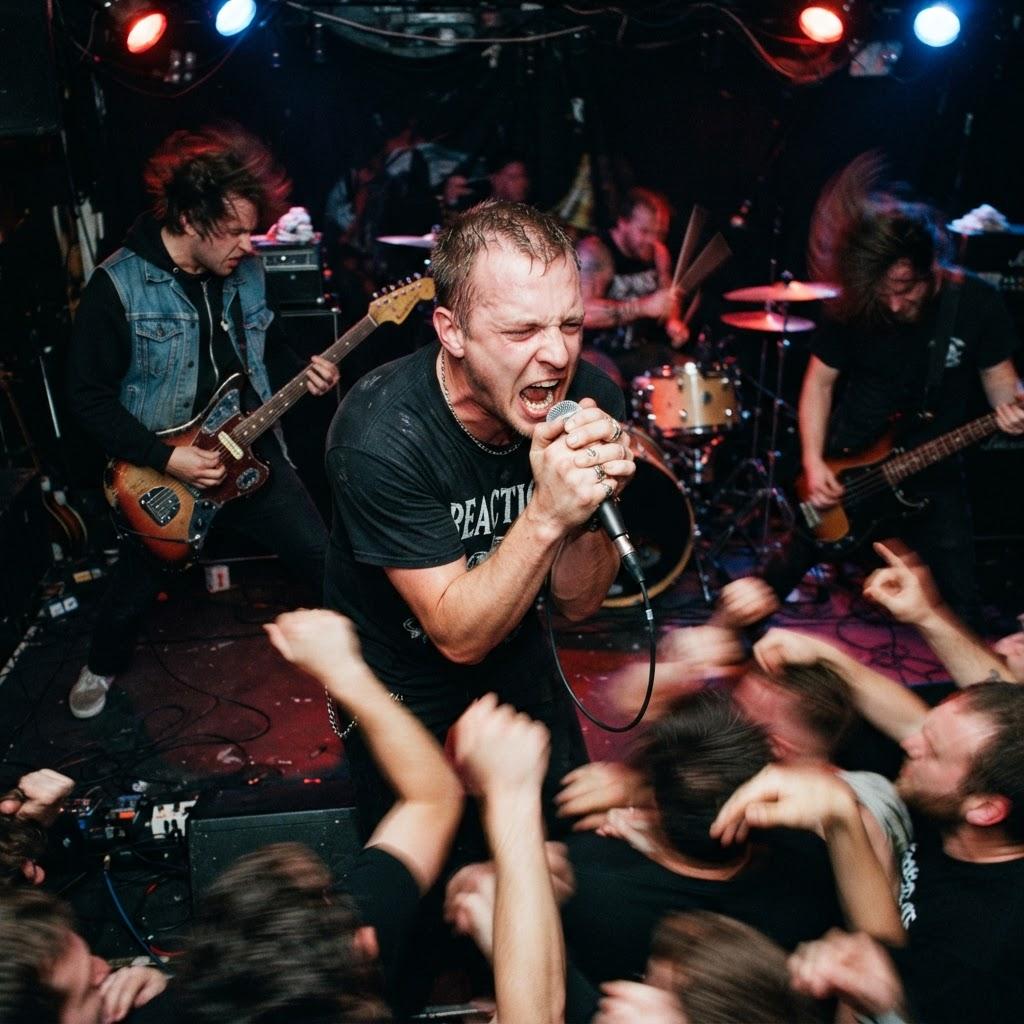
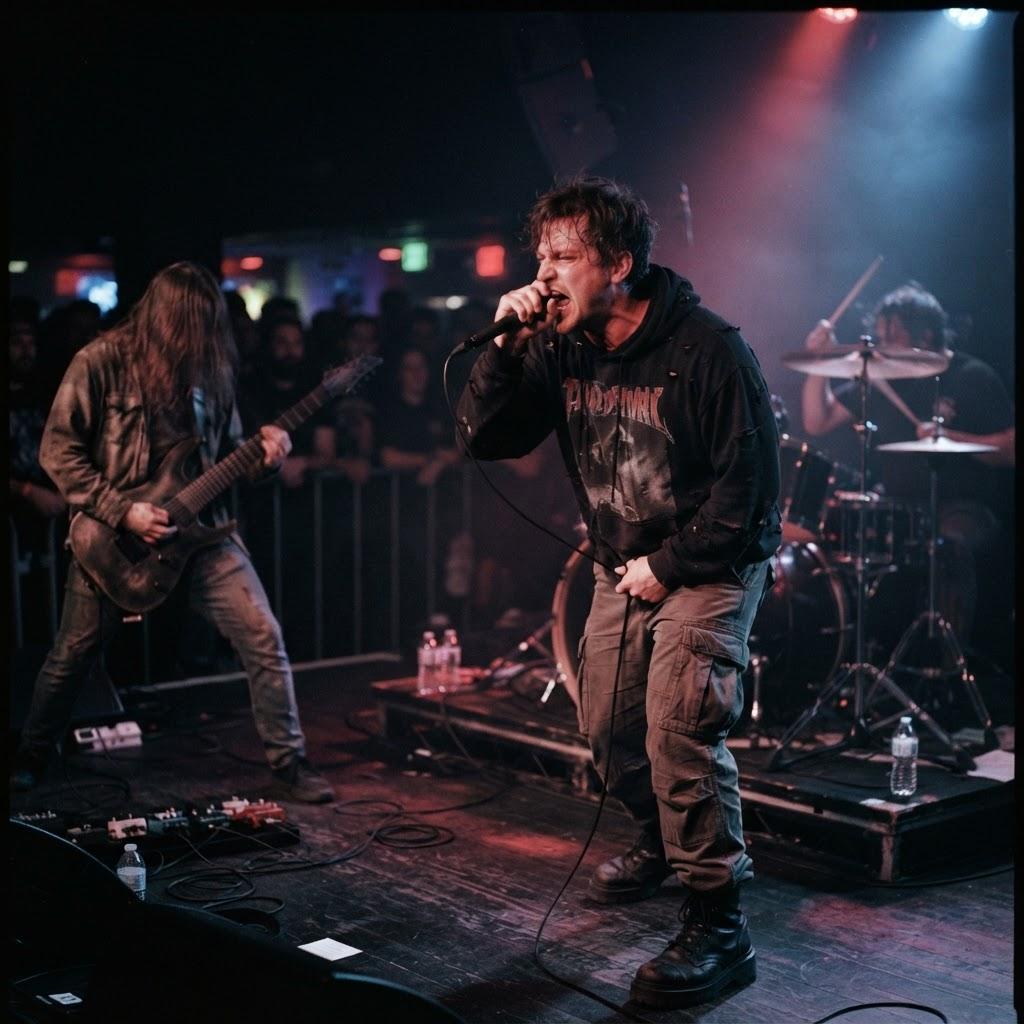
Imagine walking into a dark, industrial tavern where the walls are sweating, the floor is sticky with spilled ale, and the music playing is so intense it feels like a tectonic plate shifting under your boots. Heavy Metal isn't just music; it’s a lifestyle, a secret society, and a sonic middle finger to the mundane status quo. It is the sound of thunder trapped in a guitar amplifier, unleashed by people who didn't want to play folk songs about rainbows. When the first power chord hits—that sound where you strum multiple notes at once, cranked up through a machine that adds gravel and grit to the signal—the air itself seems to thicken. It is aggressive, theatrical, and gloriously over-the-top, like a Shakespearean play performed by Vikings inside a jet engine. Metal fans are the most dedicated music enthusiasts on the planet, characterized by a love for leather, long hair, and the kind of musical technicality that makes math teachers weep with joy. It is a world where being loud isn't just an option; it is a moral obligation to yourself and your neighbors.
The Sound & Signature Elements
To understand the musical DNA of Heavy Metal, one must first worship at the altar of the riff. A riff is essentially a catchy, repeating musical phrase that acts as the backbone of a song—think of it like the hook that snags your brain and won't let go. Metal guitarists use something called 'distortion,' which is an electronic effect that takes a clean, chime-like sound and grinds it into a snarling, fuzzy roar. Think of it like the difference between a kitten's meow and a tiger's growl. Then there are the 'power chords,' which are simplified chords played with a specific intensity that sounds massive even on the cheapest speakers. The drumming is often a dizzying display of 'double-bass'—using two pedals on the floor drum to create a sound like a galloping horse or a machine gun, depending on the speed. Vocals in metal range from operatic, sky-high wails to deep, gravelly barks that could strip paint off a wall. The song structures often ditch the standard pop formula of 'verse-chorus-verse' to instead explore epic, twisting journeys that feel like musical novels, sometimes stretching into eight or ten minutes of glorious sonic chaos.
Origins & Birth of the Sound
The birth of Heavy Metal happened in the gray, smog-choked industrial belly of Birmingham, England. In the late 60s, these guys were living in the shadow of massive steel factories, listening to the relentless, pounding rhythm of machinery all day long. They took the blues-rock that was popular at the time—which was basically a more polite version of music played in Mississippi—and they turned up the gain, slowed down the tempo, and made it sound, well, heavy. It wasn't about love or sunshine anymore; it was about the dark corners of the human psyche, the terror of war, and the crushing weight of the working-class grind. Black Sabbath, the accidental architects of the entire movement, supposedly tuned their guitars down—literally loosening the strings—to make the sound thicker and easier for a guitarist with a finger injury to play. That 'lower' tuning gave the music a sinister, ominous vibe that was brand new to the world. It was a complete departure from the peace-and-love hippie movement, acting as the darker, grittier cousin who actually understood that life was rarely a stroll through a field of flowers.
The Pioneers & Legends
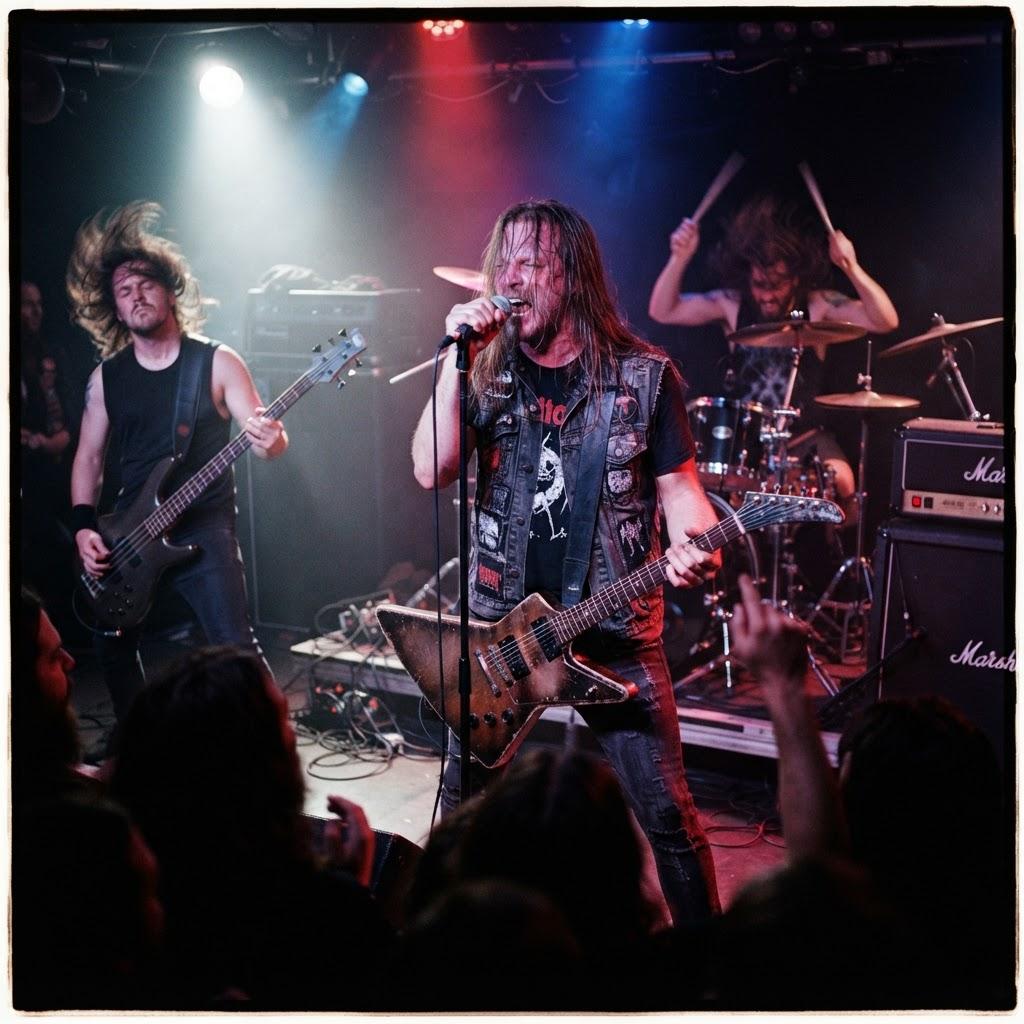
The list of legends in Metal reads like a roll call of gods, demons, and wizards of the fretboard. First and foremost, you have Black Sabbath, the godfathers who invented the dark aesthetic and the 'evil' sound. Tony Iommi, their guitarist, is practically the patron saint of the genre. Then there is Led Zeppelin, who brought a kind of mythical, folk-inspired majesty to the heavy sound, proving that you could be thunderous and poetic at the same time. We cannot forget Judas Priest, who essentially codified the look—leather jackets, studs, and motorcycles—turning the genre into a visual uniform. Iron Maiden arrived later, bringing a sense of galloping, galloping melodies and high-fantasy storytelling that made every concert feel like a trip through a history book. And then there is Lemmy Kilmister of Motörhead, a man who lived with a bottle of Jack Daniels in one hand and a bass guitar that sounded like a chainsaw in the other. These artists didn't just write songs; they built a religion, establishing the archetypes—the shredder, the frontman, the drummer, and the rebel—that every band since has chased.
Defining Tracks & Era-Defining Moments
If you want to know why this genre matters, you have to spin the tracks that changed the trajectory of rock and roll. Black Sabbath’s 'Paranoid' is the ultimate gateway drug; it’s punchy, dark, and features a riff so infectious it should be illegal. Then there is Deep Purple’s 'Smoke on the Water,' a song with a riff so simple that every human being on earth who has ever touched a guitar has tried to learn it. It proved that Heavy Metal could be radio-friendly without losing its edge. Later, you have Metallica’s 'Master of Puppets,' which took the genre into a realm of technical precision and blistering speed that changed the game forever. It transformed metal from a niche interest into a force that could pack stadiums globally. Another pivot point was Iron Maiden’s 'The Number of the Beast,' which used cinematic, theatrical flair to push the boundaries of how 'loud' and 'epic' a band could actually sound. Each of these tracks acted like a lighthouse, guiding new fans into the fold and setting a higher bar for every band that decided to pick up an electric guitar and turn their volume knob up to eleven.
Subgenres & Offshoots
Metal is a family tree that has branched out into some truly bizarre and wonderful shapes. You have Thrash Metal, which is basically what happens when you drink five espressos and try to play guitar; it is fast, aggressive, and obsessed with social themes. Then there is Doom Metal, which takes the original, sluggish, terrifying vibes of early Sabbath and slows them down until the music feels like you are walking through thick mud in the middle of a nightmare. Death Metal takes the aggression to the absolute extreme, often featuring 'growled' vocals that sound like a bear reciting poetry, and themes that lean into the macabre. Black Metal, particularly from Scandinavia, is a cold, atmospheric, and often controversial branch that sounds like a blizzard raging in an ancient forest. Power Metal brings the high-fantasy elements to the front, featuring operatic singing about dragons, knights, and space travel. It is a genre of musical hyper-specialization, where every single fan can find a tiny niche that suits their exact mood, whether they want to headbang to sonic chaos or contemplate existence through a dark, slow-motion soundscape.
Cultural Impact & Influence
Heavy Metal has invaded every corner of modern culture, even if you do not realize it is there. You see it in fashion—everyone from high-end runway designers to local thrifters has borrowed the aesthetic of band T-shirts, leather jackets, and heavy boots. In language, it gave us the 'devil horns' hand gesture, which is now a universal symbol for rockin' out, regardless of whether you are at a concert or a corporate retreat. Metal has infiltrated movies, video games, and TV shows, with its dark, driving energy being the go-to choice for anything that needs to feel epic, dangerous, or intense. Think of 'Stranger Things' and the iconic scene featuring 'Master of Puppets'; it wasn't just a song, it was a cultural touchstone that introduced a new generation to the power of a shredding guitar solo. Politically and socially, metal has always been the voice of the outsider, the kid who didn't fit in, and the working-class hero who needed a way to process the frustration of a world that didn't care. It taught people that being 'different' is actually a superpower, fostering a sense of community that is as intense as the music itself.
Controversies & Drama
No genre in history has been scrutinized, attacked, and misunderstood quite like Metal. In the 80s, you had the 'Satanic Panic,' where overly concerned adults thought listening to metal would magically turn their children into villains. It was ridiculous, hilarious, and ultimately did nothing but make the music cooler. The scene itself is rife with what fans call 'gatekeeping,' which is just a fancy way of saying some metalheads are incredibly protective about who is 'truly' metal. You get into fierce debates over whether a band is 'real' metal or just hard rock with a fancy haircut. There is also the legendary rivalry between different subgenres, where fans will argue until their faces are blue about whether a band that plays fast is better than a band that plays slow. Backstage drama is another classic element; metal bands are known for their big egos and epic personality clashes, leading to legendary breakups and reunions that read like soap operas. It is all part of the theatre, really—a high-stakes game of ego, art, and stubborn devotion that makes the whole subculture feel like a living, breathing, sometimes dysfunctional family.
Global Spread & Regional Scenes
While it was born in England, Metal quickly became a global language. It traveled to the US, where it was transformed by the blistering speed of the West Coast and the gritty, street-level energy of the East. In Scandinavia, specifically Norway and Sweden, it evolved into something much darker and colder, with artists creating atmospheric soundscapes that reflect the harsh winters and ancient landscapes of their homes. Down in South America, particularly in Brazil, the genre took on a life of its own, blending traditional metal with local rhythms to create something truly unique and percussion-heavy. Japan has an incredible, ultra-dedicated metal scene that values technical perfection and elaborate, theatrical live shows that put most Western bands to shame. Wherever it goes, metal takes the local DNA and mixes it into its own identity. It is a universal aesthetic that bridges language barriers; you can go to a metal concert in Tokyo, Rio de Janeiro, or Berlin, and the vibe, the energy, and the passion are exactly the same. It is a musical United Nations where the only requirement for membership is a love of loud, heavy music.
The Modern Landscape
Today, Metal is more diverse and thriving than ever, proving that it is far from a relic of the past. It is not just sitting in the shadows; it is evolving in real-time. You have 'Djent' bands, which use complex, jagged, and syncopated rhythms that sound like a computer glitching in the best way possible. You have artists blending metal with electronic, hip-hop, and even folk music to create hybrids that defy simple labeling. Thanks to social media platforms, young bands are finding audiences across the globe without ever needing a record label to hold their hand. We are seeing a massive resurgence in interest because, in a world that is increasingly digital and polished, people are craving the raw, tactile reality of a real guitar being hit hard. Whether it is through massive, record-breaking festivals or intimate underground clubs, the pulse of the metal scene is strong. It has become a home for anyone looking for authentic expression in a world that feels increasingly manufactured. Metal isn't just surviving; it is constantly mutating into new, weird, and exciting forms, ensuring that the next generation of headbangers has plenty of ways to keep the fire burning.
How to Dive In
Ready to join the ranks of the heavy? You do not need to overthink it. Start with the 'Big Four' of Thrash—Metallica, Megadeth, Slayer, and Anthrax—to get a feel for the speed and the attitude. If you want something more classic, go straight to the source with Black Sabbath’s self-titled debut album; it is the blueprint for everything that follows. For the high-fantasy, theatrical side of things, throw on Iron Maiden’s 'The Number of the Beast' and prepare to feel like you are fighting a mythical beast on a mountain top. If you are curious about the heavier, darker side, explore the haunting, atmospheric landscapes of Opeth or the crushing, sludge-filled riffs of Mastodon. The best way to dive in is to find a playlist, turn the volume up, and see what triggers that 'Oh, this is awesome' feeling in your chest. Don't worry about the rules or what anyone else says is 'cool.' Just listen, find the bands that make you want to jump around your living room, and embrace the chaos. Metal is a wide, welcoming world for anyone who loves power, melody, and a little bit of darkness. So, turn that knob up, let the distortion wash over you, and welcome to the family!