Late 1970s
Hardcore Punk
Hardcore punk is the musical equivalent of a caffeinated toddler launching themselves off a skyscraper. It is fast, furious, and serves as the ultimate middle finger to anything resembling a polite society.
Meet the Genre
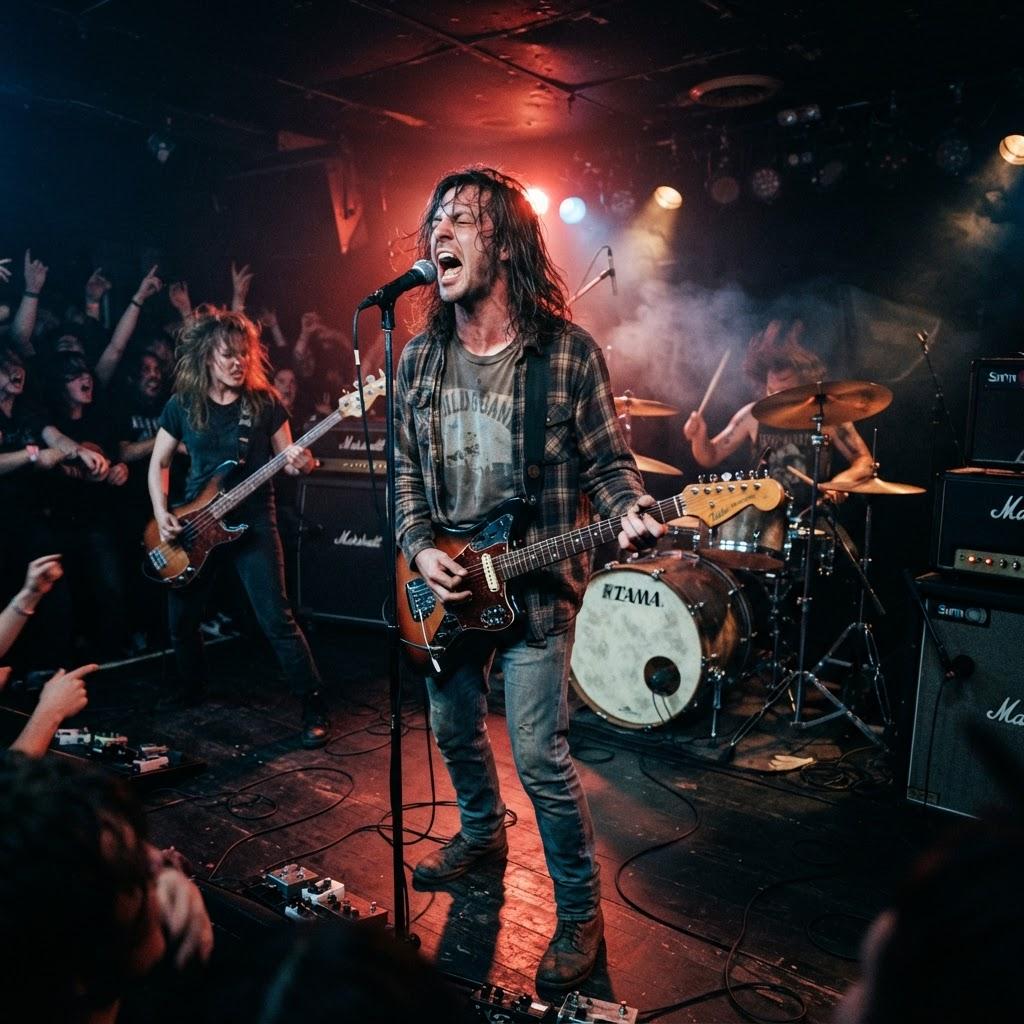
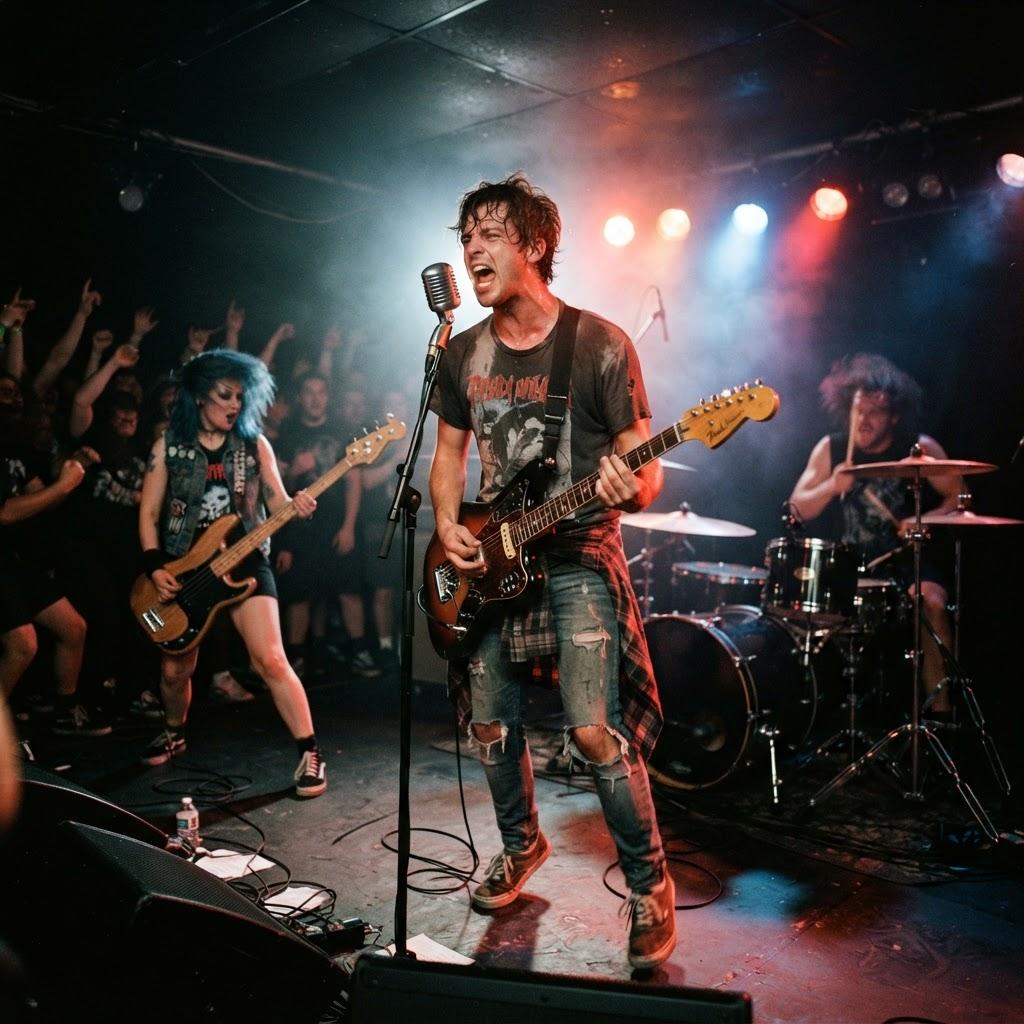
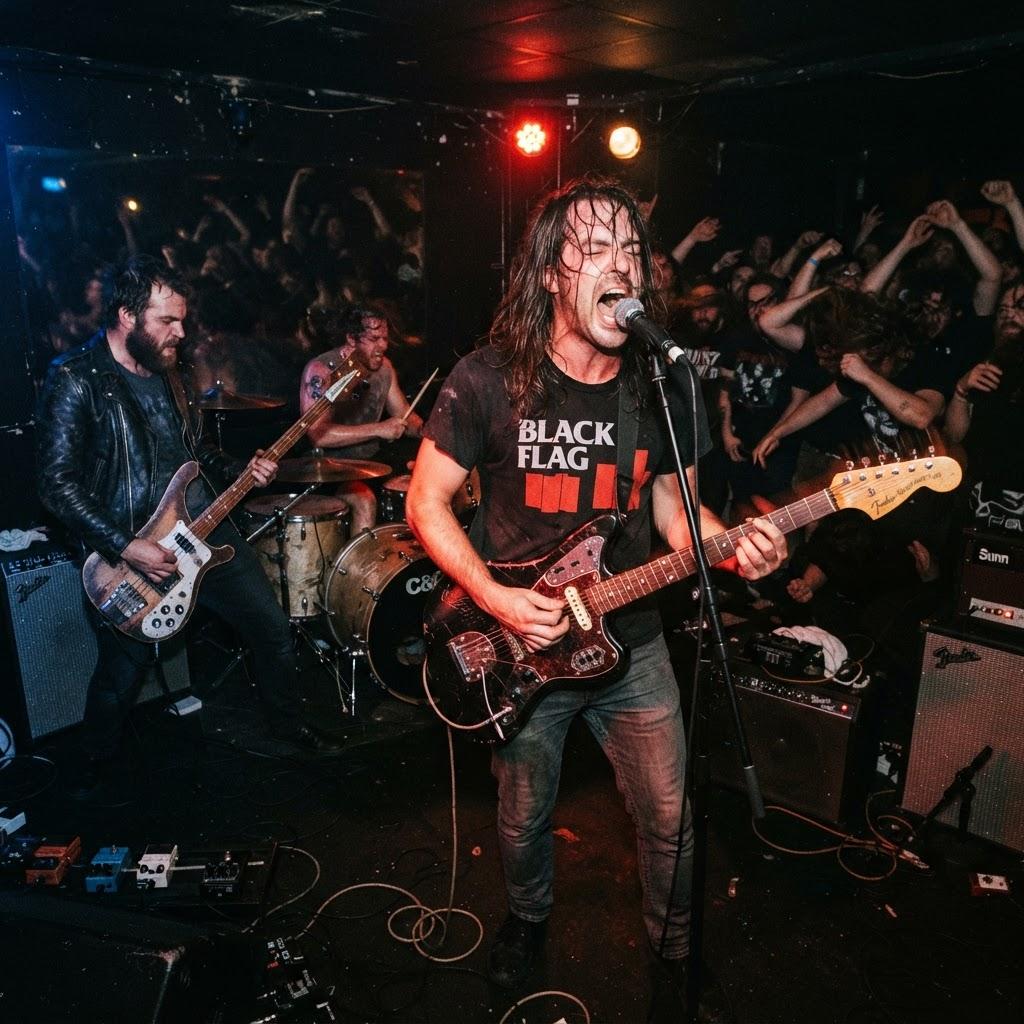
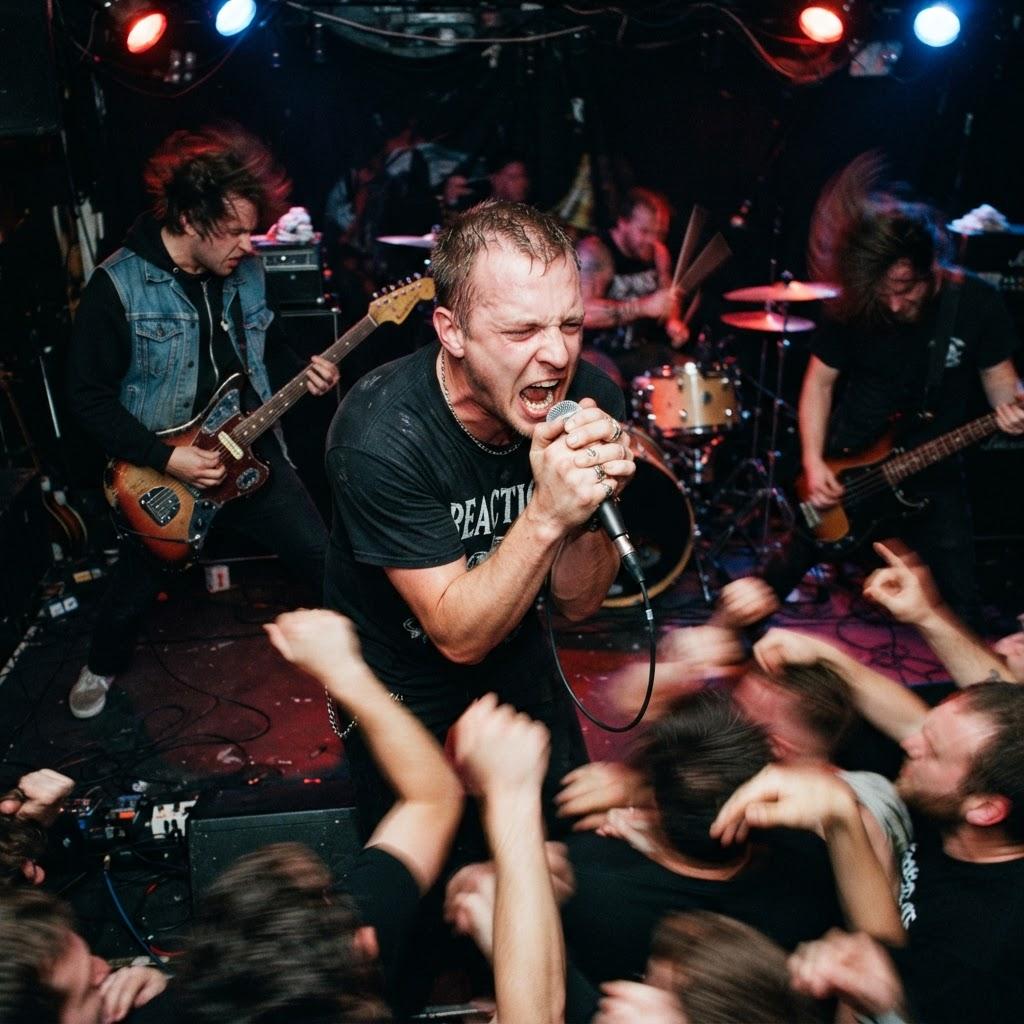
Imagine you are stuck in traffic on a humid Tuesday, your air conditioning is broken, and someone just cut you off in a minivan that has three bumper stickers about their honor student. Now, imagine if all that frustration, sweat, and primal desire to scream into a void was distilled into a sound that hits like a brick to the forehead. That is Hardcore. It is not just music; it is an adrenaline-fueled tantrum that refuses to apologize for its existence. It does not care if you think it is pretty, and it definitely does not want to be background music for your brunch. Hardcore Punk lives in the sweaty, claustrophobic corners of abandoned warehouses and damp basements where the ceiling is low and the volume is dangerously high. It is the sonic version of a mosh pit—chaotic, slightly dangerous, and strangely therapeutic. When you hit play on a classic Hardcore track, you are not signing up for a relaxing spa day; you are signing up for a two-minute sprint through a burning building while someone yells their political manifesto in your ear. It is ugly, it is glorious, and it is the only genre that insists you stop standing around and start moving your feet before the guitar solo even arrives.
The Sound & Signature Elements
The musical anatomy of Hardcore is deceptively simple, like a blunt instrument rather than a scalpel. At its heart is the 'D-beat' or the 'thrash beat,' which is basically the drummer playing as if their life depends on keeping up with a runaway train. Then you have the guitars, which are tuned to sound like a chainsaw trying to cut through a wall of static. This is achieved through massive amounts of distortion, a pedal effect that creates that fuzzy, aggressive 'crunch' you hear on records. The tempos are notoriously fast, often hovering well above 180 beats per minute, which is the musical equivalent of a caffeinated squirrel on a treadmill. Songs rarely linger; most are over before you have the chance to wonder what the lyrics were about, usually clocking in under the two-minute mark. The vocal style is less about singing in the traditional, pretty sense and more about 'barking' or 'shouting'—a rhythmic, percussive delivery that demands to be heard over the wall of sound. You will not find many complex guitar solos or polite, melodic bridges here. Instead, you get chugging power chords—which are simple, two-note chords that sound massive and powerful—and a structural commitment to getting to the point, creating a climax, and getting out before the police show up.
Origins & Birth of the Sound
Hardcore was born out of a collective 'enough is enough' moment that rippled across the American landscape around 1980. While the first wave of punk in the 70s had started to get a bit too fashionable and artsy for some, the kids in the suburbs of Los Angeles and the streets of Washington D.C. wanted something more intense. They were tired of the cool, detached irony of the art-school crowd; they wanted something that reflected the boredom and the rage of being a teenager in a world that didn't listen. In California, bands like Black Flag were practicing in suburban garages until their neighbors threatened to call the cops every single night. In D.C., Bad Brains were blending reggae rhythms with speed-metal intensity, playing so fast it defied the laws of physics. It wasn't about fame or landing a record deal; it was about the DIY or 'Do It Yourself' ethos. If you wanted a venue, you rented a VFW hall. If you wanted a record, you pressed it yourself and sold it out of the trunk of your beat-up Honda Civic. It was a raw, communal explosion of necessity where the only requirement to join was showing up with enough energy to tear the place down.
The Pioneers & Legends
To understand Hardcore, you have to bow down to the gods of the genre, the people who sacrificed their vocal cords and their eardrums for our entertainment. First, you have Black Flag, the architects of the L.A. sound. Led by the unstoppable Greg Ginn, they were the ultimate road dogs, touring in a van that barely held together and living on canned food just to bring their noise to every small-town kid in America. Then there is Minor Threat, the D.C. titans fronted by Ian MacKaye, who practically invented the 'Straight Edge' lifestyle by deciding that being drunk and high was a waste of time and energy. They wrote songs that were sharp, political, and finished in seconds. We cannot forget the Dead Kennedys, who brought a theatrical, satirical edge to the genre, making it clear that Hardcore could be smart and funny while still being incredibly pissed off. These bands were the pioneers who turned the genre from a flash-in-the-pan experiment into a bona fide movement. They weren't just musicians; they were the architects of a culture that prioritized authenticity over virtuosity. If you weren't pouring your soul into every single note, you didn't belong on the stage, and these legends made sure everyone knew it.
Defining Tracks & Era-Defining Moments
If you want to understand the tectonic plates shifting in real-time, you need to listen to a few specific tracks. Start with 'Rise Above' by Black Flag; it is the ultimate anthem of overcoming garbage circumstances, with a guitar riff that sounds like it is clawing its way out of the ground. It is the defining sound of 80s frustration. Then, move to 'Straight Edge' by Minor Threat—a blistering 45-second manifesto that changed the lives of millions by suggesting that you could be extreme without destroying your own body. It was a cultural pivot point that turned an entire scene on its head. When the Bad Brains released 'Pay to Cum,' it proved that Hardcore could be technically dazzling while maintaining the fury of a hurricane. These weren't just songs; they were triggers. Every time one of these tracks hit the airwaves—or more likely, a scratchy cassette tape passed between friends—it solidified the boundaries of the scene. The moment these tracks debuted, they didn't just top the charts; they set the ground rules for what constituted 'real' Hardcore, establishing a blueprint for speed, intensity, and raw, unfiltered truth that every band since has had to live up to.
Subgenres & Offshoots
Hardcore is not a monolith; it is a sprawling, chaotic family tree. Once the initial spark caught fire, it branched off into all sorts of wild directions. You have 'Youth Crew,' which took the positive, community-focused energy of the scene and turned it into an almost athletic, high-energy movement. Then there is 'Thrashcore,' which took the speed of the original sound and decided it just wasn't fast enough, pushing the BPMs into the realm of the ridiculous. If you like your music with a side of brooding darkness, there is 'Post-Hardcore,' which kept the intensity but added atmospheric, moody layers—think of it as Hardcore that learned how to read poetry. On the other end of the spectrum, you have 'Crossover Thrash,' where Hardcore started hanging out with Heavy Metal. This resulted in a sound that was heavier, more technical, and included guitar solos that would make a rock god blush. Each of these offshoots serves a different purpose: some are for dancing, some are for pondering the state of the world, and some are just for testing the limits of how much distortion a speaker cone can take before it actually explodes.
Cultural Impact & Influence
Hardcore Punk is the parent of everything cool and counter-cultural in modern music. Without the DIY infrastructure built by these bands—the self-booked tours, the independently produced records, the grassroots 'zines' (handmade magazines)—the modern indie rock scene would basically not exist. It fundamentally changed how we dress; the uniform of combat boots, flannel, and ripped jeans started here as a practical choice for surviving a mosh pit, not as a runway fashion statement. Even beyond music, the influence is everywhere. You can see it in the aggressive, fast-paced editing of modern internet videos, the blunt honesty of online commentary, and the general feeling that it is okay to do things your own way, even if the 'experts' tell you it is wrong. Hardcore taught a generation that you do not need permission to be heard. It taught filmmakers, designers, and writers that high-budget gloss is often just a mask for lack of substance. The ethos of 'just do it' is the beating heart of Hardcore, and it has spilled out into every corner of modern society, proving that even a small, loud group of people can change the world if they have enough distortion pedals.
Controversies & Drama
Where there is passion, there is drama, and Hardcore is practically fueled by it. The scene has always been rife with 'purist wars'—those never-ending arguments about who is 'true' Hardcore and who is a sellout. Did a band sign to a major label? Prepare for the pitchforks. Did they introduce a melodic guitar riff? The message boards will burn for a decade. The tension between those who wanted to keep the scene small and secret versus those who wanted to grow and influence the mainstream created a beautiful, messy, and often hilarious cycle of finger-pointing. There were also the 'backstage battles'—feuds between bands that were usually settled with ego-driven bravado rather than fisticuffs. The sheer intensity of the lifestyle also led to some legendary blowouts, where bands would quit mid-tour because someone touched their gear, or fights would break out because one band didn't think the other was playing fast enough. It is high-stakes emotional labor disguised as garage music, and that constant friction is exactly why the music sounds so stressed out and vital. If everyone got along, the music would probably be way too polite to matter.
Global Spread & Regional Scenes
Hardcore did not stay in the garages of California for long. It hit the world like a virus, mutating as it moved across borders. In Japan, bands like GISM combined Hardcore with extreme visuals, creating a terrifyingly cool aesthetic that felt like a dystopian movie. In the United Kingdom, it collided with the local political landscape to produce bands that were less about personal angst and more about radical systemic change. Scandinavia brought the 'D-beat' style to its logical extreme, making the music sound like a war zone in the best way possible. Every region took the core idea—fast, loud, angry—and filtered it through their own local frustrations. New York Hardcore (NYHC) added a stomping, metallic groove that made you want to break a chair, while the Boston scene brought an academic, razor-sharp focus to the lyrics. It became a global language. You could land in a city where you didn't speak the language, walk into a local Hardcore show, and immediately understand exactly what was going on. It is a universal shorthand for 'I am fed up with the status quo, and I brought my amplifier to prove it.'
The Modern Landscape
Today, Hardcore is in a weirdly healthy place. It is not exactly taking over the radio, but it is thriving in the digital age. TikTok has even had a strange impact, with kids rediscovering the raw power of the original 80s scene and realizing that it hits just as hard today as it did forty years ago. There are new generations of bands popping up everywhere, experimenting with elements of Shoegaze, Hip-Hop, and even Electronic music, proving that the 'rules' are just suggestions. The production quality has gone up, but the soul remains gloriously frayed. You can find massive, sold-out festivals filled with people who weren't even born when the first Black Flag record dropped, jumping off stages with the same reckless abandon as their predecessors. It has survived the digital transition because it is fundamentally about a visceral, real-time experience. You can stream a song, but you can't stream the feeling of being shoved into a wall of sound by a stranger in a sweaty basement. Hardcore remains the antidote to our overly curated, high-definition lives; it is the rough patch on the otherwise smooth velvet of modern pop culture.
How to Dive In
Ready to lose your hearing and find your spirit? Start with the absolute gospel: Black Flag’s 'Damaged' for the ultimate suburban-angst blues, and Minor Threat’s 'Out of Step' for the purest hit of adrenaline ever recorded. If you want something that bridges the gap, check out Bad Brains' self-titled album—it is a musical masterclass that will leave you confused as to how human beings can play that fast. For a taste of the more metallic, groove-heavy side, put on Agnostic Front’s 'Victim in Pain' and try not to bounce off the walls. Do not just listen to these songs—blast them in your car with the windows down, or put on headphones while you’re doing something mundane like laundry to make it feel like an epic quest. Once you have dipped your toes into the classics, go down the rabbit hole on music streaming platforms, follow local scene accounts, and keep an eye out for bands playing in tiny, hole-in-the-wall bars near you. Go to a show, stand in the back if you are nervous, watch the madness, and realize that you have officially joined the most intense, welcoming, and perpetually annoyed family in music history. Turn the volume knob until it breaks, and enjoy the ride.