Late 1970s and 1980s
Indie Rock
Indie rock is the sonic equivalent of a thrifted flannel shirt paired with a nervous breakdown and a brilliant guitar hook. It is the sound of making something massive out of nothing, proving that you do not need a major label budget to change the world.
Meet the Genre
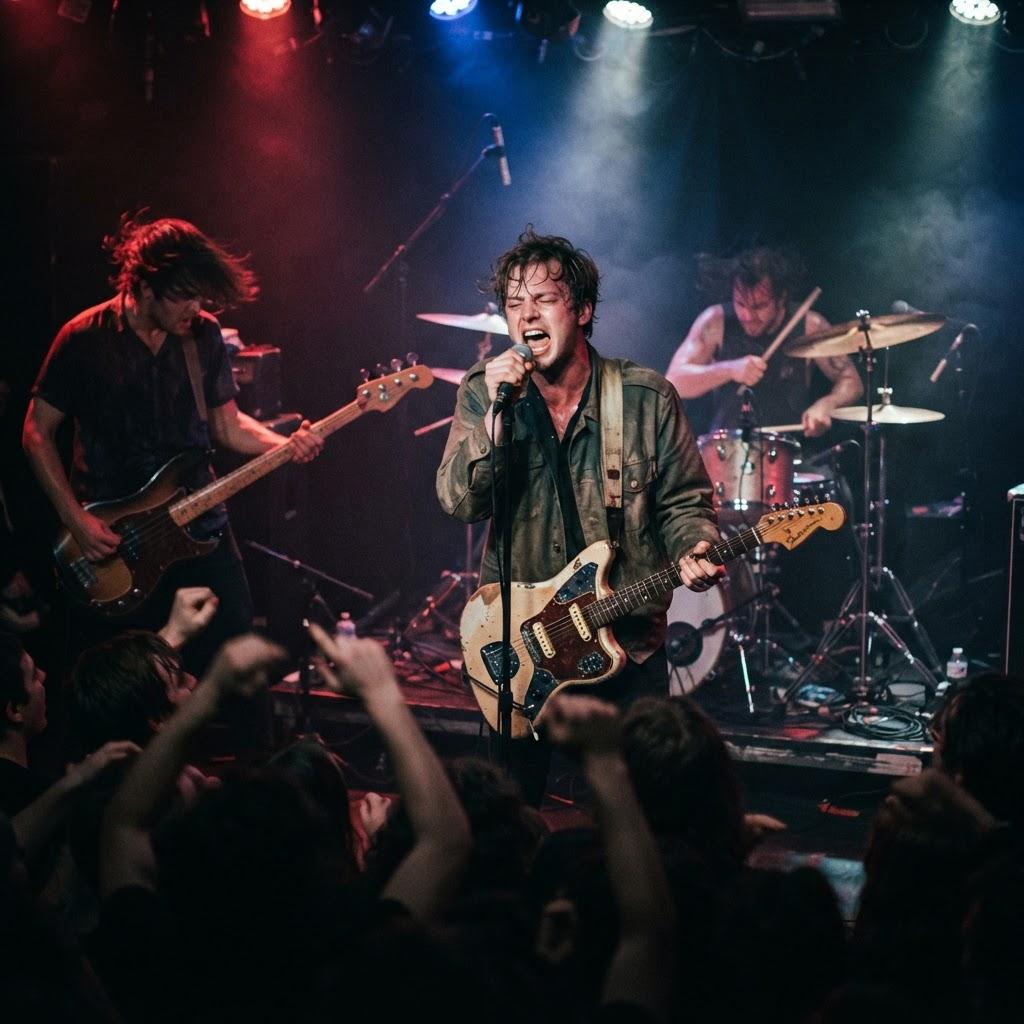
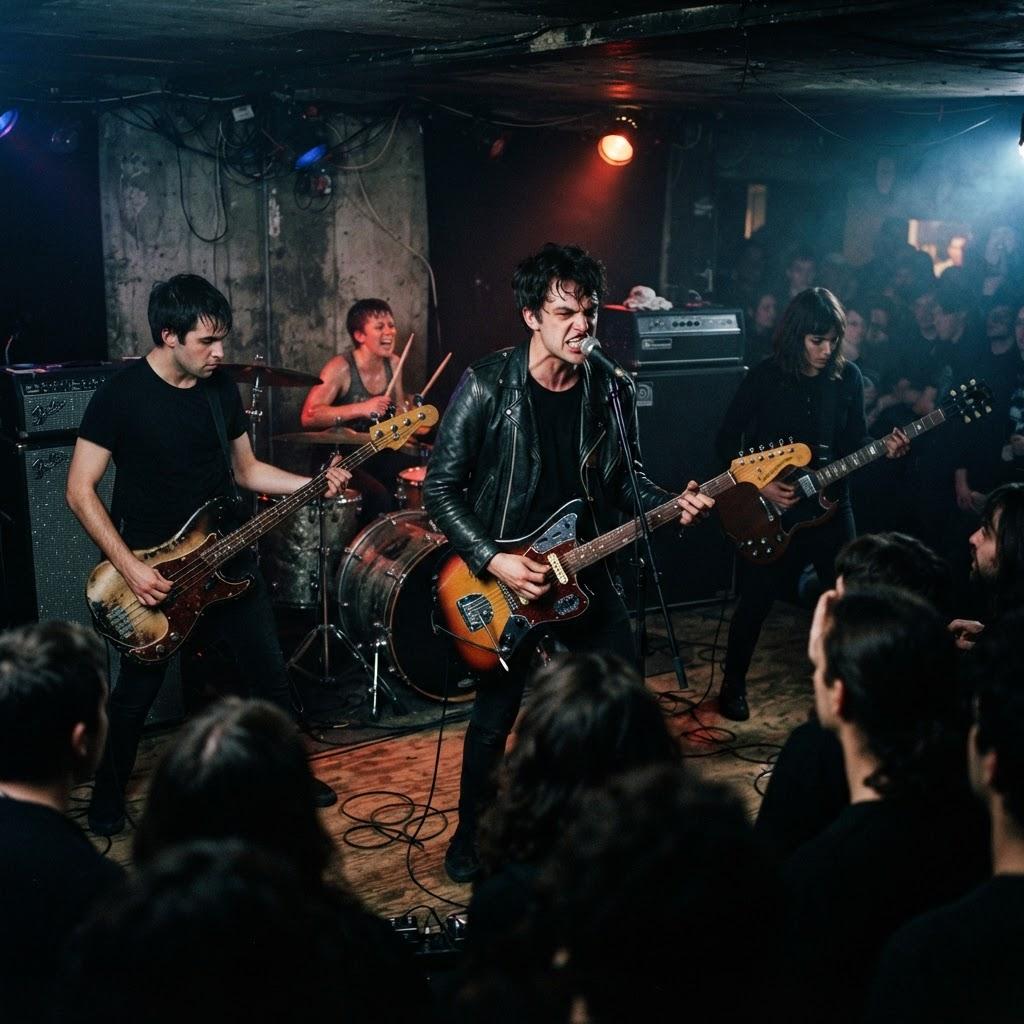
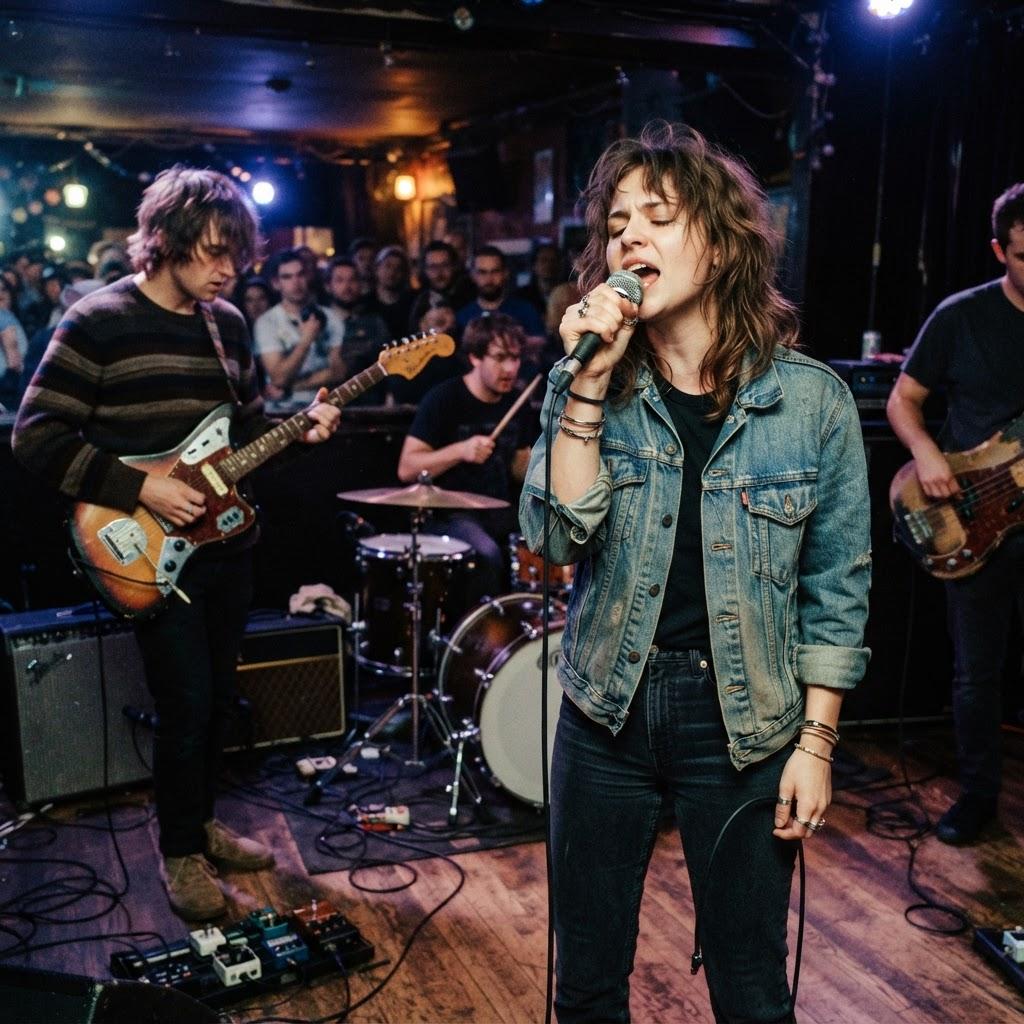
Indie rock is that friend who claims they hate mainstream movies but secretly loves a good blockbuster, yet somehow manages to make their own backyard films look cooler than anything Hollywood puts out. It is the musical equivalent of a well-worn leather jacket that smells like cheap coffee and old record store dust. This genre is not just a style of music; it is an attitude that says, 'I do not need a fancy studio or a polished production team to make you feel something.' It exists in the liminal space between a garage practice session and a sold-out festival stage, fueled entirely by caffeine, teenage angst, and a relentless desire to avoid anything that sounds like a corporate jingle. Indie rock thrives on the beauty of the unfinished, the glorious chaos of a slightly out-of-tune guitar, and lyrics that feel like they were torn directly from a crumpled diary entry hidden under a mattress. It is intimate, awkward, and occasionally loud enough to wake the neighbors, standing as a defiant middle finger to the shiny, overproduced plastic pop that haunts the radio waves.
The Sound & Signature Elements
At its core, indie rock is defined by the 'jangly' guitar—a sound produced by clean electric guitars with plenty of treble and just enough chorus effect to make the notes shimmer like heat haze on pavement. The tempo usually sits in that sweet spot where you can dance if you try, or just sway if you are feeling contemplative. Song structures often favor the 'verse-chorus-verse' approach, but indie musicians love to throw in weird, jarring transitions or extended instrumental freak-outs just to keep things interesting. You will often hear 'lo-fi' production, which is a fancy way of saying they recorded it in a damp basement on a four-track tape machine from 1985. It sounds gritty, warm, and real. Think of it like comparing a high-definition digital photo to a grainy 35mm film shot; the grain in indie rock provides the soul. The drums are often played with more heart than technical precision, and the bass lines tend to be melodic, acting as the sturdy bridge between the fluttering guitars and the drum kit’s heartbeat. Everything is designed to sound like it could happen right in your living room.
Origins & Birth of the Sound
The birth of indie rock was not a singular 'big bang' event but rather a slow-motion explosion that started in the late seventies. It was a reaction to the bloated, dinosaur-sized stadium rock bands of the time who were more interested in pyrotechnics than actual songwriting. Small, scrappy scenes began popping up in places like Athens, Georgia, and the indie-friendly streets of Manchester, England. Musicians were sick of the gatekeepers at the big labels, so they just started their own record labels, pressed their own vinyl, and booked their own tours in coffee shops and community centers. It was the musical equivalent of someone deciding to start a neighborhood garden instead of shopping at a chain grocery store. This 'do-it-yourself' or 'DIY' spirit was the fuel that turned raw post-punk energy into a fully formed genre. These artists were not aiming for the Billboard charts; they were aiming for the hearts of the weirdos, the art-school dropouts, and the misfits who felt like the mainstream was talking down to them.
The Pioneers & Legends
You cannot talk about indie rock without bowing down to the architects who laid the foundation. R.E.M. is the undisputed king of the hill, emerging from Athens with jangling guitars and Michael Stipe’s mumble-heavy, enigmatic poetry that made listeners feel like they were solving a secret code. Then there is The Smiths, the moody masters of Manchester, who taught everyone that you could make music that was both incredibly danceable and deeply, tragically melancholy. Over in the US, Pavement took the slacker aesthetic to a godly level, with Stephen Malkmus’s half-spoken, half-sung vocals sounding like he just rolled out of bed to record a masterpiece of irony and melody. Sonic Youth turned the guitar into a weapon of mass destruction, using strange tunings and screeching feedback to show that noise could be just as beautiful as a symphony. These legends were not just playing songs; they were building an infrastructure for every kid with a cheap guitar and a big dream to eventually follow in their footsteps, showing that you don't need a golden ticket to be a rock god.
Defining Tracks & Era-Defining Moments
If you want to understand the soul of this genre, you have to listen to the songs that acted as turning points. 'Radio Free Europe' by R.E.M. is essentially the manifesto of the entire movement; it is urgent, messy, and perfectly imperfect. Then there is 'This Charming Man' by The Smiths, which showed how a guitar riff could be both intricate and pop-perfect. For the nineties crowd, 'Cut Your Hair' by Pavement was the ultimate wink at the industry, a cynical yet catchy tune about the absurdity of needing a 'look' to make it big. Each of these tracks acted as a cultural tremor. When Nirvana’s 'Smells Like Teen Spirit' broke through, it dragged the entire indie ethos into the mainstream spotlight, momentarily confusing everyone who thought indie was supposed to stay underground. These songs are the 'you had to be there' moments that define the collective memory of the genre, serving as time capsules that still vibrate with the same energy today as they did the day they were pressed onto wax.
Subgenres & Offshoots
Indie rock is like a sprawling, unruly family tree where every cousin has a weird hobby. You have 'Shoegaze,' which is basically just bands staring at their pedalboards while cranking the volume until the music sounds like a beautiful, crashing wave. Then there is 'Jangle Pop,' which is obsessed with sixties-style melodies and sparkling guitars. Don't forget 'Math Rock,' where bands treat their instruments like an advanced calculus test, playing in weird, jerky time signatures that make you want to tap your foot but keep missing the beat. On the softer side, you have 'Twee Pop,' which is so unapologetically sweet and melodic that it makes a bowl of sugar look bitter by comparison. You also have 'Post-Rock,' where bands ditch the singing entirely to build massive, cinematic sonic landscapes that take ten minutes to reach a crescendo. It is a massive tent under which everyone from the angst-filled poets to the math-loving tech-nerds can find a place to park their amps and make some noise.
Cultural Impact & Influence
The influence of indie rock is woven into the very fabric of modern life. Look at any thrift store, and you are looking at the fashion legacy of indie rock—the high-waisted jeans, the ironic graphic tees, and the vintage sweaters that look like they were rescued from a 1970s attic. Beyond just clothes, indie rock changed the way we consume media; it pioneered the idea that the 'indie' label is a mark of authenticity. Film directors like Wes Anderson built entire cinematic languages around the soundtracks of indie rock, proving that a quirky song could anchor a character’s emotional arc better than any orchestral score. Politically, the genre has always leaned toward the outsider, the marginalized, and the independent thinker, influencing generations of activists and artists to pick up a microphone and speak their truth. It moved the needle on what it meant to be 'cool'—shifting the goalposts from being the most popular guy in school to being the person with the most interesting, albeit slightly weird, record collection.
Controversies & Drama
The most intense drama in indie rock always revolves around the dreaded S-word: 'Selling Out.' For decades, the community was obsessed with the idea that if a band signed to a major label, they had effectively poisoned the well. Fans would spend hours in chat rooms or record stores debating whether a band was still 'real' after they played a commercial or—heaven forbid—got their music into a car advertisement. Then there were the 'purist wars,' where fans of one subgenre would treat fans of another like they were from different planets. The tension between the 'true' underground artists and those who successfully navigated the mainstream created a delicious amount of backstage gossip and public spats. Some bands thrived on this, writing songs that were essentially long, sarcastic letters to their critics, while others collapsed under the pressure of trying to keep their indie credentials intact while simultaneously trying to pay their rent. It is a soap opera with better soundtracks, fueled by the relentless pursuit of artistic purity.
Global Spread & Regional Scenes
While it started in the gritty basements of the US and the UK, indie rock eventually became a global language. In Japan, the 'Shibuya-kei' movement blended indie sensibilities with sunshine pop and kitsch culture to create something delightfully weird. In Australia, bands took the sun-drenched, jangly guitar sound and added a layer of surf-rock grit that made the music sound like a beach party at the end of the world. Each region added its own local flavor; Scandinavia brought a cold, electronic, melancholy edge to the sound, while Latin American scenes injected layers of rhythmic complexity and political fury. It stopped being a 'western' genre and started being a global dialogue. You could walk into a club in Tokyo, Berlin, or Melbourne and find a band playing a song that felt spiritually connected to a group from Olympia, Washington, proving that the urge to DIY and express your internal monologue through a distorted guitar is a universal human impulse.
The Modern Landscape
Today, the term 'indie' has undergone a bit of a midlife crisis. Thanks to the internet, anyone with a laptop and a cheap microphone can upload music to streaming services, effectively making 'indie' a style of music rather than a method of distribution. TikTok has turned indie songs into viral sensations overnight, which is both a blessing and a curse. You have the 'bedroom pop' movement, which is the direct, digital descendant of the old indie rock ethos—kids making massive hits in their pajamas without ever leaving the house. The sound is more polished than it used to be, but the heart remains the same. You still have bands trying to break the mold, mixing synthesizers with distorted guitars and defying categorization. Even if the 'indie' label has become a bit diluted, the spirit of independent, creative, and slightly awkward music-making is stronger than ever. The gatekeepers are gone, the barriers to entry are shattered, and the world is currently experiencing a beautiful, chaotic explosion of independent sound.
How to Dive In
Ready to stop reading and start listening? Your journey begins with the essential artifacts. Go listen to R.E.M.’s 'Murmur' for the ultimate masterclass in mood, and then spin Pavement’s 'Slanted and Enchanted' to understand the peak of slacker-rock cool. If you want something sharper, hit play on The Smiths' 'The Queen Is Dead.' For a taste of the raw, noisy side, throw on Sonic Youth’s 'Daydream Nation' and let the feedback wash over you. Don't stop there, though—dive into newer stuff like Japanese Breakfast or Big Thief to see how the genre is evolving in real-time. The best way to dive in is to find one band you love and then follow the 'related artists' rabbit hole until you are three hours deep into a playlist of bands you have never heard of. That is where the magic happens. Put on your best thrifted jacket, turn the volume up, and stop worrying about being cool. Indie rock is waiting for you, and it has absolutely nothing to prove!