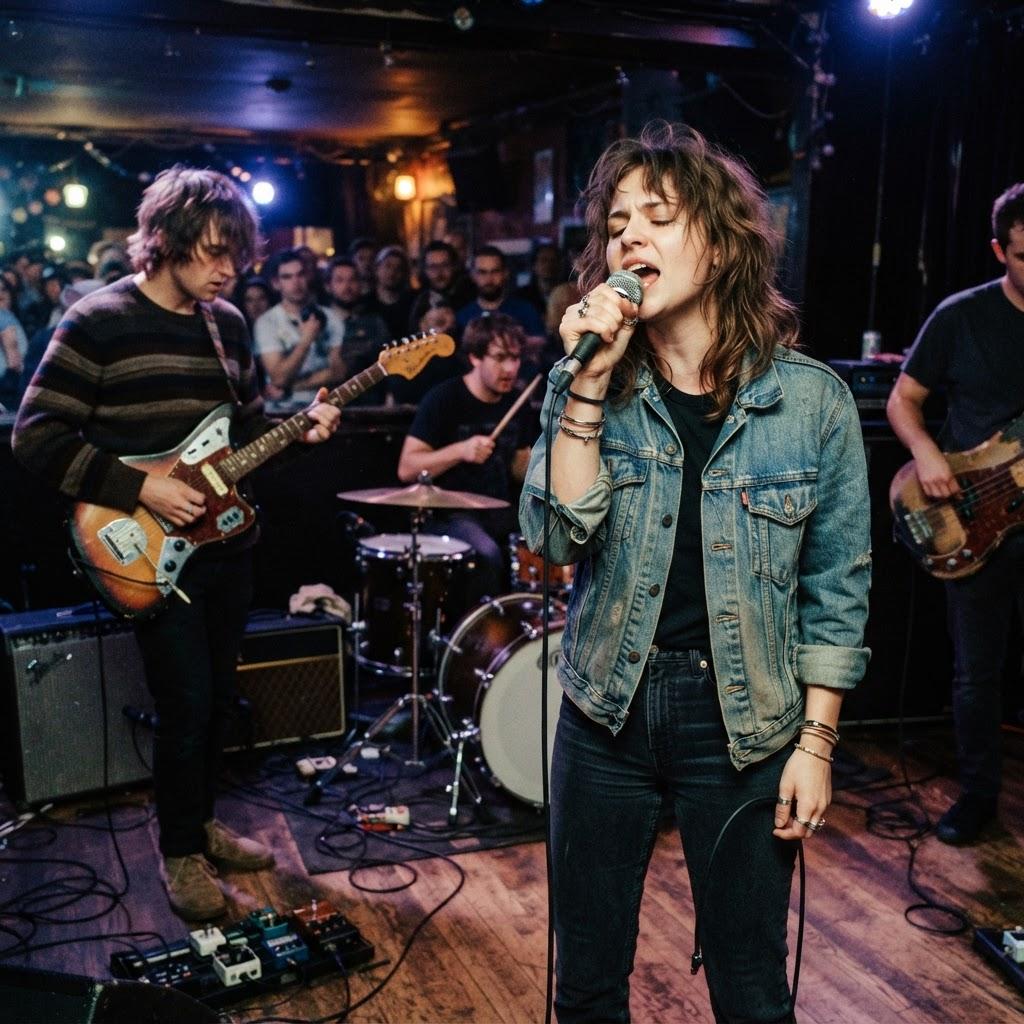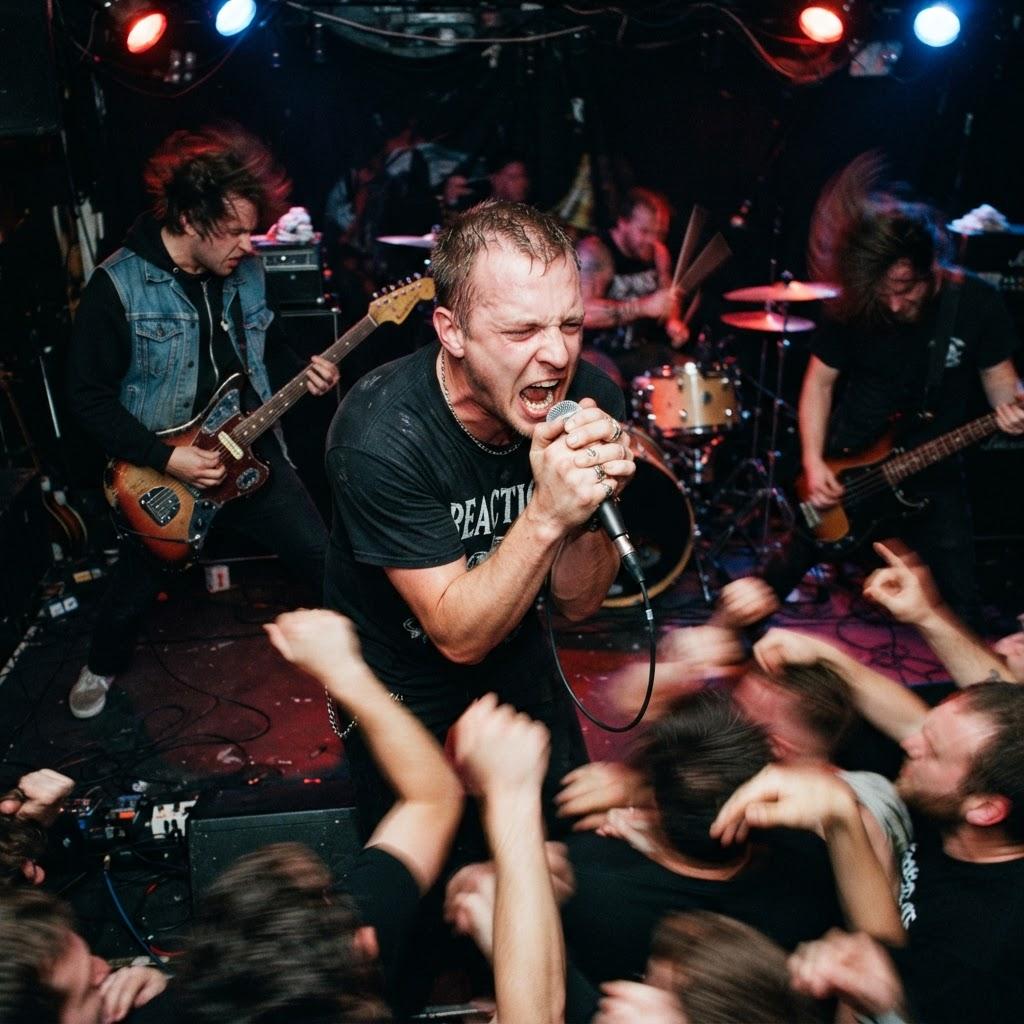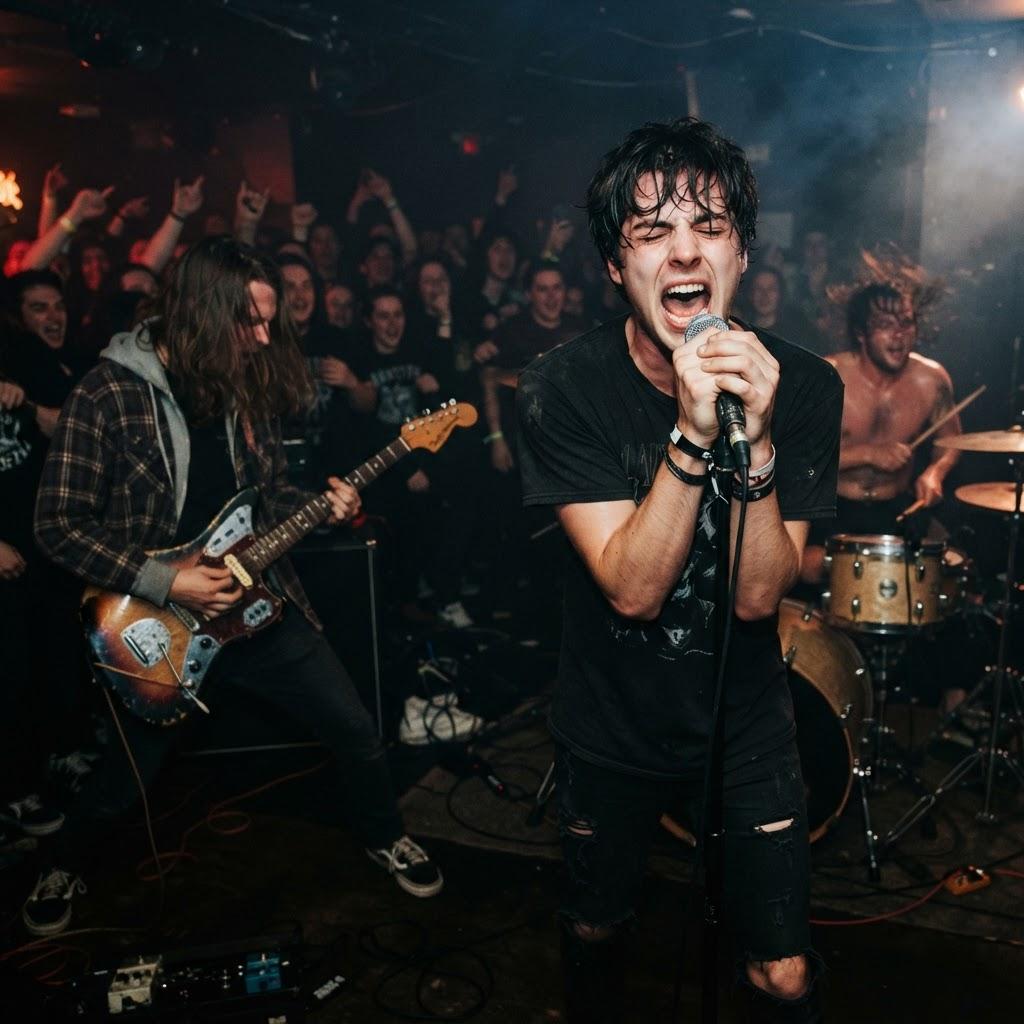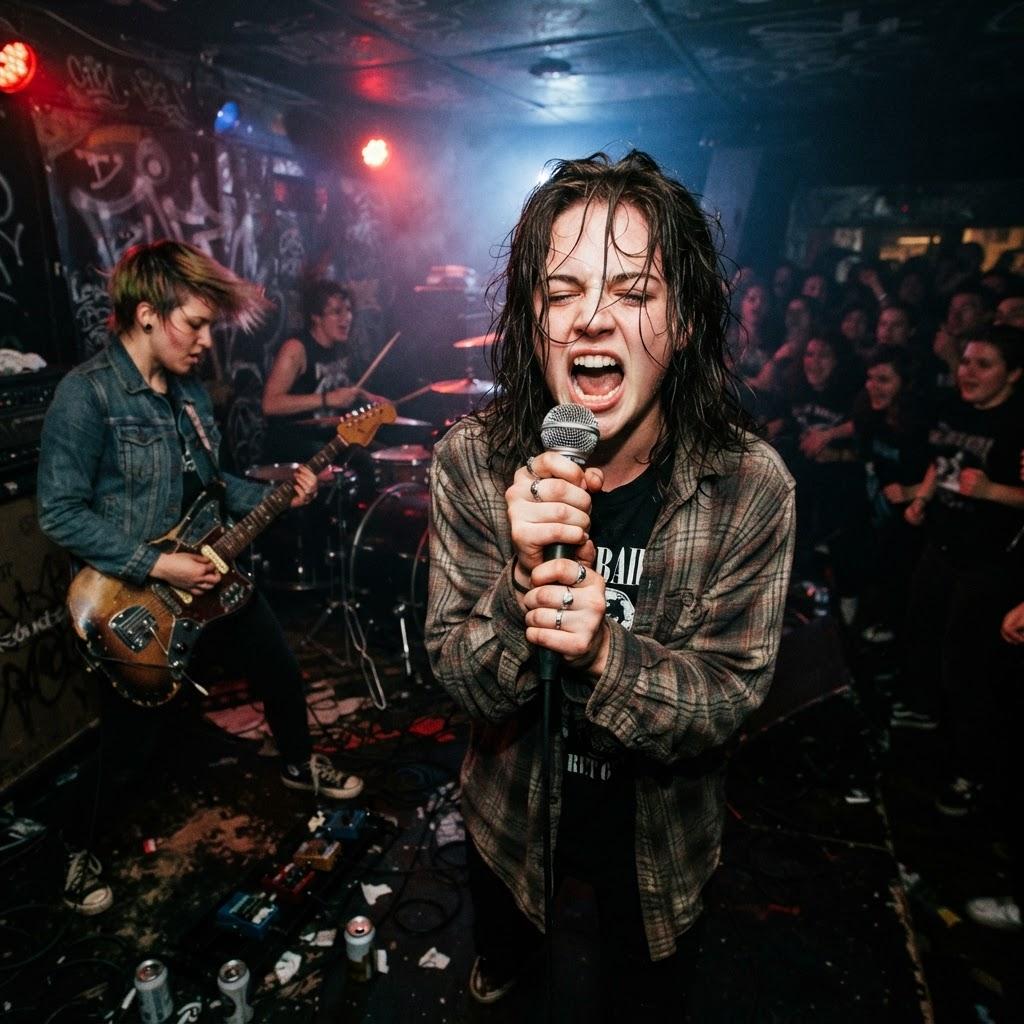
Early 1990s, Olympia, Washington
Riot Grrrl
Riot Grrrl is the sound of a middle finger wrapped in a velvet glove of raw, fuzzy distortion. It is the ultimate sonic revolution for anyone who ever felt like they were told to pipe down when they should have been screaming from the rooftops.
Meet the Genre
Imagine walking into a room where the air is thick with the smell of cheap hair dye, Sharpie ink, and the ozone of a dying amplifier. Riot Grrrl isn’t just a genre; it is a riotous, neon-colored tantrum against the status quo, delivered at maximum volume. It arrives with a feedback-drenched snarl that feels like a cold glass of water to the face on a hungover Tuesday. This is music that doesn't ask for permission; it breaks the door down, rearranges the furniture, and leaves a manifesto taped to your mirror. It is the sonic equivalent of a DIY craft project gone nuclear, blending the DIY spirit of punk with a fierce, unwavering commitment to dismantling the patriarchy, one power chord at a time. If you have ever felt like the world was handing you a script you didn't want to read, Riot Grrrl is the loud, unapologetic soundtrack to ripping that script to shreds and writing your own messy, brilliant version in glittery, permanent marker.
The Sound & Signature Elements
At its heart, the Riot Grrrl sound is about the beauty of the imperfection. We are talking about guitars pushed so hard through pedals they sound like chainsaws eating gravel—this is what we call 'distortion' or 'fuzz.' Think of it as musical texture; it’s not meant to be clean, it’s meant to be thick, oily, and dangerous. The tempos are usually high-energy, sitting somewhere in the 'I need to sweat this out right now' range of 140 to 180 beats per minute. You won't find many polished, glossy studio tricks here. Instead, you get raw vocal takes that crack, scream, and whisper, sometimes in the same sentence. It’s like a conversation where the person is so passionate they forget to breathe. The drums are often played with a 'who cares about technique, just hit it' intensity, keeping a driving beat that pushes the song forward like a runaway train. It’s glorious, scrappy, and perfectly unpolished, proving that you don't need expensive gear to sound like a revolution.
Origins & Birth of the Sound
The story begins in the sleepy, rainy corner of Olympia, Washington, and the high-energy political hubs of Washington D.C. in the early 1990s. It wasn't born in a high-rise office building or a shiny LA production studio; it was birthed in living rooms, cluttered basements, and tiny community centers. The movement was fueled by a group of women who were sick of being pushed to the back of the mosh pit. They were tired of being the 'girlfriend of the band' rather than the ones holding the guitar. So, they started making their own zines—these handmade, photocopied little magazines that acted as the internet before the internet was a daily obsession—and trading tapes. They were carving out a physical and sonic space where their voices could exist without the patronizing filter of the male-dominated music industry. It was a grassroots eruption, a collective 'enough is enough' that turned from a local secret into a global firestorm almost overnight.
The Pioneers & Legends
You cannot talk about this genre without bowing down to the architects of the noise. Bikini Kill, led by the legendary Kathleen Hanna, is essentially the high priestess of the movement, delivering lyrics that are equal parts intellectual treatise and playground taunt. Then there is Sleater-Kinney, who proved that you didn't even need a bass player to sound like an earthquake, utilizing two guitars that locked together like gears in a clock. Bratmobile brought a sort of surf-rock, bubblegum-gone-bad aesthetic that was as funny as it was lethal. Heavens to Betsy showed us the power of raw, skeletal song structures that hit you right in the gut. These artists weren't just musicians; they were mythic figures in combat boots. They acted as the front line, taking the brunt of the industry’s sexism while creating a blueprint for anyone who felt excluded. They were the ones who said, 'If they won't give us the stage, we’ll build a better one out of plywood and spite.'
Defining Tracks & Era-Defining Moments
If you want to know what this movement feels like, listen to 'Rebel Girl' by Bikini Kill. That track is a masterclass in tension and release, featuring a guitar riff that sounds like it’s peeling paint off the walls and lyrics that serve as the ultimate call to arms for every outsider. It’s not just a song; it’s an initiation. Then there is 'Cool Schmool' by Bratmobile, which perfectly captures the sneering, sarcastic, and deeply intelligent wit that defined the movement's lyrical approach. These tracks weren't just hits; they were moments where the needle dropped and the world shifted. Every time these songs blasted out of a pair of cheap speakers, a lightbulb went off for some kid in a basement halfway across the country. These moments were the glue that held the scene together, turning a collection of scattered, frustrated individuals into a genuine movement with a shared frequency and a common enemy.
Subgenres & Offshoots
Like any good family tree, Riot Grrrl has some weird and wonderful cousins. You have the 'Queercore' scene, which took the raw aggression of the movement and pushed it further into the realm of radical queer identity and politics—think of it as a sharper, more pointed version of the original. Then there is the 'Ladyfest' aesthetic, a branch that focused heavily on festivals and community building, emphasizing craft and workshops as much as the music. Some offshoots leaned harder into the pop-punk side of things, making the choruses catchier and the production slightly brighter, but never losing that stinging, anti-authority bite. Others went in the opposite direction, diving deep into the avant-garde 'noise' scene where the songs sounded like a blender full of marbles. It is a testament to the genre's versatility that it could support both melodic anthems and experimental, screeching soundscapes, all under the same umbrella of creative independence and rebellion.
Cultural Impact & Influence
The ripple effects of Riot Grrrl are everywhere, even if you don't immediately recognize the source. Before this, the idea of a 'girl band' was often treated as a novelty or a marketing gimmick, but this movement forced the world to acknowledge that women could be just as abrasive, loud, and talented as their male counterparts. This changed fashion, too; the look of baby-doll dresses paired with combat boots and heavy eyeliner became an icon of the nineties, a deliberate rejection of feminine norms that was as much a political statement as it was a style choice. The vocabulary of the movement—words like 'patriarchy,' 'intersectionality,' and 'agency'—began to seep into the common vernacular of music journalism and pop culture. Even modern indie pop artists who might seem lightyears away from punk still carry the DNA of the movement, inheriting the ethos of 'take control of your own narrative' that the Riot Grrrls fought so hard to establish in the first place.
Controversies & Drama
Of course, a movement this loud wasn't going to exist without some serious back-and-forth. There were purists who thought that anything recorded in a studio was a 'sellout,' leading to some hilarious infighting about who was 'too mainstream.' The media, as you might expect, didn't know what to do with them, often painting the movement as either a shallow fashion trend or a group of angry, humorless activists. The tension between the desire for mainstream visibility and the need to keep the 'true' underground spirit alive led to plenty of messy, dramatic public breakups and zine feuds. It was, in many ways, the original 'Twitter war' era, conducted through mimeographed pages and impassioned interviews. You had local scenes questioning the motives of bands that toured outside their home states, and debates about who really 'owned' the label of Riot Grrrl. It was messy, it was petty, and it was deeply, humanly real.
Global Spread & Regional Scenes
While it started in the US, the spirit of Riot Grrrl was too potent to be contained by borders. It caught fire in the UK, where it found a natural ally in the existing British punk tradition, creating a cross-Atlantic dialogue that kept the movement vibrant. In London and Brighton, the scene took on a slightly more cynical, biting edge, while in places like Tokyo and Berlin, it blended with local feminist subcultures to create something totally new. It wasn't about copying the Olympia blueprint; it was about adopting the 'if they don't give you space, make your own' philosophy and applying it to local conditions. You saw bands popping up in small towns everywhere, from Scandinavia to Australia, each adding their own regional flavor—maybe a bit more electronics here, or a stronger focus on traditional folk-punk influences there. The language changed, the accents changed, but the feedback-drenched core remained the same.
The Modern Landscape
Today, Riot Grrrl is less of a 'current scene' and more of an ever-present, restless ghost that haunts the music industry. You see its influence in every bedroom-pop producer who is recording an entire album on a laptop, and every TikTok creator who is using their platform to challenge outdated norms. The DIY spirit has exploded into the digital age, where social media acts as the modern-day zine. While you might not see the exact same aesthetic of the nineties on the charts, the underlying 'I can do this myself' attitude is the standard operating procedure for every independent artist. There is a renewed interest in the history of the movement, with podcasts and documentaries helping a new generation discover these pioneers. It is no longer just a moment in the nineties; it is a permanent part of the musical bloodstream, serving as a reminder that the loudest statement you can make is just to show up and make your own noise.
How to Dive In
Ready to get your hands dirty? Start by spinning 'Pussy Whipped' by Bikini Kill—it is the essential primer, a masterclass in how to turn rage into something you can dance to. Next, grab a copy of 'Dig Me Out' by Sleater-Kinney; it’s a masterclass in guitar interaction that will make you wonder why you ever liked 'perfectly produced' music in the first place. Dive into the 'It's a Bratmobile' compilation to get a feel for the sardonic, playful side of the movement. If you want something a bit more raw, track down the early Heavens to Betsy records. While you listen, look up a digital archive of the original zines—reading those is like getting a backstage pass to the mental state of the movement. Don't look for polished, perfect audio; look for the spark. Crank the volume, let the distortion rattle your ribcage, and remember: you don't need a professional contract to start your own revolution. Just start.