Late 1980s, United Kingdom
Shoegaze
Step into a sonic haze where volume meets vulnerability and melodies get lost in a glittery, distorted galaxy. It is the music equivalent of staring at your own feet while the world explodes in Technicolor, and it is absolutely glorious.
Meet the Genre
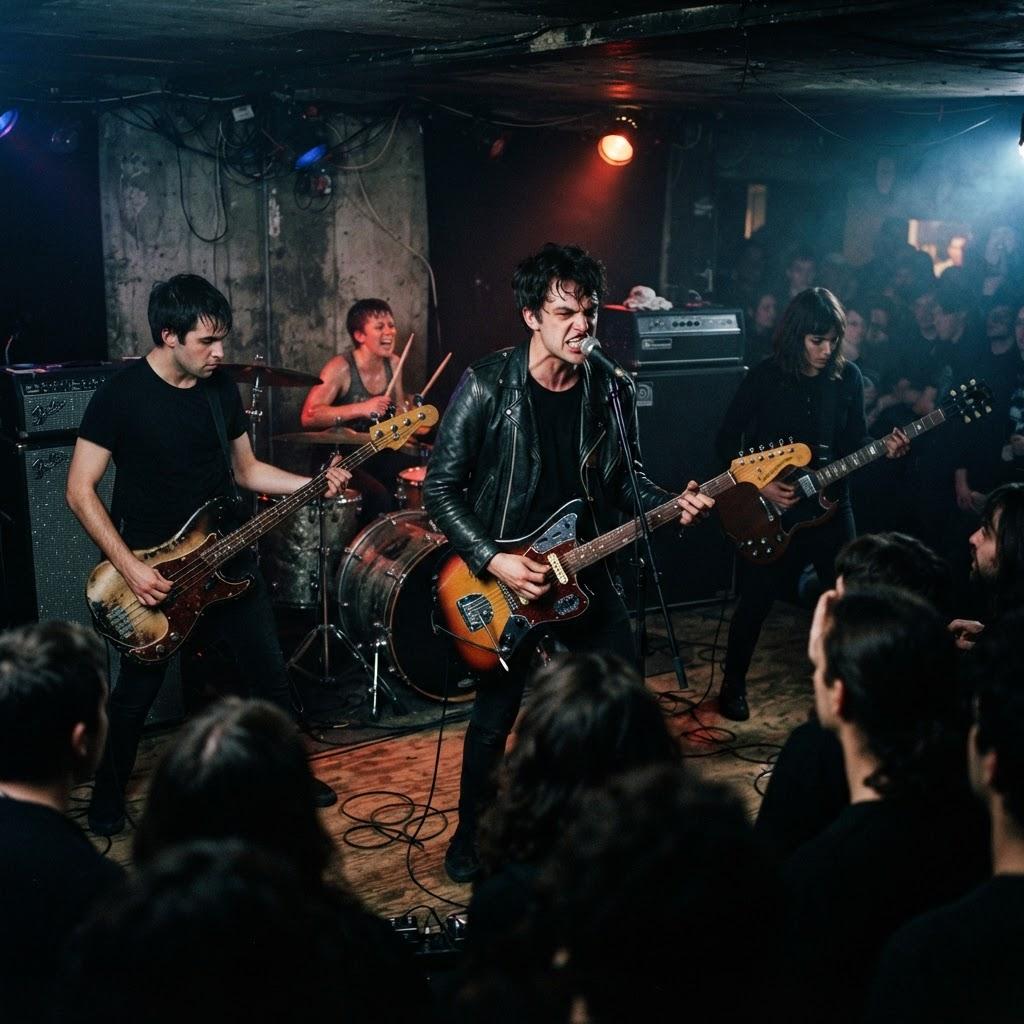
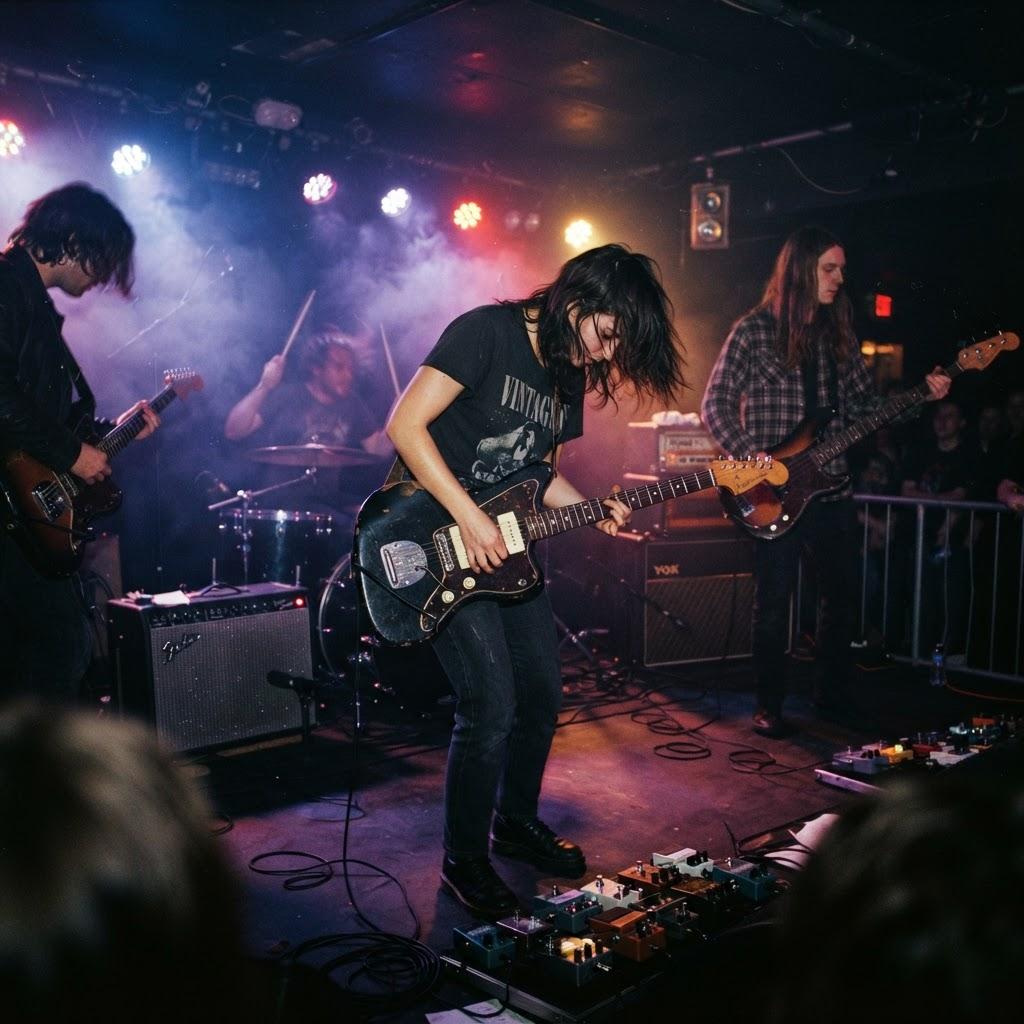
Imagine standing in the middle of a thunderstorm, but instead of cold rain, you are being pelted by warm, shimmering blankets of sound. That is Shoegaze. It is the sound of shy, introverted geniuses deciding that the best way to deal with their overwhelming emotions is to turn every single volume knob on their guitar amplifiers to eleven. You walk into a room, there is a band playing, and you realize you cannot see the lead singer’s face because they are too busy staring intensely at the floor, specifically at a chaotic tangle of stomp-boxes and colorful tangled wires. This is not music for people who want to dance the night away in a brightly lit club; this is music for people who want to lose their physical existence inside a beautiful, roaring ocean of fuzz. It is dreamy, it is terrifyingly loud, and it manages to feel like both a warm hug and an existential crisis happening at the exact same time. Whether it is washing over you like a tide of neon-colored noise or whispering a lullaby through a haze of echo, Shoegaze is the genre that taught the world that being awkward, quiet, and blindingly loud are not mutually exclusive traits.
The Sound & Signature Elements
At its core, Shoegaze is basically the art of taking a pretty pop song and putting it through a musical blender that has been upgraded with military-grade distortion. The signature sound is built on the 'Wall of Sound' concept—imagine layering twenty different guitar tracks on top of each other until it feels like a physical barrier you can lean against. This is achieved through a holy trinity of pedals: Reverb (which makes the music sound like it is being played in a giant, hollow cathedral), Chorus (which adds a watery, shimmering quality to the notes), and Fuzz (which takes a polite guitar sound and turns it into a growling, fuzzy monster). Musicians often use an E-bow, which is this little handheld gadget that vibrates guitar strings using magnets so you don't even have to touch them, creating a violin-like sustain that hangs in the air forever. The drums are usually straightforward and punchy to keep the listener grounded, while the vocals are treated as just another instrument, often buried deep in the mix with plenty of echo, making the lyrics sound like they are being sung by a ghost trapped in a distant radio station. It is a masterclass in controlled chaos.
Origins & Birth of the Sound
The birth of Shoegaze was less a revolution and more a quiet, sweaty accident happening in the Thames Valley area of England during the late 80s. Young musicians in sleepy commuter towns were bored, broke, and obsessed with the darker, moodier side of 80s post-punk. They weren't interested in the glamor of stadium rock or the aggressive bravado of heavy metal. They wanted to capture the feeling of walking home in the rain with your heart broken and your head full of static. Bands started experimenting with cheap gear, chaining pedals together until their signals started to clip and distort, creating these strange, beautiful sonic textures that hadn't been heard before. The name itself was a mean-spirited jibe from British music journalists who noticed that the guitarists spent the entire show looking down at their feet—not because they were shy, but because they were frantically stepping on pedals to switch between sounds. The artists took that insult as a badge of honor, creating a scene where vulnerability was the loudest thing in the room and the atmosphere was always thick enough to cut with a knife.
The Pioneers & Legends
No conversation about Shoegaze can happen without bowing down to the absolute titans. First, there is My Bloody Valentine, led by the enigmatic Kevin Shields, a man who famously spent years perfecting his guitar technique by pulling on the vibrato arm of his guitar while playing to create a 'bent' pitch-shifting sound that makes the music feel like it is literally melting. Then there is Slowdive, the masters of the melancholic, ethereal side of the genre, who knew exactly how to make a listener feel nostalgic for a place they had never even visited. Ride was the band that brought a bit of British indie-pop speed and swagger to the mix, proving that Shoegaze could actually be catchy enough for the radio if you weren't too scared to turn up the tempo. These bands weren't just writing songs; they were building worlds. They operated on a level of obsessive detail that often drove them to the brink of bankruptcy or total creative burnout, but the music that emerged from those sessions remains the gold standard for anyone trying to build their own fuzzy cathedral.
Defining Tracks & Era-Defining Moments
If you want to understand the history of this genre, you only need to look at a handful of sonic lightning bolts. My Bloody Valentine’s 'Only Shallow' is the big bang moment—a jarring, pitch-warped guitar riff that hits you like a brick wall and then immediately makes you fall in love with its melody. Slowdive’s 'Alison' is the ultimate anthem of the genre, featuring a vocal melody so fragile it seems like it could shatter if you listened to it too loudly, set against a shimmering backdrop of guitars that sound like sunlight reflecting off water. Ride’s 'Vapour Trail' introduced a string section into the mix, proving that Shoegaze could be grandiose and orchestral without losing its edge. Then there is Chapterhouse’s 'Pearl,' which perfectly bridged the gap between the hazy guitars and the burgeoning dance music scene of the early 90s. These tracks were pivot points, showing the world that you didn't need to scream or dance to be powerful. They turned volume into a form of intimacy and proved that if you make the music loud enough, it stops being noise and starts being a sanctuary.
Subgenres & Offshoots
Like any good musical family tree, Shoegaze eventually sprouted some very weird and wonderful branches. You have 'Nu-Gaze,' which arrived in the mid-2000s when a new generation rediscovered the genre and decided to combine it with harder, more aggressive electronic influences. Then there is 'Blackgaze,' a terrifying but beautiful mix of the shimmering, ethereal guitars of Shoegaze and the high-pitched, frantic screaming of Black Metal. It is basically the musical equivalent of a fairy tale written by a haunted forest. You also have 'Dream Pop,' which is like the slightly more approachable, polite cousin of Shoegaze—less fuzz, more focus on gorgeous, soaring vocal melodies and crystalline production. Even indie-rock bands started to pick up the Shoegaze toolbox, layering their choruses with just enough distortion to sound cool and edgy. Each of these subgenres took the basic principle—the idea that you can create an entire landscape with a guitar and a few pedals—and twisted it into something new, proving that the 'gaze' never really stops evolving.
Cultural Impact & Influence
Shoegaze did not just change how people listened to music; it changed the very idea of what a 'rock star' looked like. Before Shoegaze, the classic rock model was all about swagger, leather pants, and posing on stage. Shoegaze bands showed up in oversized sweaters and vintage clothes, looking like they had just rolled out of bed to play a show for their best friends. This aesthetic became a massive influence on fashion, popularizing the 'lo-fi' look that still pops up on runways and Instagram feeds today. The genre also deeply influenced modern film soundtracks—think of those slow-motion, moody scenes in indie movies where everything feels slightly out of focus and dreamlike; that is pure Shoegaze energy. Even hip-hop and modern pop producers have started sampling the signature 'dreamy' guitar textures of classic Shoegaze tracks to add depth and emotional weight to their beats. It turned the concept of the 'introvert musician' into something cool, shifting the focus from the ego of the performer to the pure, overwhelming power of the sonic atmosphere they created.
Controversies & Drama
The Shoegaze scene was not exactly known for rock-and-roll brawls or trash-talking on Twitter, but it had its fair share of internal drama. In the early 90s, the British music press—always hungry for a narrative—spent an absurd amount of time trying to pit bands against each other. There was the 'Scene That Celebrates Itself,' a group of bands who were all friends and went to each other’s shows, which the press mocked as being insular and elitist. Then, as the Grunge movement arrived from America with its flannel shirts and aggressive attitude, Shoegaze was suddenly labeled as 'effeminate' or 'pretentious' by critics who thought music had to be angry to be valid. The purists started wars over whether a band could still be 'Shoegaze' if they had a catchy pop chorus or if they used too many synthesizers. Behind the scenes, labels were going bust, recording sessions were turning into years-long marathons of insanity, and some bands spent so much money on studio time that they basically never made a profit. It was a beautiful, chaotic mess of ambition and perfectionism.
Global Spread & Regional Scenes
While it started in the soggy, grey towns of the UK, Shoegaze eventually developed a cult following that spanned the entire planet. Japan, in particular, fell head-over-heels in love with the genre, creating a vibrant scene that added a unique, precise, and often highly technical layer to the classic Shoegaze sound. In the United States, bands on the West Coast took the dreamy elements and mashed them up with surf-rock vibes, creating a sound that felt like staring at the ocean through a cracked, dusty window. Brazil has a massive, thriving Shoegaze underground, where the intensity of the heat and the local musical traditions turned the genre into something rhythmic, urgent, and deeply emotional. In the modern era, the internet has turned these regional scenes into a global conversation. A kid in a bedroom in Indonesia can record a track using a laptop and a guitar plug-in, post it online, and suddenly have thousands of fans in London and New York. The physical geography doesn't matter anymore; as long as you have the pedals and the right amount of reverb, the scene is everywhere.
The Modern Landscape
If you think Shoegaze died out in the 90s, you are sorely mistaken. The genre is currently having a massive resurgence, fueled largely by the fact that young people are finding its introspective nature to be the perfect soundtrack for our complicated, screen-obsessed world. Thanks to platforms like TikTok, where 'dreamy' and 'ethereal' audio clips are constantly trending, a whole new generation is discovering the bliss of the pedal-heavy wall of sound. Modern bands are pushing the genre further than ever, mixing it with everything from trap beats and ambient soundscapes to experimental folk. It is no longer just a 'niche' interest; you can find Shoegaze-inspired textures in everything from big-budget pop records to underground bedroom pop masterpieces. The gear has gotten better, too—modern digital technology allows artists to create sounds that used to require a million dollars of studio equipment. The 'gaze' is alive, well, and sounding better than ever, constantly proving that as long as there is someone with a guitar and a need to escape, this genre is never going to fade away.
How to Dive In
Ready to get lost in the haze? Start your journey by listening to 'Loveless' by My Bloody Valentine, which is essentially the Bible of Shoegaze; listen to it with headphones on so you can really hear the guitars breathing. Then, put on Slowdive’s 'Souvlaki'—it is the perfect record for a rainy afternoon or a long bus ride home. For something with a bit more of a punchy, indie-rock energy, grab Ride’s 'Nowhere' and turn the volume up until the walls vibrate. Once you have those down, explore the modern stuff—check out bands like Beach House for the dream-pop side of things or Nothing for a heavier, modern take on the classic sound. Don't worry about trying to pick apart the individual instruments or understand the technical theory; just lie down on your floor, turn the volume up to a level that feels safe but exciting, and let the wall of sound wash over you. There is no 'wrong' way to listen to this music, so just lean into the fuzz, embrace the distortion, and prepare to be completely transported to another dimension.