1980s, Chicago, Illinois
Math Rock
Math rock is the musical equivalent of a frantic, beautiful, and highly caffeinated physics equation you can dance to. It is the sound of guitars doing homework while the drums run a marathon, resulting in a chaotic masterpiece of precision and joy.
Meet the Genre
Imagine you are trying to assemble a piece of complicated flat-pack furniture, but instead of an Allen key, you have a guitar, and instead of instructions, you have a panic attack. That is math rock. It is a genre that decided standard rock and roll was way too predictable, like a movie where you know exactly who the killer is in the first ten minutes. Instead, math rock wants to throw you into a labyrinth where the walls shift every three seconds. It is smart, it is twitchy, and it has an incredible knack for being surprisingly catchy despite sounding like it was calculated by a rogue robot with a penchant for twinkly guitar riffs. There is an unmistakable air of nervous energy here, as if the music itself is vibrating at a frequency that forbids you from sitting still. It is not just music; it is an athletic event for your ears, demanding a level of focus that usually belongs in a university lecture hall, yet delivering a visceral, spine-tingling thrill that makes you want to bang your head against the wall in rhythmic harmony. It is the soundtrack for people who think in spreadsheets but feel in lightning bolts.
The Sound & Signature Elements
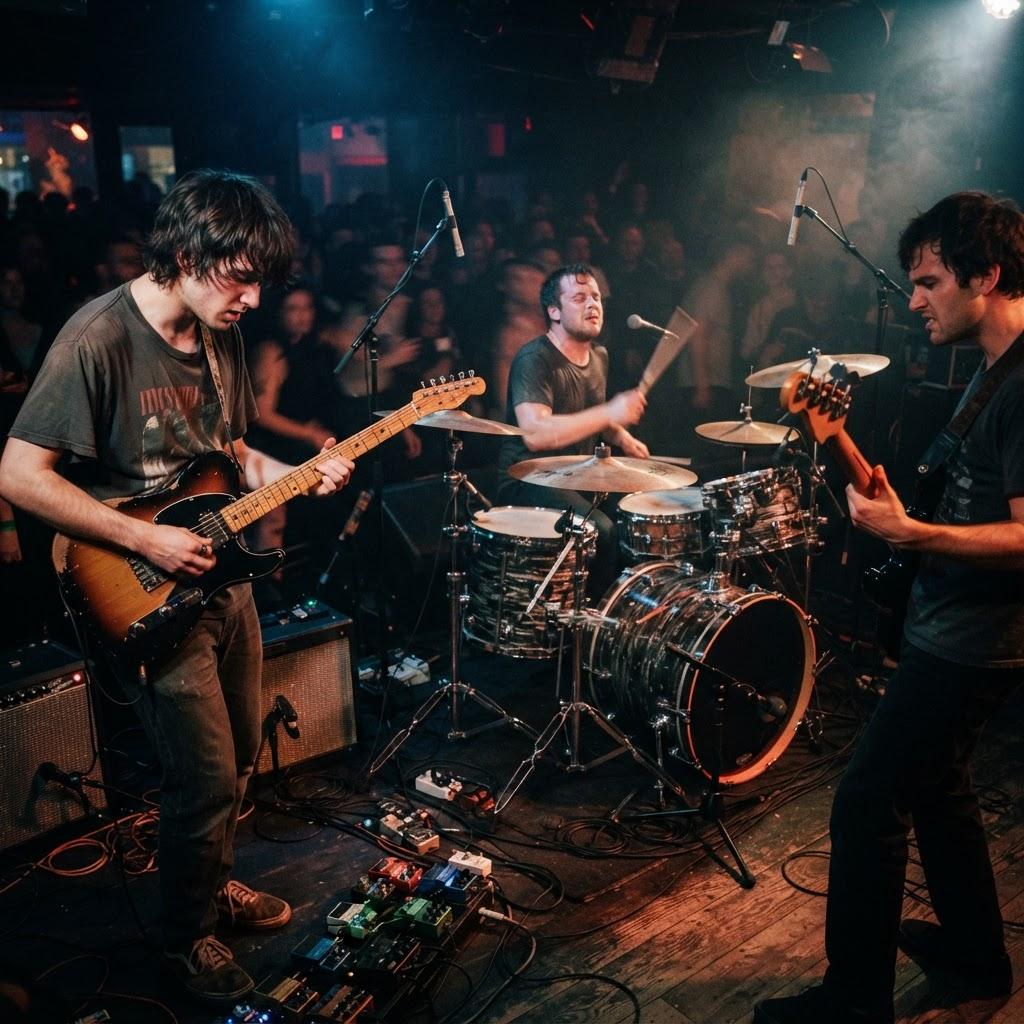
At the beating heart of math rock is the 'odd time signature,' which is essentially a fancy way of saying the rhythm doesn't go 'one-two-three-four.' It goes 'one-two-three, one-two, one-two-three-four-five.' If normal rock is walking at a steady pace, math rock is sprinting, jumping over a puddle, stopping to tie your shoe, and then doing a somersault. The guitars often use 'clean' tones, meaning they aren't distorted or fuzzy; they ring out like bells, playing 'taps' and intricate 'arpeggios'—where you pluck the notes of a chord individually rather than all at once. Think of it like a crystalline waterfall made of steel strings. The drums are the real chaotic heroes here, utilizing 'poly-rhythms,' which is when multiple patterns happen at once. It’s like a drummer playing two different songs with their left and right hands simultaneously. Add in 'stop-start' dynamics—where the band suddenly cuts to total silence and then explodes back into action—and you have a recipe for sonic whiplash. It is not about the melody being simple; it is about the architecture being complex, and every single note is placed with the surgical precision of a jeweler setting a diamond into a watch.
Origins & Birth of the Sound
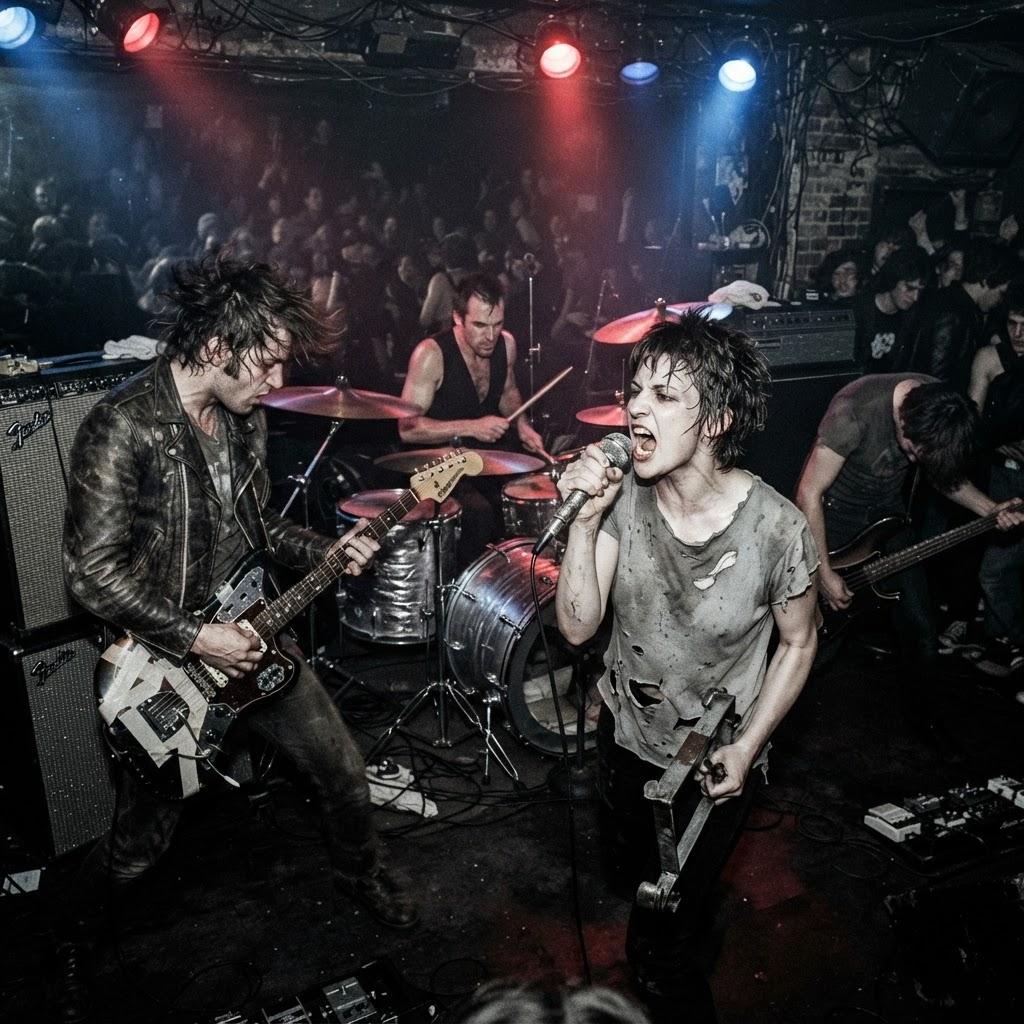
Math rock didn't just crawl out of the primordial soup; it was built in damp basements in the late 1980s, specifically in Chicago. It was the bratty, gifted younger sibling of post-hardcore and progressive rock that decided to drop out of school to study advanced calculus and aggressive posture. Artists were tired of the standard verse-chorus-verse structure that dominated the radio. They looked at the blues-based riffs of their predecessors and thought, 'What if we made this significantly more difficult and weird?' It was a rejection of the stadium-rock ego. Instead of big, long-haired anthems about motorcycles, these musicians were obsessed with texture, tension, and the geometry of sound. It happened in dingy clubs where the air was thick with stale beer and the distinct smell of sweat, as bands like Slint and Shellac began stripping away the excess fat from punk rock. They replaced the standard power chords with skeletal, jagged guitar work that sounded like breaking glass, all while keeping the intensity of a riot. It was a local rebellion that started on the stages of small, non-descript venues, eventually metastasizing into a global obsession for nerds and rockers alike.
The Pioneers & Legends
If there is a Mount Rushmore for math rock, Slint is definitely the foundation. Their album 'Spiderland' is less of a record and more of a haunted house you can listen to; it redefined the limits of what a guitar could say when it was whispering instead of screaming. Then there is Shellac, led by the legendary curmudgeon Steve Albini, whose guitar tone was so sharp it could probably perform emergency surgery. They treated the studio like a laboratory, obsessing over every micro-detail of the recording process. Don Caballero, on the other hand, arrived like a wrecking ball of technical proficiency, showing the world that drums could lead a band through a minefield of shifts and changes without missing a step. They were the ones who truly leaned into the 'math' side of things, playing with such frightening accuracy that you wondered if they had inhuman capabilities. These weren't just musicians; they were architects of chaos who dared to see how far they could stretch a song before it snapped, and in the process, they became the mythical figures that every subsequent band would try, and often fail, to emulate.
Defining Tracks & Era-Defining Moments
To understand the gravity of this genre, you have to listen to Slint’s 'Good Morning, Captain.' It is a slow-burn nightmare of a song that breaks open into a terrifying, beautiful explosion at the end, proving that math rock didn't always need to be fast to be complex—it just needed to be heavy with tension. Another pivot point was Don Caballero’s 'American Don,' which turned the guitar into a shimmering, poly-rhythmic kaleidoscope that made everyone else look like they were playing with mittens on. Then you have the later evolution with bands like Battles, whose track 'Atlas' brought a glitchy, robotic, loop-driven madness to the fore, proving that math rock could actually be danceable without losing its genius-level IQ. These tracks are the Rosetta Stones of the genre. Each one changed the landscape by proving that the audience was smarter than the music industry gave them credit for. They weren't just 'songs'; they were benchmarks that said, 'If you want to play in this league, you have to be able to jump this high.' Every time one of these tracks hit the ears of a budding young guitarist, a new math-rock band was born in a bedroom somewhere in the world.
Subgenres & Offshoots
The family tree of math rock is a tangled mess of branches, each more interesting than the last. You have 'Twinkle Daddies'—an affectionate, slightly teasing name for bands that focus on high-pitched, melodic, Japanese-influenced guitar lines that sound like a Nintendo game having a breakdown. Then there is the 'Midwest Emo' intersection, where math rock’s complex structures met the raw, teary-eyed angst of emo to create something that felt both technically brilliant and emotionally devastating. Don't forget the 'Tech-Death' crossover, where the math-rock obsession with odd time signatures found a home in extreme metal, leading to guitarists playing solos that sound like they are melting. There is also the 'Instrumental Narrative' branch, where bands ditch the singer entirely to tell a story through soundscapes alone, turning songs into wordless novels. Every offshoot is a reaction to the original; some wanted to be prettier, some wanted to be harder, and some just wanted to see if they could play a song in thirteen-eight time without accidentally summoning a demon from another dimension. It is a genre that refuses to stay in one lane, preferring to build its own highway in the middle of a desert.
Cultural Impact & Influence
Math rock is the silent architect of modern indie music. Its DNA is all over the place, hiding in plain sight. When you hear a mainstream indie band use a strange, syncopated guitar lick or an unexpected silence in a song, that is the ghost of math rock whispering in their ears. It changed fashion by basically championing the 'I don't care' look—cardigans, thick-rimmed glasses, and vintage band tees—which became the uniform for the intellectual, music-obsessed crowd. In film, the genre’s ability to create tension through music has made it a favorite for directors who want to make a scene feel slightly 'off' or uncomfortable. It also created a language among musicians where 'Are you in four-four or is that a seven-eight?' became the ultimate flex at parties. It influenced the way we consume music, too; it paved the way for the 'bedroom producer' era, where individuals in their homes use digital tools to construct insanely complex tracks that sound like they were recorded in a million-dollar facility. It made the inaccessible accessible, showing that with enough obsession and a laptop, you can rewrite the laws of rhythm.
Controversies & Drama
Oh, the math rock scene loves a good argument about what 'math' actually is. The biggest drama usually revolves around the 'Purist Wars.' Are you really math rock if you have a singer? Some say the voice is just another rhythm instrument that ruins the purity of the math. Others say you aren't math rock if you aren't using a specific type of pedalboard that costs more than a used car. The 'Sellout' accusation is also a staple; the moment a math rock band adds a catchy chorus or—heaven forbid—a pop melody, the forums light up with accusations of betrayal. It is a genre full of people who treat musical choices like religious doctrine. The legendary battles between those who prefer the jagged, harsh noise of the early days and the breezy, melodic, twinkly stuff are still fought daily in the dark corners of Reddit. There is a certain hilarity in watching grown men argue about whether a time signature of five-four is 'authentic' or just 'pretentious showboating.' It is the kind of petty, high-stakes drama that only happens when people care a little too much about something beautiful, and frankly, it is part of the charm.
Global Spread & Regional Scenes
While Chicago is the womb, Japan is the adoptive parent that took math rock and fed it espresso. Japanese bands like Toe and LITE took the genre and added a sense of space and delicacy that was previously missing. They turned the 'math' into something poetic, almost like origami in sound form. Meanwhile, in the United Kingdom, bands like Foals started out in the math rock trenches before launching into pop stardom, showing how the genre’s complex rhythms could be tamed for the masses. In the United States, the 'Midwest' scene became a hub where the genre collided with youthful suburban frustration, creating a unique sound that was as technical as it was heartbreakingly relatable. Each region added its own flavor: the British leaned into the cold, calculated precision; the Americans added grit and raw emotion; and the Japanese added a crystalline, ethereal grace. It is fascinating to see how the same set of rules can lead to such different results, proving that math rock isn't just a rigid formula, but a language that can be spoken with a thousand different accents, each one revealing a new facet of the same brilliant, chaotic diamond.
The Modern Landscape
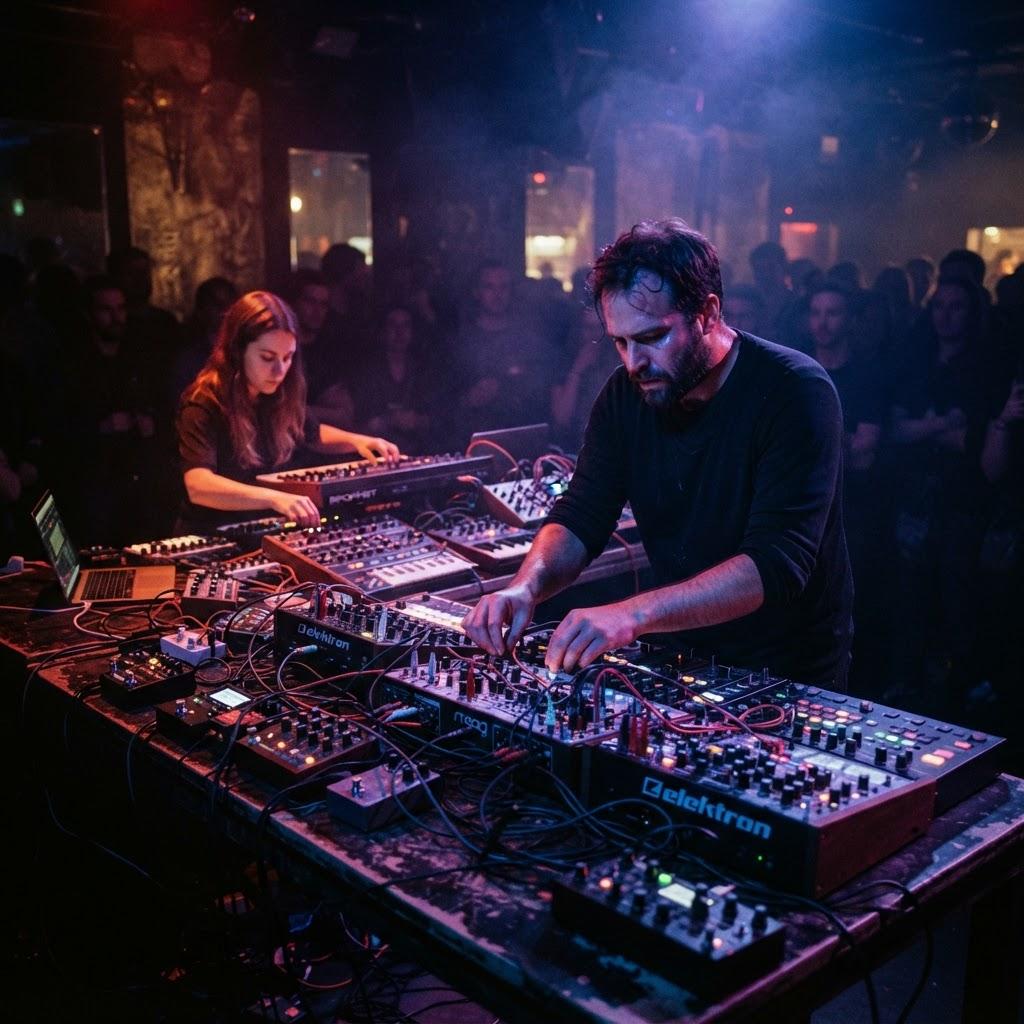
Today, math rock is having a bit of a renaissance, largely because we have reached the era of the 'internet-literate musician.' Thanks to YouTube and social media, you can find a teenager in a bedroom in Indonesia playing a riff that would have made a professional guitarist in the nineties faint with envy. The barrier to entry has evaporated. TikTok has even gotten in on the act, with 'math rock guitar challenges' where creators show off their insane tapping techniques to an audience that might not know what a time signature is, but knows a 'cool sound' when they hear it. The genre has stopped being an exclusive club and has become a global playground. Modern bands are blurring the lines even further, mixing in hip-hop, electronic beats, and jazz, turning the genre into a kind of 'musical gumbo' that is more inclusive and experimental than ever before. It is no longer just about being difficult for the sake of it; it is about finding new ways to make the human brain do a backflip. The pulse is strong, fast, and constantly shifting, which is exactly how any self-respecting math rocker would want it.
How to Dive In
If you are ready to stop walking in straight lines and start dancing in hexagons, here is your starter kit. Begin your journey with Slint’s 'Spiderland' to feel the weight of the genre’s soul, then pivot to Don Caballero’s 'What Burns Never Returns' to get your brain tied in knots by their drumming. For the brighter, twinklier side of life, throw on Toe’s 'The Book About My Idle Plot on a Vague Anxiety'—it is essentially a masterpiece of human-to-instrument communication. Once you have those down, check out Battles’ 'Mirrored' for a taste of how the genre can sound like a high-tech machine falling down a flight of stairs in the most graceful way possible. Do not worry if it doesn't make sense the first time; it is not supposed to. Listen to the drums first, then try to find the guitar, and eventually, the whole mess will click into place like a puzzle. Keep an open mind, be prepared for some sudden silences, and remember: if you find yourself tapping your foot and then missing a beat, you are doing it exactly right. Hit play, hold on tight, and enjoy the beautiful, calculated chaos.