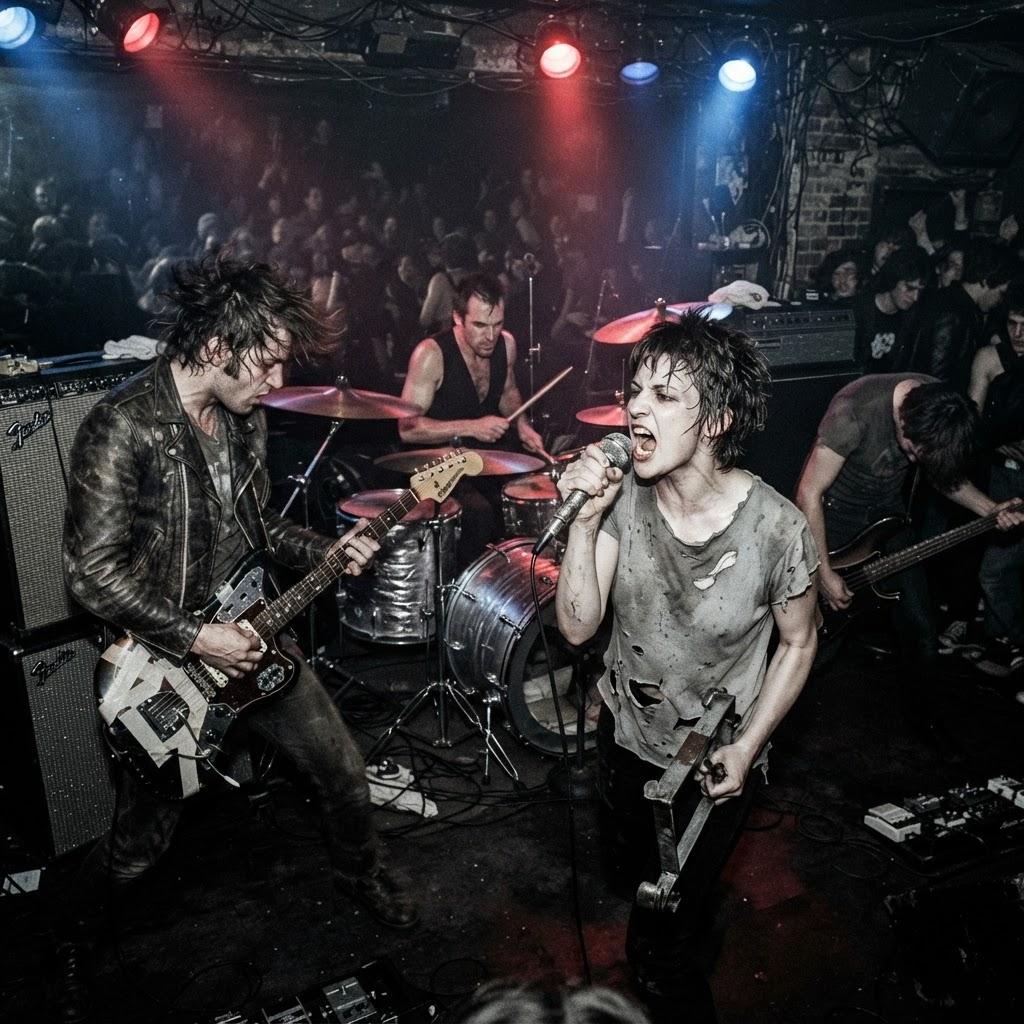
Late 1970s
No Wave
No Wave is the musical equivalent of throwing a brick through a window just to see if the glass makes a cool sound. It is raw, abrasive, and gloriously disinterested in your need for a melody.
Meet the Genre
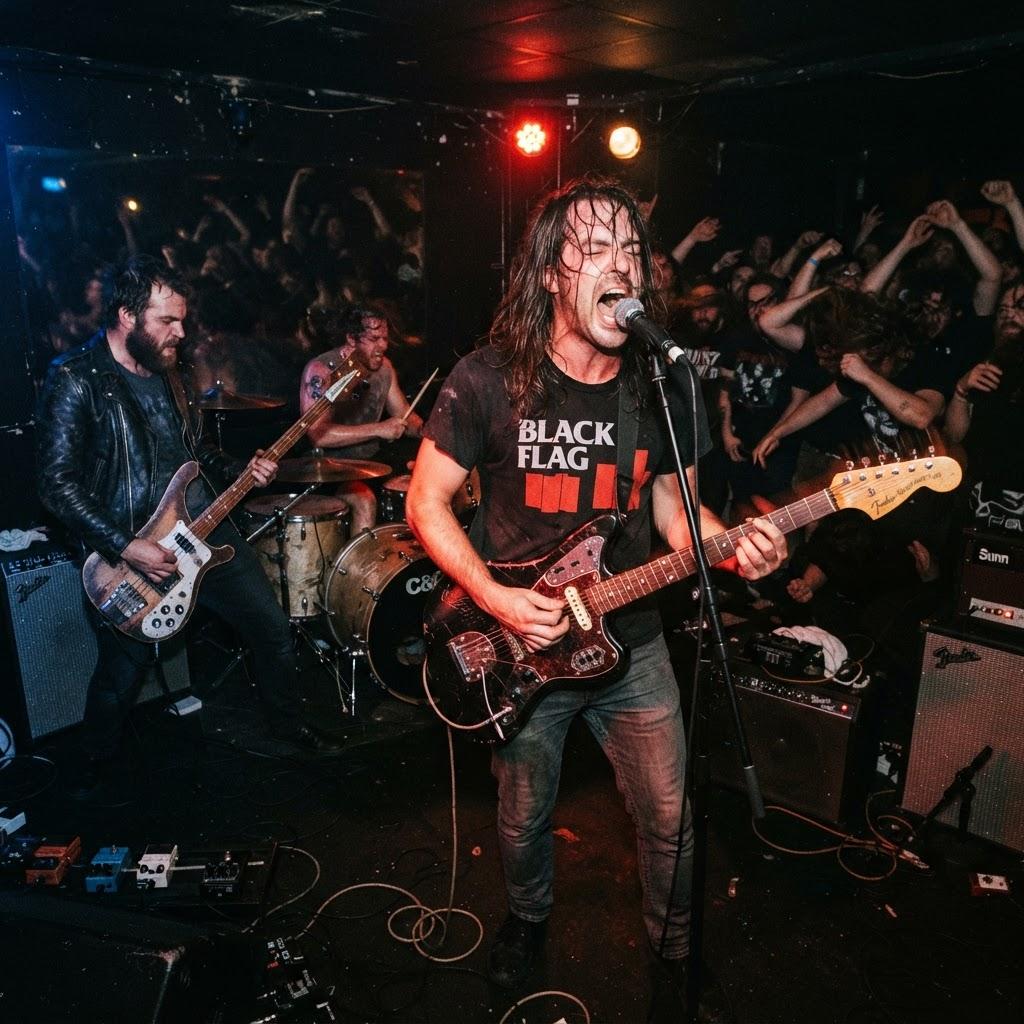
Imagine walking into a basement where the air smells like stale cigarettes and existential dread. A band is on stage, but they don’t seem to know how to play their instruments—or worse, they know exactly how to play them and have decided that harmony is a bourgeois construct designed to keep you asleep. This is No Wave. It’s the sound of the late 1970s New York City art scene having a collective, glorious meltdown. No Wave isn't interested in your sing-along choruses or your three-minute radio edits. It is a sonic middle finger to the polished decadence of disco and the self-serious posturing of mainstream rock. It is prickly, jagged, and aggressively uncomfortable, yet strangely magnetic for anyone who feels like the world is a broken machine. When you listen to it, you aren't just hearing music; you are witnessing an intellectual tantrum that somehow redefined what music could be. It’s the audio equivalent of a strobe light in a dark room—disorienting, jarring, and impossible to ignore.
The Sound & Signature Elements
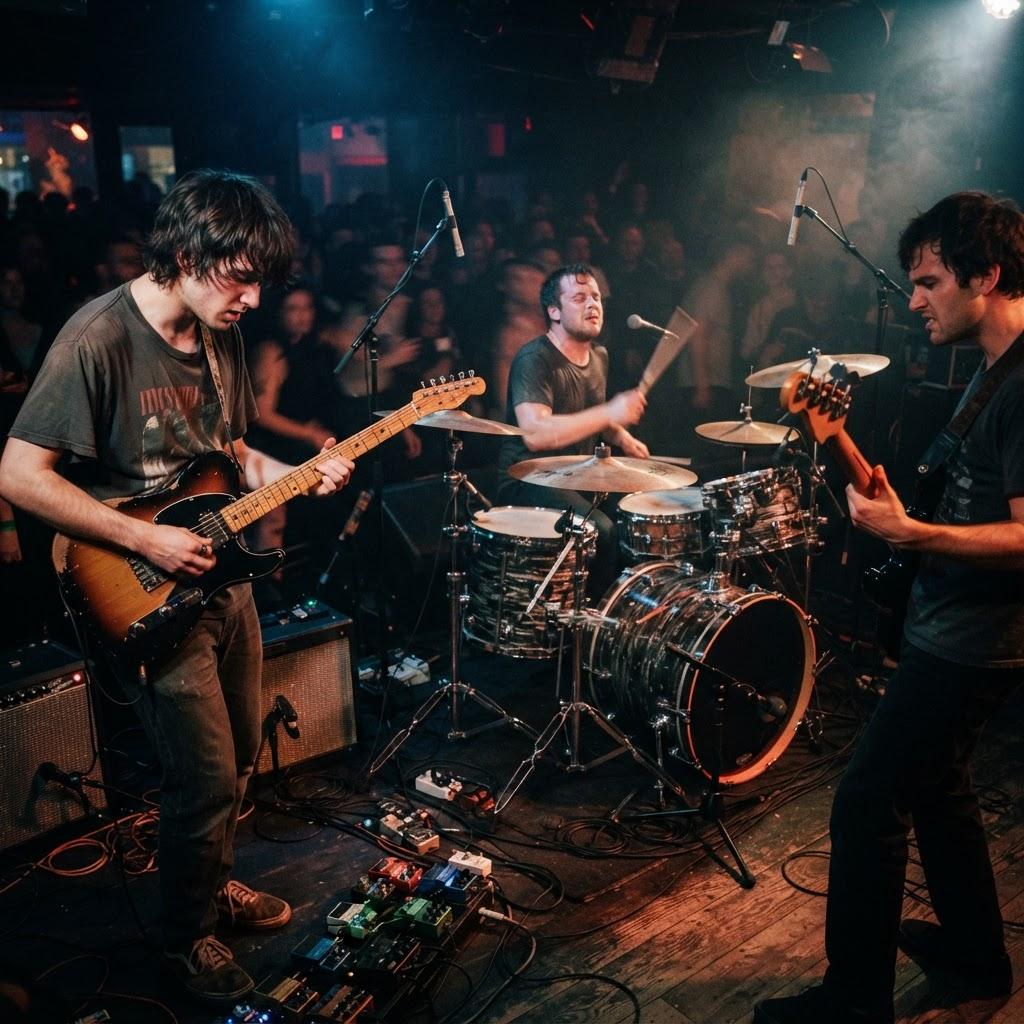
To understand No Wave, you have to throw your rulebook for 'good music' into a paper shredder. If traditional rock is a tidy row of houses, No Wave is a pile of scrap metal held together by sheer willpower. The guitar work is largely 'atonal,' which is just a fancy way of saying they deliberately play notes that clash and cause physical tension. You won't find many blues scales here. Instead, you get 'angular' riffs—sharp, staccato bursts that feel like being poked in the eye. The drumming is often primitive and repetitive, favoring a thudding, hypnotic 'motorik' beat over complex fills. Then there's the bass, which usually functions as the lead melody, grumbling away like a disgruntled subway train. Production-wise, the hallmark is 'lo-fi' grit—it sounds like it was recorded inside a tin can during an earthquake. This is intentional. It’s about honesty, not polish. The vocals are rarely sung in a traditional sense; they are spoken, shrieked, or muttered like a madman trying to explain a conspiracy theory to a pigeon.
Origins & Birth of the Sound
No Wave didn't emerge from a corporate board meeting; it crawled out of the grime of the Lower East Side in the late 1970s. New York was broke, dangerous, and utterly thrilling. While the rest of the country was basking in the glitter of the disco era, a pocket of artists, filmmakers, and musicians were living in rent-controlled lofts, eating cold cereal, and deciding that punk rock had become too mainstream. It was a true 'scene'—you’d see the same people making experimental films, painting abstract canvasses, and then getting on stage to make a terrible racket at a venue like Max’s Kansas City or the Mudd Club. They were reacting against everything—the polish of commercial music, the limitations of standard chords, and the stagnant state of the arts. It was a flash of lightning in a bottle. Within a few short years, this tiny, incestuous circle of visionaries created a movement that functioned more like a radical art collective than a collection of bands.
The Pioneers & Legends
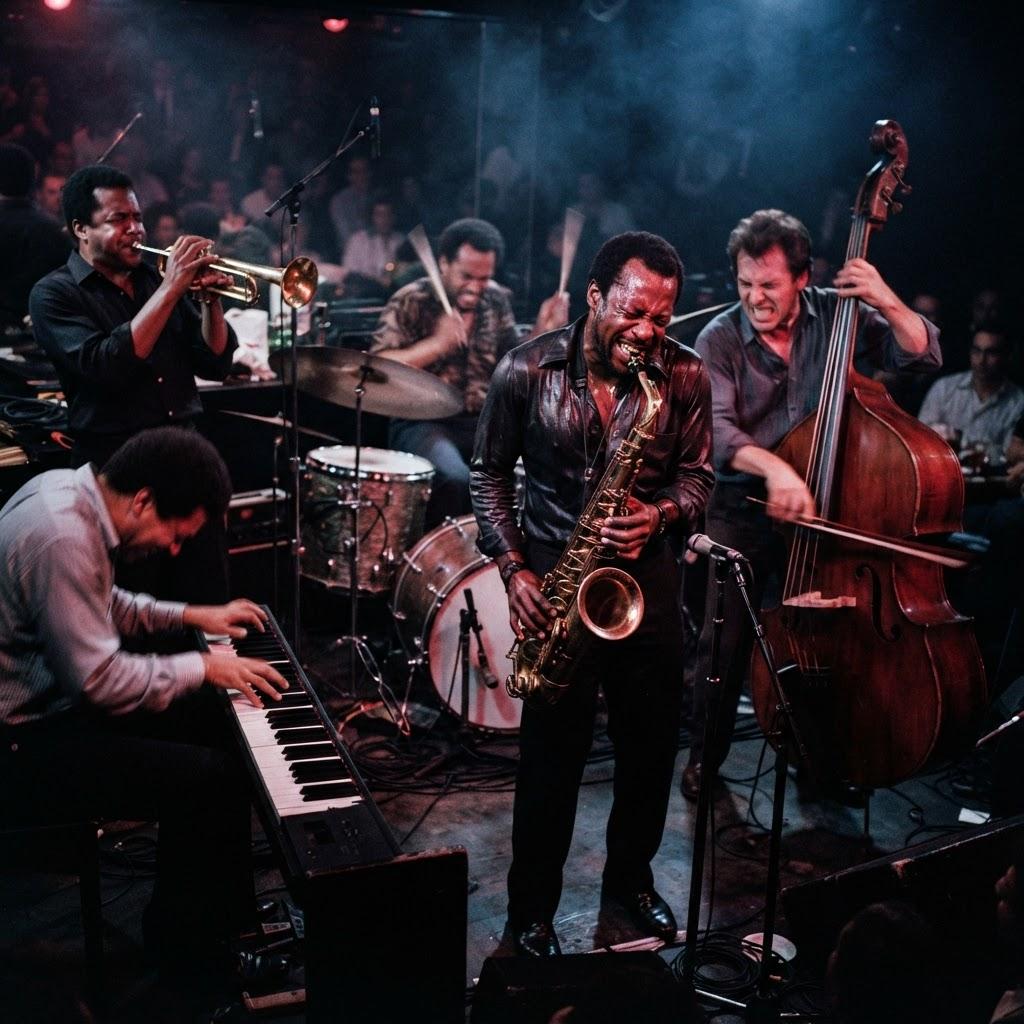
The pantheon of No Wave is populated by figures who looked at a guitar and saw a weapon of mass confusion. James Chance and the Contortions are perhaps the ultimate embodiment of the movement; Chance was a sax-playing maniac who famously got into actual fistfights with audience members. His music was a frenetic collision of James Brown funk and free-jazz screeching. Then you have Lydia Lunch, a poet of the abyss who turned her dark, haunting observations into the band Teenage Jesus and the Jerks. Her songs were often shorter than a commercial break and twice as loud. Glenn Branca, a former theater composer, turned the guitar into a mathematical experiment, piling layers of instruments on top of each other to create massive, droning 'symphonies' that sounded like jet engines taking off. These weren't just musicians; they were provocateurs. They were creating a new language, and they didn't care if the rest of the world was too busy listening to pop music to understand what they were saying.
Defining Tracks & Era-Defining Moments
To really get what this was all about, you have to spin the 'No New York' compilation, produced by Brian Eno, who was clearly fascinated by these weirdos. If you want a masterclass in controlled chaos, put on 'Contort Yourself' by James Chance and the Contortions. It’s got a funky bassline that gets hijacked by a saxophone that sounds like it’s being tortured, and it perfectly encapsulates that jittery, caffeinated New York energy. Then, listen to 'The Closet' by Teenage Jesus and the Jerks. It’s barely a minute long, screechy, and deeply unnerving. It’s a sonic slap to the face that wakes you up instantly. The moment these tracks were released, it was a declaration of war against the status quo. It proved that you didn't need to be a virtuoso to be an artist; you just needed an original vision and a complete disregard for the consequences. These songs act as a time capsule, preserving the exact moment when the underground decided to burn the map.
Subgenres & Offshoots
No Wave wasn't just one flavor of noise; it had cousins, siblings, and weird neighbors. You had the 'Noise Rock' movement that eventually grew out of the feedback-heavy experiments of the original bands. Then there was 'Industrial,' which took that mechanical, cold, and repetitive structure of No Wave and added more synthesizers and samples of factory equipment. Many of the No Wave artists branched out into 'Post-Punk' and 'New Wave'—some of them even dared to make music you could actually dance to, like the more rhythmic, disco-inflected work of early ESG or A Certain Ratio. You also saw the rise of 'Experimental Rock,' which prioritized texture over structure. Every branch of this tree kept that same core defiance—the idea that if you are making something that sounds 'comfortable,' you are probably doing it wrong. It was a breeding ground for genres that wouldn't even have names for another decade, feeding into everything from underground dance music to extreme metal.
Cultural Impact & Influence
No Wave’s influence is like a dark stain that refuses to come out of the rug—it's everywhere. In fashion, the 'anti-fashion' look of torn clothes, safety pins, and thrift-store chic that define modern streetwear can trace their roots directly back to these gritty NYC lofts. In film, directors like Jim Jarmusch and Richard Kern captured that exact same raw, unvarnished aesthetic in their work. Musically, you can see the ghost of No Wave in bands like Sonic Youth, who took that art-rock dissonance and turned it into stadium-filling anthems. Even today, the 'indie' ethos of DIY—the idea that you don't need a label, a producer, or a fancy studio to be a success—is a direct descendant of the No Wave attitude. It changed the way people looked at the world, proving that beauty can exist in ugliness, and that the most interesting things happen when you stop trying to fit in. It taught a generation that it's okay to make noise, as long as the noise is your own.
Controversies & Drama
You put a bunch of starving, over-caffeinated artists in a room together and tell them they're changing the world, and you are going to get fireworks. The No Wave scene was essentially a pressure cooker of ego. There were the 'purists' who thought if you ever learned a guitar scale, you were a sellout. There were the constant beefs between bands who felt they were 'more authentic' than their neighbors. The drama was real—people were breaking up, starting new bands every week, and fighting over who had the best thrift store find. And let's not forget the sheer disdain they had for the press. They loved to antagonize music journalists, sometimes physically chasing them out of shows. It was a 'with us or against us' mentality that was as hilarious as it was exhausting. The backstage drama often felt more significant than the concerts themselves, turning the scene into a soap opera of noise, angst, and genuine, unfiltered creative friction.
Global Spread & Regional Scenes
While New York was the cradle, the fire eventually spread to other cities where people were just as bored with the status quo. In London, the scene took on a slightly more political edge, mixing the No Wave aesthetic with the frustration of a crumbling economy. In Tokyo, artists took the abrasive, avant-garde elements and dialed them up to eleven, resulting in 'Japanoise,' an even more extreme and uncompromising take on the sound. Berlin became a sanctuary for these ideas, where musicians merged the No Wave grit with the cold, electronic pulse of German experimentalism. Every city took that original, ugly, beautiful blueprint and remixed it to fit their local landscape. Whether it was the rainy, introspective atmosphere of the UK or the neon-soaked chaos of Japan, the common denominator remained: a refusal to compromise, a love for the unusual, and a relentless commitment to pushing the boundaries of what a human being with an instrument could actually do.
The Modern Landscape
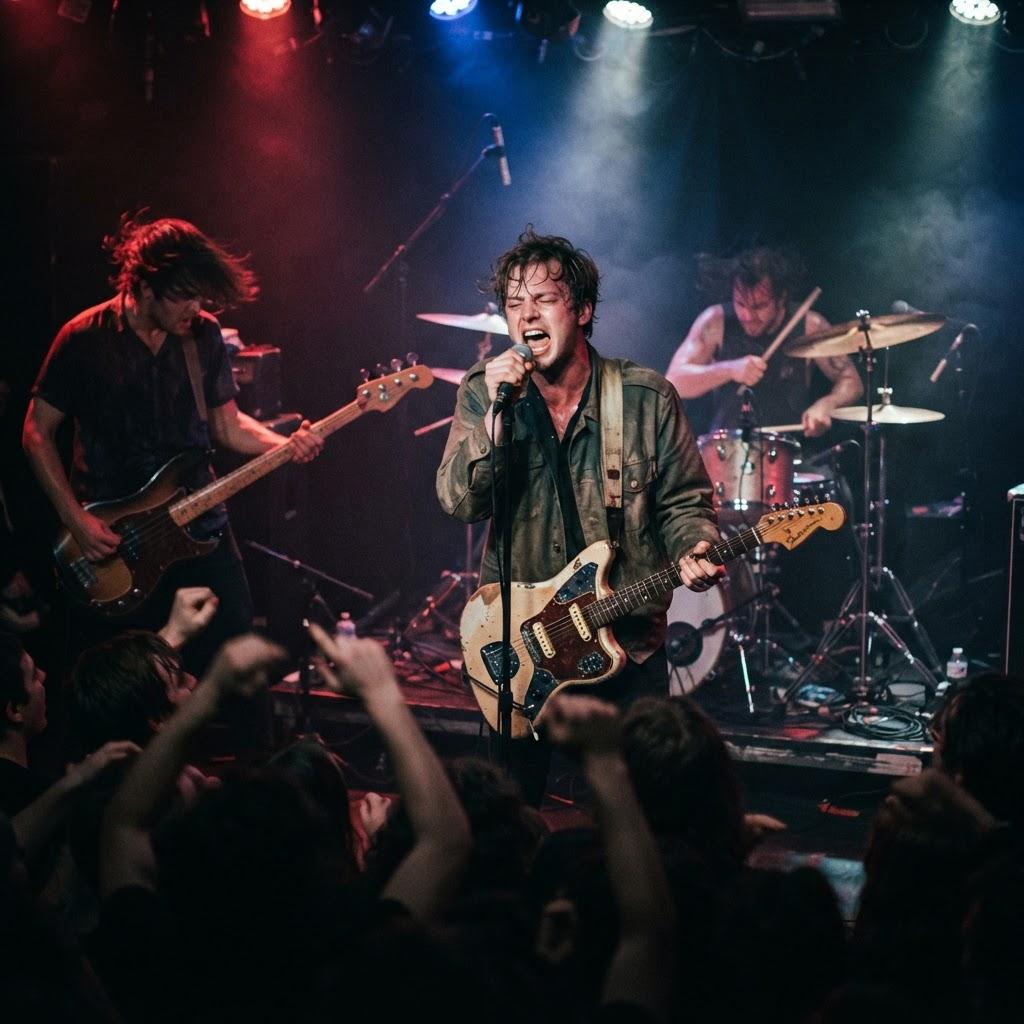
Today, No Wave is less of a 'scene' and more of a spiritual vibration. You won't find it on the Billboard charts, but its DNA is living in every bedroom pop artist who uses distortion to hide their insecurities and every noise-rock band that still cares more about feedback than fretwork. You see it popping up on TikTok, where 'alt-rock' kids are rediscovering the weirdest, most obscure tracks from 1978 and treating them like holy relics. The spirit of the movement is alive in the way we curate our own aesthetics—the appreciation for the glitch, the pixelation, and the raw. It’s a genre that refuses to die because the world will always have a supply of bored, angry, and creatively desperate kids who want to burn it all down. It remains the ultimate underground credential. If you can appreciate the beauty in a perfectly timed screech of guitar feedback, you are keeping the spirit of No Wave alive, and that is a job worth doing.
How to Dive In
Ready to ruin your neighbors' day? Start by putting on the 'No New York' album. It is the absolute Bible of the genre, featuring the 'Big Four' bands: The Contortions, Teenage Jesus and the Jerks, Mars, and DNA. If you want to dive deeper, track down anything by Glenn Branca to experience the sheer, overwhelming power of massed guitars. For something a bit more rhythmic, listen to ESG, whose bass-heavy tracks are the only thing from this era you can actually dance to without looking like you're having a seizure. Don't worry if it sounds like a mess at first—that's the point. Listen to it on a long walk, in a dark room, or while you're cleaning your kitchen, and just let the chaos wash over you. It’s supposed to be challenging, it’s supposed to be weird, and it’s supposed to make you feel something different than everything else in your library. Crank the volume, embrace the screech, and welcome to the beautiful nightmare of No Wave!