Late 1950s
Free Jazz
Free Jazz is the musical equivalent of a toddler throwing a tantrum in a tuxedo, except the toddler is a genius with a saxophone. Strap in for a wild ride through the most polarizing, liberating, and glorious chaos to ever grace your ears.
Meet the Genre
Imagine walking into a library where all the books have been shredded, the librarian is doing cartwheels, and someone has set the thermostat to 'volcano.' That is Free Jazz in a nutshell. It is the music that refuses to apologize for existing, a glorious sonic rebellion that looks at a jazz standard and says, 'Nah, I’d rather play the space between the notes instead.' When you first hear it, you might feel confused, like you accidentally clicked on a radio station broadcasting from a different dimension. But wait just a minute, and you will start to hear the conversation—the intense, whispered arguments between a saxophonist and a drummer who are trying to solve a puzzle that has no edges. It is raw, it is unapologetic, and it is the sound of total creative freedom. This genre doesn’t care about your need for a predictable chorus or a nice, tidy beat; it wants to take you by the hand and drag you through a technicolor dreamscape of pure, unadulterated emotion.
The Sound & Signature Elements
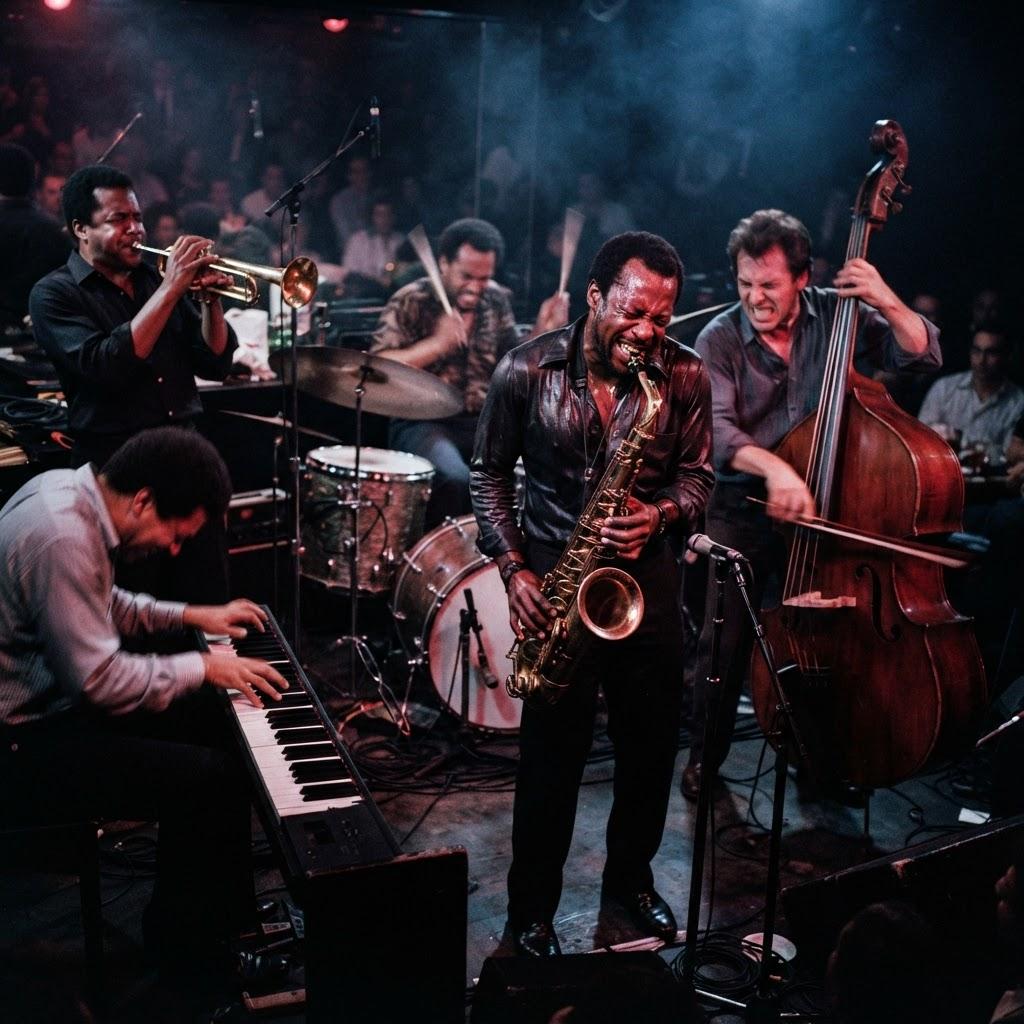
If you are looking for a gentle lullaby, you have come to the wrong neighborhood. Free Jazz is built on a lack of traditional structure. Think of 'harmony'—the way notes sound pleasant together—as a comfy chair you sit in. Free Jazz kicks that chair over and tells you to stand on the ceiling. Instead of playing in a set key, musicians play 'atonal' music, which is just a fancy way of saying they aren’t sticking to the usual Do-Re-Mi rules. They use a technique called 'collective improvisation,' where everyone is playing their own solo at the same time. It’s like a room full of people shouting their favorite movie quotes simultaneously; if you listen close, you start to hear the weird, beautiful rhythm in the noise. The tempos are wild, shifting from a turtle’s crawl to a hummingbird’s heartbeat in seconds. The drums don't keep a steady 'thump-thump-thump' like a pop song; they act like a storm, raining cymbal crashes and snare pops whenever the mood hits.
Origins & Birth of the Sound
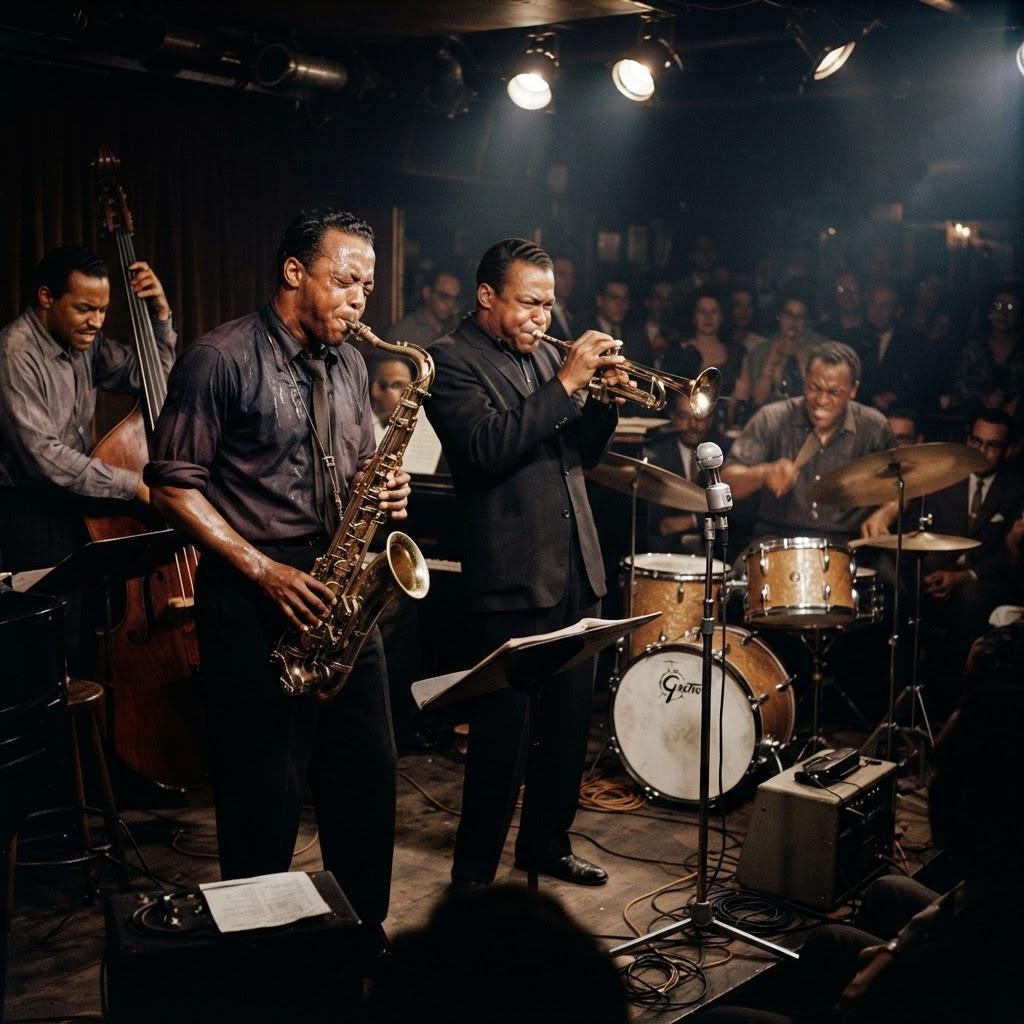
The birth of Free Jazz wasn’t in a pristine recording studio with fancy lighting; it was cooked up in the smoke-filled, cramped lofts of late-fifties New York City. The air was thick with political tension and the desire for something new. Musicians were tired of playing the same old standards for crowds that just wanted to drink their cocktails and ignore the art. They were feeling the weight of the social climate, the push for equality, and they wanted a voice that matched the urgency of the moment. They started stripping away the layers of polished jazz until nothing but the core of the music remained. It was a communal act of defiance, a way for artists to say, 'We define our own boundaries.' You can almost see them in those drafty, dimly lit lofts, sweat dripping down their faces as they pushed their horns to the limit, inventing a new language on the fly because the old one just didn’t cut it anymore.
The Pioneers & Legends
Ornette Coleman is the patron saint of this madness. He walked into a club with a plastic saxophone—yes, plastic—and proceeded to change everything. He famously declared that the musicians could play whatever they wanted, and the results were transformative. Then you have John Coltrane, who spent his final years chasing the divine through sheer volume and intensity. His albums feel like someone trying to tear a hole in the sky to see what’s on the other side. Cecil Taylor was the piano player who treated the keyboard like a percussion instrument, his fingers moving so fast and hard it’s a miracle the piano survived the session. These weren't just musicians; they were alchemists turning metal and breath into raw human spirit. Albert Ayler took the sound even further into the stratosphere, playing with such grit and passion that it sounded like a ghost choir wailing in the wind. They were the trailblazers who made it cool to ignore the rulebook.
Defining Tracks & Era-Defining Moments
You cannot talk about this genre without bowing down to Ornette Coleman’s album 'The Shape of Jazz to Come.' It’s the sonic equivalent of the Big Bang. When you put on 'Lonely Woman,' you realize that you aren't listening to a song; you are listening to a mood, a landscape, a photograph of a feeling. Then there is John Coltrane’s 'Ascension,' a sprawling, terrifying, magnificent forty-minute long improv piece that feels like an epic battle between good and evil. It’s a moment that split the jazz world in half. Either you were on the bus, or you were standing on the sidewalk watching it drive away. These tracks were the lightning strikes that proved this music wasn't just a phase; it was a permanent change in the musical climate. They turned the stage into a battlefield of pure creativity, and every single note they hit felt like it was etching something permanent into the bedrock of music history.
Subgenres & Offshoots
Like any good family, Free Jazz has some weird cousins. There is 'Energy Music,' which is pretty much exactly what it sounds like—players pushing their lungs and instruments to the brink of explosion. It’s high-octane, high-volume, and not for the faint of heart. Then you have 'Spiritual Jazz,' which takes the freedom of Free Jazz and channels it into something more meditative, almost like an attempt to reach a higher state of consciousness. It’s cosmic, deep, and usually features a lot of percussion. And let’s not forget 'European Free Improv,' which popped up across the pond and added a touch of academic experimentation and icy, clinical precision to the chaos. Each branch of the family tree brought its own flavor, proving that once you destroy the rules, you can build a thousand different kinds of houses out of the rubble. It’s a genre that thrives on mutation, constantly changing shape to suit the mood of the musicians playing it.
Cultural Impact & Influence
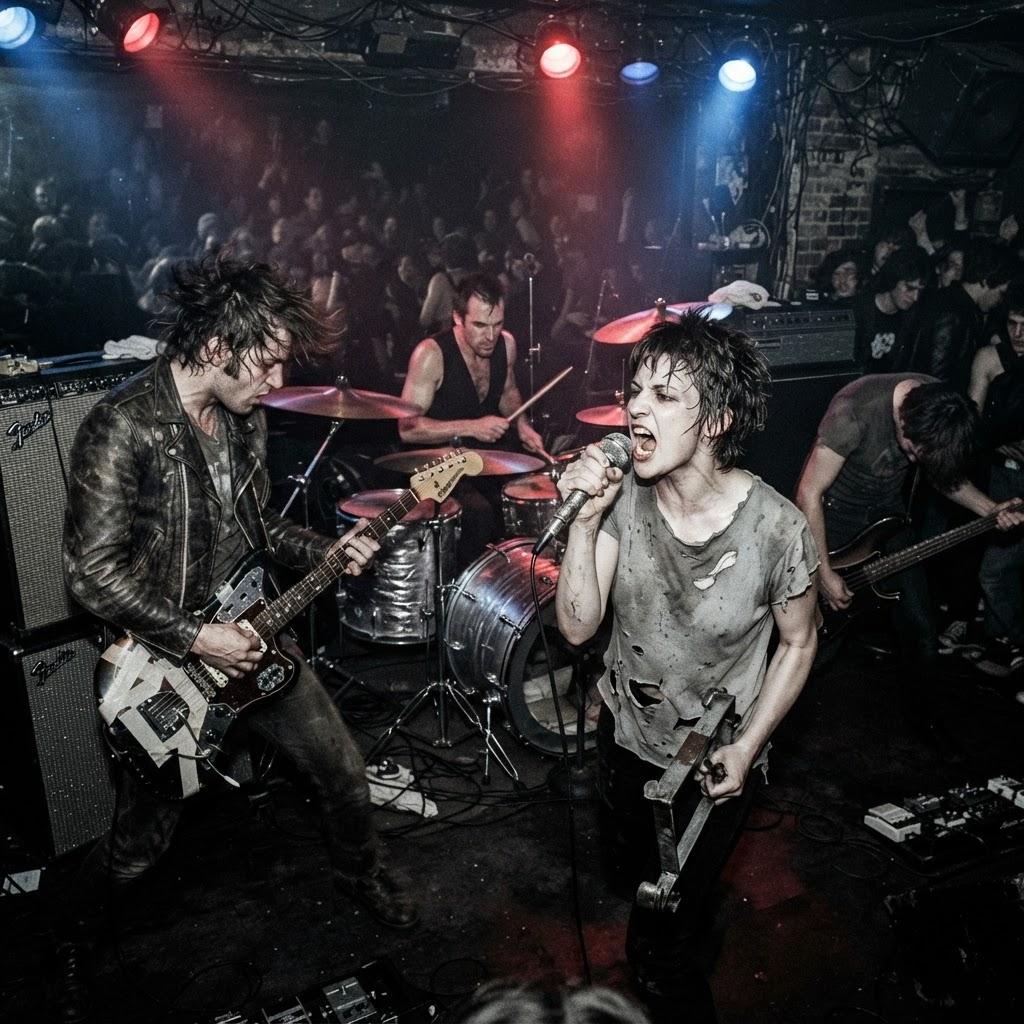
Free Jazz didn't just stay in the music world; it bled into everything. It influenced the poets of the Beat Generation, who were trying to write in a way that mimicked the spontaneous, jagged flow of the music. You see its DNA in the attitude of punk rock, which shared that same 'anyone can pick up an instrument and make a statement' philosophy. In cinema, directors started using the chaotic, unpredictable energy of free-form jazz to underline psychological tension or to show a character falling apart. Even in fashion, the idea of 'breaking the silhouette'—letting clothes flow without strict lines or rigid structures—mirrors the loose, non-traditional form of the music. It became the soundtrack to radicalism, a symbol that you didn't have to follow the suit-and-tie path that society laid out for you. Whether it was the protest lines or the art galleries, Free Jazz was the noise in the background, reminding everyone that structure is just an opinion.
Controversies & Drama
Oh, the drama was legendary. If you think reality TV is spicy, you should have been at a jazz club in the 1960s. The 'Jazz Purists'—people who thought music ended with the swing era—absolutely loathed Free Jazz. They called it 'anti-jazz,' 'noise,' and a 'scam' on the listening public. Musicians were getting into heated debates on the radio, club owners were firing bands mid-set, and critics were writing scathing reviews that read like personal insults. It was a proper civil war. The sellout accusations were flying left and right; if you started playing a melody again, the avant-garde crowd would hiss, and if you played too much noise, the traditionalists would walk out. It was a time of immense pressure, where simply existing as a musician meant taking a side in the great debate over what music should be. The backstage stories are filled with broken egos, thrown instruments, and enough ego to power a small city for a year.
Global Spread & Regional Scenes
Once the signal went out, the world tuned in. In Chicago, the AACM—the Association for the Advancement of Creative Musicians—turned Free Jazz into a massive community project, blending it with African heritage and local grassroots organizing. In Germany and the UK, musicians took the concept and made it colder, sharper, and deeply experimental, focusing on textures and silence just as much as the explosions. Even in Japan, a deep obsession with the raw power of American jazz led to a scene that was incredibly intense, with musicians pushing their performances to physical limits that bordered on performance art. It wasn't just a New York thing anymore; it was a global virus of creativity. Musicians from Tokyo to Berlin were taking the raw, improvisational spirit and mixing it with their own local folk music, traditions, and political struggles, creating a truly international language of noise.
The Modern Landscape
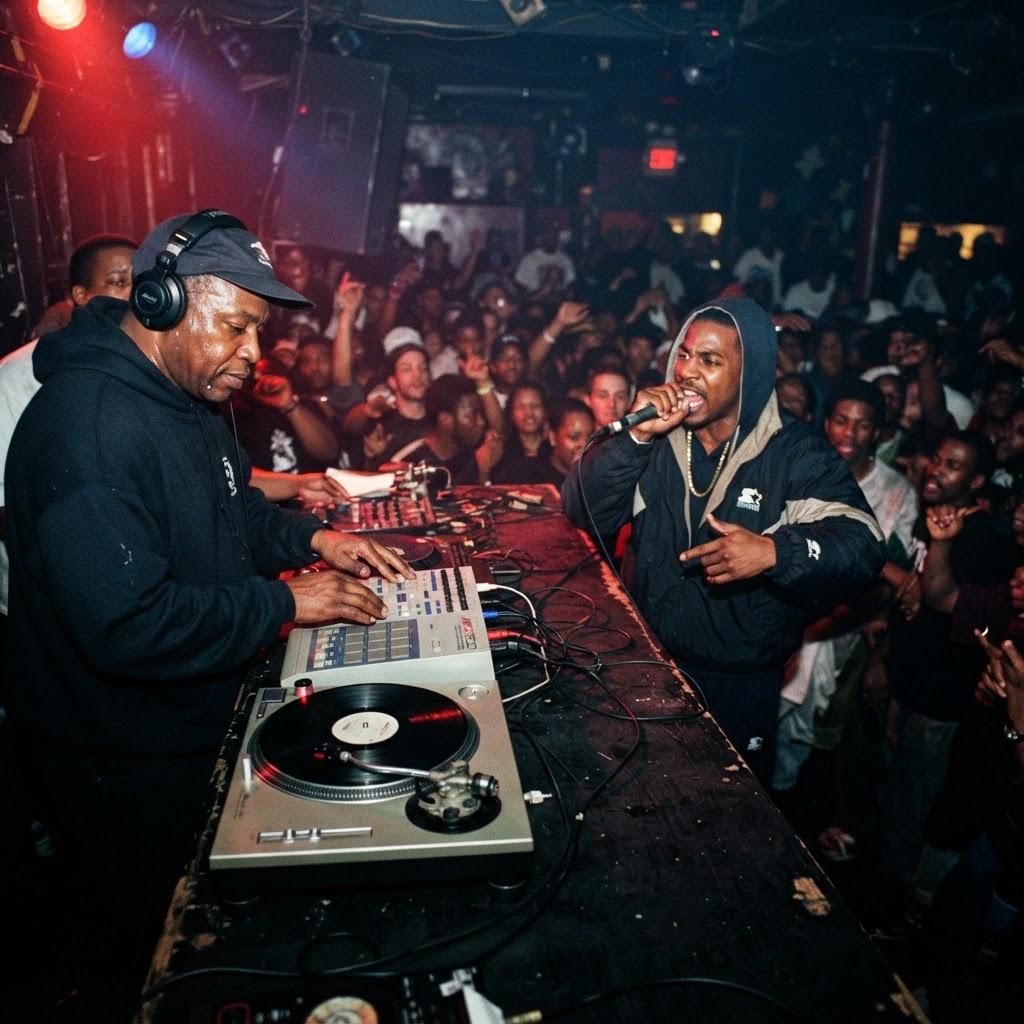
Today, Free Jazz is like that cool, eccentric relative who shows up to family reunions and shocks everyone with a wild story. It’s not on the pop charts, but you hear its echo everywhere. Modern hip-hop producers love the jagged, unpredictable samples from old Free Jazz records; they use them to add a layer of chaos and street-level grit to their tracks. You find it in modern noise rock, where bands use distortion and feedback to recreate that feeling of sonic liberation. It’s also having a bit of a renaissance in the underground scene, where new generations of players are realizing that you don't need a massive budget to make something heavy—you just need a horn, a drum kit, and something to say. It’s thriving in the crevices of the internet, in DIY venues, and in the hearts of anyone who is sick of the plastic, perfect, autotuned nonsense that passes for modern music.
How to Dive In
Ready to take the plunge? Don't start by trying to analyze every note—just let it wash over you. Start with Ornette Coleman’s 'The Shape of Jazz to Come' to understand the architecture of the revolution. Move on to John Coltrane’s 'Interstellar Space,' which is just him and a drummer having a beautiful, celestial conversation. It’s intense, sure, but it’s also weirdly comforting once you get used to it. Listen to it while doing something active—cooking, cleaning, or just walking through a busy city. Let the music become the soundtrack to your movement. Do not look for a melody to hum in the shower; look for the energy, the conversation, and the sheer audacity of the players. If you feel like you’re losing your grip on the rhythm, don’t worry—that’s the whole point. Turn it up loud, let your neighbors wonder what is happening in your living room, and enjoy the beautiful, messy, wonderful sound of absolute, total freedom!