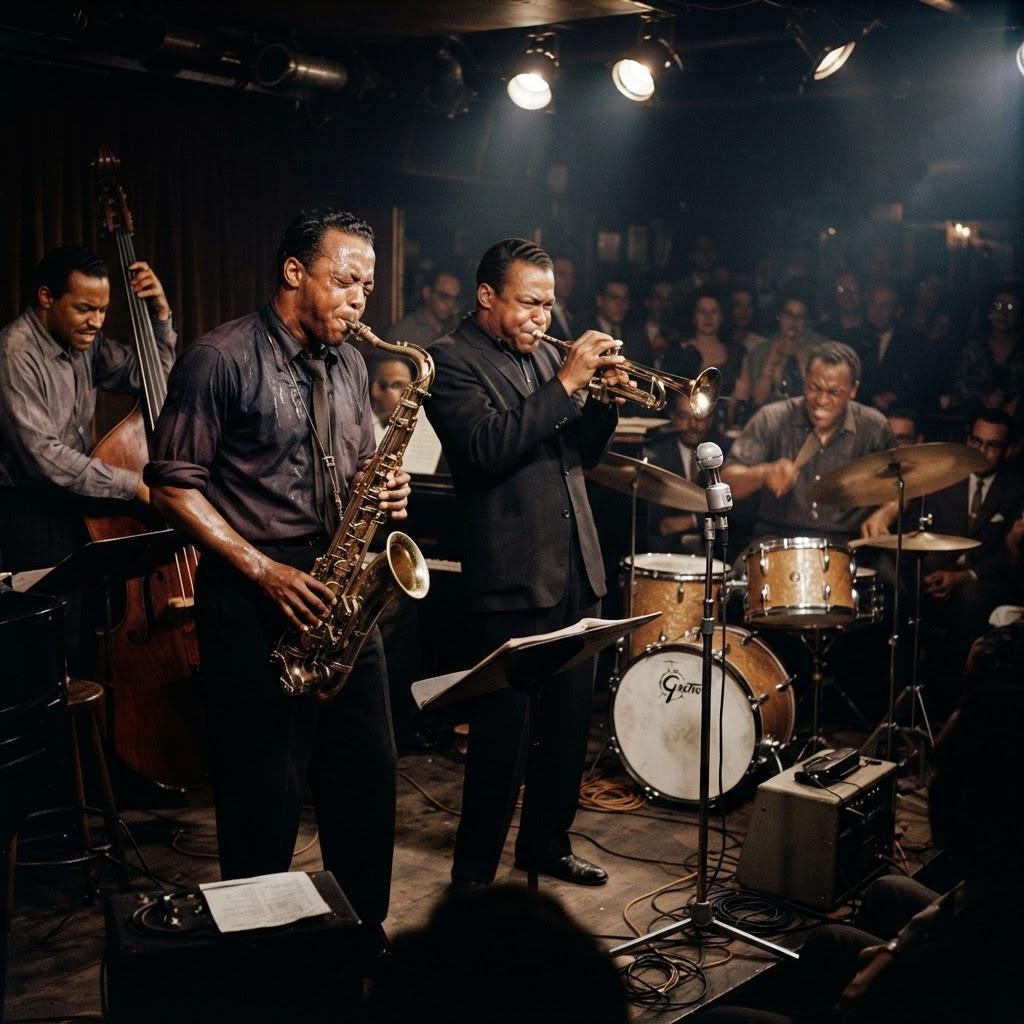
Early 1940s, Harlem, New York
Bebop
Bebop is the rebellious, espresso-chugging speed demon of jazz that traded danceability for brain-melting virtuosity. It is the sound of late-night jam sessions where the only rule was that there are no rules, provided you can play fast enough to make your instrument sweat.
Meet the Genre
Imagine you are at a party where everyone is doing the polite, organized waltz, and then someone busts through the front door, turns the tempo up to a terrifying level, and starts playing a musical riddle that only three people in the room can actually solve. That is Bebop. It is the musical equivalent of a caffeinated squirrel on a rocket ship, zipping past your ears with such velocity that you do not know if you are listening to a masterpiece or a glitch in the space-time continuum. Bebop does not care if you want to dance. It does not care if you want to hum along. It is not here to be the pleasant background noise for your dinner party; it is here to demand your absolute, undivided attention. It is the jazz equivalent of a PhD thesis written in hieroglyphics by someone who just drank a triple-shot of espresso. The mood is jittery, intellectual, and undeniably cool, dripping with an attitude that says, 'If you can keep up, great, but if not, stay out of the way of the virtuosos.' It is a frantic, beautiful, and absolutely exhilarating ride that changed the face of music forever.
The Sound & Signature Elements
To understand Bebop, you have to throw out your comfort zone. The tempo is usually what we call 'breakneck'—so fast that if you tried to tap your foot to it, you would likely pull a hamstring. The signature sound is built on the 'heads,' which is just a fancy way of saying the main melody, which is played at lightning speed. After the melody, the song basically explodes into a series of improvisational solos where the musicians throw musical curveballs at each other. They use something called 'chromaticism,' which sounds like a medical condition but is actually just using notes that are technically outside of the traditional scale to create tension. Think of it like cooking a recipe and intentionally throwing in a handful of spicy peppers just to see if your guests survive the heat. The rhythm section is equally mischievous, especially the drummer, who stops keeping a steady beat on the bass drum and instead uses it for 'dropping bombs'—unexpected, thunderous accents that keep the soloist on their toes. It is musical chess played at the speed of a light show, demanding that every player be a master of their craft, capable of playing complex, winding lines that snake around the chord changes like a musical roller coaster.
Origins & Birth of the Sound
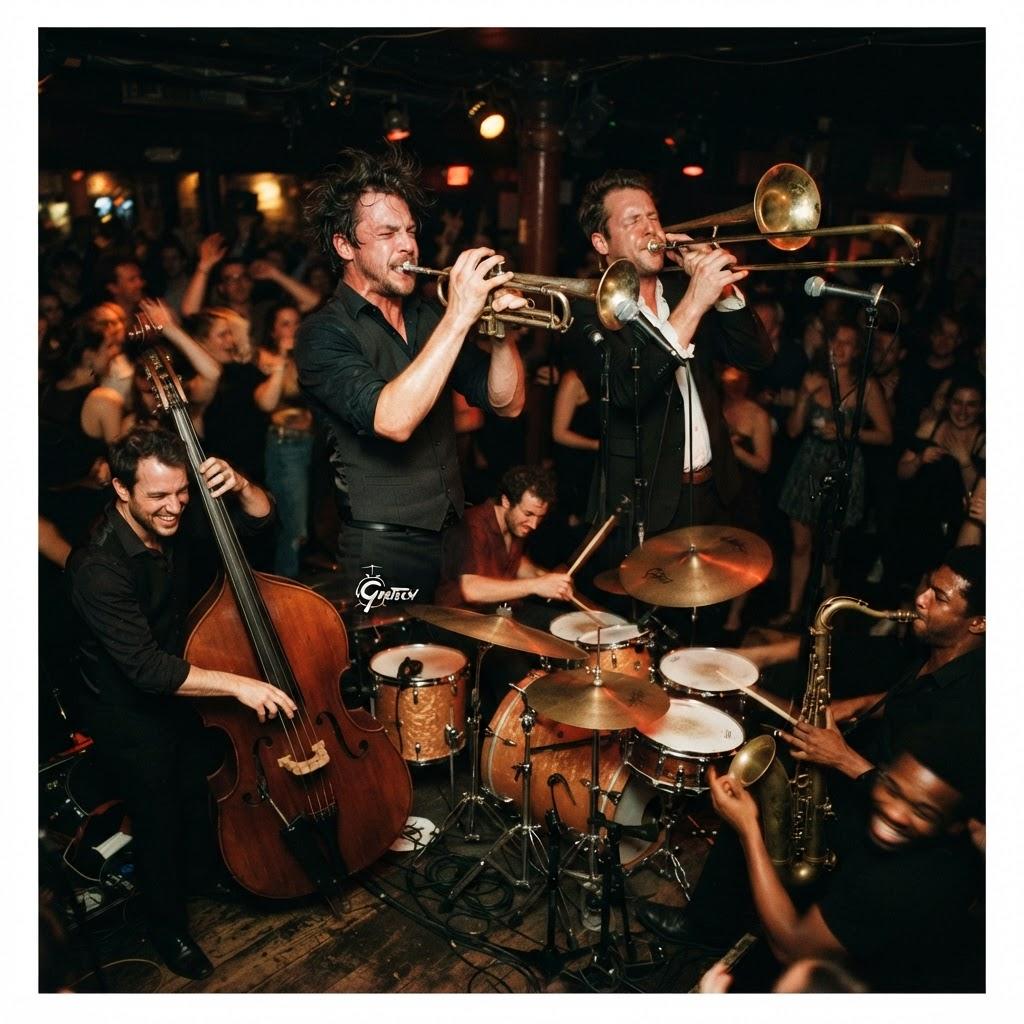
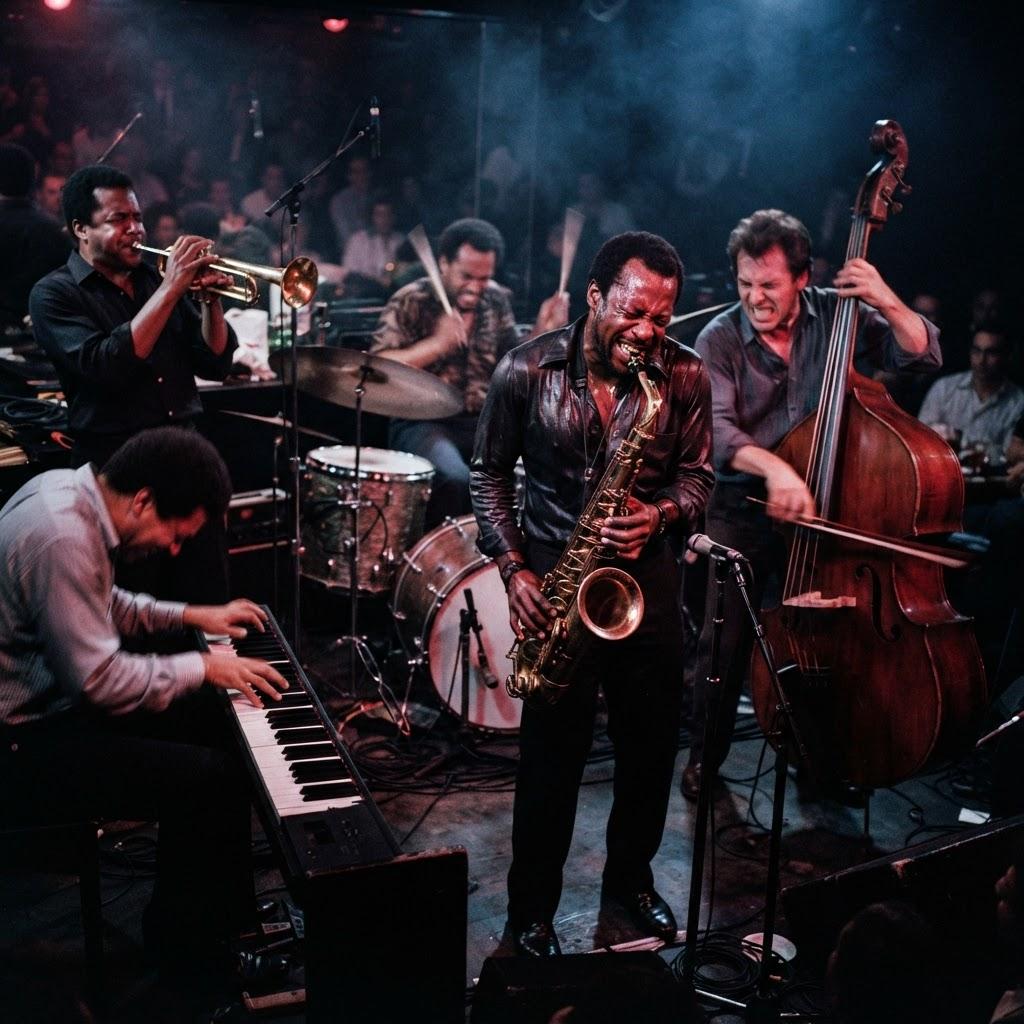
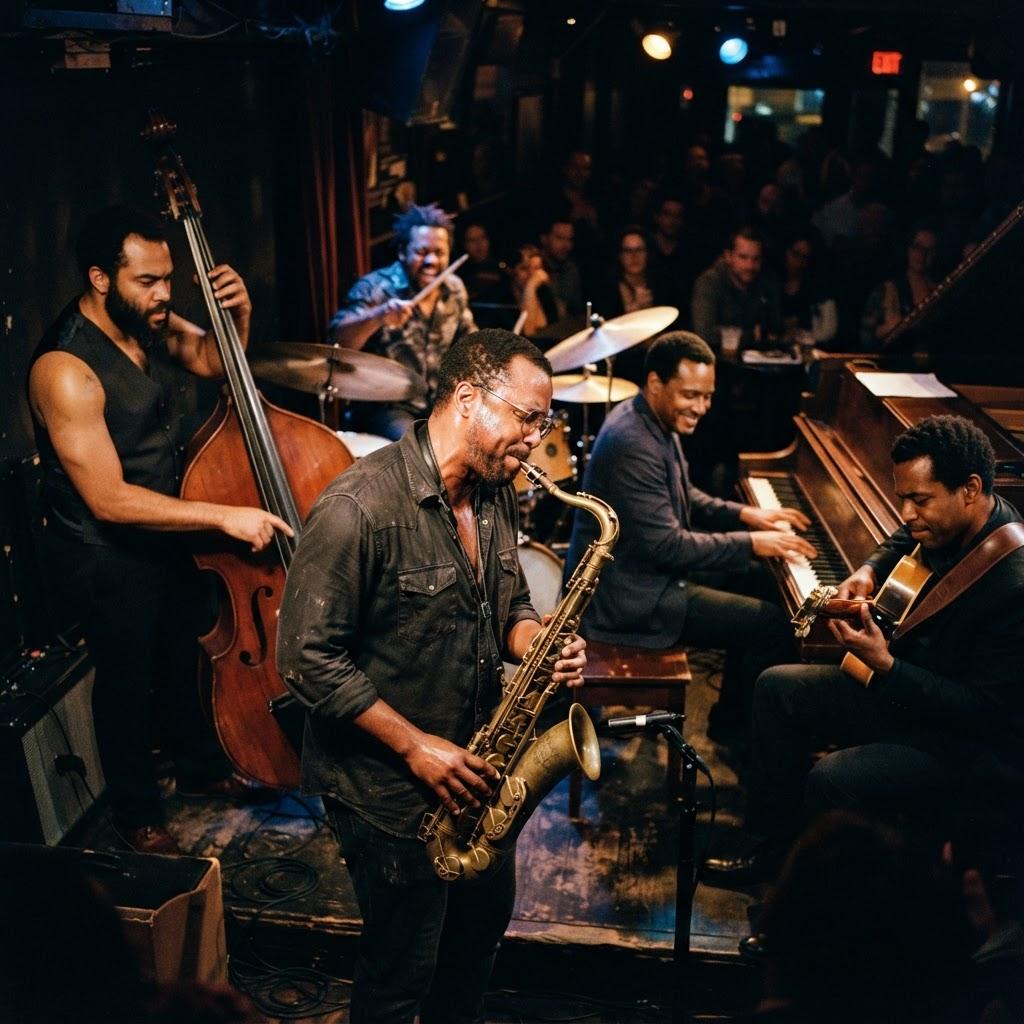
The birth of Bebop was not a polite boardroom meeting; it was a late-night uprising in the after-hours clubs of Harlem. By the early 1940s, the musicians who played in the giant, commercial Big Bands were feeling like glorified robots. They were playing the same arrangements night after night for dancers who only cared about the beat. When the club lights finally dimmed and the crowds went home, these restless virtuosos would retreat to places like Minton’s Playhouse. In these dark, smoky basements, they could finally stop playing for the dancers and start playing for each other. They wanted to stretch the boundaries of what a trumpet or a saxophone could physically do. It was a laboratory of creative defiance where they stripped away the fluff, ignored the expectations of the music industry, and pushed the harmonies to the breaking point. This was a movement fueled by late-night exhaustion, fierce competition, and the burning desire to make music that was as complex and unpredictable as the urban landscape of New York City itself. It was the moment jazz stopped being an entertainment product and started being a serious, high-art discipline.
The Pioneers & Legends
If Bebop were a superhero team, Charlie 'Bird' Parker would be the guy with the speed force. As a saxophonist, he played lines so fast and so intricate that other musicians would physically stop and stare in disbelief. Then you have Dizzy Gillespie, the trumpet-playing ringleader with cheeks that looked like they contained spare sets of lungs. He was the one who added the wit, the showmanship, and the complex harmonic theory that gave Bebop its backbone. And we cannot forget Thelonious Monk, the eccentric genius of the piano who approached every song like he was trying to solve a Rubik’s cube in the dark. He did not care for speed; he cared for silence, jagged rhythms, and notes that sounded like they were falling down a flight of stairs in the most rhythmic way possible. These pioneers were not just musicians; they were sonic architects who viewed music as a vast puzzle. They lived hard, played harder, and held each other to a standard of excellence that basically forced everyone else in the scene to either level up or get out of the kitchen.
Defining Tracks & Era-Defining Moments
If you want to understand the tectonic shift of Bebop, you need to listen to 'Ko-Ko' by Charlie Parker. It is two minutes and change of absolute insanity that sounds like a saxophone trying to escape a burning building. It redefined what an improvisational solo could be—it wasn't just a decoration, it was the entire point of the track. Another monumental moment is 'Salt Peanuts' by Dizzy Gillespie, a song that manages to be both incredibly complex and weirdly hilarious. It features a vocal hook that sounds like a deranged circus act, yet underneath that, the band is navigating chords that would make most musicians cry. Then there is 'Epistrophy' by Thelonious Monk, a track that sounds like a musical question that refuses to be answered. These tracks were not just hits; they were manifestos. They were the musical equivalent of a 'Keep Out' sign for people who just wanted to tap their toes to a safe, predictable melody. They proved that jazz could be intellectually demanding, deeply personal, and terrifyingly fast all at the same time.
Subgenres & Offshoots
Bebop was like a parent who spawned a dozen wildly different children. First, there was Cool Jazz, which was essentially Bebop that took a Xanax and put on a pair of sunglasses. It kept the complex harmonies but slowed the tempo down to a breezy, relaxed pace. Then came Hard Bop, which decided that the intellectual stuff was great, but let's add some grit, some blues, and some gospel flavor to get the people moving again. It was the tough, street-smart cousin of Bebop. You also had Afro-Cuban Jazz, which Dizzy Gillespie helped birth by injecting the complex, multi-layered rhythmic structures of Latin percussion into the Bebop formula. It was a collision of cultures that turned the dance floor into a frenzy of polyrhythms. Each of these offshoots took a piece of the Bebop DNA—the virtuosity, the freedom, the harmonic ambition—and draped it in a different set of clothes. It proved that Bebop was not a dead-end style; it was a foundational language that could be spoken with a hundred different accents.
Cultural Impact & Influence
Bebop was more than just a musical style; it was a whole aesthetic. It birthed the image of the 'jazz hipster'—the beret, the dark glasses, the goatee, and the vocabulary of slang that only the inner circle understood. It was the music of the post-war intellectual movement, signaling a shift where jazz musicians were no longer seen as entertainers but as serious artists. This shift influenced everything from the Beat Generation writers like Jack Kerouac, who tried to capture the rhythmic, improvisational flow of Bebop in his prose, to the fashion of the era, which favored a sharp, understated cool over the loud suits of the swing era. It even changed how people talked about music, introducing a level of snobbery and 'in-the-know' gatekeeping that still exists in music scenes today. Bebop made it cool to be the smartest person in the room, and it gave voice to a generation that felt alienated by the commercial mainstream. It was the original 'anti-pop' movement, proving that you could have a massive cultural impact without ever needing to sell a million copies of a record.
Controversies & Drama
The history of Bebop is essentially a soap opera with better soundtracks. You had the old-guard jazz musicians, who had spent decades mastering the swing style, looking at these young Bebop players and calling them absolute frauds. To the traditionalists, Bebop was a chaotic mess, a crime against melody, and a deliberate attempt to ruin dancing. The Bebop pioneers didn't help matters; they were notoriously prickly and loved to make the 'squares' feel unwelcome. There was constant infighting about whether this music was 'true' jazz or just a pretentious experiment. The backstage drama was legendary—broken instruments, ego-driven musical duels that lasted for hours, and the constant friction between artists who were pushing the envelope and club owners who just wanted people to buy more drinks. It was a scene fueled by fierce rivalries and an uncompromising 'us versus them' mentality. If you didn't 'get' Bebop, you were practically invisible to the people who did, and that kind of elitism created a tension that defined the genre as much as the music itself.
Global Spread & Regional Scenes
Bebop didn't stay locked in Harlem for long. It traveled like a virus, infecting scenes in Paris, Tokyo, and London. In Paris, the expatriate American jazz musicians found a home where their intellectual approach to music was treated with the kind of reverence usually reserved for fine wine and existential philosophy. In Tokyo, the culture of 'jazz kissa'—small, dimly lit coffee shops where people sit in silence and listen to rare jazz records—became a sanctuary for the Bebop sound. These local scenes didn't just copy what was happening in New York; they remixed it. They infused Bebop with local folk melodies, different rhythmic sensibilities, and their own unique cultural histories. It became a global language, a way for musicians in vastly different parts of the world to communicate through the common tongue of complex harmony and improvisation. No matter where you landed, if you stepped into a jazz club in the mid-20th century, there was a good chance you would find someone trying to navigate a Parker-style solo, proving that Bebop was a truly universal language of cool.
The Modern Landscape
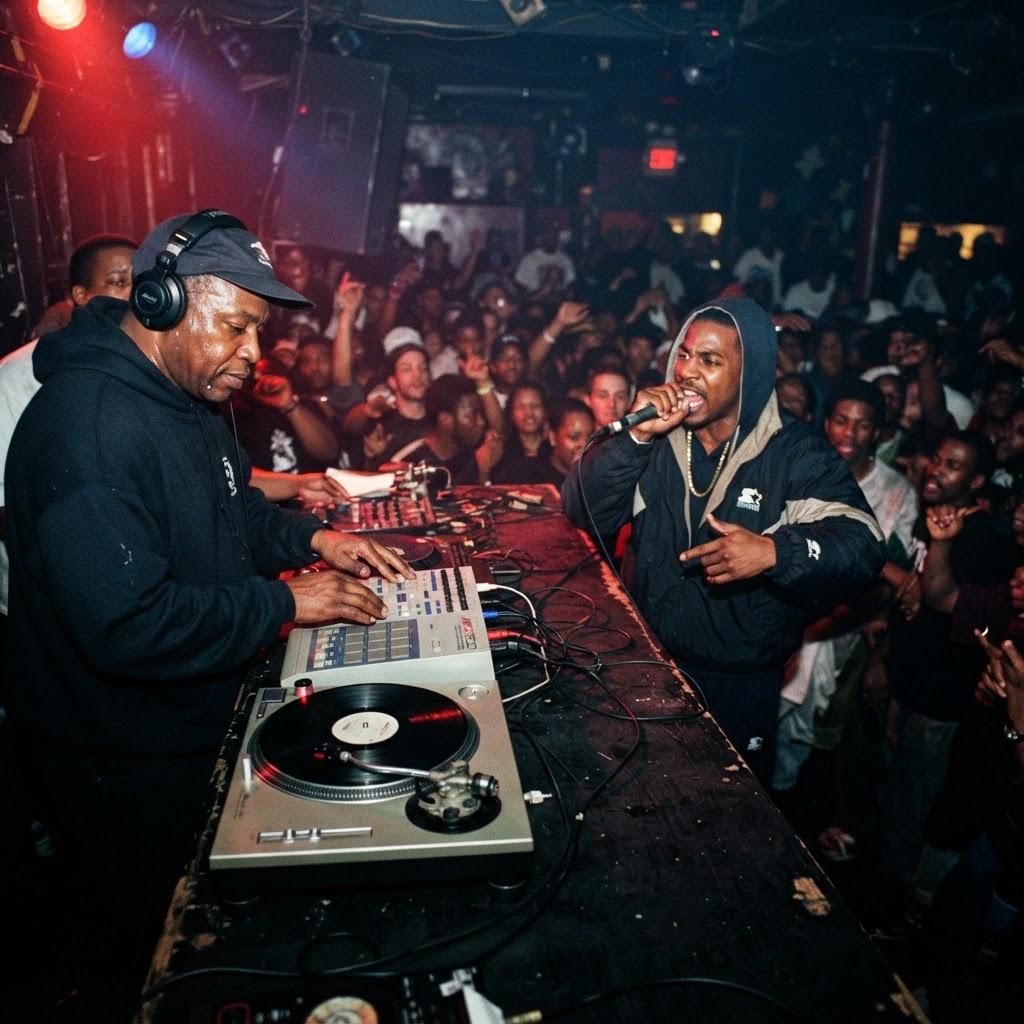
Today, Bebop exists in a fascinating space. It isn't exactly topping the Billboard charts, but its DNA is woven into the fabric of everything from hip-hop sampling to the most experimental contemporary jazz. You hear the echoes of Bebop in the way modern producers chop up samples, looking for that same frantic energy and harmonic tension. It is no longer the new, radical kid on the block; it has become the 'classical' training for anyone who wants to take their instrument seriously. You will still find students in music conservatories obsessively transcribing Charlie Parker solos note for note, trying to unlock the secrets of his speed and logic. While it might not be the soundtrack to the next blockbuster movie, it remains the ultimate litmus test for musicianship. If you can play Bebop, you can play anything. It is the bedrock of jazz education, and its influence persists in the way it continues to challenge every new generation of musicians to push their technical limits and find their own voice in the chaos.
How to Dive In
If you are ready to stop talking and start listening, your first stop must be the 'Charlie Parker: The Savoy 10-Inch LP Collection.' It is the holy scripture of the genre. If that feels too intense, try 'The Amazing Bud Powell, Vol. 1' for a masterclass in how to turn a piano into a percussive, melodic force of nature. For the trumpet fans, Dizzy Gillespie’s 'Groovin' High' is an essential starting point that will introduce you to that signature blend of high-speed technical skill and playful mischief. Do not try to analyze every note on your first listen—that is a trap. Just let the sound wash over you, focus on the sheer energy, and try to follow the melody as it zig-zags through the air. It is going to feel like you are trying to drink from a firehose at first, and that is exactly how it is supposed to feel. Keep listening, keep exploring, and soon enough, that chaotic noise will start to sound like the most logical, beautiful thing you have ever heard. Welcome to the club, grab a drink, and enjoy the ride—this music is a lifetime adventure!