1930s, United States
Swing
Swing is the brass-heavy, high-octane adrenaline shot that turned the 1930s into one giant, non-stop dance party. It is the music equivalent of a sharp suit and a perfectly timed martini, guaranteed to make your feet move whether you want them to or not.
Meet the Genre
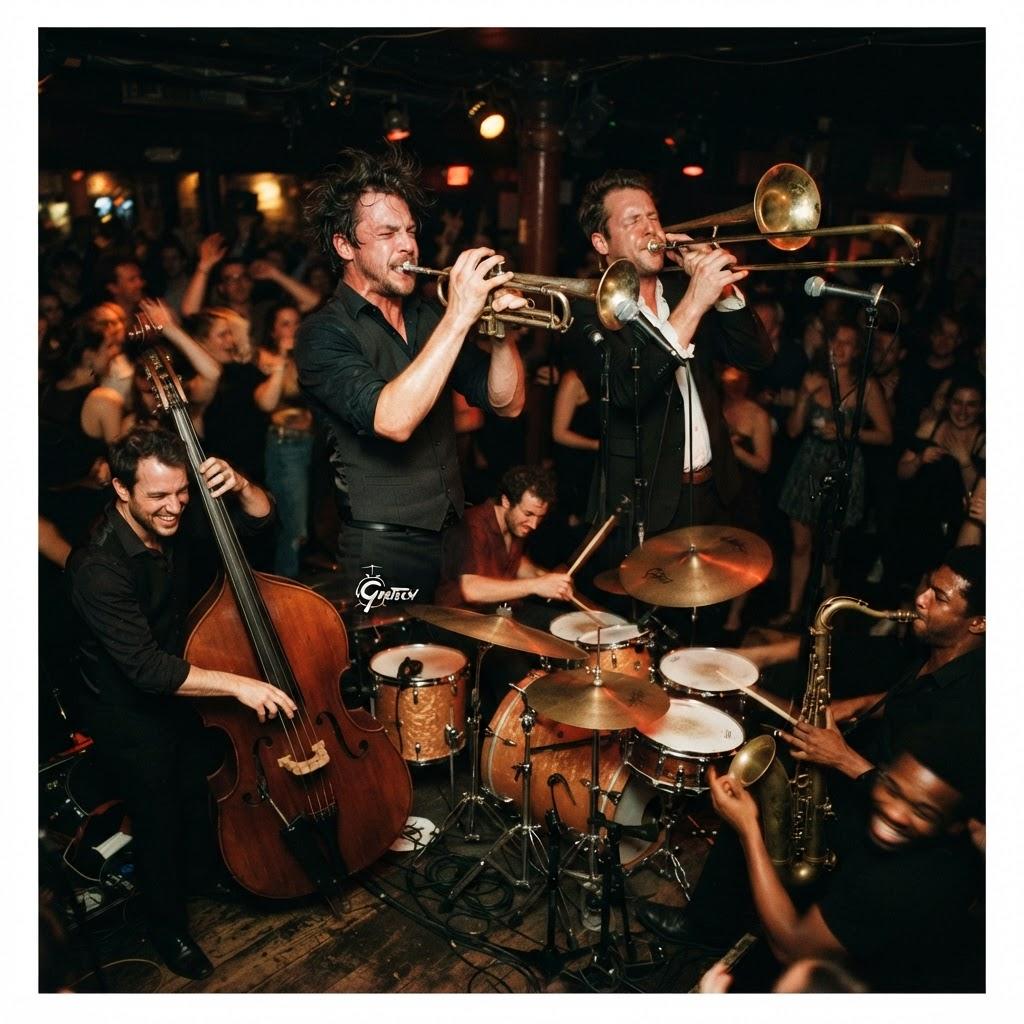
Imagine walking into a room where the air is thick with excitement, the floorboards are creaking under the weight of a thousand spinning couples, and the brass section is screaming loud enough to wake the neighbors three states over. This is the world of Swing. It is not just music; it is an attitude wrapped in a double-breasted tuxedo. Swing is that specific moment when the Great Depression was in full throttle, yet people decided that if they were going to be broke, they were going to look incredible while doing it. It is the sound of optimism wearing a pompadour and holding a brass trumpet. It is high-octane, rhythmically infectious, and carries a swagger that has rarely been matched in the last hundred years. When a swing band hits that sweet spot—that magical, elusive groove where the drums lock in with the walking bass—you don't just listen. You vibrate. It is the musical equivalent of a shot of espresso followed by a triple backflip. If you want to know what it feels like to be the coolest person in the room during the 1930s, you need to crank up a record and let the horns do the talking.
The Sound & Signature Elements
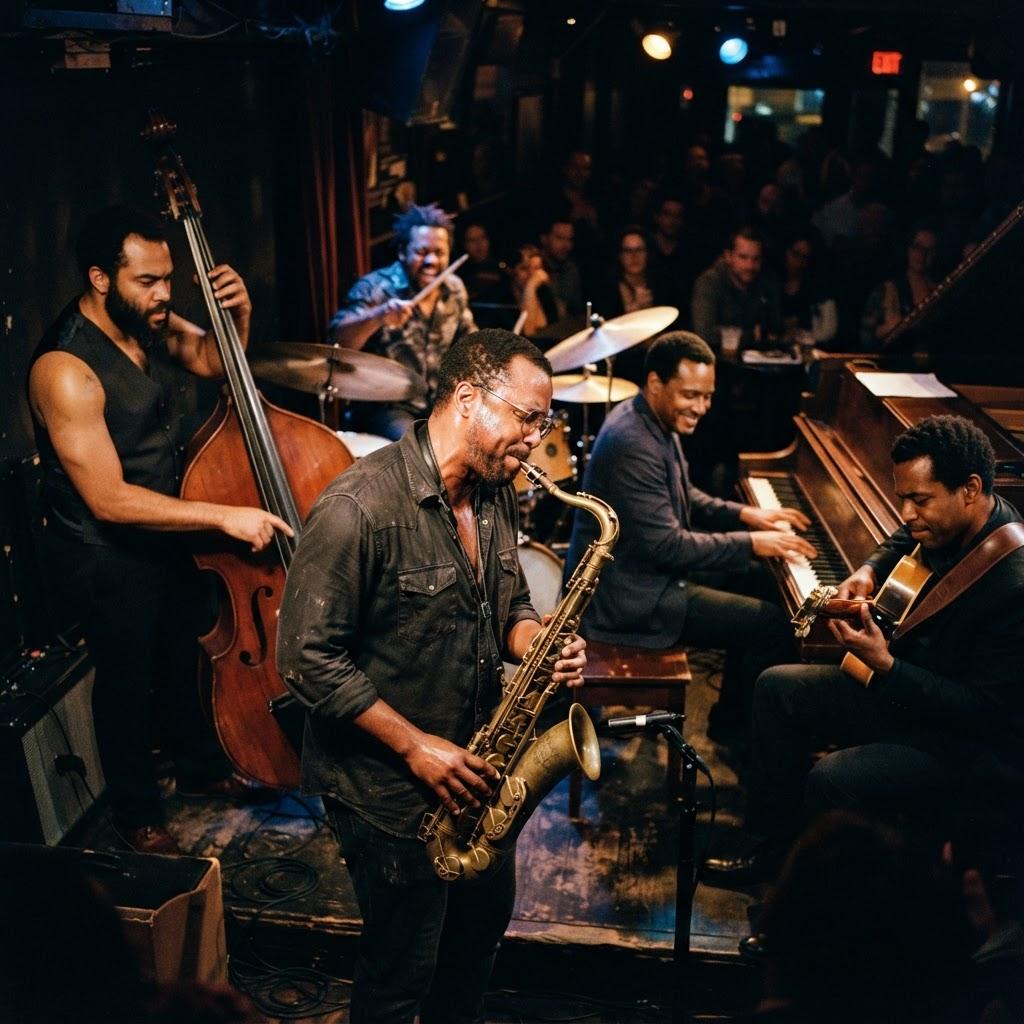
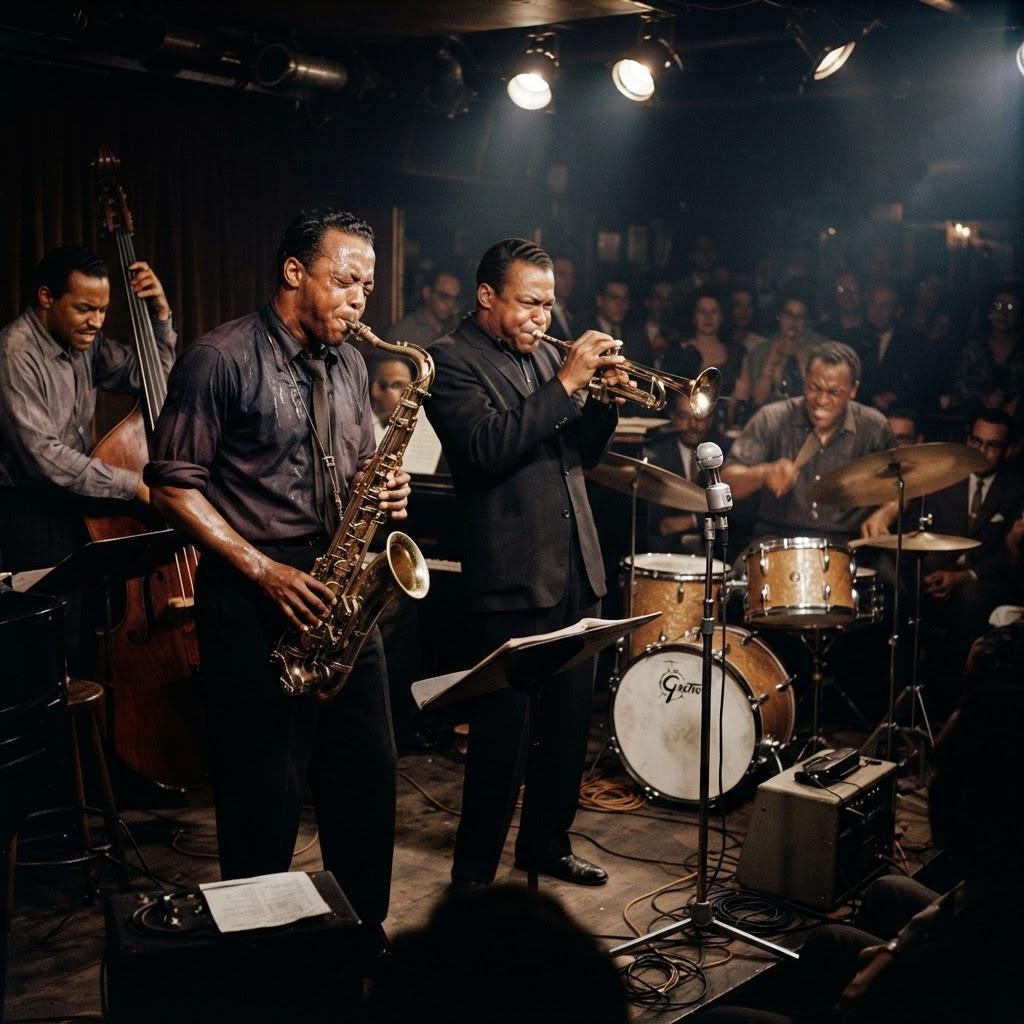
At its core, swing is all about the 'swing' feel, which is a rhythmic trick where eighth notes are played with a slight lopsided limp, making them sound bouncy rather than stiff. Think of it like walking on a bouncy castle instead of a sidewalk; that lift in the rhythm is what makes people want to jitterbug until they collapse. The backbone of this sound is the big band, a massive orchestra that functions like a well-oiled machine. You have the rhythm section—the piano, the upright bass, and the drums—holding down the fort while the brass and reed sections act like a rowdy group of friends shouting back and forth to each other. This is called 'call and response,' a musical conversation where one section asks a question with a melody and the other hits back with a punchy, triumphant answer. The drummer is the unsung hero here, using the ride cymbal to create a shimmering, constant pulse that keeps the whole thing from falling apart. Everything is built for momentum; you have staccato, punchy blasts from the trumpets and smooth, gliding runs from the saxophones, creating a texture that is both precise and wild.
Origins & Birth of the Sound
Swing didn't just appear out of thin air; it crawled out of the smoky basements and hot, crowded dance halls of New York and Kansas City. In the early 1930s, the world was going through a rough patch, and people were desperate for a distraction. While smaller jazz combos were the norm in the 1920s, the big band sound emerged as a solution to the problem of acoustic volume. If you wanted to fill a massive ballroom, you needed more horsepower, so bandleaders started adding rows of trumpets, trombones, and saxophones. It was an evolution of the early New Orleans jazz tradition, refined and polished into a sophisticated machine of joy. Musicians like Duke Ellington and Count Basie began experimenting with more structured arrangements that allowed for individual soloists to shine within a bigger, tighter framework. It was a creative act of defiance. The music was born from the streets, the clubs, and the traveling caravans of musicians who were playing for tips and working for the love of the craft. It turned jazz from a niche art form into the absolute soundtrack of American life, proving that even in the toughest times, you can still find a way to swing.
The Pioneers & Legends
If swing were a royal court, Duke Ellington would be the king. He was a mastermind who treated the big band like a living, breathing canvas, composing complex pieces that sounded like they were improvised on the spot. Then you have Benny Goodman, the 'King of Swing,' whose band was so tight it was said he could drive a rhythm section through a brick wall without missing a beat. Count Basie brought the Kansas City style to the world, favoring a minimalist, blues-driven approach that relied on the power of the groove rather than flashy technicality. You cannot talk about this era without mentioning Ella Fitzgerald, whose voice could swing harder than any trumpet player, or Chick Webb, the drummer who sat at the heart of the Savoy Ballroom and essentially dictated how the entire world danced. These people weren't just musicians; they were gods of the dance floor. They set the standard for what cool sounded like, dressing in sharp suits, keeping their instruments gleaming, and ensuring that no matter what happened on the news, the music would remain an unshakable bastion of style and rhythmic integrity.
Defining Tracks & Era-Defining Moments
Some songs are so embedded in our cultural DNA that you feel like you've known them your entire life before you even hear the first note. Take Benny Goodman’s 'Sing, Sing, Sing.' That drum intro alone is a monolith of musical history—a thundering, tribal beat that lets you know immediately that you are in for a wild ride. Then there is Duke Ellington’s 'Take the A Train,' a track that sounds like the golden age of travel and urban sophistication distilled into four minutes of pure magic. Count Basie’s 'One O’Clock Jump' defines the Kansas City sound, a riff-based masterpiece that feels like it could go on for eternity without ever losing steam. These weren't just pop hits; they were moments of absolute cultural shift. When these bands played, the radio stations carried the music into living rooms across the nation, effectively unifying the country under the banner of the swing beat. Each of these tracks acted as a catalyst, changing the way people walked, talked, and interacted with one another in the dance halls. They were the anthems of an era that believed that if you couldn't be happy, you could at least be rhythmic.
Subgenres & Offshoots
The swing tree has some wild, jagged branches. You have 'Jump Blues,' which took the energy of the big band and shrunk it down for smaller groups, paving the way for the explosive arrival of rock and roll. Think of it as swing’s cooler, meaner little brother who enjoys leather jackets and electric guitars. Then there is 'Gypsy Jazz,' popularized by Django Reinhardt, which took the swing pulse and gave it a distinct, acoustic string-driven flavor that feels like a night in a Parisian cafe. There is also the 'Symphonic Swing' movement, where composers tried to marry the grandeur of a classical orchestra with the improvisational heart of a jazz ensemble. It was a fascinating experiment in genre-blending that produced some truly strange and beautiful results. You also had regional variations, like the 'Territory Bands' in the American Midwest, which developed their own localized sounds based on which clubs they hit and which audiences they played for. Each subgenre took the fundamental 'swing' feel—that lopsided eighth note—and applied it to a completely different context, showing just how versatile this music really is.
Cultural Impact & Influence
Swing did way more than just sell records; it changed the very fabric of society during its reign. It was the original youth culture, forcing the older generation to reckon with a sound that was faster, louder, and undeniably more rebellious than anything they had heard before. The fashion of the time—the zoot suits, the flowing skirts for the dancers, the slicked-back hair—all grew out of the needs of the dance floor. If you were going to perform the Lindy Hop, you needed clothes that moved with you, leading to an aesthetic that looked sharp while mid-air. Beyond style, swing helped bridge gaps in a segregated America. The legendary Savoy Ballroom in Harlem was a place where people of all backgrounds could share the same floor, united by nothing more than the desire to catch the beat. The language of the era, from terms like 'groovy' to 'hip,' came directly from the jazz and swing musicians. The music wasn't just in the background of movies and radio broadcasts; it was the entire atmosphere, dictating how people carried themselves and how they viewed the possibilities of the modern world.
Controversies & Drama
You think modern music has beefs? You clearly haven't looked into the intense rivalry between the 'Big Band' leaders of the 1930s. The 'Battle of the Bands' was a legitimate, high-stakes competition where top-tier orchestras would try to outplay, out-swing, and out-cool each other in front of thousands of people. It was pure gladiatorial combat with brass instruments. There was the constant, nagging friction between the 'purists'—who believed that jazz should remain a high-art form for serious listening—and the 'commercialists,' who wanted to keep the dance halls full and the record sales high. The 'sellout' accusation was the ultimate insult in the industry. Musicians were constantly scrutinized for their choices of material, their band sizes, and even their choices of venue. Backstage drama was just as common as it is today, with band members leaving in a huff, star soloists being scouted by rival leaders, and the constant, crushing pressure of living on the road. The sheer ego required to lead a 20-piece band meant that every gig was a potential powder keg waiting for a single wrong note to light the fuse.
Global Spread & Regional Scenes
While it may have started in the humid, bustling clubs of the United States, swing was a global traveler. By the mid-1930s, the sound had crossed the Atlantic, finding a home in the dance halls of London, Paris, and beyond. In Europe, the genre was often adopted by musicians who added their own local flavor, like the aforementioned Gypsy Jazz movement which became a pillar of European music culture. Every major city developed its own 'swing scene' with local bands that mimicked the American masters while injecting their own regional sensibilities. You could walk into a club in Tokyo, a cellar in Berlin, or a ballroom in Sydney and hear the same driving, infectious rhythms that were shaking the rafters in New York. It was one of the first times in history that a musical trend traveled so quickly and so effectively. Local scenes adopted the dance styles as well, creating a universal language of movement. Even through the hardships of the war years, swing remained a beacon of connection, proving that the urge to move to a great brass hook is a fundamental human trait that knows no borders.
The Modern Landscape
Today, swing isn't just sitting in a museum; it is alive and kicking, constantly finding new ways to insert itself into the current zeitgeist. We are seeing a major revival in 'Neo-Swing' and the resurgence of vintage dance communities that treat the Lindy Hop like a sacred discipline. You can find massive swing dance competitions and parties in every major metropolitan area around the world, filled with people who weren't even born when the original big bands were ruling the airwaves. Thanks to social media, clips of incredible swing dancers are constantly going viral, showing that the sheer joy of the music is timeless. Contemporary producers often borrow the swing aesthetic, layering those punchy horn stabs into modern pop and electronic tracks to give them an instant boost of energy. It has become a sort of 'gold standard' for high-energy music. Whether it is an underground club playing original 78-rpm records or a modern band trying to capture that same brassy magic in a studio, the pulse of swing continues to beat strong. It is not going anywhere because, let's be honest, you can't improve on a sound that makes people feel this alive.
How to Dive In
If you are ready to let the brass take control, you need a map. Start with the essentials: pick up a copy of Benny Goodman’s 'The Famous 1938 Carnegie Hall Jazz Concert'—it is arguably the best entry point for understanding the power of a live big band. Then, dive into Duke Ellington’s 'The Blanton-Webster Band' recordings, which are the absolute peak of sophisticated, swinging orchestration. If you want the pure, bluesy grit of the Kansas City sound, look for anything by Count Basie from the late 1930s, especially the 'Decca' recordings. For a vocal perspective, Ella Fitzgerald is your North Star; her 'Songbook' series might be massive, but it will teach you everything you need to know about phrasing and timing. Don't stop there, though. Go to a local swing dance night. Even if you have two left feet, just being in the room while the music is happening is a life-changing experience. The energy is infectious, the community is welcoming, and the sound is guaranteed to put a massive smile on your face. So, stop reading, find a playlist, turn the volume up, and for heaven's sake, start moving your feet before the rhythm passes you by!