1940s, Kentucky, USA
Bluegrass
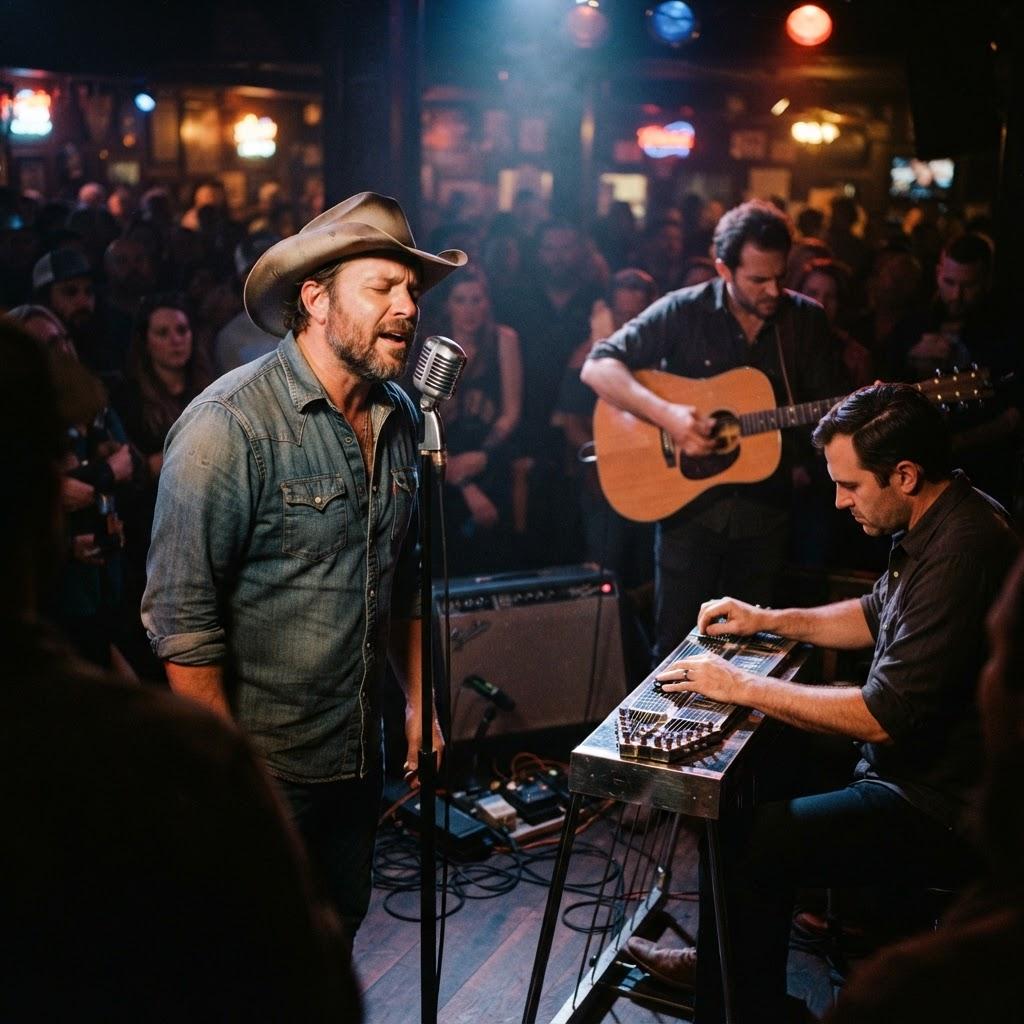
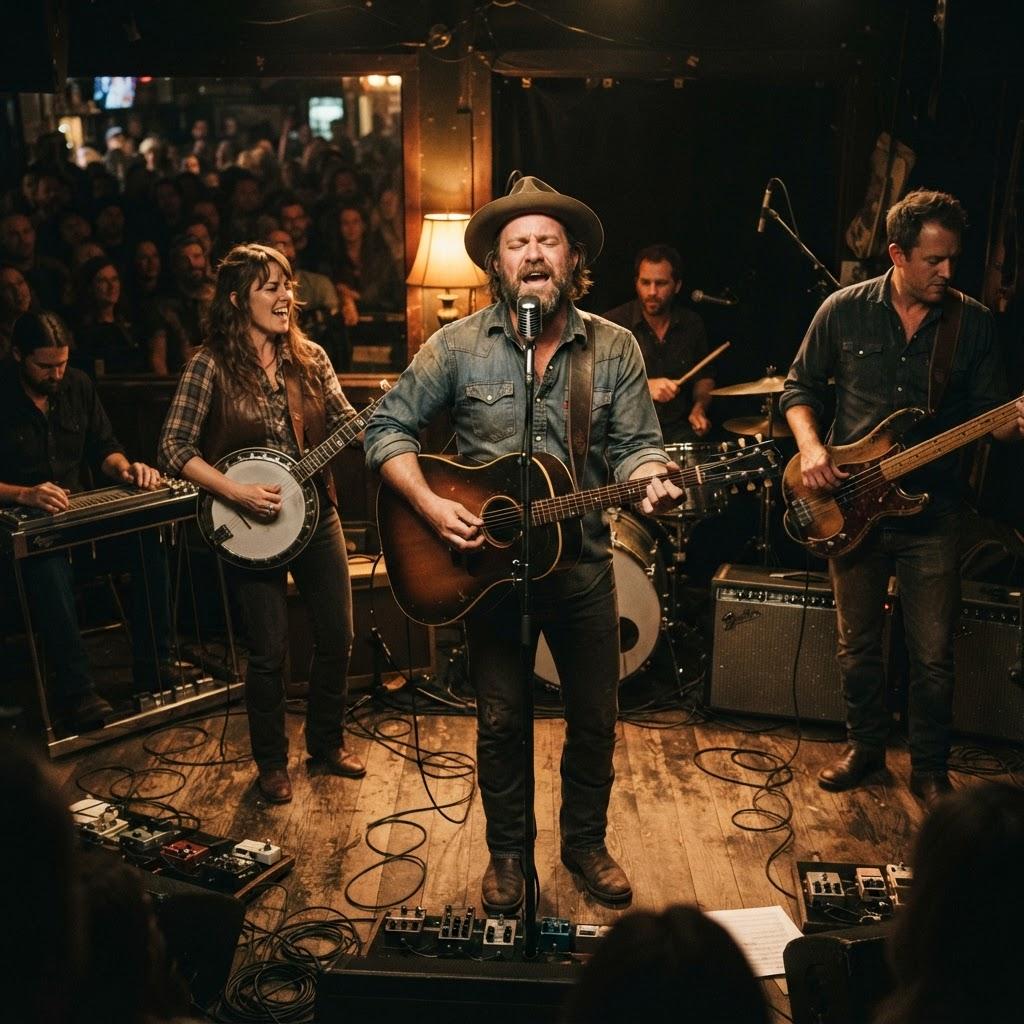
Bluegrass is the high-octane, acoustic adrenaline rush of the Appalachian mountains that makes your feet stomp and your heart race. It is a virtuosic blend of lightning-fast banjo picking and heart-wrenching harmonies that proves you do not need electricity to set a stage on fire.
Meet the Genre
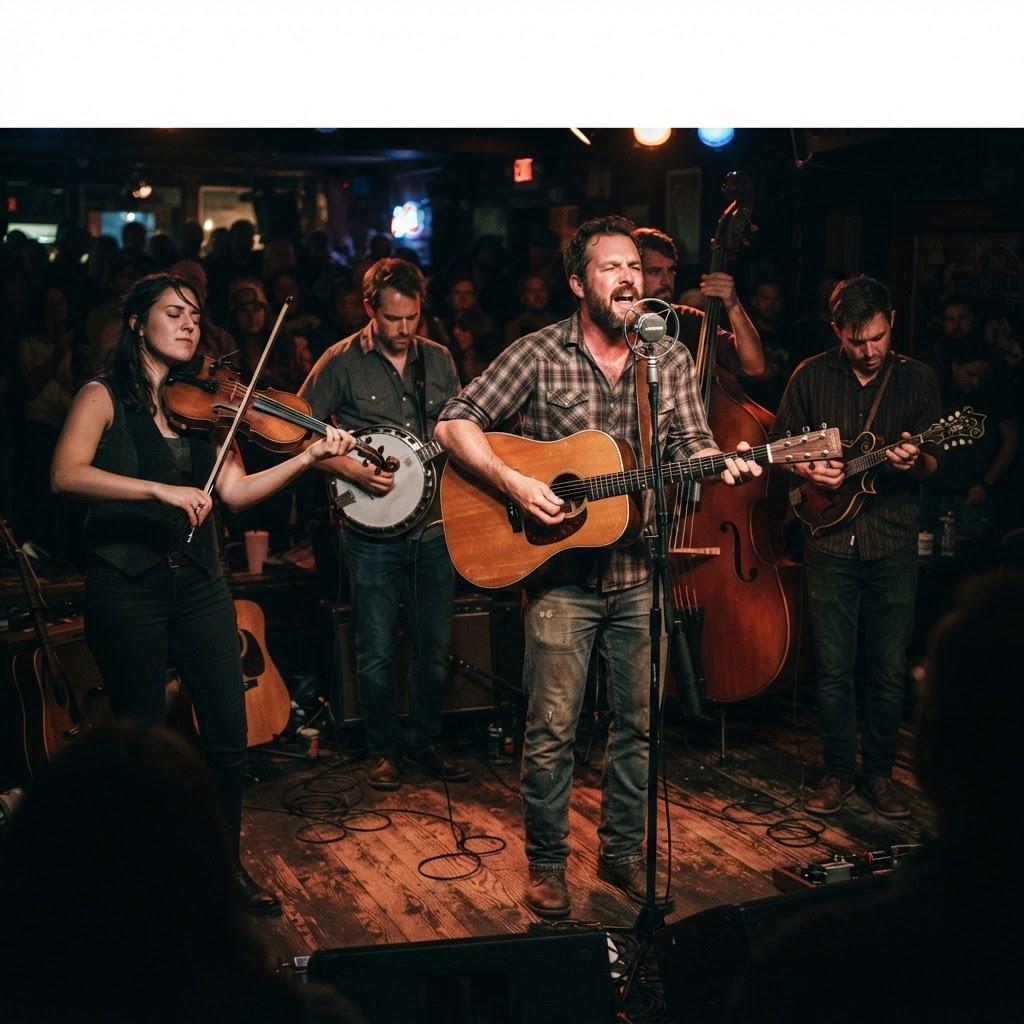
Imagine you are sitting on a porch in the middle of a Kentucky thunderstorm. Suddenly, five people materialize, all dressed in sharp suits that look like they were stolen from a 1940s funeral director, and they proceed to play instruments with the intensity of a pack of wild wolves chasing a moonbeam. That is Bluegrass. It is not just music; it is an athletic event performed while wearing a tie. There is a specific emotional fingerprint here that sits somewhere between 'I am incredibly lonely' and 'I am about to run a marathon on a unicycle.' It is the sound of pure, unadulterated virtuosity masquerading as humble mountain folk music. If you think acoustic music is just quiet dudes whispering into microphones, Bluegrass is here to slap that notion out of your hand with a banjo pick. It is fast, it is precise, and it is unapologetically loud without ever touching an amplifier. Prepare yourself for a genre that treats every song like it is the last one they will ever get to play before the world ends.
The Sound & Signature Elements
The engine under the hood of a Bluegrass band is something musicians call 'The Chop.' Imagine a mandolin player hitting the strings so hard it sounds like a snare drum being punched by a heavyweight boxer on the off-beat. That is the rhythmic heartbeat of the whole operation. The tempos are often breakneck—we are talking about songs played at speeds that would give a normal drummer a heart attack—thanks to the rhythmic drive of the upright bass, which serves as the anchor holding the chaos together. Then you have the banjo, usually played in a 'Scruggs style'—named after Earl Scruggs—which involves using thumb and finger picks to pluck multiple strings simultaneously, creating a cascading, twinkling fountain of sound that makes a standard acoustic guitar look like it is napping. The harmony style, often called the 'high lonesome sound,' involves voices soaring into the rafters, slightly straining to capture that feeling of profound Appalachian longing. It is a intricate puzzle of instrumental solos where every musician takes a turn showing off while the others provide the most tasteful background rhythm you have ever heard.
Origins & Birth of the Sound
Bluegrass was not some corporate boardroom creation; it was born in the humid, dusty air of the Appalachian mountains during a time when the world was changing faster than a hiccup. After World War II, rural musicians were looking for a way to make their traditional 'old-time' music—which was usually just a fiddle and maybe a guitar—feel more urgent and exciting for the dance halls. Bill Monroe, the man officially known as the father of the genre, basically decided that folk music needed a dose of the blues and a shot of jazz adrenaline. He took the basic building blocks of Southern string music and turned up the tension. It was an act of creative defiance against the slow, weeping ballads of the past. He wanted a sound that could cut through the noise of a crowded, rowdy tavern. By assembling a band that featured an upright bass, a mandolin, a banjo, a fiddle, and a guitar, he created a wall of acoustic sound that was revolutionary. It was the original DIY music scene, fueled by a desire to keep the mountain spirits alive while dragging the musical technique into a new, complex era.
The Pioneers & Legends
To talk about Bluegrass royalty, you have to bow down to the Trinity: Bill Monroe, Lester Flatt, and Earl Scruggs. Bill Monroe was the architect, a man who played the mandolin with such percussive aggression that he redefined what the instrument could do. Then there were Flatt and Scruggs, who were like the Lennon and McCartney of the banjo world. Earl Scruggs was basically a wizard who figured out that if you use three fingers on the banjo instead of two, you could turn the instrument into a machine-gun of melody. When he joined forces with the smooth-voiced Lester Flatt, they created the template for every band that followed. But we cannot forget the 'Queen of Bluegrass,' Hazel Dickens, who brought a raw, political edge to the music, singing about the struggles of coal miners and the working class with a voice that could crack granite. These legends didn't just play notes; they codified a language of improvisation and ensemble interaction that is still being spoken by teenagers and octogenarians alike across the globe today. They were the ones who proved that you could be a virtuoso without losing your soul.
Defining Tracks & Era-Defining Moments
If you want to understand the tectonic plates shifting, you need to listen to 'Foggy Mountain Breakdown.' It is the track that officially made the banjo the coolest instrument on the planet. It is fast, it is frantic, and it is technically impossible for mere mortals, yet it remains the gold standard for every banjo player's career. Then there is 'Blue Moon of Kentucky,' which started as a slow waltz and was famously transformed into a fast, romping Bluegrass anthem by Elvis Presley, which is perhaps the weirdest and most glorious pivot point in music history. These songs matter because they didn't just stay in the mountains; they bled into pop culture, film soundtracks, and the burgeoning rock and roll movement. When Flatt and Scruggs recorded the theme for 'The Beverly Hillbillies,' it brought the high-speed, finger-picking madness of Bluegrass into living rooms across America, proving that this music wasn't just for rural porches—it was for everyone who loved a good, frantic melody. These tracks are the foundation of the house, and they still sound as fresh and dangerous as the day they were tracked.
Subgenres & Offshoots
Just like any family, Bluegrass has some weird cousins and rebellious offshoots. You have 'Progressive Bluegrass,' which is what happens when you give a Bluegrass musician a copy of a Pink Floyd record and tell them to go wild. This branch incorporates jazz-fusion chords, complex time signatures that feel like they are folding in on themselves, and lyrics that move far away from the traditional themes of heartbreak and coal mines. Then there is 'Newgrass,' which emerged in the 70s as a way to say, 'Hey, we like the banjo, but what if we played it over a rock-influenced groove?' It’s the sonic equivalent of wearing overalls with tie-dye. You also have 'Gospel Bluegrass,' which is essentially a religious experience delivered at a breakneck speed, and 'Americana,' which acts as the catch-all umbrella for people who are scared of calling their music Bluegrass but still use a mandolin. Each of these offshoots takes the core DNA—that speed and that acoustic interplay—and stretches it until it either snaps or becomes something entirely new and fascinating.
Cultural Impact & Influence
Bluegrass is the stealth bomber of musical influence. It is hidden everywhere. Ever notice the frantic, driving rhythm in a modern pop song? That is often just a sped-up ghost of a Bluegrass rhythm section. The genre gave us the idea of the 'jam band,' where the priority shifts from the song itself to the improvised soloing that happens in the middle. Beyond the music, Bluegrass defined the aesthetic of the 'authentic' American traveler—the thrift-store chic, the denim, and the work shirts that eventually became the uniform of the entire hipster movement. It also shaped language, embedding terms like 'high lonesome' and 'breakdown' into the American lexicon. Film, too, has been obsessed with it; look at the movie 'O Brother, Where Art Thou?,' which single-handedly introduced a new generation to the sounds of the Appalachians and turned the soundtrack into a massive commercial hit. Bluegrass taught the world that you don't need a massive, expensive pedalboard to make music that sounds massive; you just need a wooden box with some strings and the audacity to pick them really, really fast.
Controversies & Drama
Ah, the purist wars. Nothing gets a Bluegrass fan more fired up than the word 'electric.' For years, the community was split down the middle by the 'purist vs. progressive' divide. You had the traditionalists who believed that if a microphone was too large, it was practically a cardinal sin. If you brought a drummer onto the stage, you weren't playing Bluegrass—you were playing 'folk-rock,' which, in some circles, was a dirty word. The beefs were legendary. Old-school legends would often openly snub younger players who tried to incorporate drums or electric instruments, calling them 'sellouts' who were killing the soul of the mountain tradition. It was dramatic, it was messy, and it was hilarious to watch from the outside. These wars were essentially a generational battle over who owned the definition of 'authentic.' Even today, you will find online forums where grown adults argue for hours over whether a resonator guitar constitutes 'real' instrumentation. It is a level of petty drama that makes daytime soap operas look like a calm afternoon in the park.
Global Spread & Regional Scenes
Here is the funny thing: Bluegrass is absolutely massive in Japan. You heard that right. In the 1960s, a fascination with American roots culture took hold in Japan, and it turns out, the discipline, precision, and technical focus required for Bluegrass resonated deeply with the Japanese musical sensibility. Today, there are Bluegrass festivals in Tokyo that would put some American towns to shame. Then you have the European scene, particularly in the Czech Republic, where the music became a symbol of freedom during the era of the Iron Curtain. Musicians would gather in secret to play these tunes, treating the songs as anthems of personal liberty. It is a global phenomenon where the 'region' is no longer just the American South, but rather anywhere someone feels the need to pick a five-string banjo at 150 BPM. Whether it is in a basement in Prague or a festival stage in Osaka, the locals bring their own flavors, mixing it with local folk traditions to create a sound that is both perfectly recognizable and distinctively international.
The Modern Landscape
Today, Bluegrass is having a total renaissance, and it is largely thanks to the fact that musicians have finally stopped fighting about whether it is okay to have a drummer. The modern landscape is a wild, thriving ecosystem. You have bands that tour in vans and play to sold-out arenas, blending Bluegrass with hip-hop, electronic music, and soul. It is all over TikTok now, too, with young virtuosos posting 'banjo covers' of chart-topping pop songs, racking up millions of views because, let’s face it, everything sounds better when there is a mandolin solo involved. The music has moved from the stuffy, traditional halls into the festivals of the indie-rock circuit. It is less about preserving the past in amber and more about using the tools of the past to build the music of the future. The barrier to entry has lowered, the snobbery is fading, and the sheer technical level of new players is rising at an alarming rate. It is the golden age of Bluegrass, and the music is more vibrant and experimental than it has ever been.
How to Dive In
Ready to lose your mind to the banjo? Start by grabbing a copy of 'The Essential Bill Monroe' to hear where the lightning first struck. Next, throw on 'Foggy Mountain Jamboree' by Flatt and Scruggs, which is essentially the Bible of the genre; if you don't find yourself tapping your foot within the first ten seconds, you might want to check your pulse. For a more modern flavor, spin up anything by Billy Strings, who is currently dragging the genre into a psychedelic, high-energy future that will make you feel like you are at a rock show. Listen to how the instruments weave around each other, try to spot the 'chop' on the mandolin, and just enjoy the ride. Don't worry about the history lessons or the purist rules—just find a playlist called 'Bluegrass Jams' and let the speed wash over you. It is music meant to be played loud, fast, and with a grin on your face. Once you get hooked on that high-speed acoustic drive, you will never go back to the slow stuff. So go ahead, find your favorite pair of boots, get them scuffed up, and hit play.