1990s, Southern California, USA
Nu Metal
Nu Metal is the angsty, baggy-pants-wearing cousin of heavy metal that decided to hang out with hip-hop and DJ turntables. It is a gloriously chaotic collision of crunching riffs and raw emotion that defined the angst of an entire generation.
Meet the Genre
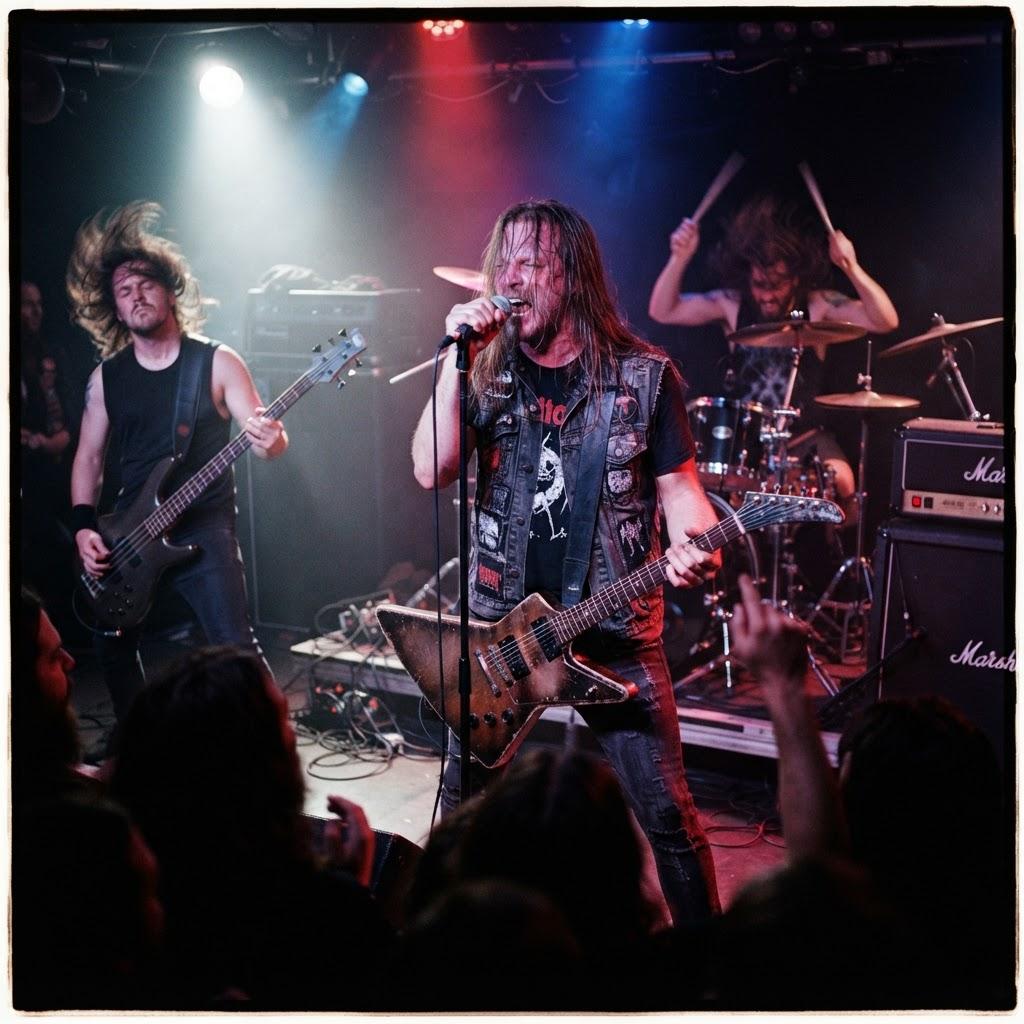
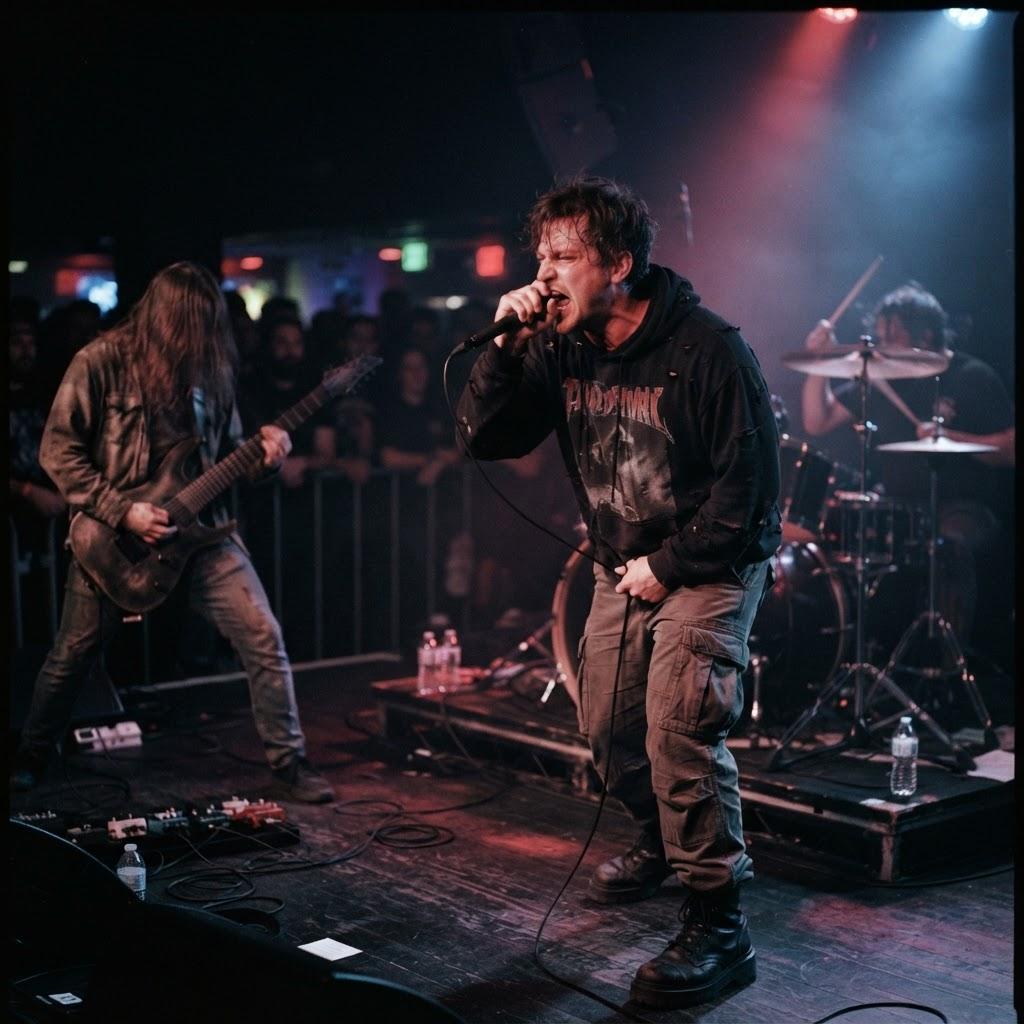
Picture a room full of teenagers in 1998, wearing shorts so baggy they constitute a tripping hazard, sporting spiked hair or frosted tips, and feeling a level of existential dread that only a high school social hierarchy can produce. That is the spiritual home of Nu Metal. It is not just music; it is a sonic Molotov cocktail thrown at the staid, leather-clad purists of traditional heavy metal. Nu Metal arrived like a loud, obnoxious, and deeply misunderstood middle child who decided that if metal was going to survive the 90s, it needed to stop being obsessed with dragons and start obsessing over therapy bills. It is raw, it is twitchy, and it is unapologetically messy. This is the genre that took the heavy, down-tuned guitar riffs of the past and decided they sounded better paired with a hip-hop beat and a DJ scratching records in the background. It is the sound of feeling completely lost in a suburban sprawl, screaming your lungs out because you don't know who else to talk to. If you are ready for a wall of sound that feels like a head-butt from a friend you just met at a skate park, you are in the right place.
The Sound & Signature Elements
To understand the mechanics of Nu Metal, you have to look past the chains and the dreadlocks. The core of this sound is the seven-string guitar. By adding that extra bottom string, guitarists were able to go way lower in pitch, creating that thick, mud-sludge sound that defines the genre. This is what we call 'drop-tuning'—literally loosening the strings so they flap like a tired rubber band but resonate with the force of a tectonic plate shifting. Then, you layer in the rhythmic syncopation, which is just a fancy way of saying the guitar riffs don't follow the standard beat—they hiccup, stop, and start in ways that make your head bob whether you want it to or not. Add in a turntable scratch or a weird electronic sample from a synthesizer, and you have the Nu Metal formula. The vocals are a weird, wonderful hybrid of rhythmic rapping and absolute, vein-popping screaming, known as 'fry screaming.' It is basically a high-energy vocal workout that sounds like someone yelling their deepest secrets into a megaphone while stuck in traffic on the 405 freeway.
Origins & Birth of the Sound
Nu Metal didn't crawl out of a fancy recording studio in Hollywood; it kicked down the doors of dusty garages in places like Bakersfield, California. Bakersfield was the perfect incubator for this strange beast—a place where the heat was oppressive and the boredom of suburban life was suffocating. Bands like Korn were essentially grinding metal against the industrial machinery of the early 90s. They were listening to everything from the funky, slap-bass heavy rock of Faith No More to the aggressive, street-smart energy of N.W.A. There was no grand design to create a new genre; it was just a group of kids who hated the hair metal of the 80s as much as they hated the dour, slow-moving sadness of grunge. They wanted something that hit as hard as Pantera but moved with the swagger of a rap record. They scavenged for gear, cranked their amps to the point of literal combustion, and started blending these disparate worlds. It was the sound of cultural appropriation in the purest sense—a chaotic, unrefined grab-bag of influences that somehow clicked into something that felt entirely new and dangerously catchy.
The Pioneers & Legends
If you look at the Mount Rushmore of Nu Metal, you are going to see a lot of aggressive hair and probably a few Adidas tracksuits. Korn is the undeniable architect of the basement-dwelling, angst-fueled sound. Their self-titled debut album is essentially the Bible of the genre, introducing that distinct, clicking bass sound and the chilling, whispered-to-screaming vocal style of Jonathan Davis. Then there is Deftones, who brought a dreamy, cinematic atmosphere to the chaos, proving that you could be heavy without being a meathead. Slipknot took the whole thing to a logical, terrifying extreme—nine guys in masks smashing kegs with baseball bats while making music that sounded like a blender filled with scrap metal. Meanwhile, Limp Bizkit turned the genre into a party, bringing a cocky, frat-boy energy that made the entire world either love them or want to see them fall off a stage. These bands didn't just play music; they became avatars for a generation, giving voice to the frustration and boredom of being a latchkey kid in the digital dawn of the late 20th century.
Defining Tracks & Era-Defining Moments
Certain songs in the Nu Metal canon act like time machines. If you play the opening riff of Korn's 'Blind,' you aren't just listening to a track; you are feeling the exact moment the genre officially arrived. The way the band pauses right before the explosion of sound is a masterclass in tension. Then you have Limp Bizkit’s 'Break Stuff,' which is the definitive anthem for anyone who has ever had a bad day, a bad year, or a bad life. It is the musical equivalent of punching a wall, and everyone knows the chorus by heart even if they pretend they don't. Linkin Park’s 'In the End' was the moment the genre reached the stratosphere, showing that Nu Metal could be melodic, introspective, and even sad. That piano intro leading into Chester Bennington’s iconic vocal performance proved that there was real heart beating beneath the distorted guitars. These tracks were not just hits; they were cultural flashpoints that appeared on every soundtrack, in every bedroom, and in the background of every extreme sports montage that hit the airwaves during the early 2000s.
Subgenres & Offshoots
Nu Metal eventually started to split off into weird little corners because the genre was so broad that it could contain both the artsy-fartsy experimentalism of bands like System of a Down and the straightforward party vibes of bands like P.O.D. You have the 'Rap-Metal' contingent, which leaned heavily into the hip-hop side of things, focusing on the flow and the attitude. Then there is the 'Art-Nu Metal' wing, populated by bands like Incubus in their early days or Deftones, who toyed with 'shoegaze'—a style of music that focuses on lush, layered textures and dreamy feedback. You also had the 'Aggro-Industrial' offshoot, which involved more synthesizers and programmed drums, sounding like a robot uprising at a construction site. Some bands leaned into the gothic, occult imagery, while others embraced a more 'positive' or 'nu-metal-lite' sound that saw massive airplay on mainstream rock radio. It was a weird family tree where the brothers were screaming at each other, but they all still went home to the same record store to buy the same baggy pants on a Tuesday afternoon.
Cultural Impact & Influence
You cannot look at the turn of the millennium without seeing the massive, neon-tinted thumbprint of Nu Metal. Fashion-wise, it was the golden age of the wallet chain, the trucker hat, and the oversized basketball jersey. It was a look that prioritized utility and discomfort, but it was omnipresent. Beyond the clothes, the genre fundamentally changed how rock music was produced. Every record label suddenly wanted their own 'Nu Metal' band, leading to a frenzy of signings that brought the sound into the mainstream consciousness. It permeated film soundtracks, the rise of the X-Games, and the burgeoning world of professional wrestling, where every tough guy needed a distorted guitar riff to introduce him to the ring. Even linguistically, the genre's tendency to embrace raw, unfiltered emotion helped normalize the conversation around mental health in rock music. It gave kids permission to be messy and loud, and it showed the music industry that you didn't have to be a classically trained virtuoso to reach millions—you just had to be authentic to your own specific brand of chaos.
Controversies & Drama
If you put five bands in a room and tell them they are all 'Nu Metal,' you are going to get at least three fights. For years, there was this massive, unspoken war between the purists—who thought Nu Metal was a disgrace to the sanctity of 'real' metal—and the fans who just wanted to have a good time. Bands were constantly accused of selling out, mostly because their songs started getting played on the radio or their music videos appeared on TRL alongside Britney Spears. There were also the constant 'beefs' between lead singers, which usually played out in magazines or during awkward festival backstage interviews. Slipknot, for instance, had a healthy disdain for the more commercial bands in the scene, while other acts tried to distance themselves from the label 'Nu Metal' entirely, claiming they were just 'experimental rock.' It was the kind of petty, high-stakes drama that makes for fantastic tabloid fodder, but it also masked the fact that everyone involved was essentially chasing the same high of being the loudest, most relevant kid on the block.
Global Spread & Regional Scenes
While Southern California was the epicenter, the fire of Nu Metal spread across the globe with terrifying speed. In Brazil, Sepultura took their thrash metal roots and injected them with the heavy, rhythmic sensibilities of the genre, creating a sound that was both earth-shattering and deeply tribal. In Japan, bands like Dir En Grey were incorporating the visual drama of their local scene with the aggressive textures of the American style, creating a high-fashion, high-octane version of the genre. In Europe, the scene took on a colder, more industrial edge, with bands across Germany and Scandinavia blending electronic music with the classic Nu Metal structure. The beauty of the genre was that it was modular; you could take the core 'riff plus rap' architecture and overlay it with any local flavor. Whether it was the street grit of London or the high-production polish of the Japanese charts, Nu Metal found a way to translate its message of suburban alienation into a universal language of rhythmic head-banging and cathartic screaming.
The Modern Landscape
Fast forward to today, and you might think Nu Metal was just a fever dream that evaporated in 2005. But you would be wrong. It is currently enjoying a massive, ironic, and strangely sincere renaissance. Thanks to the power of social media and the cyclical nature of fashion, the 'Y2K' aesthetic is back, and with it, the sound of the seven-string guitar. You see young artists on TikTok incorporating those classic, stuttering riffs into their hyper-pop and trap songs. There is a whole new generation discovering the discographies of Linkin Park and Deftones, treating those old records like unearthed treasures. It is no longer just a 'guilty pleasure'; it is being reclaimed as a legitimate, influential movement. Even the older bands are playing to sold-out arenas again, as people crave that specific, visceral energy that modern, over-produced music often lacks. It turns out that when you combine heavy guitars with a sense of pure, unfiltered vulnerability, that message never really goes out of style—it just waits for the next generation to put on the baggy pants.
How to Dive In
If you want to experience the Nu Metal lifestyle, you don't need a wallet chain, but you do need an open mind and a decent pair of headphones. Start your journey with Korn’s self-titled album to understand where the mud was first kicked up. Then, move on to Linkin Park’s 'Hybrid Theory' for the ultimate masterclass in how to combine melody and aggression. If you want something a bit more atmospheric, spin Deftones’ 'White Pony'—it is the kind of record that makes you feel like you are floating in space while gravity pulls on your feet. For the party vibe, throw on Limp Bizkit’s 'Significant Other,' and if you want to see how far the madness can go, dive into Slipknot’s self-titled record. Don't worry about trying to 'get' the genre at first; just let the rhythm take over and embrace the noise. It is music meant to be played loud, in a car with the windows down, or in a room where you can jump around without hitting a lamp. Turn the volume to ten, ignore the critics, and get ready to thrash.