Late 1920s
Delta Blues
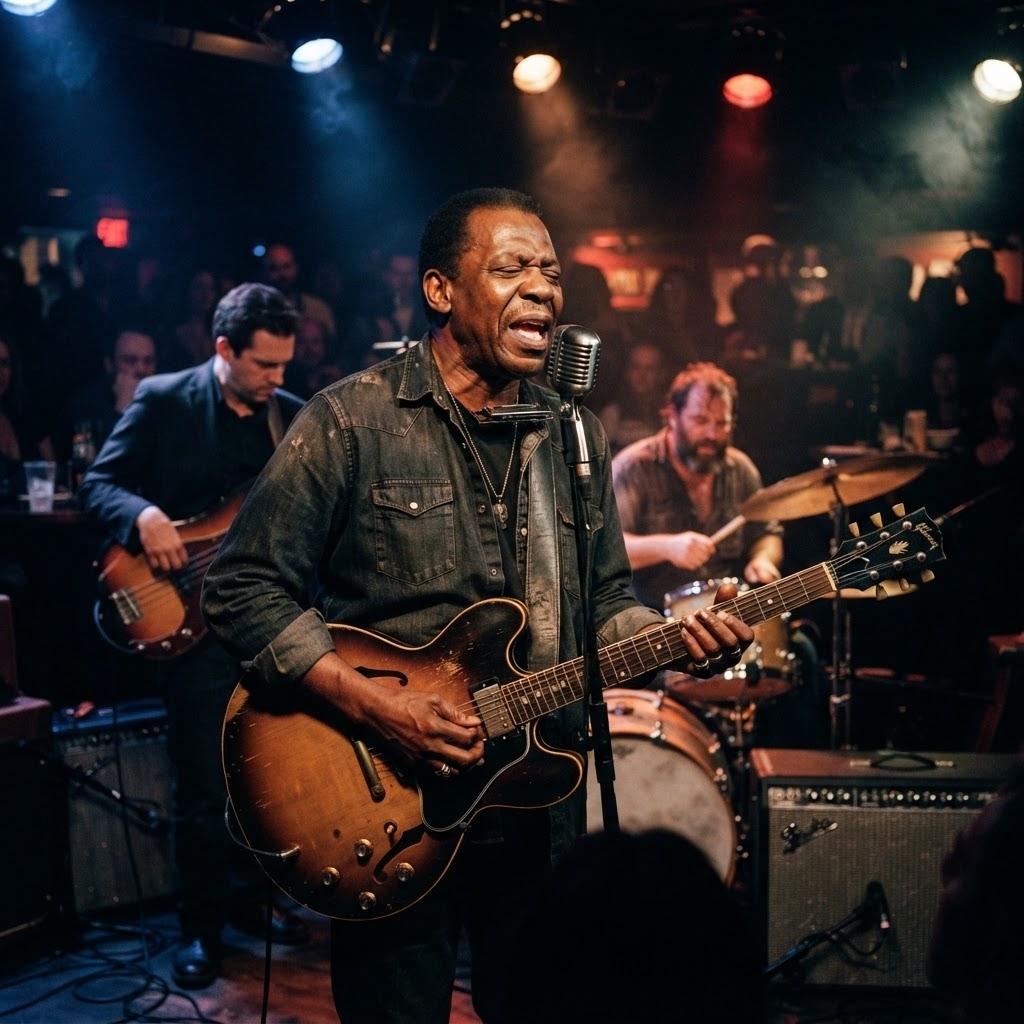
Delta Blues is the musical equivalent of a ghost story told on a porch at midnight with a glass of moonshine. It is the raw, gritty, and profoundly human foundation upon which nearly all modern rock and roll was built.
Meet the Genre
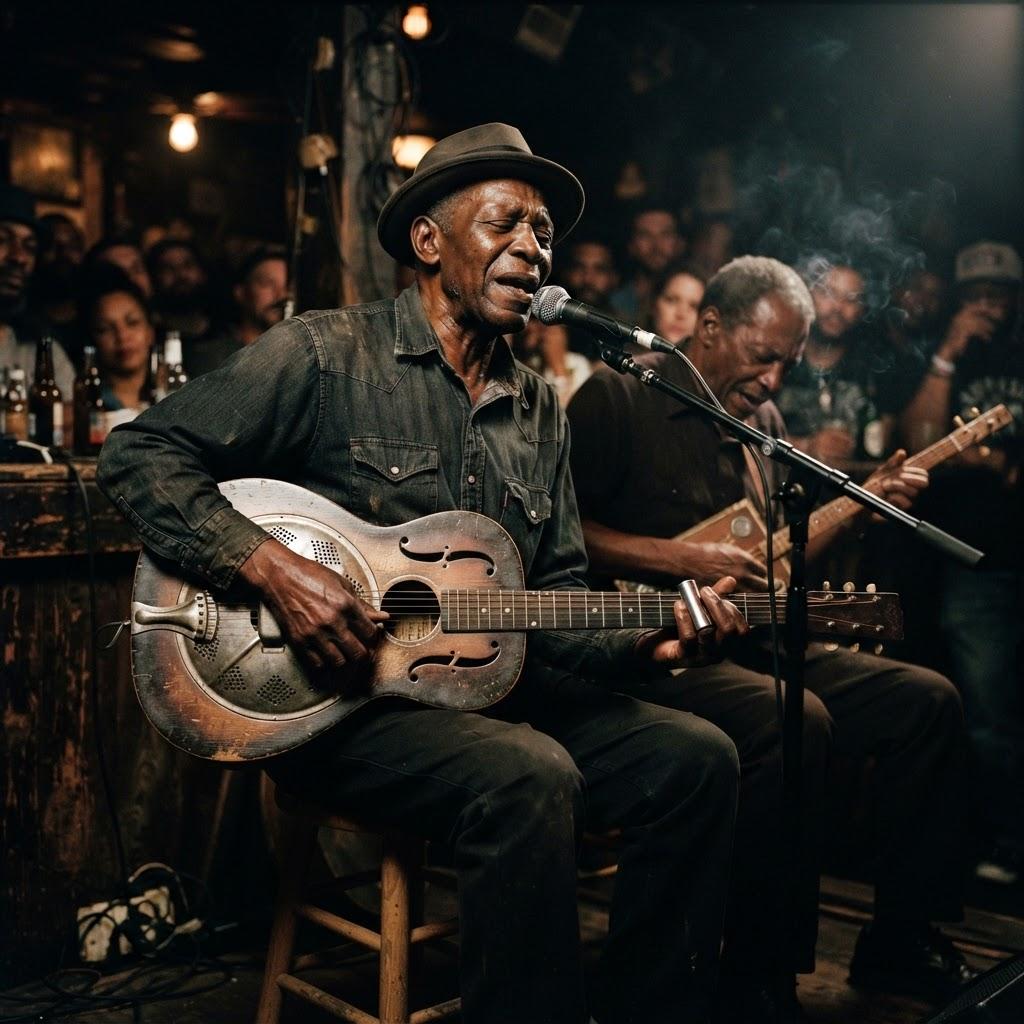
Picture a humid, sweltering night in the Mississippi Delta. You are sitting on a creaky wooden porch, the air is thick enough to chew, and the only thing keeping the silence from crushing you is a lone man with a battered acoustic guitar. This is the birthplace of the Delta Blues, a genre that is less of a musical style and more of a localized exorcism. It is raw, unapologetic, and smells vaguely of river water and tobacco. Delta Blues is the sound of a human being baring their soul because they have absolutely nothing left to lose. It doesn't care about being pretty; it cares about being true. It is the grit under the fingernails of music history, a jagged, beautiful mess that demands you lean in close just to hear the secrets being whispered. If you want pristine, auto-tuned perfection, you are in the wrong neighborhood, but if you want to understand why music can make a grown person weep, you have officially arrived at the front door of the blues.
The Sound & Signature Elements
At the heart of the Delta Blues is the 'slide' guitar technique, which sounds exactly like it sounds: sliding a metal or glass object—often the neck of a broken whiskey bottle—up and down the guitar strings to create a wailing, vocal-like cry. It mimics the human voice, sliding between notes instead of jumping between them like a stiff piano. The rhythm is often 'syncopated,' which is a fancy way of saying it doesn't just march in a straight line but kind of stumbles forward with a cool, limping swagger. You will hear the 12-bar blues structure, which is essentially a three-line lyric pattern that repeats, but the rules are suggestions at best. The tempos are rarely consistent; the guitarist might speed up when they get excited or slow down to emphasize a particularly nasty bit of heartbreak. Think of it like a conversation between a friend and their guitar where the guitar is answering back with sass. It is sparse, stripped-back, and relies entirely on the 'feel' rather than technical perfection.
Origins & Birth of the Sound
The Delta Blues didn't emerge in fancy concert halls; it crawled out of the fertile, muddy ground of the Mississippi Delta between the late 19th century and the 1920s. This was a place of backbreaking labor, Jim Crow laws, and profound struggle. Music was the only real escape, born from a fusion of African rhythmic traditions, haunting field hollers shouted by workers in the sun, and the spirituals sung in churches on Sunday mornings. It was a clandestine rebellion. You had wandering musicians traveling from one juke joint—those legendary, makeshift bars often hosted in private homes or wooden shacks—to the next, trading songs for a few coins or a plate of food. There was no internet or radio to standardize the style, so every player developed their own unique 'voice' on the instrument. It was a communal act of survival, a way to process the crushing weight of reality by turning it into a rhythm that forced your feet to tap whether you wanted them to or not.
The Pioneers & Legends
To talk about Delta Blues is to talk about the mythical titans who wielded guitars like battle axes. Take Charley Patton, for instance, the so-called 'Father of the Delta Blues,' a man with a voice so loud it could clear a room and a stage presence that bordered on demonic. Then there is Robert Johnson, the man who supposedly sold his soul at the crossroads for the ability to play like an angel from hell. His music is complex, fluid, and so haunting that it sounds like it was recorded in an alleyway by a ghost. We cannot forget Son House, who played with such ferocious intensity that it felt like he was physically wrestling the devil out of his instrument. These weren't just musicians; they were chroniclers of the human condition. They carried their entire worlds in their guitar cases, traveling by train or by foot, spreading their stories across the South. Their fingerprints are on every single chord played by rock icons decades later; they are the architects of the modern musical cathedral.
Defining Tracks & Era-Defining Moments
If you want to know where the heart of the genre beats, you listen to Robert Johnson’s 'Cross Road Blues.' It is a masterclass in tension, with a sliding guitar line that sounds like a storm rolling across the horizon. Another monumental moment is Son House’s 'Death Letter Blues,' a track so incredibly raw and devastating that it feels like you are intruding on a funeral. These songs aren't just tracks; they are sonic landscapes. The 1930s recording sessions in places like San Antonio and Dallas were the 'Big Bang' moments for this music, capturing sounds that were previously only available if you happened to be standing in the right dusty shack at 2:00 AM. These recordings are the reason we have any record of this art form at all, frozen in time like flies in amber. They are the benchmarks of cool, the blueprints for everyone from Muddy Waters to the Rolling Stones, and they remain just as spine-tingling today as they were when the wax was first cut.
Subgenres & Offshoots
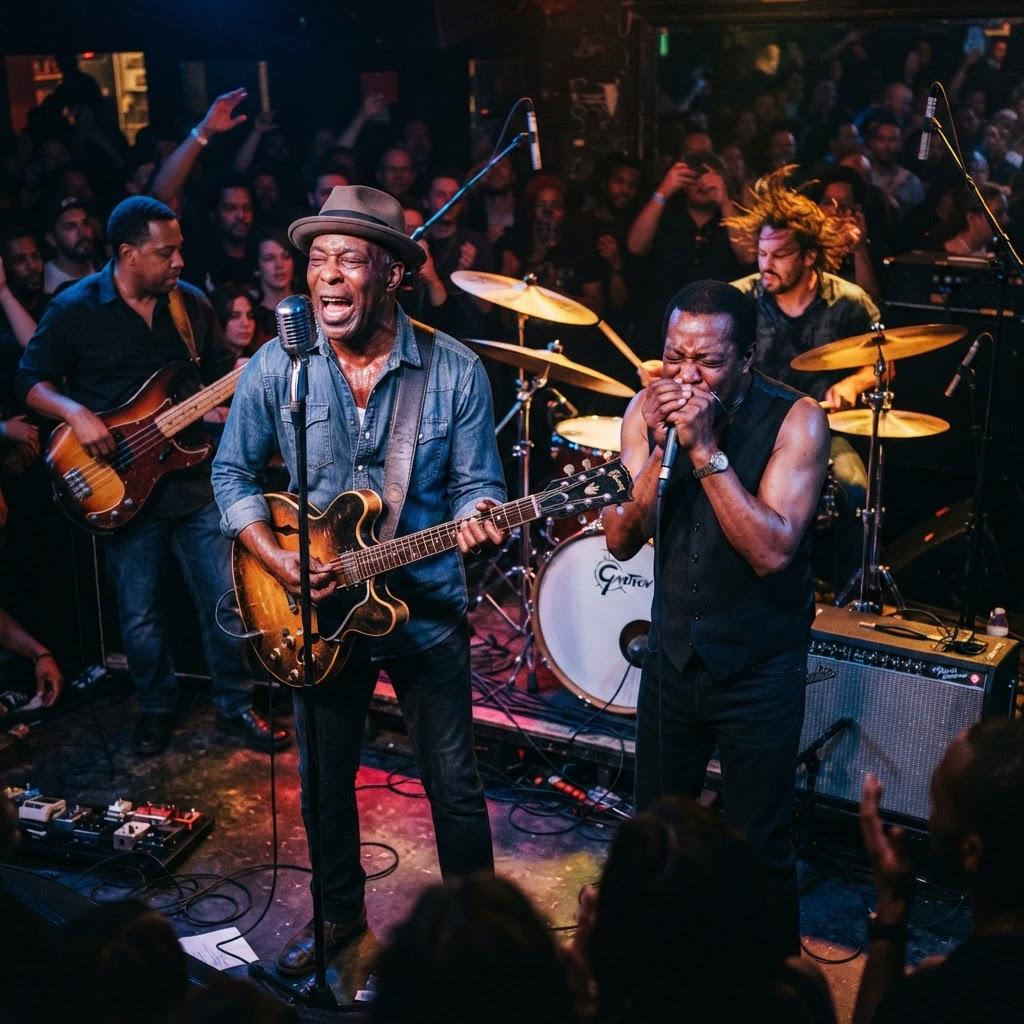
The Delta Blues is the parent of a very loud, very rowdy family. As people migrated north toward Chicago, the acoustic instruments got plugged into amplifiers, transforming the acoustic wail into the 'Chicago Blues' roar. Then there is the 'Piedmont Blues,' which moved out of the Delta and into the Carolinas, trading the heavy, aggressive slide for a delicate, finger-picked style that sounds almost like a piano playing on a guitar. You have got the 'Hill Country Blues,' which is all about the groove—a relentless, hypnotic, one-chord trance that makes you feel like you are walking through a swamp in a fever dream. And let's not forget the 'Boogie-Woogie' influence, which added a driving piano rhythm that basically invented rock and roll's chassis. Every branch of this family tree kept the original spirit but added a new flavor, proving that the blues is not a static antique, but a living, breathing organism that refuses to stop evolving.
Cultural Impact & Influence
It is impossible to overstate the impact of the Delta Blues; it is the silent engine room of global music. Without these dusty records, the British Invasion of the 1960s would have been nothing more than a bunch of guys in suits singing about tea. Artists like the Rolling Stones, Led Zeppelin, and Eric Clapton were essentially obsessive students of Delta masters, taking these raw sounds and amplifying them for stadiums. The blues also fundamentally changed how we talk about struggle; the lyrical themes of loss, desire, and longing became the standard vocabulary for popular music for the next hundred years. Beyond the music, the imagery—the crossroads, the devil, the midnight train—has become a permanent fixture in our pop culture, from movies like 'O Brother, Where Art Thou?' to countless novels and comic books. The blues taught the world that there is dignity in pain and that the most powerful thing you can do is stand up and sing about it.
Controversies & Drama
Believe it or not, the blues had its own version of a blood feud. For years, there was a war between the 'purists' who thought the guitar should never be touched by electricity and the 'innovators' who wanted to plug in and blow the roof off the clubs. The purists looked at the electrified Chicago scene as a betrayal, a 'sellout' move that traded the soul of the Delta for the flashiness of a distorted amplifier. Then there were the constant debates over song ownership. Since these tunes were passed down orally like folk legends, nobody really knew who wrote what. You would have artists accusing each other of stealing riffs, melodies, and lyrics, leading to decades of lawsuits and bitter grudges that would make a modern rap beef look like a polite tea party. It was messy, it was petty, and it was absolutely vital to the growth of the genre. If nobody was fighting over the music, that would mean nobody actually cared, right?
Global Spread & Regional Scenes
Once the Delta Blues hit the road, it started picking up local accents like a traveler hitting different regions of a country. In Chicago, it got urbanized, turning into a high-octane city sound that matched the pace of the industrial workforce. In Memphis, it blended with country and gospel to create something smoother, leading eventually to the birth of rock and roll. Even across the Atlantic, the sound found a second home. In the UK, musicians were so obsessed with these rare, imported records that they built an entire movement dedicated to recreating the 'authentic' American sound. It became a global language. A kid in London, a worker in Detroit, and a farmer in Mississippi were all suddenly speaking the same musical dialect. This spread didn't dilute the genre; instead, it added layers of nuance, showing that while the Delta was the birthplace, the blues itself was a universal truth that resonated with anyone who had ever felt a little down and out.
The Modern Landscape
Today, the Delta Blues is doing just fine, thank you very much. It has moved beyond just being a historical footnote and has become the permanent bedrock of the musical landscape. While you might not hear a pure 1930s-style acoustic blues song hitting number one on the TikTok charts every day, you hear the DNA of the blues in everything from modern indie rock to hip-hop production. We see a new generation of musicians picking up resonator guitars and returning to the source, stripping back the digital noise to find that original, human-to-human connection. It is not 'trendy' in the way that pop music is, but that is actually its greatest strength. The blues is the reliable foundation that keeps the house from falling down. Whenever music gets too plastic, too manufactured, or too distant from reality, there is always a new crop of artists ready to reach back into the mud and pull out a blues lick to remind us all what it actually feels like to be alive.
How to Dive In
So, you are ready to get your hands dirty? Start by finding a quiet spot and putting on 'The Centennial Collection' by Robert Johnson—it is basically the holy text of the genre. If you want to feel the raw power of the transition to electricity, look up Muddy Waters' early Chess Records sides; they are the definition of cool. For the truly adventurous, dig into Son House’s recordings; they will change the way you hear a guitar. Don't worry about understanding every single historical detail right away; just let the music do the work. Listen for the space between the notes, the way the singer catches their breath, and the way the guitar cries out in frustration and joy. Treat it like a conversation with an old, grizzled storyteller who has seen it all. Turn the lights down low, get comfortable, and hit play. Once you get hooked on the grit, there is no going back, and honestly, you won't want to. Welcome to the Delta—the water is fine, and it is deep.