1940s-1950s, Chicago, Illinois
Chicago Blues
Chicago Blues is the gritty, electrified heartbeat of the windy city that took the acoustic sorrow of the Delta and strapped it to a roaring amplifier. It is the sound of late-night catharsis, neon-lit gin joints, and the kind of electric guitar swagger that essentially invented rock and roll.
Meet the Genre
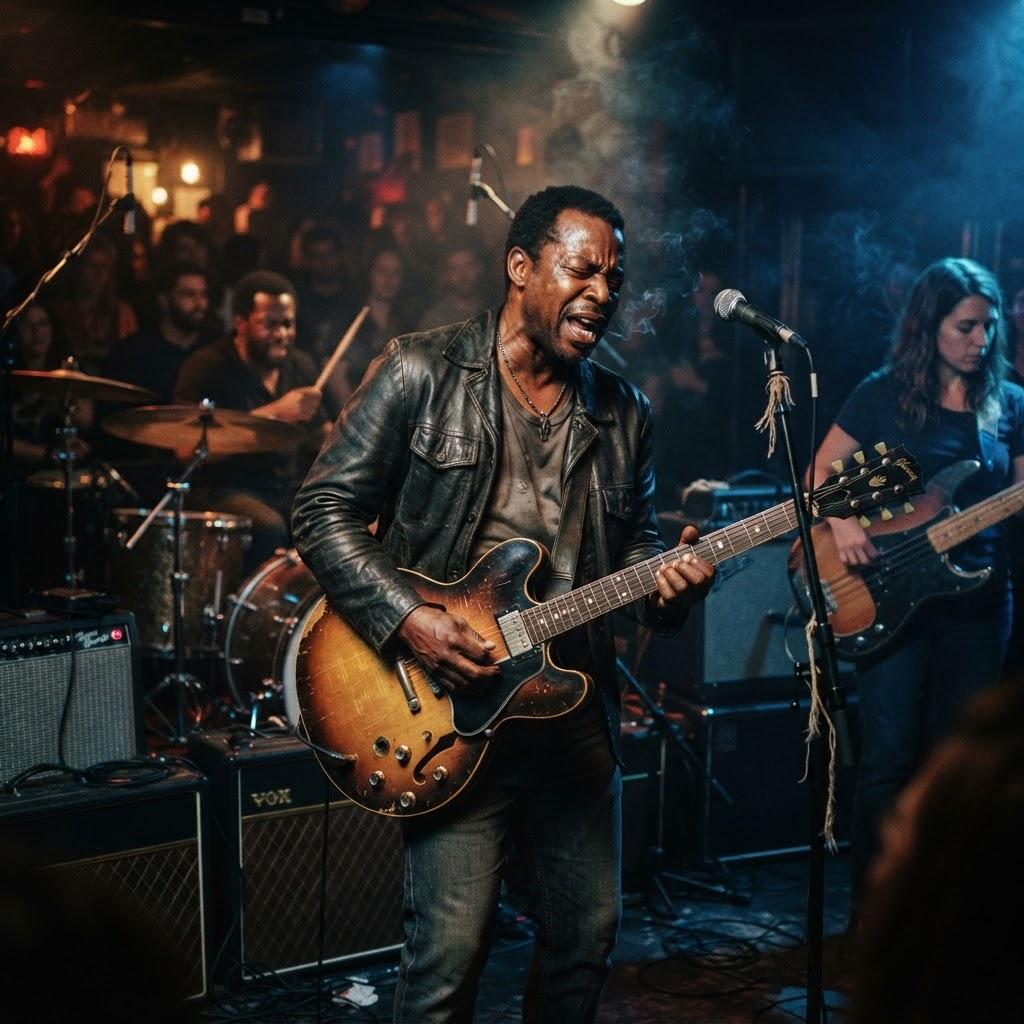
Imagine you are walking down a rain-slicked street in Chicago during the late nineteen-forties. The wind is biting at your face, but from the open door of a nearby club, you hear a sound so powerful it practically kicks the air out of your lungs. This is not the quiet, polite acoustic strumming of the dusty Southern back porch. This is Chicago Blues, the musical equivalent of a stiff shot of whiskey and a bad attitude. It is raw, it is loud, and it is undeniably alive. It captures the frantic energy of a million people moving North to chase factory jobs and a better life, leaving behind the heat of the Delta for the concrete jungle of the Midwest. The genre feels like a collision between a thunderstorm and a freight train, dripping with equal parts grit, longing, and pure, unadulterated swagger. It is music that does not just ask for your attention; it grabs you by the collar, sits you down at the bar, and tells you the truth about how hard and beautiful life can be when the lights go down.
The Sound & Signature Elements
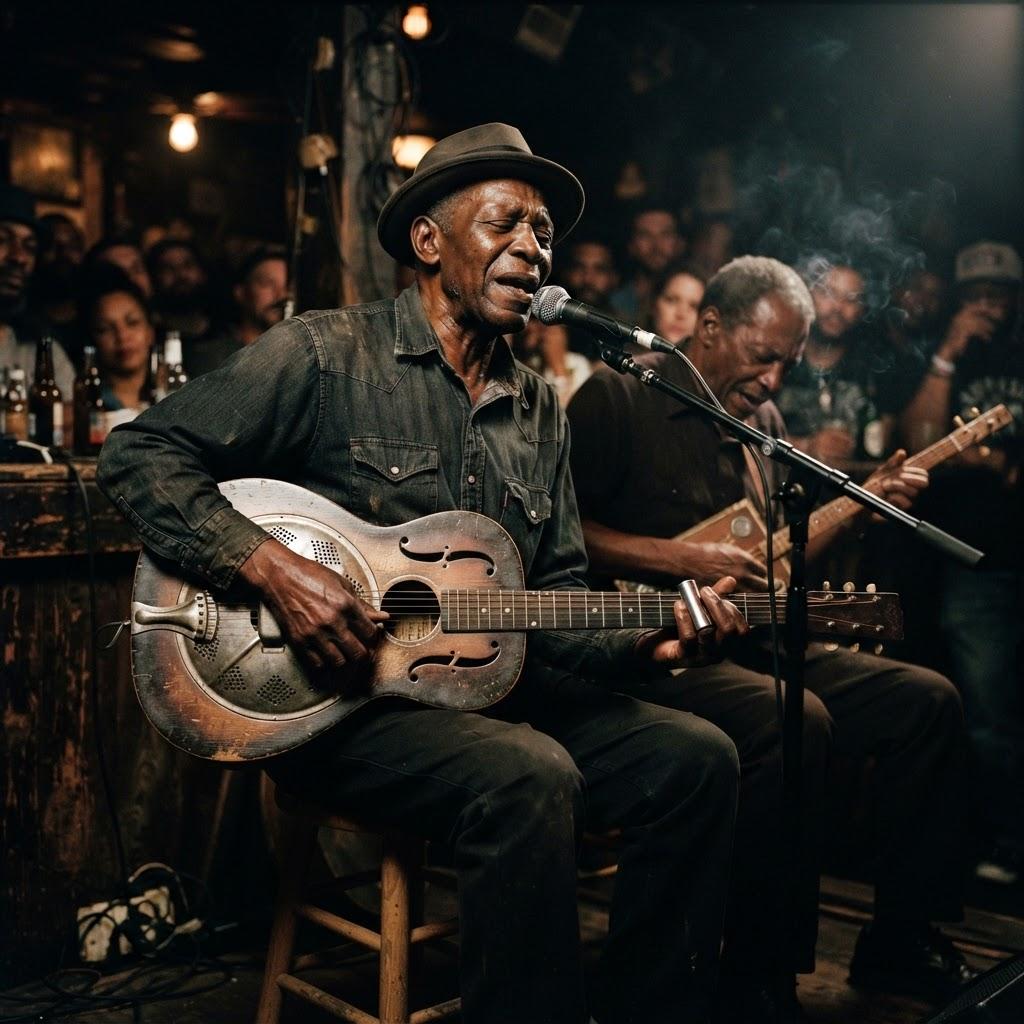
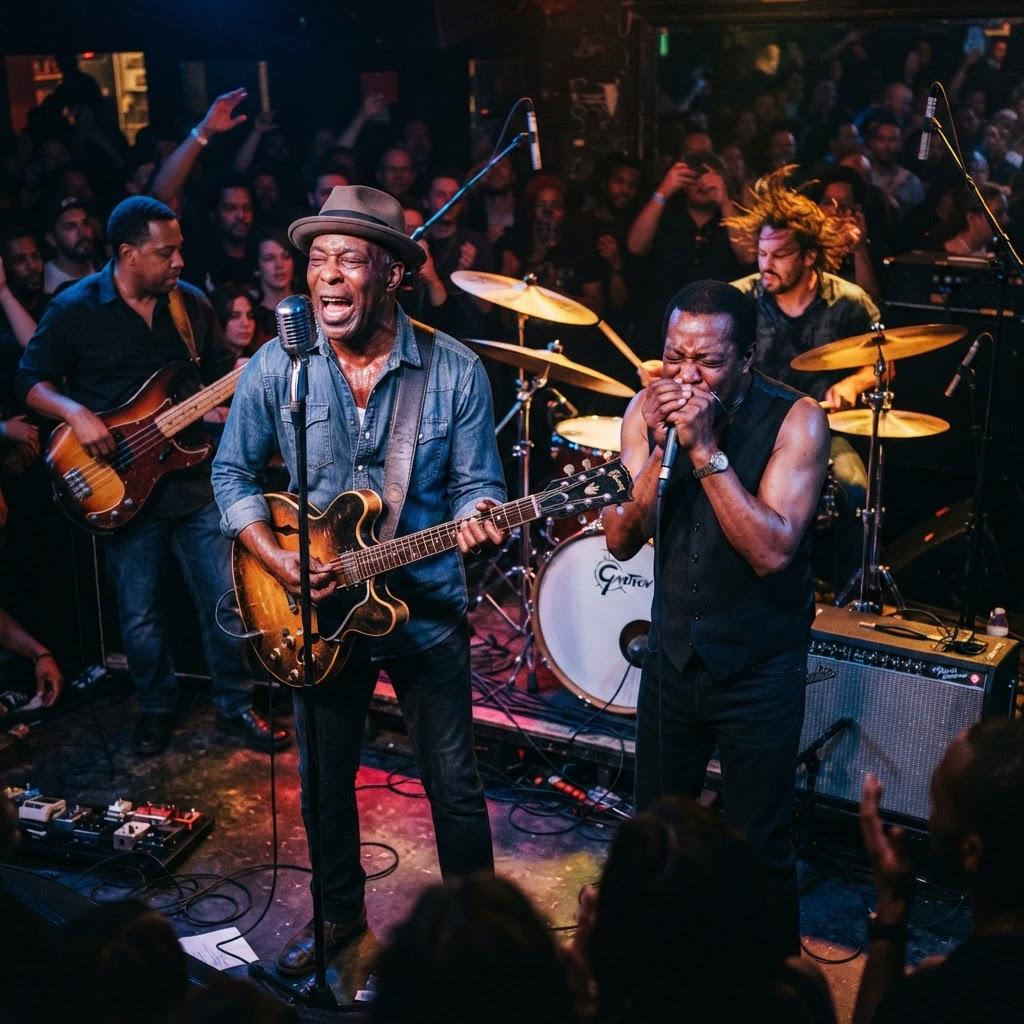
To understand Chicago Blues, you first need to embrace the power of electricity. Before this, blues was mostly a guy with an acoustic guitar and a dream, but in the crowded, noisy taverns of Chicago, that acoustic box was getting drowned out by the roar of the crowd. The solution? Plug it in and crank it up until it screams. The musical DNA here is built on the twelve-bar blues structure, which is essentially a predictable but infinitely flexible loop that keeps the band on track while the singer vents their soul. You will hear a 'shuffle' rhythm—think of it as a galloping, syncopated heartbeat that makes it physically impossible to keep your feet still. The signature instrument is the harmonica, or 'harp,' played through a microphone cupped in the hands to get that distorted, greasy, overdriven sound. When you combine that wailing harmonica with a guitar played with a glass slide—a piece of glass or metal worn on the finger to make the notes cry and moan—you get a sonic texture that feels like gravel under your fingernails. It is simple, effective, and hits like a sledgehammer.
Origins & Birth of the Sound
The story of Chicago Blues is the soundtrack to the Great Migration. Thousands of African Americans moved from the rural South to the industrial hub of Chicago, looking for a way out of the Jim Crow era’s oppression. They brought their guitars and their songs with them, but the city changed everything. It was loud, it was cramped, and it was fast. Musicians who were used to playing on porches suddenly found themselves playing in rowdy clubs where patrons were screaming and drinking. The transition from acoustic to electric was not just a stylistic choice; it was a desperate act of survival. To be heard over the cacophony of a bustling urban bar, players began using amplifiers and pickups, creating a new, metallic, aggressive edge. The studios on the South Side, like Chess Records, became the laboratories where this new sound was refined. It was here that rural legends met urban technology, resulting in a sound that was far more aggressive and sophisticated than what they had played down South, effectively creating the first truly urban version of the blues.
The Pioneers & Legends
If Chicago Blues had a Mount Rushmore, the faces carved into it would definitely include Muddy Waters, the king of the electrified hill. Muddy was the guy who took the Delta sound and gave it an urban, snarling makeover that defined the genre's standard. Then there is Howlin’ Wolf, a man whose voice sounded like it was being pulled through a furnace, possessing a physical presence that could silence an entire room just by walking through the door. Little Walter is the reason your favorite blues song has a harmonica solo that sounds like an electric guitar; he was the first guy to really push the amplified harp into the stratosphere. And let us not forget Willie Dixon, the mastermind songwriter and bassist who effectively acted as the architect for the genre, penning hits that everyone from the Rolling Stones to Led Zeppelin would later steal, usually without asking. These legends were not just playing songs; they were building an empire out of wood, wire, and sheer force of will, turning humble blues musicians into the absolute bedrock of modern popular music history.
Defining Tracks & Era-Defining Moments
You cannot talk about this genre without acknowledging the tracks that reshaped the musical landscape. Muddy Waters’ 'Mannish Boy' is the definitive statement of intent, a song so dripping with confidence and primal rhythmic power that it still sounds dangerous today. Then there is Howlin’ Wolf’s 'Smokestack Lightnin',' a trance-inducing masterpiece that proves you do not need complex chord changes if your groove is deep enough to reach the center of the earth. Little Walter’s 'Juke' is the instrumental track that proved the harmonica was a lead instrument capable of carrying an entire song, influencing generations of players to come. These were not just 'songs' in the traditional sense; they were pivotal moments where technology and raw emotion fused. When Chess Records released these records, they were capturing a lightning bolt in a bottle, and the shockwaves are still being felt every time a guitar player plugs into a tube amplifier. These tracks are the Rosetta Stone of rock, blues, and pretty much every genre that relies on a solid backbeat and a burning guitar lick.
Subgenres & Offshoots
The Chicago Blues family tree is wild and surprisingly diverse for such a focused sound. You have the 'West Side' sound, which is generally cleaner, more guitar-focused, and heavily influenced by jazz musicians who brought a higher level of technical skill to the table, like the incomparable Magic Sam or the lightning-fast fingers of Buddy Guy. Then there is the 'South Side' sound, which remains the rougher, earthier, and more ensemble-based style that Muddy Waters pioneered. As the decades rolled on, the genre began to cross-pollinate with R&B, creating 'Soul Blues,' where the emotional weight of the blues met the polished, brassy arrangements of the pop charts. There is even a weird, wonderful corner of the genre where blues met rockabilly, creating a frantic fusion that pre-dated the rock-and-roll explosion. Each of these offshoots kept the core elements—the shuffle, the slide, the pain, and the pride—but added new spices to the gumbo, proving that the blues is a living, breathing creature that refuses to sit still or stay within the lines of a textbook.
Cultural Impact & Influence
The cultural weight of Chicago Blues is massive. When those records traveled across the Atlantic to the UK in the late fifties, they effectively kickstarted the British Invasion. A generation of young British musicians like Keith Richards, Eric Clapton, and Jimmy Page heard these records and became obsessed, treating Chicago bluesmen like living gods. They took that sound, amplified it further, and sold it back to the world as Rock and Roll. Beyond the music, the genre dictated a specific look: the sharp-dressed, fedora-wearing, city-slicker aesthetic that became synonymous with cool. It changed the way we talk, the way we dress, and the way we view the artist as a tortured, authentic hero. The blues became the language of modern rebellion. Even today, if you look at any band that prioritizes soulful vocals and blues-inflected guitar licks, you are looking at the direct descendants of the clubs on 47th Street. The impact is so deep that it is practically invisible; it is the water that the rest of the music industry swims in every single day.
Controversies & Drama
Oh, the drama! The history of Chicago Blues is filled with enough backstabbing, unpaid royalties, and purist wars to make a soap opera look boring. You had the constant battle between the 'traditionalists' who thought electric instruments were a betrayal of the rural, acoustic soul of the blues, and the innovators who were tired of starving and wanted to make records that would sell in a noisy bar. Then there were the label heads at Chess Records, who famously 'managed' their artists in ways that often left the musicians penniless while the company thrived. The beefs between artists were legendary, often fought out on stage through dueling solos or petty insults thrown over the microphone during a set. There was even a classic struggle between the 'young guns' of the fifties and the older, established guard who felt their style was being bastardized. It was a pressure cooker of ambition, poverty, and genius, and the tension of those battles is exactly what gave the music its sharp, dangerous edge that persists to this very day.
Global Spread & Regional Scenes
Chicago might have been the birthplace, but the gospel of the blues spread like wildfire. Once the records started shipping overseas, London became a second home for the sound, with clubs like the Marquee hosting a constant stream of American legends who found more respect and better pay in England than in their own backyard. In Japan, a dedicated contingent of blues fanatics developed, building a scene so passionate and scholarly that they often knew more about the history of the music than the people who were playing it. In the American South, local scenes in places like Memphis and Texas began incorporating the 'Chicago style' into their own indigenous sounds, leading to a constant back-and-forth exchange of licks, ideas, and rhythmic structures. It became a global language. Whether you were a teenager in Tokyo trying to master a Muddy Waters slide part or a pub band in Liverpool trying to find that perfect, muddy guitar tone, the Chicago sound was the universal benchmark for what it meant to play the blues with grit.
The Modern Landscape
Today, Chicago Blues is in a fascinating place. While it is no longer sitting at the top of the Billboard charts, it is thriving in a way that feels incredibly authentic. You can still walk into clubs like Buddy Guy’s Legends in Chicago and hear a nineteen-year-old kid absolutely torching an electric guitar with the same intensity as a veteran of the fifties. The genre has mutated to stay relevant, with modern players incorporating elements of funk, hip-hop production, and even digital synthesis, all while keeping the core 'blue note' philosophy intact. It has become a cornerstone of the festival circuit, and thanks to the internet, younger generations are rediscovering the original masters on streaming platforms at a staggering rate. It is not just a relic for old guys in basements; it is a vital, living tradition that continues to prove that as long as people feel heartbreak, joy, and the need to move their bodies to a rhythm, the blues will never actually die.
How to Dive In
So, you are ready to stop talking and start listening? Start by grabbing 'The Best of Muddy Waters'—it is essentially the Bible of the genre. If you want to feel the raw, unfiltered fury of the harmonica, put on Little Walter’s 'The Best of Little Walter.' For that deep, furnace-fire vocal experience, 'Howlin' Wolf: The Rockin' Chair Album' will change the way you hear music forever. If you are looking for that slick, guitar-heavy brilliance, check out Buddy Guy’s early work or anything by Magic Sam. Listen to them on good speakers, not your phone, and turn the volume up until the walls vibrate. Pay attention to the way the bass and drums lock into that shuffle, and watch for the way the guitar interacts with the singer. Once you have absorbed the classics, explore the live recordings to hear how this music was meant to be experienced—with sweat, noise, and the feeling that anything could happen at any second. Dive deep, keep an open mind, and get ready to have your soul shaken in the best possible way. The blues is waiting for you.