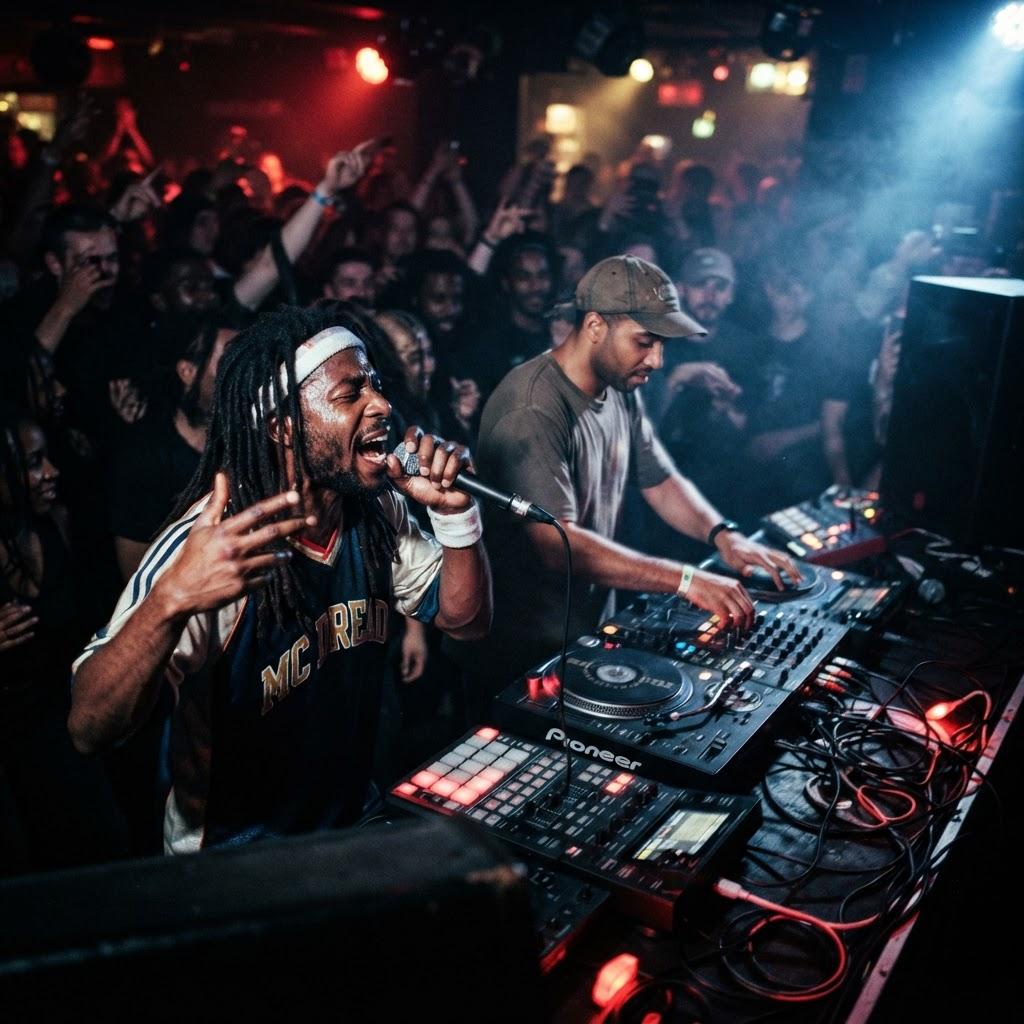
Early 1990s
Jungle
Jungle is the caffeine-fueled, bass-heavy outlaw of the electronic music world that turned 90s London into a concrete playground. It is high-octane, rhythmically chaotic, and absolutely essential for anyone who likes their eardrums massaged by pure sonic adrenaline.
Meet the Genre
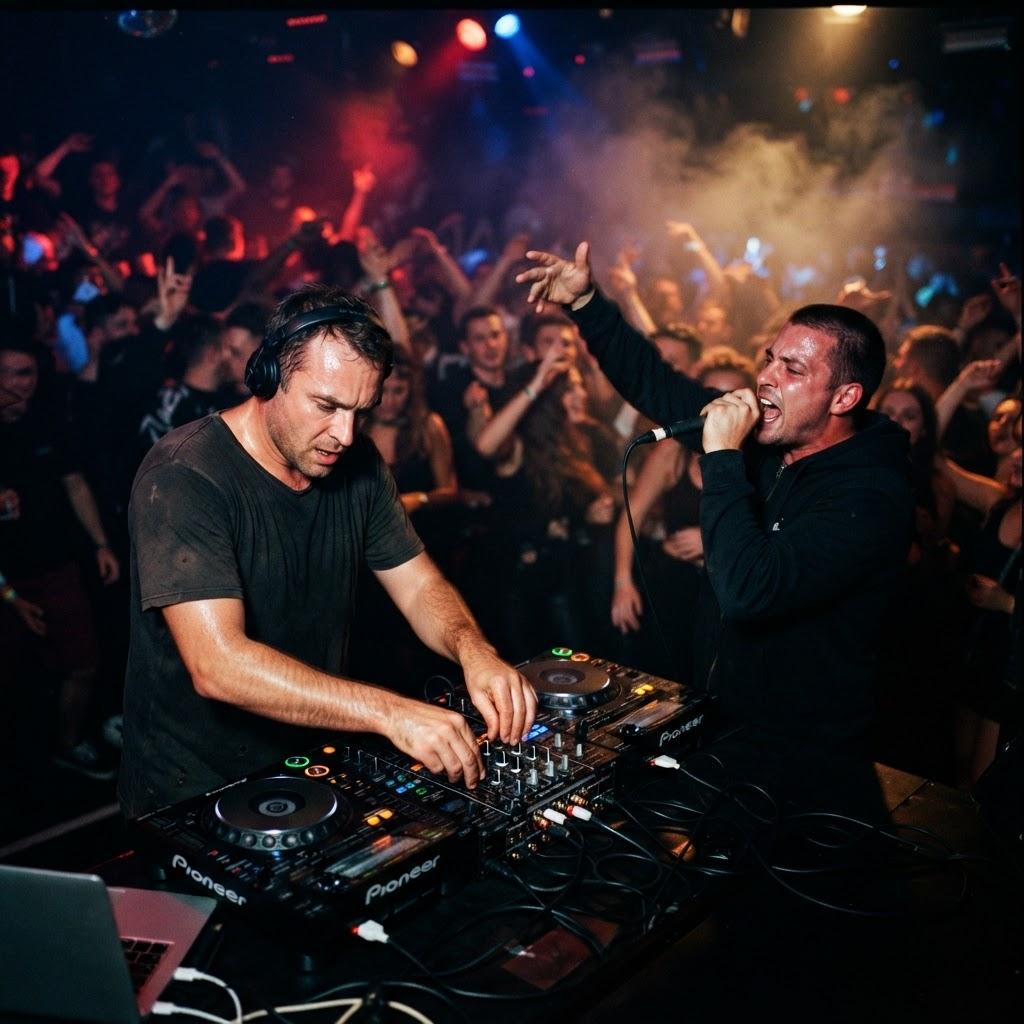
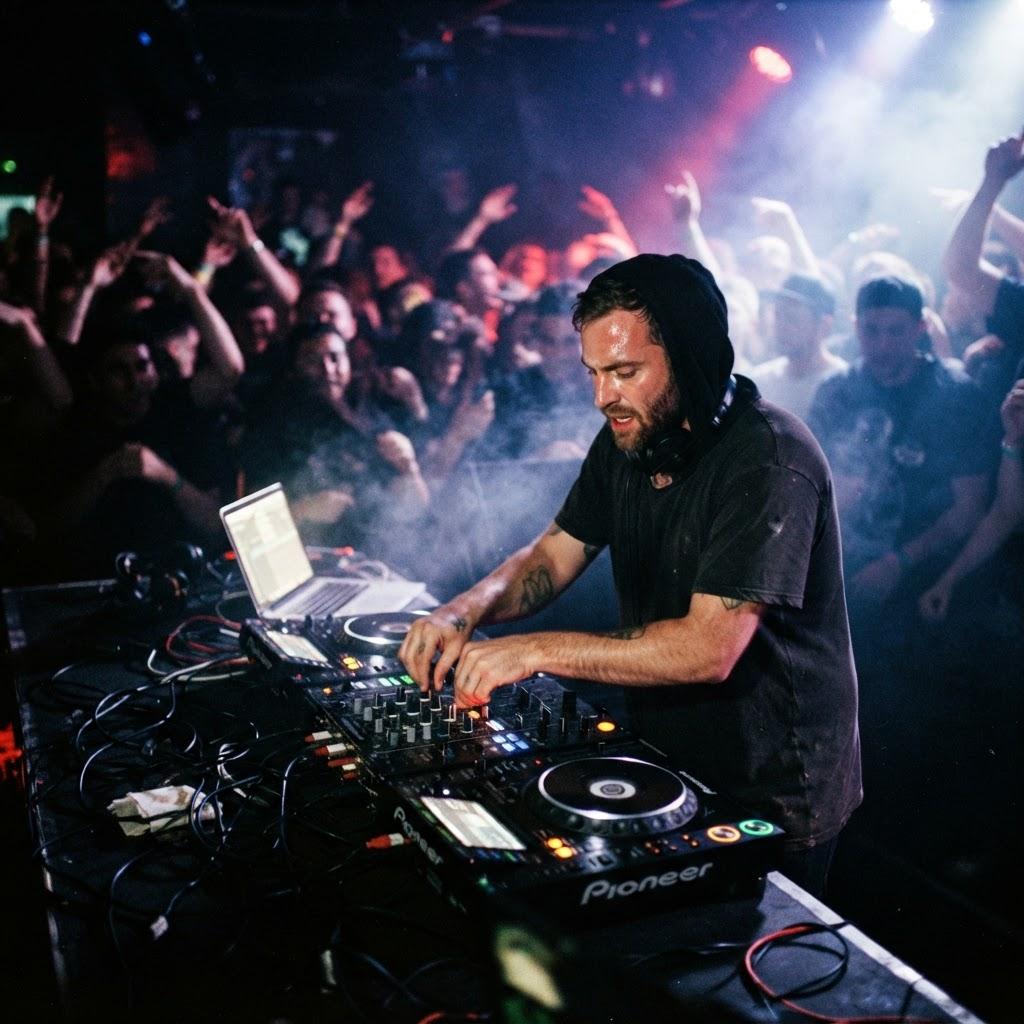
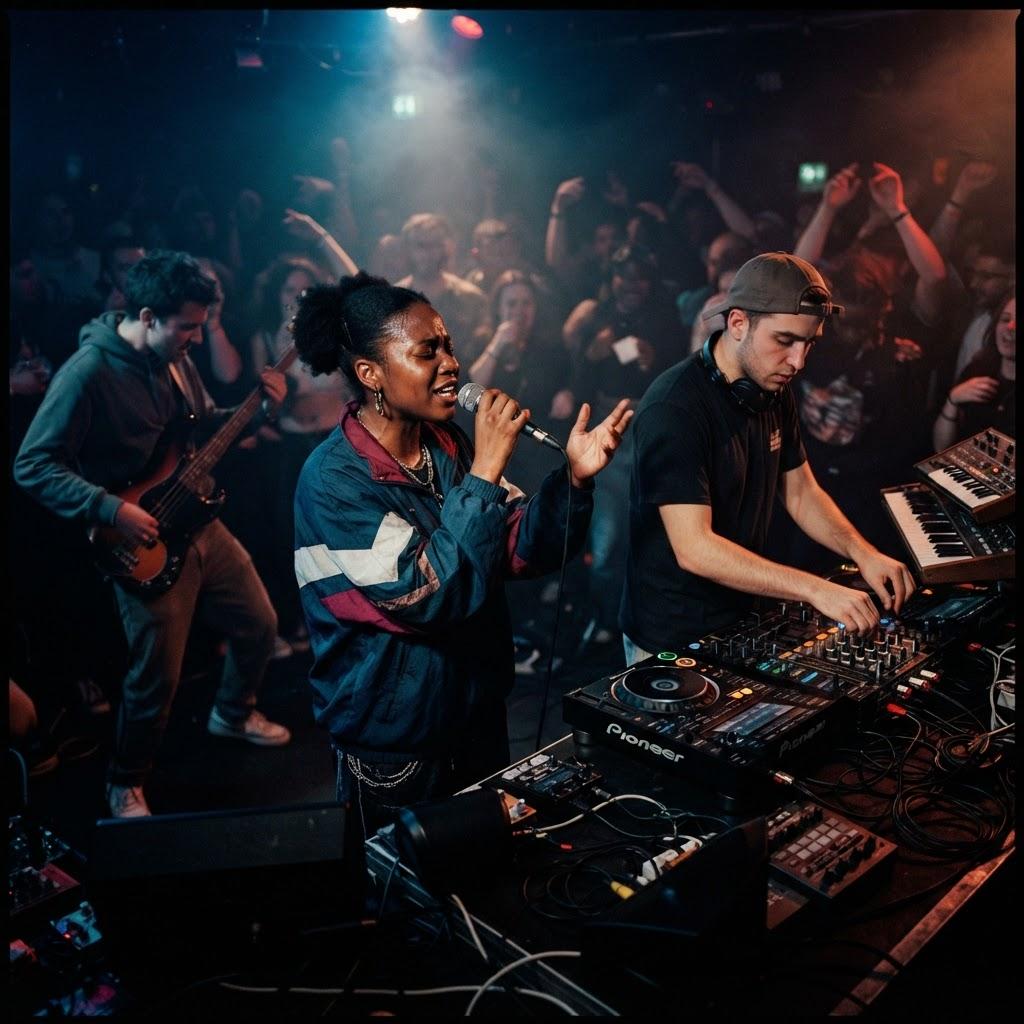
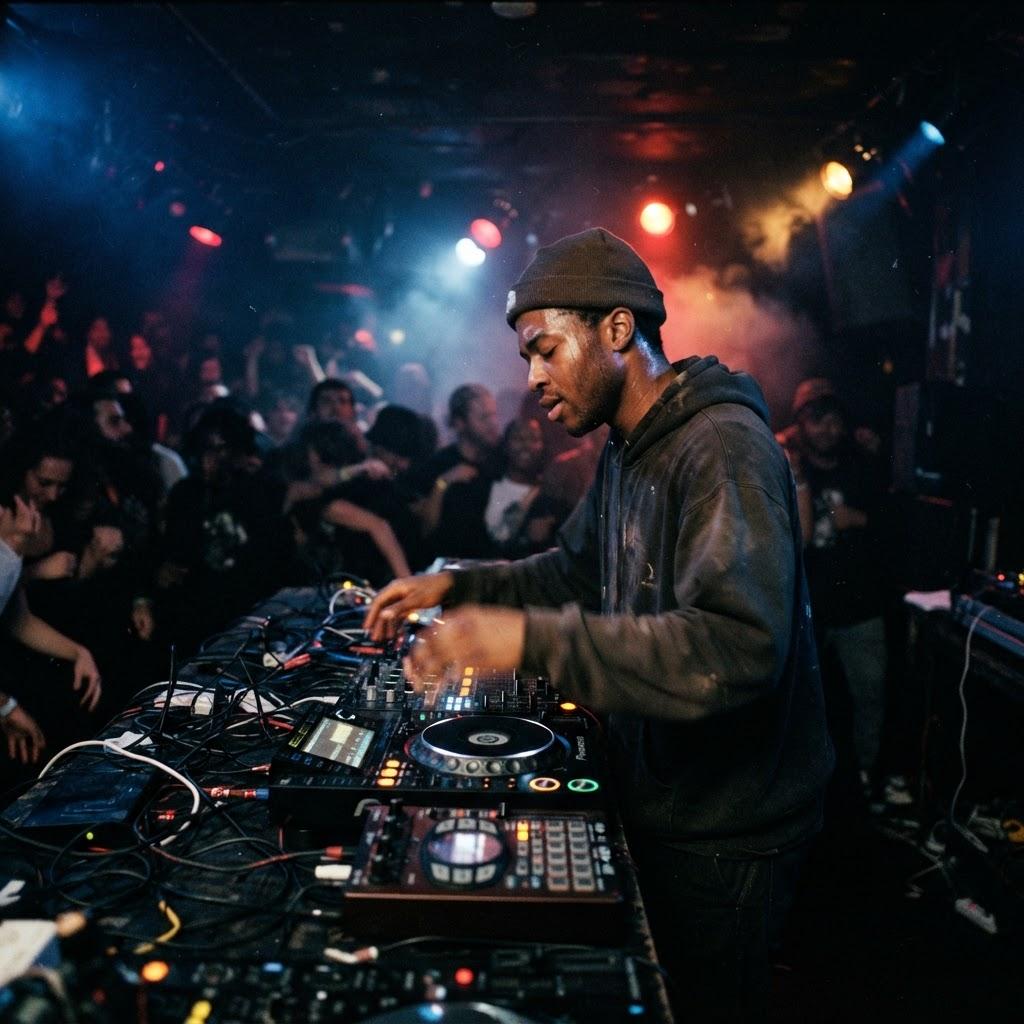
Imagine a room where a hurricane is trying to perform a synchronized dance routine with a professional marathon runner, and you are standing right in the center of it with a subwoofer strapped to your chest. That is Jungle. It is not just music; it is an anxiety-inducing, heart-pounding, bass-drenched experience that feels like someone dumped a double-shot of espresso into your bloodstream. Jungle is the rebellious teenager of electronic music, slamming doors and turning the volume up to eleven just to see how much the walls can take. It manages to feel both incredibly gritty and oddly elegant, like a tuxedo-clad bouncer at a rave who keeps checking his watch because he is late for a bank heist. When you put on a Jungle track, the atmosphere changes instantly; the room stops being a living room and starts being an urban alleyway illuminated by flickering streetlights and the promise of a long, wild night. It is frantic, it is loud, and it absolutely refuses to apologize for being the most exciting thing you have ever heard.
The Sound & Signature Elements
At the core of Jungle lies the breakbeat, a rhythmic drum pattern usually chopped up from old 1970s funk records. Think of this like taking a classic drum fill, slicing it into tiny digital puzzle pieces with a sampler, and then rearranging those pieces into a chaotic jigsaw that moves at the speed of a hummingbird on a sugar rush. These beats are often pushed to tempos around 160 or 170 beats per minute, which is fast enough to make your heart skip a few steps just by listening. Then there is the sub-bass, the secret weapon of the genre. If you imagine a normal bass sound as a firm handshake, Jungle sub-bass is an earthquake that decides to shake your ribcage until it rattles. This bass often features a 'wobble' effect, created by modulating the frequency so it sounds like a giant underwater tractor shifting gears. Combined, these elements create a sonic architecture that feels like industrial machinery dancing to a reggae beat. It is rhythmic alchemy at its absolute finest, proving that if you break something into enough pieces, you can build a masterpiece.
Origins & Birth of the Sound
Jungle did not arrive on a silver platter; it was forged in the basements and pirate radio stations of London during the early nineties. Picture a damp, cramped studio space filled with stacks of vinyl records, buzzing circuits, and a group of young producers who were tired of the polished, repetitive sounds of mainstream house music. They were pulling from a melting pot of cultures, taking the deep, spiritual weight of Jamaican sound system culture—those massive, homemade speaker stacks that could rattle your fillings—and smashing it into the futuristic, high-tech aesthetic of early UK techno. It was the sound of a generation that felt ignored, so they built their own speakers and broadcast their own rules. They were taking samples from soul, R&B, and dub reggae, stretching them, pitching them up until they sounded like helium-filled ghosts, and burying them under layers of jagged, chopped-up drum beats. It was a defiant, glorious mess of creativity that proved you didn't need a million-dollar studio to change the world; you just needed a sampler, a record player, and enough nerve to turn the bass up until the police knocked on the door.
The Pioneers & Legends
The architects of this sonic madness were not looking for fame; they were looking for the next vibration. Legends like Goldie, with his intense, artistic vision and his ability to turn complex drum patterns into something resembling fine art, stood at the forefront. Then you had LTJ Bukem, the man who proved that Jungle could have a soul, crafting ethereal, space-age soundscapes that made you feel like you were floating through a nebula while running away from the law. Names like Shy FX and DJ Hype were also instrumental, acting as the bridge between the hard-edged, raw street sound and the infectious, danceable energy that would soon conquer the charts. These producers were like digital sorcerers, taking disparate sounds from the past—funky drum breaks, eerie vocal samples, and distant Jamaican sirens—and fusing them into a future that nobody had ever heard before. They were stubborn, visionary, and constantly reinventing their own tools, often pushing equipment designed for simple loops to do things the manufacturers had never even dreamed of. To look at their catalog is to look at a blueprint for modern electronic music production.
Defining Tracks & Era-Defining Moments
If you want to understand the heartbeat of the genre, you need to hear a few specific tracks that acted like sonic landmines in the music industry. Shy FX’s 'Original Nuttah' is essentially the national anthem of Jungle, a track so infectious and rhythmically daring that it managed to force its way into living rooms everywhere. It was the moment the genre stopped being an underground secret and started being a cultural force. Then there is Goldie’s 'Terminator,' which featured the 'time-stretching' technique, where the producer slows down a drum beat without changing the pitch, resulting in a sound that felt like it was melting in real-time. It was a production revolution that defined the 'intelligent' wing of the genre. Another pivot point was the moment Jungle producers started leaning heavily into 'Amen' breaks—that famous six-second drum loop from a 1969 track called 'Amen, Brother'—and slicing it into millions of variations. These tracks weren't just songs; they were viral moments that defined the mid-nineties, showing the world that you could be complex, aggressive, and undeniably danceable all in the same breath.
Subgenres & Offshoots
The Jungle family tree is a chaotic, sprawling mess that would make a botanist cry. Once the initial Jungle explosion happened, it branched out into various offshoots that leaned into different flavors. You have 'Intelligent Jungle,' which took the frenetic energy and chilled it out with atmospheric pads, beautiful synth textures, and a general vibe of floating through deep space. Then there is 'Darkside Jungle,' which is exactly what it sounds like—it leans into the menacing, eerie, and downright creepy side of the music, perfect for those who want their adrenaline served with a side of horror movie tension. Later, as the drums became even more precise and the production got sharper, the genre mutated into Drum and Bass. While people love to debate the difference, think of Jungle as the messy, bohemian older brother and Drum and Bass as the clean-shaven, structured younger sibling who actually uses a metronome. There are also hybrids like 'Ragga Jungle,' which leans heavily into the dancehall roots with vocal toasts and heavy reggae basslines, keeping the spirit of the sound system culture front and center.
Cultural Impact & Influence
Jungle didn't just stay in the speakers; it crawled into the fashion, the slang, and the attitude of an entire generation. You saw it in the oversized cargo pants, the bucket hats, the sportswear, and the whole 'don't-care' street aesthetic that eventually trickled up to high fashion runways. It changed how people moved in clubs, replacing the rhythmic sway of house music with a high-energy, full-body workout that looked like a mixture of breakdancing and a fight with an invisible opponent. It also influenced the way music was made across the board; the production techniques pioneered by Jungle producers—specifically the way they manipulated samples and digital rhythms—are now standard tools in everything from pop music to movie scores. Even the political climate of the 90s felt like it was vibrating to the frequency of Jungle, providing a soundtrack for a generation navigating a rapidly changing urban landscape. It became the voice of the streets, a way to claim space in a city that was becoming increasingly expensive and exclusive, proving that even if you didn't have a voice on the news, you had a voice on the radio.
Controversies & Drama
Oh, the drama! Being a Jungle fan in the nineties was like being part of an intense, never-ending soap opera. The biggest beef was always the 'sellout' narrative, where purists would get into heated, late-night arguments about whether the new wave of tracks was 'real' Jungle or just watered-down pop garbage. As the sound evolved into Drum and Bass, the purists were absolutely convinced that the soul of the music was being sacrificed at the altar of mainstream popularity. There were also the legal headaches—the clearing of samples from old soul and funk records was a nightmare, leading to label collapses, lawsuits, and a general air of 'catch us if you can' piracy that defined the early scene. Some artists felt that the genre was being gentrified or stripped of its raw, inner-city urgency to suit the tastes of suburban listeners. It was a messy, loud, and incredibly passionate era where producers, fans, and DJs treated their loyalty to the sound like a religious commitment. To this day, you can still start a massive argument on a music forum just by asking if a track belongs in the Jungle box or the Drum and Bass box.
Global Spread & Regional Scenes
Jungle was born in the grey, rainy streets of London, but it didn't stay there for long. Like a sonic wildfire, it jumped across the ocean and found a home in places like North America, where the underground rave scene was hungry for something that hit harder than the standard techno offerings. In cities like Toronto, New York, and San Francisco, Jungle found its own localized flavors, often blending with local hip-hop sensibilities or the existing rave cultures. It was also huge in Japan, where producers embraced the high-tech, precision-engineered side of the sound, taking the complexity of the breakbeats and applying a level of obsessive detail that the original London pioneers were shocked by. Europe also took to it, with the continent's long-standing love for heavy, driving electronic music making it a perfect destination for the high-BPM chaos of Jungle. Each region added its own local ingredients to the recipe, with some places favoring the vocal-heavy dancehall influences, while others focused on the cold, hard, industrial edge. It became a truly global language, one that didn't need lyrics to be understood; it only needed that signature, bone-shaking bass.
The Modern Landscape
Today, Jungle is living through a massive renaissance, and it is glorious. After years of being pushed into the shadows by newer, trendier genres, it has come roaring back. You can hear it everywhere, from TikTok trends where people are trying to keep up with the impossible speed of the breakbeats, to high-profile pop producers 'discovering' the Amen break and using it to give their radio tracks some extra grit. There is a whole new generation of producers who were born long after the original London scene peaked, but they have studied the old records like they are sacred texts. They are stripping away the clunky, limited technology of the nineties and replacing it with modern digital precision, creating tracks that sound like the future the original pioneers were dreaming of. It isn't just nostalgia, though—the energy is still just as raw, the bass is still just as heavy, and the urge to move is still just as impossible to ignore. Whether it is in a basement club or a high-end festival stage, Jungle remains a vital, pulsing part of the electronic music ecosystem, as relevant today as it was when it first shocked the world.
How to Dive In
So, you want to dive into the Jungle? Great! Start by clearing your schedule and finding the biggest speakers you can lay your hands on. Do not start with your phone speaker; it will not do the bass justice. Begin your journey with the 'Renegade Snares' by Omni Trio, which is the perfect mix of high-speed drums and beautiful, haunting atmosphere. Follow that up with the seminal 'Original Nuttah' by Shy FX and UK Apachi, because you simply cannot understand the genre without feeling the pure, unadulterated joy of that bassline. For the more artistic side, check out Goldie’s 'Timeless' album, which is a masterclass in how to build a complex, multi-layered journey within the confines of the genre. Then, dive into anything produced by LTJ Bukem to experience the cleaner, atmospheric side of the sound. Once you are properly hooked, look for old pirate radio archives online to get a taste of the raw, unpredictable energy of the scene's early days. It is loud, it is fast, and it is waiting to change the way you hear rhythm forever. Now, turn that volume up and let the breaks hit you!