Early 2000s, London, United Kingdom
Dubstep
Dubstep is the sonic equivalent of a transformer trying to navigate a dance floor while its battery is leaking pure adrenaline. Prepare for a bass-heavy, skull-rattling journey that will leave your speakers begging for mercy and your ears begging for more.
Meet the Genre
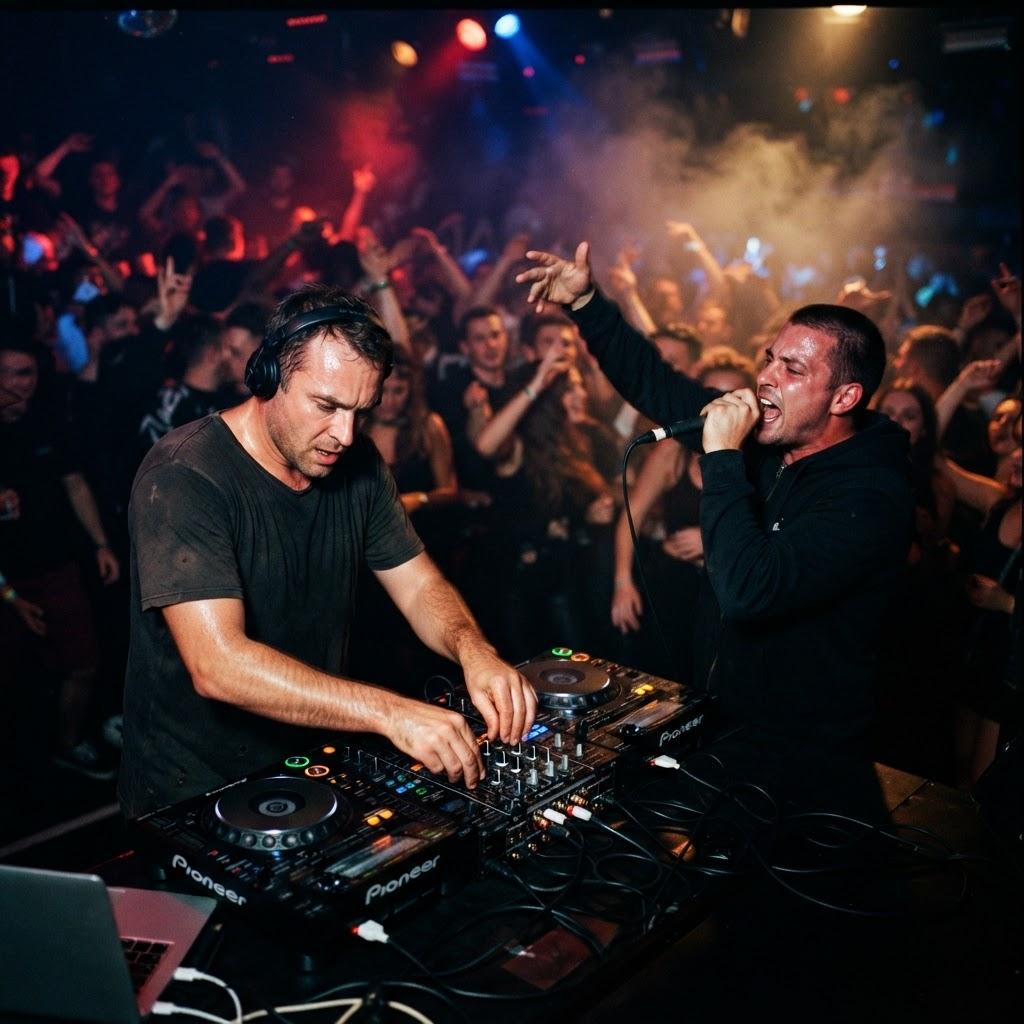
Imagine walking into a room where the air itself is vibrating so hard it threatens to shake the loose change right out of your pockets. That is the feeling of walking into a proper dubstep session. This is not music you just listen to; it is music you feel in your chest cavity, like a giant, invisible hand gently kneading your ribcage. Dubstep is the rebellious teenager of the electronic music family, the one that showed up to the party wearing neon, carrying a massive amplifier, and deciding that traditional song structures were purely optional. It is equal parts dark, moody, and hilariously aggressive. At its core, dubstep is about the spaces between the beats. It is about patience, tension, and the inevitable release of a bass drop that hits like a freight train made of electricity. If other genres are a steady walk through a park, dubstep is a rollercoaster ride through a glitchy, neon-drenched cityscape during a thunderstorm. It is mysterious, it is loud, and it is undeniably, gloriously weird.
The Sound & Signature Elements
The secret sauce of dubstep lies in its tempo, which typically hovers around the 140 beats per minute mark. But here is the trick: it feels half-speed. This is because the kick drum and the snare drum are spaced out in a way that makes your head nod slowly instead of twitching like a caffeine-addled squirrel. Then, there is the wobbler—the infamous sound that defined the genre. Think of it as a synthesizer growling at you through a straw. It is achieved by taking a simple sound and manipulating a filter, which is basically an electronic gatekeeper that lets certain frequencies through while blocking others, at a very fast, rhythmic rate. This creates that 'wub-wub' motion. The sub-bass is the other main character here; it is that low-frequency rumble that you cannot really hear with your ears as much as you can feel in your soul. When you combine those heavy, distorted bass sounds with minimalist, metallic drums and the occasional haunting vocal sample, you get the sonic equivalent of a dystopian robot dance party.
Origins & Birth of the Sound
Dubstep did not just appear out of thin air; it was cooked up in the basements and dimly lit record shops of South London in the early 2000s. It was the messy, beautiful child of UK Garage and 2-step. Producers were tired of the hyper-polished, upbeat vibe of mainstream garage and wanted something grittier. They started stripping away the bouncy piano chords and the fast-paced vocals, replacing them with the deep, cavernous influence of Jamaican dub—a style of reggae that emphasizes echo, reverb, and massive, bone-shaking bass. Artists like the crew behind the Big Apple Records shop began experimenting, stretching out the beats, and pulling in dark influences from grime and jungle. It was a scene built on exclusivity and experimentation, where DJs would play 'dubplates,' which are one-off vinyl records cut just for them. It was a secret society of bass lovers trying to find the ultimate frequency to rattle the windows of a rainy London flat.
The Pioneers & Legends
You cannot talk about dubstep without bowing down to the legends who laid the first bricks of this sonic cathedral. Benga and Skream were practically children when they started dropping tracks that would change the world, turning out raw, menacing beats in their bedrooms. Skream’s track 'Midnight Request Line' is basically the holy text of the early scene, a masterclass in how to make a simple, hypnotic bassline feel like a religious experience. Then there is Digital Mystikz, the duo of Mala and Coki, who treated the genre with the reverence of a high priest. They were all about the meditative, deep, and spiritual side of the bass, turning dance floors into ritualistic spaces. These guys were not trying to become pop stars; they were trying to push the limits of what a subwoofer could actually endure before exploding. Their dedication to the 'weight' of the sound defined the ethos of the early years, proving that you do not need a lot of melody to tell a deep, complex story.
Defining Tracks & Era-Defining Moments
Every genre has those 'before and after' moments, and for dubstep, the track 'Midnight Request Line' by Skream is the absolute landmark. Before this song hit the airwaves, dubstep was an underground secret kept by London DJs; after this, it became a phenomenon that people across the globe were suddenly hungry for. Another huge pivot point was the emergence of Skrillex, who took the wobbling foundation of the London sound and injected it with the intensity of heavy metal and high-voltage glitch. When tracks like 'Scary Monsters and Nice Sprites' dropped, it was like someone had taken a flamethrower to the genre. Suddenly, it was not just about the moody sub-bass; it was about massive, screeching synthesizers and aggressive, high-energy drops that became the soundtrack to the EDM boom of the late 2000s. These tracks proved that dubstep could function just as well in a small, damp basement as it could on the main stage of a massive international music festival.
Subgenres & Offshoots
Dubstep is a bit like a sprawling family tree where all the cousins are slightly different varieties of mad scientists. You have the original 'Deep Dubstep,' which remains true to its South London roots—it is dark, spacious, and perfect for 3 AM introspection. Then there is 'Brostep,' a term used for the more aggressive, mainstream-friendly version that focused on harsh, distorted mid-range frequencies and high-octane energy. This is the stuff that made dubstep a staple of giant concert tours. Then, you get into the weird stuff, like 'Chillstep,' which takes the syncopated rhythms of the genre but swaps the aggression for atmospheric pads, lush melodies, and rainy-day vibes. There is also 'Riddim,' a stripped-back, repetitive subgenre that sounds like a mechanical rhythmic glitch-fest. It is fascinating how the core 'wub' can be stretched in so many directions, from the meditative deep-sea exploration of one track to the neon, chaotic shredding of another.
Cultural Impact & Influence
The influence of dubstep bled into everything it touched. It changed the way people thought about the 'drop' in pop music, with mainstream artists like Britney Spears, Rihanna, and Justin Bieber all suddenly finding ways to incorporate that familiar, stuttering bass sound into their radio hits. Fashion-wise, it ushered in a wave of dark, tech-wear aesthetics: oversized hoodies, neon accents, and enough snapback hats to hide an entire generation of bass-heads. It even shifted the way language was used in music circles, with 'wobble' and 'bass-face' becoming common currency. Even film and television couldn't escape it; for a good five-year stretch, if you were watching an action scene in a blockbuster movie or a commercial for a high-end gadget, there was a 90% chance that a dubstep-inspired synth growl was anchoring the background audio. It turned the concept of 'noise' into a globally recognized language, proving that even the most abrasive sounds could become the heartbeat of modern pop culture.
Controversies & Drama
Oh, the drama! When a genre goes from a secret London basement project to a worldwide juggernaut, the purists start sharpening their knives. The biggest war in dubstep history was the 'Real Dubstep vs. Brostep' feud. The pioneers who built the sound in the early 2000s felt that the newer, aggressive style coming out of North America was a bastardization of the art form, stripping away the soul and replacing it with cartoonish, ear-splitting screeching. The North American producers, on the other hand, argued that they were evolving the sound and taking it to new heights of production complexity. It was like a giant argument between people who like their coffee black and people who like their coffee with sixteen pumps of syrup and a sparkler on top. Accusations of 'selling out' were thrown around like confetti, and the internet forums were practically set on fire with passionate debates about what constituted 'real' bass. It was petty, it was hilarious, and it honestly kept the community talking for years.
Global Spread & Regional Scenes
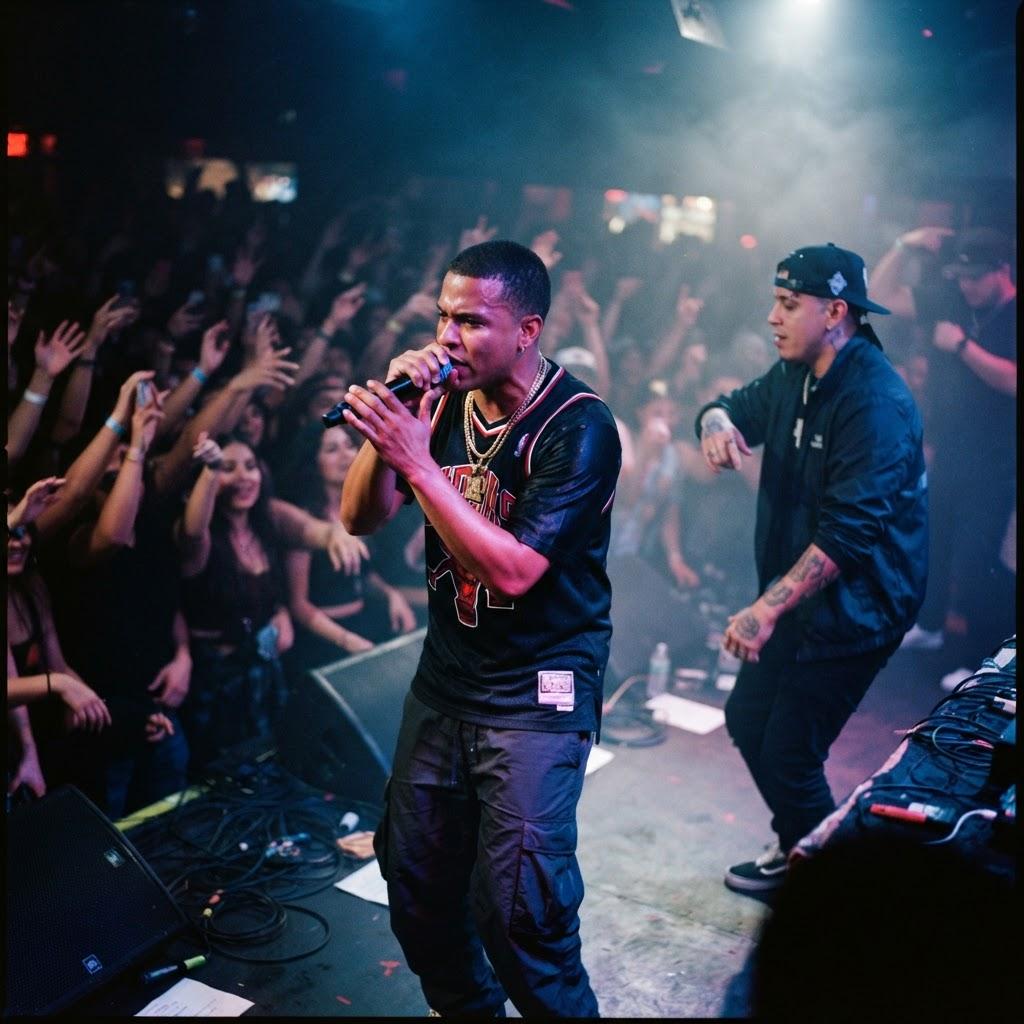
Once the digital age kicked into high gear, dubstep didn't just cross the ocean; it took a jet, landed, and immediately started a fight. While London remained the spiritual capital, the United States turned into the genre's neon-lit playground, with Los Angeles, Denver, and Chicago hosting massive scenes where the production got bigger, louder, and crazier. Europe also took to it like a duck to water, especially in places like Belgium and the Netherlands, where it mixed with the intense energy of their pre-existing dance scenes. Meanwhile, in Japan, producers brought their own unique twist, often infusing the tracks with hyper-kinetic anime-inspired aesthetics and super-precise production techniques. It became a global language of rhythm. You could be in a club in Tokyo, a warehouse in Berlin, or a festival in California, and as soon as that bass dropped, everybody knew exactly what was happening. It was the ultimate musical Esperanto, translated entirely into 'wubs' and 'wobbles'.
The Modern Landscape
Today, dubstep is in a fascinating spot. The explosive, mainstream craze of the early 2010s has settled down, but the genre has solidified itself as a permanent fixture in the electronic music landscape. It has matured, diversified, and found its way into the DNA of almost every electronic subgenre you can name. On platforms like TikTok, you see a new generation discovering the classics, while modern producers are finding ways to blend the deep, meditative roots of the 2000s with the high-production techniques of today. It is no longer trying to prove its legitimacy to the world; it has already won. The scene is thriving in a way that feels more sustainable, with smaller, dedicated labels pushing boundaries and massive festivals still drawing crowds of thousands to witness the heavy stuff. It is less about the novelty of the 'wobble' and more about the art of sound design, with modern tracks sounding clearer and more terrifying than ever before.
How to Dive In
Ready to lose your hearing in the best way possible? Start by tracking down the 'Dubstep Allstars' mix series, which is basically the historical record of how this madness started. Check out Skream’s early work for that classic, moody atmosphere, and then dive into the heavier, high-energy stuff from artists like Zeds Dead or Excision to see the full spectrum of the genre’s evolution. Listen on good speakers or a decent pair of headphones—your phone speaker will simply cry in the corner if you try to subject it to these frequencies. Pay attention to how the space in the track changes right before the drop; that tension is where the magic lives. Once you get hooked, look for local shows or underground collectives, because dubstep is best experienced with a wall of sound hitting you head-on. Don't worry about being an expert; just turn the volume up, clear some space in your living room, and let the rhythm handle the rest. Welcome to the bass weight!