1990s
Reggaeton
Reggaeton is the musical equivalent of a street-party supernova that refuses to be ignored. It is the pulse of the dancefloor, the king of the remix, and the absolute loudest heartbeat in modern global pop culture.
Meet the Genre
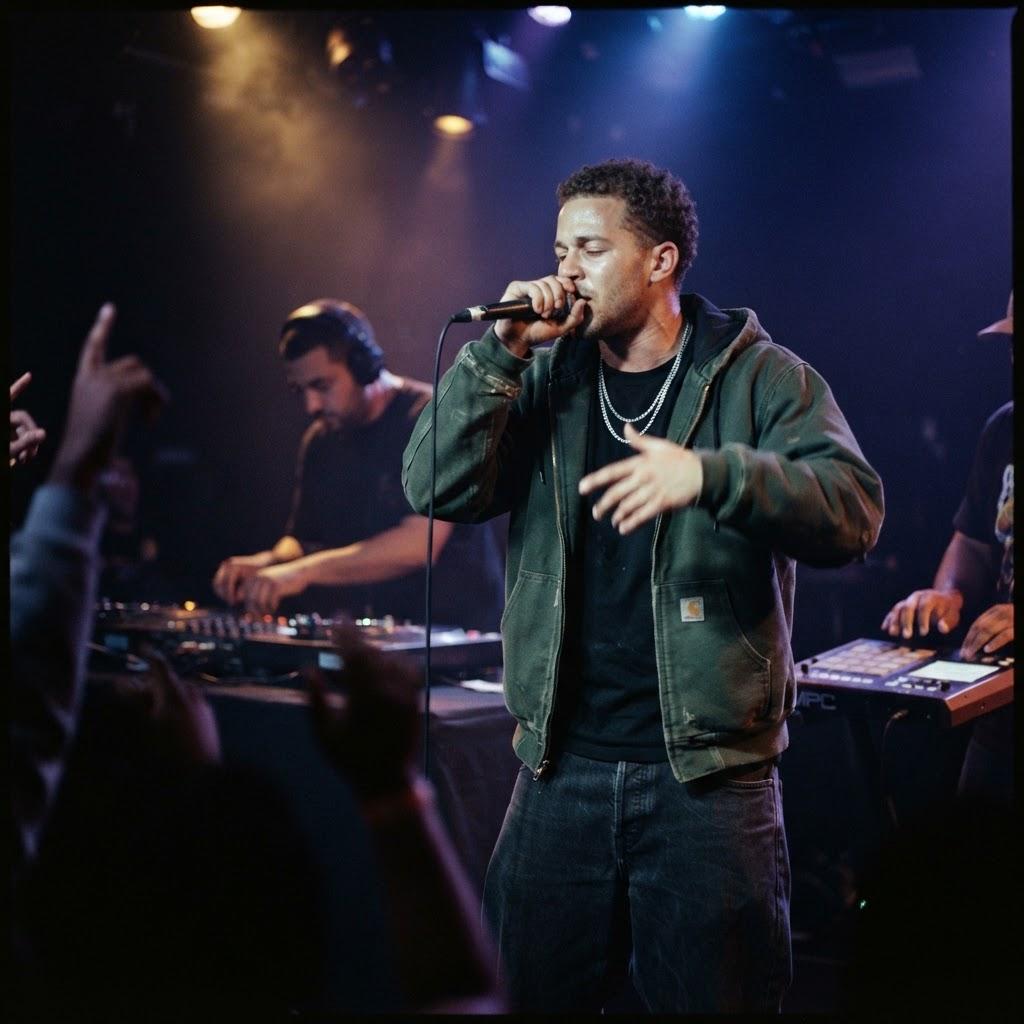
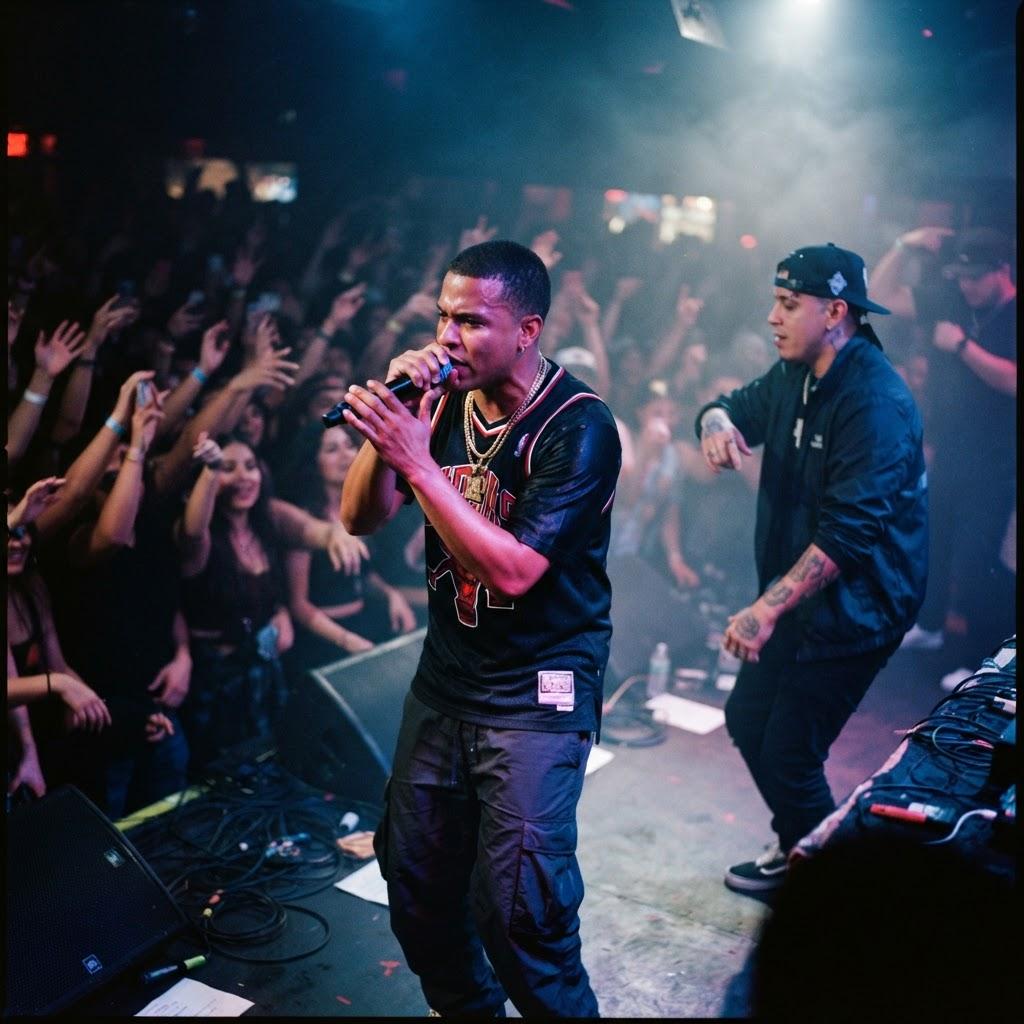
Imagine walking into a humid, neon-lit club in San Juan where the air is thick with anticipation and the floor is vibrating so hard it feels like a tectonic shift. Suddenly, the speakers erupt with a rhythmic heartbeat so infectious that your hips start moving before your brain even registers the tempo. That is Reggaeton. It is not just music; it is a full-body experience, a sonic riot that demands you stop worrying about your dignity and start worrying about your dance moves. Reggaeton is the cool, slightly dangerous cousin who shows up to the party, changes the playlist, and suddenly everyone is having the best night of their lives. It is confident, unapologetic, and wears its heart on its sleeve, blending the gritty realism of street-level storytelling with the kind of high-octane production that makes your car stereo beg for mercy. This genre doesn’t ask for your attention; it seizes it by the lapels and drags you onto the dancefloor until the sun comes up. It is the sound of resilience, the anthem of the Friday night hustle, and the ultimate equalizer that turns strangers into a unified, sweating mass of energy.
The Sound & Signature Elements
At the core of every Reggaeton track lies the 'Dem Bow' beat, a rhythmic DNA sequence that is as recognizable as a heartbeat. Think of it as a relentless, looping percussion loop that goes boom-ch-boom-chick, acting as the foundation for everything else to happen. It is simple, yet it possesses a hypnotic power that makes it impossible to stand still. Producers build on this by layering thick, buzzing synthesizers and heavy basslines that sound like they are trying to break through the walls of the studio. The vocals are where things get truly interesting; they often feature rapid-fire, rhythmic rapping mixed with melodic crooning, frequently polished with a touch of pitch-correction software known as Auto-tune. This isn't just to hide bad singing; it is a stylistic choice, giving voices a metallic, space-age shimmer that cuts through the busy background layers. The song structures are usually straightforward, prioritizing the hook—that catchy, ear-worm part of the song—so that you can remember the words by the second chorus. It is music built for movement, where every snare hit and bass pulse is strategically placed to keep the momentum rolling forward like a runaway train fueled by pure adrenaline.
Origins & Birth of the Sound
The story of Reggaeton is essentially a tale of musical cross-pollination in the most exciting way possible. In the late eighties and early nineties, the Caribbean was a bubbling cauldron of influence. Panamanian artists were already experimenting by taking Jamaican Dancehall—a bass-heavy, reggae-derived style—and translating the lyrics into Spanish. When these tapes started circulating in Puerto Rico, they hit a culture that was already obsessed with hip-hop and local Latin rhythms. It wasn't born in a sterile, corporate boardroom; it was born on street corners and in humid makeshift home studios where kids were trying to make sense of their world. These pioneers were taking the aggressive, confrontational spirit of New York rap and marrying it to the infectious, swaying rhythms of the islands. It was a DIY revolution where bedroom producers were swapping cassettes, remixing tracks with cheap keyboards, and creating a sound that felt dangerous because it was truly theirs. They were taking global pop trends and grounding them in the realities of barrio life, turning a mix of Caribbean culture and American urban grit into a language that spoke to every young person who felt left out of the mainstream narrative.
The Pioneers & Legends
No conversation about Reggaeton can happen without bowing down to the architects who built this house. Figures like Daddy Yankee, often called the 'King of Reggaeton,' transformed the genre from a local phenomenon into a worldwide behemoth through sheer force of personality and business acumen. Before him, pioneers like Vico C were already laying the groundwork, proving that hip-hop and Spanish lyrics were a lethal combination that could carry serious weight. Then you have Don Omar, the man with the golden voice who managed to weave narrative arcs into his songs, giving the genre a theatrical flair that captured hearts across the globe. Ivy Queen, the undeniable queen of the scene, wasn't just a participant; she was a trailblazer who walked into a male-dominated arena and demanded respect, becoming an icon for female empowerment in a genre that desperately needed her perspective. These artists weren't just musicians; they were entrepreneurs and myth-makers who took a subculture and refined it until it had the polished finish of a diamond. They navigated the pitfalls of the industry, fought for their right to be heard, and created a template for fame that still influences every aspiring artist looking to make a name for themselves in the urban space.
Defining Tracks & Era-Defining Moments
If you want to understand the scale of Reggaeton, you have to look at the tracks that blew the doors off the hinges. Daddy Yankee’s 'Gasolina' is the obvious starting point; it was the 'Smells Like Teen Spirit' of the genre, the moment where the world collectively turned its head and said, 'Wait, what is this?' It broke through language barriers with a hook so undeniable that it didn’t matter if you spoke Spanish or not—you understood the energy. Then there is 'Dile' by Don Omar, which proved that the genre could be romantic and melancholic without losing its ability to tear up a dancefloor. Each of these tracks serves as a milestone, marking a moment where the sound evolved from a regional secret into a global requirement for any self-respecting party. Moments like the massive collaborations of the mid-2000s or the 'Mas Flow' compilation albums acted as giant magnifying glasses, showing the world that Reggaeton had depth, variety, and an endless supply of hits. These songs aren't just tracks on a playlist; they are cultural artifacts that define entire summers, break-ups, and the evolution of a sound that eventually managed to colonize the entire pop music landscape.
Subgenres & Offshoots
While Reggaeton is a titan, it also has a family tree that is sprawling and surprisingly weird. You have 'Reggaeton Romantico,' which takes the heavy drums and replaces the aggressive lyrics with sweeping, sappy love stories that are perfect for late-night drives. On the other end of the spectrum is 'Underground,' the gritty, raw predecessor that thrives on explicit lyrics and a stripped-back, menacing production style that feels like it belongs in a dark tunnel. Then there is the fascinating 'Latin Trap' fusion, which marries the heavy, triplet-based hi-hats of Atlanta trap music with the rhythmic structure of the Caribbean, creating something that feels like the future. You also see regional variations where producers add local flairs—like the subtle accordion stabs found in Colombian-influenced tracks or the electronic, house-music-inspired synths creeping into Spanish-produced hits. This diversity proves that Reggaeton isn't a static monument; it is a living, breathing entity that changes based on what the local scene eats, drinks, and dances to. It is constantly absorbing other styles like a sponge, evolving into weird and wonderful new shapes while always keeping that signature heartbeat buried deep in the mix.
Cultural Impact & Influence
The influence of Reggaeton is so massive that it is almost invisible because it is literally everywhere. Look at fashion—the oversized streetwear, the iced-out jewelry, and the hyper-stylized grooming that is now common in mainstream luxury ads? That aesthetic owes a massive debt to the early Reggaeton superstars. Look at language; slang terms originating from the streets of Puerto Rico are now embedded in global pop culture, spoken by people who have never even set foot on the island. Even the way we structure radio hits has changed; pop stars from North America and Europe now beg for a Reggaeton remix of their songs because they know that without that rhythmic 'Dem Bow' element, their track might struggle to move the crowd. It shifted the center of the music industry’s gravity, forcing major labels to look outside of London and Los Angeles for their next big hit. It gave a voice to millions of young people, legitimizing their experiences and proving that a localized street sound could become the dominant dialect of modern music. It is a true cultural phenomenon that managed to change the way the world dresses, speaks, and dances, all while staying true to its rhythmic roots.
Controversies & Drama
Let’s be honest: Reggaeton hasn’t had a quiet life, and that is exactly how the fans like it. The history of the genre is littered with moral panics, heated debates over lyrics, and the occasional classic 'beef' that kept the magazines and radio stations buzzing for months. For years, conservative critics tried to ban the genre, claiming it was too vulgar or 'corrupting' for the youth, which, of course, only made it more popular—there is no better marketing than being told you aren't allowed to listen to something. Then there are the internal debates; purists often complain that the sound has become too polished, too 'pop,' and too reliant on international collaborations, longing for the days of the basement-made, gritty, stripped-back sound. The accusations of selling out are practically a rite of passage for every successful artist in the scene. But the drama is part of the charm. It shows that people care about the music deeply. Whether it is a public rivalry between two icons that plays out on social media or a debate over whether a certain song is truly Reggaeton, the friction is a sign that the genre is alive, vital, and fiercely protected by its devoted audience.
Global Spread & Regional Scenes
While it started in the Caribbean, Reggaeton has effectively turned into a global traveler with a passport full of stamps. Take Colombia, specifically Medellin, which has become the genre’s second capital, churning out hit-makers who bring a smoother, more pop-centric sensibility to the sound. Or look at Spain, where the fusion of local flamenco influence and high-end production has created a distinct, sultry version of the genre that is dominating the European charts. Even in places like Japan or the Middle East, you find producers who have fallen in love with the rhythmic structure of the 'Dem Bow' beat and are applying it to their own languages and instruments. It is a testament to the power of the beat itself; it doesn’t require you to be from the islands to feel it in your bones. Each region takes the core of the music and grafts its own history onto it, creating a mosaic of styles that all fall under the same big, colorful umbrella. This global spread ensures that the sound is constantly evolving, with fresh inputs from every corner of the planet ensuring that it never sounds stale or predictable.
The Modern Landscape
Today, Reggaeton is the boss of the music world, and it knows it. The current landscape is a vibrant, messy, and exhilarating place where legends play alongside Gen Z stars who grew up worshiping them. Social media has accelerated the way tracks go viral, with a single, catchy 15-second snippet on a video-sharing app capable of turning a local producer into a millionaire overnight. The production quality has reached a level of pristine, futuristic perfection, with studio wizards crafting sounds that feel like they are coming from a different dimension. However, the soul of the music—that raw, defiant, party-starting essence—remains untouched. Even with massive stadium tours and high-fashion brand deals, the genre still feels at home on a backyard sound system. It is a genre that has managed to achieve total world domination while still acting like the underdog. With constant innovation, a never-ending stream of new talent, and a fan base that is as passionate as it is massive, the current state of Reggaeton is one of total, unadulterated strength. It isn't just surviving; it is defining what it means to be a global musical superpower.
How to Dive In
So, you’re ready to stop watching from the sidelines and finally get into the thick of it? Great. The best way to start is to stop overthinking it and just start listening. Begin your journey by spinning 'Barrio Fino' by Daddy Yankee—it is the holy text of the genre and the perfect entry point. From there, move on to Don Omar’s 'The Last Don' to get a feel for the melodic, storytelling side of things. If you want to hear how the genre is evolving right now, dig into the discography of Bad Bunny or Karol G, both of whom have mastered the art of keeping the traditional grit while pushing the boundaries of what pop music can sound like. Don't worry about understanding every single word of the lyrics; the music tells the story for you. Focus on the interplay between the bass and the drums, and let your body follow the lead. Put these albums on during a long drive or at a gathering, and keep your ears open for the rhythmic pulse. Once you find that 'Dem Bow' groove, everything else will click into place. Welcome to the party—it’s going to be loud, it’s going to be fun, and you’re probably going to be sore from dancing tomorrow, but trust me, it is worth every single beat.