2010s, San Juan, Puerto Rico
Latin Trap
Latin Trap is the sonic equivalent of a high-speed car chase through neon-drenched streets, blending raw street poetry with irresistible, bass-heavy rhythms. It is the unapologetic soundtrack of a generation that redefined global pop music on its own terms.
Meet the Genre
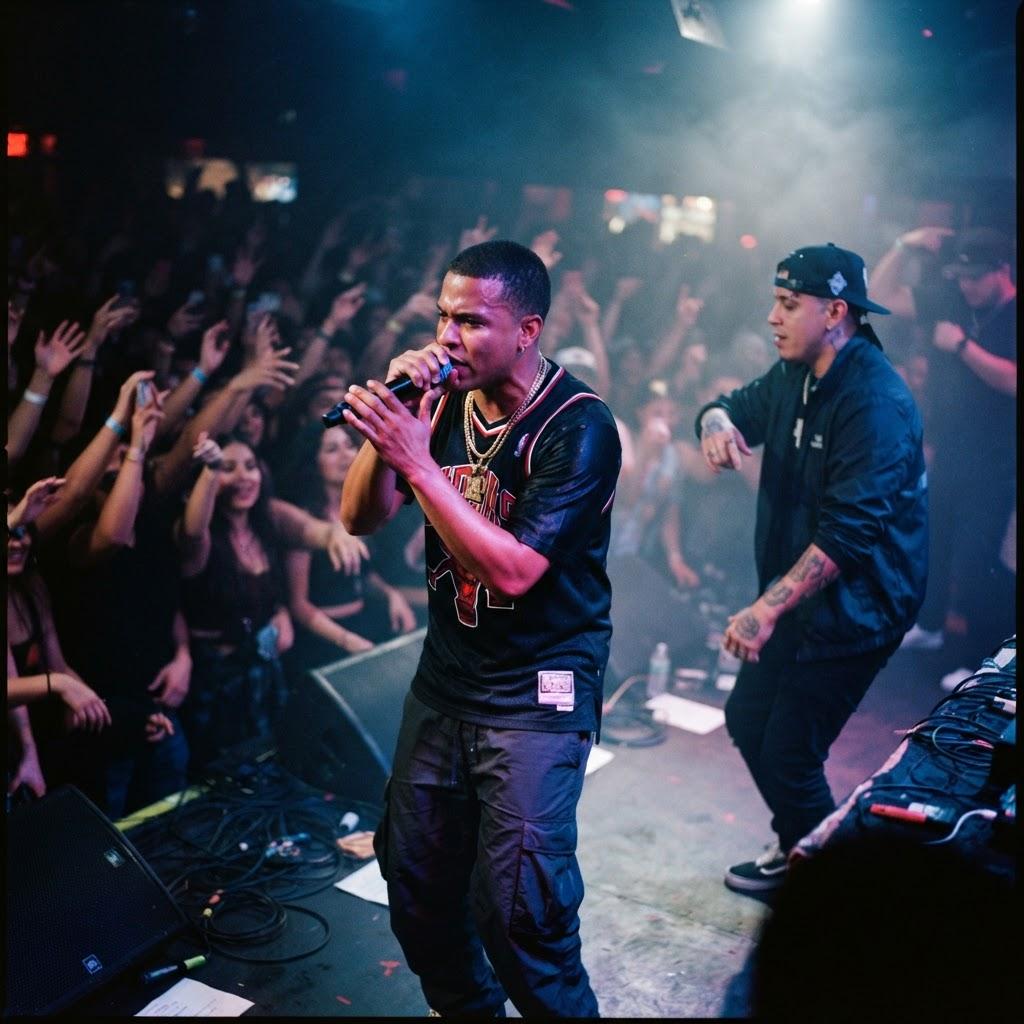
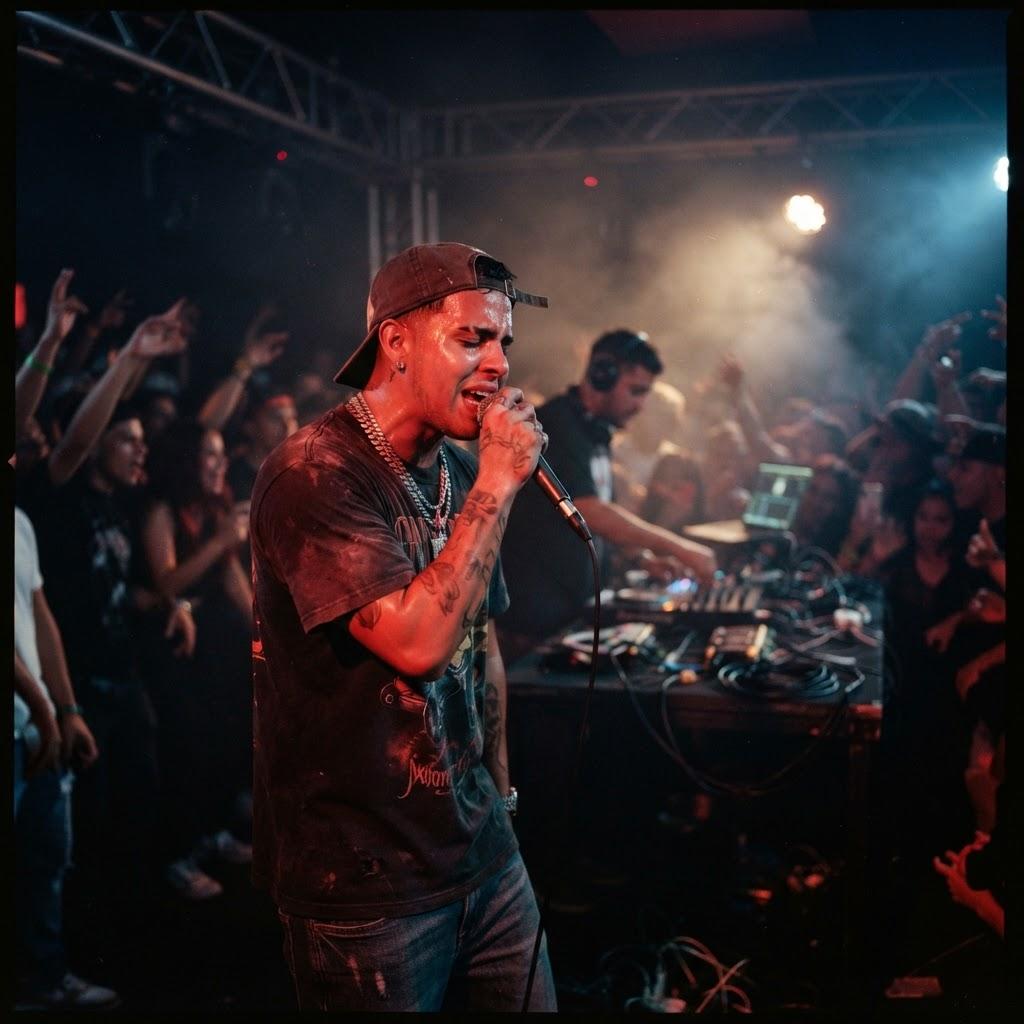
Imagine you are cruising down a coastal highway at three in the morning, the humidity of the tropics sticking to your skin, while a bassline so heavy it vibrates your rearview mirror thumps in your chest. That is Latin Trap. It is not just music; it is an attitude draped in designer streetwear, a genre that took the gritty, paranoid energy of Southern American trap and injected it with the rhythmic swagger of the Caribbean. It feels like a late-night confession mixed with a flex, where the lyrics pivot effortlessly from tales of hard-won success to the aching vulnerability of a broken heart. There is a palpable sense of danger here, but it is dressed in sequins and gold chains. It captures the exact moment the underdog decides they are tired of waiting for permission and simply starts running the show. When a track hits, it does not ask for your attention—it kicks the door down and demands you move, turning every living room, club, or car interior into a VIP section. Latin Trap is the cool, slightly reckless cousin at the party who always brings the best stories and the loudest speakers, making everyone else seem like they are living in slow motion.
The Sound & Signature Elements
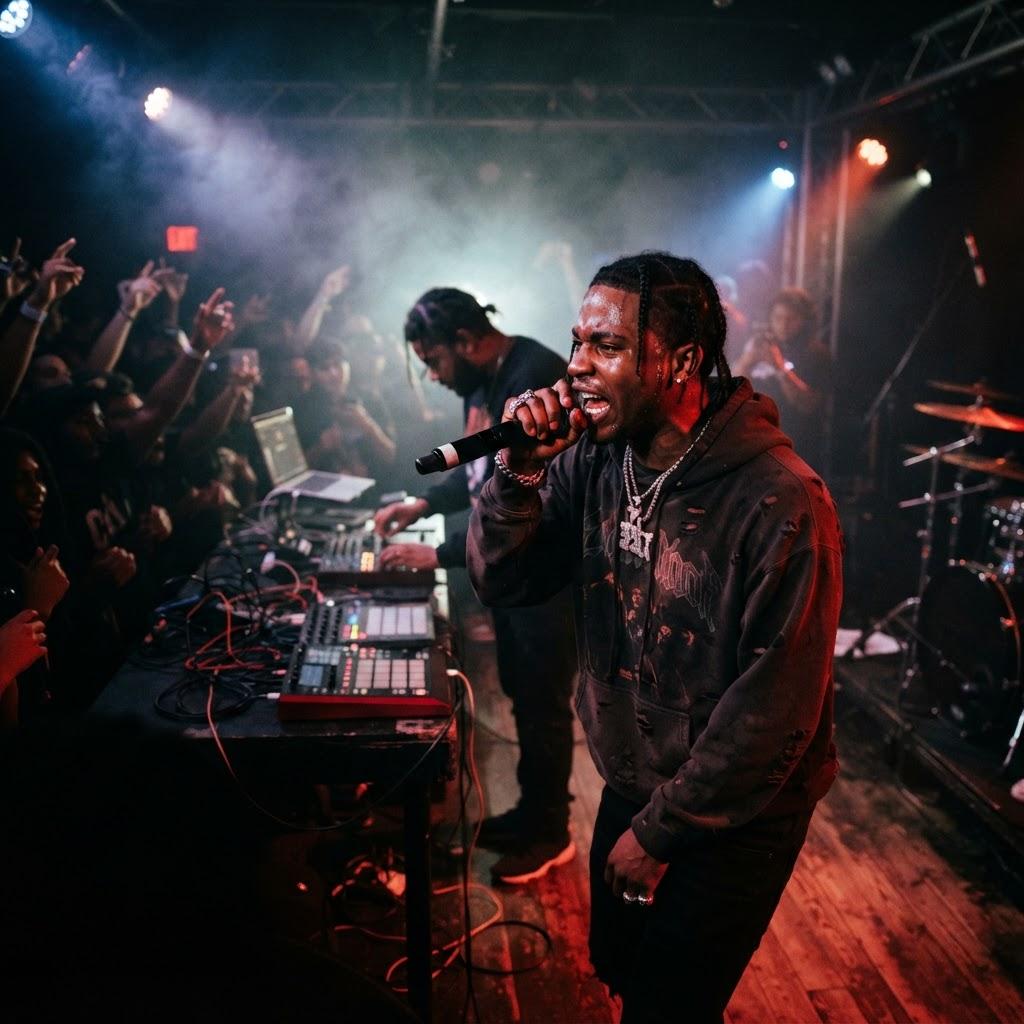
At its core, Latin Trap is built on the skeletal remains of the Roland TR-808, a drum machine that essentially invented the deep, rattling sub-bass sound that defines modern hip-hop. Think of the 808 as the heartbeat of the track; it is not just a note you hear, it is a physical force that shakes the air around you. The percussion is characterized by rapid-fire hi-hat rolls—those high-pitched, metallic 'tiki-tiki-tiki' sounds that jitter like a hummingbird on a caffeine high. These drums provide the skeleton, but the soul comes from the vocals. Most artists utilize Auto-tune, which is a production tool that corrects pitch, but here it is used as a stylistic instrument. It gives the voice a robotic, otherworldly sheen, allowing for melodies that sound half-sung and half-rapped. The song structure usually follows a loop-based approach, which acts like a hypnotist’s swing, keeping the listener locked into a groove for the duration of the track. It avoids the complex musical shifts of jazz or rock, opting instead for a repetitive, intoxicating hypnotic loop that builds tension. It is a masterclass in minimalism, where every single sound—the snap of a snare, the shimmer of a synth, the breath of a vocalist—is placed with precision to make sure your head never stops nodding.
Origins & Birth of the Sound
The birth of Latin Trap was not a neat, polished affair; it was a gritty collision of cultures in the studios of San Juan. In the early 2010s, Puerto Rican artists were already masters of Reggaeton, a dance-floor monster defined by its steady, thumping beat. But there was a craving for something darker, something that reflected the harsh realities of life on the block rather than just the sunny escapism of the beach clubs. Producers began looking north to the trap scenes in Atlanta, adopting the slow-burning, ominous drum patterns of Gucci Mane and T.I. while keeping the lyrical focus firmly in Spanish. These pioneers did not have major labels or massive budgets; they had cracked software, homemade studio setups in cramped bedrooms, and an internet connection that acted as their primary distribution network. They were taking the essence of street-level storytelling and filtering it through a uniquely Latin lens. It was an act of musical rebellion, a conscious departure from the polished, radio-friendly sounds that dominated the charts at the time. By stripping back the tropical melodies and cranking up the dark, distorted bass, they accidentally created a sonic blueprint that would eventually consume the entire global music market.
The Pioneers & Legends
No conversation about Latin Trap can happen without bowing down to the architects who turned a localized experiment into a global religion. Bad Bunny stands as the undisputed king, a cultural phenomenon who proved that you could be vulnerable, experimental, and incredibly hard-hitting all at once. Before he was selling out stadiums, he was uploading tracks to SoundCloud that sounded like they were recorded inside a storm. Then there is Anuel AA, the self-proclaimed 'Real Hasta La Muerte,' whose rasping, high-energy delivery brought an intensity that felt like a raw nerve exposed to the world. He injected a certain level of street-level authenticity that became the gold standard for the genre. We also have to salute Arcángel, an elder statesman who bridged the gap between the golden era of Reggaeton and the trap explosion, providing the lyrical dexterity that made the young guns push themselves harder. These figures were not just musicians; they were tastemakers who understood that the future of Latin music wasn't in mimicking the past, but in destroying it and building something entirely new on the ruins. Each legend brought a different flavor, whether it was the melodic genius of Ozuna or the relentless, gritty cadence of Bryant Myers.
Defining Tracks & Era-Defining Moments
Certain songs act as tectonic plates in the history of music, and in Latin Trap, the shift happened when the world heard 'Esclava' by Bryant Myers. It was a raw, unpolished, and impossibly catchy anthem that bypassed radio filters and went straight to the streets, proving that you didn't need a massive PR campaign to ignite a wildfire. Then came the 'Soy Peor' moment from Bad Bunny; the song that essentially declared that Latin Trap was not just a side project, but the new center of the universe. It featured a melancholic, almost heartbroken tone that contrasted perfectly with the heavy, menacing beat, showing that trap could handle emotional depth. We also have to mention 'La Ocasión,' a powerhouse collaboration that served as the genre’s unofficial manifesto, featuring an all-star lineup that signaled to the industry that this movement was a force to be reckoned with. These tracks were not just hits; they were cultural flashpoints that changed how record labels looked at talent in the Caribbean. They signaled a departure from the traditional musical structures and invited a whole new generation of listeners to lean into the dark, seductive, and undeniably catchy rhythms that were pouring out of the studios in Puerto Rico.
Subgenres & Offshoots
Just like a tree that refuses to stop growing, Latin Trap has sprouted some fascinating branches. One of the most prominent is 'Sad Trap' or 'Emo-Trap,' which leans heavily into the feelings of isolation and heartbreak, utilizing slower tempos and reverb-drenched synths that make the listener feel like they are wandering through a fog. Then there is the high-octane world of 'Drill-Trap,' which incorporates the aggressive, slide-bass patterns found in Chicago or Brooklyn drill, resulting in a sound that feels genuinely frantic and claustrophobic. We also see the rise of 'Trap-Corridos' in Mexico, a wild, beautiful hybridization where the traditional acoustic guitars and trumpets of Mexican folk music are woven directly into the synthetic 808-heavy backbone of trap music. It is a genre clash that sounds like it should fail but somehow works perfectly, bridging the gap between rural tradition and urban modernity. Each of these offshoots proves that the trap rhythm is incredibly versatile, acting as a canvas that artists from vastly different cultural backgrounds can paint their own realities onto without losing that core, driving force that makes the genre so infectious and hard-hitting.
Cultural Impact & Influence
Latin Trap is the reason why Spanish-language songs now dominate global charts with a regularity that would have been unthinkable twenty years ago. It forced the rest of the world to catch up, turning Spanish into the new lingua franca of global pop culture. Beyond the music, the genre dictated the fashion aesthetic of a generation—think oversized puffer jackets, layered gold jewelry, designer sunglasses worn indoors, and an obsession with luxury branding that became a uniform for the youth. The language of the streets, full of slang and regional idioms, migrated from the recording booth into daily conversation, social media captions, and high-fashion runways. You see the influence in how contemporary pop stars everywhere are trying to emulate that specific, rhythmic cadence in their own vocal performances. It fundamentally shifted the power dynamic in the music industry, moving the creative hub from cities like Los Angeles and London to the urban centers of Latin America. It gave a voice to a generation that felt ignored by mainstream media, allowing them to broadcast their own version of reality to a global audience that finally decided it was time to stop ignoring the sound of the streets.
Controversies & Drama
If there is no drama, is it really a scene? Latin Trap has had more than its fair share of backstage scuffles, internet beefs, and public meltdowns. The tension between the 'purists'—who viewed the genre as a corruption of traditional Latin sounds—and the new wave of trap artists created a war of words that played out over social media in real-time. There were accusations of 'selling out' whenever an artist signed with a major label or collaborated with a North American pop star, leading to heated debates about the soul of the genre. Producers have argued over who truly invented the signature 'Latin Trap sound,' leading to public feuds that felt like episodes of a soap opera set in a recording studio. Then there were the lyrics, which often drew the ire of conservative critics and parents, leading to debates about morality, censorship, and the responsibility of artists to their younger listeners. These arguments were loud, messy, and occasionally petty, but they were also a sign of how seriously everyone took the movement. The drama served to galvanize the fanbase, turning every minor disagreement into a historical event that reinforced the idea that Latin Trap was something worth fighting over.
Global Spread & Regional Scenes
The way Latin Trap traveled is a case study in digital-era globalization. It didn't just spread; it mutated. In Colombia, specifically in Medellín, the scene took on a more polished, melodic sheen, focusing on the intersection of trap and reggaeton to create massive, stadium-filling anthems. Over in Spain, the influence of the local flamenco tradition started to bleed into the trap production, creating a unique, soulful hybrid that sounds like a campfire session in a gritty city alleyway. Even in the United States, the diaspora communities in places like Miami and New York acted as a bridge, mixing the high-tech production of American hip-hop with the linguistic and cultural nuances of their home countries. This wasn't a copy-paste process; it was an active remixing where local artists added their own spices to the stew. Whether it is the Argentinian scene, which brings a specific, poetic, and often socially conscious lyrical intensity, or the rapid growth in Chile, the music proves that the trap beat is a universal frequency. It is the language of modern youth, transcending borders and languages because the emotional core—the frustration, the ambition, and the love—is exactly the same everywhere.
The Modern Landscape
Today, Latin Trap is not just a genre; it is the furniture of the musical world—ubiquitous, essential, and constantly evolving. It has moved past the 'new and dangerous' phase and has settled into a comfortable, dominant position in the global pop hierarchy. You hear its DNA in everything from K-pop to country music remixes, as producers everywhere realize that the 808-kick and the trap-hi-hat are the most effective ways to make a song sound 'modern.' The artists who started in basement studios are now the ones winning Grammys and headlining world tours, yet the scene maintains a surprisingly vibrant underground. Platforms like TikTok have become the new testing ground, where a single viral fifteen-second clip can turn an unknown artist into a star overnight. The production is becoming cleaner and more ambitious, incorporating elements of hyper-pop, house music, and even experimental jazz, showing that the genre is far from running out of steam. It has become a mature, sophisticated ecosystem where you have clear superstars, working-class industry veterans, and a constant stream of new talent that keeps the old guard on their toes.
How to Dive In
Ready to experience the thumping bass and infectious hooks for yourself? Start your journey by listening to the foundational albums that laid the groundwork. Begin with Bad Bunny's 'X 100pre,' which is arguably the most essential document of the genre's expansion into mainstream pop. For something with a bit more grit, dive into the back catalog of Anuel AA’s 'Real Hasta La Muerte,' which provides that raw, unvarnished look at the early trap ethos. If you want to see the intersection of Latin Trap and the global stage, check out any of the compilation albums featuring the top-tier collaborative tracks that defined the mid-2010s. Pay attention to the way the producers layer the sounds; listen to the spaces between the beats, the way the hi-hats dance, and the way the auto-tuned vocals slide over the sub-bass like a hot knife through butter. Don't worry about understanding every single slang term immediately; let the vibe and the energy carry you. Once you are hooked, keep digging through playlists of newer artists like Myke Towers or Rauw Alejandro. Crank the volume, find a speaker that can actually handle the bass, and let the pulse of the streets take over your speakers—you are now officially part of the movement.