1990s, Chicago, Illinois
Footwork
Footwork is the high-octane, rhythmically jittery heartbeat of Chicago that sounds like a caffeinated hummingbird trying to solve a Rubik's cube. It is pure, unfiltered kinetic energy that will make your legs move before your brain even registers the tempo.
Meet the Genre
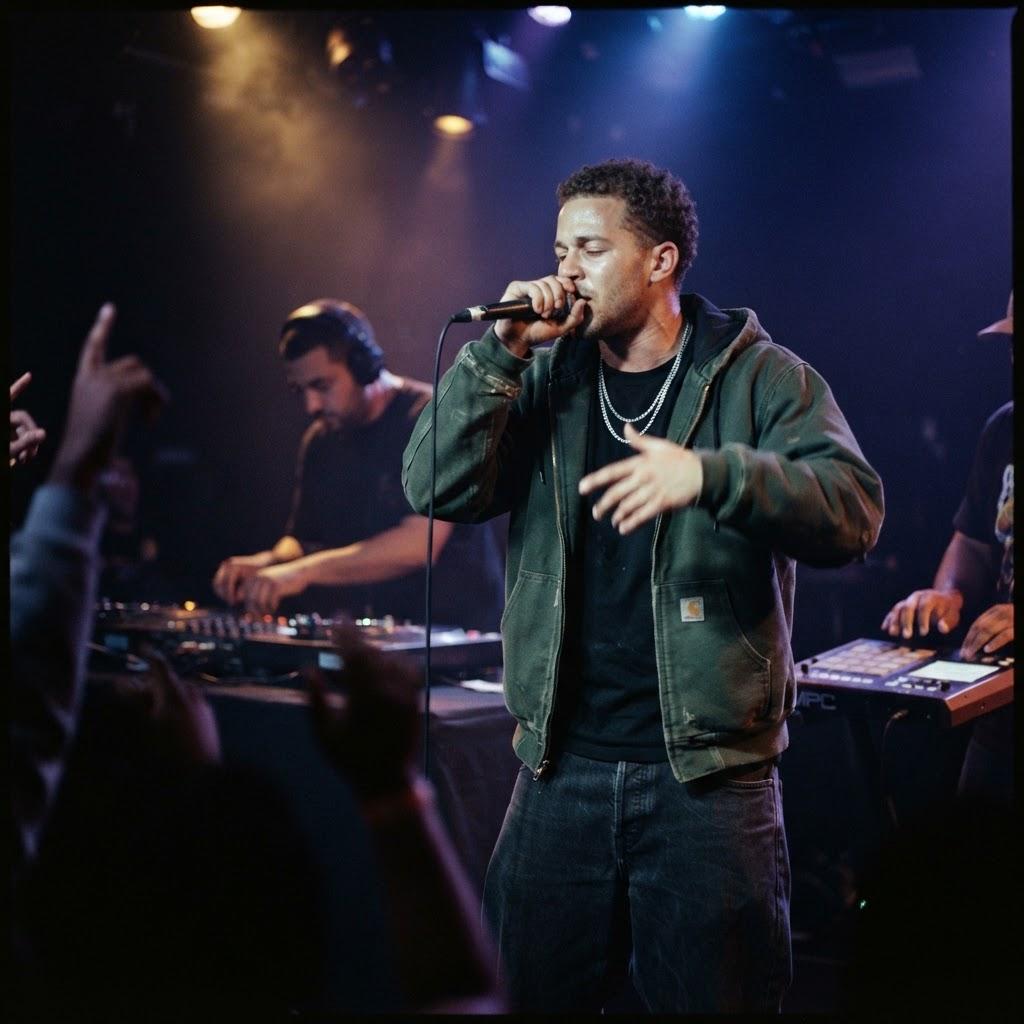
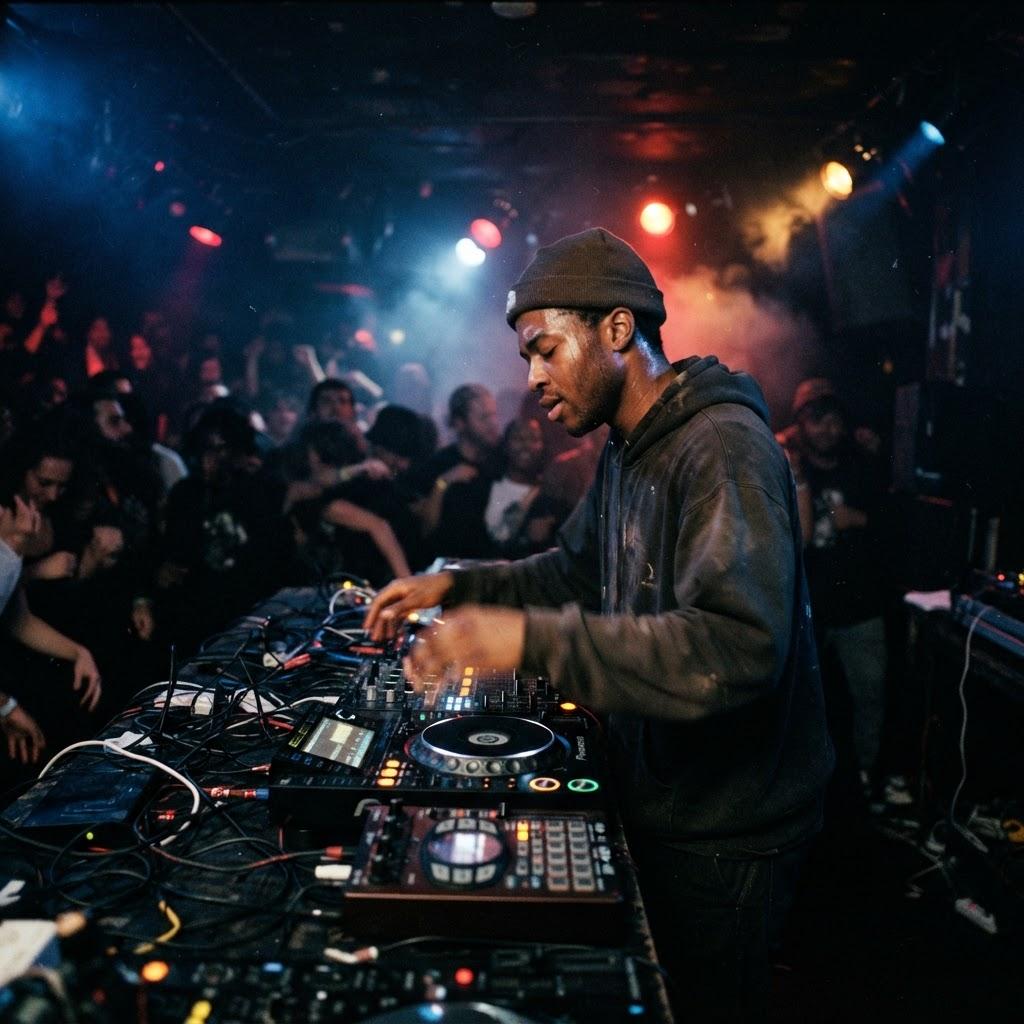
Imagine you have just downed three double-espressos, strapped on a pair of frictionless sneakers, and are suddenly tasked with participating in a high-stakes dance-off in the middle of a crowded Chicago basement. That is the fundamental vibe of Footwork. It is not just music; it is a rapid-fire physical conversation between the DJ and the dancers who move their feet so fast they look like a blurry fan blade. Footwork is the cool, slightly unhinged cousin of electronic dance music that refuses to sit still or play nice with conventional pop structures. It is frantic, it is repetitive, and it is undeniably infectious. The genre treats silence like an enemy and rhythm like a religion. When you hear a classic Footwork track, you are not supposed to nod your head politely; you are supposed to be mentally (or physically) running a marathon in your living room. It carries the swagger of a street fighter and the intricate complexity of a math problem solved at lightning speed. This is music that feels like it is vibrating at the molecular level, constantly twitching, jumping, and demanding your absolute undivided attention.
The Sound & Signature Elements
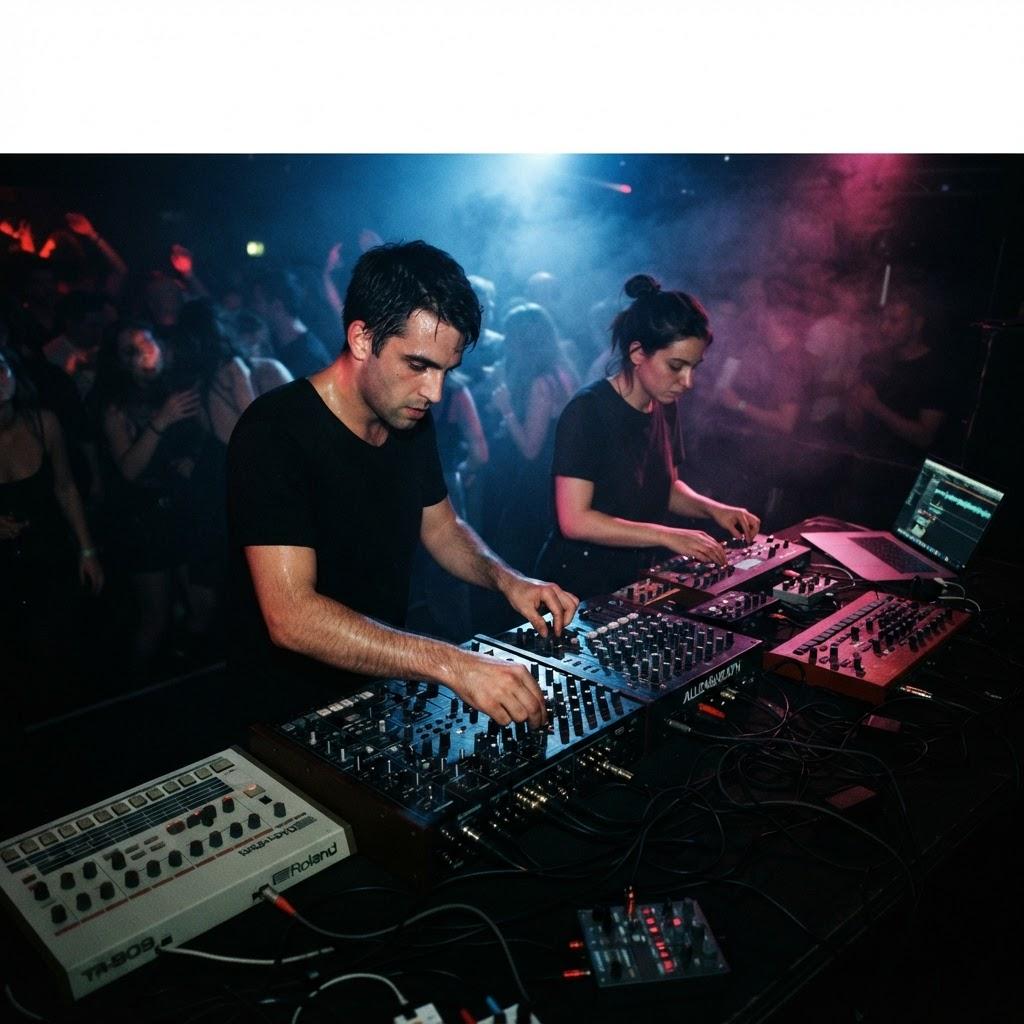
At its core, Footwork is defined by its blistering tempo, usually hovering around 160 beats per minute, which is fast enough to make most heart monitors panic. The rhythmic backbone is almost always anchored by the legendary Roland TR-808 drum machine, which provides those deep, window-rattling sub-bass kicks and sharp, piercing snare snaps. The real secret sauce, however, is the 'chopping.' Producers take tiny, sliver-thin snippets of vocal samples—often just a single word or a breath—and chop them into rhythmic jigsaw puzzles that repeat over and over, creating a stuttering, hypnotic effect that feels like a record skipping on purpose. Think of it like someone frantically editing a video in real-time, cutting frames out just to see how fast they can make the motion look. The song structures are notoriously short and punchy, often avoiding long, build-up-heavy 'drops' in favor of throwing you right into the chaotic deep end from the first second. It is a dense, layered soundscape where every millisecond is packed with activity, refusing to let the listener drift off or get comfortable for even a fleeting moment.
Origins & Birth of the Sound
Footwork didn't crawl out of a fancy laboratory or a million-dollar recording studio; it was born in the sweat-soaked basements and crowded community centers of Chicago. It emerged as a frantic evolution of Ghetto House and Juke, genres that were already pushing the limits of speed and aggression in the city's nightlife scene. The dance style actually preceded the music’s specific identity. Dancers needed tracks that hit a certain velocity to match the impossible speed of their feet, so the DJs—many of whom were also incredible dancers themselves—started pushing their software to the breaking point. This was a grassroots movement of necessity: if the current music wasn't fast enough to keep up with the competition happening on the dance floor, you simply went home, fired up your software, and made something faster. It was creative defiance in its purest form, fueled by cheap energy drinks, limited technology, and the overwhelming desire to be the best dancer in the room. This wasn't about radio play or global charts; it was about the local glory of winning a dance battle and earning the respect of your peers.
The Pioneers & Legends
To talk about Footwork without bowing down to the legends is a cardinal sin. The undisputed king of the hill was the late, great DJ Rashad, a visionary who turned the raw, aggressive energy of the streets into a globally respected art form. Rashad had an ear for melody that seemed to cut through the frantic drum patterns like a laser beam. Then there is DJ Spinn, Rashad’s partner in crime, who helped build the Teklife crew into a powerhouse of rhythmic innovation. These guys weren't just DJs; they were musical surgeons. Other titans like RP Boo are often credited with inventing the sound by experimenting with erratic, unpredictable drum sequences that defied all standard logic. RP Boo’s tracks often feel like they are breaking while they are playing, which is exactly why they are so brilliant. These pioneers created a community, not just a discography, fostering a scene where young kids could learn to produce on cracked software and earn their stripes through sheer talent. Their legacy is defined by a refusal to sound like anyone else, constantly trying to out-weird and out-pace each other.
Defining Tracks & Era-Defining Moments
If you want to understand the soul of this genre, you have to blast DJ Rashad’s 'Let U No' through a speaker that can handle serious bass. That track is a masterclass in how to combine raw, stuttering grit with an almost soulful, melancholy melody—it’s the musical equivalent of crying while you are sprinting. Another essential touchstone is RP Boo’s 'Baby Come On,' which basically laid the blueprint for how to use vocal chops as a lead instrument rather than just a background texture. These tracks weren't just hits; they were pivot points. They moved Footwork from the basement to the global stage, proving that you could be experimental and weird while still being incredibly danceable. There was also the release of the 'Bangs & Works' compilations, which acted as a glowing neon sign to the rest of the world, shouting, 'Hey, look at what’s happening in Chicago!' These moments transformed the genre from a localized secret shared between dance crews into a recognized pillar of modern electronic music, forcing the rest of the world to catch up to the blistering speed of the Windy City.
Subgenres & Offshoots
Because Footwork is so inherently restless, it naturally spawned a few weird cousins and offshoots. You have the more melodic, spacey side of the spectrum, sometimes called 'Ambient Footwork,' which takes the signature frantic drum patterns and strips away the aggression to leave something that feels like a glitchy, futuristic lullaby. Then there is the heavier, more distorted side, which leans into the industrial grit of old-school Techno, pushing the bass to levels that might actually relocate your internal organs if you are not careful. Some producers have even started blending the hyper-active rhythms of Footwork with the soulful, warm textures of classic R&B, creating a sub-genre that some fans call 'Future Soul'—though that is a bit of a fancy term for what is essentially just beautiful, broken-up singing over a drum kit that has had too much caffeine. The beauty of this family tree is that nothing is really set in stone. Everything is subject to change, remixing, and mutation, because the ethos of the genre has always been about taking what is established and immediately trying to tear it apart.
Cultural Impact & Influence
You might not realize it, but Footwork has left its fingerprints all over the modern musical landscape. If you hear a pop song today that features a rapidly chopped vocal sample that sounds like a glitchy robot, you are hearing the ghost of a Chicago Footwork track. Beyond just the audio, the movement fundamentally changed how people interact with rhythm. It turned the dance floor into a high-performance athletic zone, shifting the focus from 'looking cool' to 'being technically impossible.' This influence trickled into fashion—where the utilitarian, athletic look of Chicago’s street dance crews started appearing on global runways—and even into the way other genres like Drum and Bass and Grime handle their percussion. Footwork proved that you didn't need expensive gear or years of formal training to create something revolutionary; you just needed a computer, a massive amount of audacity, and the willingness to look a bit strange. It taught a whole generation of bedroom producers that the rules are really just suggestions, and that the most interesting sounds are usually found by pushing the 'limit' button until it snaps off.
Controversies & Drama
Oh, the drama! Being a genre born in the pressure cooker of Chicago’s music scene, Footwork has seen its fair share of petty feuds and territorial disputes. There have been plenty of 'purist wars' where long-time fans accused newer, globally-recognized producers of watering down the sound or making it too 'polite' for the club-going masses in Europe. You would frequently see arguments on social media about whether a track was 'real' Footwork or just a generic electronic song that happened to be played fast. Then, of course, there were the classic accusations of biting—when a producer would take a signature drum pattern or a specific sample chop and use it in their own track without giving the proper credit. In the tight-knit world of Chicago, where everyone knows everyone and the talent pool is small but intense, these accusations could turn into full-blown public feuds. It is all very dramatic, but it is also a testament to how much these artists care about their craft. When you pour your soul into a beat, you tend to get a little protective when someone else tries to snatch your flavor.
Global Spread & Regional Scenes
Footwork didn't stay in Chicago for long. Like a wildfire, it jumped across the ocean and found a surprising, massive home in the United Kingdom, where the local rave scene was already primed for fast, bass-heavy experimentation. British producers fell in love with the stuttering madness of it and started injecting their own local grime and dub influences into the mix, creating a unique cross-pollination. Japan also became a hotbed for the genre, with producers there obsessing over the intricate, mathematical precision of the drum patterns. In Tokyo, Footwork tracks were often treated like pieces of high-art, with producers focusing on the sound design and textural quality of the samples. Even in Los Angeles, the genre found a niche in the experimental beat scene, where producers blended it with jazz and hip-hop to create something smoother but still undeniably fast. It is amazing to see how a sound that was so deeply rooted in the specific, localized geography of Chicago could travel halfway across the world and be adopted by people who had never even set foot in the Midwest.
The Modern Landscape
Today, Footwork is in a fascinating place—it is no longer the new, shocking kid on the block, but it has aged like a fine, high-proof whiskey. It is currently thriving as a global language, with festivals dedicated to the sound happening from Krakow to Tokyo. While it hasn't become mainstream radio fodder—it is just too intense for that—it has become a bedrock of the 'experimental club' scene. You are just as likely to hear a Footwork-inspired track in a high-fashion runway show as you are in an underground basement. The tools have changed, with most producers now using sophisticated software that makes the original hardware limitations seem like ancient history, yet the spirit remains the same. The focus on extreme tempo and hyper-processed vocals is still there, but the sounds are cleaner, the production is crisper, and the influence has bled into mainstream pop music to an extent that most listeners don't even realize. It is still the soundtrack to the hyper-kinetic, digital-obsessed world we live in, and it isn't slowing down for anyone.
How to Dive In
Ready to lose your mind? Start by listening to DJ Rashad’s album 'Double Cup'—it is essentially the Bible of the genre, a perfect blend of soul, rhythm, and raw power. If you want to get a sense of where it started, look for classic mixtapes from the Teklife crew on platforms like SoundCloud or YouTube, where you can find hours of DJ sets that document the frantic evolution of the sound. Do not skip over RP Boo’s work, specifically his album 'Legacy,' which will show you the jagged, beautiful, and weird edges of the genre. Once you have those in your ears, start looking for modern producers who are keeping the fire alive, like Jlin, who brings a dark, cinematic intensity to the music that feels like a futuristic nightmare you can dance to. Don't worry about trying to 'understand' the theory behind it—just turn the volume up, clear some space in your room, and let the syncopated, stuttering drums do the talking. Once it clicks, you will never hear music the same way again. Now, go hit play and get those feet moving!