1930s
Western Swing
Western Swing is the musical equivalent of a cowboy wearing a tuxedo at a rodeo; it is fancy, fiddle-filled, and guaranteed to make your boots itch to dance. Get ready for a high-octane journey through the swingingest, stingiest, and most sophisticated sound to ever emerge from the dusty plains of the American Southwest.
Meet the Genre
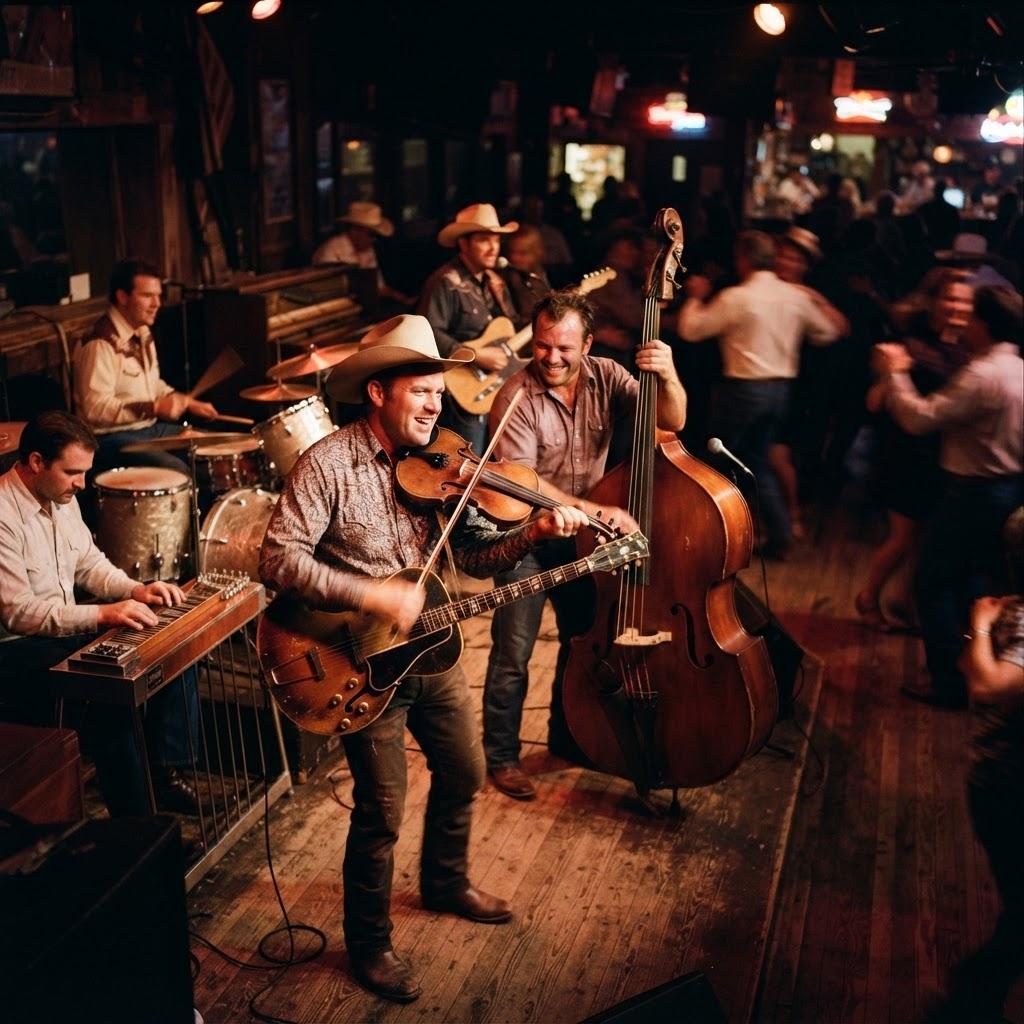
Imagine you are walking into a dimly lit, sawdust-covered dance hall in the middle of 1930s Texas. The air is thick with the scent of cheap beer, perfume, and anticipation. Suddenly, a band hits the stage, and instead of the mournful, lonely cowboy ballads you might expect, they explode into a sound so infectious and rhythmically complex that your feet start tapping before your brain even registers what is happening. This is Western Swing—the musical equivalent of a rodeo rider deciding to take a detour through a Manhattan jazz club. It is big, it is bold, and it refuses to sit still. Western Swing takes the lonesome cry of the country fiddle and dresses it up in a fancy, striped jazz suit, giving it a backbeat that could wake the dead. It is the sound of pure, unadulterated joy amidst the hard times of the Great Depression. This genre does not just want your attention; it wants your entire nervous system to synchronize with its relentless, swinging pulse. It is sunshine and starlight, grit and glitter, all rolled into one impossibly upbeat package. Whether you are a city slicker or a ranch hand, you will find yourself caught in its orbit, wondering how something that sounds this sophisticated can also feel so much like home.
The Sound & Signature Elements
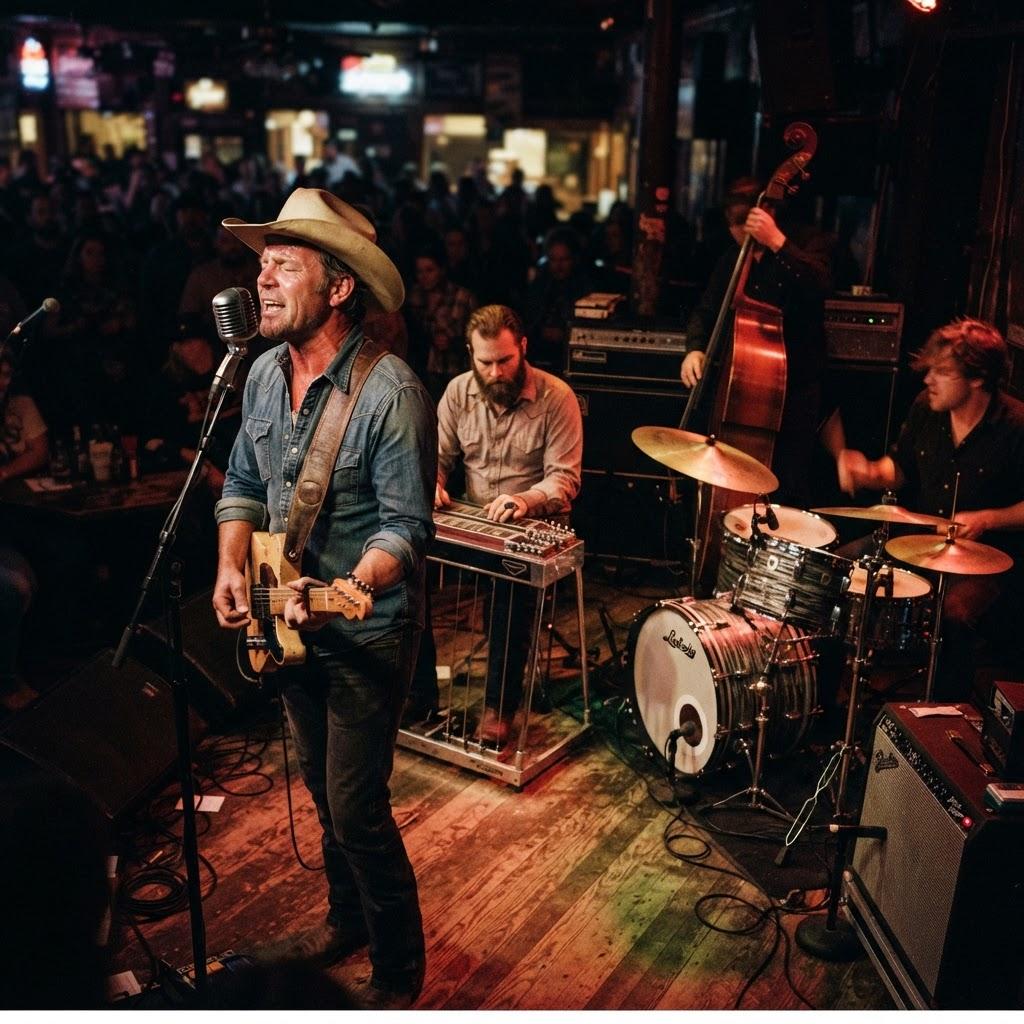
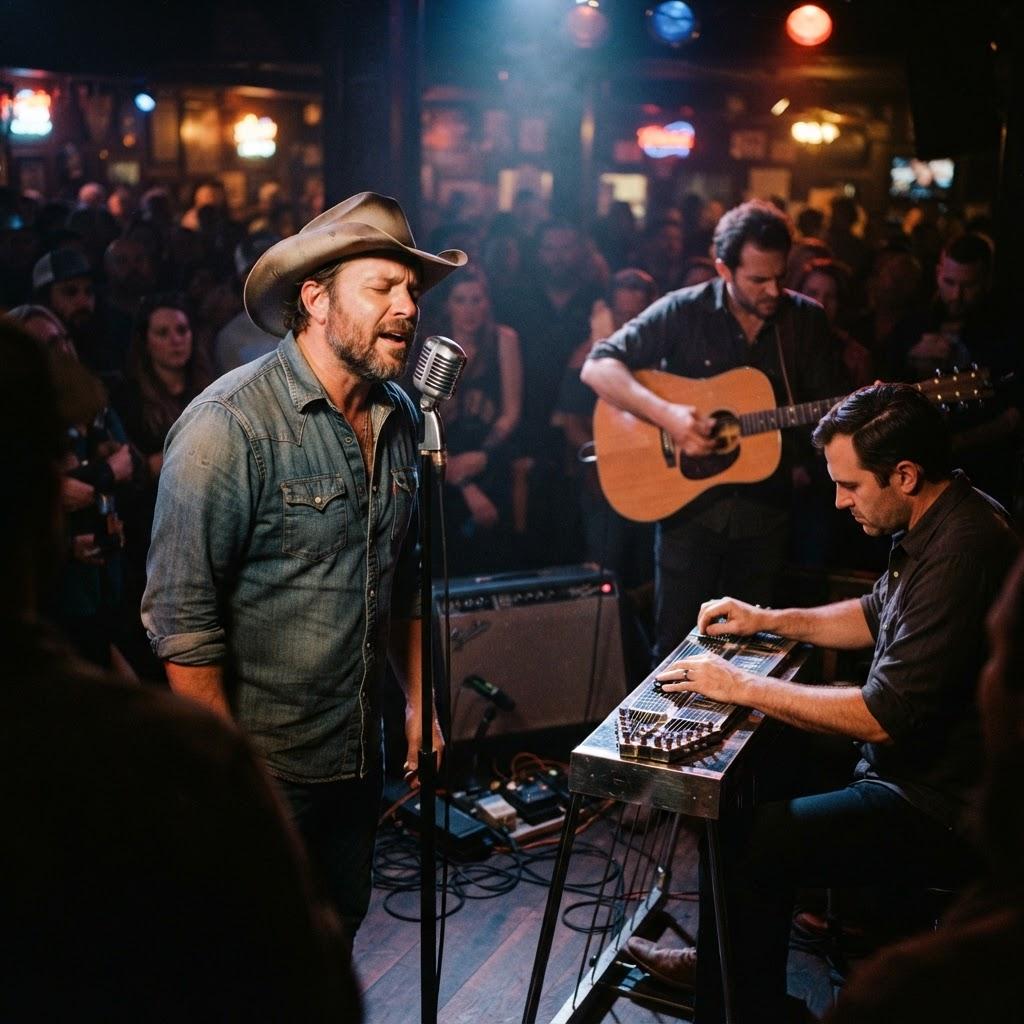
At its core, Western Swing is built on a foundation of 'swing' rhythm, which is that irresistible, loopy, rolling feeling that makes you want to snap your fingers or swing your partner across the floor. Musically, it is like a musical stew. You have the traditional country fiddle, which provides the emotional color, but you mix it with the complex, brassy punch of a Big Band orchestra. The tempo is almost always fast, usually bouncing between 120 and 160 beats per minute, which is the sonic equivalent of a caffeine overdose for your dance moves. You will hear the 'steel guitar,' which is that slippery, crying instrument that sounds like it is sliding down a greased lightning bolt, adding a unique, futuristic, and liquid texture that defines the genre. The rhythm section is locked in tight, with an upright bass thumping away like a heartbeat and a drummer keeping that jazz-inflected 'ride cymbal' pattern going to drive the train forward. Think of it as 'Country-Jazz Fusion' before people actually started using that term. It is not just about the notes on the page; it is about the interplay between instruments. The guitar players often take cues from Django Reinhardt, playing these intricate, galloping runs that make a simple C-major chord sound like a masterpiece. It is musical alchemy: combining the rural storytelling of the plains with the urban intellectualism of swing jazz.
Origins & Birth of the Sound
Western Swing did not arrive in a flash of lightning; it evolved in the dusty, restless spaces of Texas and Oklahoma during the early 1930s. The region was a melting pot, a place where people of all walks of life—oil workers, farmers, cattle drivers—found themselves gathered in community halls to escape the grim reality of the Dust Bowl and the Great Depression. You had country musicians who knew their way around a hoedown, but they were also listening to the radio and hearing the big jazz orchestras from New York and Chicago. It started when musicians began taking the old-timey fiddle tunes and trying to make them sound as sophisticated as the big jazz acts of the era. They experimented. They jammed. They essentially forced the fiddle to have a conversation with the saxophone and the electric guitar. It was an act of creative rebellion. Why stick to the three-chord structure of the past when you could incorporate the complex chords and improvisational flair of the jazz age? The birth of Western Swing was messy, electric, and utterly defiant. It was born in backrooms, roadhouses, and barn dances, where the only thing that mattered was keeping the dancers moving long enough to forget their troubles. It was the sound of a culture reinventing itself through sheer force of will, optimism, and an absurd amount of musical talent.
The Pioneers & Legends
If Western Swing is the royalty of the dance hall, then Bob Wills is the unquestioned King. Bob Wills and His Texas Playboys were the pioneers who turned this weird experiment into a national phenomenon. Bob Wills himself was a fiddle-playing visionary who was less of a bandleader and more of a conductor of chaos, known for his signature, gravelly 'ah-ha!' vocal outbursts that punctuated the music and kept the band on its toes. Then you have Milton Brown, the 'Father of Western Swing,' who sadly passed away far too young but arguably laid the initial blueprint by forming his Musical Brownies. His ability to blend jazz with string-band instrumentation was revolutionary. You cannot talk about legends without mentioning Leon McAuliffe, the man who turned the steel guitar from a background curiosity into a lead instrument that could wail with the intensity of a trumpet. These were not just musicians; they were technical wizards and showmen who navigated the massive, unwieldy ensembles of the day with grace. They brought in piano players who could hold their own against any jazz virtuoso and horn players who understood the soul of the country. They were the architects of a sound that demanded absolute technical perfection disguised as a casual, fun-loving good time.
Defining Tracks & Era-Defining Moments
To understand the gravity of Western Swing, you have to listen to the tracks that defined the landscape. 'San Antonio Rose' is the undisputed national anthem of the genre. When you hear that instrumental opening, you are instantly transported back to a time of high-heeled cowboy boots and polished dance floors. It is sophisticated, melodic, and undeniably infectious. Another monolith of the genre is 'Steel Guitar Rag,' a track that serves as a tutorial on why the steel guitar is the secret weapon of the entire sound. Every single riff in that track is designed to make you smile. Then there is 'Ida Red,' a stomping, driving piece of music that shows off the band's ability to lock into a groove so tight it feels like a physical object. These tracks were not just songs; they were viral hits of their day, broadcast across the radio waves to millions of Americans hungry for a diversion from the dark news of the times. Every pivot point in the genre’s history can be traced back to a record session where a bandleader told their crew, 'Let’s try a little more swing on this one.' These songs turned rural outcasts into radio stars, proving that music doesn't have to choose between being smart or being fun; it can be both.
Subgenres & Offshoots
Western Swing is a generous tree with some wild branches. You have the 'Hot String Band' style, which leans heavily on virtuosic, lightning-fast guitar and fiddle solos, almost like a bluegrass band that ate too many jazz records. Then there is the 'Big Band Country' variation, which adds a heavy brass section—trumpets, saxophones, and trombones—that makes the music feel like a military march for a party. You also have the 'Cowboy Jazz' offshoot, which is a bit more laid back, leaning into the crooner style of the 1940s while keeping the western storytelling themes front and center. Because it was such a flexible genre, it constantly cross-pollinated with everything it touched. In California, for example, the influence of the Hollywood movie industry led to the 'Singing Cowboy' aesthetic, where Western Swing became more cinematic and polished for the silver screen. In the darker, moodier corners of the Texas dance halls, you could find 'Honky Tonk Swing,' which brought in the heartbreak and the spilled-whiskey lyrics of country music but kept the propulsive, swinging beat of the jazz influence. It is a family tree where every branch seems to have a different personality, but they all share the same rhythm-loving DNA that makes the genre so impossible to categorize or ignore.
Cultural Impact & Influence
The influence of Western Swing is like a phantom limb for modern music; you don't always see it, but you definitely feel it. It laid the literal groundwork for rock and roll. Think about it: high-energy, guitar-driven music with a heavy backbeat? Before the kids were listening to Elvis or Chuck Berry, the Texas Playboys were rocking the dance halls with the exact same energy. The electric guitar’s transition from a quiet rhythm tool to a loud, expressive, piercing lead instrument happened right here. Without the showmanship of Western Swing, the high-octane spectacle of modern country concerts would probably be a lot more boring. Beyond music, it changed the aesthetic of the American West. It made being a 'cowboy' look cool, glamorous, and exciting rather than just a dusty job. It brought a certain urban panache to rural culture, helping to bridge the gap between the farm and the big city. Language, fashion, and even the way we approach a party can trace its roots back to these dance halls. It gave people permission to be sophisticated and rustic at the same time, which is a tension that pretty much defines the entire American cultural identity to this day. It was the first truly 'modern' sound of the heartland.
Controversies & Drama
No genre with this much personality escapes the drama. The biggest beef in the Western Swing world was the eternal 'Purist vs. Progress' war. Traditionalists looked at the inclusion of drums—a very recent, scandalous addition to country music at the time—and thought the world was ending. They argued that if you put a drummer on stage, it was no longer 'country,' it was 'jazz' or, worse, 'the devil’s music.' The bandleaders were constantly fighting radio stations and venue owners who thought the music was too complex or too 'noisy' for their audiences. There were also the petty squabbles between the big-name bandleaders who would 'steal' each other’s star players, leading to legendary rivalries that played out on the stages of various dance halls. The accusation of 'selling out' was thrown around constantly because these artists dared to experiment with pop and jazz structures. It was a constant tug-of-war between the folks who wanted their country music to stay simple, lonesome, and acoustic, and the Western Swing musicians who were dead set on bringing the entire musical world into their sandbox. It was a petty, glorious, and incredibly high-stakes tug-of-war that ultimately made the music much better because they were all trying to outdo each other every night.
Global Spread & Regional Scenes
While its heart will always be in Texas and Oklahoma, Western Swing was not a stationary creature. As people migrated, so did the sound. California, particularly the Bakersfield area, became a secondary home for the genre during the mid-century. The transplanted workers brought their fiddles and their swing records to the West Coast, creating a scene that was a little bit grittier and a little bit louder than the Texas original. You also saw scenes pop up in the Pacific Northwest and even in parts of the Midwest, where the influence of the regional polka bands created a unique, accordion-heavy take on the swing sound. It moved through the radio waves, influencing musicians in Nashville who were trying to figure out how to make country music sell to city audiences. Wherever there was a dance hall and a group of musicians who were bored with playing the same three chords, Western Swing took root. It was a virus of fun that spread across the country, adapting to whatever local flavors were present. From the honky-tonks of the Southwest to the urban jazz clubs that briefly welcomed these 'cowboy' musicians, the genre proved that you didn't need to be from the plains to understand the universal language of a swinging, fiddle-led dance party.
The Modern Landscape
Today, Western Swing sits in a fascinating spot. It is not exactly dominating the Top 40 charts alongside the latest synth-pop tracks, but it is thriving in a vibrant, underground-to-established ecosystem. You have 'Revivalist' bands who are absolute nerds about the history, re-creating the 1940s sound with painstaking detail, playing on vintage instruments and wearing the suits to match. At the same time, you have younger, genre-bending artists who are taking the DNA of Western Swing—the rhythm, the instrumentation, the defiance—and slamming it into modern indie, rock, and alternative country. It pops up in the most unexpected places on social media, where a viral clip of an incredible fiddle solo can send a whole new generation down the rabbit hole. It is less of a 'dying breed' and more of a 'secret language' that musicians speak when they want to inject some real soul and technical grit into their work. It has transitioned from a commercial juggernaut to a revered craft. You see its fingerprints on everything from modern Americana to the high-energy folk scene. It is proof that a sound this well-engineered never really goes away; it just waits for the next generation of musicians to discover that if you want to make people dance, you can't beat a really good fiddle swing.
How to Dive In
If you are ready to stop reading and start dancing, you need to head straight for the classics. Start your journey with Bob Wills and His Texas Playboys’ compilation 'The Essential Bob Wills.' It is the 'Bible' of the genre. If you want something that hits you with the raw intensity of the early days, track down recordings by Milton Brown and His Musical Brownies. For a modern fix, listen to Asleep at the Wheel, who have been carrying the torch for decades with incredible precision and respect for the source material. Pay attention to how the fiddle and the steel guitar dance around each other in every track. Don’t just listen for the melody—listen for the rhythm section. Try to pick out the upright bass, the drums, and the piano; they are the engine room of the whole operation. Once you feel the 'swing'—that specific, rolling, galloping sensation—you are officially hooked. Keep exploring the various compilations of 1940s dance-hall music, and don't be afraid to branch out into the more experimental stuff. Put on 'San Antonio Rose,' crank the volume to the point where your neighbors start tapping their feet, and let the sheer joy of the music do the rest. Western Swing is a lifelong rabbit hole, and the best way to start is by turning it up and losing yourself in the groove.