1970s, Nashville, Tennessee
Outlaw Country
Outlaw Country is the musical equivalent of a middle finger wrapped in velvet and fringe. It is the grit, the glory, and the glorious rebellion of artists who decided that Nashville suit-and-tie culture was just a bit too suffocating for their souls.
Meet the Genre
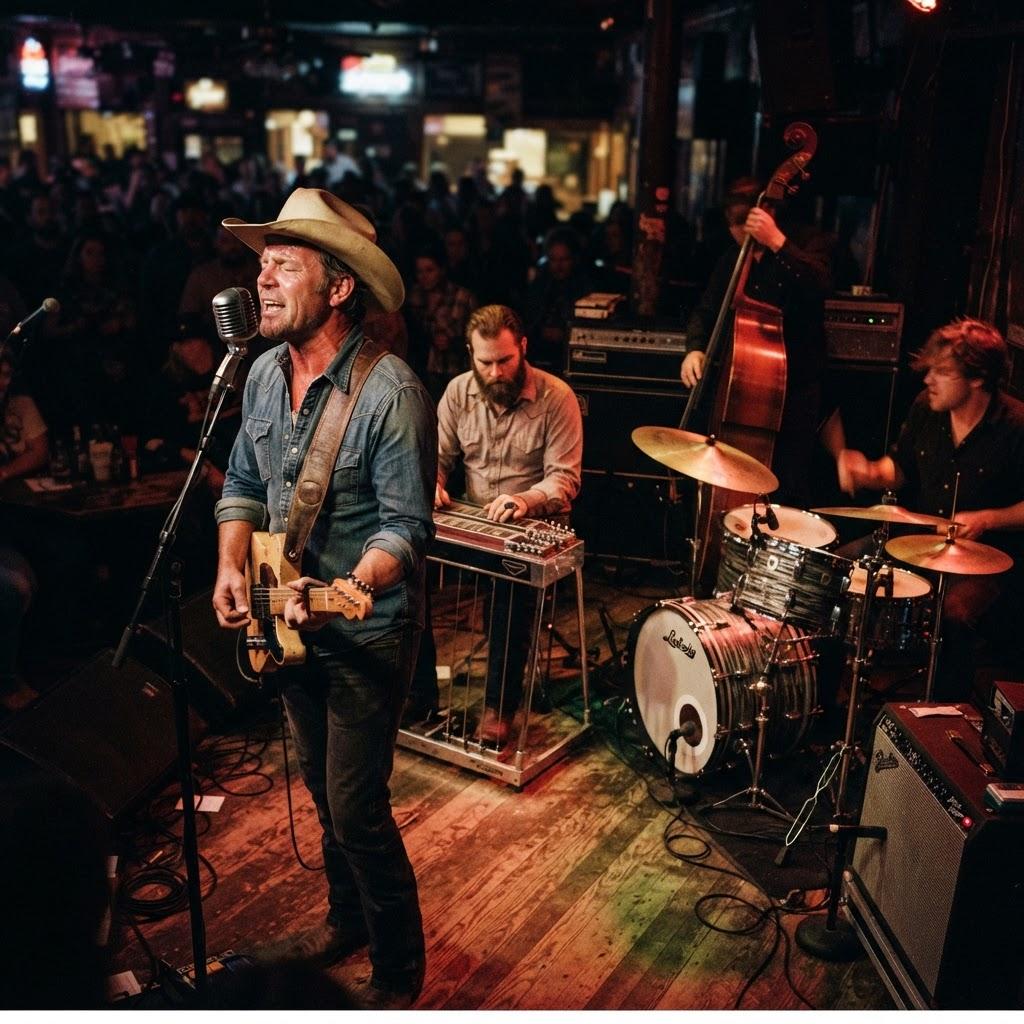
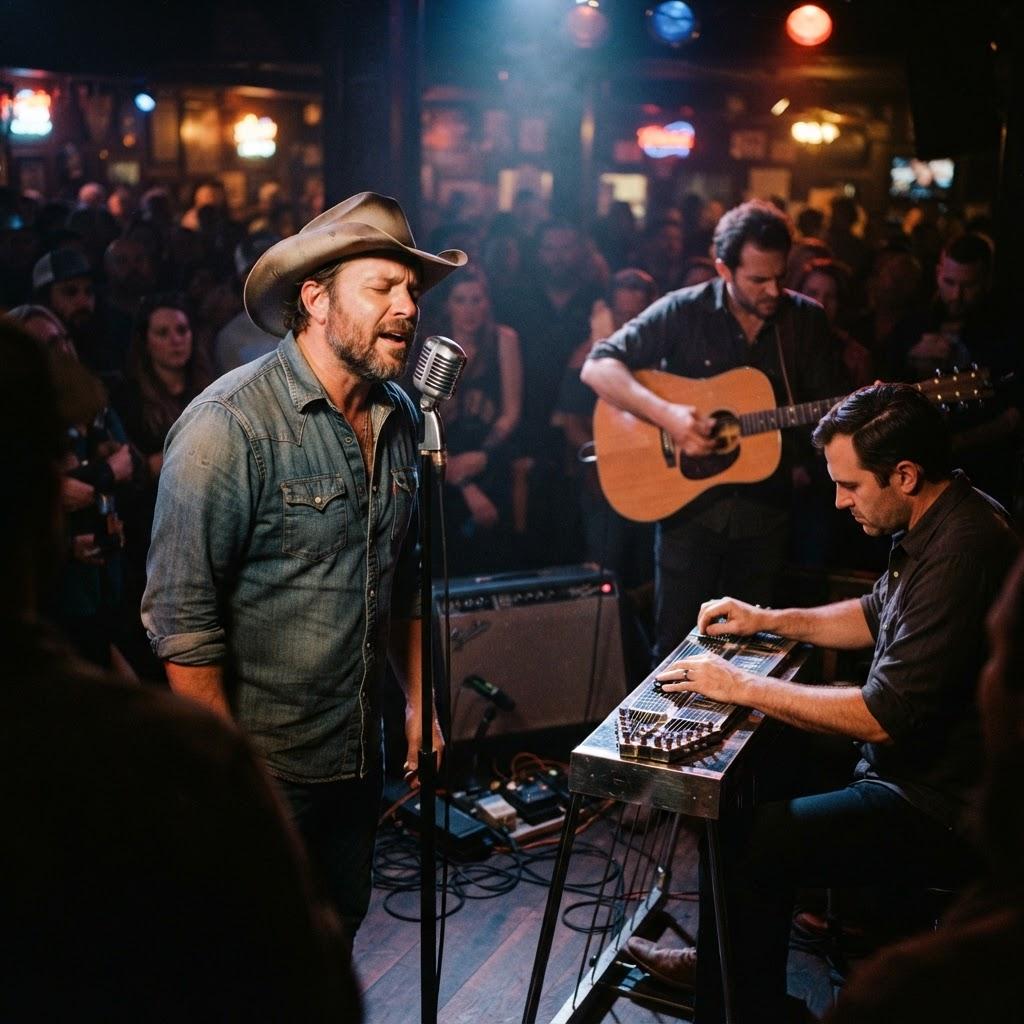
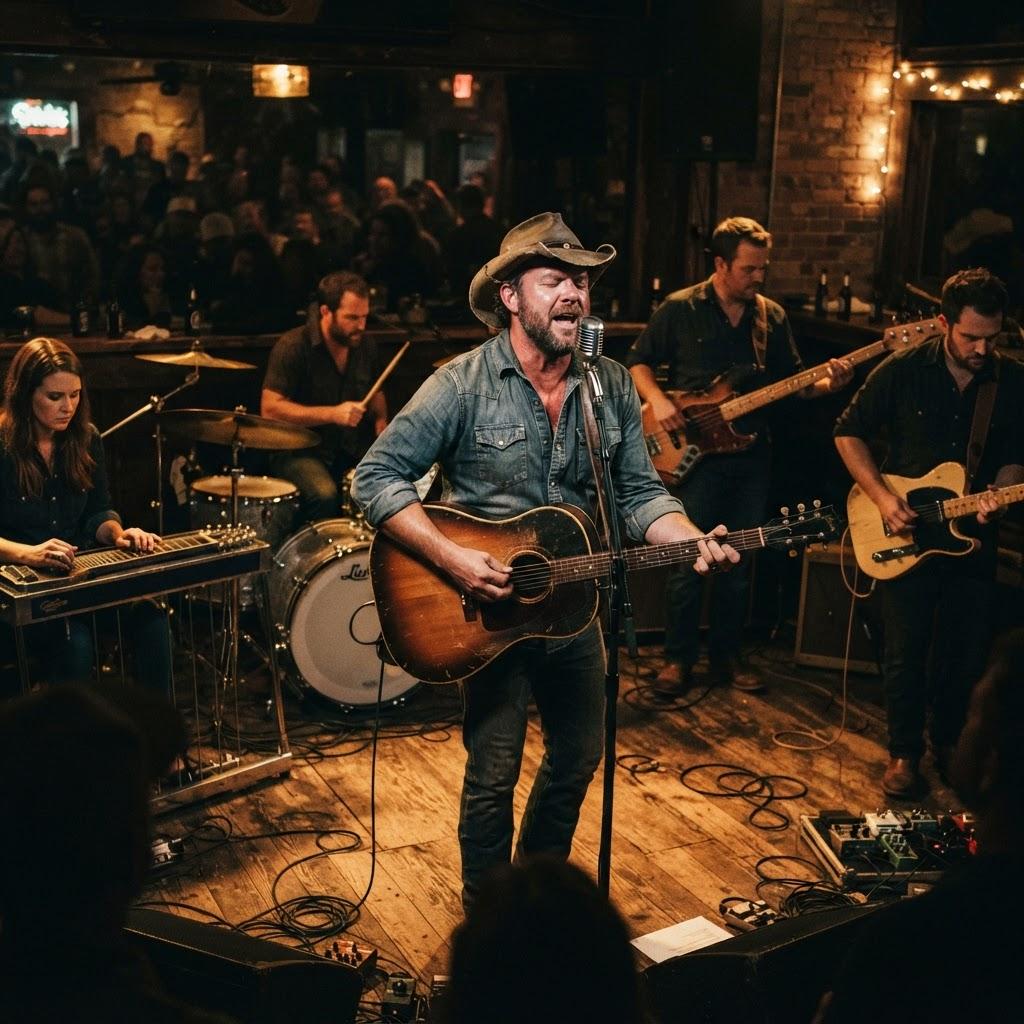
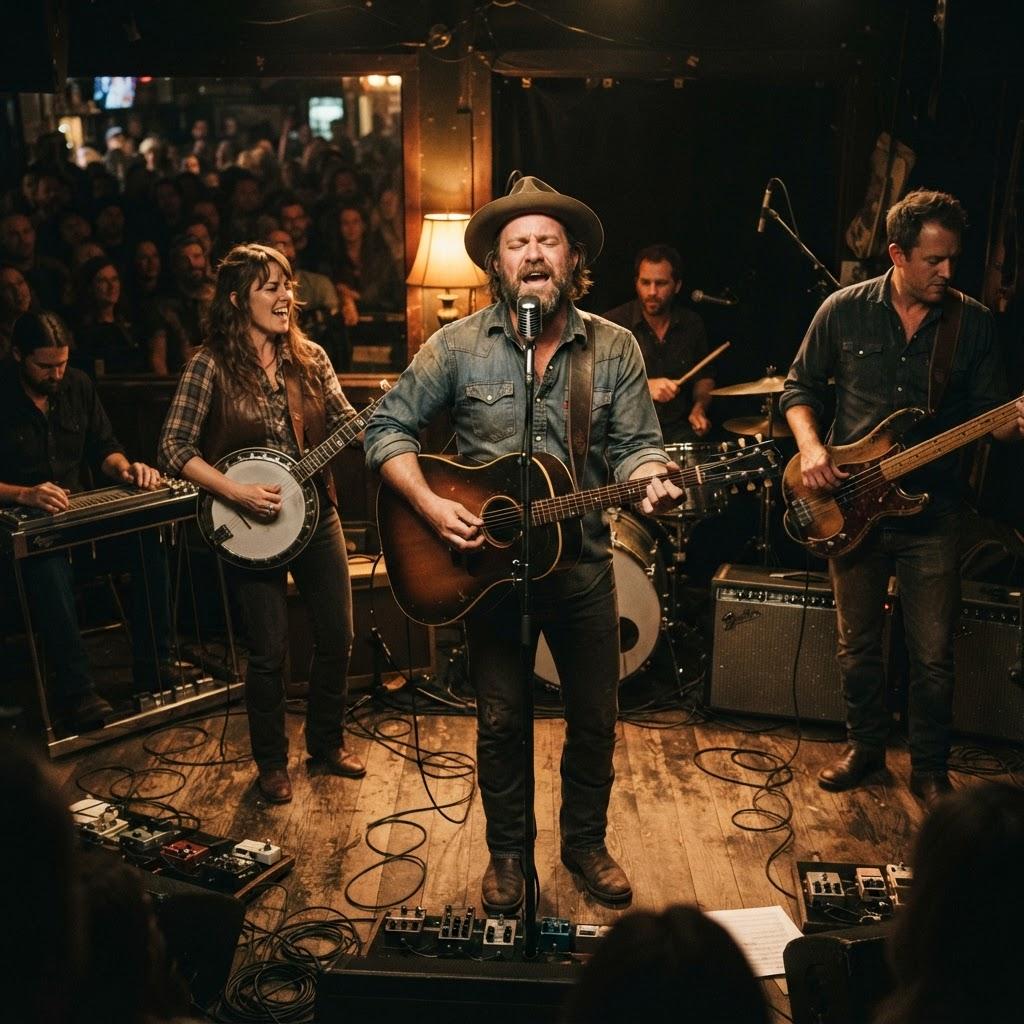
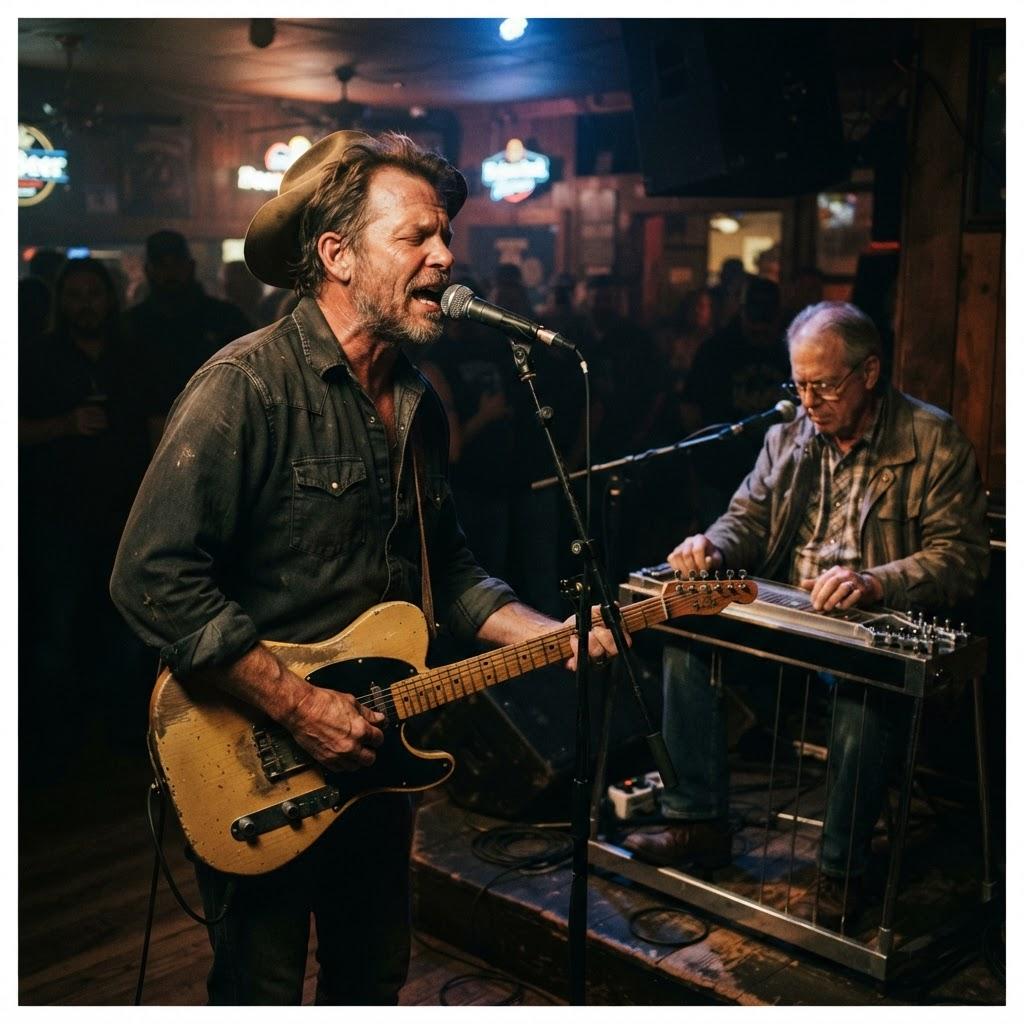
Picture a room filled with cigarette smoke, the faint scent of stale bourbon, and a man leaning into a microphone like it is the only thing keeping him from falling off the face of the earth. Outlaw Country is not just a genre; it is a declaration of independence from the polished, glitter-drenched machinery of the Nashville music industry. While the radio was busy pumping out songs about shiny trucks and perfect porch swings, the outlaws were in the back corner of a dark bar singing about divorce, prison, bad luck, and the beautiful misery of being human. It feels like a late-night drive on a dusty highway with the headlights off—dangerous, exhilarating, and deeply honest. There is no artificial sweetener here. It is music that sounds like boots scuffing on hardwood floors and voices weathered by years of chasing the wrong sunset. It does not ask for your approval; it simply tells you how it is, whether you want to hear it or not. When the music hits, it feels like the sonic equivalent of a firm handshake from a stranger who knows all your darkest secrets.
The Sound & Signature Elements
At its heart, Outlaw Country is a masterclass in musical minimalism, stripping away the orchestral bloat of the Nashville Sound in favor of raw, jagged edges. You will hear the 'Telecaster' guitar, which is essentially an electric guitar known for its sharp, cutting 'twang' that can pierce through a thick mix like a knife through butter. Then there is the 'pedal steel,' that weird-looking table with pedals and levers that produces a weeping, sliding sound which acts as the emotional anchor of the track. The tempo usually leans into a steady, walking pace, rarely rushing, because outlaws do not run unless the sheriff is coming. The song structures are refreshingly simple—verse, chorus, verse, chorus, a mournful solo, and an outro—because when you have a story that hurts, you do not need fancy production to hide it. The vocals are never perfect; they are cracked, gravelly, and occasionally off-key, but that 'imperfection' is the feature, not the bug. It is like comparing a pristine, computer-generated animation to a charcoal sketch on a cocktail napkin—the sketch feels real because a human hand actually made it.
Origins & Birth of the Sound
The birth of Outlaw Country happened when a few tired musicians finally slammed their fists on the table and decided they had had enough of the 'producer is king' regime. Back in the late 60s and early 70s, Nashville was a factory. You walked into a studio, wore what they told you to wear, and played exactly the notes the session leader scribbled on a page. Willie Nelson, arguably the patron saint of this rebellion, looked at that system, saw the lack of heart, and packed his bags for Austin, Texas. He found a scene filled with hippies, college students, and grizzled cowboys who all wanted something real. The 'Outlaw' label was actually coined by a marketing executive trying to explain why these guys had long hair and played for fans who looked more like bikers than country club members. It was a cultural collision where folk-rock sensibilities met traditional honky-tonk grit. They weren't literally breaking laws, though they certainly didn't mind looking like they were; they were breaking the unwritten laws of the country music business, proving that an artist’s creative vision was worth more than a producer’s profit margin.
The Pioneers & Legends
You cannot talk about Outlaw Country without bowing down to the holy trinity: Willie Nelson, Waylon Jennings, and Kris Kristofferson. Willie was the cosmic philosopher, a man who could write a song that made you cry into your beer and then start a set that lasted until dawn. Waylon, on the other hand, was the muscle. With his deep, booming voice and a leather-covered Fender guitar, he embodied the stoic toughness of the movement. He famously fought the record labels for the right to use his own studio musicians rather than the 'house band' of Nashville. Then there was Kris Kristofferson, the Rhodes Scholar who traded a promising military career to sweep floors at a studio just so he could be near the music. He brought a literary, almost poetic weight to the genre that showed how smart, deep, and vulnerable these 'outlaws' actually were. Alongside them, you had the fierce and uncompromising Jessi Colter, who proved that the outlaw spirit wasn't just for the boys. These weren't just musicians; they were larger-than-life characters who lived their lyrics, turning their own turbulent lives into a blueprint for generations of misfits.
Defining Tracks & Era-Defining Moments
If you want to understand the tectonic shift this movement caused, you have to spin 'Ladies Love Outlaws' by Waylon Jennings. It is the manifesto of the movement, setting the tone for every cowboy poet who followed. Then there is Willie Nelson’s 'Red Headed Stranger' album, a concept record that felt more like a short story told in a smoky campfire light than a standard collection of hits. Another titan is 'Help Me Make It Through the Night,' written by Kristofferson, which showed that outlaws could be soft, romantic, and devastatingly sad all at once. The most pivotal moment was the release of the compilation album 'Wanted! The Outlaws' in 1976. It was the first country album to go platinum, a massive middle finger to the industry that had tried to gatekeep the charts. When that record hit the shelves, the suits in Nashville finally realized that the 'fringe' element was actually the biggest thing in the country. It was the moment the rebels became the kings of the castle, turning the entire industry on its head and changing the sound of radio forever.
Subgenres & Offshoots
Outlaw Country is like a wild tree with branches that grow in weird, wonderful directions. You have 'Red Dirt,' which is the earthy, Oklahoma-flavored cousin of the genre, blending in more rock energy and bluesy influence. It is less about the grand myth of the outlaw and more about the specific, regional struggle of living in the dust of the plains. Then there is 'Cowboy Punk,' which takes the outlaw attitude and injects it with the high-speed, aggressive energy of the 80s punk scene. It is louder, faster, and usually features a lot more shouting, yet it retains that fundamental 'we don't care what you think' ethos. You also have 'Americana,' which acts as the gentle, thoughtful sibling that focuses heavily on songwriting, acoustic textures, and the stories of the common person. These offshoots prove that the movement wasn't a static monument but a living, breathing virus of creativity that could adapt to whatever musical environment it found itself in, constantly evolving without losing its stubborn, rebellious heart.
Cultural Impact & Influence
The shadow cast by Outlaw Country is massive and it isn't just limited to the music charts. In terms of fashion, the 'outlaw' look—denim jackets, long hair, braids, leather vests, and cowboy hats worn at a defiant tilt—became a symbol of working-class cool that influenced everything from high fashion to local bar culture. The genre also shifted the way we talk about the 'artist.' It killed the idea that a singer had to be a polished puppet; it made 'authenticity' the new currency. Even outside of music, filmmakers and writers started using that outlaw aesthetic to tell grittier, more grounded stories about the American experience. In the world of music, you can hear its DNA in everything from Grunge rock to modern Indie Folk. When you hear a band like Pearl Jam or a singer-songwriter like Jason Isbell, you are hearing the echo of those 70s outlaws. They taught an entire generation that it is better to be a flawed, authentic disaster than a perfect, manufactured success, a lesson that has echoed through every corner of pop culture for decades.
Controversies & Drama
Oh, the drama was glorious. The biggest battle was the 'purist wars,' where traditionalists accused the outlaws of ruining country music with their 'rock and roll' attitudes and long hair. These critics were the same people who thought a country singer should wear a sequined Nudie suit and never, ever say a bad word about the government or their mother. The outlaws laughed, drank more whiskey, and kept right on playing. There was also the constant friction with the record labels, who wanted to control the output but were essentially powerless because the fans loved the outlaws too much to care about what the boardroom wanted. Some fans even called the outlaws sellouts when they started playing in arenas, leading to classic arguments in dive bars about what 'real' country actually means. It was a soap opera played out through guitar solos and press releases, proving that nothing fuels creative genius quite like a little bit of spite and a whole lot of professional jealousy among peers.
Global Spread & Regional Scenes
While Nashville was the headquarters, the fire really caught in places where people felt alienated by mainstream culture. In Austin, Texas, the 'Armadillo World Headquarters' became the church of the movement, a venue where hippie culture and cowboy culture had a baby. California also picked up the slack, with artists in the Laurel Canyon scene finding common ground with the outlaws’ focus on storytelling and personal truth. Even across the pond in the United Kingdom, the outlaw spirit resonated with punk rockers who saw a kindred soul in Willie Nelson’s defiance. In every city, local scenes would pop up, mixing the outlaw sound with their own regional flavor—the swampy blues of the South, the crisp, clean folk of the North, and the sun-baked, desert-scorched rock of the West. It wasn't about being from Tennessee; it was about being an outsider. That universal feeling made the music travel, allowing it to become a global language for anyone who felt a little too rough around the edges to fit into a neat, corporate box.
The Modern Landscape
Today, Outlaw Country isn't just a nostalgic relic; it is the heartbeat of modern alternative country. If you scroll through TikTok or check out the current charts, you will see a massive resurgence of the 'outlaw' spirit. Artists like Tyler Childers, Sturgill Simpson, and Colter Wall have taken the mantle, stripping back the polished sheen of modern radio and replacing it with the same raw, storytelling intensity that defined the 70s. These artists are masters of the digital age, using social media to bypass the same gatekeepers their heroes once fought. They have proven that the hunger for 'real' music never goes away. It is not just about the old-school sound anymore; it is about the attitude—the rejection of the formulaic, the love of the deep cut, and the obsession with songwriting that actually means something. The movement has come full circle, moving from the dingy bars of Austin back into the spotlight, proving that when you make music that speaks to the soul, it never actually goes out of style.
How to Dive In
So, how do you actually start your journey into the wild west of sound? Your first stop must be 'Wanted! The Outlaws,' the 1976 compilation that serves as the Rosetta Stone for the entire genre. It is the perfect entry point because it hits every single tone you need. Then, grab Willie Nelson’s 'Red Headed Stranger' and listen to it from start to finish—not on shuffle, just play it. Move on to Waylon Jennings’ 'Honky Tonk Heroes' for a crash course in grit and telecaster twang. If you want something that bridges the gap between old and new, look up Sturgill Simpson’s 'Metamodern Sounds in Country Music.' It is a trippy, modern take on the outlaw ethic that will blow your mind. Don't worry about trying to learn the history all at once; just put on a pair of headphones, turn the volume up until the distortion hits, and let the music do the talking. Once you experience that first authentic, heart-wrenching guitar lick, you will understand exactly why this music has survived for decades. Hit play, lean back, and welcome to the resistance.