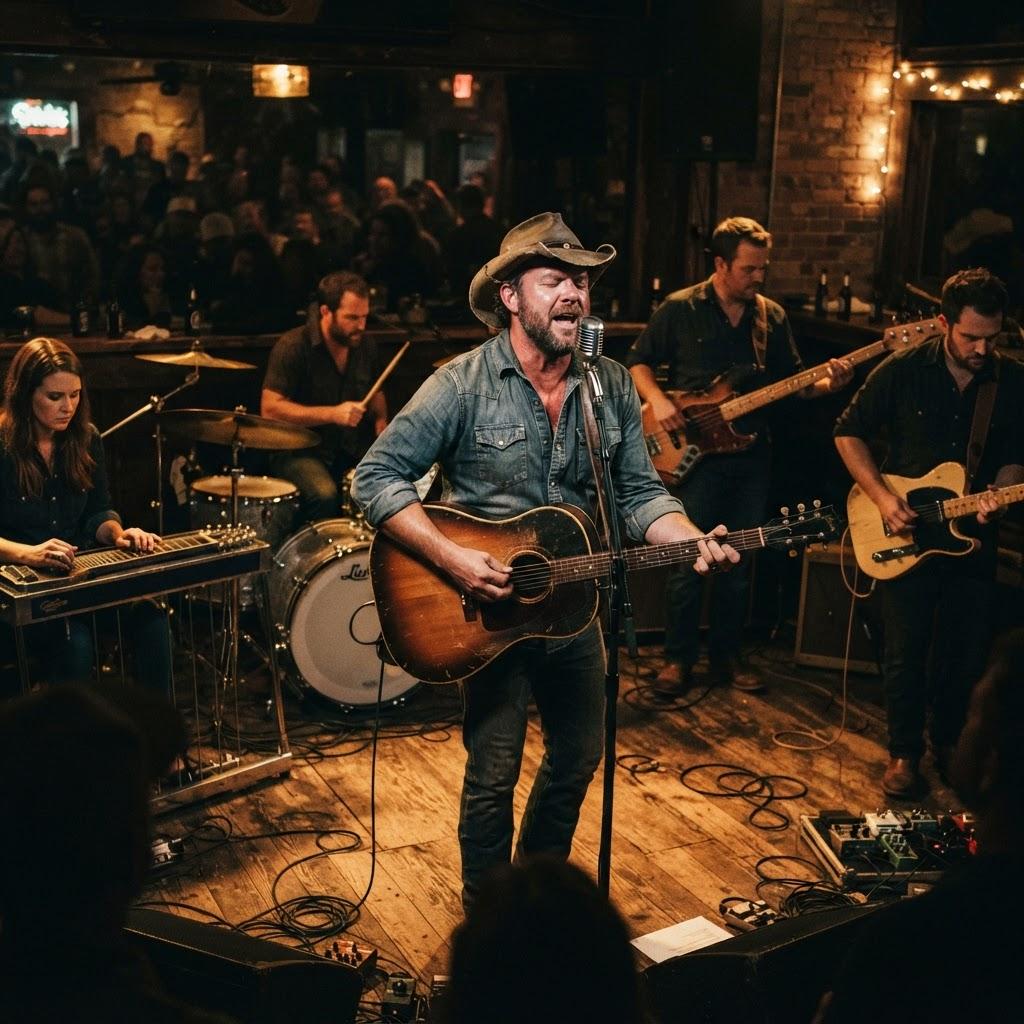
1970s, Stillwater, Oklahoma
Red Dirt
Red Dirt is the musical equivalent of a dusty porch party where the whiskey is cheap but the songwriting is worth a million bucks. It is a stubborn, soulful blend of country, rock, and blues that refuses to play by Nashville's polished rules.
Meet the Genre
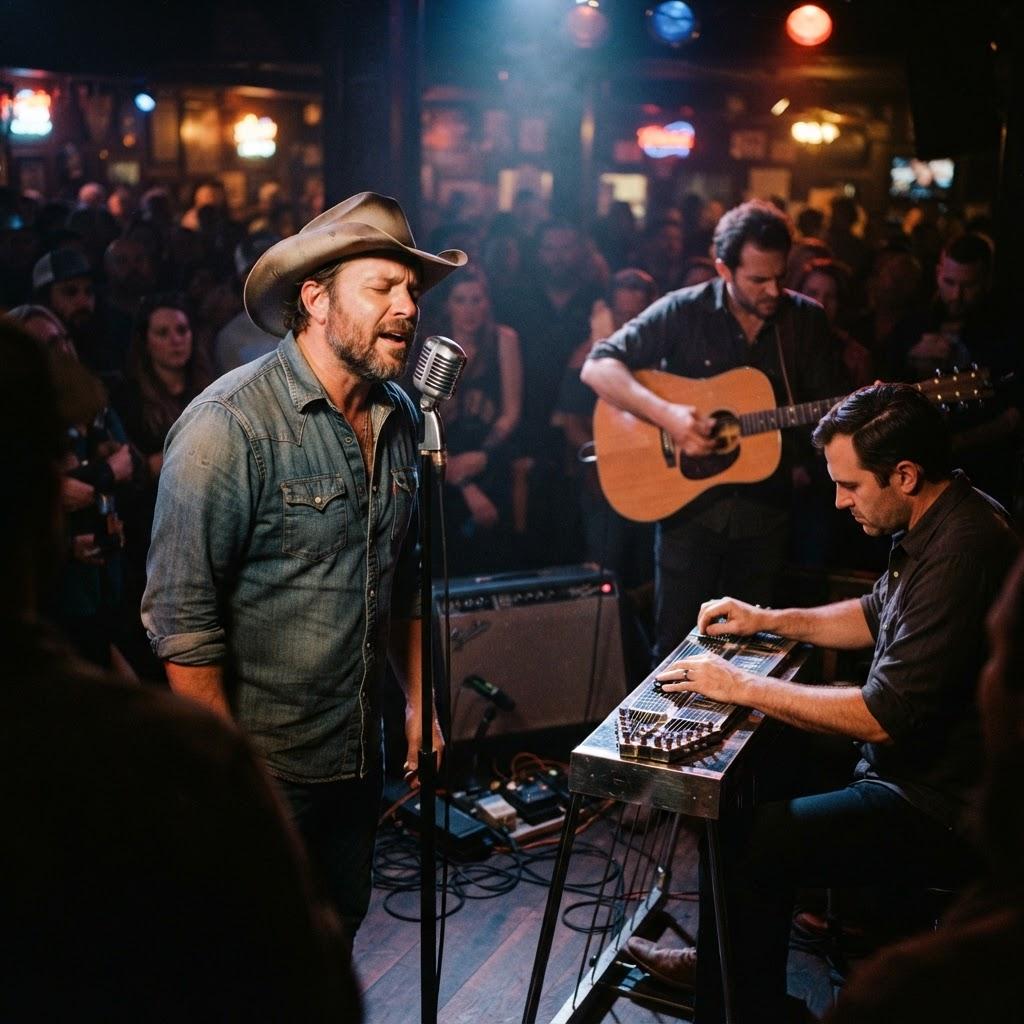
Imagine walking into a dimly lit bar in the middle of a sprawling Oklahoma wheat field. There is a layer of dust on your boots, the smell of woodsmoke in the air, and a band on stage that sounds like they haven't slept in three days. That is the vibe of Red Dirt. It is not quite the polished pop-country you hear on the radio, and it is definitely not the campfire-twang of old-school folk. Red Dirt is the rebellious, slightly hungover cousin of mainstream country. It is a genre that wear its heart on its sleeve and its dirt on its denim. It is less about fancy stage pyrotechnics and more about the truth found in a whiskey glass or a long, lonely highway drive. When you listen to Red Dirt, you aren't just hearing music; you are hearing the collective autobiography of the Great Plains, told by folks who would rather write their own story than follow a script written by a corporate suit in Nashville. It is rugged, authentic, and unapologetically grounded in the red clay of the South.
The Sound & Signature Elements
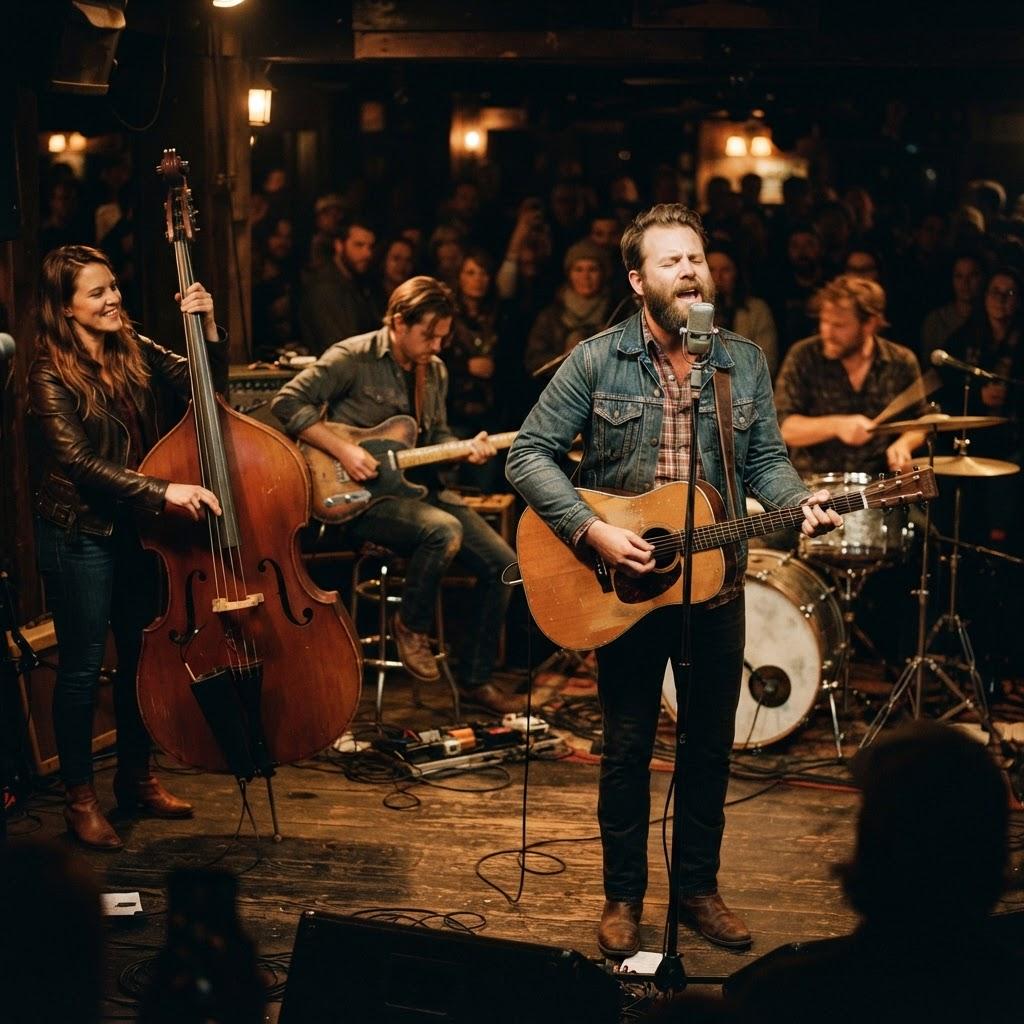
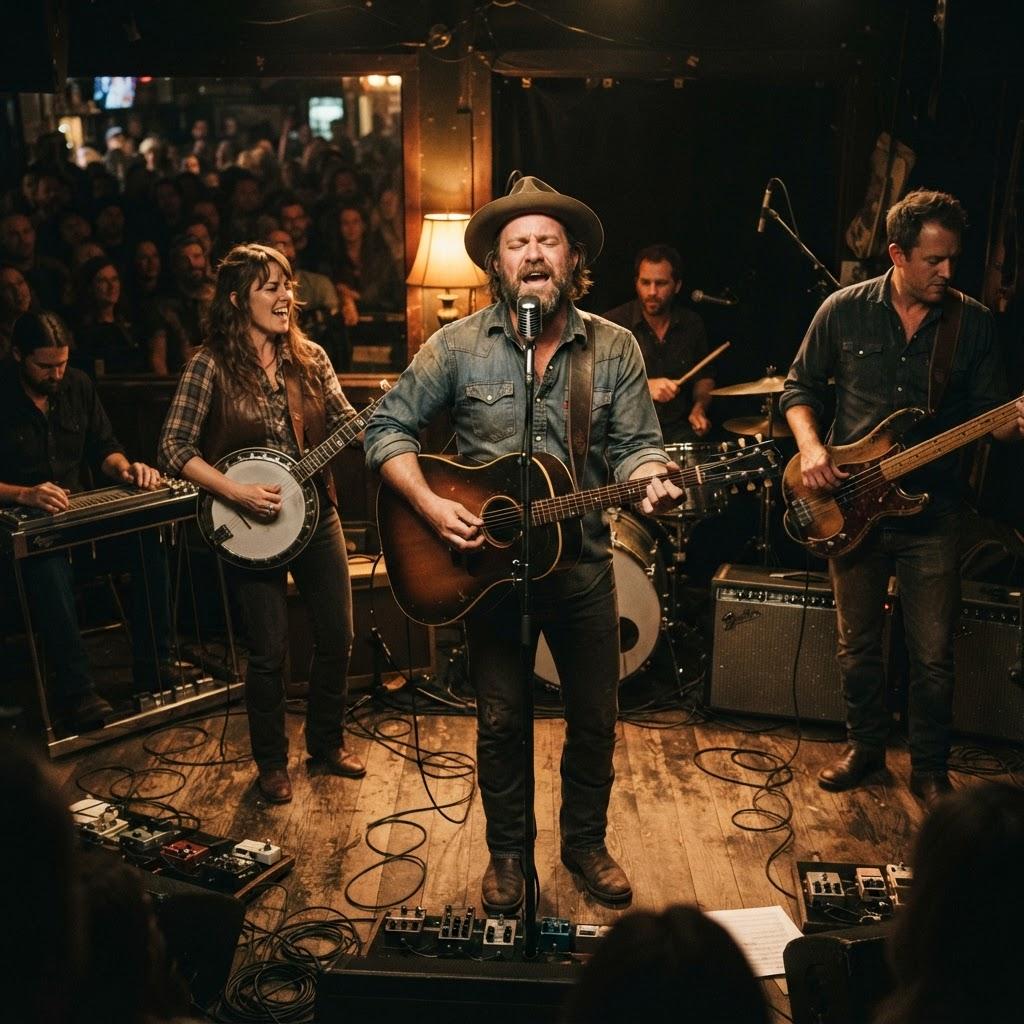
At its core, Red Dirt is an exercise in musical gumbo. You take a ladle of traditional country fiddle, stir in a big dollop of classic rock-and-roll attitude, and sprinkle in some rhythm and blues for flavor. The tempos usually bounce between a laid-back, porch-sitting 70 beats per minute to a foot-stomping, beer-spilling 130 beats per minute. Musically, it relies heavily on the 'three chords and the truth' philosophy, but with a twist—these chords are often driven by a punchy, overdriven electric guitar that sounds like it was recorded in a garage. The drums are rarely over-produced; they keep a steady, organic heartbeat that grounds the more adventurous guitar solos. You will hear a lot of vocal harmonies that sound less like a perfectly rehearsed choir and more like a group of friends singing along at the end of a long night. Think of the pedal steel guitar not as a sad, weeping prop, but as a soaring bird that lifts the song into the stratosphere while the lyrics bring you right back down to the dusty ground.
Origins & Birth of the Sound
The birth of Red Dirt wasn't in some high-tech studio in Hollywood; it happened in a humble, beat-up house in Stillwater, Oklahoma, known as the 'Farm.' In the early 70s, this house became a magnet for every songwriter, musician, and wandering soul who didn't fit into the mainstream mold. Bob Childers, often called the Godfather of Red Dirt, held court there, creating an environment where music was shared like bread. It was a place of creative defiance. These musicians were tired of the homogenization of the music industry. They wanted to create something that reflected their landscape—the red soil, the endless horizon, and the specific struggles of life in the Heartland. They weren't trying to capture the Billboard charts; they were trying to capture a feeling. It was born from late-night jam sessions that blurred the lines between blues, rock, and country, fueled by cheap beer and a shared disdain for the assembly-line songs coming out of the commercial music machine. They weren't just playing music; they were building a community.
The Pioneers & Legends
If you want to know where the power lines are buried, you have to talk about the architects of the sound. Bob Childers is the bedrock; his songwriting style defined the introspection that makes Red Dirt so special. Then there is Tom Skinner, who could make a simple acoustic guitar arrangement sound like a symphony of human experience. These men were the quiet giants, never seeking fame but deeply influencing everyone who walked through their doors. Then came the louder voices, like Jason Boland & The Stragglers, who brought a honky-tonk grit that reminded everyone that country music is supposed to have a bite. Cross Canadian Ragweed exploded onto the scene, bringing an electrifying, rock-heavy energy that bridged the gap between the barroom and the stadium. These pioneers were the gatekeepers of authenticity. They didn't just sing about life; they lived the songs they wrote, from the divorce papers to the breakdowns in the middle of nowhere. They are the reason the music feels so damn real even decades later.
Defining Tracks & Era-Defining Moments
To understand Red Dirt, you need to spin a few specific records that acted as turning points. Cross Canadian Ragweed’s '17' is practically the genre's anthem, a song that captures the nostalgic angst of youth with a soaring chorus that demands to be screamed at the top of your lungs while driving down a backroad. It was a moment that proved this regional sound could have mainstream appeal without selling its soul. Then there is Jason Boland’s 'Pearl Snaps,' a track that serves as a manifesto for the genre, mocking the plastic, shiny image of modern country stars. Every time a new fan hears the opening riff of that song, they instantly get the joke and the protest behind it. These tracks didn't just top the regional charts; they became social markers. If you knew the lyrics to these songs, you were part of the inner circle. They were the musical equivalent of a secret handshake that opened doors to a whole new world of honest songwriting and guitar-driven storytelling.
Subgenres & Offshoots
Red Dirt has a family tree that is as tangled as a briar patch. You have the 'Texas Country' branch, which is so closely related that people often get them confused—think of Texas Country as the rowdier, more booze-soaked cousin that loves to play in dancehalls. Then there is the 'Americana' overlap, where the music strips away the rock elements and focuses heavily on the folk roots, leaning into the storytelling aspect of the genre. You also have the 'Red Dirt Rock' offshoot, which cranks up the volume and distortion until it sounds more like a bar-band version of classic rock than anything you’d find at the Grand Ole Opry. Some artists even lean into a 'Cowboy-Psych' sound, adding ethereal, spacey textures to their songs. It is a surprisingly diverse ecosystem, ranging from the delicate, whisper-soft acoustic ballads of the singer-songwriter scene to the high-octane, arena-ready sounds of bands that clearly spent too much time listening to Led Zeppelin records while growing up on a ranch.
Cultural Impact & Influence
The impact of Red Dirt extends far beyond the speakers. It has influenced a massive shift in how people view the 'Heartland' aesthetic. Before Red Dirt, the image was often stereotyped or ignored, but this genre made Oklahoma and Texas feel like centers of gravity for genuine American art. It changed the fashion in these parts, too—making the worn-in, functional workwear look the standard uniform for music fans, moving away from the rhinestone-covered suits of the past. Politically, the genre provided a voice for the rural working class, creating songs that touched on the realities of agriculture, economic hardship, and a fiercely independent spirit. It forced the rest of the country to acknowledge that great art doesn't just happen in New York or Nashville. The genre created its own infrastructure of independent music festivals and small-venue circuits, showing that you can sustain a massive, dedicated fanbase without ever getting a seal of approval from the traditional music industry elites in the big city.
Controversies & Drama
No genre worth its salt doesn't have a little bit of back-fence gossip and internal squabbling. The biggest debate in the Red Dirt world is the age-old 'Sellout vs. Purist' war. Whenever a Red Dirt band gets a little too successful or starts leaning into a slightly more polished sound, the keyboard warriors come out of the woodwork to label them as traitors to the cause. It is a hilarious, never-ending cycle of judgment. Then there is the endless territorial debate between Texas and Oklahoma fans over who 'owns' the sound—it is the musical equivalent of arguing over which state has better barbecue. Bands have broken up over creative differences, often involving too much bourbon and too many strong opinions about how a fiddle should sound in a bridge. The drama is usually as petty as it is legendary, serving as a reminder that underneath the poetic lyrics, these are just human beings trying to make it in a business that is designed to chew people up and spit them out.
Global Spread & Regional Scenes
While it started in the red soil of Oklahoma, the sound has traveled much further than anyone expected. It has found a massive, appreciative home in the high deserts of New Mexico and the rugged landscapes of Wyoming, where the lifestyle of the listener matches the tone of the music perfectly. You can walk into a dive bar in Copenhagen or a club in Tokyo and find a fan wearing a faded Stillwater concert tee, which is both bizarre and beautiful. The 'Red Dirt' label has become a global catch-all for any music that values organic instrumentation and honest grit over processed production. Local scenes in places like Montana and Idaho have adopted the spirit of the genre, mixing in their own regional flavors—sometimes incorporating native influences or the colder, more isolated vibes of the North. It is no longer just a regional sound; it has become a mindset that resonates with anyone, anywhere, who feels like they are being sold a synthetic version of their own lives.
The Modern Landscape
Today, Red Dirt is in a fascinating spot. It is no longer just an underground movement; it is a booming, multi-million dollar industry, yet it still manages to keep its soul intact. With the rise of digital streaming and social media, Red Dirt artists are bypassing the gatekeepers entirely, finding massive audiences on TikTok and Spotify without ever needing a major label executive to sign their checks. You see a new generation of artists mixing in hip-hop production elements or heavy metal sensibilities while still keeping that core Red Dirt songwriting integrity. It is currently in a 'Golden Age' of sorts, where the legend-status artists continue to tour and sell out shows, while younger, hungrier acts are innovating on the sound in real-time. The barrier to entry has vanished, and the genre is evolving at a breakneck speed, proving that as long as there are people who want to hear the truth set to a guitar riff, the spirit of the genre will never die.
How to Dive In
If you are ready to get your hands dirty, start by listening to Cross Canadian Ragweed’s 'Soul Gravy'—it is essentially the Bible of the genre. Then, queue up Jason Boland’s 'Shot and a Guitar' to get a feel for the wit and the grit. Follow that with anything by Mike McClure, a brilliant songwriter who knows exactly how to build a song that hits you right in the gut. Don’t stop there; look for 'The Great Divide' to see where the early, more melodic side of the movement started. Once you have those under your belt, hit up a 'Red Dirt' playlist on your streaming service of choice and just let the algorithm take you on a tour of the plains. Look for the artists who mention the names of small towns you’ve never heard of. When you find that one song that makes you feel like you are sitting on a tailgate watching the sun go down, you have officially arrived. Now, go find a cold drink, turn the volume up, and enjoy the ride.