1990s, USA
Americana
Americana is the sonic equivalent of a dusty, whiskey-soaked roadmap through the heart of the United States. It is a heartfelt musical quilt stitched together from the scraps of folk, country, and rock, waiting for you to wrap yourself in its ragged, beautiful glory.
Meet the Genre
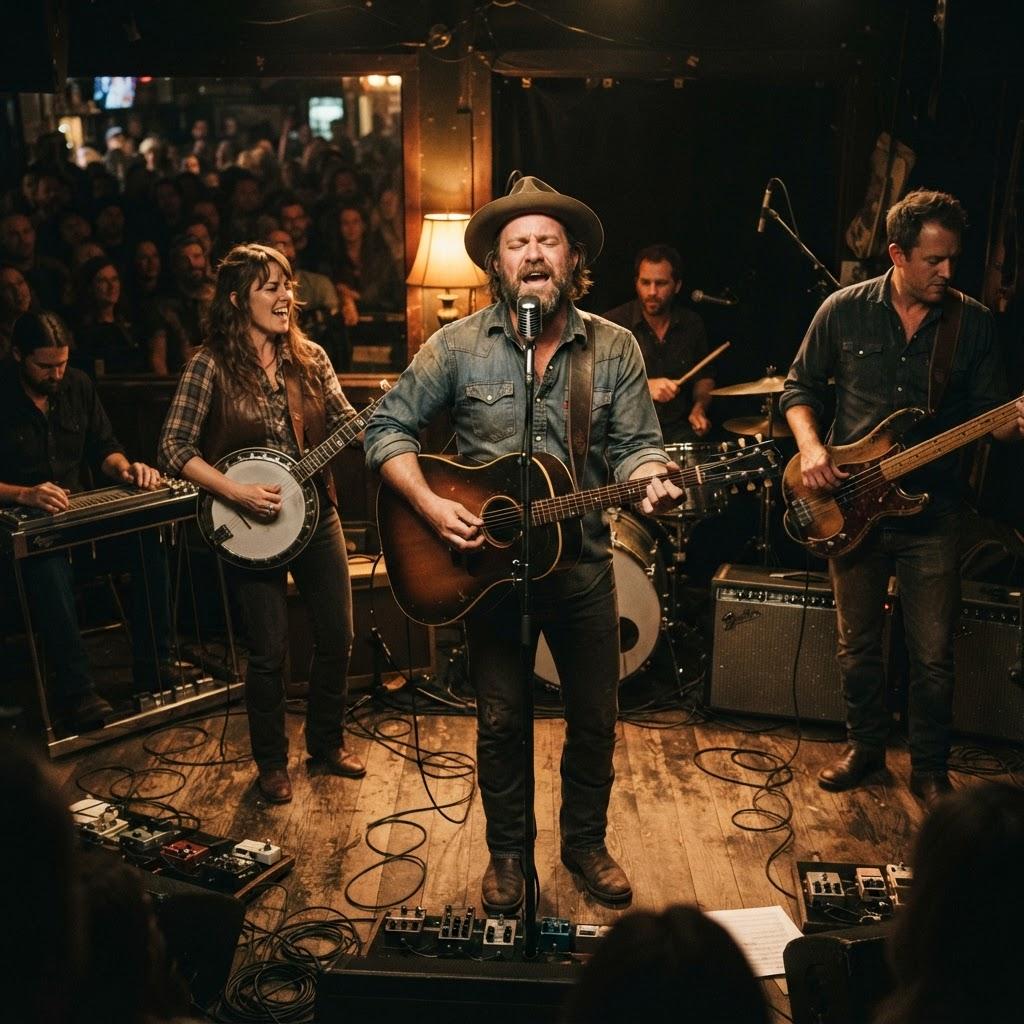
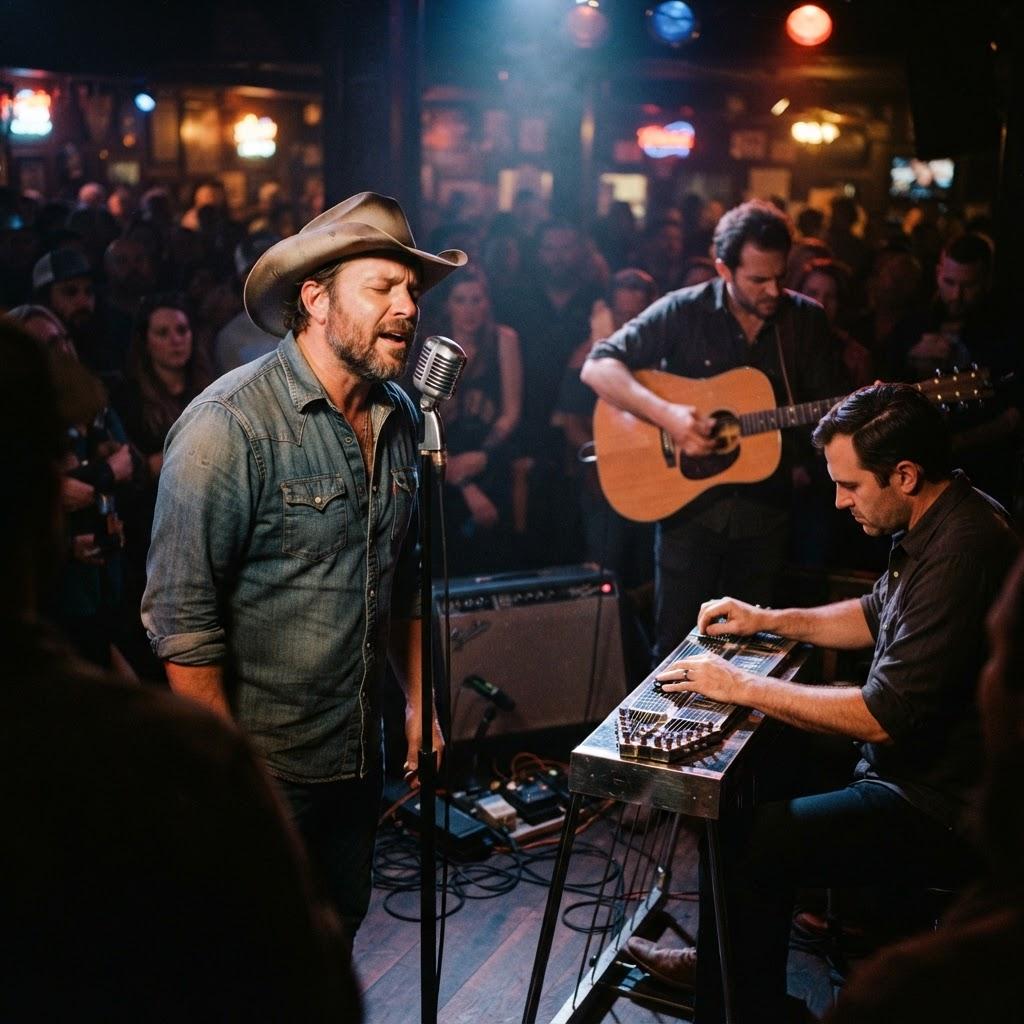
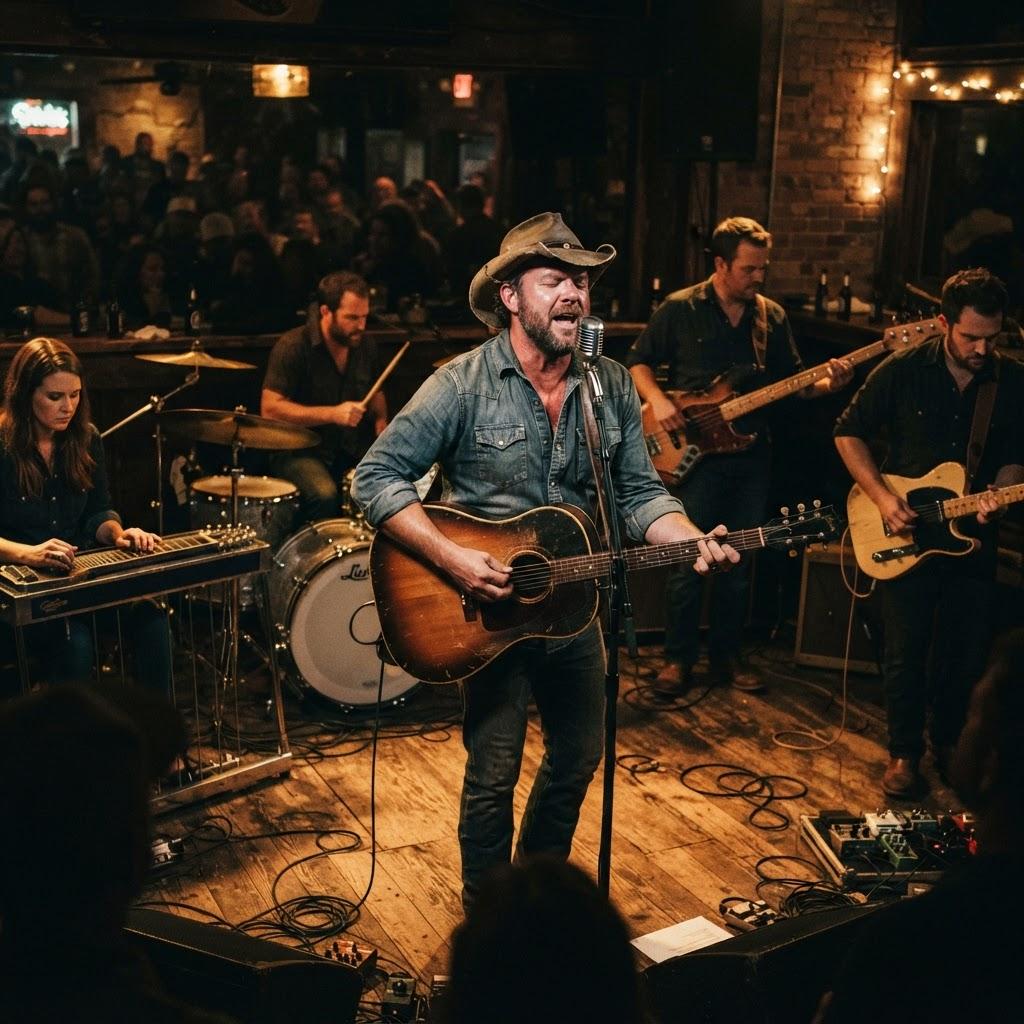
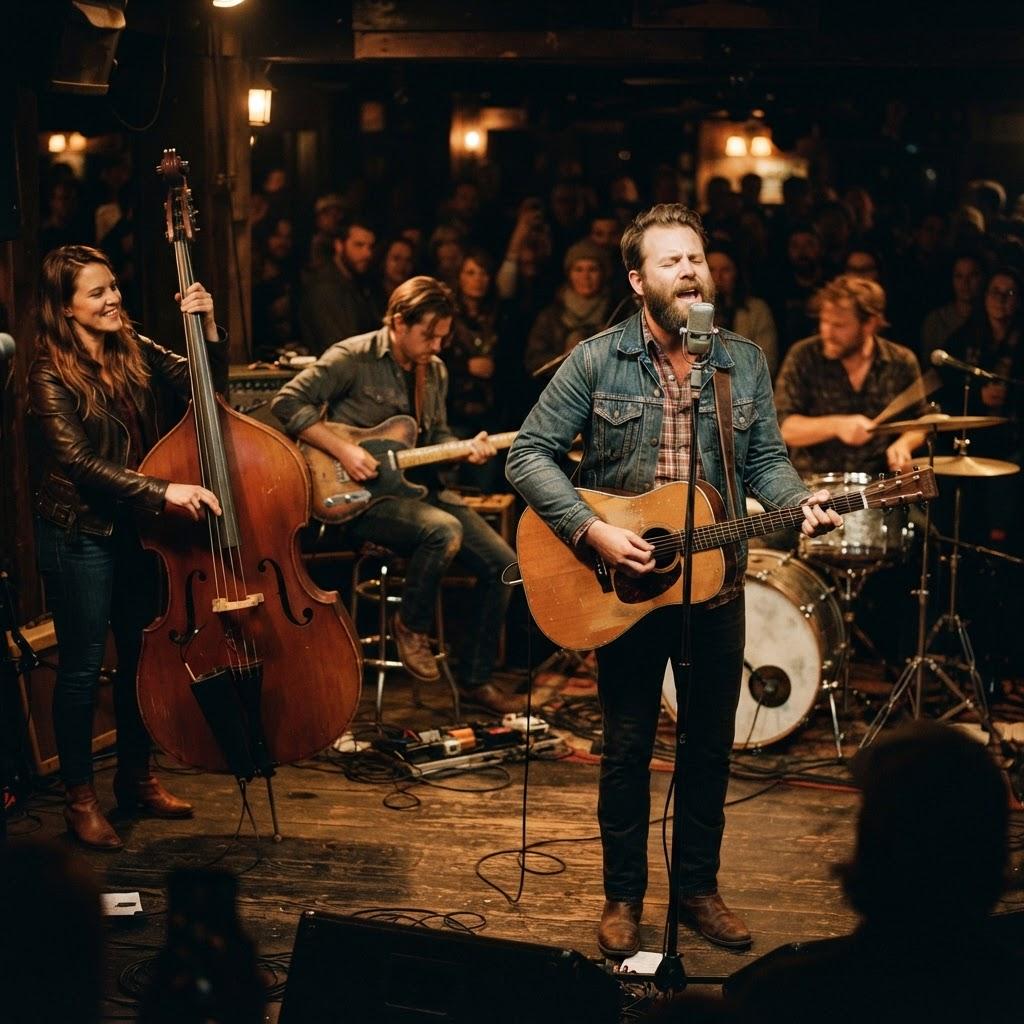
Imagine walking into a bar that hasn't changed its décor since 1974. There is a smell of sawdust and stale beer, the lighting is dim enough to hide your questionable dance moves, and the guy on stage looks like he just drove a pickup truck five hundred miles through a rainstorm. That is the spiritual home of Americana. It is a genre that doesn't care about shiny pop production or synthesizers that sound like a robot sneezing. Instead, Americana is all about the porch-light stories, the heartbreak of a long-distance drive, and the way a dusty acoustic guitar can make you feel more nostalgic for a place you have never actually visited. It is the music equivalent of wearing a pair of boots that are so broken-in they basically belong to your feet, and honestly, it is the most honest thing you will ever hear in a world filled with Auto-Tune. It feels like a late-night drive across the desert, with the radio playing a song that seems to know your deepest secrets. If music had a soul, Americana would be the one wearing flannel and drinking cheap coffee at dawn.
The Sound & Signature Elements
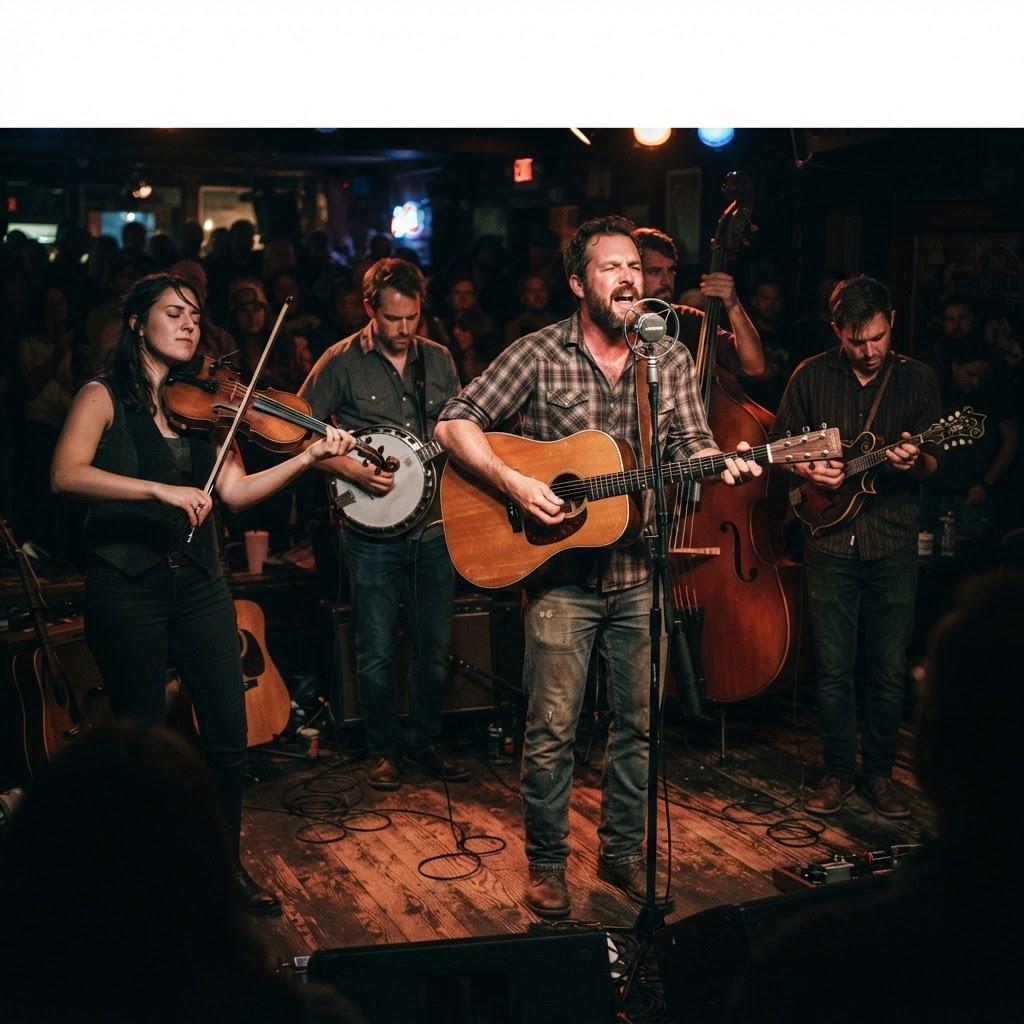
The DNA of Americana is simple but sturdy, built on a foundation of organic instrumentation and lyrical grit. Think of it as the opposite of a sterile, computer-made track; here, you want to hear the fingers sliding across the guitar strings and the wood of the banjo vibrating. The tempo usually leans into a comfortable, mid-range shuffle, perfect for head-nodding or slow-dancing in a kitchen. Most tracks sit between 70 and 110 beats per minute, which is essentially the pace of a steady heart or a confident walk. The production is often what producers call 'warm,' meaning they emphasize low-end frequencies—the bass and the lower notes of the guitar—to create a cozy, analog feel. You will frequently hear the pedal steel guitar, which is that sliding, weeping instrument that sounds like it’s having a minor existential crisis, paired with the snappy, bright pluck of a mandolin. The structure usually follows a classic verse-chorus pattern, because when you have a good story to tell, you don’t need to get fancy with avant-garde jazz structures. It is music built for humans, not for algorithms.
Origins & Birth of the Sound
Americana didn't just crawl out of a single swamp; it is the child of a hundred different American road trips. Throughout the 20th century, folk, blues, and country were essentially cousins living in different ZIP codes. You had the mountain music of Appalachia, the slow-rolling blues of the Delta, and the honky-tonk boogie of the Texas plains. By the time the 1990s rolled around, artists were exhausted by the hyper-polished, neon-soaked sound of mainstream radio. They wanted to go back to basics, creating a space for music that was as rugged as the landscape itself. It was a conscious act of defiance against the corporate-mandated shine. Labels started looking for artists who sounded like they recorded their albums in a barn, and suddenly, this patchwork of styles coalesced into a legitimate radio format. It was a grassroots movement fueled by the idea that there was more value in an honest, slightly out-of-tune guitar performance than in a perfectly processed pop song. It was the music of the people who still believed in the power of a dusty six-string to change the world.
The Pioneers & Legends
To understand Americana, you have to bow down to the architects of the sound. Let’s start with Gram Parsons, a man who basically invented the 'cosmic American music' blueprint while wearing a rhinestone suit and looking perpetually hungover. He bridged the gap between the psychedelic rock of the 60s and the tear-in-your-beer country of the 50s. Then there is Gillian Welch and David Rawlings, who stripped everything down to its bare bones and made the most haunting, ancient-sounding records that somehow felt brand new. You cannot talk about Americana without mentioning Wilco, who took all these traditional roots and threw them into a blender with weird noise and experimental rock, proving that you could honor the past while scaring the neighbors. Then there is Emmylou Harris, the queen of the genre, who has a voice that can cut through stone and has championed nearly every great songwriter to walk the Earth. These people aren't just musicians; they are archivists who keep the spirit of the American ballad alive while ensuring it never gathers too much dust.
Defining Tracks & Era-Defining Moments
If you want to know what this genre sounds like, you need to listen to a few specific sonic checkpoints. Start with 'I Am a Man of Constant Sorrow' as interpreted by the Soggy Bottom Boys—yes, it’s from a movie, but it single-handedly brought back an entire generation of interest in folk-blues. Then, queue up 'Car Wheels on a Gravel Road' by Lucinda Williams. That title track is the definitive Americana moment: gritty, poetic, and driving like a car toward a destination you aren't sure exists. It’s the sound of the pavement under the tires. Another pivot point was the release of Wilco’s 'Yankee Hotel Foxtrot,' an album that was famously rejected by their record label for being too 'weird,' only to become a masterpiece that solidified Americana as a genre that could be as intellectually challenging as it was emotionally resonant. These aren't just songs; they are cultural tremors. Each one marks a moment where a musician decided that telling the truth was more important than getting a radio play, and the result changed the trajectory of roots music forever.
Subgenres & Offshoots
The Americana family tree is sprawling and wonderfully weird. You have 'Alt-Country,' which is basically country music that grew up in the suburbs, listened to a lot of punk, and decided to stop wearing ten-gallon hats. Then there is the 'Bluegrass Revival,' a group of folks who treat the mandolin with the same intensity that heavy metal guitarists treat distortion pedals—it is fast, frantic, and incredibly impressive. Don't forget 'Folk-Noir,' which sounds exactly like it implies: folk songs that sound like they take place in a rain-slicked city at midnight, usually featuring a lot of minor keys and lyrical themes involving ghosts or bad decisions. There is even the 'Red Dirt' scene, a specific, gritty style of music coming out of Oklahoma that blends country, blues, and rock into something that sounds like an engine running on high-octane gasoline. Every sub-branch takes the basic Americana ingredients and tweaks the recipe, adding more spice, more grit, or more soul depending on the regional flavor, proving that the genre is as restless as the people who play it.
Cultural Impact & Influence
Americana has seeped into the American subconscious like a slow-moving river. It gave us back the flannel shirt, not as a fashion statement, but as a lifestyle. It shifted how we watch movies—think of the films of the Coen Brothers, which practically use Americana as their official score. Beyond the aesthetic, it changed the way we value storytelling in music. Before the Americana boom, pop music was largely about the beat; after, it became socially acceptable, even cool, to be a songwriter who focused on the narrative depth of the lyrics. It influenced politics by keeping the focus on the 'common person'—the truck driver, the heartbroken teacher, the struggling farmer—giving a voice to the people who rarely make it into the headlines of a glitzy music magazine. Americana has been the soundtrack to a million road trips, a billion cups of coffee, and a countless number of late-night kitchen-table conversations where the world was set to rights by a few chords and a couple of well-chosen verses.
Controversies & Drama
Oh, the drama! You would think a genre full of acoustic guitars would be peaceful, but you would be wrong. The biggest fight in the history of Americana is the eternal, soul-crushing debate: 'Is it actually country?' Traditionalists spend their lives gatekeeping, insisting that unless you have a pedal steel guitar playing in the key of C and a story about a tractor, it isn't 'real' country. Then there is the 'Sellout' accusation. Whenever an Americana artist gets too big, or—heaven forbid—uses a drum machine or a synthesizer, the purists start sharpening their pitchforks. It is a hilarious sight to see people arguing over whether a mandolin solo is 'authentic' enough. There is also the constant battle over the term 'Americana' itself, with some artists claiming it is just a marketing term invented by record label execs to sell records to people who think they are too intellectual for mainstream country. It is a petty, wonderful, and deeply human cycle of elitism that keeps the scene feeling like a very opinionated, very passionate family reunion.
Global Spread & Regional Scenes
You might think Americana is strictly a U.S. affair, but you would be dead wrong. It is massive in the UK and Scandinavia, where they have somehow managed to adopt this very American sound and make it their own. British Americana artists often bring a slightly darker, more introspective, or even gothic sensibility to the genre—it’s like they take the American cowboy myth and give it a rainy, Victorian makeover. In Scandinavia, they seem to appreciate the melancholic nature of the genre more than anyone else on the planet, creating songs that feel like long, cold winters by a fireplace. In the US, the scene remains hyper-regional. Austin, Texas, is the rowdy older sibling, while Nashville remains the polished, competitive capital. Then you have the Pacific Northwest, where the Americana sound gets mixed with a bit of indie-rock frost, creating something that is both earthy and ethereal. It has truly become a global language of longing and roots.
The Modern Landscape
Today, Americana is everywhere, even if it doesn't call itself by that name. Thanks to platforms like TikTok, we are seeing a massive resurgence in 'roots' music where teenagers are discovering the banjo and the upright bass through viral trends. The modern landscape is one of total hybridization. You have artists like Jason Isbell who sell out arenas by writing songs so devastatingly smart they make poets weep, and you have newer acts who are blending hip-hop rhythms with classic folk instrumentation, pushing the boundaries of what 'roots' actually means. It is no longer just about dusty old men in hats; it is about young, diverse voices finding their power in traditional sounds. The genre is currently in a 'post-genre' state, where it’s less about fitting into a box and more about the quality of the song. It is thriving precisely because it has stopped trying to define itself and started trying to connect with listeners who are looking for something real in a digital age.
How to Dive In
Ready to get your hands dirty? Start your journey with three essential albums: 'O Brother, Where Art Thou?' soundtrack (it’s the gateway drug for a reason), Lucinda Williams’ 'Car Wheels on a Gravel Road' (for the grit), and Jason Isbell’s 'Southeastern' (for the emotional gut-punch). For individual tracks, listen to 'The Weight' by The Band—it is the holy grail of this sound. Once you have those under your belt, dive into the 'Americana' playlists on any streaming service, but don't stop there. Look for the 'hidden gems' section where you will find the songwriters who are playing to five people in a basement. Keep an ear out for the interplay between the electric guitar and the fiddle; that is usually where the magic happens. Don't worry about being a purist. Just listen for the stuff that makes you want to drive long distances, look at the horizon, and feel a little bit better about your messy, wonderful life. Now, turn that volume up and go find your own dusty, melodic path!