1960s, United States
Garage Rock
Garage Rock is the sonic equivalent of finding a rusty switchblade in a box of candy. It is raw, unapologetically loud, and proof that three chords and an attitude are enough to start a revolution.
Meet the Genre
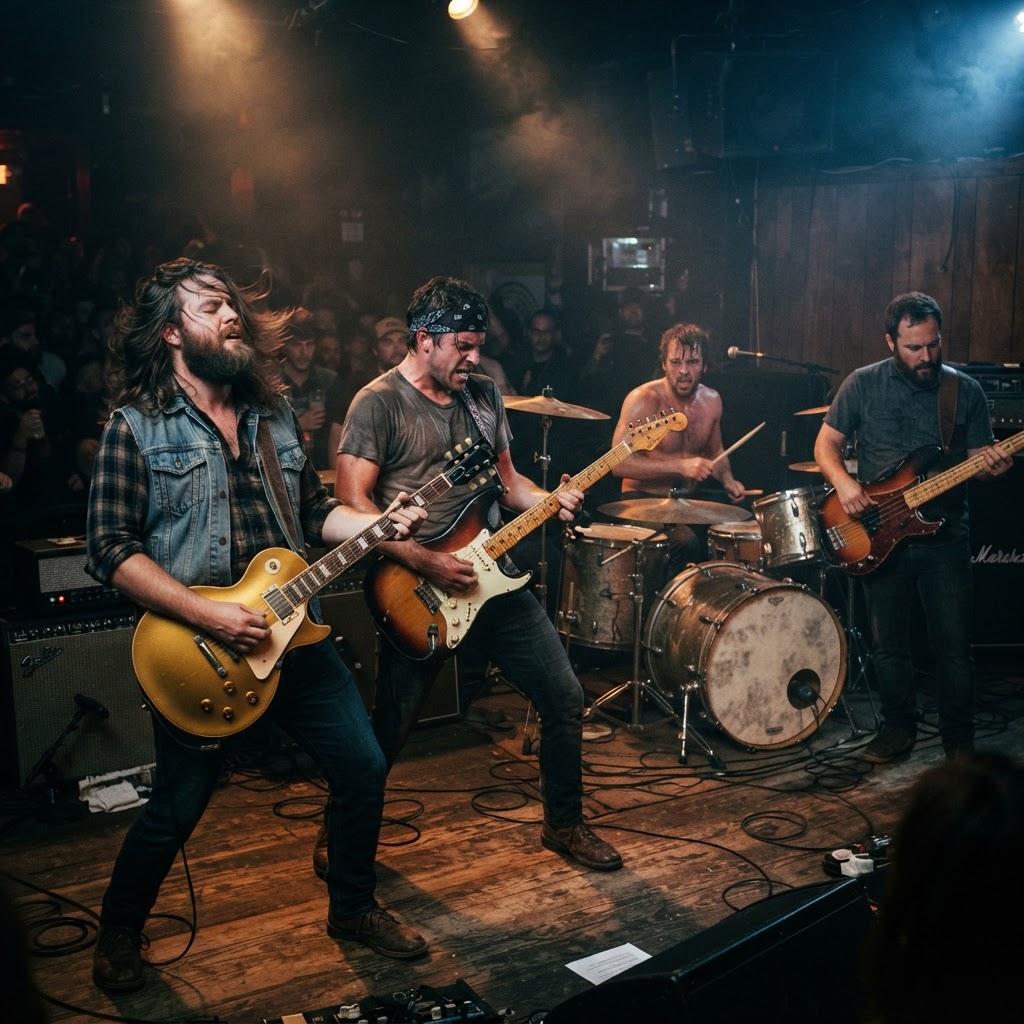
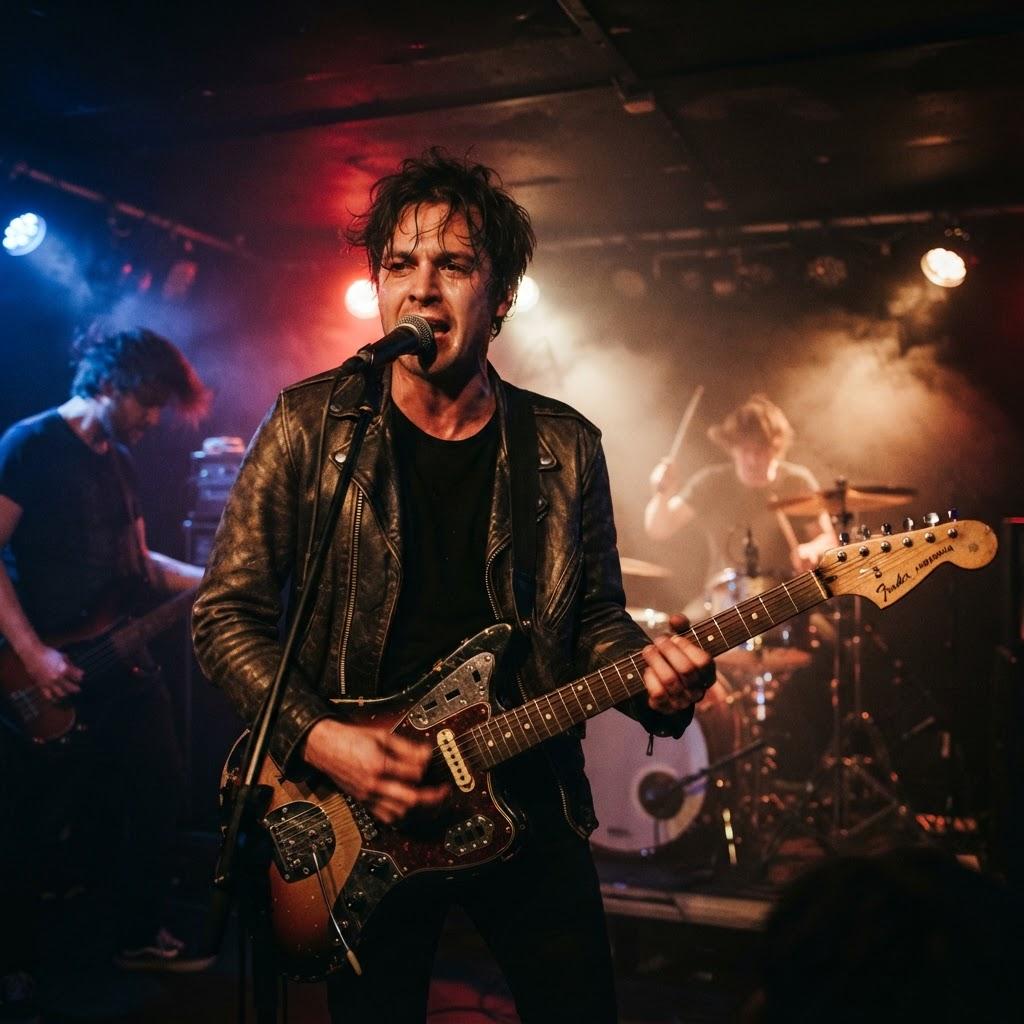
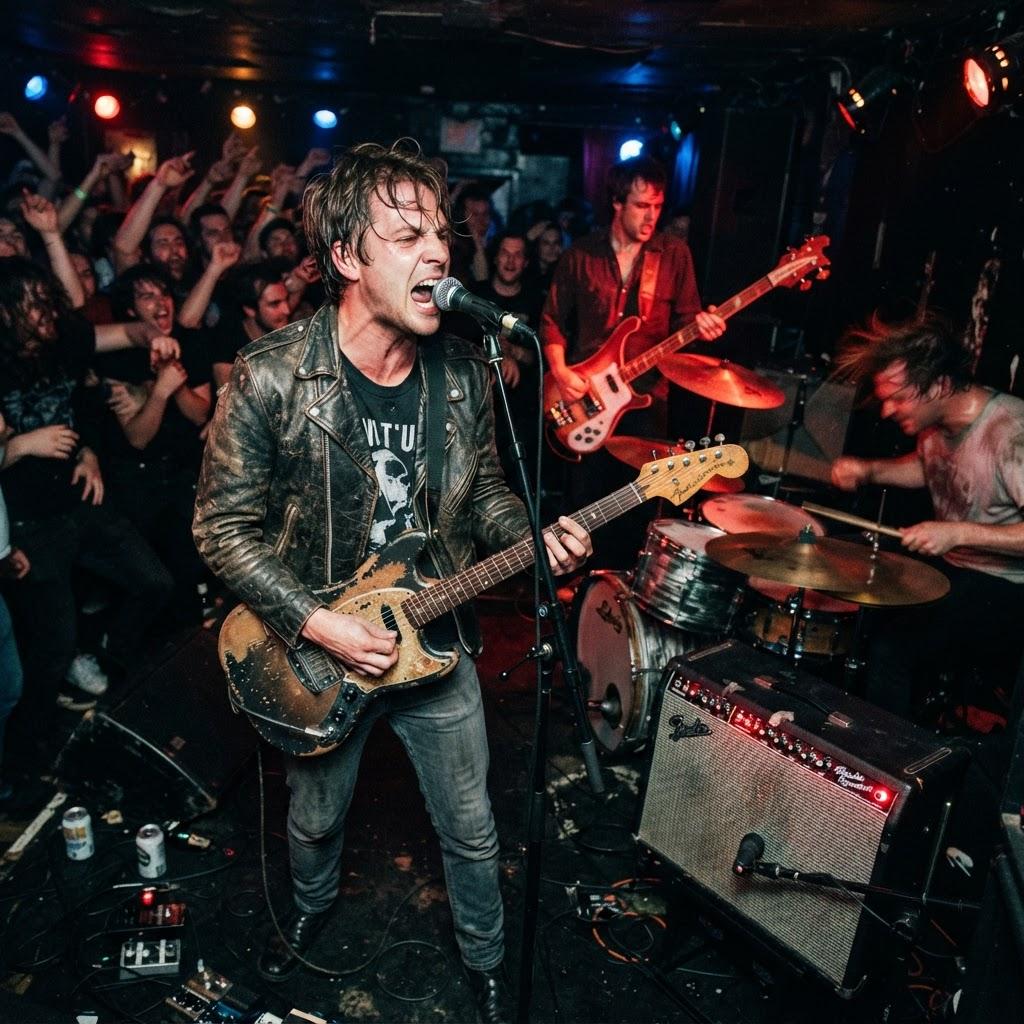
Garage Rock is the musical equivalent of a teenager deciding that if they cannot have the world, they are going to burn their parents' living room down with the sheer volume of a cheap electric guitar. It is the sound of sticky basement floors, stale soda, and the kind of unearned confidence that only exists when you have learned exactly three chords and are absolutely convinced you are the next big thing. Imagine walking into a suburban garage in 1965, the air thick with the smell of gasoline and teenage angst. There is no polish here, no fancy studio wizardry, and definitely no professional production. It is just raw, unadulterated energy vibrating off the drywall. Garage rock does not care if your guitar strings are old or if your drummer is basically just hitting the snare because they like the sound of a stick meeting plastic. It is the purest form of musical honesty: the sound of kids trying to outrun their boredom by making as much noise as humanly possible.
The Sound & Signature Elements
The sonic signature of garage rock is built on the holy trinity of distortion, simplicity, and volume. At its core, it is about taking a guitar and running it through a 'fuzz' pedal—a little box that clips the sound waves of the instrument until it sounds like a swarm of angry mechanical bees. Think of it as taking a clean, polite signal and dragging it through a cheese grater. The tempos are almost always frantic, usually sitting somewhere between 'running away from the police' and 'late for the school bus.' Structure-wise, forget about complex bridges or soul-searching guitar solos that last ten minutes. Garage rock operates on the 'verse-chorus-verse' model where the chorus is just the song title screamed three times until the singer runs out of breath. It is musical shorthand, stripping away the bloat of mainstream pop to reveal the jagged, rusty skeleton of rock and roll. If it sounds expensive, you are doing it wrong; the goal is to make it sound like it was recorded in a storm drain using a microphone salvaged from a 1950s telephone.
Origins & Birth of the Sound
Before the glitzy arenas and the stadium rock excess, there were just frustrated kids in the American Midwest and the Pacific Northwest looking for an escape. In the early 1960s, the world was obsessed with polished pop groups, but in towns where the highlight of the week was a Friday night high school dance, the kids wanted more grit. The genre was born out of a DIY necessity; these bands could not afford expensive rehearsal spaces, so they colonized their parents' garages. It was a domestic invasion. They were listening to the British Invasion groups like The Beatles and The Rolling Stones, but instead of trying to perfectly mimic the mop-top perfection, they tried to mimic the attitude. They took the blues-based structures of their heroes, cranked the amplifiers past the point of sanity, and accidentally invented a genre. It was a grassroots revolution started by teenagers with nothing to do and everything to prove, turning suburban silence into a cacophony that defied the polite expectations of their parents.
The Pioneers & Legends
If you are looking for the architects of this beautiful mess, start with The Kingsmen. Their version of 'Louie Louie' is the foundational myth of the genre. Legend has it that the singer was so drunk and the lyrics so muddled that the FBI actually launched an investigation to see if there was obscene content in the song. They never found anything, which is the perfect metaphor for the genre—you think there is a dangerous message, but it is just pure, messy energy. Then there are The Sonics, the true granddaddies of the 'dirty sound.' Hailing from Tacoma, they played with such a feral intensity that they made the other bands of the time look like they were performing at a library book club. They didn't just play rock and roll; they attacked it. These legends didn't need to be technically proficient to be monumental; they just needed to be loud enough to vibrate the windows in the neighbors' houses, proving that passion often beats precision in the court of public opinion.
Defining Tracks & Era-Defining Moments
A few songs serve as the immutable DNA strands of the garage rock genome. 'Louie Louie' by The Kingsmen is the Big Bang, the moment the universe realized that being barely intelligible could be a career choice. Then there is 'Psychotic Reaction' by Count Five, a song that captures the genre's shift from simple blues-thumping into the hazy, psychedelic territory of the mid-60s. It features a guitar break that sounds like the instrument is having a nervous breakdown in real-time, which is exactly the vibe the genre strives for. Another pivot point was the compilation album 'Nuggets,' curated by Lenny Kaye. Before this album, garage rock was just regional noise, but Kaye collected these isolated, weirdo singles into one volume, effectively showing the world that this wasn't just a handful of bands; it was a movement. This release was the lightbulb moment that made the next generation realize that if you could find four guys, two guitars, and a drum kit, you could be a rock star in your own living room.
Subgenres & Offshoots
Garage rock is a weird, twisting tree with branches that reach into some very strange places. There is 'Garage-Psychedelia,' where the fuzz pedals stayed but the lyrics started talking about purple clouds and mirrors. Then you have 'Garage Punk,' which is essentially what happens when you decide that the rock part is too slow and the screaming needs to be more frequent. This branch effectively acts as the bridge between the 60s garage sound and the Ramones-style punk rock that would take over the 70s. You also have the 'Trash Rock' scene, which sounds exactly like it implies—a glorious pile of noisy, distorted debris that is as charming as it is abrasive. Some regional pockets even experimented with 'Organ-Driven Garage,' where the guitar players were shoved aside for guys playing Vox Continental organs through distortion boxes, creating a swirling, carnival-horror soundtrack that sounds like a haunted funhouse ride. Each subgenre is just the same initial idea—play loud, play fast—being filtered through increasingly weirder and more obsessive brains.
Cultural Impact & Influence
The cultural fingerprints of garage rock are everywhere, often hiding in plain sight. Before the internet turned music into a commodity, garage rock was the ultimate 'secret handshake' culture. It taught kids that they didn't need a record label, a manager, or a formal education to express themselves. This DIY—or 'Do It Yourself'—spirit is the direct ancestor of everything from the punk zine scene to the modern independent musician releasing tracks from their bedroom. Fashion-wise, garage rock gave us the look of the 'outsider cool': unkempt hair, cheap leather jackets, and clothes that looked like you had slept in them, which is exactly what people did after a long night of gigs. It influenced films, too; the gritty, low-budget aesthetics of cult movies often mirror the sonic aesthetic of a garage track. Politically, it fostered a spirit of non-conformity. By being unapologetically noisy and intentionally unpolished, garage rock stood as a rejection of the mainstream's attempt to sanitize the youth experience into something marketable and safe.
Controversies & Drama
Because garage rock is built on ego, cheap beer, and low-fidelity recording techniques, the drama is usually both petty and spectacular. You had the 'Purist Wars,' where bands would constantly accuse each other of 'selling out' if they dared to record in a studio with more than two microphones. The accusation of being 'too produced' was the ultimate insult in the garage scene, equivalent to calling a construction worker a professional flower-arranger. There were also endless beefs about who stole which riff from whom, which was inherently funny because most of these bands were just recycling the same four blues progressions that every band had been using since the 1950s. The backstage drama was similarly unhinged; since many of these bands were essentially groups of friends who had never left their hometowns, the internal breakups were often as messy as a bad family dinner. They took their local fame very seriously, and the ego clashes were always amplified by the fact that they were all playing on the same crappy amplifiers.
Global Spread & Regional Scenes
While it started in American suburbs, garage rock proved to be a contagious virus that spread across the globe. In the UK, it mutated into something sharper and more aggressive, feeding into the 'Mod' subculture where fashion was just as important as the feedback. In Japan, the scene developed a cult-like obsession with the minutiae of the 60s, producing bands that could play the authentic garage sound so perfectly it was scary. Australia, meanwhile, took the American blueprint and made it even more sweaty and sun-drenched, creating a unique strain of garage rock that sounds like it was recorded in the middle of a desert heatwave. Every city with a basement developed its own local dialect of the genre; if you go to Sweden or Peru, you will find garage scenes where the lyrics might change, but the fundamental, glorious need to make as much noise as possible remains the same. It is a universal language, spoken in the dialect of distorted speakers and screaming teenagers everywhere.
The Modern Landscape
Today, garage rock is in a state of eternal, healthy mutation. It is no longer just a vintage relic; it is a living, breathing creature that has found a home in the digital age. While it might not be dominating the Billboard charts, it is thriving in the corners of the internet where people crave something real in a world of over-produced, digital-perfect music. Thanks to platforms like TikTok, the 'aesthetic' of garage rock—the lo-fi, raw, 'I-recorded-this-in-my-closet' vibe—has actually become a massive trend. Younger artists are discovering that using a cheap microphone and a bad guitar pedal is not just a limitation; it is a style. You have bands that mix the original 60s energy with modern production to create something that feels nostalgic yet incredibly fresh. It is the perfect antidote to the pristine, algorithmic pop machine. As long as there is someone with a guitar and a grudge against silence, garage rock will never actually go away; it just hibernates between bursts of glorious, feedback-drenched activity.
How to Dive In
If you are ready to stop reading and start hearing, you need to build your starter kit. Start with 'Nuggets: Original Artyfacts from the First Psychedelic Era, 1965–1968.' Think of this as the holy scripture of the movement. For specific tracks, listen to The Sonics' 'The Witch' and realize how aggressive music was before 'aggression' was a marketing term. Then, check out The Stooges' early work to see how the genre started to turn into the punk rock that would define the 70s. Once you have those down, jump into the modern stuff—The White Stripes or The Hives—to see how they took that 60s raw nerve and supercharged it for the new millennium. Don't worry about being an expert; the whole point is that nobody is an expert. Put your speakers up, ignore the distortion, and embrace the fact that it sounds a little bit broken. If it doesn't sound like it is on the verge of falling apart, turn the volume up until it does. You are now part of the history of the garage.