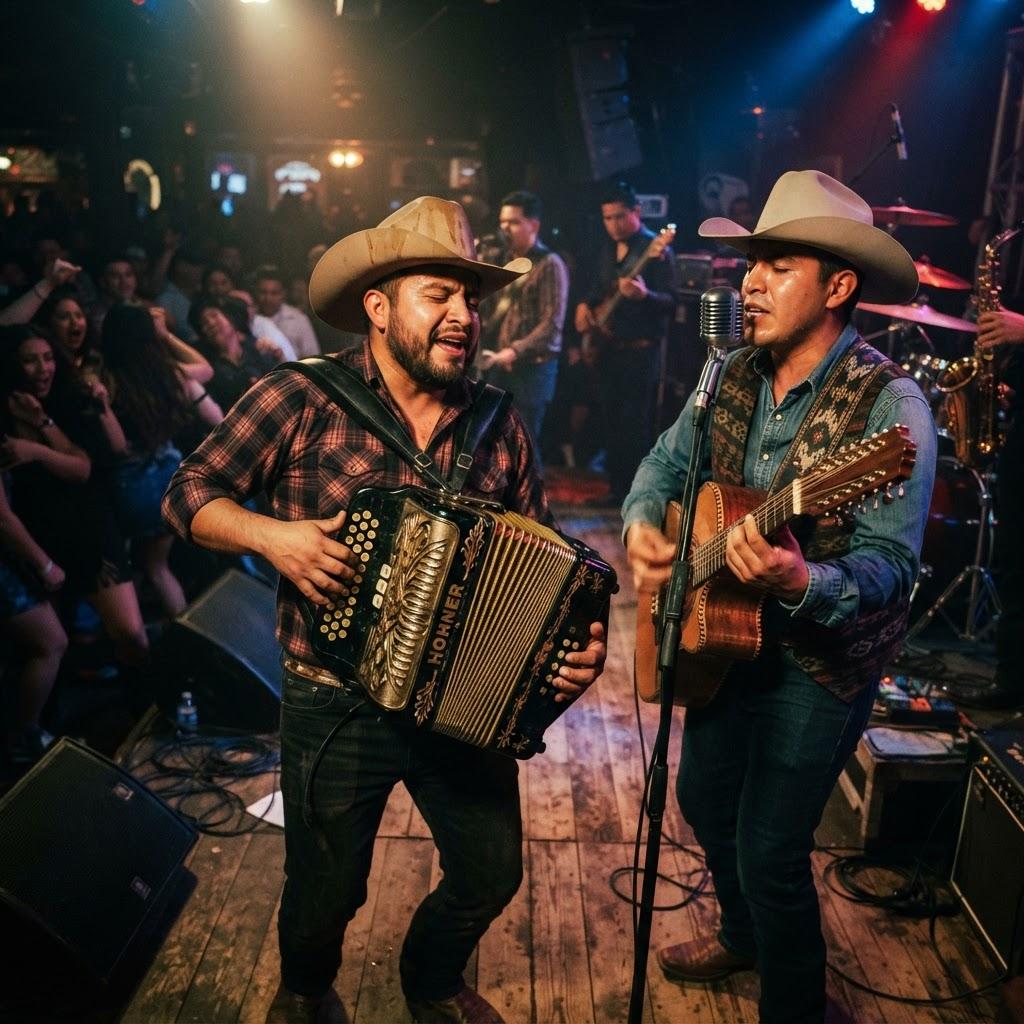
1800s-1900s, Northern Mexico and Southern Texas
Norteño
Norteño is the musical equivalent of a dusty, high-speed road trip through the desert where the accordion is king and every song feels like a heartbreaking confession or a triumphant celebration. Put on your boots and get ready to dance with the most charismatic, accordion-wielding genre in the history of the Americas.
Meet the Genre
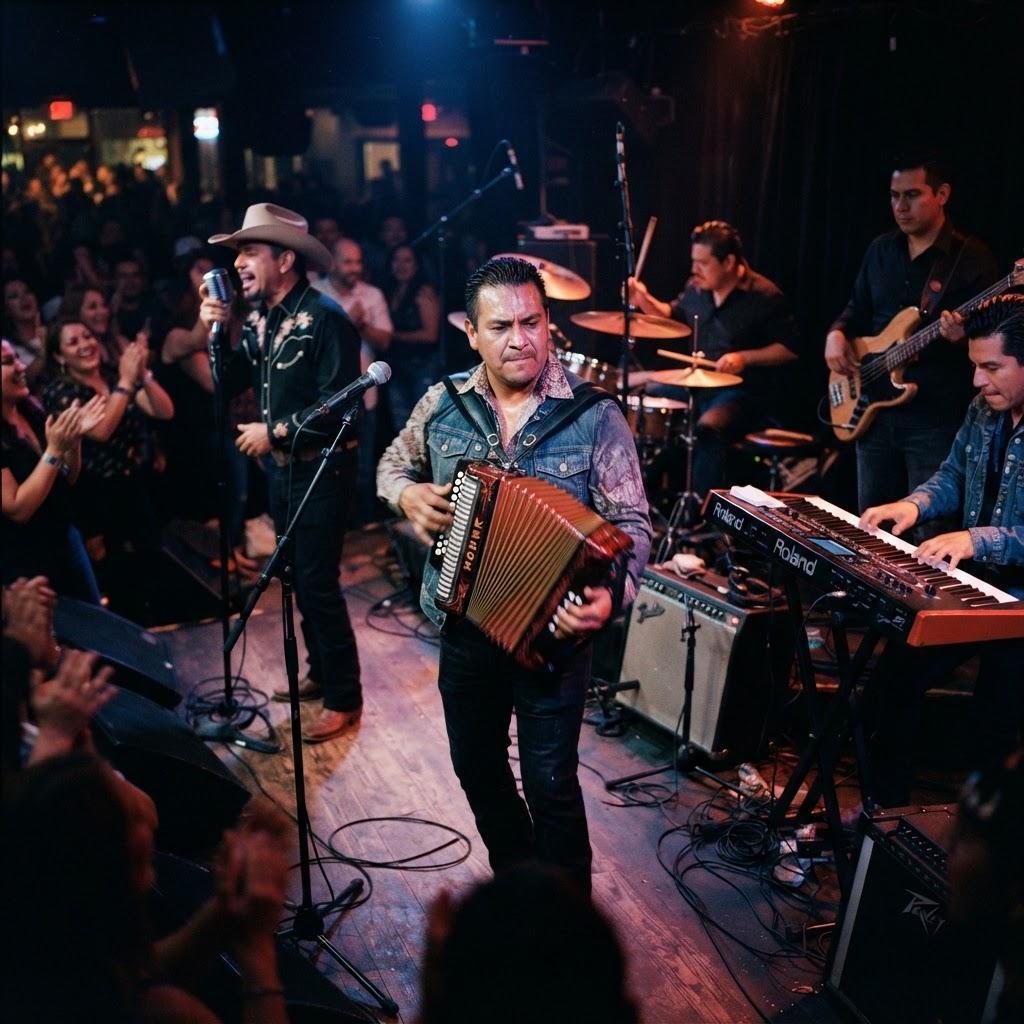
Imagine walking into a cantina where the air smells like lime, sawdust, and decades of unfiltered stories. Suddenly, a sound tears through the room—a bright, wailing accordion line that feels like a lightning bolt made of velvet. That is Norteño. It is the music of the border, a genre that carries the weight of a thousand miles of desert on its shoulders while somehow managing to make you want to dance until the soles of your boots wear thin. Norteño isn’t just music; it’s a lifestyle, a history lesson, and a therapy session all wrapped in a sturdy leather jacket. It is a genre that refuses to be ignored, pulsating with a rhythmic heartbeat provided by the bajo sexto—a massive, deep-voiced twelve-string guitar—and the frantic, joyful weeping of the button accordion. It is brash, it is honest, and it is unapologetically loud. Whether it is singing about a tragic betrayal in the mountains or a celebration that lasts three days, Norteño grabs you by the collar and pulls you into its world. You don’t just listen to it; you endure it, you celebrate it, and you eventually find yourself humming its melodies in the shower.
The Sound & Signature Elements
Let’s break down the musical machinery behind this beast. At the core, you have the button accordion, which is the diva of the ensemble. It doesn’t just play notes; it gasps, it screams, and it dances through complex scales with the agility of a gymnast. Supporting that chaos is the bajo sexto, an instrument that sounds like a standard guitar that spent the last ten years hitting the gym. With its twelve strings tuned in octaves, it provides the rhythmic foundation, hitting the 'oom-pah' beat—that classic, bouncy rhythm where the beat goes ONE-and-two-and, like a heartbeat skip. Then there is the electric bass, which acts as the glue, holding the rhythm section steady while the drums keep the tempo chugging along, usually at a clip that makes you want to drive over the speed limit. The vocals are almost always delivered with a gravelly, heartfelt sincerity, usually by two singers harmonizing in thirds, which creates that unmistakable ‘close-harmony’ sound. It’s not about perfection; it’s about soul. If you hear a syncopated, high-energy shuffle that sounds like a German polka got lost in a Mexican desert and decided to stay, you’ve found the heart of the sound.
Origins & Birth of the Sound
The birth of Norteño is a beautiful, accidental marriage of cultures that happened in the mid-19th century. When Czech, German, and Polish immigrants rolled into Northern Mexico and Texas, they brought their accordions and their polkas, waltzes, and mazurkas. Imagine these European settlers sitting around campfires, playing tunes that were essentially the 1850s version of upbeat dance music. The locals heard this and thought, 'This is cool, but what if we added a little bit of our own soul?' They began blending those European melodies with the Corrido—an ancient style of Mexican narrative storytelling that is essentially a musical newspaper. The workers, ranchers, and travelers who traversed the border needed a way to document their triumphs and tragedies. They didn’t have radio, so they wrote songs. They took the accordion from the foreigners, adopted the twelve-string guitar from their own traditions, and accelerated the tempo to match the heat of the landscape. It wasn't born in a pristine studio; it was born in the dirt, on ranches, and in the bustling trade hubs where diverse cultures collided. It was a defiant act of musical translation that turned dusty border towns into the global headquarters of a brand new, electrifying sound.
The Pioneers & Legends
You cannot talk about Norteño without bowing down to the gods of the genre. First, you have Narciso Martínez, the ‘Father of the Conjunto,’ who basically took the accordion and turned it into a lead instrument rather than just a background drone. Before him, the accordion was a novelty; after him, it was a weapon. Then there is Los Tigres del Norte, the undisputed kings of the genre. They are the Bob Dylan of the border—storytellers who took the plight of immigrants, the corruption of the streets, and the humor of daily life and turned them into massive hits that filled stadiums. They are the reason Norteño moved from rural cantinas to massive global venues. We must also talk about Ramón Ayala, the 'King of the Accordion,' whose technique is so fluid and distinct that you can recognize his touch from three notes away. These artists didn’t just play songs; they built a mythology. They documented the changing landscape of the borderlands, acting as the unofficial chroniclers of a society that was often ignored by the mainstream press. Their voices provided a soundtrack for generations of people navigating the complex realities of life along the Rio Grande.
Defining Tracks & Era-Defining Moments
If you want to understand the impact of Norteño, you have to listen to the tracks that changed the game. Los Tigres del Norte’s 'Contrabando y Traición' is essentially the 'Bohemian Rhapsody' of the genre. It’s a fast-paced narrative about a drug-running couple that turned the ‘narcocorrido’ subgenre into a cultural phenomenon. It is gritty, cinematic, and so catchy that even people who didn't understand the Spanish lyrics were tapping their feet to it. Then there’s Ramón Ayala’s 'Tragos de Amargo Licor,' a song so quintessentially sad and beautiful that it captures the exact feeling of sitting at a bar alone on a Tuesday night. It’s the anthem for anyone who has ever had their heart broken. These tracks matter because they bridged the gap between folk music and pop culture. They proved that a song about a specific, local struggle could be universally understood by anyone who has felt love, loss, or the thrill of an adventure. Every time one of these tracks hits the airwaves, time stands still in the world of Norteño, and for three minutes, everyone in the room is transported to the same dusty, neon-lit corner of the world.
Subgenres & Offshoots
Norteño isn’t a monolith; it’s a family tree that is constantly branching out in weird directions. You have the classic, clean-cut 'Norteño' style, which is all about the traditional accordion and bajo sexto setup. Then you have 'Conjunto,' which leans even harder into the accordion's polka roots, often stripping away the more modern production flourishes for a tighter, punchier sound. On the darker side of the spectrum, you have the 'Narcocorrido,' which are essentially gritty action-movie soundtracks set to a polka beat. These songs tell stories of outlaws and cartels with the kind of unflinching detail you’d expect from a true-crime documentary. On the complete opposite end, you have 'Norteño-Banda,' which takes the core sensibilities of Norteño and merges them with the massive, brass-heavy sound of Banda music. It’s like adding a full marching band to your accordion duo. And then there are the 'Modernos,' who are experimenting with electronic beats and synthesizers, creating a futuristic, neon-soaked version of the music that feels right at home in a 2024 dance club. It’s a genre that loves to experiment, making it one of the most dynamic and versatile forms of music on the planet.
Cultural Impact & Influence
Norteño is a cultural titan. It dictated fashion for decades—the tight jeans, the crisp cowboy hats, and the signature boots became the uniform of a massive demographic across two countries. It influenced the way people speak, with phrases from classic songs entering the everyday lexicon of millions. In film, it became the go-to sound for portraying the American West, providing a grit and authenticity that pop or rock could never achieve in those settings. Beyond that, it has become a political force. These songs often carry messages about civil rights, immigration, and the struggles of the working class, serving as an unofficial anthem for migrant communities globally. When a Norteño song plays at a family wedding, a political protest, or a rural festival, it is an act of identity. It tells the world, 'This is who we are, this is where we came from, and we aren't going anywhere.' The music transcends the speakers, becoming the literal soundtrack to the life of the diaspora, helping people stay connected to their roots even when they are thousands of miles away from home.
Controversies & Drama
Oh, the drama! The world of Norteño is not for the faint of heart. The biggest controversy is, predictably, the 'Narcocorrido' debate. Are these songs just documenting the reality of life in the borderlands, or are they glorifying criminal activity? This has led to massive radio bans, government pushback, and intense debates about censorship that would make a rock band blush. Then there’s the 'Purist Wars,' where old-school fans fight tooth and nail against the new generation of artists who dare to use drum machines or autotune. It’s a classic battle of 'the accordion was better when it was raw' versus 'the future is now.' You’ll hear artists accusing each other of 'selling out' for touring with pop acts, or being too traditional and stagnant. There’s also the competitive nature of the scene—who plays the fastest? Who writes the most heartbreaking lyrics? It’s a high-stakes world where musical talent is often measured by how much you can make a crowd cry and dance at the exact same time. It’s a soap opera, but with more buttons and better rhythm sections.
Global Spread & Regional Scenes
Norteño started in the desert, but it has traveled everywhere. You can walk into a nightclub in Tokyo, a dive bar in Chicago, or a festival in the heart of Colombia and hear that unmistakable accordion trill. The reason for this spread is simple: humanity loves a good story and a great beat. In the U.S., cities like Los Angeles and San Antonio are massive powerhouses where the sound has been refined and polished for global consumption. In Mexico, every state has its own little flavor; for example, the style in Nuevo León is fast and technical, while the style in Chihuahua might lean into a moodier, slower narrative. The genre has even crossed into other cultures, with local musicians in parts of the world adopting the accordion as their go-to instrument because of the influence of these classic records. It’s a testament to the power of the music that it doesn't need to be translated to be felt. The sorrow in the accordion or the joy in the rhythm is a universal language that hits home regardless of what part of the globe you are standing on.
The Modern Landscape
Today, Norteño is having a total glow-up. It is all over TikTok, with young artists like Peso Pluma and Eslabon Armado mixing traditional instruments with trap beats and pop sensibilities, bringing the genre to a whole new generation of teenagers who didn't grow up listening to their parents’ old vinyls. The production quality has skyrocketed; we are talking about crisp, high-fidelity sound that makes the accordion sound like a space-age synth. It’s a strange and exciting time where an 80-year-old classic can exist on a playlist right next to a brand new, bass-heavy track, and they both make perfect sense together. The genre is currently in a state of hyper-evolution, moving beyond the borderlands and into the mainstream global spotlight. It’s not just regional music anymore; it’s a global phenomenon that is filling arenas from Mexico City to New York. The youth are grabbing the bajo sexto and proving that tradition isn't something you keep in a glass case—it’s something you keep updating, remixing, and playing as loud as humanly possible.
How to Dive In
So, how do you start your journey into this accordion-fueled madness? You don’t need a guidebook, just a decent pair of speakers and an open mind. Start with the heavy hitters. Put on Los Tigres del Norte’s 'Jefe de Jefes'—it’s an absolute masterpiece of storytelling that sets the standard for the entire genre. Then, let your ears adjust to the high-speed virtuosity of Ramón Ayala by listening to his hits like 'Monedita de Oro.' If you want something that bridges the gap between old and new, check out some of the modern collaborations coming out of the 'Regional Mexican' scene today. Pay attention to the way the accordion breathes—it’s the most expressive part of the music. Don't worry if you don't speak a word of Spanish; the emotion is right there in the melody. If you want to get the full experience, find a local venue that hosts a ‘Norteño night,’ grab a drink, watch the way the dancers move, and try to keep up. It’s loud, it’s proud, and it’s arguably the most fun you will ever have while learning about a culture. Now go, hit play, and turn that volume dial until it physically can't go any higher!