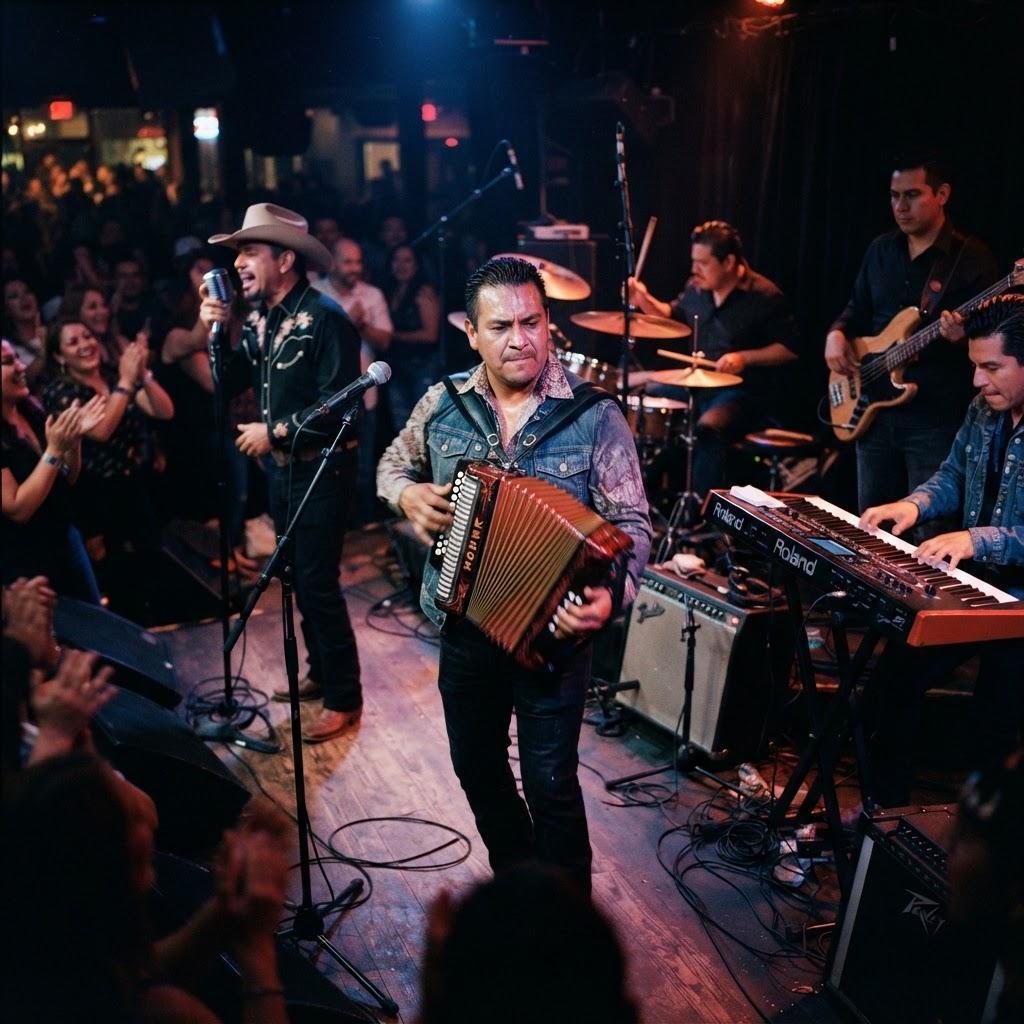
1940s-1950s, South Texas, USA
Tejano
Tejano is the spicy, accordion-fueled soundtrack of South Texas that will make your hips move before you even realize what hit you. It is a high-energy blend of cultural defiance and pure, unadulterated joy that bridges the gap between old-world traditions and modern stadium pop.
Meet the Genre
Imagine walking into a sun-drenched backyard in San Antonio, where the smell of sizzling fajitas competes with the sound of a button accordion being played with the intensity of a wildfire. This is the realm of Tejano, a musical powerhouse that refuses to be ignored. It is not just music; it is the sonic equivalent of a vibrant, multi-colored serape thrown over a leather jacket. Tejano is the bold, brassy, and impossibly catchy heartbeat of the Tex-Mex borderlands. It vibrates with the restless energy of a people who have spent generations blending cultures, languages, and histories into one hell of a party. You do not just listen to Tejano; you experience it through the rhythmic tap of your boots and the sudden urge to spin someone around on a dusty dance floor. It is elegant, it is rowdy, and it is unapologetically loud. Whether it is an intimate family wedding or a massive stadium concert, Tejano commands total attention, pulling you into a world where heartbreak is treated with a dance, and joy is celebrated with a full-blown brass section.
The Sound & Signature Elements
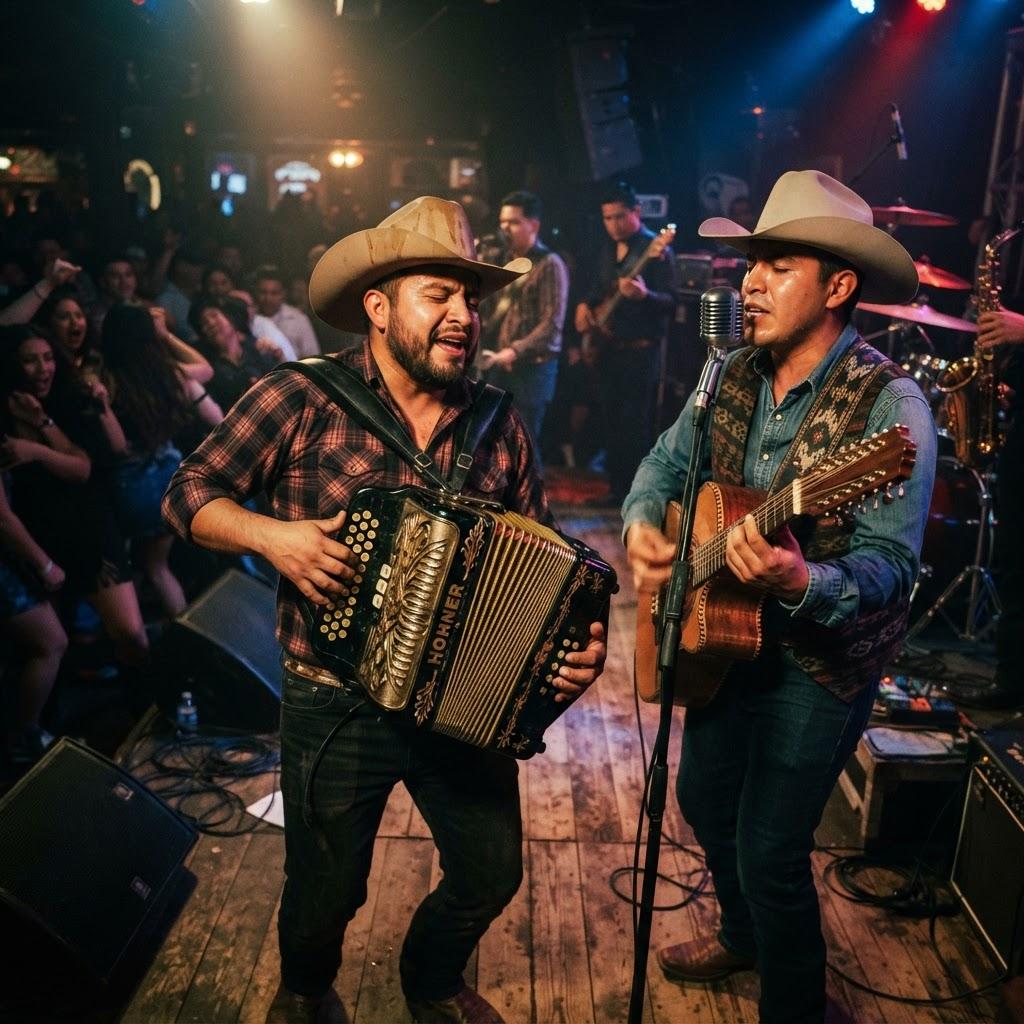
At the core of Tejano is the accordion, specifically the button accordion, which provides the genre’s squeaky, nimble, and iconic melody lines. Think of it like a caffeinated windpipe that can sing faster than a sparrow. Supporting this master of ceremonies is the bajo sexto, a twelve-string guitar that acts as the rhythmic backbone, providing a thick, percussive sound that keeps the beat chugging along like a vintage locomotive. When the genre moved into the modern era, producers added electric bass and drums to the mix, creating a foundation as sturdy as a brick house. Think of the drum beat as the reliable friend who never misses a beat, while the electric bass adds a round, satisfying thud that hits you right in the chest. Add in a sprinkle of shiny synthesizers—which act like the neon lights of the arrangement—and you have a wall of sound that is both organic and futuristic. The song structures usually follow a classic verse-chorus-verse format, keeping things catchy and designed for maximum impact when played at top volume.
Origins & Birth of the Sound
The birth of Tejano is a story of immigrant ingenuity meeting the wide-open spaces of the American Southwest. In the early 20th century, German and Czech immigrants brought their traditional polkas and waltzes to the Texas plains. The local Mexican communities, with their love for rhythmic, storytelling ballads, looked at these accordions and thought, 'We can do something wilder with that.' It was a cross-cultural collision that happened on front porches and at community dances. The accordion, initially a European folk instrument, became the rebel heart of a new sound that expressed the unique experience of being Chicano—neither fully here nor fully there, but somewhere beautiful in between. Musicians began experimenting, blending the quick-stepping polka beats with traditional mariachi flair. It was an act of cultural rebellion. By the time the mid-century rolled around, the sound had coalesced into something distinctly Tejano. It was raw, it was unrefined, and it was entirely original, reflecting the rugged landscape of South Texas where the heat is high and the music is even hotter.
The Pioneers & Legends
To understand the titans of Tejano, you have to look at the visionaries who strapped the accordion to the electric stage. Narciso Martínez, known as the 'Father of Conjunto,' was the man who turned the accordion into a virtuoso instrument, stripping away the complex background music of European polkas to let the lead melody fly free. Then came the legendary Valerio Longoria, who added a touch of vocal charm and innovation, making the music feel more intimate and deeply human. But no discussion is complete without the Queen of Tejano, Selena Quintanilla. She took the genre, which was once mostly an accordion-led boys' club, and blasted it into the stratosphere of global pop. Her voice was like liquid gold, and her ability to blend traditional Tejano rhythms with smooth R&B sensibilities made her a cross-generational icon. These legends did more than just play notes; they codified a language of rhythm and soul that transformed a regional folk style into a sophisticated art form capable of filling arenas from Mexico City to Chicago.
Defining Tracks & Era-Defining Moments
If you want to understand the soul of this movement, start with the tracks that made the walls shake. 'Como La Flor' by Selena is the undeniable anthem, a song so universally beloved that it essentially became a secondary national anthem in South Texas. It captures the perfect balance of Tejano rhythm and pop polish. Before that, tracks like 'La Chicarronera' by Narciso Martínez showcased the raw, stripped-back intensity of the early Conjunto style, which sounds like it was recorded in a room where the floorboards were literally dancing. Another pivot point was the inclusion of full brass sections and synthesizer glissandos, which defined the 1980s and early 90s 'Tejano Explosion.' Songs from groups like La Mafia or Mazz pushed the production quality into high-fidelity territory, making Tejano sound like a big-budget record that could hold its own against any American Top 40 hit. These moments were not just songs; they were cultural milestones that proved Tejano could evolve without losing the dust of its rural, humble roots.
Subgenres & Offshoots
The Tejano family tree is sprawling and wonderfully weird. At one end, you have Conjunto, the traditionalist sibling that demands only the accordion, bajo sexto, bass, and drums. It is the pure, unadulterated version—the 'black coffee' of the genre. Then you have Tejano-Pop, the flashy, glittery cousin that loves synthesizers, drum machines, and spandex. This is where the genre gets experimental, incorporating dance beats and slick, radio-ready production. There is also Orquesta Tejano, which brings in huge horn sections, feeling more like a big-band swing ensemble than a folk group. It is luxurious, grand, and meant for a ballroom floor. Sometimes, you will even find Norteno-influenced tracks bleeding into the mix, bringing a slightly different regional accordion flavor from across the Mexican border. Each of these sub-genres offers a different texture of the same emotion. Whether you want the stripped-back, accordion-heavy punch of Conjunto or the lush, orchestral sprawl of Orquesta, there is a version of this sound that fits your mood perfectly.
Cultural Impact & Influence
Tejano is the thread that keeps the tapestry of Chicano culture tightly knit. It influenced fashion, with the iconic 'Tejano look'—think wide-brimmed hats, elaborate leather work, and flashy embroidered shirts—becoming a staple at festivals and rodeos. Language-wise, the genre helped popularize 'Spanglish' in song lyrics, seamlessly flipping between English and Spanish in a way that felt natural to the bilingual experience of millions. Its influence is also seen in film and television, where the stories of Tejano icons have brought visibility to the struggles and triumphs of the Mexican-American community. Politically, the music served as a unifying force, giving a voice to a population that often felt overlooked by mainstream media. Beyond the borders of Texas, you can hear traces of Tejano in modern country music, which frequently borrows the accordion's jaunty, upbeat phrasing to add a little 'Tex-Mex' flavor to their radio hits. It is a genre that literally changed how a huge chunk of America sounds, speaks, and dresses, all while keeping the dance floor packed.
Controversies & Drama
No genre is worth its salt without a little bit of internal bickering. For years, the 'Purist Wars' raged on between the Conjunto traditionalists and the modernizers. The older crowd looked at the flashy, synth-heavy production of the 80s and accused them of selling out, claiming that 'real' Tejano died the moment a computer touched an accordion. It was the classic 'acoustic versus electric' argument, just with more accordions and even more passion. There were also the territorial disputes—who truly had the best sound, the Valley or San Antonio? It became a point of fierce regional pride that bordered on absurdity. Backstage drama was just as juicy, with record labels, band breakups, and the sudden rise and fall of various 'star' vocalists providing endless fodder for the local radio gossip segments. These feuds weren't just petty; they were evidence of how much people cared. You do not fight over a genre unless you believe it is the most important thing in the world, and for Tejano fans, it absolutely was.
Global Spread & Regional Scenes
Tejano started in the rural dance halls of South Texas, but it definitely didn't stay there. As the Mexican-American diaspora spread throughout the United States, so did the music. You will find massive, devoted scenes in California, Arizona, and even as far north as Chicago and Washington state, where cold winters are no match for the heat of a well-played accordion solo. In Mexico, the genre found a massive audience, though it often blended with local northern Mexican styles like Norteño, creating a beautiful feedback loop of musical exchange. The regional scenes are fascinating because they each add a little local flavor; the California scene might lean a bit more toward the funk-influenced side, while the Texas scene stays fiercely loyal to the traditional polkas. Today, you can hear the influence of Tejano in global markets, as listeners in places like Colombia and Japan have discovered the hypnotic, bouncing joy of the button accordion, leading to a surprising, if small, international following that loves the 'Tex-Mex' vibe.
The Modern Landscape
Today, Tejano is in a state of exciting, chaotic evolution. It is not just sitting in the past; it is actively remixing its own identity on platforms like TikTok, where younger generations are discovering the classics and sampling them into moody, trap-influenced beats. There is a whole 'New Tejano' movement brewing, driven by artists who grew up with both traditional accordion music and modern urban pop. They are not choosing between the two; they are smashing them together. While traditional Tejano festivals still pull in massive, multi-generational crowds, the music is finding new life in clubs and through bedroom producers who are adding glitched-out drum patterns to classic accordion loops. It is a testament to the genre's adaptability. Whether it is a heritage act keeping the traditional flame alive or a digital-native kid making Tejano-fusion, the music remains a living, breathing, and constantly shifting entity that refuses to be relegated to a museum shelf.
How to Dive In
Ready to get your accordion-fueled education started? Stop everything and queue up Selena’s 'Amor Prohibido'—it is the perfect gateway drug to the genre. Once you have that melody stuck in your head, head over to the classic works of Little Joe y La Familia to hear that big, bold Orquesta sound that will make you want to stand up and salute. If you want to experience the raw, authentic pulse of the genre, look for anything by Esteban Jordan, who is essentially the Jimi Hendrix of the accordion—his speed will melt your brain. Dive into a 'Tejano Hits' playlist to get a taste of the different eras, from the 70s golden age to the 90s explosion. Do not be afraid to jump around; the best way to learn is to follow the sound that makes your feet move the fastest. Put on your boots, clear some floor space, and crank the volume until the neighbors start complaining—or better yet, until they come over to join the party. Enjoy the ride!