1970s, United States
Smooth Jazz
Smooth Jazz is the sonic equivalent of a luxury hotel lobby that somehow manages to feel like a warm hug. It is the sophisticated, polished, and endlessly relaxed sibling of the jazz world that just wants you to unbutton your collar and breathe.
Meet the Genre
Imagine you have just stepped out of a high-speed elevator into a penthouse suite where the air conditioning is set to a crisp seventy degrees and there is a chilled glass of sparkling water waiting for you on a marble coaster. That is the exact vibe of Smooth Jazz. It is not here to challenge your political beliefs or force you to solve complex math equations in your head while you listen. It is here to provide a plush, sonic cushion for your overworked brain. While its older jazz cousins might be busy playing notes so fast they sound like a swarm of angry bees, Smooth Jazz takes the opposite approach. It is cool, collected, and remarkably polished. It is the music that soundtracked every romantic comedy montage in the nineties and turned suburban shopping malls into palaces of refined relaxation. It wears a tuxedo jacket with no tie, drives a sedan with leather seats, and never, ever gets lost in a temper tantrum on stage. It is the ultimate musical comfort food, designed to make you feel like you are perpetually vacationing in a resort where the sun always sets perfectly over the horizon.
The Sound & Signature Elements
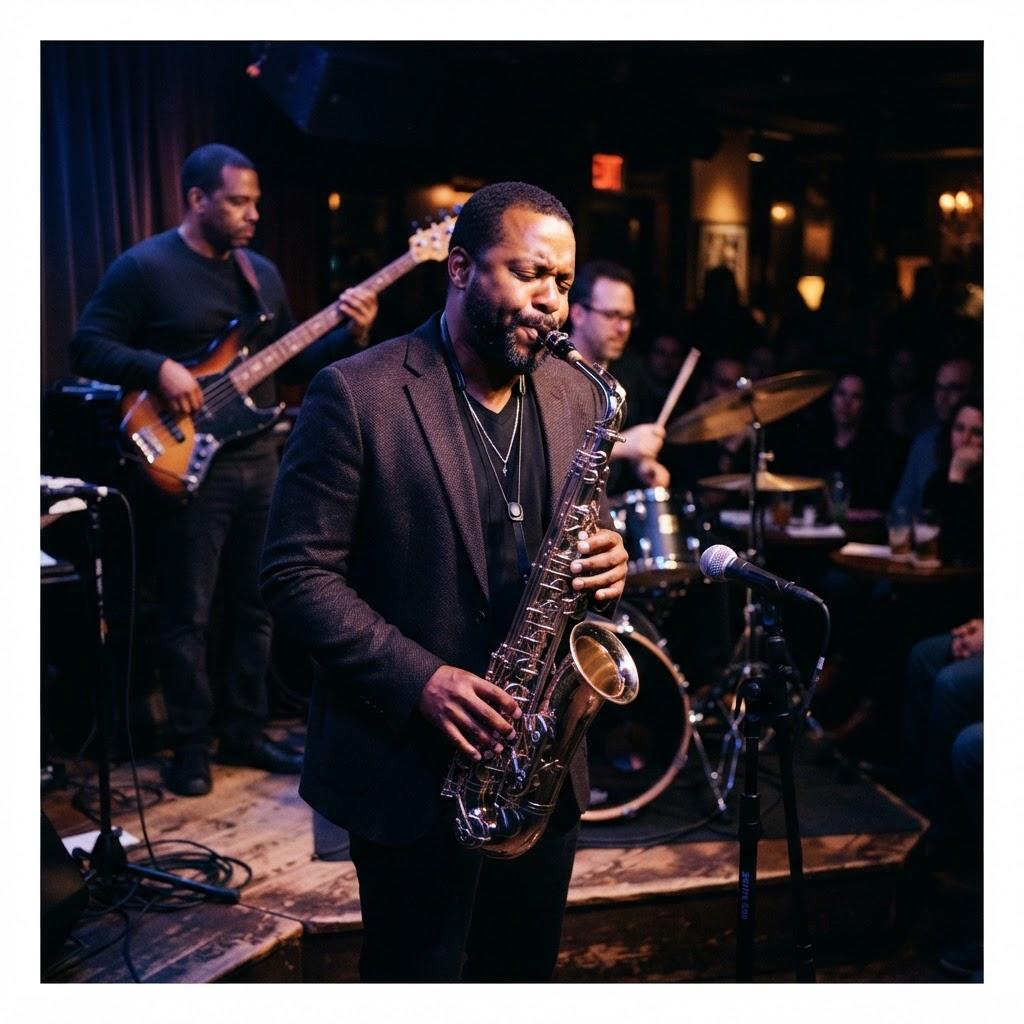
The secret sauce of Smooth Jazz lies in its production, which treats the recording studio like a high-end laboratory for sonic cleanliness. At its core, you are looking at a mid-tempo groove—usually hovering right in that sweet spot where you could tap your foot without breaking a sweat. The instruments are treated with what audio nerds call 'reverb' and 'delay,' which are just fancy ways of saying the sounds are made to feel like they are floating in a large, echoey cathedral. The soprano saxophone acts as the lead singer, often playing melodies so silky smooth you could use them to iron a shirt. The basslines are frequently played on fretless instruments, which gives them a sliding, rubbery quality—like a gymnast doing a slow-motion cartwheel. The drums are rarely aggressive; they rely on crisp, quantized beats that provide a sturdy, reliable foundation. Every note is placed with the precision of a jeweler setting a diamond. There is zero room for clashing chords here; everything is harmonically agreeable, aiming to soothe your nervous system rather than wake it up from a dead sleep.
Origins & Birth of the Sound
Smooth Jazz did not emerge from a single dark alleyway; it was more of an atmospheric shift that happened in the mid-1970s. As Jazz Fusion began to get a little too wild and experimental for the average radio listener, a group of clever producers and musicians in Los Angeles and New York realized that people still wanted to hear instruments—just, you know, played a bit more politely. They started blending the complex improvisations of jazz with the sturdy, reliable beat of R&B and the shimmering production of top-tier pop music. It was an act of creative defiance, really. These musicians were tired of being told that music had to be difficult to be 'serious.' They looked at the success of artists like Grover Washington Jr. and said, 'What if we made this sound expensive, accessible, and radio-friendly?' It was the musical equivalent of taking a complicated Michelin-star dish and simplifying the recipe so that everyone at the dinner party could enjoy it. The result was a sound that felt both sophisticated enough for the jazz elite and catchy enough for the guy buying his first fancy stereo system.
The Pioneers & Legends
To understand Smooth Jazz, you have to bow down to the architects who built this glittering skyscraper. Grover Washington Jr. is effectively the patron saint of the genre; his saxophone tone was the blueprint for everything that followed. He proved that a jazz musician could be a pop star without selling their soul. Then there is Kenny G, the man who turned the soprano saxophone into a cultural force so powerful it could practically change the weather. With his legendary permed hair and his ability to hold a note for what seemed like several geological eras using circular breathing, he became the face of the genre. We cannot forget David Sanborn, whose alto sax had a grit and edge that proved smooth did not have to mean boring, or George Benson, who combined jazz guitar chops with a soulful vocal style that made everyone want to go out and buy a velvet blazer. These individuals were not just musicians; they were the tastemakers who proved that you could conquer the charts without playing a single power chord or needing a backup dancer in neon spandex.
Defining Tracks & Era-Defining Moments
If you want to understand the genre, you need to dive into the tracks that defined the trajectory of 'cool.' Grover Washington Jr.’s 'Just the Two of Us' is the undisputed national anthem of Smooth Jazz—it has a groove so infectious it should be studied in biology textbooks. Then you have Kenny G’s 'Songbird,' a track that was so ubiquitous in the late eighties that it likely occupies a permanent space in the collective human subconscious. It is the sound of pure, unadulterated melodic bliss. Another pivot point was Anita Baker’s 'Sweet Love,' which seamlessly blurred the lines between R&B and Jazz, showing just how versatile the genre's production style could be. These tracks were not just songs; they were cultural markers. They appeared in elevators, hotel lobbies, dentist waiting rooms, and late-night radio programs, slowly weaving themselves into the fabric of daily life. When you hear that distinct, shimmering electric piano intro, you know exactly where you are, and you know that for the next four minutes, everything is going to be perfectly, undeniably fine.
Subgenres & Offshoots
Just like any sprawling family tree, Smooth Jazz has some eccentric cousins that live in the attic. You have 'Contemporary Jazz,' which is basically Smooth Jazz that went to private school and tries to act a bit more serious about its theoretical complexity. Then there is 'Acid Jazz,' which takes the smooth vibes but adds a breakbeat, some funky drum samples, and maybe a rapper for good measure—it is basically Smooth Jazz that stayed out too late at a club in London. We also have 'Quiet Storm,' which is less of a subgenre and more of a mood-based radio format that blends the softest jazz with the most tender R&B ballads you have ever heard. It is designed specifically for 2:00 AM drives. Finally, there is 'Fusion-Lite,' which is where the complex, wandering solos of the seventies go to retire and take a nap. Each branch of this family tree shares the same DNA—the focus on melody and high-end sonic polish—but they all serve slightly different purposes depending on whether you are at a party, a spa, or trying to convince a first date that you are a person of refined taste.
Cultural Impact & Influence
It is easy to make jokes about Smooth Jazz being the background noise of life, but its influence is actually massive. It completely changed how we think about background music. Before Smooth Jazz, your dentist’s office was likely filled with awkward, glitchy Muzak covers of Beatles songs. Smooth Jazz replaced that with real, professional-grade musicianship. It helped legitimize the 'adult contemporary' radio format, giving artists a place to exist once they grew too old for Top 40 teen pop. Fashion-wise, it basically single-handedly kept the silk shirt industry afloat for two decades. You see its influence today in the 'Lo-Fi Hip Hop' playlists that dominate YouTube. Those chill, looping beats meant to help you study? That is just the spiritual successor to the Smooth Jazz aesthetic. It taught an entire generation that music does not always have to be a high-stakes emotional confrontation. Sometimes, it is just allowed to be a texture, a vibe, and a way to signal that you have achieved a certain level of comfort in your life.
The Controversies & Drama
Oh, the drama! If you want to see a traditional jazz purist turn purple, just mention the words 'Smooth Jazz' in their presence. For decades, there has been an absolute war between the 'Jazz Police'—people who think jazz must be difficult, dissonant, and played in a basement by someone wearing a beret—and the Smooth Jazz community. The accusations of 'selling out' were thrown around like confetti at a parade. Purists claimed that Smooth Jazz killed the spirit of improvisation, turning a daring art form into a corporate product designed to sell wine and scented candles. The artists themselves usually just laughed all the way to the bank, pointing out that they were keeping jazz instruments alive in the mainstream while the purists were playing to audiences of six people in a drafty community center. It is a classic tale of high art versus commercial viability, played out over decades of heated message board debates, magazine op-eds, and the occasional passive-aggressive quote in a major newspaper interview.
Global Spread & Regional Scenes
While it was born in the neon glow of Los Angeles, Smooth Jazz quickly became a truly international traveler. It found an incredibly passionate home in Japan, where the appreciation for high-fidelity audio production made Smooth Jazz a massive hit in urban lounges and high-end listening bars. The Japanese scene took the American blueprint and added an even greater layer of technical precision, leading to some of the most intricate and beautiful recordings in the genre's history. In the United Kingdom, it blended with local dance-music culture to create the aforementioned Acid Jazz movement, which gave it a grittier, club-ready edge. In South Korea, it became the gold standard for romantic atmosphere in cafes, with local artists putting their own spin on the soft, melodic phrasing. It turns out that regardless of the language you speak, everyone appreciates a well-played saxophone hook when they are trying to relax at the end of a long day. It is the ultimate musical Esperanto, a language of smooth chords and steady rhythms that connects Tokyo to London to New York.
The Modern Landscape
Today, Smooth Jazz is experiencing something of a secret renaissance. You won't find it dominating the Billboard Hot 100 alongside hyper-pop stars, but it is thriving in the ecosystem of digital streaming. It is the backbone of the 'Chill' and 'Focus' playlists that millions of people listen to while they work, study, or scroll through their phones. The genre has evolved from a radio-bound format into a global streaming powerhouse. Modern producers are taking the old-school Smooth Jazz principles and updating them with contemporary trap-influenced hi-hats or lo-fi tape saturation, making the sound feel both nostalgic and fresh. It is no longer just the stuff of mall elevators; it is the secret ingredient in the success of bedroom pop artists who borrow that 'smooth' sensibility to make their tracks feel intimate and warm. The genre proved it has staying power precisely because it refused to chase trends. It stayed true to its mission: helping you relax. As long as the world stays chaotic and loud, there will always be a place for the calm, cool precision of a well-crafted Smooth Jazz groove.
How to Dive In
Ready to embrace the luxury? Start your journey by listening to Grover Washington Jr.’s album 'Winelight'—it is the holy text of the genre and remains incredibly listenable even decades later. If you want to experience the sheer pop-stardom of the genre, put on Kenny G’s 'Breathless' and just let the saxophone wash over you; don’t fight it, just enjoy it. For a taste of that funky, guitar-driven sound, George Benson’s 'Breezin'' is an absolute essential that will make you want to drive a convertible along the coast at sunset, even if you are just sitting in your living room. Once you have those down, explore the work of Boney James for a modern take on the saxophone sound, or check out some 'Quiet Storm' compilations to find your perfect late-night groove. The goal is not to study the music like a textbook, but to let it exist as the background to your best moments. Turn the volume up, pour yourself something cold to drink, and remember: it is okay to just enjoy the music. Welcome to the smooth life!