Early 2010s, Internet Forums
Vaporwave
Vaporwave is the musical equivalent of a fever dream inside a shopping mall from 1989. It is a neon-soaked, slowed-down exploration of consumerist nostalgia that will make you feel like you are floating through a void made of cassette tape static and glitchy memories.
Meet the Genre
Imagine you are wandering through an abandoned suburban shopping mall at three in the morning. The fluorescent lights are flickering with a rhythmic hum, a distant fountain is splashing in the food court, and the sound system is playing a warped, dreamy version of a smooth jazz track that you swear you have heard in a dentist's office before. That is the essence of Vaporwave. It is a genre that thrives on the uncomfortable intersection of luxury, obsolescence, and pure, concentrated nostalgia. It does not ask you to dance; it asks you to sit in a beanbag chair and contemplate the fleeting nature of capitalism and the digital ghosts of the 1980s and 90s. It feels like finding an old VHS tape in your parents' attic, hitting play, and realizing that the footage inside is glitching in ways that make your heart ache for a time you barely remember. Vaporwave is the ultimate aesthetic experience, a sonic playground where commercial jingles go to die and are reborn as ethereal, haunting soundscapes.
The Sound & Signature Elements
At its core, Vaporwave is built on the art of plunderphonics—the cheeky act of taking pre-existing audio, like corporate elevator music, 80s pop ballads, or TV commercials, and warping them into something entirely new. The primary tool is a sampler or a basic digital audio workstation, which is just a fancy computer program for making music. Producers use a technique called time-stretching, which is like grabbing a rubber band and pulling it until it snaps, but in this case, it just makes the song move at a glacial, hypnotic pace. They also love pitch-shifting, which makes the original singers sound like they are exhausted or singing from the bottom of a deep swimming pool. Add a heavy dose of reverb—the sonic equivalent of shouting in a cathedral—and you get that signature blurry, wet sound. The tempos are often sluggish, mimicking the feeling of being slightly drowsy after too much screen time. It is a rhythmic collapse of structure, where the song exists in a loop, looping until you lose track of where it begins or ends.
Origins & Birth of the Sound
Vaporwave did not emerge from a smoky underground jazz club or a garage in Seattle. It was born in the neon glow of the early 2010s internet, specifically on music-sharing sites like Bandcamp and Tumblr. It grew out of the wreckage of 'chillwave,' a genre that was already obsessed with retro aesthetics, but Vaporwave took that concept and dialled it up to a level of existential dread. It was the brainchild of anonymous bedroom producers who were spending too much time on Wikipedia reading about consumerism and listening to old commercial soundtracks. The birth of the genre is often tied to the release of certain seminal albums that proved this 'dead' music could be resuscitated into something incredibly moving. It was a digital uprising of DIY artists who didn't need expensive equipment, just a cracked copy of music editing software and an internet connection. It was a direct, witty, and slightly cynical response to the glossy, hollow promises of the late 20th-century corporate world.
The Pioneers & Legends
Every revolution needs its leaders, and in the world of Vaporwave, the figureheads are as mysterious as the music itself. Daniel Lopatin, known under the moniker Chuck Person, is widely considered the architect of the genre with his legendary 'Eccojams Vol. 1,' a collection of warped snippets that basically wrote the rulebook. Then there is Macintosh Plus, the alias of Ramona Andra Xavier, whose album 'Floral Shoppe' became the undisputed, meme-lord monolith of the movement. Her iconic track 'Lisa Frank 420 / Modern Computing' is the genre’s national anthem, featuring a Japanese pop song slowed down to a crawl that became an instant internet legend. These pioneers weren't just musicians; they were digital curators, scavengers of the media landscape who found the hidden beauty in forgotten radio advertisements and instructional videos. They set the tone for the entire genre, proving that by taking a piece of cultural trash and treating it with reverence, you could create something that felt strangely profound and deeply nostalgic.
Defining Tracks & Era-Defining Moments
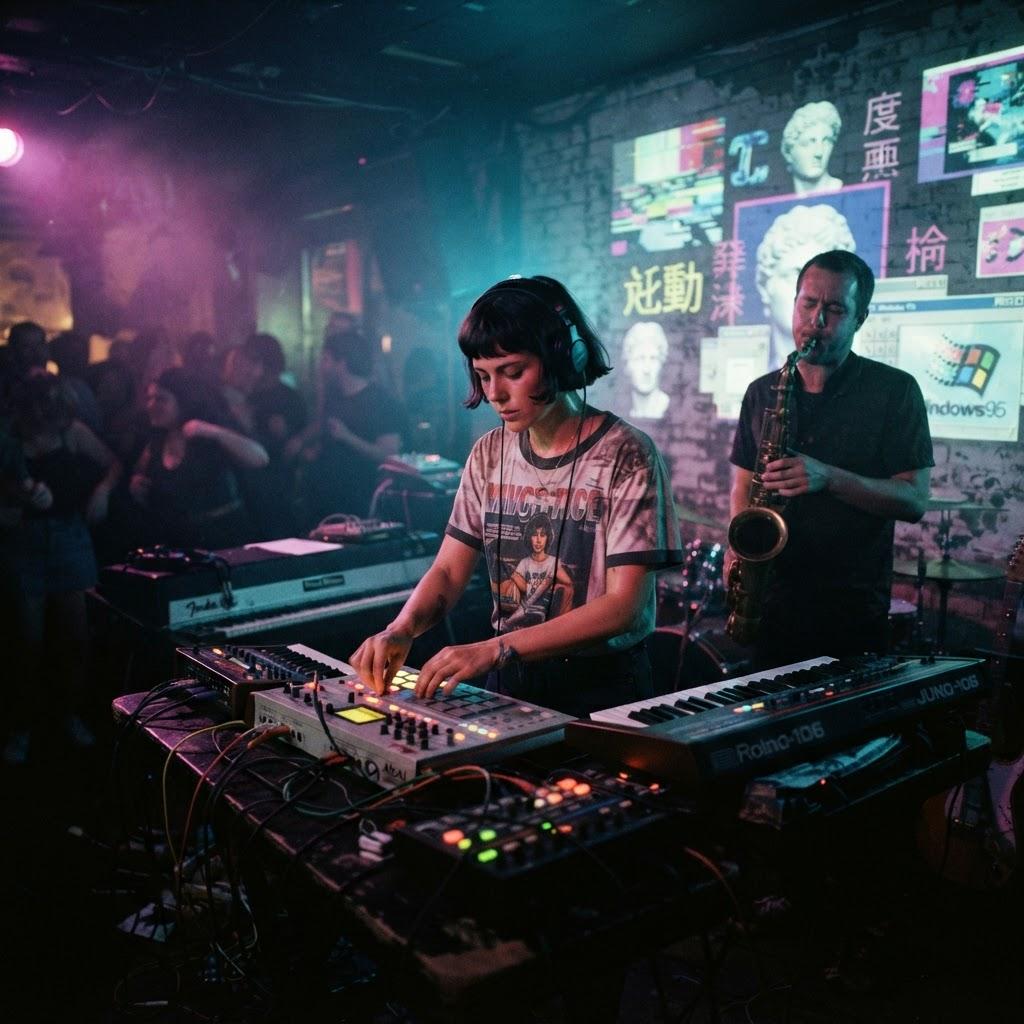
If you want to understand the heartbeat of Vaporwave, you must sit with a few specific tracks. 'Lisa Frank 420 / Modern Computing' by Macintosh Plus is the absolute essential starting point; it captures that strange, hazy feeling of walking through a digital shopping mall perfectly. Another pivot point is the rise of the 'Vaporwave aesthetic' on YouTube, where videos paired this music with grainy clips of old Windows 95 commercials, 80s anime, and CGI graphics that looked like they were rendered on a toaster. These visual-audio pairings shifted the genre from a simple musical style into a full-blown visual movement. The moment that Vaporwave crossed over from a tiny forum secret to a mainstream meme was when the 'aesthetic' became a shorthand for anything slightly retro, slightly blue, and slightly pink. It wasn't just about the music anymore; it was about the lifestyle, the fashion, and the vibe. Every time a new listener hears these tracks for the first time, it is like they are discovering a secret passage in a video game.
Subgenres & Offshoots
As the genre grew, it sprouted branches as weird and wonderful as a mutant rainforest. You have Future Funk, which takes the hazy vapor sound and puts it on a treadmill, making it upbeat, danceable, and full of funky basslines that make it impossible to stay still. On the flip side, you have Mallsoft, a subgenre that strips away the drums entirely, leaving only the sound of synthesized wind chimes and artificial background music, simulating the experience of being lost in a giant shopping centre. Then there is Simpsonwave, a hilarious and strangely poetic offshoot that pairs Vaporwave music with edited, melancholic clips from 'The Simpsons,' making Bart and Homer look like depressed teenagers trapped in a neon nightmare. Each subgenre adds a new flavor to the pot, showing how versatile the core idea is. Whether you want to dance your heart out or feel like you are slowly drifting into a digital abyss, there is a branch of the Vaporwave tree waiting to wrap its branches around your ears.
Cultural Impact & Influence
Vaporwave's reach has extended far beyond the speakers, seeping into fashion, interior design, and even mainstream marketing. You have likely seen the 'aesthetic'—those pastel pink and blue color palettes, the busts of Roman statues wearing sunglasses, the glitchy Japanese text, and the Windows 95 icons. It changed the way an entire generation looks at the past, taking the corporate greed of the 80s and repurposing it as a cool, ironic fashion statement. It influenced high-fashion runways, music videos from pop stars like Charli XCX, and even the way major brands design their social media presence to appeal to internet-savvy youth. It is a strange irony that a genre meant to criticize corporate consumerism ended up being a style that big corporations eventually tried to sell back to us. Vaporwave turned 'trash' into 'treasure,' making the forgotten artifacts of the digital age into the defining visual language of the 2010s, proving that even a discarded logo can carry a soul if you add enough reverb to it.
Controversies & Drama
Where there is a scene, there is drama, and Vaporwave has plenty. The biggest battle was the 'is it music?' debate. Purists would argue that stealing someone else's song and slowing it down is just laziness, while fans argued it was 'plunderphonics,' a valid art form that creates new meaning through recontextualization. This led to massive, petty arguments on forums about who was the 'real' Vaporwave artist and who was just a 'poser' trying to capitalize on the aesthetic. There was also the 'sellout' controversy when the genre started getting too popular, with people claiming that once you could buy a Vaporwave t-shirt at a mall, the soul of the genre had been compromised. And of course, there were the copyright nightmares—when your entire genre is based on sampling other people's work, you are bound to run into legal trouble eventually. These purist wars and legal skirmishes only added to the mythology of the genre, making it feel like a secret society that was constantly under threat from the outside world.
Global Spread & Regional Scenes
Though it started on the internet, Vaporwave developed surprisingly strong local hearts. In Japan, it felt like coming home; producers there leaned into the city-pop and futuristic elements of the genre, creating a sound that felt like a love letter to the neon streets of Tokyo. In Russia, the scene took on a colder, more melancholic edge, often incorporating themes of post-Soviet decay and the sadness of failed utopias. In the United States, the focus stayed largely on the 'mall culture' aspect, a critique of the sprawling retail spaces that define American suburbia. Each region took the core idea—reclaiming the past—and applied their own specific cultural memories to it. It is fascinating to see how a track from a guy in a bedroom in Ohio sounds different from a track from a producer in a high-rise in Osaka, even though they are both using the same basic tools. This global reach proved that the feeling of 'nostalgia for a time that never was' is a universal human experience that transcends borders and languages.
The Modern Landscape
Today, Vaporwave is in a state of constant evolution. It is not exactly the underground secret it used to be, but it has not quite become pop music either. It has found a cozy home on TikTok and Instagram, where the 'aesthetic' remains a powerful visual hook for creators making surreal, short-form video content. While the initial wave of 'slowed down 80s music' has slowed to a crawl, the genre has morphed into more experimental territory, with artists pushing the boundaries of what can be done with sound design and digital textures. Some might say the genre is 'dead,' but in the world of Vaporwave, death is just another aesthetic choice. The music lives on in the thousands of hours of content on platforms like YouTube and Bandcamp, continuing to inspire new producers to look at their old mp3 collections and wonder what secrets might be hiding under a layer of tape hiss and creative manipulation. It is less of a passing trend and more of a permanent fixture in the digital cultural archive.
How to Dive In
Ready to take the plunge into the digital shopping mall? Start with the absolute classics. You must listen to 'Floral Shoppe' by Macintosh Plus; it is the essential bedrock of the movement. From there, move on to 'Eccojams Vol. 1' by Chuck Person to hear the seeds of the genre being planted. If you are feeling more energetic, dive into some Future Funk by artists like Saint Pepsi, whose track 'Enjoy Yourself' is guaranteed to get you moving. For a deeper, more atmospheric experience, look up 'Birth of a New Day' by 2814, which captures the 'nighttime city' vibe perfectly. Explore the various channels on YouTube dedicated to archiving these sounds, as the comments sections are often just as interesting as the music itself. Do not overthink it—just find a quiet spot, put on some headphones, close your eyes, and let the static wash over you. There is a whole universe of glitchy, beautiful, and weirdly emotional sound waiting for you, so go ahead and hit play!