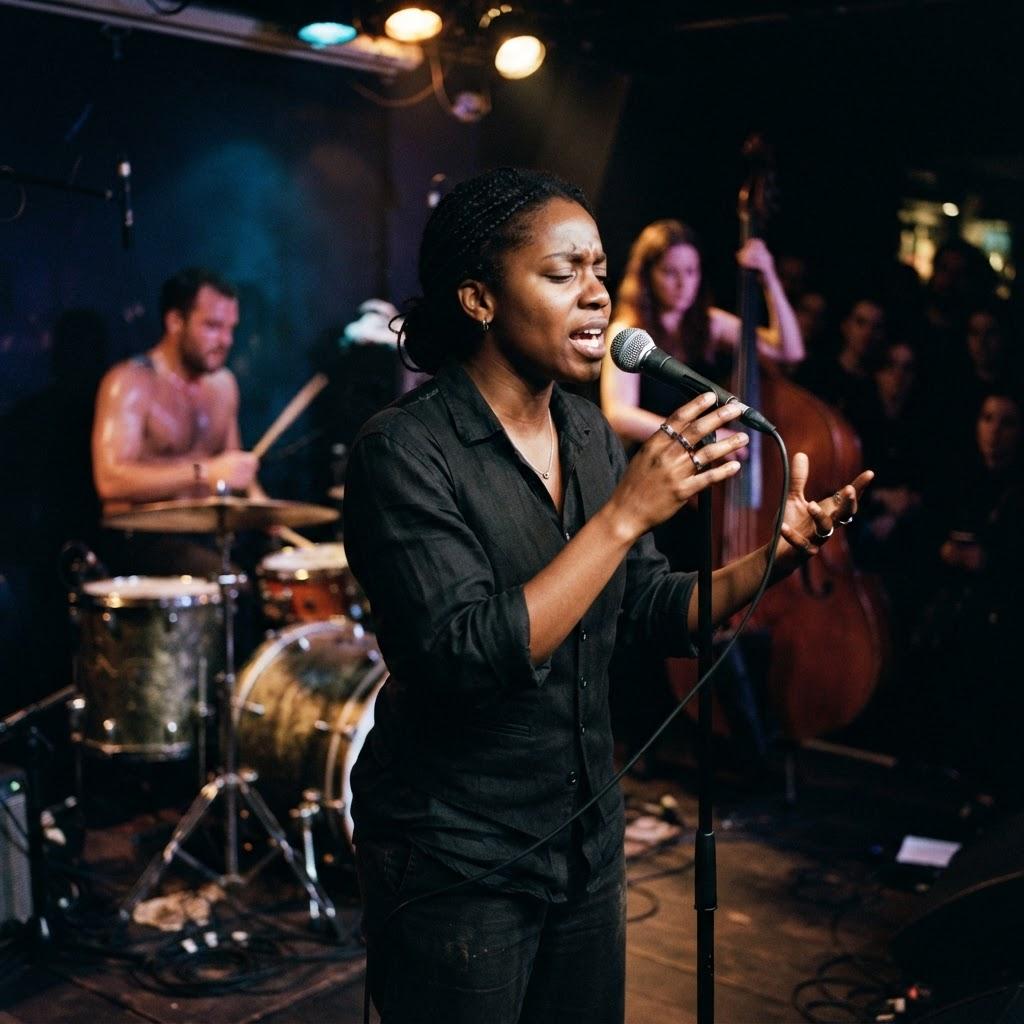
1950s, New York City, USA
Spoken Word
Spoken Word is the art of turning a conversation into a sonic riot, where the rhythm of the language beats the drum. It is the ultimate testament to the idea that sometimes the most powerful instrument in the band is simply the human voice at its most unhinged and honest.
Meet the Genre
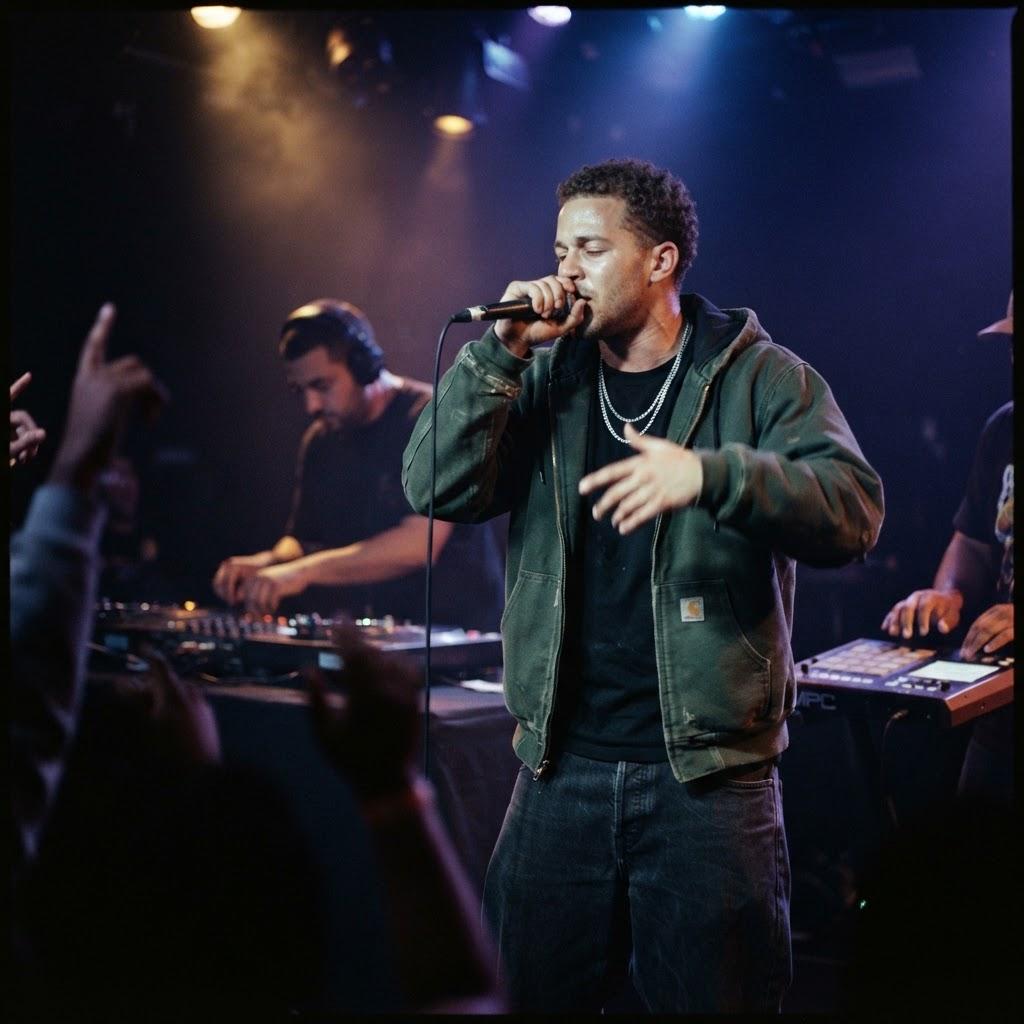
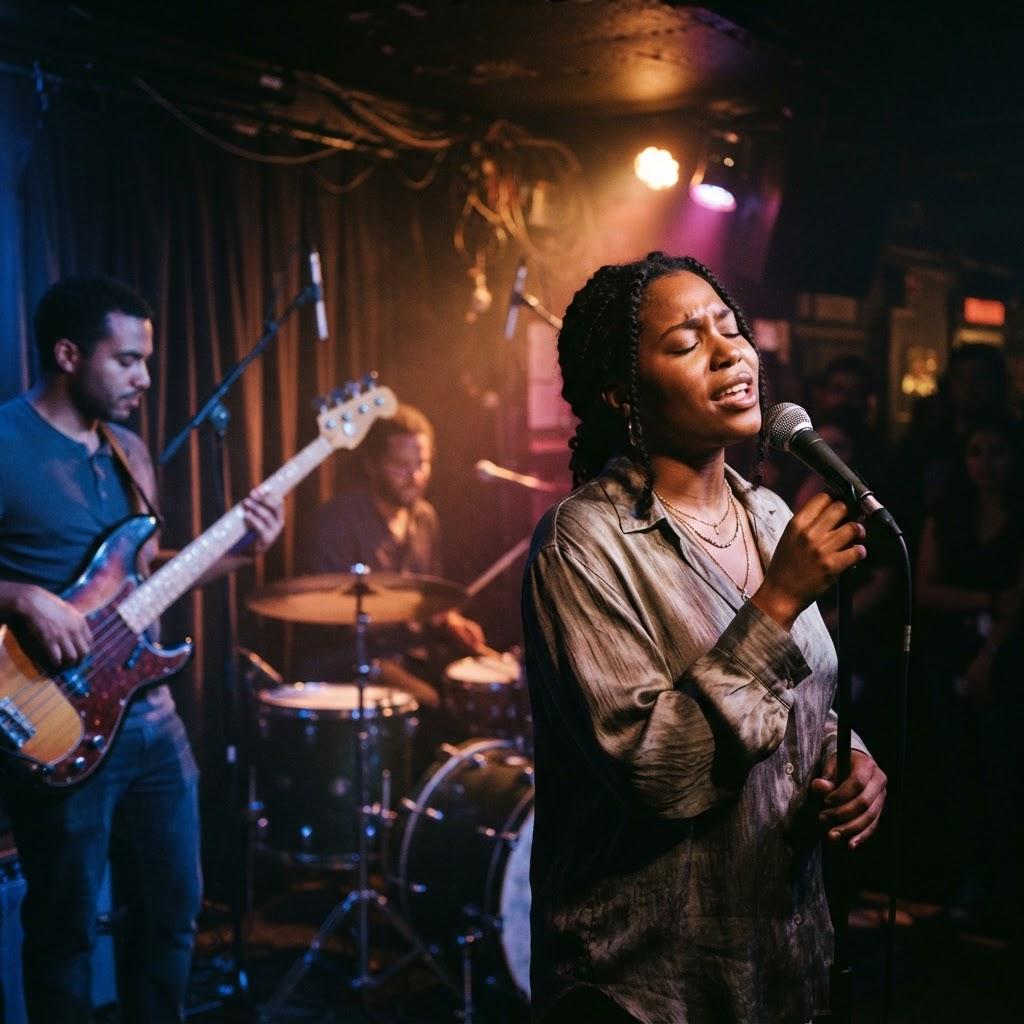
Imagine you are sitting in a dimly lit basement, the kind that smells faintly of clove cigarettes and stale espresso, where the only thing louder than the silence is the person pacing on stage. Spoken Word is the cool, intellectual cousin of pop music who refuses to sing a single melody because they are too busy dissecting the soul of the universe. It is a genre that doesn't care about your radio-friendly hooks or your catchy choruses; it cares about the way a consonant hits your teeth or how a well-placed pause can make an audience hold their breath for ten agonizing seconds. It is raw, it is unfiltered, and it is entirely obsessed with the weight of words. When the music drops away and only the voice remains, the illusion of performance vanishes, leaving you staring directly into the artistic guts of the performer. It is the sound of truth told with a rhythmic swagger that makes you feel like you are being let in on a secret that has been waiting to be told since the dawn of humanity.
The Sound & Signature Elements
The musical DNA of Spoken Word is a strange and beautiful beast. Unlike a standard pop song where the drums keep a rigid, metronomic beat to keep you dancing, Spoken Word treats the beat like a suggestion rather than a law. The tempo often fluctuates based on the emotional urgency of the narrator; if the speaker is angry, the words spill out like a flash flood, forcing any accompanying instrumentation—perhaps a stand-up bass or a glitchy electronic loop—to scramble to keep up. Think of it as a conversation held during a jazz improvisation session where the speaker is the lead instrument. Production tricks often involve stripping everything away, a technique called 'dry mixing,' where the voice is pushed so far to the front of the mix that it feels like the artist is whispering directly into your ear canal. It doesn't use standard song structures like 'verse-chorus-verse.' Instead, it follows a narrative arc, building tension through repetition or changing the intensity of the vocal delivery, much like a great campfire ghost story that keeps getting creepier.
Origins & Birth of the Sound
Spoken Word wasn't born in a sterile laboratory; it was birthed in the smoke-filled cafes of 1950s New York, where the Beat Generation poets decided that reading from a book was far too boring. Figures like Jack Kerouac and Allen Ginsberg started treating the page like a musical score, performing their verses with the frantic energy of a drummer soloing in a jazz club. This was an act of creative defiance against the sanitized, upbeat pop music of the post-war era. They wanted to capture the grit of the city, the despair of the working class, and the flickering light of enlightenment, all while a bass player plucked lazily in the background. It was the original DIY punk movement before anyone even thought to call it punk. It grew out of a need to reclaim the voice from the radio machines that were pumping out pre-packaged melodies. By bringing poetry into the nightclub and the underground gallery, these artists proved that you didn't need a golden voice to make a profound impact; you just needed something real to say.
The Pioneers & Legends
To understand Spoken Word, you have to bow at the altar of the titans who defined the form. Gil Scott-Heron is arguably the patron saint of the genre, a man who combined the political fire of a protestor with the rhythmic flow of a master jazz drummer. When he released 'The Revolution Will Not Be Televised,' he didn't just record a track; he laid down a blueprint for how to critique society while making it sound like a groove. Then there is Patti Smith, the 'Godmother of Punk,' who injected a wild, jagged mysticism into the form, turning rock concerts into seances. Henry Rollins later took that intensity and turned it into a weapon, using the medium to scream, whisper, and philosophize about the brutality of modern existence. Each of these legends brought a different weapon to the stage: Scott-Heron brought the cool, Smith brought the spirit, and Rollins brought the iron-clad discipline. They turned the spoken word into a formidable force that proved silence is often the best setup for a devastating punchline or a life-changing epiphany.
Defining Tracks & Era-Defining Moments
History is paved with tracks that changed the trajectory of the art form. Gil Scott-Heron's 'The Revolution Will Not Be Televised' is the undisputed heavyweight champion, a piece that turned mass media criticism into a rhythmic mantra that still rings true today. Then you have Laurie Anderson's 'O Superman,' which took the avant-garde, experimental world and dragged it into the pop charts in the early 80s using nothing but a vocoder—a device that changes the pitch of your voice—and a haunting, looping rhythm. It was a moment where the weird became the center of the room. Later, the explosion of slam poetry in the 90s, highlighted by the rise of shows like 'Def Poetry Jam,' brought the genre to the living room of millions, making a household name out of performers like Saul Williams. These moments acted as gravitational pulls, dragging the genre from the dark, smoky basements into the bright, blinding glare of mainstream recognition, proving that people actually wanted to hear complex ideas delivered with a beat.
Subgenres & Offshoots
The family tree of Spoken Word is messy and full of thorns. You have the 'Slam Poetry' branch, which is the competitive, high-stakes sports version of the genre where poets go head-to-head in battles of wit and delivery. Then there is 'Sound Poetry,' the weirdo cousin that cares more about the physical sensation of the syllables—clicks, pops, and vowel sounds—than the actual meaning of the words. It is basically the linguistic version of abstract painting. Another branch is 'Industrial Spoken Word,' which drags the poetry through a shredder of mechanical noise, synthesizers, and harsh, buzzing electronic textures. If the traditionalists are reading in a library, the industrial crowd is reciting poetry inside a car engine. You also have the influence of Caribbean 'Dub Poetry,' which fuses the rhythmic, reggae-inspired cadence of the islands with a deeply political message, proving that Spoken Word is not just an American export, but a universal tool for anybody who has ever wanted to shout their truth over a bassline.
Cultural Impact & Influence
It is hard to overstate how much Spoken Word has leaked into the bloodstream of popular culture. You can hear its DNA in everything from the intricate storytelling of hip-hop to the moody, atmospheric intros of modern indie rock albums. Even your favorite political commentator is probably using pacing and cadence techniques that were pioneered by 1970s spoken word poets. The genre helped shift the cultural value of the 'lyric' from something that just needs to rhyme into something that needs to carry the weight of a narrative. It paved the way for fashion movements that embraced the 'intellectual rebel' aesthetic—turtlenecks, dark shades, and an air of permanent contemplation. Film directors often use spoken word sequences to ground a scene in reality, stripping away the cinematic music to force the audience to listen to the character's internal monologue. It has essentially taught generations of people that if you want to be heard, you don't necessarily have to scream; you just have to speak with enough conviction that the world has no choice but to stop and listen.
Controversies & Drama
Where there is art, there is drama, and Spoken Word is no exception. The most enduring fight in the community is the 'Purist vs. Popularist' war. The purists argue that once you add too much music, it stops being poetry and becomes a song, essentially demanding that the art remains 'pure'—meaning just a voice and perhaps a quiet percussion instrument. The popularists, on the other hand, want to see how far the genre can stretch, adding heavy production, autotune, and high-energy electronic beats. Then there are the 'Sellout' wars, which erupted whenever a spoken word artist dared to be featured on a commercial television show or performed a poem for a major corporation. The critics act as if the poet has just committed a cardinal sin, while the artists argue that they are just trying to pay rent and reach a wider audience. It is all very dramatic, involving late-night message board arguments and heated interviews that feel like a high school soap opera, all centered around whether the microphone should have a reverb effect or not.
Global Spread & Regional Scenes
While New York and Chicago might be the historical cradles, Spoken Word has traveled further than a backpacker with a rail pass. In London, the scene took on a distinctly rebellious, working-class flavor, blending with the punk and dub scenes to create something that sounded like the rainy, gray streets of the UK. In Germany, there is a massive tradition of 'Lyrik-Performance' that leans heavily into the avant-garde and the theatrical, turning readings into high-concept art installations. Meanwhile, in Jamaica, Dub Poetry emerged as a force of nature, using the genre as a vehicle for anti-colonial discourse and social justice, often performed over the deep, heavy bass of roots reggae. Each region takes the core ingredient—a person with something to say—and remixes it with their own local slang, musical history, and political grievances. It shows that while the language may change, the human impulse to stand up and hold an audience hostage with nothing but the rhythm of their own voice is a truly global phenomenon.
The Modern Landscape
Today, Spoken Word is in a weird, wonderful state of flux. It is no longer just limited to coffee shops; it is thriving on TikTok and Instagram, where creators use the medium to deliver bite-sized, high-impact observations that go viral in a heartbeat. The 'Sad Girl' aesthetic and the rise of emotional, confessional songwriting have brought spoken-word-style interludes back into the mainstream. Artists like Billie Eilish or Phoebe Bridgers often use the 'whisper-talk' technique in their tracks, which is a direct descendant of the intimate, unvarnished delivery of early spoken word. It is also a massive part of the current resurgence in 'Jazz Rap,' where the boundary between a poetic verse and a musical rap has completely dissolved. The genre has essentially stopped being a 'thing you go to see in a basement' and has become a 'tool you use in your creative kit.' It is more accessible than ever, and while it might be losing some of its 'exclusive club' vibe, it is gaining a massive audience that finally appreciates the power of a well-spoken word.
How to Dive In
So, you are ready to stop just listening to the beat and start listening to the message? Welcome to the deep end. Start by putting on Gil Scott-Heron’s album 'Pieces of a Man' to understand where the soul of this movement lives. Then, jump into the high-octane energy of Henry Rollins' 'Get in the Van' or his various spoken-word collections to feel the sheer, unbridled intensity of the format. For something more modern and mood-driven, listen to the work of Saul Williams, whose album 'Amethyst Rock Star' is a masterclass in fusing poetry with gritty, distorted rock instrumentation. Don't look for a melody to carry you; look for the rhythm in the speech and the way the performer plays with the space between words. Once you've got a taste, head to YouTube to look up clips of slam poetry competitions or local open mics in your city. The beauty of Spoken Word is that it is a live, breathing art form, so don't just stay in the digital realm. Go find a local show, grab a drink, find a seat, and prepare to be completely floored by the sound of a human voice taking a stand.