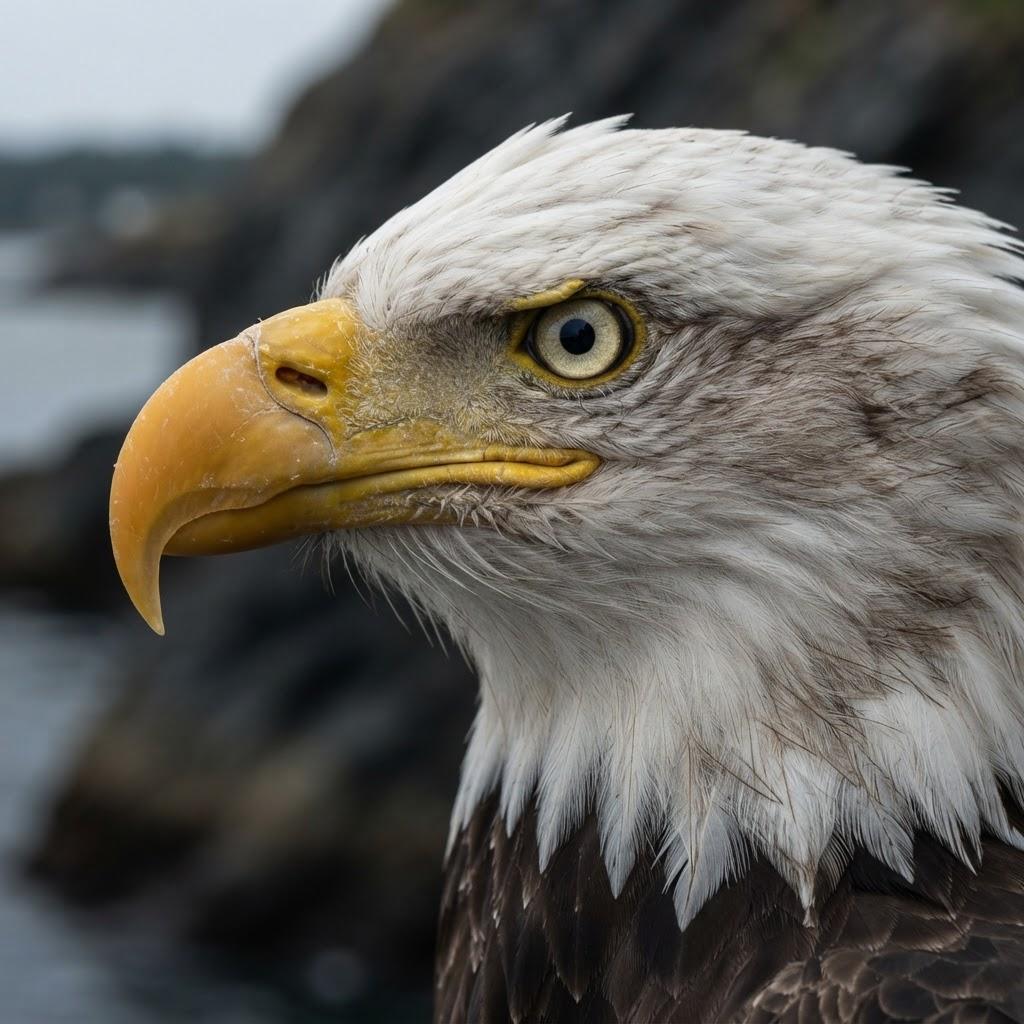
Haliaeetus leucocephalus
Bald Eagle
The Bald Eagle is nature’s ultimate dramatic protagonist: a majestic, fish-stealing icon with a scream that sounds like a squeaky door hinge. Get ready to dive into the life of this feathered celebrity, from its romantic sky-dancing to its questionable interior design choices.
Meet the Bird
The Bald Eagle is the undisputed superstar of the avian world, a creature so recognizable that it has become a literal symbol for entire nations. If the animal kingdom held an annual awards ceremony, the Bald Eagle would be the guy in the white tuxedo who walks in late, steals someone else’s appetizer, and still gets a standing ovation. Despite the name, they aren't actually bald; they are sporting a very dapper, high-contrast white head that makes them look like they are perpetually wearing a powdered wig from the 18th century. When they aren't busy posing for stamps and coins, they are scanning the horizon with the intensity of a private investigator. They possess a vibe that is equal parts regal predator and grumpy neighborhood landlord. While we associate them with heroic, sweeping music and liberty, their real-life behavior is often much more hilarious and chaotic. They are opportunistic scavengers who would choose a free lunch over a hard-earned one any day, proving that even apex predators appreciate the convenience of a takeout order when they see one.
Superpowers & Weird Abilities
Forget laser eyes; the Bald Eagle has vision that would make a fighter pilot weep with envy. These birds have what is called binocular vision, meaning they can see things with incredible clarity from up to a mile away. It is like having high-definition built-in binoculars attached to your face. They can focus on two things at once, tracking a fish swimming beneath the surface of a river while simultaneously keeping an eye on a rival eagle trying to sneak into their territory. Additionally, they have a special nictitating membrane, which is basically a transparent third eyelid. It acts like a pair of high-tech goggles that protects their eyes from wind, debris, and water splashes while they are diving at high speeds. When they hit the water, they don't even have to squint. It is a biological marvel of engineering that allows them to hunt in environments that would leave a human feeling disoriented, wet, and very hungry.
Drama, Personality & Feathered Chaos
If there is one thing the Bald Eagle understands, it is the art of the heist. These birds are the absolute masters of letting someone else do the hard work before swooping in to collect the prize. Benjamin Franklin was right to call them a bird of bad moral character because they are notorious freeloaders who will bully an Osprey or a gull until it drops its catch. Watching an eagle harass a smaller bird for a stolen trout is basically the avian version of a reality television drama, complete with high-speed chases and indignant screeching. Beyond their petty theft, they are surprisingly territorial and will engage in intense aerial shoving matches with neighbors. They hold grudges, remember specific locations where food was previously found, and are not above causing a massive scene in the middle of a peaceful waterway just to claim a particularly choice branch or a leftover carcass.
Bizarre Rituals & Quirky Habits
One of the most hilarious things about Bald Eagles is that their iconic cry, often used in movies, is totally fake. In real life, they sound like a squeaky gate hinge that hasn't been oiled in thirty years. It is a high-pitched, stuttering trill that is deeply un-majestic. Aside from their comedy-gold vocalizations, they are famous for 'playing' with objects. They have been observed dropping sticks, catching them mid-air, and tossing them back up again, essentially practicing for future hunting maneuvers or just entertaining themselves because they are bored. They also spend a strange amount of time sunning themselves. You might find one standing in a tree with its wings spread out wide like a Victorian vampire trying to dry off after a bath. It is a bizarre, static pose that lasts for long periods, showing off their massive wingspan and making them look remarkably like a living flag fluttering in the wind.
Legends, Folklore & Human Stories
Across North America, Indigenous cultures have held the Bald Eagle in profound esteem for centuries. For many tribes, the eagle is a sacred messenger, a bridge between the physical world and the spiritual realm. Its feathers are considered holy gifts, representing honor, wisdom, and courage. These stories are a beautiful contrast to the modern, somewhat cynical view of the bird as a national mascot. Throughout history, these birds have been seen as harbingers of weather patterns or guides for hunters. There is a sense of cosmic weight attached to their presence; seeing one is often considered a sign of good fortune or a reminder to maintain one's integrity. While modern humans sometimes view them as mere photo opportunities, the deep, ancient respect for these birds remains a vital part of the continent's cultural heartbeat, weaving a story of connection that spans back thousands of years before the first camera was ever pointed at the sky.
Mating: The Ridiculous World of Avian Dating
Bald Eagle dating is not for the faint of heart. It is a high-stakes, adrenaline-fueled spectacle that would make a stuntman nervous. The courtship display involves a move called the 'cartwheel dive,' where two eagles lock talons mid-air and tumble toward the ground in a terrifying, spinning freefall. They break apart at the last possible second, pulling up just before hitting the earth. It is basically the avian equivalent of an extreme bungee jumping date. They also perform elaborate synchronized flight displays, tracing loops and dives through the sky to show off their strength and coordination. If the female decides the male’s performance is lackluster, she will simply fly off and ignore him entirely, leaving him to try again until he either proves his worth or gives up. It is a grueling, exhausting process that ensures only the fittest and most persistent birds get to partner up.
Nesting: Master Architects and Lazy Slumlords
Bald Eagles are the construction kings of the bird world, but they operate on a scale that is frankly absurd. They build enormous stick nests, known as eyries, that can reach up to ten feet wide and weigh as much as two tons. That is enough weight to crush a small car. They add more material every single year, so these nests essentially become massive, multi-generational skyscrapers made of branches, grass, and moss. Some nests have been used by the same family for decades. They are like the neighborhood mansions that keep getting additions until they basically swallow the whole tree. It is an engineering marvel that defies gravity, and while the interior might not be minimalist chic, it is incredibly sturdy. Watching an eagle carefully place a single, massive branch into a structure that is already the size of a queen-sized bed is a testament to their dedication to real estate development.
Raising Babies: The Screaming Food Disposals
Once the eggs hatch, the dream of soaring above the clouds ends, and the nightmare of parenting begins. Baby Bald Eagles, or eaglets, are essentially voracious, fuzzy, gray vacuum cleaners with wings. They start off tiny and helpless, but they grow at a frightening speed. The parents are forced to spend their entire day playing taxi and delivery driver, constantly shuttling fish, carrion, and small mammals to the nest. The chicks spend most of their time screaming, flapping, and aggressively pecking at their parents' beaks to demand more food. It is a loud, messy, and frantic operation. Within a few weeks, the nest looks less like a royal palace and more like a high-intensity cafeteria. The parents are clearly exhausted, with their feathers ruffled and their patience tested, but they continue to provide until the young are ready to take their first, likely wobbly, flight.
Bird-Watching Travel & Local Hotspots
If you want to catch these icons in the wild, you need to head to places where the fishing is good and the trees are tall. In the United States, the Chilkat River in Alaska is the mecca, hosting thousands of eagles during the salmon run in late autumn. For those in the lower 48, the Upper Mississippi River during the winter is a phenomenal place to spot them as they congregate near open water. National wildlife refuges are your best friends here; places like the Blackwater National Wildlife Refuge in Maryland or the Skagit River in Washington are legendary. Always look for big, ancient trees lining the bank of a river or lake. Early morning and late afternoon are the prime times when they are most active. Bring binoculars, a thermos of something hot, and a healthy dose of patience, because even the most photogenic bird eventually decides to just sit on a branch and do absolutely nothing for three hours.
Food, Feeder Hacks & DIY Projects
Here is the reality check: you cannot put a Bald Eagle in your backyard feeder. They are not interested in your sunflower seeds, your fancy suet cakes, or that cute little hummingbird nectar station. They are apex predators that demand fresh meat and a lot of it. However, you can make your yard an 'eagle-friendly' habitat by focusing on the local environment. If you live near a lake or river, maintain natural, healthy tree lines that provide good vantage points. Avoid using pesticides that might contaminate the water supply, as eagles are very sensitive to toxins that build up in the fish they eat. While you won't see them at a backyard birdfeeder, you can support them by advocating for clean water initiatives in your community. A healthy watershed means healthy fish, which keeps the local eagle population happy, fed, and soaring above your house instead of struggling to survive.
Seasonal Guides & "Crisis" Management
Seasons change how eagles behave, but the constant is their need for reliable fishing grounds. In the winter, you will see them huddled on branches, saving energy and waiting for the water to stay liquid enough for them to hunt. During the spring, you might see fledglings practicing their flying skills. If you find a baby bird on the ground, do not panic and do not immediately scoop it up. If it is fully feathered and hopping around, it is likely a fledgling practicing its independence, and the parents are probably watching from a nearby branch. Keep your distance, keep your pets inside, and give them space. If the bird is clearly injured or has no feathers, that is the only time you should call a local wildlife rescue center. Never try to feed or raise a bird yourself, as it is illegal and they require professional care that you simply cannot provide.
Backyard Tech & Gadget Reviews
While AI-powered feeders won't help you with eagles, technology is still a fantastic tool for tracking them. A high-quality spotting scope is worth a dozen fancy smart gadgets when it comes to observing birds of prey. For the tech-inclined, setting up a trail camera or a high-resolution motion-sensor camera near a riverbank or a known nesting site can provide hours of fascinating footage. Just be sure to follow local regulations, as harassing or getting too close to an active nest is against the law and bad for the birds' stress levels. Window collisions are a serious issue for all birds, not just eagles. Using window film, decals, or even just simple string curtains can break up the reflection on your glass, saving birds from thinking your living room is a clear path forward. Protect the birds and keep your glass clean—it’s a win-win for everyone involved.
How to Spot One & How It Is Doing
To spot a Bald Eagle, look for that brilliant white head and tail against a dark brown, almost black, body. If you see a juvenile, however, they are a mottled, messy-looking mix of brown and white that takes about five years to transform into the classic look. Listen for that weird, high-pitched chattering—it sounds like a rusty hinge, not the majestic roar you hear in Hollywood movies. Conservation-wise, these birds are a massive success story. They were once critically endangered due to pesticides, but thanks to decades of protection, they have bounced back incredibly well. To help keep them thriving, support local conservation groups, pick up trash around your local waterways, and keep the environment clean. The fact that we can see these giants soaring above our cities and forests again is a testament to what we can achieve when we actually decide to care about our wild neighbors. They are doing great, and with our continued help, they will be here for generations.