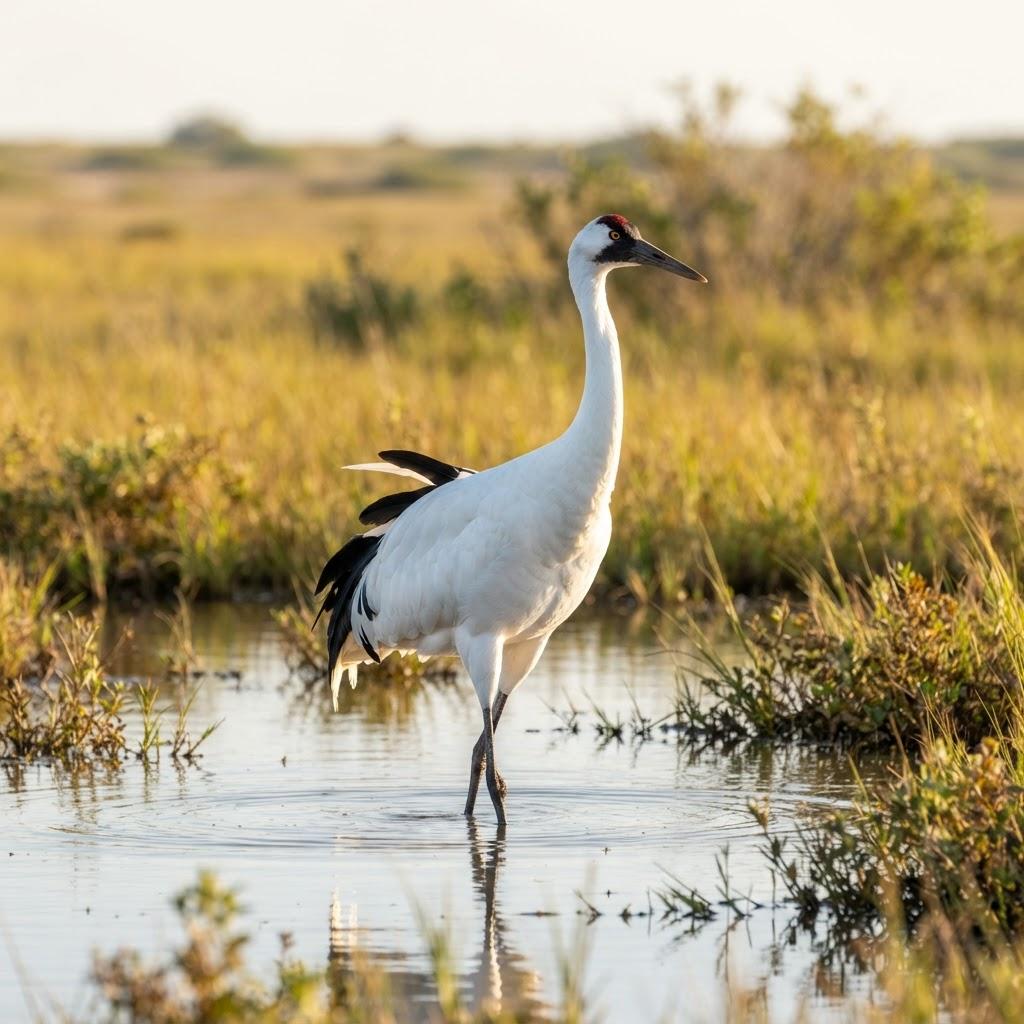
Grus americana
Whooping Crane
Meet the Whooping Crane, North America's tallest and arguably most dramatic avian celebrity. Standing five feet tall with a voice that could rattle windows, this crane is a true icon of survival and a master of the wetlands.
Meet the Bird
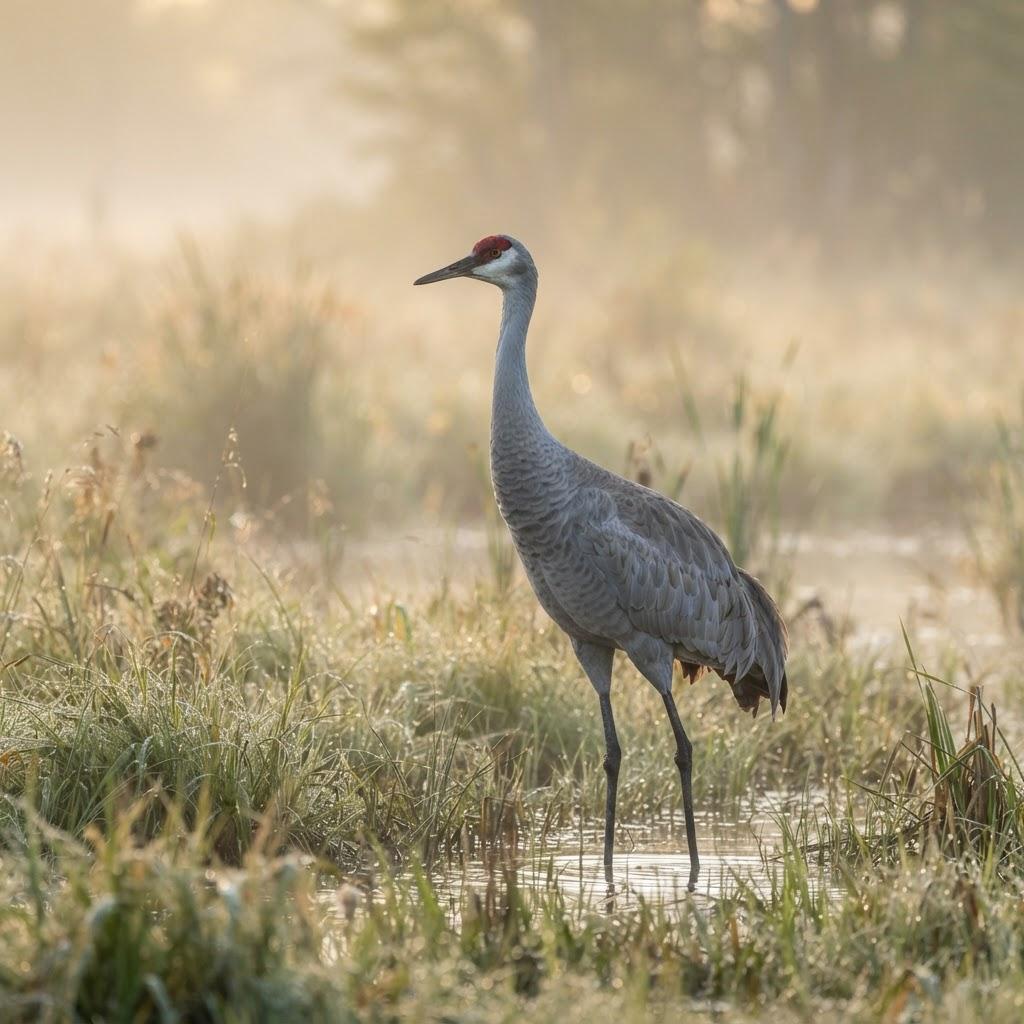
Imagine a bird that walks through a swamp like it owns the place, wearing a tuxedo that it absolutely refuses to take off. The Whooping Crane is the tall, elegant, slightly terrifying supermodel of the North American marshlands. Standing at nearly five feet, this is the tallest bird on the continent, and it carries itself with the kind of poise that suggests it knows exactly how rare it is. With snowy white feathers, a splash of crimson on its head that looks like it just had a very intense discussion with a tube of lipstick, and black wingtips that provide the ultimate formal accessory, this bird is a total head-turner. If the Whooping Crane were a person, it would be the one at the party standing in the center of the room, impeccably dressed, speaking in a voice that commands absolute silence, and making everyone else feel like they are wearing pajamas. It is not just a bird; it is a living, breathing landmark that has cheated extinction and lived to tell the tale.
Superpowers & Weird Abilities
The Whooping Crane possesses a biological quirk that makes human vocal cords look like a cheap rubber band. The secret to its signature, earth-shaking call is a trachea—the windpipe—that is actually coiled and folded inside its breastbone like a complex plumbing system. This anatomical accordion allows the crane to produce a low-frequency, echoing 'whoop' that can travel up to three miles across the flat plains. It is essentially a built-in megaphone that helps the birds stay in touch with their partners and families in a world that is otherwise vast and silent. Beyond the sound, these birds have eyes that are remarkably adapted for long-distance reconnaissance, allowing them to spot a potential predator or a delicious snack from hundreds of feet away. It is like having a pair of high-definition binoculars permanently installed in their skulls, which is incredibly useful when you are navigating thousands of miles of dangerous migration routes through the heart of a continent.
Drama, Personality & Feathered Chaos
Do not be fooled by the elegant, swan-like appearance of the Whooping Crane; this is a bird with a temperament that could be described as 'intense.' These cranes are fiercely territorial and view their piece of the marsh as a private fortress that no other bird dare enter. They have a reputation for being the absolute bosses of their wetlands, often standing their ground against animals much larger than themselves if they feel their space is being encroached upon. They are not the type to share a feeder or play nice in a mixed-species flock; they are solitary, highly opinionated, and possess a level of social drama that makes reality TV look tame. When a Whooping Crane decides it does not like someone, it lets everyone know with a display of posturing that involves stiff wings, aggressive squawking, and a stare that could freeze lava. They are the ultimate divas of the avian world, and they demand respect at all times.
Bizarre Rituals & Quirky Habits
When a Whooping Crane wants to express excitement or just needs to burn off some nervous energy, it breaks into a dance that looks like a blend of ballet and a frantic toddler having a tantrum. They will leap into the air, flap their wings with purpose, toss sticks or vegetation around, and bow to their partners with such theatrical flair that you expect a round of applause at the end. This is not just for show; it is a way to solidify the pair bond and keep the spirits high. They are also notoriously fastidious about their grooming, spending hours every single day preening their feathers to ensure they remain waterproof and aerodynamic. They care about their presentation as much as a high-fashion runway model. Watching them meticulously polish their plumage in the golden hour of the afternoon is a masterclass in avian self-care and a reminder that being a top-tier predator requires keeping your gear in perfect working order.
Legends, Folklore & Human Stories
In the annals of North American natural history, the Whooping Crane holds a place of honor alongside the bald eagle and the bison. For many Indigenous cultures, the crane is a symbol of longevity, loyalty, and strength, appearing in countless stories as a guardian of the wetlands or a messenger of the changing seasons. In more recent human history, the Whooping Crane became the face of conservation after the population dropped to a terrifying low of just fifteen individuals in the 1940s. The effort to bring them back from the brink of total annihilation is one of the greatest human-animal success stories in history. People have gone to extreme lengths to save this species, including flying ultralight aircraft to lead young cranes on their first migration across the country. This profound human dedication has turned the Whooping Crane into a living, breathing symbol of hope, representing the idea that if we try hard enough, we can actually fix some of the environmental damage we have caused.
Mating: The Ridiculous World of Avian Dating
Whooping Crane dating is less like a casual meet-cute and more like an Olympic-level synchronized dance competition. When a male crane spots a potential soulmate, he has to prove his worth through a sequence of hops, bows, and wing-flaps that must be perfectly timed with his partner's own movements. It is an intricate courtship ritual that can go on for years as the birds slowly build trust. If the male messes up his steps or lacks the necessary enthusiasm, the female is well within her rights to walk away and leave him standing alone in the mud. They are strictly monogamous, often staying together for their entire lives, which is a big commitment considering they live for decades. Their dance is a test of character—if you cannot dance for three hours under the hot sun without losing your rhythm, are you really the kind of bird she wants to spend the next twenty years with?
Nesting: Master Architects and Lazy Slumlords
When it comes to building a house, Whooping Cranes do not mess around with flimsy, twig-based shacks. They construct massive, sturdy mounds of vegetation—sedges, rushes, and reeds—right in the middle of shallow marshy waters. These floating islands are essentially high-end, waterproof platforms designed to keep their eggs safe from terrestrial predators. The parents are incredibly dedicated, spending days dragging vegetation to build up the base until it is high enough to keep their future chicks dry. It is a labor-intensive engineering project that requires immense strength and coordination. Once the base is set, the female lays one or two eggs, and both parents share the responsibility of incubation, sitting on the nest through wind, rain, and heat. They are the definition of 'involved parents' who prioritize the structural integrity of their home above all else, ensuring that their fragile eggs are shielded from the harsh realities of the swampy floor.
Raising Babies: The Screaming Food Disposals
Raising a Whooping Crane chick is an exhausting endeavor that would make a human parent weep with exhaustion. From the moment they hatch, these chicks—known as 'colts'—are basically fuzzy, yellow, walking stomachs on stilts. They grow at an astonishing rate, requiring a constant supply of high-protein snacks like crustaceans, snails, insects, and small fish that the parents painstakingly hunt and bring back to the nest. The chicks are incredibly vocal, constantly demanding food with a high-pitched, insistent peep that ensures their parents never get a moment of peace. Parents spend the entire day foraging, walking miles across the marsh to fill the bellies of their demanding youngsters. It is a high-stakes race against time as the chick must gain enough weight and strength to survive its first winter migration. By the time the chick is ready to fly, it has nearly reached its full height, which is a staggering display of rapid development.
Bird-Watching Travel & Local Hotspots
If you are ready to witness the majesty of the Whooping Crane in person, you need to head to the Aransas National Wildlife Refuge on the Texas Gulf Coast during the winter months. This is the primary wintering ground for the Aransas-Wood Buffalo flock, and there is nowhere else on Earth where you can see them congregate in such numbers. Pack your best spotting scope and a thermos of coffee, because these birds are master hide-and-seekers, and you might need to scan the horizon for a while before one of those signature white silhouettes pops up against the brown grasses of the marsh. During the migration seasons, keeping an eye on the Platte River in Nebraska or the various wetlands throughout the central United States can yield a surprise sighting. Remember, these are wild, endangered animals, so keep your distance, respect the refuge rules, and enjoy the experience of seeing one of the rarest creatures on the planet in its natural, rugged home.
Food, Feeder Hacks & DIY Projects
Let’s get one thing straight: you are not going to attract a five-foot-tall, endangered Whooping Crane to a plastic tray in your backyard next to your local sparrow population. These birds are specialized wetland foragers. In the wild, they feast on blue crabs, clams, and aquatic vegetation. If you want to support them, focus on supporting the wetlands they call home. Consider donating to local conservation groups that protect marshland habitat or participating in invasive plant removal days at your local park. While you cannot put up a Whooping Crane feeder, you can create a water feature or a small, native-plant-heavy garden that mimics a wetland ecosystem, which provides habitat for the insects and smaller creatures the broader wetland ecosystem relies on. The best 'feeder hack' for a Whooping Crane is simply advocating for the preservation of their natural, messy, and beautiful wild habitat so they never have to rely on a backyard at all.
Seasonal Guides & "Crisis" Management
Whooping Cranes are the ultimate seasonal travelers, moving with the rhythms of the continent. Spring is their time for returning to northern breeding grounds, where they will spend the summer months in solitude and nesting bliss. Winter is the time for social gathering, when they retreat to the warmer coastal marshes. If you find a 'fledgling' in the wild—a young bird that looks uncoordinated—the best thing you can do is absolutely nothing. Do not touch it, do not try to feed it, and do not pick it up. Most of the time, the parents are watching from a nearby tree or brush, and human interference only causes stress. Unless the bird is clearly injured or in immediate danger from a road, it is just going through its awkward 'teenager' phase. Respect the distance, take a photo from afar if you must, and let nature do its thing. Being a silent observer is the best way to be a good steward of their world.
Backyard Tech & Gadget Reviews
While technology cannot bring a Whooping Crane to your patio, modern optics are your best friend. A solid pair of 10x42 binoculars is the gold standard for birding, allowing you to see the detail on a crane's crown from a safe distance without scaring it off. If you are interested in tracking the birds, many conservation organizations now use satellite GPS trackers on the cranes to monitor their migration paths, and this data is often available to the public online. It is a fantastic way to follow their journey across the continent from your living room. For backyard enthusiasts, setting up a trail camera is the perfect way to see what nocturnal visitors are wandering through your property, even if they aren't cranes. It’s all about getting a window into the lives of wild creatures, whether it’s a crane in a marsh or a raccoon in your garden, using tech to foster a deeper appreciation for the wild neighbors we often ignore.
How to Spot One & How It Is Doing
To identify a Whooping Crane, look for the tall, slender white body, the black wingtips that are only visible in flight, and the distinct, bald red patch on the forehead. Their call is a piercing, guttural 'bugle' that you will recognize immediately if you have ever heard it—it sounds like a trumpet being played by a very large bird. As for their status, the Whooping Crane remains endangered, but their story is one of incredible resilience. Thanks to decades of captive breeding and habitat protection, the populations are slowly climbing. Every individual counts, and your support of wildlife refuges and clean-water initiatives directly contributes to their future. They are a testament to the fact that extinction is not inevitable if we choose to step up. When you see a Whooping Crane, you are seeing a miracle of survival, a bird that refused to disappear and a community of people that refused to let them go.