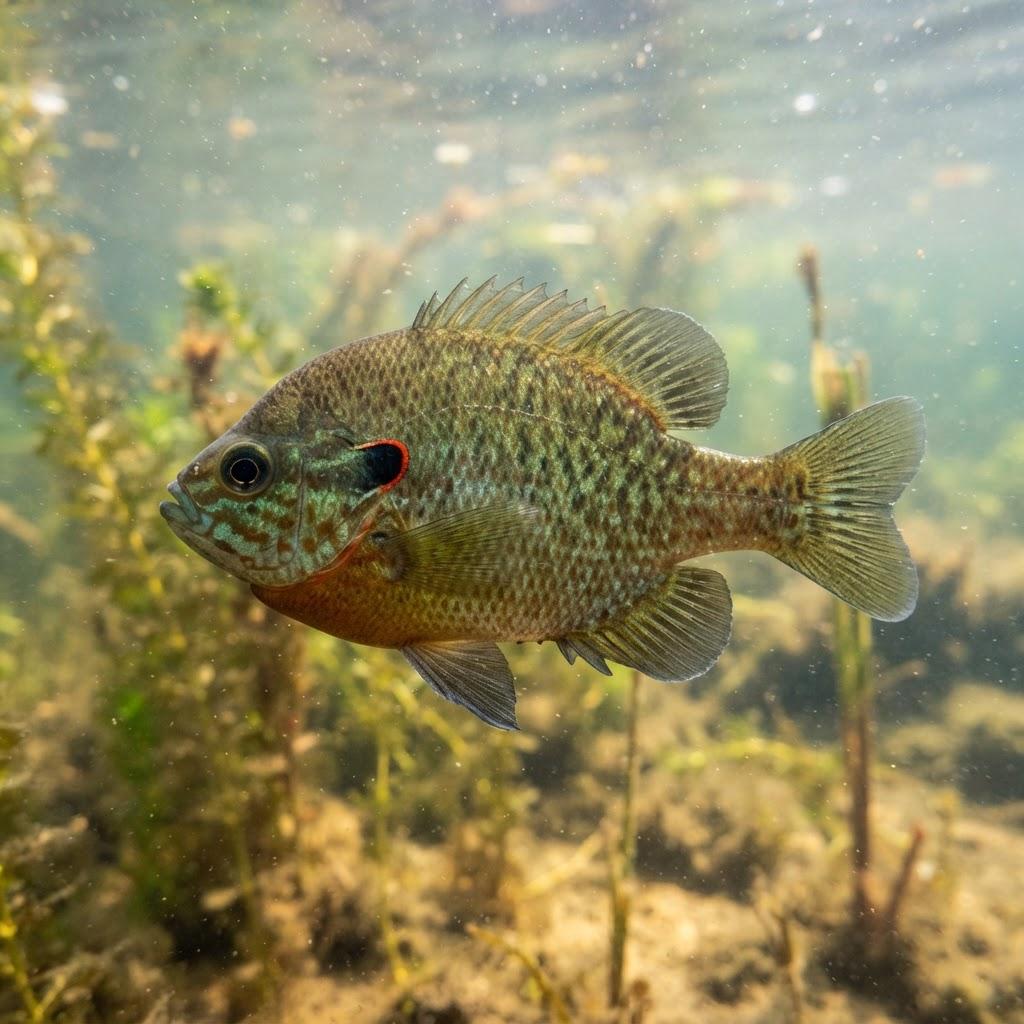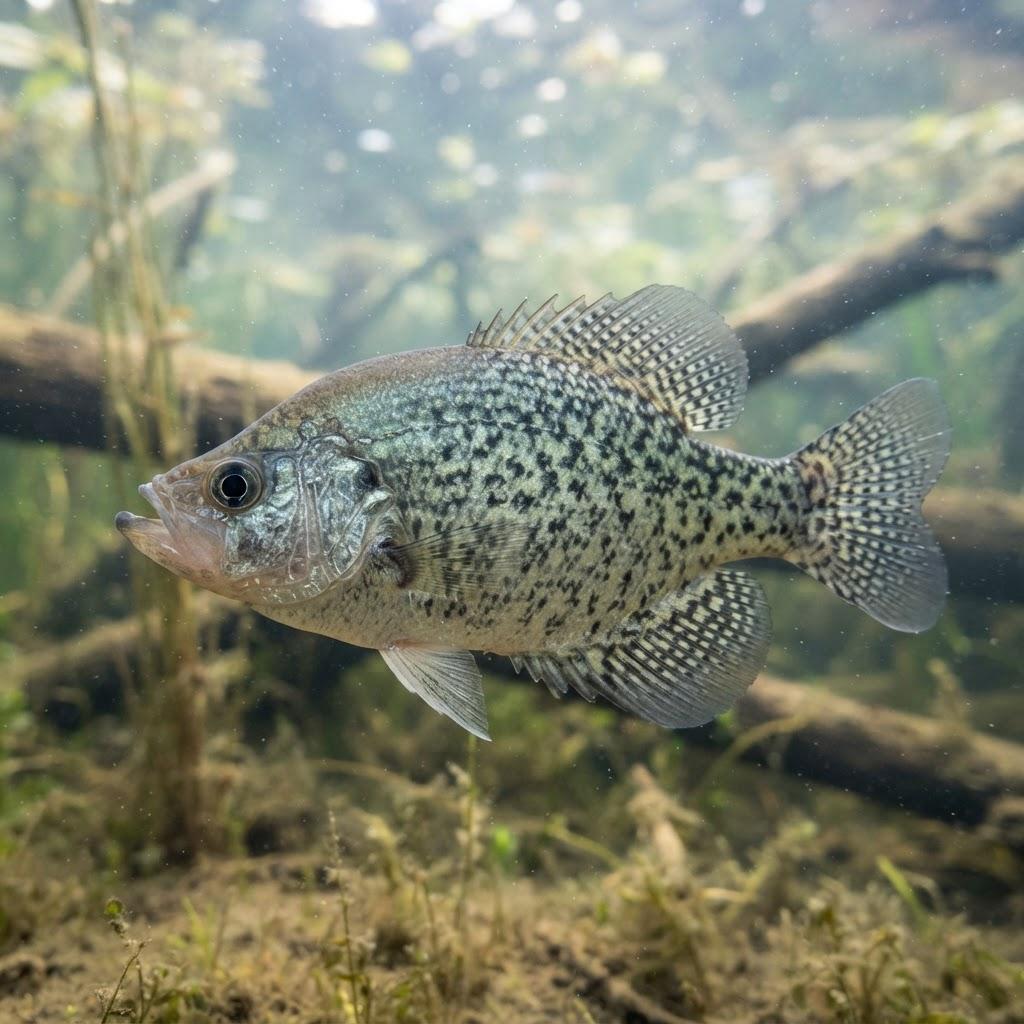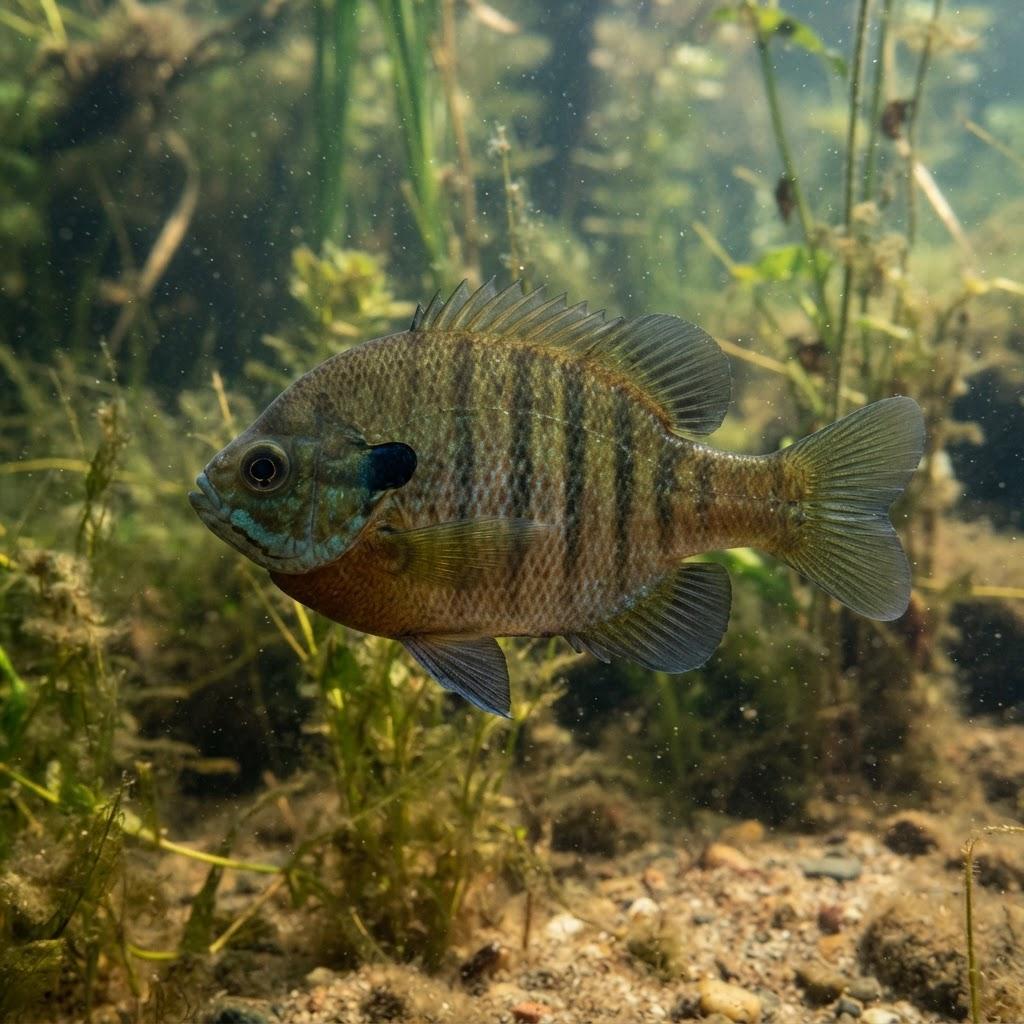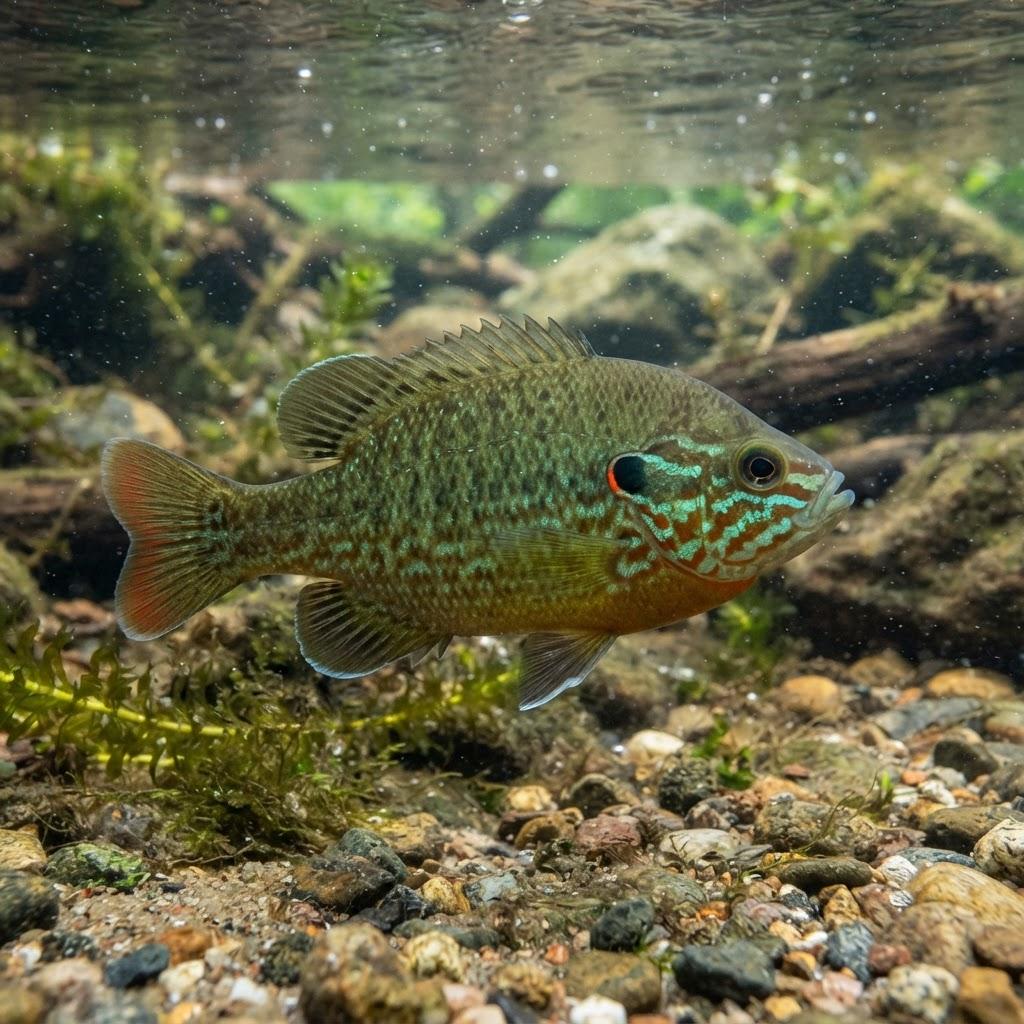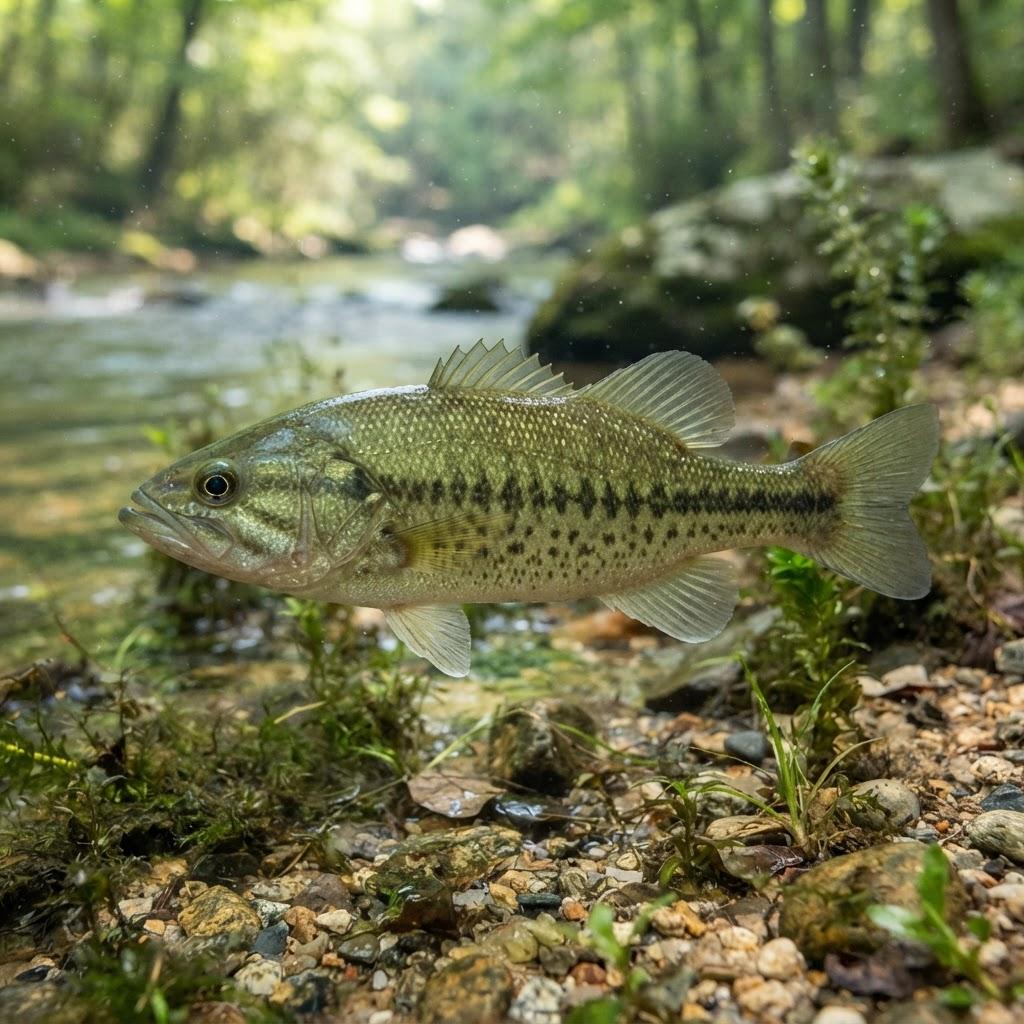
Micropterus punctulatus
Spotted Bass
The Spotted Bass is the scrappy, underdog cousin of the Largemouth Bass that acts like it owns the river. With a personality that is part bully and part athlete, this fish turns every encounter into an epic, high-stakes showdown.
Meet the Fish
Imagine you walk into a dive bar and see a guy wearing a leather jacket, looking for trouble, and probably bragging about a fight he won three years ago. That is the Spotted Bass in fish form. While his flashier cousin, the Largemouth Bass, gets all the press and the professional endorsements, the Spotted Bass is the guy in the corner plotting a takeover. He is the punk-rock sibling of the black bass family, small but scrappy, and absolutely convinced that he is ten times bigger than he actually is. If the Largemouth is a luxury sedan, the Spotted Bass is a hopped-up dirt bike with no muffler. He is sleek, he is spotted, and he has a mouth that does not quite reach back behind his eye, making him look like he is constantly wearing a smirk. He is the ultimate overachiever of the stream, willing to take on bait that is arguably too big for his face just to prove a point.
Weird Biological Superpowers Explained Simply
While he might not shoot lasers or turn invisible, the Spotted Bass possesses a biological sensor array that makes modern military technology look like a child’s toy. Running down the side of his body is the lateral line, a row of specialized cells that function like a high-definition seismic detector. Think of it as a sonar system that feels vibrations in the water. If a bug lands on the surface or another fish wiggles its tail a mile away, the Spotted Bass feels the displacement of water molecules before the sound even travels. It is essentially sixth-sense-level intuition. Furthermore, he has an adjustable swim bladder, which acts like an internal buoyancy vest. By gulping air or releasing it through his system, he can hover effortlessly at different depths without expending any energy. It is like having a perfectly calibrated submarine ballast tank tucked neatly inside his ribs, allowing him to wait in silence for the perfect ambush.
Absurd Self-Defense Mechanisms
When a predator shows up, the Spotted Bass does not scream or hide; he employs a strategy of extreme aggression. Because he lacks spines that could seriously injure a shark or a massive catfish, he relies on his reflexes and a 'fight back' mentality. His primary defense is his ability to blend into the dappled sunlight hitting the river rocks. Those spots on his side aren't just for fashion; they act as disruptive camouflage. When sunlight filters through the water and hits the riverbed, it creates a pattern of shifting shadows. The Spotted Bass perfectly mimics this chaotic light show, making him nearly invisible to a hungry predator hovering above. If that fails, he uses his muscular frame to perform a sudden, explosive burst of speed that leaves any pursuer confused. It is the aquatic equivalent of throwing a smoke bomb and sprinting in the opposite direction, only with more scales and less theatricality.
Fish Drama and Gossip
If there were a reality show centered on the river bottom, the Spotted Bass would be the protagonist everyone loves to hate. These fish are intensely territorial, constantly patrolling their specific rocks and logs like a bouncer at an exclusive nightclub. They do not tolerate 'loitering' by other fish in their designated zone. It is common to see a Spotted Bass engaging in intense staring contests, flaring his gills wide to look bigger, or doing little 'intimidation dances' to scare off trespassers. The gossip among the minnows is legendary; they treat him like a neighborhood tyrant. He is the fish that pushes his way to the front of the feeding line, snatching up the choicest crawfish morsels while giving the other bass the equivalent of an underwater side-eye. It is a high-octane soap opera where the stakes are lunch and the only currency is sheer, unadulterated moxie.
The "Wait, That's Real?!" Deep-Sea Oddities
While our friend the Spotted Bass sticks to shallow rivers, he is distantly related to the deep-sea monsters that would make a horror movie director weep with joy. Down in the midnight zone, there are fish that have literal glass heads—the barreleye fish—where you can see their brains through their transparent foreheads. Their eyes are always staring straight up, looking for the silhouettes of snacks against the fading surface light. Then there are the anglerfish, which use a glowing, bioluminescent pole dangling from their foreheads as a lure. If you compare the Spotted Bass to these deep-sea dwellers, you realize just how normal he is. Yet, the deep-sea fish are essentially aliens, using chemistry to create their own 'neon' lights to attract mates or confuse enemies. The Spotted Bass is the grounded, blue-collar cousin, happy with the sunlight, while his deep-sea relatives are busy conducting electricity and glowing in the crushing, absolute darkness of the abyss.
Myth Busting
Let’s clear the air: people have been spreading lies about fish intelligence for centuries. One of the biggest myths is that fish have a three-second memory. Absolutely not true. If a Spotted Bass had a three-second memory, he would never be able to remember where his favorite hunting rock was or which predators to avoid. Research shows that fish are surprisingly sharp; they can recognize human shapes, memorize complex river maps, and even learn to navigate through artificial mazes. Another myth is that Spotted Bass are just 'dumber versions' of Largemouth. In reality, they are often more aggressive and harder to catch because they are more curious and experimental with their food. They do not just eat what drops in front of them; they hunt with a level of intentionality that suggests a functional brain that knows exactly what it wants and how to get it.
Humorous Historical Tales or Folklore
Humans have had a weird relationship with bass throughout history. In the early days of American settlement, pioneers treated fish like a bottomless pantry, often over-fishing areas until the water was basically empty. There is a classic piece of regional folklore in the South that claims if you catch a Spotted Bass during a full moon, you are legally required to tip your hat to the water. While that is likely a joke started by bored fishermen to mess with city folk, it speaks to the deep respect—and mild frustration—that humans have for this fish. In some Appalachian legends, the bass is seen as the 'king of the eddy,' a trickster character who knows exactly how to snap your fishing line just as you think you have him. These stories have been passed down through generations of anglers who swear that the Spotted Bass is actually a tiny, scaled goblin plotting to ruin their weekend afternoon.
Underwater Love Stories and Bizarre Romances
Romance in the life of a Spotted Bass is not exactly dinner and a movie. It is more of an aggressive, high-pressure negotiation. When it is spawning season, the males set up a perimeter and prepare for a visit from a female. The dance is brief and intense: the male puts on his best display, flashing his colors and performing high-speed maneuvers to show off his vitality. If the female is impressed—which is a high bar—they perform a circular, synchronized swimming routine that looks like a very fast, very confusing ballet. There is no long-term commitment here; once the eggs are laid and fertilized, the male is strictly business. He is the classic 'love 'em and leave 'em' type, focused entirely on the duty of protecting the future generation rather than lingering for a post-romance chat. It is functional, effective, and completely devoid of sentimentality.
Underwater Architecture and DIY Nesting
The Spotted Bass male is the ultimate project manager when it comes to home construction. He does not just find a spot and call it a day; he spends significant time clearing a 'nest'—a clean, circular depression in the gravel. He uses his tail to fan away sediment, silt, and debris until he hits the solid bedrock or large pebbles. This requires serious engineering skills. He wants a clean surface because eggs need oxygen-rich water to survive, and silt would basically smother them like a heavy blanket. He is constantly patrolling the perimeter of this gravel pit, pushing away any interloper who looks like they might want to snack on his investment. It is a masterpiece of minimalist, utilitarian design. He builds a fortress designed to hold the future, ensuring that the next generation of rowdy, spotted rebels has the best possible start in the challenging world of the stream.
The Chaos of Raising Tiny Swimmers
Once those eggs hatch, the real insanity begins. Unlike some species that just abandon their offspring to the whims of the current, the Spotted Bass male is a surprisingly dedicated—if twitchy—parent. He stays over the nest, guarding the fry as they emerge. The fry, or baby bass, are incredibly vulnerable, essentially being bite-sized snacks for every other creature in the river. The father spends his days acting like a frantic bodyguard, chasing off curious minnows and larger predators alike. As the fry grow, they become a chaotic, swirling cloud of tiny fish, moving in unison as if they are a single, jittery organism. It is a high-stakes daycare where the teacher is a grumpy, overprotective dad who hasn't slept in three days. Watching a group of fry navigate a river is like watching a herd of kittens cross a highway—mostly luck and rapid, panicked swimming.
How to Spot One & How It Is Doing
If you are looking to find a Spotted Bass, grab a pair of polarized sunglasses and head to a clear, flowing stream with rocky cover. Look for the 'smirk'—the mouth that stops before the eye—and the distinct row of spots along their lower side that look like someone took a paintbrush to their scales. They love deep, rocky pools where the water flows at a steady clip. As for their health, these fish are doing great. They are incredibly resilient, adapting well to changing river conditions and thriving in many reservoirs where other fish struggle. They are the survivors of the bass world. To keep them happy, just keep the rivers clean. Pick up your trash, watch your motor oil, and remember that every ripple you see in the water is home to a little, underwater gladiator doing his best to rule his rocky empire. They are doing fine, and with a little care, they will be there to test your patience for decades to come.